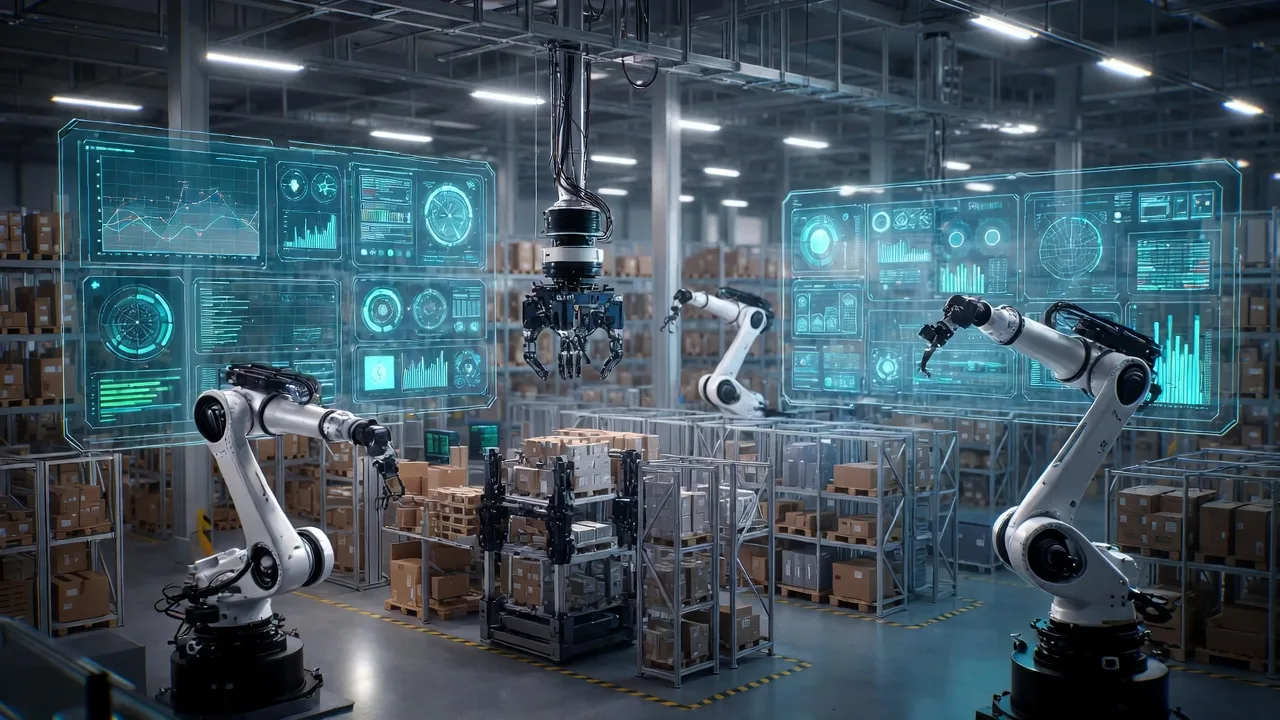
Cloud Supply Chain Management: Transforming Enterprise Logistics with AI Agents
Cloud Supply Chain Management (SCM) uses cloud computing to automate and integrate the network of resources, processes, and data that move goods from sourcing to final delivery. Unlike traditional siloed models, it treats the supply chain as a connected network with real-time visibility.
Core Benefits
- Real-Time Visibility: Enables 24/7 tracking of inventory and assets across global locations.
- Agility and Scalability: Allows businesses to quickly adjust capacity and pivot sourcing in response to market disruptions.
- Data-Driven Decision Making: Uses AI and predictive analytics for accurate demand forecasting and risk mitigation.
- Enhanced Collaboration: Automates communication with vendors and partners through shared digital platforms.
Key Technologies
- Artificial Intelligence (AI) & Machine Learning: Power “self-healing” supply chains that anticipate disruptions and automate procurement.
- Internet of Things (IoT): Connected sensors monitor machinery for predictive maintenance and track shipments in transit.
- Blockchain: Creates immutable records for end-to-end product traceability and trust.
- Digital Twins: Human-AI systems that visualize physical supply chains to run stress tests and simulations.
Leading Platforms
- Oracle Fusion Cloud SCM: An integrated suite covering planning, procurement, manufacturing, and logistics.
- SAP S/4HANA Cloud: Focuses on demand-driven networks and real-time operational response.
- AWS Supply Chain: A cloud-native application that aggregates data into a unified lake to generate risk insights.
- Microsoft Azure: Provides the underlying IoT and machine learning infrastructure for custom SCM solutions.
Implementation Challenges
- Data Security: Protecting sensitive partner data from cyber threats.
- Change Management: Overcoming resistance to new technology and training staff for digital workflows.
- Vendor Lock-in: The difficulty of migrating data between different cloud SCM providers.
What is Cloud Supply Chain Management?
Cloud supply chain management refers to managing supply chain processes using cloud-based platforms. Unlike on-premise systems, cloud SCM leverages centralized, internet-accessible platforms to monitor, coordinate, and optimize all aspects of the supply chain—from sourcing raw materials to delivering finished products.
Key Advantages for Enterprises:
| Feature | Traditional SCM | Cloud SCM |
|---|---|---|
| Accessibility | Limited to on-premise systems | Accessible anywhere with internet |
| Scalability | Hardware-dependent | Instantly scalable based on demand |
| Integration | Often siloed | Connects ERP, CRM, WMS, TMS seamlessly |
| Data Insights | Basic reporting | Real-time analytics and predictive insights |
| Cost | High upfront investment | Subscription-based, lower TCO |
Why Enterprises Are Moving to Cloud SCM?
Global enterprises face supply chain pressures such as volatile demand, regulatory compliance, and sustainability requirements.
Cloud SCM offers several strategic advantages:
- Real-Time Visibility: Enterprises gain a 360° view of inventory, shipments, and supplier performance.
- Agility in Operations: Cloud platforms allow rapid scaling and adaptation to market changes.
- Cost Efficiency: Subscription-based cloud solutions reduce upfront capital expenditure and lower operational costs.
- Data-Driven Decisions: AI-powered analytics identify trends, forecast demand, and optimize logistics routes.
- Collaboration: Suppliers, distributors, and internal teams can seamlessly collaborate on a unified platform.
AI Agents: The Game Changer in Logistics and Transportation
The integration of AI agents into cloud SCM is transforming enterprise logistics. AI agents are autonomous software tools that can analyze massive datasets, make real-time decisions, and communicate across systems without constant human intervention.
Key Functions of AI Agents in Logistics:
| Function | AI Agent Capabilities | Enterprise Impact |
|---|---|---|
| Route Optimization | Analyze traffic, weather, and shipment priorities | Reduce delivery time by 15–25%, cut fuel costs |
| Inventory Forecasting | Predict stock shortages or surplus using historical and real-time data | Minimize stockouts and overstock situations |
| Predictive Maintenance | Monitor vehicles and equipment, schedule proactive maintenance | Reduce downtime by up to 30% |
| Supplier Risk Assessment | Evaluate supplier reliability and detect disruptions | Improve supplier selection and contingency planning |
| Automated Documentation | Generate invoices, customs paperwork, and compliance reports | Reduce manual errors and administrative overhead |
By deploying AI agents, enterprises can move from reactive decision-making to proactive supply chain management.
How Cloud SCM Integrates with Enterprise Systems?
Cloud SCM platforms do not operate in isolation. For enterprises, seamless integration with existing systems is crucial.
Key integration points include:
- ERP (Enterprise Resource Planning): Synchronizes procurement, finance, and production planning.
- WMS (Warehouse Management Systems): Monitors stock levels, automates order picking, and tracks shipments.
- TMS (Transportation Management Systems): Optimizes routing, shipment tracking, and carrier management.
- CRM (Customer Relationship Management): Connects customer demand insights to supply chain planning.
Integration Table:
| System | Role in Cloud SCM | AI Agent Contribution |
|---|---|---|
| ERP | Centralized enterprise data | Detect supply-demand mismatches, suggest corrective actions |
| WMS | Warehouse efficiency | Automate inventory replenishment and storage optimization |
| TMS | Transportation logistics | Optimize routes, predict delays, manage carriers |
| CRM | Customer demand insights | Forecast order volumes, prioritize high-value shipments |
AI-Driven Logistics Use Cases
Enterprises adopting cloud SCM with AI agents experience tangible benefits across logistics and transportation:
- Dynamic Route Planning: AI agents analyze real-time traffic and weather conditions to reroute shipments, reducing transit times.
- Demand-Driven Inventory: Predictive algorithms ensure warehouses maintain optimal stock levels, preventing overstock or stockouts.
- Supplier Network Optimization: AI identifies underperforming suppliers, suggesting alternatives before disruptions occur.
- Autonomous Fleet Management: Vehicles are monitored for fuel efficiency, maintenance schedules, and driver behavior, improving operational efficiency.
- Compliance Automation: Customs, safety, and environmental compliance are automatically documented, reducing regulatory risk.
Case Study Snapshot:
| Enterprise | Challenge | AI Solution | Result |
|---|---|---|---|
| Global Electronics Manufacturer | Frequent delivery delays | AI-driven dynamic routing | 20% faster deliveries, 18% lower fuel cost |
| Large Retail Chain | Overstock in multiple warehouses | AI-powered demand forecasting | Reduced excess inventory by 22% |
| Logistics Provider | Maintenance downtime | Predictive maintenance AI agents | Downtime cut by 30% |
Measuring the ROI of Cloud SCM with AI Agents
Enterprises demand measurable results. ROI is often visible in three areas:
- Operational Efficiency: Reduced manual interventions, faster decision-making, and optimized routing cut costs.
- Customer Satisfaction: Faster deliveries and fewer stockouts improve customer loyalty.
- Scalability: Cloud infrastructure supports seasonal demand spikes without costly hardware investments.
ROI Metrics Table:
| Metric | Before Cloud SCM | After AI-Driven Cloud SCM |
|---|---|---|
| On-time delivery | 78% | 95% |
| Inventory carrying cost | 12% of revenue | 8% of revenue |
| Transportation cost | $10M/year | $7.5M/year |
| Administrative hours | 10,000/year | 6,000/year |
Implementing Cloud SCM with AI Agents
Enterprises can follow a structured approach to adopt cloud SCM:
- Assess Current Supply Chain: Identify bottlenecks, data silos, and inefficiencies.
- Select Cloud SCM Platform: Choose a platform with AI agent capabilities and strong integration support.
- Define KPIs: Establish measurable goals like delivery speed, inventory reduction, and cost savings.
- Integrate Existing Systems: Connect ERP, WMS, TMS, and CRM for unified operations.
- Deploy AI Agents: Automate tasks like route optimization, forecasting, and predictive maintenance.
- Monitor and Optimize: Continuously refine AI algorithms based on real-time data and enterprise objectives.
Cloud SCM Security and Compliance
Data security and regulatory compliance are non-negotiable for enterprise adoption. Cloud SCM platforms offer:
- End-to-End Encryption: Protects sensitive supply chain data during transmission and storage.
- Access Controls: Role-based permissions prevent unauthorized access.
- Audit Trails: Maintain logs for compliance reporting and traceability.
- Disaster Recovery: Cloud platforms ensure business continuity in case of system failures.
AI agents also enhance compliance by automatically checking shipments, documentation, and supplier adherence to regulations.
Future Trends in Cloud Supply Chain Management
The future of cloud SCM is intertwined with AI-driven innovations:
- Autonomous Supply Chains: Self-managing logistics networks with minimal human intervention.
- AI-Powered Procurement: Dynamic supplier selection based on performance, risk, and cost.
- Predictive Sustainability: Algorithms optimize routes and inventory to minimize carbon footprints.
- Blockchain Integration: Secure, transparent, and immutable supply chain records.
- Real-Time AI Collaboration: Agents communicating across global networks for instantaneous decision-making.
Enterprises embracing these trends will gain a competitive advantage in operational efficiency, resilience, and sustainability.
People Also Ask
AI agents analyze real-time data on routes, traffic, and demand, making autonomous decisions to optimize deliveries, reduce fuel costs, and prevent delays.
Yes. Modern cloud SCM platforms are designed to seamlessly integrate with ERP, WMS, TMS, and CRM systems for unified supply chain management.
Risks include data breaches and unauthorized access. These are mitigated by encryption, role-based access controls, audit trails, and compliance with global security standards.
Many enterprises observe improvements in efficiency and cost reduction within 6–12 months, depending on the complexity of their supply chain.
AI agents are versatile and can be adapted for manufacturing, retail, logistics providers, and large-scale distribution networks, but customization may be required for highly specialized processes.
Leave a Reply