Welcome to WordPress. This is your first post. Edit or delete it, then start writing!
Author: hmsadmin
-

Accounts Payable OCR Software for Logistics and Transportation Enterprises
Accounts Payable OCR Software for Logistics and Transportation Enterprises
Accounts payable (AP) OCR software uses Optical Character Recognition and Artificial Intelligence to automatically read and extract data from invoices, receipts, and other financial documents. Modern solutions go beyond simple text scanning to handle complex layouts, validate data against purchase orders (3-way matching), and route invoices for approval.
Top Accounts Payable OCR Software (2025–2026)
The following solutions are widely recognized for their accuracy and integration capabilities:
- Tipalti: Best for global enterprises and multi-national operations. It offers end-to-end AP automation, including tax compliance and global payments in 120 currencies.
- ABBYY FlexiCapture: Best for complex, high-volume needs. Known for exceptional accuracy and the ability to process millions of documents without rigid templates.
- Yooz: Best for mid-market businesses. It integrates with over 250 financial systems and focuses on a user-friendly, real-time AI experience.
- Lido: Best for speed and simplicity. A flexible platform that extracts data with 99%+ accuracy directly into spreadsheets or databases without IT setup.
- AvidXchange: Best for full AP workflows. It provides comprehensive fraud detection and purchase order management alongside high-accuracy invoice scanning.
- Nanonets: Best for unstructured data. Uses deep learning to handle diverse, non-standard document layouts and allows for custom model training.
- DocuClipper: Best for QuickBooks users. Specializes in extracting data from bank statements and invoices for direct import into QuickBooks.
- Dext Prepare: Best for small businesses and accountants. Popular for its mobile-first design and 99%+ accuracy for receipts and bills.
Key Benefits of Implementation
- Speed: Reduces processing time by up to 80% compared to manual entry.
- Accuracy: Reaches 95-99% accuracy, significantly reducing common human errors like typos or transpositions.
- Cost Savings: Can save businesses an average of $5–$15 per invoice processed.
- Fraud Prevention: Automated systems can flag duplicate invoices and verify that vendor details match your approved records.
- Early Discounts: Faster processing allows your team to take advantage of early payment discounts from vendors.
Critical Features to Look For
- Template-Free Extraction: AI that “understands” layouts rather than relying on rigid zones for data.
- ERP Integration: Seamless syncing with systems like NetSuite, SAP, Sage, or QuickBooks.
- Validation Rules: Automatic cross-checks for mathematical errors, tax compliance, and PO matching.
- Audit Trails: Digital logs of every action, approval, and exception for transparency.
What Is Accounts Payable OCR Software?
Accounts payable OCR software uses optical character recognition combined with machine learning to extract invoice data such as vendor name, invoice number, line items, taxes, totals, and payment terms from unstructured documents and convert it into structured data for AP systems.
In logistics and transportation, AP OCR must also handle:
- Fuel surcharge breakdowns
- Lane-based freight pricing
- Accessorial charges like detention or demurrage
- Multi-page carrier invoices
- Rate cards and contract references
Basic OCR reads text. Enterprise AP OCR understands context, validates values, and flags exceptions.
Why Logistics AP Breaks at Scale?
Logistics finance teams face complexity that traditional AP automation was never designed for.
AP Challenge Why It Happens in Logistics Business Impact Invoice mismatches Rates vary by lane, weight, fuel index Delayed payments, disputes Duplicate invoices Carriers resend invoices after follow-ups Overpayments Manual validation Line items must match TMS data High processing cost Poor audit trails Data spread across emails and PDFs Compliance risk Long cycle times High invoice volume, low standardization Carrier dissatisfaction OCR alone does not solve these problems. The solution requires AI agents that connect finance data with logistics systems.
How Accounts Payable OCR Software Works in Logistics?
Modern AP OCR for logistics operates as a pipeline, not a single step.
Step 1: Invoice Ingestion
Invoices enter the system through multiple channels:
- Email inboxes
- Vendor portals
- SFTP or API feeds
- Mobile uploads from depots
AI agents classify documents by type before OCR is applied.
Input Type AI Agent Action Carrier freight invoice Route to freight validation Fuel invoice Trigger fuel reconciliation Maintenance bill Route to asset cost allocation Step 2: Intelligent Data Extraction
OCR models trained on logistics documents extract both header and line-level data.
Extracted Data Logistics Context Invoice number Carrier billing reference Lane details Origin, destination Fuel surcharge Indexed to fuel rate Accessorial fees Detention, layover, tolls Tax components Jurisdiction-specific Unlike generic OCR, logistics-focused models understand repeating line items, rate tables, and multi-page invoices.
Step 3: AI-Based Validation and Matching
This is where AI agents matter.
Extracted invoice data is validated against:
- Transportation Management Systems (TMS)
- Contract rate tables
- Fuel price indexes
- Proof of delivery (POD) records
Validation Type Outcome Rate match Auto-approve Quantity mismatch Flag exception Duplicate detection Block payment Missing POD Hold invoice Instead of humans checking every invoice, AI agents review only exceptions.
Step 4: Approval, Posting, and Payment
Once validated:
- Approved invoices sync to ERP systems
- Payment terms are calculated automatically
- Audit logs are generated
All actions are traceable, which matters for enterprise compliance.
From OCR to AI Agents: The Real Shift
Most vendors stop at “invoice capture.” That is not enough for logistics.
AI agents extend AP OCR by taking actions, not just extracting data.
Capability OCR-Only Tools AI Agent-Driven AP Data extraction Yes Yes Context awareness Limited High Cross-system validation Manual Automated Exception handling Human-led AI-triaged Continuous learning No Yes For logistics enterprises, AI agents act as digital AP analysts, trained on your contracts, vendors, and operational rules.
Key Features Enterprise Buyers Should Evaluate
If you are buying accounts payable OCR software for logistics, these are not optional features.
Logistics-Specific Document Intelligence
The system must understand freight invoices, fuel bills, and accessorial structures, not just generic AP documents.
AI-Based Matching, Not Rules Only
Static rules fail when rates fluctuate. AI agents adapt based on historical patterns and contract context.
ERP and TMS Integration
System Why It Matters ERP Financial posting TMS Freight validation Fuel management Surcharge verification Vendor master Payment accuracy Explainability and Auditability
Every approval or rejection must be traceable. Black-box AI is a liability in finance.
Measurable Business Impact
Enterprises adopting AI-driven AP OCR in logistics typically see:
Metric Before After Invoice processing time 5–10 days Same day Manual touch rate 80% <20% Duplicate payments High risk Near zero Audit readiness Reactive Continuous AP cost per invoice High Significantly reduced These are operational outcomes, not marketing promises.
Security and Compliance Considerations
Accounts payable touches sensitive financial and vendor data.
Enterprise-grade AP OCR software must support:
- Role-based access controls
- Encrypted data at rest and in transit
- Full audit logs
- Compliance with regional tax and finance regulations
AI agents must operate within defined approval boundaries.
How This Fits Into a Broader AI Logistics Platform
For logistics enterprises building AI maturity, AP OCR should not be isolated.
It becomes part of a larger AI agent ecosystem that includes:
- Freight audit and payment
- Fuel reconciliation
- Asset cost tracking
- Vendor performance analysis
AP data feeds intelligence back into pricing, procurement, and carrier negotiations.
People Also Ask
Is OCR alone enough for accounts payable automation in logistics?No. OCR only converts text to data. Logistics AP requires validation against TMS, contracts, and fuel indexes. AI agents are necessary to automate decisions and exception handling.
How accurate is accounts payable OCR for freight invoices?Accuracy depends on training data and validation layers. Logistics-trained OCR combined with AI agents typically achieves high extraction accuracy, with near-perfect results after automated matching.
Can AP OCR software handle multi-page and complex carrier invoices?Yes, if designed for logistics. Enterprise solutions support multi-page invoices, repeated line items, and rate tables common in carrier billing.
How does AP OCR prevent duplicate payments?AI agents detect duplicates by analyzing invoice numbers, amounts, vendor behavior, and historical patterns, not just exact matches.
How long does it take to implement AP OCR with AI agents?Implementation timelines vary, but enterprise systems are typically deployed in phases, starting with extraction and validation, then expanding into full AI-driven automation.
-
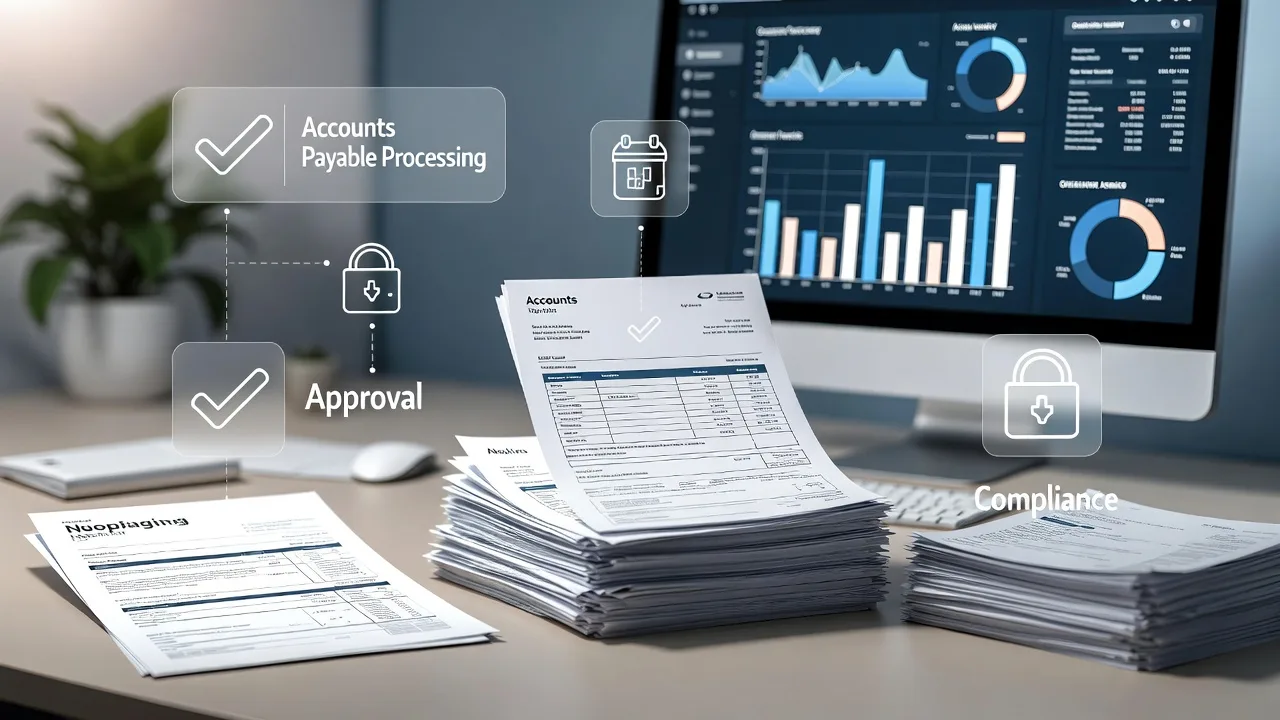
Accounts Payable Processing Best Practices for Logistics and Transportation Enterprises
Accounts Payable Processing Best Practices for Logistics and Transportation Enterprises
To transform your accounts payable (AP) from a back-office cost into a strategic asset, focus on standardisation, automation, and strong internal controls.
1. Workflow & Process Standardisation
- Map and Document Your Process: Clearly define every step from invoice receipt to final payment. Documentation ensures consistency across the team and simplifies training for new hires.
- Centralise Invoice Intake: Establish a single point of entry, ideally a dedicated AP email address or Supplier Portal, to prevent lost invoices and scattered data.
- Implement “Three-Way Matching”: Automatically verify that the Invoice matches the Purchase Order (PO) and the Goods Receipt. This reduces payment errors and ensures you only pay for what was actually received.
- Establish Fixed Payment Schedules: Instead of paying bills as they arrive, move to a weekly or bi-weekly “check run” (even for electronic payments) to better manage cash flow and reduce administrative burden.
2. Automation & Digitization
- Go Paperless: Transition from physical invoices and paper checks to electronic formats. Digitization makes documents searchable and significantly reduces storage costs.
- Leverage OCR Technology: Use Optical Character Recognition (OCR) to automatically extract data from invoices, which minimizes manual entry errors and speeds up the approval cycle.
- Shift to Electronic Payments: Prioritize ACH transfers or virtual credit cards over paper checks. Electronic methods are cheaper, more secure, and provide better digital audit trails.
3. Security & Internal Controls
- Segregation of Duties: Ensure that no single person has total control over the process. For example, the employee who sets up new vendors should not be the one who approves or issues payments.
- Secure the “Master Vendor File”: Limit access to the vendor database and regularly scrub it for duplicate or inactive accounts to prevent “ghost vendor” fraud.
- Require W-9s Upfront: Never process a payment to a new vendor until a valid W-9 is on file to ensure tax compliance.
4. Strategic Financial Management
- Capture Early Payment Discounts: Negotiate terms like “2/10 Net 30” (a 2% discount for paying within 10 days) and prioritize these invoices to generate immediate savings.
- Monitor Key Performance Indicators (KPIs): Regularly track metrics like Cost Per Invoice, Days Payable Outstanding (DPO), and Exception Rates to identify bottlenecks in your process.
- Regular Reconciliation: Reconcile your AP ledger with vendor statements and bank records frequently (ideally monthly or even daily) to catch discrepancies early.
What Is Accounts Payable Processing in Logistics and Transportation?
Accounts payable processing is the end-to-end workflow used to receive, validate, approve, and pay supplier invoices.
In logistics and transportation, AP is uniquely complex because invoices are driven by operational events, not static purchases.
Typical invoice sources include:
- Freight carriers and last-mile partners
- Fuel stations and fuel card providers
- Toll operators and port authorities
- Maintenance vendors and spare part suppliers
- Warehouses and 3PL providers
Each invoice depends on trip data, shipment confirmations, fuel consumption logs, rate contracts, and service-level agreements.
That dependency makes AP accuracy directly tied to operational data quality.
Why Traditional AP Processes Fail in Logistics Enterprises?
Most AP systems were designed for predictable procurement environments. Logistics is not predictable.
Here is where traditional AP breaks down.
Operational Complexity
One shipment can generate multiple invoices from different vendors, each tied to different rates, fuel surcharges, tolls, and delays.
High Invoice Volume
Large fleets and distributed carrier networks generate tens of thousands of invoices per month.
Unstructured Data
Invoices arrive as PDFs, emails, scans, EDI feeds, and portal downloads, often with inconsistent formats.
Frequent Disputes
Discrepancies between agreed rates and billed amounts are common due to route changes, detention time, or fuel price volatility.
Delayed Approvals
Approvals depend on operations teams who are not part of finance systems and often lack visibility into invoice context.
Core Accounts Payable Best Practices for Logistics Enterprises
1. Centralize Invoice Intake Across All Channels
Best practice starts with eliminating fragmented invoice intake.
Enterprises should funnel all invoices into a single system regardless of source.
Invoice Source Traditional Handling Best Practice Email PDFs Manual download Automated capture Scanned documents Manual entry OCR + validation EDI feeds Partial integration Unified ingestion Vendor portals Manual login Agent-based extraction AI agents can monitor inboxes, portals, and EDI streams continuously, ensuring no invoice enters the system untracked.
2. Automate Data Extraction with Context Awareness
Basic OCR is not enough for logistics invoices.
Best practice requires understanding what the data means.
AI agents trained on logistics invoices can extract and classify:
- Route IDs
- Shipment numbers
- Vehicle or container IDs
- Fuel quantities and rates
- Toll locations and timestamps
This context-aware extraction reduces downstream reconciliation failures.
3. Enforce Three-Way and Four-Way Matching Automatically
Matching is the backbone of AP accuracy.
In logistics, matching often extends beyond purchase orders.
Matching Type Data Sources Three-way matching PO, invoice, goods receipt Four-way matching PO, invoice, shipment data, contract Operational matching Trip logs, GPS data, fuel sensors AI agents excel here because they can correlate operational data streams with invoice line items in real time.
When mismatches occur, the system flags root causes instead of just rejecting invoices.
4. Design Exception-First Workflows
Best-in-class AP teams do not review every invoice. They review only exceptions.
Invoice Category Handling Approach Fully matched Auto-approved Minor variance Auto-approved within tolerance Major discrepancy Routed to operations Contract breach Escalated with evidence AI agents triage invoices continuously, allowing finance teams to focus on value-added review instead of data entry.
5. Integrate AP with Logistics and Fleet Systems
AP cannot operate in isolation in transportation enterprises.
Systems that must be integrated include:
- Transportation Management Systems (TMS)
- Fleet Management Systems
- Fuel management platforms
- GPS and telematics systems
- Contract and rate management tools
AI agents act as connective tissue between these systems, synchronizing data without brittle point-to-point integrations.
6. Standardize Approval Logic Across Regions and Business Units
Enterprises often allow each region or subsidiary to define its own AP rules. This creates chaos at scale.
Best practice is centralized logic with configurable parameters.
Rule Type Example Amount thresholds Auto-approve under ₹50,000 Vendor trust score Faster approvals for reliable vendors Route risk level Stricter checks on high-risk routes Fuel variance tolerance Adjusted by geography AI agents enforce these rules consistently while adapting to operational context.
7. Move from Batch Payments to Predictive Payments
Traditional AP waits for invoices, then processes payments in batches.
Modern AP anticipates liabilities.
Using historical shipment data, fuel consumption, and vendor behavior, AI agents can:
- Forecast payable amounts
- Flag cash flow risks early
- Optimize payment timing for discounts and vendor goodwill
This transforms AP from a cost center into a cash management lever.
How AI Agents Transform Accounts Payable in Logistics?
AI agents are not just automation tools. They behave like specialized digital operators.
Capability Traditional AP Software AI Agents Invoice ingestion Rule-based Adaptive Data extraction Template-driven Learning-based Matching Static rules Contextual reasoning Exception handling Manual Autonomous triage Vendor communication Email-based Agent-driven resolution Insights Historical Predictive For logistics enterprises, AI agents understand the operational reality behind each invoice, not just the numbers.
Key Metrics Enterprises Should Track
Best practice AP teams measure performance beyond invoice counts.
Metric Why It Matters Invoice cycle time Cash flow efficiency First-pass match rate Data quality indicator Exception rate Process health Cost per invoice Operational efficiency Dispute resolution time Vendor satisfaction Leakage detected Direct cost savings AI-driven AP systems surface these metrics continuously, not in month-end reports.
Common Mistakes Enterprises Still Make
- Treating AP as a finance-only function
- Automating bad processes instead of redesigning them
- Using generic OCR tools for logistics invoices
- Ignoring operational data during invoice validation
- Underestimating the cost of exceptions
These mistakes compound as invoice volumes grow.
The Strategic Impact of Modern AP Processing
For logistics and transportation enterprises, AP excellence delivers measurable business outcomes.
- Lower operating costs
- Faster vendor payments and better rates
- Reduced fraud and duplicate payments
- Improved audit readiness
- Stronger alignment between finance and operations
When powered by AI agents, AP becomes a strategic capability rather than a back-office burden.
People Also Ask
What makes accounts payable processing harder in logistics and transportation?Logistics invoices depend on real-world events like routes, fuel usage, delays, and tolls. This creates constant variability that traditional AP systems cannot handle without manual intervention.
Can AI agents replace AP staff?No. AI agents handle data-heavy, repetitive tasks and exception triage. Human teams focus on oversight, complex negotiations, and strategic decisions.
How long does it take to modernize AP with AI agents?Most enterprises see meaningful improvements within 8 to 12 weeks, depending on system integrations and invoice volume.
Are AI-driven AP systems compliant with audits and regulations?Yes. AI agents create detailed audit trails, versioned approvals, and traceable decision logic that often exceeds manual compliance standards.
What is the ROI of AI-based accounts payable automation?Enterprises typically see 30–60 percent cost reduction per invoice, faster payment cycles, and significant leakage recovery within the first year.
-
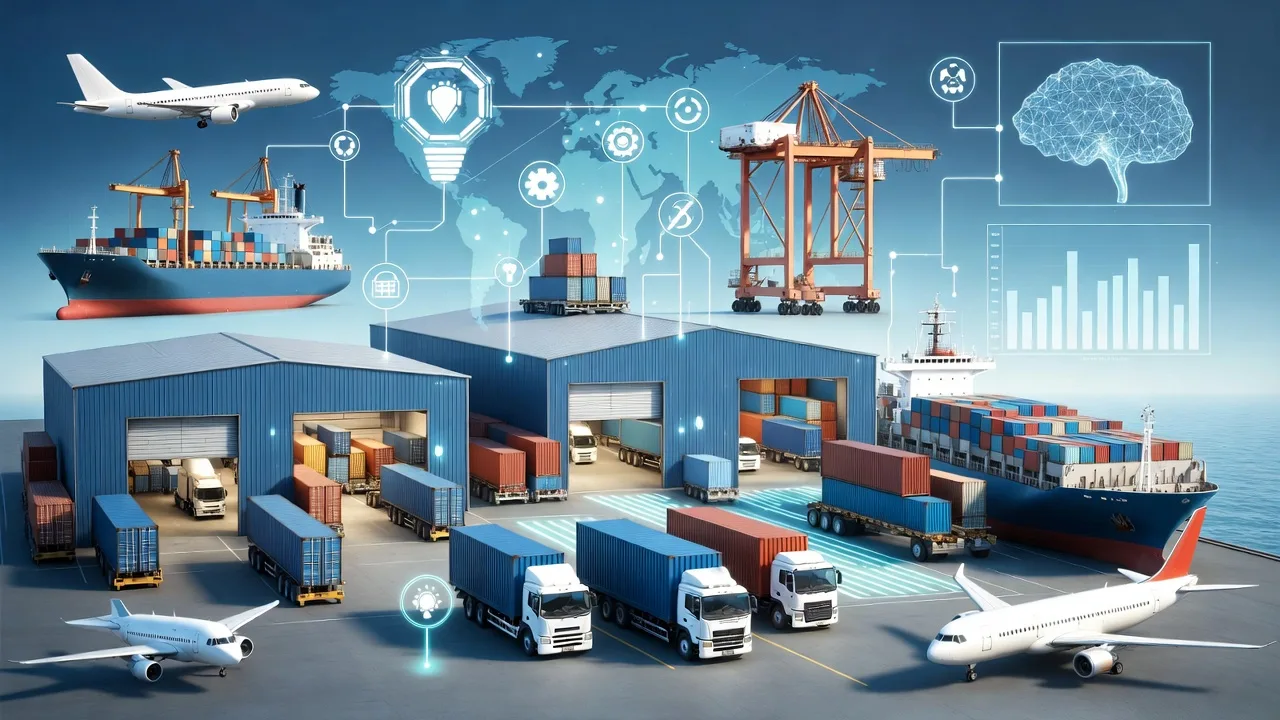
AP Automation Benefits for Enterprise Logistics and Transportation
AP Automation Benefits for Enterprise Logistics and Transportation
Implementing accounts payable (AP) automation transforms the finance department from a manual cost center into a strategic asset. By digitizing workflows, organizations can reduce invoice processing costs by up to 80% and shorten approval cycles from weeks to just a few days or hours.
Core Benefits of AP Automation
- Significant Cost Reductions: Automation eliminates expensive manual tasks like data entry, physical document storage, and postage. Industry benchmarks show that while manual processing can cost $15–$20 per invoice, automated systems can reduce this to under $2.
- Faster Processing & Productivity: Intelligent OCR (Optical Character Recognition) automatically extracts data, and pre-defined rules route invoices to the correct approvers. This allows teams to handle higher transaction volumes without increasing headcount.
- Enhanced Accuracy & Compliance: Automated validation checks and “three-way matching” (comparing invoices, purchase orders, and goods receipts) virtually eliminate human errors like duplicate payments or data entry mistakes. It also creates a permanent, searchable digital audit trail.
- Better Cash Flow Management: Real-time visibility into outstanding liabilities allows finance leaders to forecast cash needs accurately. Faster approvals also help organizations capture early payment discounts and avoid late fees.
- Fraud Prevention: Automation strengthens internal controls by enforcing Segregation of Duties (SoD) and flagging suspicious activity, such as sudden changes to vendor bank details or unusual invoice patterns.
- Stronger Vendor Relationships: Reliable, on-time payments and transparent communication via vendor portals build trust with suppliers, which can lead to better negotiation terms and improved service.
- Strategic Focus: Freeing staff from tedious administrative work allows them to focus on higher-value activities like financial analysis, spend optimization, and business forecasting.
AP Automation vs. Manual Processing
Feature Manual Process Automated Process Cost per Invoice High ($10 – $21+) Low ($1 – $2) Cycle Time 10 – 30+ Days 2 – 5 Days or less Error Rate 3.5% – 4% average Near-zero Visibility Siloed, paper-based Real-time dashboards Audit Prep Days/Weeks of searching Minutes (searchable) What is AP automation in logistics and transportation?
AP automation is the use of software and AI agents to digitize, validate, route, and pay supplier invoices with minimal human intervention. In logistics and transportation, AP automation must handle:
- High invoice volumes from carriers, fuel providers, maintenance vendors, ports, and warehouses
- Complex rate cards, accessorial charges, and fuel surcharges
- Frequent exceptions caused by delivery changes, detention, demurrage, or partial shipments
- Tight coupling with TMS, ERP, fleet management, and fuel management systems
Unlike generic AP tools, logistics-focused AP automation relies on AI agents that understand operational data, not just invoice fields.
Why manual AP breaks at enterprise scale?
Enterprise logistics teams often tolerate broken AP workflows because the pain is spread across finance, operations, and procurement. The result is predictable.
Problem Operational impact Financial impact Manual invoice entry Slow processing, backlogs Higher processing cost per invoice Poor three-way matching Disputes between ops and finance Overpayments and leakage Limited visibility No real-time liabilities view Cash flow uncertainty Exception overload Staff firefighting Missed early-pay discounts Audit stress Reactive compliance Audit findings and penalties AP automation directly addresses these failure points by embedding intelligence into the workflow.
Core AP automation benefits for enterprise buyers
1. Faster invoice processing without adding headcount
AI agents extract data from PDFs, EDI, emails, and portals, classify invoices, and route them automatically. For logistics enterprises processing tens of thousands of invoices per month, this removes the linear relationship between volume and staff.
Typical outcomes:
Metric Manual AP AI-driven AP automation Invoice cycle time 10–30 days 1–3 days Invoices per AP FTE 1,000–1,500 5,000–8,000 Exception rate High and untracked Measured and reduced Speed is not cosmetic. Faster processing stabilizes vendor relationships and improves operational continuity.
2. Higher accuracy in freight and logistics invoices
Logistics invoices are error-prone by nature. Rates vary by lane, weight, service level, and timing. AI agents trained on logistics data can validate invoices against:
- Contracted rate cards
- Shipment and delivery records
- Fuel surcharge tables
- Accessorial rules
This moves AP from clerical review to rule-based and learning-based validation.
Validation type Manual AP AI agent-based AP Rate verification Spot checks Automated at scale Duplicate detection After payment Before approval Accessorial checks Inconsistent Policy-driven The result is lower leakage and fewer downstream disputes.
3. Real-time visibility into liabilities and cash exposure
Enterprise finance leaders need to know what is owed, to whom, and why, without waiting for month-end close. AP automation provides a live view of approved, pending, and disputed invoices.
Key visibility gains include:
- Accrued liabilities by carrier, route, or business unit
- Aging of unapproved invoices
- Exception trends tied to specific vendors or lanes
This visibility supports better cash forecasting and working capital planning, especially in volatile freight markets.
4. Stronger controls and audit readiness
AP automation embeds controls directly into the workflow instead of relying on after-the-fact reviews.
Control area How AP automation helps Approval governance Policy-based routing by amount, vendor, or risk Audit trail Immutable logs of every action Compliance Consistent application of rules Fraud prevention Anomaly detection by AI agents For transportation enterprises operating across regions, this consistency reduces audit risk and compliance overhead.
5. Reduced vendor friction and better carrier relationships
Late or incorrect payments damage carrier trust and can disrupt service availability. AP automation improves vendor experience by:
- Shortening payment cycles
- Reducing disputes caused by internal errors
- Providing clear remittance data
In a capacity-constrained market, being a reliable payer is a competitive advantage.
The role of AI agents in modern AP automation
Traditional AP automation focuses on digitization. AI agent-driven AP automation focuses on reasoning.
AI agents in logistics AP can:
- Interpret unstructured invoices
- Correlate invoice data with shipment events
- Learn from past exceptions
- Proactively flag anomalies
Capability Rule-based automation AI agent-based automation Handles edge cases Poorly Improves over time Cross-system reasoning Limited Native Exception resolution Manual Assisted or autonomous This is especially important in logistics, where exceptions are normal, not rare.
Integration benefits across logistics systems
Enterprise buyers should evaluate AP automation based on integration depth, not UI features.
System Integration benefit TMS Shipment-level invoice validation ERP Real-time posting and accruals Fuel management Accurate surcharge reconciliation Fleet systems Maintenance invoice matching AI agents act as the connective tissue between these systems, reducing reconciliation work across departments.
Measuring ROI from AP automation
AP automation ROI is often understated because benefits span finance and operations.
Value area Measurable outcome Cost reduction Lower cost per invoice Cash flow Improved DPO control Leakage prevention Fewer overpayments Productivity Higher throughput per FTE Risk Fewer audit issues Enterprises typically see payback within 6–12 months when automation is deployed at scale.
When AP automation becomes a strategic capability?
AP automation stops being a back-office project when it starts informing decisions. Exception patterns can reveal:
- Carrier performance issues
- Contract misalignment
- Operational inefficiencies
For logistics leaders, this turns AP data into an operational intelligence source.
Final takeaway
For logistics and transportation enterprises, AP automation is no longer about efficiency alone. AI-driven AP automation improves financial control, operational alignment, and vendor trust at scale. When powered by AI agents that understand logistics workflows, AP becomes a strategic asset rather than a cost center.
People Also Ask
Is AP automation suitable for complex freight invoices?Yes. AI agent-based AP automation is specifically designed to handle variable rates, accessorials, and shipment-linked charges common in logistics and transportation.
How long does AP automation take to implement at enterprise scale?Most enterprise deployments take 8–16 weeks, depending on integration complexity and data readiness.
Can AP automation reduce carrier disputes?Yes. Automated validation and clear audit trails significantly reduce disputes caused by internal errors or missing documentation.
Does AP automation replace AP staff?No. It shifts staff from manual processing to exception management, vendor communication, and analysis.
What should enterprises look for in an AP automation vendor?Deep logistics domain knowledge, AI agent capabilities, and proven integrations with TMS and ERP systems.
-
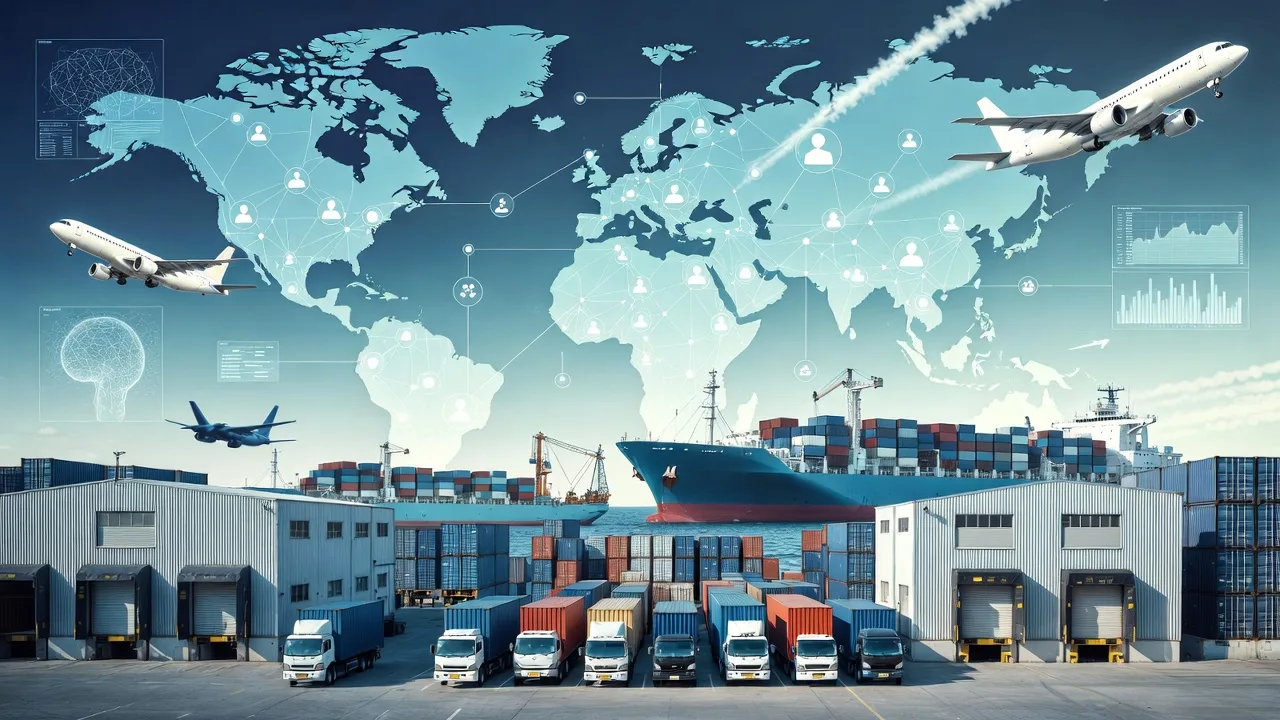
AI Logistics Software: How AI Agents Are Reshaping Enterprise Logistics and Transportation
AI Logistics Software: How AI Agents Are Reshaping Enterprise Logistics and Transportation
AI logistics software uses machine learning, predictive analytics, and automation to optimize supply chain operations, featuring AI-driven route planning, real-time tracking, and demand forecasting. It increases operational efficiency, reduces costs, minimizes empty miles, and enhances customer satisfaction by analyzing vast datasets to make data-driven decisions. Leading solutions include LogiNext, Locus, and Raft and Nunar.
Key Applications of AI in Logistics
- Intelligent Route Optimization: Algorithms evaluate thousands of routes in seconds, considering traffic, weather, and delivery windows to reduce delivery times by up to 25%.
- Demand Forecasting: AI analyzes historical data, market trends, and seasonality to predict inventory needs and optimize resource allocation.
- Real-Time Visibility & Tracking: Systems provide end-to-end tracking of goods, enabling automated alerts and proactive management of disruptions.
- Last-Mile Delivery Optimization: AI helps streamline the final stage of delivery, enhancing efficiency and customer experience.
- Warehouse and Inventory Management: AI improves inventory accuracy and automates warehouse workflows.
Top AI Logistics Software Providers (2026)
- Nunar: Focuses on last-mile delivery and route optimization.
- Locus: Provides AI-based dispatch and route planning.
- Raft: Specializes in AI for freight forwarding and logistics.
- Optym: Offers Load AI to optimize trucking operations.
- Other Key Players: Blue Yonder, FourKites, Project44, SAP IBP, Oracle SCM Cloud.
Benefits of Adopting AI in Logistics
- Cost Reduction: Minimizes fuel consumption, labor costs, and operational inefficiencies.
- Enhanced Decision-Making: Real-time data and predictive analytics improve, rather than just react to, operational challenges.
- Improved Sustainability: Optimized routing reduces the carbon footprint.
- Higher Customer Satisfaction: Faster, more accurate, and transparent delivery experiences.
What Is AI Logistics Software?
AI logistics software is an enterprise platform that uses artificial intelligence models and autonomous AI agents to plan, execute, monitor, and optimize logistics operations in real time.
Unlike traditional logistics systems that rely on fixed rules and manual overrides, AI logistics software learns from historical and live data across the supply chain and adapts decisions dynamically.
At the core are AI agents. These agents act like specialized digital operators, each responsible for a specific domain such as route optimization, capacity planning, exception handling, or freight cost control. They collaborate across systems to achieve business goals such as lower cost per shipment, higher on-time delivery, and improved asset utilization.
Why Traditional Logistics Software Is No Longer Enough?
Most enterprise logistics stacks were built for stability, not volatility. They assume predictable demand, stable routes, and human-driven coordination. That assumption no longer holds.
Key limitations of legacy logistics systems
Limitation Business Impact Static routing rules Routes fail during congestion, weather, or demand spikes Manual exception handling Delays cascade before humans can intervene Siloed systems (TMS, WMS, ERP) Decisions are made with partial data Post-event reporting Problems are discovered too late to fix Heavy dependence on planners Scaling requires more people, not better systems AI logistics software replaces reactive workflows with proactive, automated decision making.
How AI Agents Work in Logistics and Transportation?
AI agents are not chatbots or dashboards. They are autonomous software entities designed to operate continuously inside enterprise logistics environments.
Each agent has four core capabilities:
- Perception: Ingests real-time data from GPS, telematics, TMS, WMS, IoT sensors, carrier feeds, and external sources like weather or traffic.
- Reasoning: Uses machine learning and optimization models to evaluate tradeoffs.
- Action: Executes decisions through APIs, system triggers, or human-in-the-loop workflows.
- Learning: Improves decisions over time based on outcomes.
Common AI agents in enterprise logistics
AI Agent What It Does Route Optimization Agent Continuously recalculates optimal routes based on live conditions Capacity Planning Agent Balances fleet, carrier, and warehouse capacity Exception Management Agent Detects disruptions and resolves them before escalation Freight Cost Optimization Agent Negotiates rates and selects cost-efficient carriers ETA Prediction Agent Improves delivery accuracy using real-time signals Compliance Agent Ensures regulatory and SLA adherence automatically These agents work together, sharing context and decisions across the logistics network.
Core Capabilities of Enterprise AI Logistics Software
AI logistics software is not a single feature. It is a platform with multiple integrated capabilities designed to operate at scale.
End-to-end visibility with intelligence
Visibility alone is table stakes. AI systems convert visibility into foresight.
Capability Outcome Predictive ETAs Fewer missed deliveries Risk scoring for shipments Early intervention Real-time anomaly detection Reduced downtime Network-wide performance insights Faster strategic decisions Autonomous transportation planning
AI agents continuously optimize transportation plans instead of relying on static schedules.
Function AI-Driven Advantage Route planning Adapts to traffic, weather, fuel costs Load consolidation Improves vehicle utilization Mode selection Balances speed, cost, and reliability Re-routing Happens automatically, not manually Intelligent warehouse coordination
AI logistics software connects transportation and warehousing into a single decision layer.
Area AI Impact Dock scheduling Reduced congestion Labor forecasting Better shift planning Inventory positioning Faster fulfillment Cross-dock optimization Lower handling costs AI Logistics Software Architecture for Enterprises
Enterprise buyers need to understand architecture, not just features.
A modern AI logistics platform typically includes:
Architecture layers
Layer Role Data ingestion layer Connects TMS, WMS, ERP, telematics, IoT AI model layer Forecasting, optimization, anomaly detection AI agent orchestration Coordinates agent decisions Integration layer APIs to enterprise systems Governance layer Security, audit, explainability This modular design allows enterprises to adopt AI incrementally without ripping out existing systems.
Business Outcomes Enterprises Actually Care About
AI logistics software is justified by outcomes, not algorithms.
Measurable enterprise impact
Metric Typical Improvement Transportation cost per mile 8–15% reduction On-time delivery rate 5–12% improvement Fleet utilization 10–20% increase Manual planning effort 30–50% reduction Exception resolution time Cut by more than half These gains compound over time as AI agents continue learning.
Use Cases Across Logistics and Transportation
AI logistics software applies across multiple enterprise scenarios.
Transportation networks
- Dynamic route optimization across thousands of vehicles
- Automated carrier selection and tendering
- Predictive maintenance scheduling using telematics data
Third-party logistics providers
- Multi-client network optimization
- AI-driven SLA enforcement
- Intelligent capacity allocation during demand spikes
Manufacturing and distribution
- Inbound material flow optimization
- Just-in-time delivery alignment
- Cross-facility inventory balancing
How to Evaluate AI Logistics Software Vendors?
Not all platforms marketed as “AI-powered” deliver real autonomy.
Buyer evaluation checklist
Question Why It Matters Does it use AI agents or just analytics? Agents enable action, not just insight Can it operate in real time? Logistics decisions are time-critical How well does it integrate with existing systems? Rip-and-replace increases risk Is decision logic explainable? Enterprises need auditability Can humans override or collaborate with agents? Control and trust are essential Avoid platforms that only add AI labels to legacy workflows.
Security, Governance, and Trust
Enterprise logistics data is sensitive and regulated.
AI logistics software must include:
- Role-based access control
- Data encryption in transit and at rest
- Full audit logs of AI decisions
- Configurable decision boundaries for agents
- Human-in-the-loop controls where required
AI agents should operate within defined guardrails, not as black boxes.
The Future of Logistics Is Agent-Driven
Logistics is moving from human-centric coordination to AI-augmented execution.
In the next phase:
- AI agents will negotiate capacity and pricing autonomously.
- Networks will self-balance inventory and transportation.
- Exception handling will become predictive rather than reactive.
- Planners will shift from execution to strategy.
Enterprises that adopt AI logistics software early will gain structural cost and service advantages that are difficult to replicate later.
People Also Ask
How is AI logistics software different from a traditional TMS?A traditional TMS executes predefined workflows and reports outcomes. AI logistics software continuously learns, predicts, and takes action through AI agents. It adapts decisions in real time instead of waiting for human intervention.
Can AI logistics software work with existing ERP and WMS systems?Yes. Enterprise-grade platforms are designed to integrate with existing systems through APIs and data connectors. They augment current infrastructure rather than replace it.
Are AI agents fully autonomous or supervised?Most enterprise deployments use a hybrid model. AI agents operate autonomously within defined rules, with human oversight and override options for critical decisions.
How long does it take to see ROI from AI logistics software?Many enterprises see measurable improvements within three to six months, especially in transportation cost reduction and service reliability. ROI increases as models learn from more operational data.
Is AI logistics software secure for regulated industries?Yes, when built correctly. Enterprise platforms include security controls, audit trails, and governance layers to meet regulatory and compliance requirements.
-

Artificial Intelligence in Transportation: Smarter Mobility
Artificial Intelligence in Transportation: Revolutionizing Logistics with Intelligent Agents
Artificial Intelligence (AI) is transforming transportation from a reactive sector into a proactive, data-driven ecosystem. By integrating machine learning, computer vision, and predictive analytics, it is addressing modern urban challenges like congestion, safety, and carbon emissions.
Core Applications
- Autonomous Vehicles (AVs): AI is the “brain” behind self-driving technology, using sensor fusion (LiDAR, radar, cameras) to navigate, detect obstacles, and make real-time driving decisions. Leading examples include Waymo’s robotaxis and Tesla’s Full Self-Driving system.
- Intelligent Traffic Management: Systems like Surtrac in Pittsburgh use AI to adjust traffic signal timings in real-time based on actual vehicle flow, reducing travel times by up to 25% and emissions by 20%.
- Predictive Maintenance: AI monitors vehicle health (engines, brakes, tires) via IoT sensors to predict failures before they happen. This is widely used by railway operators like SNCF and Hitachi to reduce downtime and maintenance costs.
- Logistics & Fleet Optimization: AI helps companies like UPS and FedEx optimize delivery routes by analyzing traffic, weather, and historical data, which can reduce fuel costs by up to 30%.
- Public Transit Optimization: AI models predict passenger demand to adjust bus and train schedules dynamically, ensuring resources are deployed where they are needed most, as seen in San Antonio’s transit planning.
Key Benefits
- Safety: AI helps mitigate human error, responsible for 94% of accidents, through Advanced Driver Assistance Systems (ADAS) that provide collision warnings and driver fatigue monitoring.
- Sustainability: By optimizing routes and reducing idling in traffic, AI helps lower fuel consumption and greenhouse gas emissions.
- User Experience: AI-powered chatbots and real-time tracking apps provide passengers with accurate ETAs and personalized travel recommendations.
Challenges & Future Trends
- Challenges: Widespread adoption is hindered by high implementation costs, regulatory uncertainty regarding liability, and significant cybersecurity risks.
- Regulatory Shift: Governments are beginning to use AI themselves; for instance, the U.S. Department of Transportation is exploring AI to draft federal safety regulations faster.
- Emerging Trends: Future focus areas include Urban Air Mobility (UAM) with drone taxis, autonomous last-mile delivery robots, and fully integrated “Smart City” mobility networks.
How AI Is Transforming Transportation?
AI in transportation leverages machine learning (ML), computer vision, natural language processing (NLP), and predictive analytics to automate processes, forecast demand, and enhance decision-making. Enterprise logistics operations are particularly well-suited to AI because of the massive volumes of data generated by fleets, warehouses, supply chains, and customer interactions.
Key areas where AI is transforming transportation include:
- Predictive Maintenance – AI predicts vehicle and equipment failures before they occur, reducing downtime and maintenance costs.
- Route Optimization – Machine learning algorithms determine the most efficient delivery routes, accounting for traffic, weather, fuel costs, and real-time conditions.
- Inventory and Fleet Management – AI agents analyze demand patterns and optimize the allocation of vehicles, drivers, and warehouse resources.
- Supply Chain Visibility – AI integrates data across multiple partners, providing real-time tracking and predictive alerts for delays or disruptions.
- Autonomous Vehicles and Drones – AI powers self-driving trucks, delivery robots, and drones, reducing human dependency and improving safety.
Benefits of AI in Transportation for Enterprises
AI delivers measurable value for enterprises by improving efficiency, reducing costs, and enhancing service quality. The table below summarizes the key benefits:
Benefit Impact on Transportation & Logistics Cost Reduction AI optimizes fuel consumption, route planning, and maintenance schedules, cutting operational costs. Improved Delivery Speed Dynamic routing and predictive analytics ensure timely deliveries. Reduced Downtime Predictive maintenance minimizes vehicle and equipment failures. Enhanced Safety AI monitors driver behavior, identifies hazards, and reduces accidents. Real-Time Visibility AI-powered dashboards provide live tracking of shipments, vehicles, and inventory. Decision Automation AI agents handle routine operational decisions, freeing human teams for strategic tasks. Customer Satisfaction Accurate ETAs and proactive disruption alerts improve end-customer experience. AI Agents in Logistics and Transportation
AI agents are specialized software systems that can perceive their environment, make autonomous decisions, and act to achieve goals. In transportation, AI agents can handle tasks ranging from route optimization to fleet scheduling.
Key Applications of AI Agents
Application Function Enterprise Benefit Autonomous Fleet Management Monitors vehicle location, condition, and performance. Reduces human errors, improves resource allocation. Dynamic Route Planning Uses traffic, weather, and historical data to determine optimal routes in real time. Cuts fuel costs, reduces delivery times. Predictive Maintenance Agents Analyzes sensor and operational data to predict vehicle or equipment failures. Minimizes downtime and costly emergency repairs. AI-Powered Load Optimization Calculates the best load distribution for cargo to maximize efficiency and safety. Increases payload efficiency and reduces transportation cost per unit. Demand Forecasting Agents Predicts shipment volumes, peak times, and inventory needs. Optimizes fleet scheduling and inventory stocking. Intelligent Customer Support Uses NLP to answer queries, schedule deliveries, and provide real-time updates. Enhances customer experience and reduces support workload. Real-World Enterprise Use Cases
AI is already making tangible impacts across global transportation enterprises:
- Smart Fleet Management: Companies like DHL and UPS use AI to monitor vehicle performance, predict maintenance needs, and dynamically allocate resources across thousands of vehicles.
- Predictive Route Optimization: AI agents analyze traffic patterns, weather forecasts, and historical delivery data to optimize routes for FedEx and Amazon logistics fleets.
- Autonomous Delivery Systems: Leading logistics firms are piloting AI-powered drones and self-driving trucks to automate last-mile deliveries, reducing reliance on human labor.
- Intelligent Supply Chain Visibility: AI consolidates data from suppliers, warehouses, and distributors to provide end-to-end supply chain visibility for enterprises like Maersk and DB Schenker.
Implementing AI in Transportation: A Step-by-Step Enterprise Approach
Adopting AI agents in transportation requires strategic planning and integration into existing enterprise systems. Here’s a framework for enterprise adoption:
Step Action Key Considerations 1. Identify Business Goals Define the transportation challenges AI will address (e.g., cost reduction, speed). Align AI use cases with measurable KPIs. 2. Data Collection & Integration Aggregate vehicle, fleet, warehouse, and supply chain data. Ensure data quality, accessibility, and compliance with regulations. 3. Choose AI Technology Select AI models, ML algorithms, and agent frameworks suitable for enterprise logistics. Evaluate scalability, reliability, and integration capabilities. 4. Pilot & Test Deploy AI agents in controlled environments. Monitor performance, accuracy, and ROI before enterprise-wide rollout. 5. Scale & Optimize Expand AI agents across fleets, warehouses, and routes. Continuously refine models with real-time data. 6. Training & Change Management Educate employees on AI capabilities and workflows. Ensure smooth adoption and minimize resistance. Challenges in AI Adoption for Transportation
While AI offers significant benefits, enterprises must address several challenges:
- Data Complexity: Transportation generates heterogeneous data from sensors, vehicles, GPS, and ERP systems. Ensuring clean, structured, and interoperable data is critical.
- Integration with Legacy Systems: Many enterprises rely on older fleet management or ERP systems that may not natively support AI.
- Regulatory Compliance: Autonomous systems, data privacy, and safety regulations vary by country and industry.
- Talent Gap: Skilled AI engineers and data scientists are essential for developing, deploying, and maintaining AI agents.
- Scalability & ROI: Pilot programs often succeed, but scaling AI across thousands of vehicles and multiple geographies requires careful planning and monitoring.
Measuring the Impact of AI in Transportation
Enterprises need clear KPIs to evaluate AI agent performance. Typical metrics include:
Metric Purpose On-Time Delivery Rate Measures improvement in delivery punctuality. Fuel Efficiency Evaluates cost savings from optimized routes. Vehicle Downtime Tracks reduction in maintenance-related downtime. Operational Costs Monitors savings achieved from AI-driven optimization. Customer Satisfaction Score Assesses improvements in client experience and support response times. Predictive Accuracy Evaluates AI models’ success in forecasting maintenance, demand, or routes. Future Trends in AI-Driven Transportation
The transportation industry is poised for even deeper AI integration. Key trends include:
- Autonomous Trucking Expansion: Full-scale adoption of AI-driven long-haul trucks.
- AI-Powered Urban Mobility: Smart traffic management and AI-enabled public transport planning.
- Integration with IoT Devices: Real-time sensor data feeding AI models for predictive insights.
- Sustainability Optimization: AI agents minimizing carbon footprint through energy-efficient routes and electric fleet management.
- Cognitive Supply Chains: Self-learning AI agents autonomously adjusting supply chains to global events and demand fluctuations.
People Also Ask
How do AI agents differ from traditional fleet management software?Traditional software tracks and reports data, whereas AI agents analyze patterns, predict outcomes, and make autonomous decisions, reducing manual intervention.
Can AI agents be integrated with existing logistics systems?Yes. AI agents are designed to work alongside ERP, TMS, and WMS systems via APIs and data connectors, enabling a phased, enterprise-friendly deployment.
What types of transportation data do AI agents require?AI agents leverage GPS, telematics, fuel consumption, maintenance logs, weather data, traffic updates, inventory levels, and shipment histories.
What ROI can enterprises expect from AI in transportation?ROI varies, but enterprises typically see reductions in operational costs (10–30%), improved on-time deliveries (15–25%), and decreased maintenance downtime (20–40%).
Are AI-powered autonomous vehicles safe for enterprise deployment?AI vehicles undergo extensive testing and monitoring. While not completely eliminating risk, AI improves safety by reducing human error and optimizing real-time responses to hazards.
-
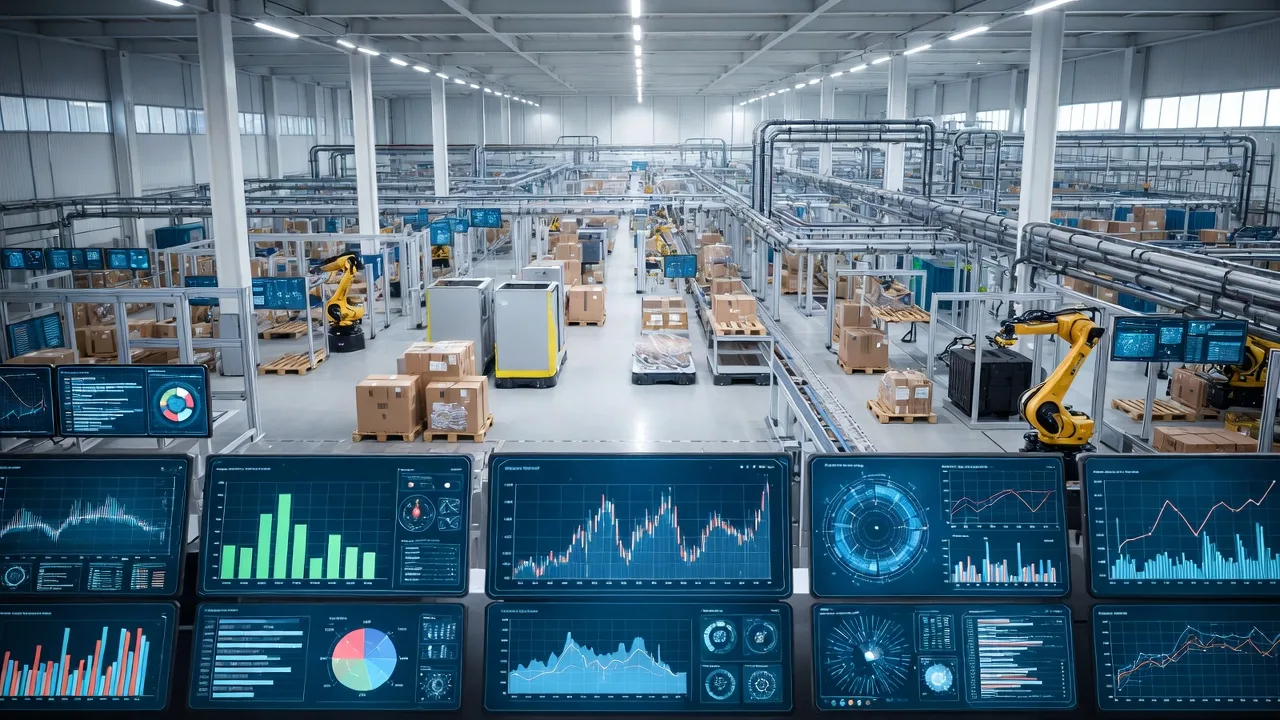
AI in Supply Chain Optimization: Transforming Logistics with Intelligent Agents
AI in Supply Chain Optimization: Transforming Logistics with Intelligent Agents
In today’s fast-paced global economy, supply chains are becoming increasingly complex. Enterprises face pressure to reduce operational costs, enhance efficiency, and respond dynamically to disruptions. Traditional supply chain management methods struggle to cope with these demands. Enter Artificial Intelligence (AI), especially AI agents designed for logistics and transportation, which is revolutionizing the way supply chains operate.
This blog explores how AI optimizes supply chain operations, enhances decision-making, and provides measurable ROI for enterprise logistics operations.
Why AI is Critical for Modern Supply Chains?
Supply chains today are multidimensional networks involving suppliers, manufacturers, warehouses, transportation partners, and end customers. Manual decision-making or rule-based systems cannot keep up with the speed and volume of modern operations. AI, particularly autonomous agents, offers predictive, adaptive, and automated solutions to these challenges.
Challenge Traditional Approach AI-Enabled Approach Forecasting demand Historical data and spreadsheets AI agents predict demand using real-time market data, seasonal trends, and customer behavior patterns Inventory management Fixed reorder points Dynamic, AI-driven inventory optimization reduces overstock and stockouts Route planning Static routing software AI agents optimize delivery routes in real-time considering traffic, weather, and fuel consumption Supplier risk management Manual monitoring AI continuously analyzes supplier reliability, geopolitical risks, and supply disruptions Customer service Reactive issue resolution AI agents proactively flag delays, reroute shipments, and communicate with customers How AI Agents Transform Logistics and Transportation?
AI agents are autonomous software systems that can make decisions, learn from data, and interact with other systems. In logistics, they act as intelligent coordinators that optimize multiple supply chain layers simultaneously.
1. Predictive Demand Planning
AI agents analyze historical sales, market trends, social media sentiment, and external factors like weather or geopolitical events to forecast demand with higher accuracy. Unlike traditional systems, which rely on static forecasts, AI agents continuously learn from real-time data and adjust predictions.
Impact on Enterprises:
- Reduced inventory carrying costs by 15–30%
- Improved fulfillment rates
- Minimized production overstock
Metric Traditional Forecasting AI Agent Forecasting Forecast Accuracy 70–75% 90–95% Stockouts Frequent Rare Inventory Holding Costs High Optimized 2. Dynamic Route Optimization
Transportation efficiency is crucial for logistics-heavy enterprises. AI agents optimize delivery routes based on traffic patterns, weather, vehicle load, and delivery priorities. This goes beyond static GPS routing by dynamically rerouting shipments to save time and fuel.
Example:
A regional distribution network implemented AI-driven routing for last-mile delivery. Result:- 18% reduction in fuel consumption
- 22% improvement in on-time delivery
- Real-time adaptation to traffic incidents
Route Optimization Parameter Manual Route Planning AI Agent Optimization Traffic Consideration Limited Real-time dynamic Fuel Efficiency Not considered Calculated for all deliveries Delivery Prioritization Manual Automated prioritization based on SLA and urgency Scenario Simulation None Multiple scenarios simulated before execution 3. Intelligent Inventory Management
AI agents integrate data from warehouses, suppliers, and demand forecasts to maintain optimal inventory levels. They determine precise reorder points, automate procurement, and balance stock across multiple locations to prevent both overstocking and stockouts.
Enterprise Benefits:
- Reduced waste due to spoilage or obsolescence
- Optimized warehouse space utilization
- Cost savings through automated procurement
Inventory Metric Traditional AI-Optimized Overstock Rate 20–30% 5–10% Stockout Rate 10–15% 1–3% Warehouse Utilization Low High, dynamic allocation 4. Supplier Risk Assessment and Management
Supply chains are vulnerable to supplier failures, geopolitical disruptions, and financial instability. AI agents continuously analyze supplier performance, financial health, and geopolitical risks. They can recommend alternative suppliers proactively and adjust procurement strategies.
Key Advantages:
- Reduced disruption risks
- Proactive contingency planning
- Enhanced compliance monitoring
Supplier Risk Traditional AI Agent Approach Risk Identification Reactive, slow Proactive, continuous Alternative Supplier Selection Manual Automated recommendation Compliance Monitoring Periodic audits Real-time tracking 5. Autonomous Monitoring and Issue Resolution
AI agents in logistics do more than plan—they act in real time to resolve issues. They monitor shipments, predict delays, and automatically trigger corrective actions like rerouting cargo or notifying customers. This reduces operational bottlenecks and improves customer satisfaction.
Impact on Operations:
- Reduced manual intervention by 40–50%
- Faster resolution of delays or disruptions
- Enhanced transparency for stakeholders
Implementing AI in Supply Chain: Enterprise Considerations
Adopting AI in logistics and transportation requires careful planning:
- Data Integration: AI agents require access to ERP systems, warehouse management systems, transportation management systems, and IoT sensors.
- Scalability: AI models must handle enterprise-scale data across multiple geographies.
- Explainability: Stakeholders need clear insights into AI decisions to trust the system.
- Continuous Learning: AI agents improve over time with real-world feedback.
- Regulatory Compliance: Ensure AI deployment aligns with logistics, environmental, and data protection regulations.
Implementation Stage Key Actions Assessment Map current supply chain processes and pain points Data Preparation Collect and normalize historical and real-time data Pilot Deployment Implement AI agents on select routes, warehouses, or suppliers Full Rollout Scale AI agent solutions enterprise-wide Continuous Improvement Monitor performance and retrain models for accuracy ROI of AI in Supply Chain Optimization
Investing in AI agents delivers tangible enterprise value:
Benefit Typical ROI Impact Transportation cost reduction 10–20% Inventory cost reduction 15–30% Service-level improvement 20–40% Forecasting accuracy Up to 95% Operational efficiency 25–35% Enterprises that implement AI-driven logistics report faster order fulfillment, lower operational costs, and improved decision-making agility. These advantages translate into stronger competitiveness and customer loyalty.
Case Study: AI Agents in Action
Company: A leading regional logistics provider
Problem: Frequent delivery delays and high fuel costs
Solution: Deployed AI agents for predictive routing and dynamic inventory management
Results:- On-time delivery improved by 22%
- Fuel consumption reduced by 18%
- Customer complaints dropped by 35%
- Inventory holding costs optimized across three regional warehouses
This demonstrates the transformative power of AI when applied strategically in logistics operations.
People Also Ask
How do AI agents differ from traditional supply chain software?AI agents are autonomous, learn from real-time data, and adapt decisions dynamically, whereas traditional software relies on static rules and manual intervention.
Can AI predict supply chain disruptions?Yes. By analyzing supplier performance, weather data, geopolitical events, and market trends, AI agents can proactively flag potential disruptions.
What types of data are required for AI in supply chain optimization?Key data includes sales history, inventory levels, supplier performance, transportation logs, IoT sensor data, and market intelligence.
How quickly can enterprises see ROI after implementing AI agents?ROI can often be observed within 6–12 months, depending on the scope of deployment and quality of data integration.
Is AI suitable for all logistics operations?While AI benefits most complex, data-rich supply chains, small-scale operations with limited data may see lower immediate impact but can still benefit from predictive insights.
-
Machine Learning Supply Chain Platform: Transforming Logistics and Transportation
Machine Learning Supply Chain Platform: Transforming Logistics and Transportation
Machine learning (ML) supply chain platforms integrate advanced algorithms into logistics, procurement, and inventory management to move from reactive to predictive operations. By 2026, over 75% of commercial supply chain solutions are expected to feature embedded AI/ML capabilities.
Leading ML Supply Chain Platforms
- Kinaxis Maestro: Uses a “concurrency” technique to evaluate multiple planning scenarios simultaneously, improving agility in volatile markets.
- Blue Yonder: An end-to-end platform spanning retail to warehouse operations, running over 25 billion AI predictions daily to manage global uncertainty.
- AWS Supply Chain: A cloud-based application that unifies data from existing ERPs to provide ML-powered demand planning and actionable insights.
- SAP Integrated Business Planning (IBP): Features embedded ML for demand sensing and automated inventory replenishment.
- Oracle SCM Cloud: Integrates manufacturing, logistics, and procurement into a single suite that uses ML to identify supplier risks and optimize fulfilment.
- Microsoft Dynamics 365 SCM: Leverages Azure ML and “Copilot” to predict equipment failures and suggest optimal inventory placements.
Core ML Capabilities
- Demand Forecasting: Analyzes historical sales, weather, and social media trends to reduce forecasting errors by up to 50%.
- Inventory Optimization: Dynamically adjusts safety stock and reorder points to reduce excess inventory by up to 30%.
- Route Optimization: Factors in real-time traffic and weather to find the fastest delivery sequences, reducing fuel costs and emissions.
- Predictive Maintenance: Uses sensor data to flag equipment stress before failure, reducing unplanned downtime by 30–50%.
- Supplier Risk Management: Automatically monitors supplier performance and geopolitical data to anticipate potential disruptions.
Implementation Considerations
- Data Readiness: Models require high-quality, standardized data from across the ecosystem to function effectively.
- Scalability: Organizations often start with a “walk before you run” approach, applying ML to a single function (e.g., demand sensing) before scaling.
- Human-Machine Symbiosis: Successful platforms allow human planners to focus on strategic work while ML handles repetitive tasks and complex computations.
What is a Machine Learning Supply Chain Platform?
A machine learning supply chain platform is a software system that leverages AI algorithms to analyze complex supply chain data, detect patterns, forecast demand, and automate decision-making across logistics operations. Unlike traditional rule-based systems, ML platforms continuously learn from historical and real-time data, enabling predictive and prescriptive insights.
Core capabilities include:
Capability Description Enterprise Benefit Demand Forecasting Predict customer demand based on historical trends and external factors Reduces stockouts and overstocking, improving cash flow Route Optimization Analyze traffic, fuel, weather, and vehicle data to plan efficient routes Cuts transportation costs and improves delivery times Inventory Management Predict inventory needs and automate replenishment Minimizes storage costs and prevents stock discrepancies Supplier Risk Analysis Evaluate supplier performance and potential disruptions Reduces supply chain interruptions and mitigates risk Predictive Maintenance Monitor vehicles and equipment for early failure signs Decreases downtime and maintenance costs How AI Agents Revolutionize Logistics and Transportation?
AI agents are autonomous programs that can perform complex tasks without constant human oversight. In logistics and transportation, these agents analyze vast datasets, spanning orders, shipments, fleet status, and external variables, and make decisions or recommendations in real-time.
Key Use Cases
Use Case How AI Agents Add Value Example Dynamic Route Planning Recalculates delivery routes in real-time to avoid delays Trucks avoid traffic congestion and reduce fuel use Autonomous Inventory Allocation Determines optimal stock placement across warehouses Reduces transit time for high-demand products Freight Matching Automatically pairs available shipments with the most efficient carriers Cuts costs and improves on-time delivery Predictive Delay Alerts Identifies risks such as weather or port congestion Allows proactive rerouting or rescheduling Automated Documentation Generates and validates shipping documents and customs forms Minimizes human errors and accelerates cross-border shipments Enterprises benefit from faster decision-making, lower operational costs, improved accuracy, and enhanced customer satisfaction when AI agents are fully integrated.
The Strategic Advantages for Enterprise Buyers
Investing in a machine learning supply chain platform is not just about technology—it’s a strategic transformation. Here’s how enterprises stand to gain:
- End-to-End Visibility: ML platforms consolidate data from suppliers, warehouses, fleets, and customers, providing a single source of truth. Enterprises can track every shipment in real-time and predict bottlenecks before they occur.
- Cost Reduction: Automated route optimization, predictive maintenance, and inventory planning reduce fuel, labor, and storage costs while minimizing losses due to delays or stockouts.
- Improved Customer Experience: Predictive delivery windows and proactive notifications increase reliability and satisfaction, strengthening brand loyalty.
- Scalable Operations: AI agents can scale with business growth, managing larger datasets and more complex networks without proportional increases in staff.
- Risk Mitigation: ML models detect anomalies in supply chains, anticipate supplier failures, and suggest contingency plans before disruptions escalate.
Building a Machine Learning Supply Chain Platform
A robust ML supply chain platform for logistics and transportation typically includes several integrated layers:
Layer Function Example Technologies Data Ingestion Collects structured and unstructured data from ERP, IoT sensors, GPS, weather APIs, and shipment records Apache Kafka, AWS Kinesis Data Processing Cleans, aggregates, and transforms raw data for analysis Apache Spark, Databricks Machine Learning Engine Runs predictive, prescriptive, and reinforcement learning models TensorFlow, PyTorch, scikit-learn AI Agents Autonomous decision-making and task execution across logistics workflows Custom Python/R AI agents, Robotic Process Automation (RPA) Visualization & Reporting Provides dashboards, KPIs, and actionable insights for decision-makers Power BI, Tableau, Looker Integration Layer Connects platform to ERP, TMS, WMS, and external partner systems REST APIs, GraphQL, SAP, Oracle The integration of these layers ensures that enterprise supply chains are agile, responsive, and intelligent.
Real-World Impact: Logistics Optimization
Let’s illustrate the potential ROI of a machine learning supply chain platform with a hypothetical mid-sized logistics company:
Metric Before ML Platform After ML Platform Improvement Average Delivery Time 48 hours 36 hours 25% faster Fuel Consumption 100,000 liters/month 80,000 liters/month 20% reduction Inventory Carrying Cost $2M $1.6M 20% savings On-Time Delivery Rate 85% 95% 10% increase Maintenance Downtime 200 hours/month 120 hours/month 40% reduction These improvements are achievable because AI agents optimize every step of the logistics and transportation workflow, from predictive route planning to automated inventory management.
Implementing AI Agents: Best Practices
Enterprise adoption of AI agents requires a strategic approach:
- Start with High-Impact Use Cases: Begin with areas where AI can deliver measurable cost savings or efficiency improvements. Route optimization, predictive maintenance, and demand forecasting are ideal starting points.
- Invest in Data Quality: ML models are only as good as the data they analyze. Ensure data is accurate, complete, and continuously updated.
- Integrate with Existing Systems: AI agents should complement existing TMS, ERP, and WMS systems to avoid operational disruption.
- Monitor and Iterate: Regularly evaluate AI agent performance and retrain models as market conditions, routes, and customer behaviors change.
- Ensure Human Oversight: While AI agents can operate autonomously, enterprise risk management requires human oversight for critical decisions.
Key Metrics to Measure Success
To evaluate the effectiveness of an ML supply chain platform, enterprises should monitor:
Metric Description Target Outcome On-Time Delivery Rate Percentage of orders delivered on schedule ≥95% Transportation Cost per Mile Total transport expenses divided by distance Decreasing trend Inventory Turnover Number of times inventory is sold and replaced Increasing trend Predictive Accuracy Accuracy of AI demand forecasts ≥90% Maintenance Incidents Number of unplanned maintenance events Decreasing trend Consistently tracking these KPIs ensures AI agents deliver tangible business value.
Future of AI in Supply Chain Management
The next generation of ML supply chain platforms will go beyond predictive analytics, leveraging autonomous supply networks where AI agents interact with each other, suppliers, and carriers in real-time. Features likely to become standard include:
- Self-Healing Networks: Automatic rerouting and inventory redistribution during disruptions.
- Collaborative AI Agents: Multiple agents coordinating across supply chain nodes for optimal efficiency.
- Sustainability Optimization: AI models calculating the lowest carbon footprint options for transportation and storage.
- End-to-End Transparency: Full traceability from supplier raw material to customer delivery.
Enterprises investing in these platforms today position themselves as leaders in operational efficiency, customer satisfaction, and sustainability.
People Also Ask
How do machine learning platforms integrate with existing ERP and TMS systems?ML platforms typically use API-based integration, connecting to ERP, TMS, and WMS systems. Data is ingested in real-time, allowing AI agents to analyze operations and provide actionable recommendations without disrupting existing workflows.
Can AI agents replace human decision-making in logistics?Not entirely. AI agents excel at repetitive, data-intensive tasks like route planning or inventory allocation. Critical decisions, risk management, and exception handling still require human oversight. The goal is augmentation, not replacement.
What is the typical ROI for implementing an ML supply chain platform?ROI varies by enterprise size and scope, but studies show 20–30% reduction in transportation and inventory costs, 10–15% improvement in delivery times, and 5–10% increase in customer satisfaction metrics within the first year.
How do AI agents handle unpredictable events like weather or strikes?AI agents continuously monitor internal and external data sources. When anomalies occur, agents propose optimized alternatives, such as rerouting shipments, adjusting inventory allocation, or rescheduling deliveries to minimize impact.
What are the prerequisites for adopting a machine learning supply chain platform?Enterprises need high-quality historical and real-time data, integration with core operational systems, a clear use-case roadmap, and a governance framework to monitor AI agent performance. Organizational readiness and executive sponsorship are critical for success.
-
Cloud Supply Chain Management: Transforming Enterprise Logistics with AI Agents
Cloud Supply Chain Management: Transforming Enterprise Logistics with AI Agents
Cloud Supply Chain Management (SCM) uses cloud computing to automate and integrate the network of resources, processes, and data that move goods from sourcing to final delivery. Unlike traditional siloed models, it treats the supply chain as a connected network with real-time visibility.
Core Benefits
- Real-Time Visibility: Enables 24/7 tracking of inventory and assets across global locations.
- Agility and Scalability: Allows businesses to quickly adjust capacity and pivot sourcing in response to market disruptions.
- Data-Driven Decision Making: Uses AI and predictive analytics for accurate demand forecasting and risk mitigation.
- Enhanced Collaboration: Automates communication with vendors and partners through shared digital platforms.
Key Technologies
- Artificial Intelligence (AI) & Machine Learning: Power “self-healing” supply chains that anticipate disruptions and automate procurement.
- Internet of Things (IoT): Connected sensors monitor machinery for predictive maintenance and track shipments in transit.
- Blockchain: Creates immutable records for end-to-end product traceability and trust.
- Digital Twins: Human-AI systems that visualize physical supply chains to run stress tests and simulations.
Leading Platforms
- Oracle Fusion Cloud SCM: An integrated suite covering planning, procurement, manufacturing, and logistics.
- SAP S/4HANA Cloud: Focuses on demand-driven networks and real-time operational response.
- AWS Supply Chain: A cloud-native application that aggregates data into a unified lake to generate risk insights.
- Microsoft Azure: Provides the underlying IoT and machine learning infrastructure for custom SCM solutions.
Implementation Challenges
- Data Security: Protecting sensitive partner data from cyber threats.
- Change Management: Overcoming resistance to new technology and training staff for digital workflows.
- Vendor Lock-in: The difficulty of migrating data between different cloud SCM providers.
What is Cloud Supply Chain Management?
Cloud supply chain management refers to managing supply chain processes using cloud-based platforms. Unlike on-premise systems, cloud SCM leverages centralized, internet-accessible platforms to monitor, coordinate, and optimize all aspects of the supply chain—from sourcing raw materials to delivering finished products.
Key Advantages for Enterprises:
Feature Traditional SCM Cloud SCM Accessibility Limited to on-premise systems Accessible anywhere with internet Scalability Hardware-dependent Instantly scalable based on demand Integration Often siloed Connects ERP, CRM, WMS, TMS seamlessly Data Insights Basic reporting Real-time analytics and predictive insights Cost High upfront investment Subscription-based, lower TCO Why Enterprises Are Moving to Cloud SCM?
Global enterprises face supply chain pressures such as volatile demand, regulatory compliance, and sustainability requirements.
Cloud SCM offers several strategic advantages:
- Real-Time Visibility: Enterprises gain a 360° view of inventory, shipments, and supplier performance.
- Agility in Operations: Cloud platforms allow rapid scaling and adaptation to market changes.
- Cost Efficiency: Subscription-based cloud solutions reduce upfront capital expenditure and lower operational costs.
- Data-Driven Decisions: AI-powered analytics identify trends, forecast demand, and optimize logistics routes.
- Collaboration: Suppliers, distributors, and internal teams can seamlessly collaborate on a unified platform.
AI Agents: The Game Changer in Logistics and Transportation
The integration of AI agents into cloud SCM is transforming enterprise logistics. AI agents are autonomous software tools that can analyze massive datasets, make real-time decisions, and communicate across systems without constant human intervention.
Key Functions of AI Agents in Logistics:
Function AI Agent Capabilities Enterprise Impact Route Optimization Analyze traffic, weather, and shipment priorities Reduce delivery time by 15–25%, cut fuel costs Inventory Forecasting Predict stock shortages or surplus using historical and real-time data Minimize stockouts and overstock situations Predictive Maintenance Monitor vehicles and equipment, schedule proactive maintenance Reduce downtime by up to 30% Supplier Risk Assessment Evaluate supplier reliability and detect disruptions Improve supplier selection and contingency planning Automated Documentation Generate invoices, customs paperwork, and compliance reports Reduce manual errors and administrative overhead By deploying AI agents, enterprises can move from reactive decision-making to proactive supply chain management.
How Cloud SCM Integrates with Enterprise Systems?
Cloud SCM platforms do not operate in isolation. For enterprises, seamless integration with existing systems is crucial.
Key integration points include:
- ERP (Enterprise Resource Planning): Synchronizes procurement, finance, and production planning.
- WMS (Warehouse Management Systems): Monitors stock levels, automates order picking, and tracks shipments.
- TMS (Transportation Management Systems): Optimizes routing, shipment tracking, and carrier management.
- CRM (Customer Relationship Management): Connects customer demand insights to supply chain planning.
Integration Table:
System Role in Cloud SCM AI Agent Contribution ERP Centralized enterprise data Detect supply-demand mismatches, suggest corrective actions WMS Warehouse efficiency Automate inventory replenishment and storage optimization TMS Transportation logistics Optimize routes, predict delays, manage carriers CRM Customer demand insights Forecast order volumes, prioritize high-value shipments AI-Driven Logistics Use Cases
Enterprises adopting cloud SCM with AI agents experience tangible benefits across logistics and transportation:
- Dynamic Route Planning: AI agents analyze real-time traffic and weather conditions to reroute shipments, reducing transit times.
- Demand-Driven Inventory: Predictive algorithms ensure warehouses maintain optimal stock levels, preventing overstock or stockouts.
- Supplier Network Optimization: AI identifies underperforming suppliers, suggesting alternatives before disruptions occur.
- Autonomous Fleet Management: Vehicles are monitored for fuel efficiency, maintenance schedules, and driver behavior, improving operational efficiency.
- Compliance Automation: Customs, safety, and environmental compliance are automatically documented, reducing regulatory risk.
Case Study Snapshot:
Enterprise Challenge AI Solution Result Global Electronics Manufacturer Frequent delivery delays AI-driven dynamic routing 20% faster deliveries, 18% lower fuel cost Large Retail Chain Overstock in multiple warehouses AI-powered demand forecasting Reduced excess inventory by 22% Logistics Provider Maintenance downtime Predictive maintenance AI agents Downtime cut by 30% Measuring the ROI of Cloud SCM with AI Agents
Enterprises demand measurable results. ROI is often visible in three areas:
- Operational Efficiency: Reduced manual interventions, faster decision-making, and optimized routing cut costs.
- Customer Satisfaction: Faster deliveries and fewer stockouts improve customer loyalty.
- Scalability: Cloud infrastructure supports seasonal demand spikes without costly hardware investments.
ROI Metrics Table:
Metric Before Cloud SCM After AI-Driven Cloud SCM On-time delivery 78% 95% Inventory carrying cost 12% of revenue 8% of revenue Transportation cost $10M/year $7.5M/year Administrative hours 10,000/year 6,000/year Implementing Cloud SCM with AI Agents
Enterprises can follow a structured approach to adopt cloud SCM:
- Assess Current Supply Chain: Identify bottlenecks, data silos, and inefficiencies.
- Select Cloud SCM Platform: Choose a platform with AI agent capabilities and strong integration support.
- Define KPIs: Establish measurable goals like delivery speed, inventory reduction, and cost savings.
- Integrate Existing Systems: Connect ERP, WMS, TMS, and CRM for unified operations.
- Deploy AI Agents: Automate tasks like route optimization, forecasting, and predictive maintenance.
- Monitor and Optimize: Continuously refine AI algorithms based on real-time data and enterprise objectives.
Cloud SCM Security and Compliance
Data security and regulatory compliance are non-negotiable for enterprise adoption. Cloud SCM platforms offer:
- End-to-End Encryption: Protects sensitive supply chain data during transmission and storage.
- Access Controls: Role-based permissions prevent unauthorized access.
- Audit Trails: Maintain logs for compliance reporting and traceability.
- Disaster Recovery: Cloud platforms ensure business continuity in case of system failures.
AI agents also enhance compliance by automatically checking shipments, documentation, and supplier adherence to regulations.
Future Trends in Cloud Supply Chain Management
The future of cloud SCM is intertwined with AI-driven innovations:
- Autonomous Supply Chains: Self-managing logistics networks with minimal human intervention.
- AI-Powered Procurement: Dynamic supplier selection based on performance, risk, and cost.
- Predictive Sustainability: Algorithms optimize routes and inventory to minimize carbon footprints.
- Blockchain Integration: Secure, transparent, and immutable supply chain records.
- Real-Time AI Collaboration: Agents communicating across global networks for instantaneous decision-making.
Enterprises embracing these trends will gain a competitive advantage in operational efficiency, resilience, and sustainability.
People Also Ask
How do AI agents improve logistics efficiency?AI agents analyze real-time data on routes, traffic, and demand, making autonomous decisions to optimize deliveries, reduce fuel costs, and prevent delays.
Can cloud SCM integrate with our existing ERP and WMS systems?Yes. Modern cloud SCM platforms are designed to seamlessly integrate with ERP, WMS, TMS, and CRM systems for unified supply chain management.
What are the security risks of cloud SCM?Risks include data breaches and unauthorized access. These are mitigated by encryption, role-based access controls, audit trails, and compliance with global security standards.
How quickly can enterprises see ROI after implementing AI-driven cloud SCM?Many enterprises observe improvements in efficiency and cost reduction within 6–12 months, depending on the complexity of their supply chain.
Are AI agents suitable for all types of supply chains?AI agents are versatile and can be adapted for manufacturing, retail, logistics providers, and large-scale distribution networks, but customization may be required for highly specialized processes.
-
Generative AI in Supply Chain: Transforming Logistics and Transportation
Generative AI in Supply Chain: Transforming Logistics and Transportation
The supply chain is no stranger to complexity. Globalization, fluctuating demand, labor shortages, and transportation disruptions have made logistics more challenging than ever. Amid these pressures, generative AI has emerged as a transformative tool for enterprises, offering predictive insights, process automation, and real-time decision-making. For logistics and transportation companies, AI agents are not just a technology trend—they are becoming essential to maintaining efficiency, reducing costs, and enhancing service levels.
In this article, we explore how generative AI is reshaping supply chain operations, the practical applications of AI agents, and the tangible benefits for enterprise buyers.
What Is Generative AI in Supply Chain?
Generative AI refers to artificial intelligence systems that can create new content, scenarios, or predictions based on existing data. Unlike traditional AI, which relies on predefined rules or classification models, generative AI can analyze vast datasets and generate solutions or forecasts in real time.
In supply chain and logistics, generative AI can:
- Predict demand fluctuations.
- Optimize delivery routes.
- Automate inventory planning.
- Generate actionable insights for procurement, warehousing, and transportation management.
For enterprise buyers, this means AI can move from advisory analytics to proactive, autonomous operations.
Key Use Cases for Generative AI in Logistics and Transportation
Enterprise logistics operations are intricate, involving multiple nodes, stakeholders, and data streams. Generative AI can integrate into these processes through AI agents designed for transportation and logistics.
1. Demand Forecasting and Inventory Optimization
Generative AI models can analyze historical sales, weather patterns, economic indicators, and even social media trends to predict product demand. Unlike traditional forecasting, generative AI can simulate multiple “what-if” scenarios and generate inventory plans that minimize stockouts and excess inventory.
Table 1: Inventory Optimization with AI Agents
Metric Traditional Forecasting Generative AI Forecasting Forecast Horizon 1–3 months 6–12 months, dynamic updates Scenario Simulation Limited Thousands of scenarios simultaneously Response to Demand Shifts Reactive Proactive, real-time adjustments Stockout Risk Reduction 10–15% 30–50% Inventory Holding Costs High Reduced by 15–25% Enterprise Impact: Companies can reduce working capital tied up in inventory while ensuring timely product availability, directly impacting customer satisfaction.
2. Route Planning and Transportation Efficiency
Generative AI agents can optimize logistics routes by accounting for traffic patterns, weather conditions, vehicle availability, and fuel costs. AI agents continuously learn from new data, recalibrating routes in real time to avoid delays and minimize costs.
Table 2: AI-Driven Route Optimization
Feature Conventional Route Planning Generative AI Agent Route Adjustments Manual, periodic Dynamic, real-time Fuel Efficiency Baseline 10–20% improvement Delivery Timeliness Standard KPI tracking Predictive adherence Multi-Stop Optimization Limited Complex multi-stop optimization Driver Scheduling Manual Automated, adaptive Enterprise Impact: Transportation fleets operate more efficiently, reducing fuel expenses and carbon emissions while improving on-time delivery rates.
3. Risk Management and Disruption Mitigation
Generative AI agents can simulate potential disruptions in the supply chain, from port delays to supplier failures, and suggest contingency plans. By generating multiple scenarios, enterprises can proactively manage risks instead of reacting to crises.
Table 3: Supply Chain Risk Management
Risk Factor Traditional Management Generative AI Approach Supplier Disruptions Reactive, manual updates Scenario simulations, predictive alerts Weather Events Post-event adjustment Preemptive rerouting and inventory allocation Regulatory Changes Periodic review Continuous monitoring and impact simulation Labor Shortages Manual workforce planning AI-driven workforce scheduling and task redistribution Financial Impact Estimations Predictive cost modeling Enterprise Impact: AI agents enable proactive decision-making, reducing downtime and financial loss during unexpected disruptions.
4. Autonomous Documentation and Compliance
AI agents can automatically generate shipping manifests, customs documents, and compliance reports. Generative AI reduces human error, accelerates document preparation, and ensures adherence to international regulations.
Example Applications:
- Automated bill of lading generation.
- Customs declaration preparation with real-time regulatory updates.
- Audit-ready transportation and delivery logs.
Enterprise Impact: Streamlined compliance processes reduce operational friction, accelerate shipment processing, and minimize penalties.
5. Customer Experience Enhancement
Generative AI agents can improve communication with clients and partners by providing accurate, real-time updates on shipments, delivery windows, and potential delays. Predictive insights allow customer service teams to proactively address issues.
Table 4: Customer Experience Metrics
Metric Conventional Approach Generative AI Agent Delivery Notifications Basic, manual updates Personalized, predictive updates Issue Resolution Time Hours to days Minutes to hours Shipment Visibility Limited tracking End-to-end, real-time Client Engagement Reactive Proactive and automated Enterprise Impact: Enhanced transparency builds trust with clients and improves retention rates, especially for high-volume enterprise accounts.
How Enterprises Can Deploy Generative AI Agents?
Adopting generative AI requires careful planning, data integration, and iterative deployment. Enterprises should consider the following steps:
- Data Consolidation: Aggregate data from suppliers, transporters, warehouses, and sales channels.
- AI Model Selection: Choose models capable of generating predictions, simulations, and scenario analyses.
- Integration with Existing Systems: Ensure AI agents integrate with ERP, WMS, and TMS platforms.
- Pilot Projects: Start with focused pilots, e.g., route optimization or demand forecasting, before scaling.
- Continuous Learning: Enable AI agents to learn from outcomes, improving predictions and decision-making over time.
Table 5: Enterprise AI Deployment Roadmap
Stage Key Activities Expected Outcome Data Preparation Clean, consolidate, and validate datasets Accurate model inputs Pilot Implementation Deploy AI in one domain (e.g., routing) Measurable KPIs, low-risk learning Full-Scale Deployment Integrate AI across logistics functions Optimized operations, cost reduction Continuous Optimization Monitor performance, retrain models Adaptive, evolving AI agents Challenges and Considerations
While generative AI offers significant advantages, enterprise buyers must be aware of potential challenges:
- Data Quality: AI models are only as good as the data fed into them. Incomplete or inconsistent data reduces effectiveness.
- Change Management: Integrating AI into existing workflows requires staff training and process adaptation.
- Cost and ROI: Initial investment can be high. Enterprises need clear KPIs to measure returns.
- Ethics and Transparency: Generative AI outputs should be explainable to avoid errors in automated decision-making.
Future of Generative AI in Supply Chain
The next wave of innovation will see AI agents not only optimizing existing operations but autonomously managing supply chain networks. Examples include:
- Self-optimizing warehouses where AI agents coordinate picking, packing, and shipping.
- Predictive maintenance for fleets and equipment based on AI-generated forecasts.
- Real-time global supply chain orchestration, adjusting shipments and procurement dynamically.
Enterprises that adopt generative AI early will gain a competitive advantage by increasing resilience, reducing costs, and delivering superior customer experiences.
People Also Ask
How does generative AI differ from traditional AI in supply chain management?Traditional AI relies on predefined rules and historical data patterns. Generative AI can create new scenarios, simulate outcomes, and provide proactive recommendations, allowing for predictive and autonomous decision-making.
Can generative AI integrate with existing ERP, WMS, and TMS systems?Yes. Modern AI agents are designed to integrate with enterprise software via APIs or middleware, ensuring seamless data flow and synchronized operations.
What are the primary benefits of using AI agents in logistics?Benefits include reduced delivery times, lower operational costs, optimized inventory, proactive risk management, improved customer experience, and enhanced decision-making.
How secure is generative AI in supply chain operations?AI agents adhere to enterprise-grade security standards. Data access is controlled, and sensitive information can be anonymized. Enterprises should implement strict cybersecurity protocols alongside AI deployment.
What is the ROI timeline for implementing generative AI in logistics?While initial investment may vary, enterprises often see measurable ROI within 6–12 months through cost savings in transportation, inventory, and operational efficiency.