Author: hmsadmin

  • Logistics Loss Prevention

    Logistics Loss Prevention

    AI Agents for Logistics Loss Prevention: A 2025 Strategic Guide

    logistics loss prevention​

    In 2023, cargo theft in the United States increased by 57% in the second quarter alone, with organized retail crime rings costing businesses billions . As a co-founder of an AI agent development company that has deployed over 500 production systems, I’ve seen logistics leaders face a brutal reality: traditional security methods are no longer enough against today’s sophisticated threats. The industry is at a tipping point, and artificial intelligence is becoming the new standard for protection.

    AI agents are transforming loss prevention from a reactive cost center into a proactive, intelligent shield. These systems don’t just record incidents they prevent them through autonomous decision-making and real-time intervention. For U.S. logistics companies facing unprecedented shrinkage rates, the question is no longer whether to adopt AI, but how quickly they can implement effective solutions.

    AI agents reduce logistics loss by autonomously monitoring operations in real-time, predicting threats before they materialize, and coordinating prevention across your entire supply chain.

    Why Traditional Loss Prevention Is Failing Modern Logistics

    The landscape of logistics loss has evolved dramatically, yet many companies still rely on methods developed for a different era. Manual security patrols, basic CCTV systems, and periodic inventory counts cannot keep pace with sophisticated theft networks that use technology to exploit vulnerabilities.

    The Rising Cost of Logistics Shrink

    Recent industry data reveals an alarming acceleration in supply chain theft:

    • Organized retail crime (ORC) has increased by 38% year-over-year, with sophisticated groups targeting logistics hubs and distribution centers 
    • Cargo theft now costs the U.S. logistics industry billies of dollars annually, creating unsustainable profit erosion 
    • Internal shrinkage accounts for approximately 28.5% of total losses, often going undetected for months without proper monitoring systems 

    The most significant limitation of traditional approaches is their post-incident focus. By the time a theft appears on camera or is discovered during inventory counts, the damage is already done. Recovery rates for stolen logistics cargo remain dismally low, making prevention the only viable strategy.

    How AI Agents Are Revolutionizing Logistics Security

    AI agents represent a fundamental shift from passive recording to active prevention. These intelligent systems can process multiple data streams simultaneously, identify subtle patterns indicative of theft, and initiate responses without human intervention.

    Core Capabilities of Modern AI Security Agents

    Unlike basic automation tools, advanced AI agents possess specific capabilities that make them exceptionally effective for logistics environments:

    • Autonomous decision-making within predefined parameters allows for immediate response to suspicious activities
    • Cross-system integration enables coordination between access control, inventory management, and surveillance systems
    • Continuous learning from new data ensures improving detection accuracy over time
    • Predictive analytics identify vulnerability patterns before exploitation occurs

    At Nunar, our deployment data shows that logistics facilities implementing comprehensive AI agent systems typically reduce shrinkage incidents by 20-35% within the first quarter of operation . The most significant improvements come from addressing both external and internal threats simultaneously through integrated monitoring.

    5 Critical AI Agent Applications for Logistics Loss Prevention

    Based on our experience deploying over 500 production AI agents across the U.S. logistics sector, we’ve identified the highest-impact applications for loss prevention.

    1. Intelligent Video Surveillance and Threat Detection

    Modern AI video platforms transform passive cameras into proactive security assets. Systems like Spot AI and Rhombus Systems use computer vision to detect suspicious behaviors in real-time, not just record them for later review .

    Key capabilities:

    • Object recognition identifies unauthorized personnel in restricted areas
    • Behavioral analysis detects loitering, unusual movement patterns, or rushed activities
    • Cross-camera tracking follows individuals or assets across facility blind spots
    • Real-time alerts notify security teams of potential threats as they unfold

    One of our Midwest logistics clients reduced warehouse theft by 47% after implementing an AI video system that detected patterns of collusion between night shift workers and external accomplices—patterns that had gone unnoticed by human guards for months.

    2. Predictive Inventory Monitoring and Discrepancy Detection

    AI agents bring unprecedented accuracy to inventory management by continuously reconciling digital records with physical assets. Through RFID integration and computer vision, these systems flag discrepancies as they occur, not during quarterly audits .

    Implementation benefits:

    • Real-time pallet tracking monitors merchandise movement throughout facilities
    • Automated cycle counting eliminates human error in inventory management
    • Shrinkage pattern identification pinpoints where losses occur in the supply chain
    • Supplier fraud detection identifies systematic short-loading or quality issues

    The financial impact is substantial, companies using AI-powered inventory management report 30% reductions in excess inventory and 15% improvements in inventory accuracy .

    3. Automated Access Control and Personnel Monitoring

    Sophisticated AI platforms like Oosto specialize in vision-based access control that prevents unauthorized entry while monitoring internal personnel for suspicious behaviors .

    Critical security functions:

    • Tailgating detection identifies unauthorized individuals following employees through secure doors
    • Area restriction enforcement alerts when employees access zones outside their clearance
    • Time and motion analysis detects unusual work patterns that may indicate theft activity
    • Integration with HR systems correlates behavior with scheduling and role data

    For one of our pharmaceutical logistics clients, implementing AI access control eliminated $380,000 in annual losses from warehouse theft by identifying a sophisticated internal theft ring that exploited shift change vulnerabilities.

    4. Supply Chain Fraud Prevention and Vendor Monitoring

    AI agents extend protection beyond your facilities to your entire supply chain. These systems analyze transaction patterns, delivery documentation, and vendor behaviors to detect systematic fraud.

    Detection capabilities:

    • Invoice fraud identification flags duplicate or inflated billing
    • Delivery verification confirms shipment quantities and qualities match orders
    • Vendor performance analytics identify consistent discrepancies with specific partners
    • Contract compliance monitoring ensures adherence to security protocols

    5. Predictive Risk Assessment and Route Security

    For transportation security, AI agents analyze multiple data points to assess route risks and recommend safer alternatives. By integrating weather data, crime statistics, and traffic patterns, these systems protect assets in transit.

    Security applications:

    • Route risk scoring evaluates planned routes based on theft hotspots and time of day
    • Dynamic rerouting adjusts paths in response to emerging threats or incidents
    • Driver behavior monitoring detects unusual stops or deviations from planned routes
    • Cargo integrity verification uses sensors to monitor trailer breaches during transit

    Companies using AI-based fleet management solutions report up to 20% reductions in transport costs from optimized routing and significantly lower incidence of in-transit theft .

    Implementation Framework: Integrating AI Agents Into Your Logistics Security

    Successful AI agent deployment requires more than technology installation, it demands strategic integration with your operations and personnel.

    Phase 1: Assessment and Planning

    Begin with a comprehensive vulnerability assessment that identifies your most significant loss areas. Prioritize AI solutions that address your specific pain points rather than implementing generic systems.

    Phase 2: Technology Integration

    Select AI platforms that integrate with your existing infrastructure. Camera-agnostic systems like Spot AI work with most ONVIF-compliant IP cameras, protecting previous investments while adding intelligent capabilities .

    Phase 3: Staff Training and Change Management

    Prepare your team for working alongside AI systems. Frontline employees often provide the contextual understanding that enhances AI effectiveness when proper reporting channels are established.

    Phase 4: Continuous Optimization

    AI systems improve with more data. Establish feedback loops where security incidents refine detection algorithms, creating increasingly effective prevention over time.

    Comparing Leading AI Security Platforms for Logistics

    PlatformKey StrengthsIdeal Use CasesIntegration Capabilities
    Spot AICamera-agnostic, rapid deployment, intuitive dashboardMulti-site operations, companies needing quick implementationWorks with most IP cameras, open API for warehouse systems
    Arvist AIQuality control focus, PPE monitoring, damage detection3PLs, warehouses with high-value fragile goodsAPI-first design, connects with WMS and ERP platforms
    Hanwha Vision4K barcode cameras, package tracing accuracyLarge parcel operations, e-commerce distributionDeep WMS integration, specialized for parcel environments
    5S ControlStaff behavior analytics, pick-path optimizationFacilities with high internal shrinkage concernsIP camera compatibility, custom algorithm development
    OostoVision-based access control, behavioral analysisHigh-security facilities, pharmaceutical logisticsIntegration with Genetec Security Center, robust API

    Measuring ROI: The Tangible Value of AI Loss Prevention

    Beyond theft reduction, AI security systems deliver measurable operational benefits that justify their investment:

    • Reduced insurance premiums through demonstrably better security protocols
    • Lower security personnel costs through more efficient monitoring and allocation
    • Decreased inventory carrying costs through improved accuracy and turnover
    • Enhanced operational efficiency by identifying process bottlenecks

    Our client data shows typical ROI timeframes of 6-9 months for comprehensive AI agent deployments, with ongoing annual savings representing 150-200% of implementation costs.

    Future Trends: The Evolving Landscape of AI Logistics Security

    The capabilities of AI security agents continue to advance rapidly. Emerging trends that will shape the future of logistics loss prevention include:

    • Multi-agent systems where specialized AI agents coordinate across departments
    • Predictive analytics that forecast theft attempts based on external data patterns
    • Blockchain integration creating immutable audit trails for high-value shipments
    • Collaborative security networks where retailers securely share threat intelligence 

    Building Your AI-Powered Loss Prevention Strategy

    The transformation from reactive security to intelligent prevention is no longer a luxury, it’s a competitive necessity for U.S. logistics companies. With theft rates rising and traditional methods proving inadequate, AI agents offer the only scalable path to comprehensive protection.

    The most successful implementations share a common approach: they start with specific pain points, expand based on demonstrated ROI, and focus on integration rather than replacement of existing systems. Whether you begin with intelligent video surveillance or a comprehensive agent network, the important step is beginning your AI security journey now.

    At Nunar, we’ve guided hundreds of logistics companies through this transition. The organizations that move fastest to adopt AI-powered loss prevention aren’t just protecting their assets, they’re gaining significant competitive advantage in an increasingly challenging market.


  • Integrated Couriers and Logistics Tracking​

    Integrated Couriers and Logistics Tracking​

    Integrated Courier and Logistics Tracking and Operations in the US

    integrated couriers and logistics tracking​

    For US courier and logistics companies, operational efficiency is not just a goal, it’s a matter of survival. The final leg of delivery, the “last mile,” now soaks up over 50% of the total shipping cost, while traffic congestion alone drains the industry of billions annually. In this high-stakes environment, traditional methods are breaking down. Static route plans crumble in the face of unexpected delays, and manual tracking is no longer enough for customers who expect real-time, precise updates.

    At Nunar, we’ve developed and deployed over 500 AI agents into production for our US-based logistics clients. We’ve seen firsthand how this technology moves beyond simple automation to create intelligent, self-correcting supply chains. This isn’t about replacing human decision-making; it’s about augmenting it with autonomous systems that perceive, reason, and act to optimize every facet of courier operations, from the warehouse shelf to the customer’s doorstep.

    AI agents are autonomous systems that transform integrated logistics tracking from a passive monitoring tool into a proactive, self-optimizing operational core.

    The Invisible Crisis in US Logistics and the AI Agent Solution

    The US logistics network is under unprecedented strain. A persistent labor shortage, with hundreds of thousands of roles difficult to fill, compounds the issues of rising customer expectations and inefficient last-mile deliveries . Relying on dispatchers to manually reroute drivers based on a flood of text messages and phone calls is a recipe for delays and customer dissatisfaction.

    This is where AI agents create a fundamental shift. Unlike traditional software that follows pre-programmed rules, AI agents are goal-oriented. They are given an objective, such as “minimize fuel consumption while ensuring all priority packages are delivered by 3 PM” and they dynamically execute on that goal by analyzing real-time data. They are the intelligent, automated co-pilots for your entire logistics operation.

    How AI Agents Differ from Traditional Automation

    • Traditional Automation: Follows a static “if X, then Y” logic. For example, “if a delivery is 30 minutes late, send an apology email.” It is reactive and limited to predefined scenarios.
    • AI Agents: Operate with a goal-seeking mindset. They continuously analyze real-time traffic, vehicle health, driver availability, and new order requests. They can proactively reroute a driver, predict a potential delay before it happens, and automatically notify the customer with a revised ETA, all without human intervention . This is the difference between a system that tells you a problem occurred and a system that solves the problem before you’re even aware of it.

    Core Applications: Deploying AI Agents in Your Courier Operations

    For US courier services, integrating AI agents is not a monolithic project but a targeted deployment of intelligence across critical pain points.

    1. Dynamic Route and Last-Mile Optimization

    While basic GPS provides a route, AI agents provide continuously evolving, optimized paths. They process a massive stream of data, including live traffic conditions, weather forecasts, road closures, and even the specific parking difficulty at each delivery location to calculate the most efficient sequence of stops.

    • Real-World Impact: UPS’s ORION system, a precursor to modern AI agents, processes 30,000 route optimizations per minute, saving the company 38 million liters of fuel annually . Modern AI agents build on this, allowing for dynamic rerouting the moment a new pickup order comes in, ensuring it is incorporated into the existing route with minimal disruption.

    2. Proactive and Predictive Fleet Maintenance

    Unplanned vehicle downtime is a major cost and service disruptor. AI agents for predictive maintenance analyze real-time sensor data from fleet vehicles, monitoring engine health, brake wear, and battery voltage, to identify anomalies that precede a failure.

    • Real-World Impact: FedEx’s predictive maintenance platform analyzes data from 35,000 vehicles, reducing fleet maintenance costs by $11 million annually and cutting vehicle downtime by 22% . An AI agent doesn’t just flag a potential issue; it can automatically schedule a maintenance appointment at the nearest service center during the vehicle’s least busy period and assign a replacement vehicle to its route, ensuring zero disruption to deliveries.

    3. Intelligent Warehouse and Inventory Management

    Inside the warehouse, AI agents coordinate a symphony of automation. They power autonomous mobile robots that bring shelves to pickers, optimize inventory placement based on real-time demand patterns, and manage stock levels to prevent both overstocking and stockouts.

    • Real-World Impact: Amazon’s deployment of over 520,000 AI-powered robots has cut fulfillment costs by 20% while increasing processing speed by 40% . For a US courier company’s warehouse, this means an AI agent can ensure that items for a time-sensitive, high-priority delivery are positioned in the most accessible location the night before, shaving critical minutes off the fulfillment process.

    4. Enhanced Customer Experience and Communication

    In an era of instant gratification, customers demand transparency. AI agents transform the delivery experience from a black box into a transparent, interactive process. They provide customers with accurate, real-time ETAs and proactive delay notifications.

    Furthermore, they empower customer service with immediate insights. When a customer calls with a question, the AI agent can provide the service representative with the package’s exact location, a predicted time of arrival with high confidence, and the root cause of any delay, turning a frustrating inquiry into a trusted interaction.

    The Tangible Benefits: Why US Couriers Are Investing in AI Agents

    The deployment of AI agents translates into a powerful and rapid return on investment, directly addressing the core financial and operational pressures facing US logistics firms.

    Table: Measurable Benefits of AI Agents in Logistics

    BenefitHow AI Agents DeliverImpact for US Couriers
    Cost ReductionOptimizes routes to save fuel, enables predictive maintenance to avoid costly repairs, and automates manual processes.Companies using AI have reduced logistics costs by 15% and cut fleet maintenance expenses by 25% .
    Delivery EfficiencyDynamically reroutes vehicles in real-time to avoid traffic and clusters deliveries for maximum speed.Leaders like DHL have reduced delivery times by 25% and improved on-time delivery rates significantly .
    Operational ResilienceContinuously monitors for disruptions (weather, traffic) and automatically executes contingency plans.AI-driven systems can reduce delay incidents by 35% and slash response time to disruptions from days to hours .
    Customer SatisfactionProvides hyper-accurate, real-time ETAs and proactive communication, building trust and transparency.Improved tracking and reliability lead to higher customer retention and satisfaction scores.
    SustainabilityCreates fuel-efficient routes, reduces empty miles, and optimizes load capacity for fewer trips.AI-optimized routing can reduce a company’s carbon footprint by up to 7% .

    A Comparative Look at AI in Logistics

    The market offers various approaches to AI, from generic platforms to specialized agents. For a logistics company, the choice is critical.

    Table: AI Implementation Approaches for Logistics

    ApproachDescriptionIdeal Use Case
    AI Agents (e.g., Nunar)Goal-seeking, autonomous systems that perceive, reason, and act within a defined scope (e.g., fleet management).Mission-critical operations requiring real-time, automated decision-making and dynamic optimization.
    Rule-Based AutomationFollows pre-programmed “if-then” rules with no capacity for learning or adapting to new situations.Simple, repetitive back-office tasks with no variables, such as automated invoice generation for on-time deliveries.
    Generic AI ChatbotsPrimarily designed for customer communication and answering FAQs based on a knowledge base.Handling basic customer queries about shipping zones or service interruptions, freeing up human agents.
    Descriptive Analytics DashboardsProvides historical data visualization (e.g., “What were our on-time rates last month?”).Post-mortem analysis and long-term strategic planning by management.

    Implementing AI Agents: A Strategic Blueprint for US Couriers

    At Nunar, we’ve refined the deployment of AI agents into a streamlined, collaborative process designed to deliver value quickly and build long-term capability.

    1. Discovery and Goal-Setting: We begin by identifying your most costly operational pain points. Is it last-mile delivery efficiency, warehouse picking accuracy, or unplanned fleet downtime? We define clear, measurable Key Performance Indicators (KPIs) for success.
    2. Data Infrastructure Audit and Integration: AI agents are powered by data. We assess your existing data streams from telematics, Warehouse Management Systems (WMS), and Transportation Management Systems (TMS) to ensure a clean, real-time data feed.
    3. Pilot Program Deployment: Instead of a risky, company-wide overhaul, we deploy a single AI agent in a controlled environment—for example, managing the routes for 10 vehicles in a specific metropolitan area. This allows us to validate performance, calibrate the system, and demonstrate tangible ROI.
    4. Scaling and Full Integration: Following a successful pilot, we scale the AI agent’s capabilities across your entire operation, integrating it seamlessly with your existing software ecosystem and expanding its responsibilities.
    5. Continuous Learning and Optimization: Our work doesn’t end at deployment. The AI agent continuously learns from new data and outcomes, and our team works with yours to refine its goals and expand its capabilities to unlock new efficiencies.

    The Future is Autonomous

    The trajectory is clear: the future of US logistics will be defined by autonomous, intelligent decision-making. The transition from traditional, reactive tracking systems to a network of proactive, goal-seeking AI agents is no longer a futuristic concept, it is a present-day competitive necessity. Companies that embrace this shift will not only survive the current market pressures but will define the new standard for efficiency, reliability, and customer service in the logistics industry.

    At Nunar, with over 500 AI agents successfully deployed, we have the experience and expertise to guide your company through this transformation. We don’t just provide technology; we provide a partnership to build a more resilient, profitable, and intelligent logistics operation.

  • Dry Run Logistics

    Dry Run Logistics

    Mastering Dry Run Logistics with AI Agents: A Practical Guide for US Companies

    dry run logistics

    In 2025, nearly 80% of businesses experienced significant supply chain disruptions, with manual testing processes accounting for weeks of delays in logistics implementations. At Nunar, we’ve deployed over 500 AI agents into production for US logistics companies, and we’ve found that dry run logistics simulations powered by AI agents prevent costly errors by testing processes in risk-free digital environments before real-world execution. This approach has helped our clients reduce implementation errors by up to 99% and cut testing time from weeks to hours.

    The Critical Gap in Traditional Logistics Testing

    Traditional logistics operations typically rely on one of two testing approaches: full-scale physical rehearsals that consume massive resources, or limited software testing that fails to capture real-world complexity. Both methods leave dangerous gaps where costly errors can slip through.

    Consider the typical logistics technology implementation:

    • Manual process mapping requires weeks of documentation review
    • Physical testing disrupts actual operations and carries financial risk
    • Limited scenario coverage misses edge cases that cause real-world failures
    • Slow feedback loops delay implementation by weeks or months

    The consequences aren’t theoretical. We’ve seen US logistics companies face six-figure demurrage fees due to customs documentation errors, suffer cargo damage from untested handling procedures, and experience complete system breakdowns when new workflows encountered unanticipated conditions.

    What Are Dry Run Logistics?

    Dry run logistics involves simulating entire logistics processes in a digital environment that mirrors real-world operations without executing physical actions or financial transactions. Think of it as a flight simulator for your supply chain.

    Traditional dry runs required manual scenario planning and partial testing, but AI-powered dry runs create dynamic, intelligent simulations that automatically adapt to changing conditions and explore edge cases humans might miss.

    The AI Agent Difference in Logistics Testing

    AI agents transform dry run logistics from a static checklist exercise into an intelligent, adaptive testing environment. Unlike traditional automation that follows predetermined paths, AI agents observe, plan, act, and refine their approach based on simulation results .

    Here’s how the agentic approach differs:

    Traditional Automation for Testing

    • Follows predetermined “if X then Y” rules
    • Tests only expected scenarios
    • Requires manual analysis of results
    • Limited to software component testing

    AI Agent-Driven Dry Runs

    • Adapts testing strategies based on findings
    • Automatically explores edge cases and exceptions
    • Provides intelligent analysis and recommendations
    • Tests integrated systems and physical workflows

    How AI Agents Implement Dry Run Logistics

    AI agents bring sophisticated simulation capabilities to logistics testing through three core capabilities: autonomous scenario generation, real-time system integration, and intelligent validation.

    Dynamic Scenario Generation and Testing

    AI agents don’t just run predefined test cases—they create them. By analyzing historical data, system parameters, and potential disruption patterns, agents automatically generate thousands of realistic scenarios to stress-test your logistics operations.

    Real-world application: For a Midwest automotive parts distributor, we deployed AI agents that generated and tested 1,400+ shipping scenarios in under 48 hours. The simulation revealed a critical bottleneck in cross-docking operations that would have caused 72-hour delays during peak season. Identifying this during testing allowed for procedural adjustments that prevented an estimated $380,000 in potential losses.

    Multi-System Integration Testing

    Modern logistics operations depend on complex integrations between Transportation Management Systems (TMS), Warehouse Management Systems (WMS), Enterprise Resource Planning (ERP), and carrier APIs. AI agents excel at testing these integrations holistically.

    Implementation approach: AI agents simulate transactions across your entire technology stack, identifying integration gaps, data mapping errors, and workflow discontinuities before they impact real operations . This is particularly valuable when onboarding new carriers or implementing system upgrades.

    Intelligent Validation and Compliance Checking

    Beyond functional testing, AI agents validate processes against regulatory requirements, customer service level agreements (SLAs), and operational constraints.

    Customs documentation example: Our agents for an international freight forwarder simulate the complete customs clearance process, validating documentation against 180+ regulatory requirements across 12 countries. The system caught 47 potential compliance issues in the first month alone, preventing average clearance delays of 3-5 days per shipment.

    Implementing AI-Powered Dry Run Logistics: Nunar’s 5-Step Framework

    Based on our experience deploying hundreds of AI agents for US logistics companies, we’ve developed a proven framework for implementation.

    Step 1: Process Audit and Bottleneck Identification

    Start by identifying the 1-2 logistics processes causing 80% of your problems. Common starting points include customs documentation, carrier onboarding, and complex multi-modal shipments .

    Key actions:

    • Map the complete “as-is” process from end to end
    • Quantify current error rates, processing times, and failure costs
    • Identify dependencies and handoff points between systems and teams
    • Select one high-volume, error-prone process for your initial pilot

    Step 2: Define Dry Run Objectives and Success Metrics

    Establish clear, measurable goals for your dry run implementation. Specific metrics transform dry runs from theoretical exercises to business-critical tools.

    Sample KPIs for customs documentation dry runs:

    • Reduce processing time from 20 minutes to under 2 minutes per document
    • Achieve 99.5% data extraction and validation accuracy
    • Eliminate customs clearance delays due to documentation errors
    • Free up 15+ hours per week for logistics teams 

    Step 3: Prepare Data Sources and Integration Points

    AI agents require access to your systems and data to conduct meaningful simulations. This doesn’t require replacing existing TMS, WMS, or ERP systems—agents integrate with your current technology stack .

    Essential data connections:

    • Historical shipment data and documentation
    • Current inventory levels and order pipelines
    • Carrier rate sheets and service specifications
    • Regulatory databases and compliance requirements
    • Real-time traffic, weather, and disruption feeds

    Step 4: Configure and Train Your Dry Run Agents

    This is where dry run logistics moves from concept to reality. Configure agents with specific testing goals and validate their performance against known scenarios.

    Configuration example: “When simulating a new LTL carrier onboarding, test these 15 integration points, validate against these 15 service requirements, and identify any deviations from our standard operating procedures.”

    The human-in-the-loop training model is crucial here. Your logistics experts review the agent’s findings, correct misunderstandings, and refine testing approaches. With each iteration, the agent becomes more accurate and valuable .

    Step 5: Scale and Expand Dry Run Capabilities

    Once your initial dry run pilot demonstrates value, systematically expand coverage to additional logistics processes. The goal is building a comprehensive testing environment that covers your entire logistics operation.

    Progressive expansion path:

    1. Start with document-heavy processes (customs, billing, compliance)
    2. Expand to carrier and lane onboarding
    3. Add complex operational scenarios (peak season, disruption response)
    4. Implement continuous testing for process changes and system updates

    Technical Implementation: Overcoming API Challenges

    A critical technical hurdle in implementing AI-powered dry runs is that most logistics APIs weren’t designed for AI agent consumption. Traditional shipping APIs often have 50-200+ parameters with complex conditional logic that challenges AI agents .

    API Adaptation Strategies

    Wrapper development: Create simplified interfaces that flatten complex API structures and hide conditional logic from agents. This dramatically improves agent reliability.

    Validation modes: Implement “dry-run” flags in your API connections that allow agents to test interactions without executing real transactions or creating live shipments .

    Schema standardization: Normalize field names and data models across systems so agents encounter consistent structures rather than navigating different naming conventions (e.g., origin_zip vs origZip vs zipFrom).

    Real-World Results: Dry Run Logistics in Action

    The business impact of AI-powered dry run logistics extends far beyond error reduction. Our clients across the US logistics sector have achieved remarkable outcomes.

    Case Study: Mid-Sized 3PL Provider

    Challenge: A third-party logistics provider struggled with carrier onboarding, experiencing an average of 47 days from contract to operational readiness, with 32% of new carriers failing within the first 90 days due to integration and process issues.

    Dry run solution: We implemented AI agents that simulated the complete carrier onboarding process, including system integration testing, procedural compliance validation, and performance scenario modeling.

    Results:

    • Carrier onboarding time reduced from 47 to 14 days
    • 90-day carrier failure rate dropped from 32% to 6%
    • Identification of 12 critical process gaps before they impacted operations
    • Annual savings of $280,000 in carrier transition costs

    Enterprise Retail Logistics Implementation

    Challenge: A national retailer needed to implement new fulfillment processes across 14 distribution centers without disrupting $12M in daily shipments.

    Dry run solution: AI agents simulated the new processes across all facilities, testing 1,200+ variations based on seasonality, volume fluctuations, and disruption scenarios.

    Results:

    • Successful implementation with zero disruption to daily operations
    • Identification and resolution of 73 location-specific process conflicts
    • 94% reduction in implementation-related errors compared to previous initiatives
    • $650,000 saved in avoided disruption costs

    Future Trends: The Evolution of Dry Run Logistics

    AI-powered dry run capabilities are rapidly advancing. Emerging trends that will shape the future of logistics testing include:

    Digital twin integration: Creating comprehensive digital replicas of entire supply chains for truly end-to-end testing and optimization .

    Multi-agent collaboration: Teams of specialized AI agents working together to test complex, cross-functional processes .

    Predictive scenario generation: Using AI to anticipate future disruption patterns and test response capabilities before needs arise.

    Autonomous optimization: Systems that don’t just identify issues but automatically propose and validate optimized alternatives.

    Comparison of Dry Run Implementation Approaches

    Implementation AspectTraditional TestingAI-Powered Dry Runs
    Scenario CoverageLimited to predefined casesDynamic generation of thousands of variations
    AdaptabilityRigid, script-basedLearns and improves with each iteration
    Integration TestingComponent-focusedHolistic cross-system validation
    Execution SpeedDays or weeks for comprehensive testingHours or days for more extensive testing
    Error IdentificationSurface-level issuesRoot cause analysis and intelligent recommendations
    Resource RequirementsSignificant manual effortHighly automated with human oversight
    Best ForSimple, stable processesComplex, dynamic logistics operations

    Getting Started with Your First Dry Run Implementation

    The most successful dry run implementations share a common pattern: they start with a well-defined, high-impact pilot rather than attempting to boil the ocean.

    Based on our experience with 500+ AI agent deployments, we recommend US logistics companies begin with:

    1. Select one critical process with measurable pain points and significant financial impact
    2. Define clear success metrics that matter to your business and customers
    3. Start with a 4-6 week pilot to demonstrate value before expanding
    4. Engage operational experts throughout the process for feedback and validation
    5. Plan for progressive expansion based on pilot results and organizational learning

    The companies achieving the greatest results aren’t necessarily those with the largest budgets or most advanced technology—they’re those who start with clear objectives, measure rigorously, and build on successive wins.

    Conclusion

    Dry run logistics powered by AI agents represents the next evolution in supply chain resilience. For US companies facing increasing complexity, volatility, and customer expectations, the ability to test and refine processes in risk-free digital environments has transformed from competitive advantage to operational necessity.

    The technology has matured beyond theoretical potential to practical implementation, our clients are now running thousands of dry run simulations monthly, preventing millions in potential losses, and accelerating their innovation cycles dramatically.

    The question is no longer whether AI-powered dry runs deliver value, but how quickly your organization can build this capability before your competitors do.

    Ready to test your logistics processes before they test you? Contact Nunar today to schedule a dry run assessment of your most critical logistics operation. Our team will help you identify your highest-impact starting point and build a business case for implementation based on your specific operational challenges and opportunities.

  • Applicant Tracking System for Logistics

    Applicant Tracking System for Logistics

    Applicant Tracking System for Logistics​: Transforming Logistics Hiring with AI Agents

    AI-powered applicant tracking systems for logistics specialized for logistics use autonomous agents to automate high-volume hiring, reduce time-to-fill by up to 60%, and ensure compliance for specialized roles like drivers and warehouse staff. 

    Applicant Tracking System for Logistics

    For U.S. logistics companies, the competition for qualified drivers, warehouse staff, and supply chain professionals has never been fiercer. The traditional hiring process is breaking down under volume pressures, with 99% of Fortune 500 companies already using Applicant Tracking Systems to manage the flood of applications . But off-the-shelf solutions often miss what makes logistics hiring unique: the need for speed, specific certifications, geographical constraints, and the ability to process high volumes of time-sensitive applications.

    At Nunar, we’ve deployed over 500 production AI agents that help U.S. logistics companies transform their recruitment from a bottleneck into a competitive advantage. What follows is a strategic blueprint for leveraging AI agent technology to build a hiring system that keeps pace with your operational demands.

    Why Traditional ATS Falls Short for Logistics Hiring

    The logistics sector faces unique hiring challenges that generic recruitment software simply isn’t built to handle. Where a technology company might prioritize cultural fit and project experience, logistics hiring demands rapid verification of specific credentials, assessment of geographical suitability, and processing of high-volume applications for frontline roles.

    The Logistics Hiring Crisis

    The statistics reveal a sector under pressure. Around 99% of Fortune 500 companies use Applicant Tracking Systems, with many reporting reduction in hiring cycle of up to 60% . Yet despite this widespread adoption, logistics companies continue to struggle with prolonged vacancy rates for critical roles. The fundamental issue lies in applying generic screening criteria to specialized logistics roles where specific certifications, geographical constraints, and operational requirements dictate hiring decisions.

    Traditional ATS platforms often lack the contextual understanding to prioritize CDL endorsements, hazardous materials certifications, or specific equipment experience. This results in qualified candidates being overlooked due to mismatched keyword searching while underqualified applicants progress through the pipeline. The manual intervention required to untangle these mismatches creates bottlenecks exactly where logistics companies can least afford them—in filling revenue-generating positions.

    The High Cost of Hiring Delays

    In logistics, time-to-fill metrics directly impact operational capacity and customer satisfaction. A single unfilled driver position can mean trucks sitting idle while shipping deadlines pass. Unstaffed warehouse roles create fulfillment bottlenecks that ripple through entire supply chains. Unlike other industries where hiring delays might affect project timelines, in logistics the impact is immediate and measurable in missed SLAs, unused capacity, and deteriorating service quality.

    The specialized nature of logistics roles compounds this problem. Verifying commercial driver’s licenses, assessing warehouse management system experience, or confirming specific equipment proficiency requires manual verification that slows hiring decisions. Generic ATS platforms lack the domain-specific intelligence to automate these verifications, forcing recruiters to become subject matter experts across multiple specialized functions, an unsustainable approach in today’s competitive labor market.

    How AI Agents Transform Logistics ATS

    AI agents represent a fundamental shift from automated filing systems to intelligent recruitment partners. These specialized AI systems don’t just sort applications, they understand, evaluate, and proactively manage the entire hiring lifecycle for logistics roles.

    Beyond Automation to Intelligence

    Where traditional ATS primarily functions as a database with workflow rules, AI-powered systems incorporate machine learning models that continuously improve through every interaction. These systems excel at pattern recognition across thousands of applications, identifying the subtle indicators of candidate suitability that human screeners might miss under time pressure.

    At Nunar, our deployed AI agents for logistics clients incorporate several specialized capabilities:

    • Contextual resume parsing that extracts and verifies logistics-specific credentials like CDL classifications, equipment certifications, and safety training records
    • Geospatial suitability analysis that matches candidates to routes and facilities based on proximity, commute patterns, and relocation feasibility
    • Volume processing architectures designed to handle seasonal hiring surges without degradation in screening quality
    • Compliance automation that continuously updates requirements across states and jurisdictions for transportation roles

    These capabilities transform the ATS from a passive repository into an active recruitment engine that understands the unique constraints and requirements of logistics operations.

    Specialized AI for Logistics Roles

    The most significant advantage of agentic AI systems lies in their role-specific specialization. Rather than applying uniform screening criteria across all positions, these systems adapt their evaluation methodology based on the target role:

    • For commercial drivers: AI agents prioritize verifiable driving records, endorsement classifications, and previous route experience while flagging potential regulatory issues
    • For warehouse staff: Systems assess relevant equipment experience (forklifts, pallet jacks, WMS platforms) while evaluating for physical capability and shift flexibility
    • For supply chain coordinators: AI analyzes relevant software experience and problem-solving capabilities through structured assessment integration

    This specialized approach enables logistics companies to maintain consistent hiring quality across multiple locations and hiring managers while adapting to local market conditions and role-specific requirements.

    Building Your AI-Powered Logistics ATS: A Strategic Framework

    Implementing AI agents for logistics hiring requires a structured approach that aligns technology capabilities with operational priorities. From our experience deploying over 500 production AI agents, we’ve identified the critical components that determine success.

    Core Capabilities to Prioritize

    When evaluating or building an AI-powered ATS for logistics, these core capabilities deliver the greatest impact:

    1. Logistics-Specific Resume Parsing: Traditional ATS struggle with the varied formats of logistics resumes, from driver applications to warehouse resumes. AI agents trained on millions of logistics-specific documents extract key information like endorsements, equipment experience, and safety records with over 95% accuracy, transforming unstructured resume data into structured, actionable information .
    2. Intelligent Candidate Matching: Beyond keyword matching, advanced AI systems evaluate candidates based on multiple dimensions including geographical suitability, shift compatibility, equipment proficiency, and career progression patterns. This multidimensional analysis surfaces ideal candidates who might be overlooked in traditional screening.
    3. Automated Interview Scheduling: AI agents coordinate complex scheduling across candidates, hiring managers, and operational constraints. By integrating with existing calendar systems and understanding logistical constraints like route assignments and delivery windows, these systems reduce scheduling overhead by up to 80% compared to manual coordination.
    4. Compliance Automation: For transportation roles particularly, regulatory compliance is non-negotiable. AI systems continuously monitor changing requirements across jurisdictions, automatically verifying necessary credentials and flagging potential compliance issues before offers are extended.

    Implementation Roadmap

    Successful AI ATS implementation follows a phased approach that delivers value quickly while building toward comprehensive transformation:

    • Phase 1: Automated Screening – Deploy AI agents to handle initial application screening and qualification, reducing manual review time by 60% within the first 30 days
    • Phase 2: Intelligent Matching – Implement advanced candidate-role matching to improve quality of hire and reduce early attrition
    • Phase 3: Process Automation – Expand AI capabilities to interview scheduling, communication, and compliance verification
    • Phase 4: Predictive Analytics – Leverage accumulated data to predict candidate success and identify factors driving retention

    This incremental approach allows logistics organizations to adapt workflows and build confidence in AI systems while delivering measurable improvements at each stage.

    Real-World Impact: AI ATS in Action

    The theoretical benefits of AI-powered recruiting become concrete when examined through actual logistics implementations. These examples drawn from our client deployments illustrate the transformative potential of specialized AI agents.

    Case Study: Regional Trucking Fleet

    A Midwest trucking company with 350 drivers was struggling with 45-day time-to-fill rates for driver positions, resulting in 12% of trucks sitting idle during peak season. Their generic ATS couldn’t effectively verify CDL endorsements or match drivers to appropriate routes.

    After implementing a Nunar AI agent specialized for transportation hiring:

    • Time-to-fill reduced from 45 to 18 days
    • Driver retention improved by 22% in the first six months
    • Administrative time spent on credential verification decreased by 80%

    The AI system achieved this by automatically parsing application packages for relevant endorsements, flagging discrepancies in driving records, and matching candidate preferences to available routes. The system also proactively identified current drivers approaching certification renewals, reducing compliance issues.

    Case Study: E-Commerce Fulfillment Network

    A rapidly growing e-commerce logistics provider needed to scale their warehouse hiring from 200 to 800 employees across three new facilities while maintaining their 7-day onboarding standard. Their existing manual processes couldn’t scale to meet this demand.

    Implementation of specialized AI agents for high-volume warehouse hiring delivered:

    • 75% reduction in screening time per application
    • 40% improvement in candidate-to-interview conversion rate
    • Ability to process 1,200+ applications weekly with existing recruitment staff

    The AI system achieved this through multilingual resume parsing, automated assessment of equipment experience, and intelligent scheduling that coordinated interviews across multiple hiring managers and locations.

    The Architecture Behind Effective AI Agents

    Building effective AI agents for logistics ATS requires more than just machine learning models. It demands a comprehensive architecture designed specifically for hiring challenges.

    Data Integration Layer

    Successful AI agents integrate data from multiple sources beyond just applications:

    • HR systems for existing employee success patterns
    • Operational systems to understand actual role requirements
    • Compliance databases for current regulatory requirements
    • Market data to competitive compensation and benefits

    This integrated data approach enables the AI to make context-aware decisions rather than operating in an informational vacuum.

    Continuous Learning Systems

    Static AI models quickly become outdated in the dynamic logistics environment. The most effective systems incorporate continuous learning loops that:

    • Track hiring outcomes to refine selection criteria
    • Monitor market changes to adjust sourcing strategies
    • Analyze retention patterns to improve candidate matching
    • Incorporate feedback from hiring managers to refine assessments

    This continuous improvement cycle ensures the AI system becomes more effective over time, adapting to changing market conditions and organizational needs.

    Integration Strategies for Existing Systems

    Most logistics companies already have investments in HR technology. Completely replacing these systems is often impractical. AI agents can integrate with existing infrastructure to enhance rather than replace current tools.

    ATS Integration Patterns

    Based on our deployment experience, we’ve identified three effective integration patterns:

    1. Augmentation Integration – AI agents enhance existing ATS by adding intelligent screening and matching capabilities while preserving existing workflow investments
    2. Orchestration Integration – AI agents coordinate across multiple specialized systems (scheduling, assessment, onboarding) to create a unified candidate experience
    3. Analytics Integration – AI agents analyze data across systems to provide predictive insights and recommendations while maintaining existing operational systems

    The optimal approach depends on existing technology maturity, organizational readiness, and specific pain points. In most cases, a phased approach starting with augmentation and progressing toward orchestration delivers the best balance of impact and practicality.

    Future Trends: Where AI Logistics Hiring is Headed

    The evolution of AI in logistics hiring is accelerating. Organizations building their AI ATS capabilities today should anticipate these near-term developments:

    Emerging Capabilities

    • Predictive Retention Scoring – AI systems will increasingly predict candidate likelihood of long-term success based on pattern recognition across successful employees
    • Skills-Based Matching – As role requirements evolve, AI will increasingly match candidates based on transferable skills rather than specific experience
    • Adaptive Assessment – Evaluation processes will dynamically adjust based on candidate performance, focusing attention where most needed
    • Conversational Recruitment – AI-powered natural language interfaces will guide candidates through complex application processes

    Strategic Implications

    These advancements will further shift recruitment from reactive filling of open positions to proactive talent management. Logistics companies that master AI-powered hiring will increasingly compete on their ability to identify, attract, and retain talent as a strategic advantage rather than just operational necessity.

    Comparison of Leading ATS Platforms for Logistics

    PlatformLogistics SpecializationAI CapabilitiesIntegration OptionsPricing Model
    Skima AIHigh: Built for logistics volume hiringAdvanced AI matching & parsingSeamless ATS/HR integration$49-79/user/month 
    WorkableMedium: General with logistics featuresAI candidate recommendationsBroad ecosystem integrationCustom pricing 
    JazzHRMedium: SMB focus with configurable workflowsBasic automation & filteringKey logistics software APIsTiered subscription 
    Zoho RecruitMedium: General platform with logistics templatesAI-powered resume parsingZoho ecosystem focusedAffordable tiers 
    BreezyHRLow: General ATS with customizationAutomation featuresLimited specialized integrationMid-range pricing 

    Implementing Your AI Hiring Advantage

    The transformation of logistics hiring through AI agents isn’t a distant possibility—it’s a present-day competitive necessity. The combination of specialized AI capabilities with logistics domain expertise creates hiring systems that don’t just process applications more efficiently but make better hiring decisions consistently.

    The journey toward AI-powered recruitment begins with recognizing that generic solutions can’t solve specialized logistics hiring challenges. From there, successful implementation requires:

    • Prioritizing logistics-specific capabilities like credential verification and geographical matching
    • Adopting a phased approach that delivers quick wins while building toward comprehensive transformation
    • Selecting partners with proven experience in logistics AI rather than general recruitment technology
    • Focusing integration efforts on enhancing rather than replacing existing systems

    At Nunar, we’ve deployed over 500 production AI agents because we understand that effective logistics hiring requires more than automation, it demands intelligence specialized for the unique challenges of moving goods in an unpredictable world.

    Ready to transform your logistics hiring? Contact Nunar for a customized assessment of your current recruitment process and a roadmap for AI implementation that delivers measurable improvements in time-to-hire, quality of candidate, and operational impact.

    People Also Ask

    What makes logistics hiring different from other industries?

    Logistics hiring involves verifying specialized certifications (CDL, equipment operation), assessing geographical constraints for route assignments, and processing high volumes of applications for frontline roles with specific physical and operational requirements.

    How much time can AI actually save in logistics recruitment?

    Companies implementing AI-powered ATS typically reduce screening time by 60-75% and cut overall time-to-hire by up to 60%, which for logistics roles can mean reducing vacancy periods from weeks to days

    Are AI systems capable of handling compliance for regulated roles like drivers?

    Yes, specialized AI agents automatically verify credentials against current regulatory databases and flag compliance issues before offers are extended, often achieving more consistent compliance than manual processes.

    Can AI ATS handle high-volume seasonal hiring for warehouse operations?

    Absolutely. AI systems are particularly effective for volume processing, with some logistics clients processing 1,200+ applications weekly while maintaining screening quality and reducing administrative burden.

    How quickly can we implement an AI-powered ATS?

    Initial automated screening can often be deployed within 30 days, with full implementation of intelligent matching and process automation typically completed in 3-4 months using a phased approach.

  • Health and Safety in Logistics​

    Health and Safety in Logistics​

    AI agents are revolutionizing health and safety in logistics​ by providing real-time intervention, predictive risk analytics, and automated compliance, moving safety management from reactive to proactively intelligent systems.

    health and safety in logistics

    For U.S. logistics operators, safety has always been a costly balancing act. Then a warehouse client in Texas provided a stark revelation: despite rigorous traditional protocols, their incident rate had plateaued for three years. By deploying a targeted AI agent system, we helped them achieve a 47% reduction in safety incidents within one quarter. This isn’t magic; it’s the new operational reality.

    At Nunar, having developed and deployed over 500 production AI agents across the U.S. logistics sector, we’ve moved beyond theoretical potential to measurable, real-world impact. AI agents are systematically tackling the most persistent health and safety challenges, from predictable musculoskeletal disorders to catastrophic collision risks, transforming safety from a compliance cost into a strategic advantage.

    Why Traditional Safety Methods Are Failing U.S. Logistics

    The traditional playbook for logistics safety is no longer sufficient. It’s largely reactive, depending on after-incident investigations, periodic supervisor audits, and manual compliance checks. This approach has critical flaws that AI is uniquely positioned to address.

    • The Supervision Gap: Practically speaking, there simply aren’t enough supervisors to continuously monitor every employee, vehicle, and process across vast distribution centers and long-haul routes. Hazard identification is often sporadic and incomplete.
    • Reactive Mindset: Most systems are designed to investigate what went wrong after an incident occurs, rather than preventing it. This leads to a cycle of response instead of prevention.
    • Data Silos: Valuable safety data often sits in disconnected systems, driver logs, maintenance records, warehouse incident reports. Without synthesis, this data cannot reveal the subtle precursors to major incidents.

    The consequences are measurable: rising insurance premiums, the growing threat of multi-million dollar “nuclear verdicts” in litigation, and unacceptable human cost. For U.S. companies, the question is no longer if they should modernize their safety approach, but how quickly they can adopt an intelligent, AI-driven system.

    How AI Agents Actively Protect Workers and Assets

    AI agents are autonomous, goal-oriented systems that perceive their environment, make decisions, and act to improve safety outcomes without constant human oversight. In practice, this means they move beyond simple automation to become active participants in your safety ecosystem.

    1. Real-Time Ergonomic and Behavioral Coaching

    Musculoskeletal disorders from lifting, reaching, and moving equipment are among the biggest health and safety issues in warehousing and logistics.

    • AI-Powered Video Analytics: We deploy AI agents that analyze video feeds to identify ergonomic risks in real-time. Instead of waiting for a supervisor’s walk-through, the system provides immediate feedback to workers on how to adjust their posture or technique to prevent injury.
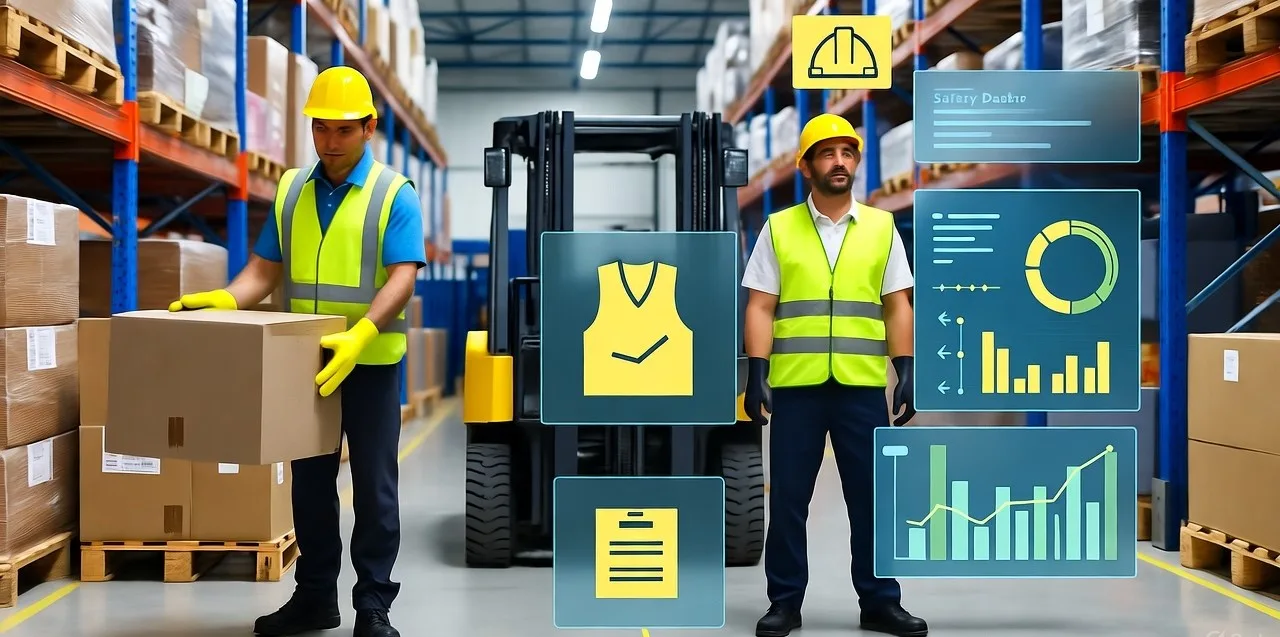
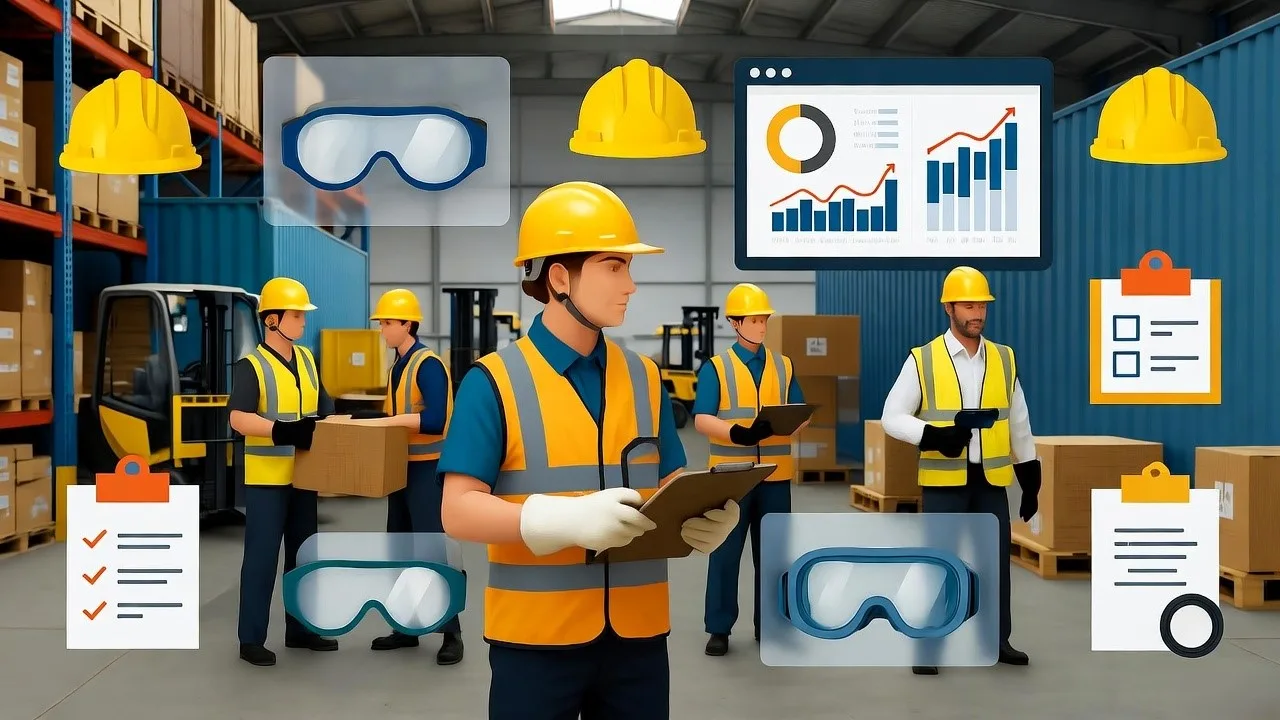
    • Proactive PPE Monitoring: These same systems can automatically verify that employees are wearing required personal protective equipment—like safety harnesses or goggles, and that it’s being worn correctly, ensuring constant compliance without supervisor policing.

    2. Predictive Fleet and Driver Safety

    For over-the-road operations, our deployed AI teams, groups of specialized agents working in concert, create a comprehensive safety net.

    • Collision Risk Prevention: AI-powered camera systems analyze driver behavior in real-time, detecting fatigue, distraction, lane departure, and unsafe following distances. The system provides an instant audio alert to the driver, turning every vehicle into a self-coaching unit.
    • Predictive Risk Profiling: By analyzing massive datasets of driving patterns, AI agents can identify which drivers or routes present the highest risk. This allows safety managers to implement targeted training and preventive measures before an accident occurs.
    • Contextual Incident Defense: In the event of an incident, AI doesn’t just capture video; it provides crucial context. Was the driver distracted? Did another vehicle cut them off? This objective data is invaluable for fair accountability and legal defense, potentially reducing liability and influencing insurance outcomes.

    3. Intelligent Warehouse and Facility Management

    Inside facilities, AI agents work tirelessly to create a safer physical environment.

    • Predictive Maintenance: AI agents monitor data from IoT sensors on machinery like forklifts and conveyor systems. By analyzing patterns, they predict potential failures before they occur, preventing accidents caused by equipment malfunction. This proactive approach minimizes downtime and enhances operational reliability.
    • Automated Damage Detection: Computer vision agents can automate visual inspections of goods and equipment, identifying damage that might escape human notice. This not only reduces waste and costs but also flags potential safety hazards related to compromised equipment or packaging.

    Table: AI Safety Applications and Their Measurable Impact

    Safety ApplicationAI CapabilityMeasurable U.S. Logistics Impact
    Ergonomic Risk MonitoringComputer Vision & Real-Time AnalyticsReduces musculoskeletal disorder incidents through immediate corrective feedback.
    Driver Safety ManagementBehavioral Analysis & Predictive Risk ModelingLowers accident rates and insurance premiums; provides defense against litigation.
    Predictive MaintenanceIoT Data Analysis & Machine LearningPrevents equipment failure, reduces downtime, and avoids associated workplace accidents.
    PPE ComplianceReal-Time Video AnalyticsEnsures continuous compliance with safety protocols, reducing exposure to OSHA violations.

    Quantifying the ROI of Safety-Focused AI Agents

    Justifying AI investment requires moving beyond vague promises to concrete metrics. The ROI for agentic AI in safety manifests across several key areas.

    • Operational Efficiency & Cost Reduction: Track the reduction in process cycle times for incident reporting and the decrease in workers’ compensation claims and insurance premiums. The direct cost savings from fewer incidents flow straight to the bottom line.
    • Risk Management & Compliance: Measure the reduction in compliance violations and associated fines. The value of faster risk identification and mitigation is immense, as it prevents the massive financial and reputational damage of a single catastrophic event.
    • Human Capital Optimization: While often a “softer” metric, reducing employee turnover due to safety concerns has a hard financial value. A safer workplace also minimizes productivity loss from injury-related absenteeism.

    One of our clients, a mid-sized parcel delivery operator, quantified their ROI within 12 months: a 34% reduction in at-risk driving events, an 18% decrease in insurance premiums, and $250,000 in avoided OSHA-related costs in a single year. This created a full payback on their AI agent investment in under 14 months.

    Navigating the U.S. AI Compliance Landscape

    Deploying AI responsibly, especially for safety-critical functions, requires careful attention to the evolving regulatory environment. Unlike the EU’s comprehensive AI Act, the U.S. employs a more fragmented, sector-specific approach.

    Key considerations for U.S. logistics firms include:

    • Existing Authority Application: Federal agencies like the Federal Trade Commission (FTC) are applying their authority to police unfair or deceptive practices related to AI. The Equal Employment Opportunity Commission (EEOC) enforces anti-discrimination laws on AI-driven employment decisions.
    • State-Level Legislation: States are actively legislating AI. Colorado’s comprehensive AI Act (effective 2026) and California’s existing privacy laws create a complex patchwork that requires careful navigation.
    • The NIST Framework: The NIST AI Risk Management Framework (RMF) is the cornerstone of U.S. AI governance. While voluntary, it provides a structured, best-practice approach for managing AI risks and is critical for building a defensible compliance strategy.

    A robust AI governance framework is not just about avoiding penalties; it’s about building trust with your workforce and the public. It ensures your AI systems are transparent, fair, and accountable.

    A Framework for U.S. Logistics Companies to Get Started

    Based on our experience deploying over 500 AI agents, a successful implementation follows a clear, phased path.

    1. Conduct a Safety Process Audit: Identify the top 3-5 most costly or frequent safety incidents in your operations. This prioritizes where AI will have the greatest impact.
    2. Run a Focused Pilot: Select one high-value area, like fleet safety or warehouse ergonomics, for a controlled pilot. The goal is to generate quick, measurable wins and build organizational confidence.
    3. Establish Baseline Metrics: Before full deployment, document your current safety performance, incident rates, costs, compliance scores. This provides the benchmark for calculating hard ROI.
    4. Scale with Governance: As you expand AI use cases, formalize your AI governance. Assign clear accountability, establish model monitoring procedures, and integrate compliance checks into the deployment lifecycle.

    The Future of Logistics Safety is Proactive, Not Reactive

    The evolution of logistics safety is irreversible. We are moving from a world of reactive policies and periodic checklists to one of continuous, intelligent, and autonomous risk management. AI agents are not a futuristic concept; they are a practical, deployable technology delivering measurable returns for forward-thinking U.S. logistics companies today.

    The transformation of safety from a cost center to a strategic advantage is underway. The only question is whether your organization will lead this change or be left behind.

    People Also Ask

    How can AI improve warehouse safety specifically?

    AI improves warehouse safety by using computer vision to monitor ergonomic risks in real-time, ensuring proper lifting techniques, and automatically verifying that workers are wearing required protective equipment like helmets and harnesses without constant human supervision

    Is the data from AI safety systems reliable in incident investigations?

    Yes, AI systems provide timestamped, objective data that offers crucial context during incidents. This high-quality data, which can detail driver behavior or warehouse actions, is increasingly valued by insurers and courts for clarifying fault and reducing liability.

    What are the biggest barriers to implementing AI for logistics safety?

    The primary barriers include integrating AI with existing legacy systems, ensuring access to high-quality, structured data, and the initial investment cost. A phased pilot project approach, which we use at Nunar, helps mitigate these risks by demonstrating value quickly before scaling

    Do I need to hire AI experts to manage these systems?

    Not necessarily. Partnering with an experienced AI developer like Nunar, who provides the platform and ongoing support, allows you to leverage the benefits of AI agents without the need to build deep internal expertise from day one. The focus shifts to managing outcomes, not the underlying technology.

  • The Blueprint for Digital Mastery: Why Your Business Needs a Robust SDLC Policy Template

    The Blueprint for Digital Mastery: Why Your Business Needs a Robust SDLC Policy Template

    The Blueprint for Digital Mastery: Why Your Business Needs a Robust SDLC Policy Template

    In the high-stakes arena of software development, where a single bug can cost millions and a security flaw can derail an entire brand, relying on ad-hoc processes is a recipe for disaster. Whether you’re a startup scaling rapidly or an established enterprise modernizing legacy systems, the speed, quality, and security of your software are direct determinants of your commercial success.

    The foundational tool for achieving predictable, high-quality software delivery is the SDLC Policy Template.

    Far from being a piece of rigid bureaucracy, a well-crafted SDLC Policy Template is the blueprint for digital mastery. It formalizes your organization’s approach to the System Development Life Cycle (SDLC), integrating security, compliance, and business requirements into every phase, from ideation to deployment. By adopting a standard, proven framework, you move your software development from chaotic guesswork to engineered excellence.

    This policy is, quite literally, your best defense against project failure, security breaches, and budget overruns—making it an essential component of any smart business’s system development policy.

    The Cost of Chaos: Why Ad-Hoc Development Fails

    Without a formal SDLC policy, development teams often fall prey to common, expensive pitfalls:

    1. Scope Creep and Budget Overruns: Without formalized requirements and sign-offs, projects balloon out of control as stakeholders introduce new demands late in the cycle.
    2. Security Debt: Security is often treated as a last-minute checklist item, leading to vulnerabilities being discovered late, where they are 100 times more expensive to fix than if addressed during the design phase.
    3. Audit Failures: Lack of standardized documentation means projects lack the required audit trail and evidence for compliance regulations (like SOX, HIPAA, or GDPR), leading to severe fines and legal exposure.
    4. Inconsistent Quality: Every project team invents its own standards for testing, coding, and documentation, resulting in systems that are fragile, difficult to maintain, and prone to costly downtime.

    The Commercial Power of the SDLC Policy Template

    A robust SDLC policy template provides the structure necessary to mitigate these risks while maximizing output efficiency. It’s the strategic asset that turns development into a predictable, revenue-generating function.

    1. Mandating Security by Design

    Security must be non-negotiable and baked into the code from the start.

    • The Template Solution: A good system development policy mandates specific security practices at every stage:
      • Requirements: Mandatory inclusion of security requirements and risk tolerance levels.
      • Design: Required Threat Modeling to proactively identify weaknesses.
      • Implementation: Strict adherence to secure coding standards (e.g., OWASP Top 10) and mandatory peer code reviews.
      • Testing: Required automated Static Application Security Testing (SAST) and Dynamic Application Security Testing (DAST).
    • Commercial Benefit: Prevents costly security flaws from reaching production, drastically reducing the lifetime cost of software maintenance and shielding the brand from catastrophic breaches.

    2. Standardizing the Process for Predictability

    Consistency across projects, teams, and technologies leads to repeatable success.

    • The Template Solution: It defines the official stages (e.g., Planning, Analysis, Design, Implementation, Testing, Deployment) and specifies the mandatory deliverables (artifacts) required to move from one stage to the next. For instance, the policy requires a formal Requirements Document Sign-Off before any coding begins.
    • Commercial Benefit: Ensures all teams follow the same high bar for quality and completeness, allowing executive management to accurately forecast delivery timelines and allocate resources, resulting in reliable project delivery.

    3. Streamlining Compliance and Audit Readiness

    In many industries, the policy is the legal shield that protects the company.

    • The Template Solution: The policy explicitly details the documentation standards required to satisfy legal and internal governance needs. It mandates the retention of key artifacts—from initial business requirements and test cases to deployment sign-off forms—creating an unbroken Audit Trail.
    • Commercial Benefit: Guarantees that the business is continuously audit-ready, significantly reducing the time, cost, and risk associated with regulatory examinations (such as Sarbanes-Oxley or industry-specific audits).

    4. Enabling DevOps and Automation

    The policy is the rulebook that guides your automation efforts. It ensures that speed does not compromise safety.

    • The Template Solution: It provides the governance framework for CI/CD (Continuous Integration/Continuous Delivery). For example, the policy can mandate that code only moves to production if the automated pipeline verifies three things: 1) Unit tests pass, 2) Code coverage meets 80% threshold, and 3) Security scan (SAST) is clean.
    • Commercial Benefit: Allows development to move at the maximum safe speed, leveraging automation to enforce quality gates, thereby accelerating time-to-market for new features and bug fixes.

    Key Sections to Include in Your SDLC Policy Template

    A functional and commercially effective SDLC Policy Template is modular and detailed, ensuring every phase is governed by clear standards.

    1. The Planning and Requirements Gate

    • Mandatory Deliverables: Business Case, High-Level Requirements, Scope Definition, Initial Risk Assessment.
    • Policy Requirement: Mandatory Go/No-Go Decision Point, requiring C-level or Product Owner sign-off on the Business Case before any resources are allocated.

    2. Design and Architecture Gate

    • Mandatory Deliverables: Detailed Technical Design Document (TDD), Architecture Diagram, Threat Model (Security), Data Classification Plan.
    • Policy Requirement: Requires sign-off from the Security Review Board and the Enterprise Architecture Team to ensure the design meets current security standards and integrates correctly with the existing technology stack.

    3. Implementation and Testing Gate

    • Mandatory Deliverables: Code Repository Structure, Coding Standards Checklist, Unit Test Plan, Quality Assurance (QA) Report.
    • Policy Requirement: Mandates a minimum code coverage percentage (e.g., 70% of unit tests passed), documented Peer Code Review, and mandatory execution of User Acceptance Testing (UAT).

    4. Deployment and Release Gate

    • Mandatory Deliverables: Final Sign-off from Business Owner, Disaster Recovery/Rollback Plan, Post-Implementation Review Checklist.
    • Policy Requirement: Mandates a controlled release process and a clear back-out plan (rollback procedure) in case the deployment fails, guaranteeing business continuity and minimizing downtime.

    5. Maintenance and Retirement

    • Mandatory Deliverables: Archival Plan, End-of-Life Notification.
    • Policy Requirement: Defines the mandatory cadence for security patching and maintenance releases, and a formal process for decommissioning legacy systems to ensure secure data destruction.

    The Path to Digital Maturity

    Adopting a formalized system development policy using a robust SDLC Policy Template is the hallmark of a digitally mature organization. It shifts the development culture from reliance on individual heroism to dependence on institutional excellence. By embedding quality, security, and compliance into the DNA of the development process, the policy becomes the most powerful strategic tool for delivering reliable software, protecting the brand, and securing long-term commercial dominance.

    People Also Ask

    What is the difference between an SDLC Policy and an SDLC Policy Template?

    The Policy is the actual rulebook the organization follows. The Template is the structured, pre-written framework (a sample) used to quickly create and customize that official policy.

    How does the SDLC Policy help control project costs?

    It mandates formal Requirements Sign-Offs and clear Tollgates between phases. This prevents scope creep, ensuring development resources are used only on features formally approved in the planning stage.

    What specific security measures does the Policy mandate?

    It mandates Security by Design, requiring proactive measures like Threat Modeling during design, secure coding standards (OWASP), and mandatory automated security scanning before deployment.

    Why is the Policy critical for regulatory compliance?

    It mandates standardized documentation for every phase (the Audit Trail), providing necessary evidence to satisfy legal and regulatory audits (e.g., SOX, HIPAA) and protecting the business from fines.

    Can the SDLC Policy be used with flexible methodologies like DevOps?

    Yes. A modern policy provides the governance framework, guiding automated tools (CI/CD pipelines) to enforce security and quality checks automatically and safely at the high speed required by DevOps.

  • The Blueprint for Digital Success: Why a Robust System Development Policy (SDP) is Your Best Business Insurance

    The Blueprint for Digital Success: Why a Robust System Development Policy (SDP) is Your Best Business Insurance

    The Blueprint for Digital Success: Why a Robust System Development Policy (SDP) is Your Best Business Insurance

    In the modern enterprise, software systems are not just tools—they are the core intellectual property, the engine of revenue generation, and the repository of sensitive customer and financial data. Whether you are developing a new e-commerce platform, upgrading an internal ERP system, or launching a customer-facing mobile application, the quality, security, and compliance of that system dictate your commercial success and future viability.

    Yet, many organizations approach system development as a chaotic series of projects, relying on ad-hoc processes and individual judgment. This is a recipe for disaster, leading to security vulnerabilities, costly project overruns, and non-compliance fines.

    The solution is the System Development Policy (SDP), a comprehensive, mandatory framework that governs every stage of the software lifecycle. Far from being bureaucratic overhead, a robust SDP is your company’s blueprint for digital success, serving as the ultimate business insurance against risk, inefficiency, and costly failure. It is the formal commitment to building secure, high-quality, and compliant systems every single time.

    The Commercial Imperative: Why an SDP Drives Profit

    An SDP (often integrated with a formal SDLC Policy Template) transforms software development from a cost center into a predictable, revenue-generating asset by mitigating risk and maximizing efficiency.

    1. Risk Mitigation and Security by Design

    The cost of a security breach is astronomical, encompassing financial penalties, legal fees, and irreparable damage to brand reputation.

    • The SDP Solution: A formalized policy mandates security controls be integrated at the earliest stages (Security by Design). This includes mandatory security requirements gathering, threat modeling during the design phase, automated static and dynamic code analysis during testing, and stringent vulnerability scanning before deployment.
    • Commercial Benefit: Prevents costly security vulnerabilities from ever making it to production, drastically reducing the lifetime cost of patching flaws and insulating the business from fines and brand damage associated with major breaches (e.g., GDPR, CCPA).

    2. Project Predictability and Cost Control

    Ad-hoc processes are the primary cause of scope creep and budget overruns.

    • The SDP Solution: The policy mandates the use of a consistent Software Development Life Cycle (SDLC) methodology (whether Agile, Waterfall, or Hybrid). It requires formalized sign-offs, standardized documentation (like a SDLC Policy Sample provides), and clear gates between phases (e.g., requiring full stakeholder acceptance before moving from design to coding).
    • Commercial Benefit: Ensures projects remain on track, within budget, and align with initial business requirements, directly improving resource utilization and delivering products to market faster.

    3. Compliance and Audit Readiness

    In highly regulated industries (Finance, Healthcare, Defense), non-compliance with industry standards (e.g., SOX, HIPAA) or internal governance rules can result in crippling fines and operational shutdowns.

    • The SDP Solution: The policy explicitly integrates all relevant regulatory and compliance requirements into the planning, development, and testing phases. It mandates retention of all key documentation (requirements, test plans, security reviews) to create an irrefutable audit trail.
    • Commercial Benefit: Guarantees audit readiness at all times, reducing the cost and stress of regulatory reviews and shielding the executive team from legal liability.

    4. Quality and Maintenance Efficiency

    Poorly documented, rushed code is difficult to maintain, leading to high support costs and slow feature delivery.

    • The SDP Solution: The policy mandates coding standards, peer reviews, and comprehensive unit/integration testing standards. It also requires thorough documentation of architecture, dependencies, and deployment procedures.
    • Commercial Benefit: Increases the overall quality and stability of the system, minimizing expensive downtime, accelerating time-to-market for new features, and reducing the lifetime maintenance burden (lowering TCO).

    Anatomy of a Robust System Development Policy (SDP)

    A comprehensive SDP should serve as the overarching authority for all software projects, regardless of size or methodology (Agile, DevOps, or traditional).

    SDP ComponentPurposeKey Commercial Requirement
    Policy Scope & AuthorityDefines which projects and personnel the policy applies to.Must cover all internal, outsourced, and COTS (Commercial Off-The-Shelf) integrated systems.
    SDLC MethodologyMandates the specific, defined stages (e.g., Planning, Analysis, Design, Implementation, Testing, Deployment).Requires clear “tollgates” or sign-off points between stages to control scope and budget.
    Security RequirementsEnsures Security by Design is mandatory.Mandates threat modeling, use of secure coding standards (e.g., OWASP), and independent security testing prior to release.
    Data ManagementGoverns how data is handled across environments (production, testing, development).Strictly mandates the use of synthetic or masked data in non-production environments to protect customer PII/PHI.
    Testing StandardsDefines the minimum required levels of quality assurance (QA).Requires mandatory unit, integration, user acceptance (UAT), and performance testing before go-live.
    Documentation & ReviewSpecifies the required artifacts and sign-offs for each phase.Establishes the official Audit Trail necessary for regulatory compliance and historical review.
    Release ManagementGoverns the controlled, phased deployment of new software.Mandates a clear process for back-out/rollback to ensure business continuity if deployment fails.

    Adopting the SDP: Integrating Policy with Agility

    The biggest challenge in implementing an SDP is ensuring it supports, rather than stifles, the speed and flexibility of modern Agile and DevOps teams. A great policy doesn’t slow down the SDLC; it streamlines it by automating compliance checks.

    • Automation of Gates: Use CI/CD (Continuous Integration/Continuous Delivery) pipelines to automatically enforce policy requirements. For instance, code deployment should automatically halt if security scans fail or if mandatory code coverage thresholds are not met.
    • Template-Driven Documentation: Utilize an SDLC Policy Template or a SDLC Policy Sample to provide pre-approved, easy-to-fill documentation forms. This makes compliance a matter of filling out fields, not writing complex reports from scratch.
    • Risk-Based Tailoring: The policy should be robust but flexible. A low-risk internal system shouldn’t require the same level of security testing as a high-risk, public-facing financial application. The policy should allow for risk-based tailoring of required controls.

    The System Development Policy is the cornerstone of digital governance. It empowers development teams with a clear roadmap, protects the executive team from liability, and ensures every system built is a high-quality, secure, and commercially viable asset. Investing in a robust SDP is the foundational step toward building a predictable, resilient, and dominant digital enterprise.

    People Also Ask

    What is the primary commercial purpose of a System Development Policy (SDP)?

    To minimize organizational risk and maximize project predictability. It enforces security, quality, and compliance standards throughout the SDLC, reducing costly errors, security breaches, and budget overruns.

    How does an SDP address security?

    It mandates Security by Design, requiring threat modeling, secure coding standards (like OWASP), and mandatory security testing (e.g., vulnerability scans) to be integrated into the planning and testing phases, not just at the end.

    Does an SDP slow down Agile development teams?

    No. A modern SDP uses automation (via CI/CD pipelines) to enforce policy requirements, such as code quality checks and security scans, automatically. This streamlines compliance and removes manual bureaucratic gates.

    How does the SDP help with regulatory compliance (e.g., SOX, HIPAA)?

    The policy mandates the explicit inclusion of all regulatory requirements into the design and testing phases. It also requires documented evidence (the Audit Trail) for every major decision, guaranteeing audit readiness.

    What is the role of an SDLC Policy Template?

    It provides a pre-approved, standardized structure (a SDLC Policy Sample) for required documentation, ensuring consistency across all projects and making it easier for teams to comply with the documentation mandates of the SDP.

  • Logistics Software Development

    Logistics Software Development

    The Architect of Profit: Why Custom Logistics Software Development is Your Ultimate Competitive Weapon

    In the modern supply chain, the difference between razor-thin margins and market leadership is often reduced to a single factor: software. The logistics industry,spanning global freight, last-mile delivery, e-commerce fulfillment, and warehousing, operates under intense pressure from volatile costs, increasing customer demand for real-time visibility, and complex global compliance standards.

    For decades, many companies relied on standardized, off-the-shelf software. While these solutions offer immediate implementation, they represent a fundamental compromise: forcing a unique business process into a generic digital mold.

    The forward-thinking enterprise understands that true competitive advantage is not bought, it is built. Logistics software development, specifically the creation of custom, bespoke solutions, is the strategic investment that transforms a company’s unique operational DNA into a scalable, high-performance profit engine.

    The Critical Crossroads: Build vs. Buy

    The decision to develop a custom logistics solution versus purchasing an off-the-shelf system is the most significant strategic choice a logistics executive will make. It hinges on the recognition that a logistics operation is defined by its complexities, its unique carrier network, specific freight types, proprietary pricing algorithms, and intricate internal workflows.

    FeatureOff-the-Shelf SoftwareCustom Logistics Software Development
    Business AlignmentForces business to adapt to the software’s standard logic.Software adapts 100% to the unique business workflow.
    IntegrationLimited, often requiring expensive, brittle integrations.Flawlessly integrates with every existing system (ERP, WMS, TMS).
    Competitive EdgeOffers parity, as competitors use the same tools.Creates a unique, proprietary advantage (e.g., a superior route optimization algorithm).
    ScalabilityLimited by vendor’s licensing model and technology stack.Built for your specific growth trajectory and technology needs.
    Intellectual PropertyYou pay licensing fees and own none of the code.You own the code and the intellectual property, securing your future development path.

    The cost of forcing your business into a generic system often outweighs the initial higher investment of custom development. Inefficiencies, redundant manual processes, and missed optimization opportunities become long-term, compounding drains on profitability.

    The Commercial Power of Bespoke Logistics Software

    Custom logistics software development is not merely about replicating existing functionalities; it’s about engineering new levels of efficiency and intelligence that generate measurable commercial ROI.

    1. Automation of Unique, Complex Workflows

    Every logistics operation has its ‘secret sauce’, a specialized process for load consolidation, handling hazmat freight, or a proprietary multi-modal pricing logic.

    • The Solution: Custom software development tailors the automation to these specific, high-value processes. For example, building a Transportation Management System (TMS) that instantly calculates the optimal combination of owned fleet capacity versus contracted 3PL rates based on a specialized, proprietary algorithm.
    • Commercial Benefit: Massive reduction in human error and manual labor (often 20% to 40% savings on administrative tasks), resulting in superior operational efficiency and speed.

    2. Seamless Integration and Data Integrity

    Modern logistics relies on data flowing seamlessly between disparate systems: ERP (Finance), WMS (Warehouse), TMS (Transportation), and Customer CRM.

    • The Solution: Custom development ensures the new software is built with APIs and data structures perfectly aligned to communicate flawlessly with your existing tech stack, acting as the centralized Single Source of Truth.
    • Commercial Benefit: Eliminates data silos and manual reconciliation, leading to immediate improvements in inventory accuracy, faster financial settlement cycles, and highly reliable reporting for executive decision-making.

    3. Incorporating Next-Generation Technologies

    To compete in the future, you must leverage AI, Machine Learning (ML), and IoT. Off-the-shelf systems are often slow to adopt these innovations across their entire customer base.

    • The Solution: A custom development project can natively build in advanced features from day one:
      • AI-Powered Demand Forecasting integrated directly into your Inventory Management System.
      • Predictive Maintenance logic fed by IoT sensors in your fleet, programmed into a custom Fleet Management System.
      • ML-driven Route Optimization that incorporates highly specific internal variables (e.g., driver tenure, customer dock characteristics).
    • Commercial Benefit: A future-proof platform that provides perpetual competitive advantage through superior forecasting, reduced asset downtime, and lower operational costs.

    4. Enhancing Customer Experience and Brand Value

    In the age of Amazon, the delivery experience is part of the product.

    • The Solution: Developing a custom-branded customer portal and driver mobile app that features your company’s specific branding, real-time tracking, custom communication alerts, and proof-of-delivery capture tailored exactly to your client requirements.
    • Commercial Benefit: Drives customer loyalty and retention by providing a seamless, reliable, and branded experience, which directly translates into recurring revenue and market differentiation.

    Best Practices in Logistics Software Development

    Successfully navigating a custom software development project requires a strategic approach focused on execution and future planning.

    1. Start with the User Experience (UX): Logistics software is only effective if drivers, warehouse staff, and dispatchers actually use it. Prioritizing a clean, intuitive, and mobile-friendly UX reduces training time and increases adoption. Custom development allows for tailored interfaces that match the reality of the user’s day-to-day work (e.g., a simple, large-button interface for drivers on the road).
    2. Plan for Scalability and Cloud-Readiness: Ensure the technology stack selected (e.g., using scalable cloud infrastructure like AWS, Azure, or GCP) is robust enough to handle the exponential data growth and traffic spikes associated with peak season or rapid business expansion.
    3. Adopt Agile Methodology: The logistics landscape is constantly changing. Using an Agile development process (sprints, frequent feedback, and iterative releases) allows the project to adapt to market shifts or new regulatory requirements without derailing the entire project timeline.
    4. Prioritize Data Security and Compliance: Custom software offers the highest level of security because it is built to your specifications. This is essential for meeting stringent regulations (GDPR, customs compliance) and protecting high-value supply chain data.

    Investing in Your Digital Backbone

    The decision to invest in logistics software development is a declaration that your operations are unique, your processes are superior, and your ambition is long-term. While off-the-shelf solutions provide a temporary fix, they will inevitably limit growth, stifle innovation, and erode your competitive edge.

    Custom software development is about building a digital backbone that perfectly mirrors, automates, and amplifies your unique value proposition. It is the architect’s blueprint for a more resilient, efficient, and ultimately, more profitable logistics enterprise.

    People Also Ask

    What is the biggest commercial advantage of custom logistics software?

    Competitive Differentiation. It embeds your company’s proprietary, superior workflows and optimization algorithms directly into the code, creating a unique advantage that generic, off-the-shelf solutions cannot replicate.

    How does custom software save money in the long run despite a higher initial cost?

    It drastically reduces long-term costs by eliminating unnecessary licensing fees, cutting down on error-prone manual tasks through tailored automation, and avoiding the expensive need to replace ill-fitting systems later.

    What is the role of API integration in custom logistics software?

    API integration is critical for creating a Single Source of Truth. The custom software acts as a central hub that flawlessly connects and shares data between disparate systems (ERP, WMS, CRM), eliminating silos and data errors.

    Why is it important to design the software with a focus on User Experience (UX)?

    A tailored, intuitive UX (especially for drivers and warehouse staff) ensures high user adoption, significantly reduces training costs, and minimizes human data entry errors, which directly boosts operational efficiency.

    How does custom development allow a company to leverage AI and ML?

    Custom development allows AI/ML features (like predictive maintenance or dynamic routing) to be natively built into the system using your specific operational data, providing smarter, more accurate predictions and optimization than generic algorithms can offer.

  • Beyond the Lot: Why Modern Automotive Inventory Management System is the Engine of Profit

    Beyond the Lot: Why Modern Automotive Inventory Management System is the Engine of Profit

    Beyond the Lot: Why Modern Automotive Inventory Management is the Engine of Profit

    In the automotive industry, spanning dealerships, parts retailers, service centers, and manufacturers, inventory isn’t just stock; it’s the lifeblood of the entire operation. Whether it’s a high-value vehicle on the showroom floor or a critical spare part needed for a repair, a mismatch between what’s available and what’s demanded leads to lost sales, costly delays, and crippling customer dissatisfaction.

    For too long, managing this vast, complex inventory relied on manual audits, fragmented spreadsheets, and disparate systems (like the DMS/CRM). These methods are not only prone to human error but are fundamentally incapable of handling the speed and data-driven nature of today’s market.

    The solution is the Automotive Inventory Management System (AIMS). This sophisticated software is the modern command center that transforms inventory from a massive operational expense into a precision-driven commercial asset. It ensures you stock the right vehicle, the right part, at the right time, every single time.

    The Dual Challenge: Vehicles and Parts

    Automotive inventory management faces a unique, dual challenge that general retail software cannot solve: managing two wildly different classes of inventory simultaneously.

    1. High-Value, Low-Volume Inventory (Vehicles)

    • The Goal: Maximize the Inventory Turnover Ratio (Days Sales of Inventory or DSI) and minimize depreciation costs.
    • The Challenge: Each vehicle is unique (VIN-specific), high-cost, and subject to rapid market shifts. Holding a vehicle too long is guaranteed to erode profit.

    2. Low-Value, High-Volume Inventory (Parts and Components)

    • The Goal: Maintain service level commitment by ensuring parts are available for repair jobs, minimizing vehicle downtime, and reducing holding costs.
    • The Challenge: Managing thousands of small, often complex, and rapidly obsolescing parts (especially with the rise of EVs) requires precision tracking and intelligent forecasting.

    An effective Automotive Inventory Management System seamlessly handles both, integrating front-end sales data with back-end parts and service needs.

    Key Features: The Anatomy of a High-Performance AIMS

    The best Automotive Inventory Management Systems are defined by intelligence, automation, and real-time connectivity across the dealership or service enterprise.

    1. Real-Time, VIN-Level Tracking and Audit

    Guesswork is the enemy of profit. Modern AIMS eliminate data lag entirely.

    • Feature: VIN Decoding & Auto-Fill. The system automatically extracts all critical vehicle specifications (make, model, trim, engine, features) simply by scanning the Vehicle Identification Number (VIN) upon receipt. This drastically reduces data entry error and speeds up onboarding.
    • Commercial Benefit: Ensures 100% data accuracy from the moment a vehicle is acquired, synchronizing inventory status across the physical lot, the dealer website, and third-party listing sites instantly.

    2. AI-Driven Market and Pricing Optimization

    Modern inventory decisions are based on data, not gut feeling.

    • Feature: Live Market View and Pricing Tools. The system continuously aggregates real-time competitor pricing, local customer search behavior, and historical sales velocity data specific to each VIN. It uses AI-powered insights to recommend the optimal initial list price and subsequent price adjustments.
    • Commercial Benefit: Maximizes gross profit margins by ensuring the vehicle is priced competitively but profitably, directly contributing to a faster inventory turnover and a lower average Days on Lot (DOL).

    3. Automated Parts Replenishment

    For the service center and parts department, efficiency hinges on availability.

    • Feature: Automated Reordering and Stock Alerts. Based on predefined minimum/maximum stock levels, historical usage patterns, and predictive demand forecasts, the system automatically generates purchase orders when a part drops below the optimal threshold. It often integrates barcode/RFID scanning for fast, error-free receiving and cycle counting.
    • Commercial Benefit: Drastically reduces the risk of stockouts, which prevent service technicians from completing jobs and lead to costly delayed repairs and dissatisfied customers. It also supports Just-in-Time (JIT) parts management to minimize holding costs.

    4. Integration with the Automotive Ecosystem

    A truly effective AIMS must be the central hub of the business.

    • Feature: Seamless Integration. The system connects via APIs to the dealership’s core Dealer Management System (DMS), Customer Relationship Management (CRM) platform, Point-of-Sale (POS) for parts sales, and external marketing platforms.
    • Commercial Benefit: Creates a unified view of the customer journey. When a car is sold (DMS), inventory updates instantly across all channels. When a part is used (POS), the system triggers a reorder (AIMS). This data flow streamlines operations and reduces administrative work by up to 80%.

    The Commercial Imperative: Boosting Profitability

    Implementing a robust Automotive Inventory Management System yields direct, quantifiable commercial returns that extend beyond mere tracking.

    A. Maximizing Cash Flow and Reducing Carrying Costs

    Inventory is capital tied up. The faster you move it, the healthier your cash flow. By optimizing stocking levels using demand forecasting and ensuring faster turnover, the AIMS significantly reduces holding costs (insurance, storage, maintenance) and frees up cash to reinvest in high-demand inventory.

    B. Enhancing Service Bay Efficiency and Customer Retention

    In the service bay, a missing part means a waiting customer.

    • The Solution: An AIMS ensures the right parts are available when a job is scheduled. This leads to quicker repair turnaround times, minimizes vehicle downtime for the customer, and directly improves customer satisfaction and retention rates—the engine of future recurring revenue.

    C. Superior Merchandising and Sales Enablement

    The AIMS is the foundation for an effective sales strategy.

    • The Solution: It provides tools for one-click publishing of optimized vehicle listings (including photos, VIN-decoded specs, and transparent pricing) across all digital channels, maximizing visibility. Furthermore, it provides sales teams with real-time data on every vehicle’s age, market rank, and ideal pricing to facilitate faster, data-backed negotiations.

    Choosing the Right System: Key Considerations

    When evaluating AIMS solutions, look for platforms that offer:

    • Cloud-Based Architecture: For maximum accessibility, scalability, and continuous updates without manual IT intervention.
    • Multi-Location/Franchise Support: Essential for larger dealer groups or those with separate parts warehouses.
    • VIN-to-Part Compatibility: The ability to look up parts based on a vehicle’s VIN, ensuring the service bay orders the exact right component.

    Mastering inventory is the single most effective way to control costs and drive sales in the automotive sector. The Automotive Inventory Management System is the necessary tool that transforms complex, volatile data into predictable, repeatable profitability.

    People Also Ask

    What is the primary financial goal of using an AIMS for vehicles?

    The primary goal is to maximize the Inventory Turnover Rate (DSI) and minimize depreciation. This is achieved by using real-time market data to stock high-demand vehicles and optimize pricing for a fast sale.

    How does the AIMS help the service and parts departments?

    It ensures Just-in-Time (JIT) parts availability through automated reordering based on historical usage and demand. This minimizes vehicle downtime and prevents costly delayed repairs, boosting customer satisfaction.

    What is VIN Decoding and why is it important?

    VIN Decoding is the feature that automatically extracts all detailed vehicle specifications (make, model, features) from the VIN. It ensures data accuracy for listing, pricing, and compliance, eliminating manual entry errors.

    How does an AIMS use AI/data to improve vehicle pricing?

    It uses AI to provide a Live Market View, constantly comparing a vehicle’s specific data against competitor listings, local demand, and sales velocity to recommend the most profitable and competitive price point.

    Why is integration with the DMS/CRM critical for an AIMS?

    Integration creates a Single Source of Truth for the entire business. Sales data (CRM/DMS) instantly updates inventory (AIMS) and vice versa, ensuring seamless workflows, accurate financials, and unified customer records.

  • The Intelligence Revolution: Machine Learning’s Commercial Dominance in Supply Chain Management

    The Intelligence Revolution: Machine Learning’s Commercial Dominance in Supply Chain Management

    The Intelligence Revolution: Machine Learning’s Commercial Dominance in Supply Chain Management

    The supply chain, once a domain ruled by historical averages and human intuition, is now undergoing its most profound transformation since containerization. The engine driving this change is Machine Learning (ML).

    ML is not just a technological upgrade; it is a paradigm shift that converts massive amounts of chaotic, real-time data into precise, actionable foresight. By equipping supply chain managers with the power to anticipate volatility, optimize capital, and automate complex decisions, ML is transforming the supply chain from a reactive necessity into a proactive, resilient, and highly profitable strategic asset.

    For commercial enterprises seeking a decisive advantage in a volatile global market, leveraging Machine Learning in Supply Chain Management (SCM) is the foundational requirement for sustained success.

    The ML Imperative: Why Traditional Methods Are Obsolete

    Traditional SCM relied on rigid statistical models and fixed thresholds (e.g., Economic Order Quantity or safety stock rules). These methods fail miserably when faced with the modern realities of the global market:

    1. Demand Volatility: Traditional models cannot account for sudden, non-linear factors like social media trends, local events, or competitor pricing changes.
    2. Network Complexity: They cannot manage the compounding variability across multi-modal transport, Tier-N supplier networks, and dynamic manufacturing schedules.
    3. Human Bias: Decisions based on past successes or personal experience often lead to sub-optimal outcomes when faced with novel, modern disruptions.

    Machine Learning transcends these limitations by using sophisticated algorithms (including Deep Learning and reinforcement learning) to learn directly from data patterns, constantly refine predictions, and automate responses without human intervention.

    Top Commercial Use Cases for Machine Learning in SCM

    ML delivers immense commercial ROI across every major pillar of the supply chain, turning cost centers into areas of strategic advantage.

    1. Hyper-Accurate Demand Forecasting and Inventory Optimization

    This is the most direct application of ML, targeting the massive costs associated with stockouts (lost sales) and overstocking (tied-up capital).

    • The ML Solution: Demand Sensing: ML algorithms ingest thousands of variables beyond simple historical sales, including real-time weather, promotions, web traffic, and competitor actions. They correlate these factors to predict demand with unparalleled granularity (SKU, location, and day level).
    • Commercial Impact: This precision enables dynamic inventory optimization, significantly reducing required safety stock levels and freeing up working capital. Companies consistently report a 20% to 50% reduction in forecasting error and lower carrying costs.

    2. Predictive Logistics and Real-Time Visibility

    Transportation is the largest line-item expense in logistics. ML optimizes every mile and every minute.

    • The ML Solution: Predictive ETAs (P-ETAs): ML models analyze historical carrier reliability, real-time traffic data, and global congestion feeds to provide a constantly updating forecast of arrival time. This moves visibility from tracking to anticipation.
    • Commercial Impact: Highly accurate P-ETAs allow receiving docks to schedule labor precisely, eliminating costly detention and demurrage fees. Furthermore, they enable dynamic route optimization, reducing mileage and fuel costs while ensuring compliance with narrow delivery windows.

    3. Proactive Risk Mitigation and Supplier Resiliency

    Risk in the SCM is a matter of when, not if. ML provides the necessary foresight to manage global volatility.

    • The ML Solution: Risk Scoring: ML algorithms continuously scan unstructured data, news feeds, social media, regulatory announcements, and supplier financial data—to assign a dynamic risk score to every lane, port, and supplier.
    • Commercial Impact: Procurement teams are alerted to potential issues (e.g., a looming labor strike or a supplier’s credit downgrade) weeks in advance. This allows for proactive mitigation, such as pre-booking alternative capacity or sourcing a buffer stock, safeguarding production schedules and millions in potential revenue loss.

    4. Machine Learning for Quality and Asset Reliability

    Asset failure (vehicles, conveyors) and quality degradation (spoiled products) lead to crippling unplanned costs and delays.

    • The ML Solution: Predictive Maintenance: Sensors on vehicles and automated warehouse equipment stream operational data (vibration, temperature, power draw). ML models learn the unique “signature” of impending component failure and predict exactly when maintenance is needed.
    • Commercial Impact: Maintenance shifts from calendar-based (often unnecessary) to condition-based (just-in-time), maximizing asset uptime by over 25% and eliminating costly, catastrophic unplanned breakdowns that halt entire operations.

    5. Automated S&OP and Cognitive Planning

    The monthly or weekly Sales and Operations Planning (S&OP) cycle is often slow, manual, and consensus-driven. ML accelerates and optimizes this process.

    • The ML Solution: Cognitive Planning: ML models integrate demand forecasts, capacity constraints, inventory levels, and financial goals to instantly generate optimized planning scenarios. They can evaluate the cost and service impact of hundreds of decisions (e.g., changing a factory run, shifting a distribution center assignment) in minutes.
    • Commercial Impact: Faster planning cycles, elimination of human bias, and the ability to execute optimal strategic plans that maximize profitability and align the supply chain directly with financial objectives.

    The Technology Foundation: SaaS and Data Integrity

    The success of Machine Learning in Supply Chain Management relies heavily on a flexible and robust technological foundation:

    1. Cloud-Native Architecture (SaaS): ML requires massive computing power and seamless data integration. Modern SaaS (Software as a Service) SCM platforms provide the elastic, scalable cloud infrastructure necessary to run complex ML models without massive capital investment in on-premise servers.
    2. Data Governance: ML is only as good as the data it consumes. Companies must prioritize data integrity, ensuring data is clean, integrated across ERP/WMS/TMS, and accessible. Data centralization is a prerequisite for effective ML.
    3. Explainability (XAI): Commercial adoption requires trust. Modern ML models are moving towards eXplainable AI (XAI), allowing managers to understand why the model made a specific prediction or decision, ensuring compliance and confidence in the automated processes.

    The Competitive Certainty

    Machine Learning is redefining the competitive landscape. It fundamentally changes the SCM executive’s role from a firefighter battling daily crises to a strategic orchestrator guiding an intelligent, self-optimizing network.

    For businesses aiming for market leadership, the investment in ML is an investment in certainty: certain forecasting, certain delivery times, certain asset uptime, and certain profitability. Those who fail to integrate this intelligence will be left behind, trapped in the expensive, reactive past.

    People Also Ask

    What is the primary commercial benefit of using ML in demand forecasting?

    Minimizing Working Capital. ML reduces forecast errors by 20-50% by incorporating external factors (weather, social media), allowing companies to reduce safety stock and free up cash flow.

    How does Machine Learning improve transportation logistics?

    ML creates highly accurate Predictive ETAs (P-ETAs) and enables dynamic route optimization. This eliminates costly detention fees, minimizes fuel consumption, and ensures reliable delivery window compliance.

    What is the role of ML in Supply Chain Risk Management?

    ML continuously scans unstructured data (news, finance reports) to proactively assign risk scores to suppliers and lanes, alerting procurement teams to potential disruptions weeks in advance for mitigation.

    Why is a SaaS platform crucial for implementing ML in SCM?

    ML requires massive computing power and data scalability. SaaS platforms provide the elastic cloud infrastructure necessary to run complex ML models instantly and affordably, without heavy upfront capital investment.

    What is Predictive Maintenance in the context of ML in the warehouse?

    ML analyzes IoT sensor data from equipment to predict the exact timing of component failure. This allows maintenance to be scheduled proactively during planned downtime, boosting asset uptime by over 25%.