Author: hmsadmin

  • 3PL vs. In-House Logistics

    3PL vs. In-House Logistics

    3PL vs. In-House Logistics

    3PL vs. In-House Logistics: A Data-Driven Guide for 2025

    In early 2025, one of our clients, a rapidly scaling D2C brand, faced a critical decision: continue building their multi-million dollar in-house logistics network or partner with a third-party logistics (3PL) provider. Their internal analysis showed that outsourcing could cut supply chain costs by up to 25%, but they were hesitant to relinquish control. After integrating a custom AI agent we developed to simulate both scenarios, the data revealed a surprising third path—a hybrid model that ultimately saved them 18% in operational costs while improving their delivery speed by 30%. This nuanced outcome is the reality for most modern businesses navigating the 3PL vs. in-house logistics decision.

    At Nunar, with over 500 AI agents deployed in production for U.S. logistics and supply chain operations, we’ve moved beyond the simplistic “one is better” debate. The real question is: which model, or combination of models, creates the most resilient, cost-effective, and scalable operation for your specific business context?

    The choice between 3PL and in-house logistics isn’t binary; it’s about finding the right balance of control, cost, and scalability for your business stage and goals.

    The True Cost of Logistics: Beyond the Spreadsheet

    When evaluating logistics models, many businesses make the critical mistake of comparing only direct costs. The true financial picture emerges only when you account for both direct and indirect expenses across the entire operation.

    Direct vs. Indirect Logistics Costs

    Direct costs are the visible, easily quantifiable expenses:

    • Warehousing rent or mortgage payments
    • Salaries and benefits for warehouse staff and drivers
    • Equipment purchases, maintenance, and utilities
    • WMS, TMS, and other software licenses

    Indirect costs often go overlooked but significantly impact your bottom line:

    • Recruiting, training, and retaining specialized logistics talent
    • Insurance, compliance, and industry certifications
    • System downtime or inefficiencies from outdated technology
    • Management time and attention diverted from core business activities

    CapEx vs. OpEx: A Strategic Financial Divide

    The financial structures of 3PL and in-house logistics differ fundamentally:

    • In-house logistics is Capital Expenditure (CapEx) heavy. You’re investing upfront in infrastructure—buildings, racking, forklifts, and systems—whether or not your volumes justify these fixed costs year-round.
    • 3PL logistics transforms these fixed costs into variable Operational Expenditures (OpEx). Instead of tying up capital in infrastructure, you pay for what you use. This model efficiently absorbs demand volatility, such as needing 100,000 sq. ft. in Q4 but only 60,000 in Q1.

    Table: Comprehensive Cost Comparison

    Cost FactorIn-House Logistics3PL Logistics
    Setup CostsHigh upfront investmentMinimal upfront investment
    Ongoing OperationsFixed monthly costs regardless of volumeFlexible pricing based on actual demand
    Labor & StaffingSalaries, hiring, training for your teamHandled by 3PL provider
    Technology InvestmentSignificant capital outlay for systemsAccess to advanced technology included
    Risk ManagementYou bear all operational risksRisk shared with or transferred to 3PL

    What Is In-House Logistics?

    In-house logistics means your business maintains complete control over every aspect of its supply chain by owning or leasing facilities, hiring and managing teams, investing in systems, and overseeing daily operations.

    Advantages of In-House Logistics

    • Complete Control: You dictate processes, layout, and performance standards without intermediary influence.
    • Real-Time Visibility: Proprietary data and reporting systems provide immediate insights into operations.
    • Customized Brand Experience: Tailor packaging, shipping, and customer interactions to perfectly reflect your brand values.
    • Direct Customer Relationships: Handle all customer communications and issue resolution without third-party involvement.
    • Faster Response to Issues: Solve problems quickly without navigating another company’s bureaucracy.

    Limitations of In-House Logistics

    • High Fixed Costs: Infrastructure and labor expenses don’t flex with demand fluctuations.
    • Scalability Challenges: Expanding to new markets or handling seasonal spikes requires significant capital investment.
    • Substantial Internal Burden: Heavy demands on your HR, IT, and operations teams.
    • Expertise Gaps: Difficult to maintain specialized knowledge across all logistics functions.
    • Technology Limitations: Struggling to keep pace with rapidly advancing logistics technology.

    What Is 3PL Logistics?

    Third-party logistics (3PL) involves outsourcing some or all of your supply chain operations to a specialized provider. Rather than managing warehousing, fulfillment, transportation, and technology in-house, you partner with an organization that already has the infrastructure, systems, and teams in place.

    Services Modern 3PLs Provide

    • 3PL Warehousing and inventory management
    • Order Fulfillment for B2B, DTC, retail, and subscription models
    • Value-Added Services like kitting, labeling, repacking, and sequencing
    • Technology Integrations for real-time visibility and automation
    • Transportation Management including truckload, LTL, and dedicated contract carriage
    • Reverse Logistics and product lifecycle management

    Advantages of 3PL Logistics

    • Reduced Costs: Avoid massive upfront investments in infrastructure and benefit from economies of scale.
    • Scalability and Flexibility: Quickly adjust resources to match demand fluctuations without long-term commitments.
    • Access to Expertise: Leverage specialized knowledge without the cost of hiring and training.
    • Advanced Technology: Utilize state-of-the-art systems without capital investment.
    • Focus on Core Business: Redirect resources and attention to product development, marketing, and sales.
    • Enhanced Risk Management: Benefit from established compliance procedures and contingency planning.

    Potential Disadvantages of 3PLs

    • Reduced Control: Less direct oversight of daily operations and customer interactions.
    • Communication Challenges: Potential gaps in coordination and information flow.
    • Strategic Misalignment: Provider priorities may not perfectly match your business goals.
    • Hidden Costs: Potential for unexpected charges like peak season surcharges or minimum volume fees.

    The AI Revolution in Logistics Decision-Making

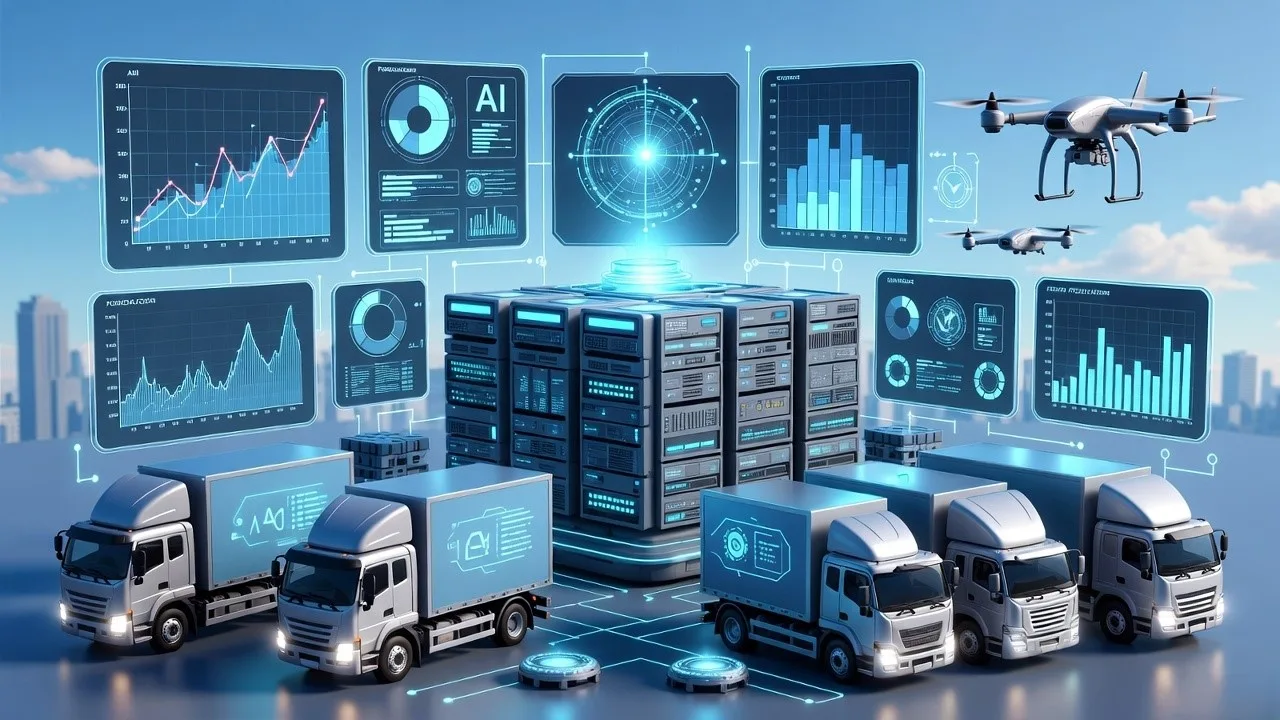
    At Nunar, we’ve deployed AI agents that are fundamentally transforming how businesses approach the 3PL vs. in-house decision. These systems analyze hundreds of variables to generate precise recommendations tailored to specific business contexts.

    How AI Agents Optimize Logistics Operations

    • Predictive Analytics: Machine learning models forecast demand with up to 95% accuracy, enabling proactive inventory management.
    • Dynamic Route Optimization: AI systems like Locus DispatchIQ reduce shipping costs by up to 15% while increasing delivery productivity by 25%.
    • Intelligent Warehouse Management: AI-powered systems from companies like Covariant automate picking and sorting operations with unprecedented accuracy.
    • Real-Time Visibility Platforms: Solutions like Shippeo provide highly accurate ETA forecasting and proactive exception management.

    Real-World Impact of Logistics AI

    Companies implementing AI agents in their logistics operations report remarkable improvements:

    • 30% reduction in logistics costs through optimized operations
    • 40% decrease in inventory holding costs via improved forecasting
    • 25% improvement in order fulfillment accuracy
    • 50% reduction in data analysis time, freeing strategic resources

    Hybrid Models: The Strategic Middle Ground

    For many growing companies, the optimal solution isn’t strictly 3PL or in-house. A hybrid logistics model allows businesses to maintain control over core operations while leveraging external expertise for specific functions or during peak periods.

    Common Hybrid Logistics Strategies

    • Core vs. Overflow: Keep high-value or specialized SKUs in-house while outsourcing high-volume DTC fulfillment to a 3PL partner.
    • Geographical Segmentation: Use in-house capabilities for core markets and rely on 3PLs for regional or international expansion.
    • Channel-Specific Approach: Manage B2B distribution internally while outsourcing e-commerce fulfillment.
    • Test and Learn: Use 3PLs to validate new markets before investing in permanent infrastructure.

    Implementing a Successful Hybrid Model

    Based on our experience deploying hundreds of logistics AI agents, successful hybrid implementation requires:

    • Clear segmentation criteria for different logistics channels
    • Integrated technology systems for end-to-end visibility
    • Well-defined service level agreements for all partners
    • Regular performance reviews and optimization cycles

    When to Choose 3PL vs. In-House Logistics

    The right logistics model depends on your company’s size, growth stage, operational complexity, and strategic priorities.

    3PL Is Typically Better For:

    • Startups and fast-growing brands that need to scale quickly without infrastructure investment
    • Companies lacking logistics infrastructure, warehouse space, or experienced internal teams
    • Businesses with multi-location fulfillment needs across regions or countries
    • Omnichannel or DTC brands that require quick shipping and real-time visibility
    • Organizations seeking flexibility for seasonal scaling or market testing

    In-House Logistics Makes Sense When:

    • You’re a large, stable enterprise with predictable volumes and long-term CapEx flexibility
    • Your operation has specialized or sensitive QA protocols (e.g., pharmaceuticals, aerospace)
    • You already have strong internal logistics teams and are looking to optimize, not outsource
    • Brand experience is critical and requires complete control over customer interactions
    • You serve a concentrated geographic area where direct control provides cost advantages

    Industry-Specific Considerations

    Different industries have distinct logistics requirements that influence the 3PL vs. in-house decision:

    Best for 3PL Logistics:

    • E-commerce and DTC brands requiring multi-channel fulfillment
    • Retail companies managing seasonal inventory fluctuations
    • Manufacturing businesses needing specialized transportation management
    • Companies requiring import/export and customs expertise

    Often Better for In-House or Hybrid:

    • Highly regulated industries (healthcare, aerospace) with strict compliance needs
    • Businesses with proprietary technology or processes
    • Companies with extremely specialized handling requirements
    • Organizations where supply chain control is a competitive advantage

    People Also Ask

    What percentage of businesses use 3PL services?

    In the United States, the majority of businesses use 3PL services, with only 28% bringing logistics activities in-house. This reflects the growing recognition of the strategic advantages that specialized logistics providers offer.

    What is the main reason 3PL partnerships fail?

    The primary reason for failed 3PL partnerships is poor customer service (34%), followed by failed expectations (28%) and cost issues (22%). Successful partnerships require clear communication, aligned expectations, and mutual commitment to service excellence.

    Is a hybrid logistics model difficult to implement?

    While implementing a hybrid model presents coordination challenges, proper technology integration and clear process definition make it highly manageable. The flexibility and cost optimization benefits typically outweigh the implementation complexity

    How important is technology in modern logistics?

    Technology has become crucial in logistics, with 74% of shippers indicating they would likely switch 3PL providers based on AI capabilities alone. Advanced visibility, predictive analytics, and automation are now expected components of competitive logistics operations.
    What is the growth outlook for the 3PL market?

    Despite economic uncertainties, the U.S. 3PL market was poised for significant growth, with predictions of $132.3 billion in growth between 2025 and 2029. This reflects continued expansion of outsourcing in supply chain management.

  • Supply Chain Predictive Analytics Use Cases

    Supply Chain Predictive Analytics Use Cases

    Crystal Ball Logistics: Top Supply Chain Predictive Analytics Use Cases

    In today’s volatile global economy, the old adage “forecasting is guessing” is a recipe for disaster. Supply chain managers are no longer rewarded for reacting quickly; they are rewarded for anticipating accurately. The secret weapon transforming guesswork into certainty is Predictive Analytics, the use of statistical algorithms and machine learning (ML) to process vast historical and real-time data to forecast future outcomes.

    For commercial enterprises, predictive analytics is not a luxury; it is the foundational intelligence layer that converts the supply chain from a reactive cost center into a resilient, proactive, and highly profitable strategic asset. By shifting from what happened to what will happen, businesses gain the commercial edge necessary to dominate dynamic markets.

    Here are the top commercial use cases where predictive analytics is delivering tangible, massive ROI across the modern supply chain.

    1. Precision Demand Forecasting and Inventory Optimization

    This is the most direct and impactful application of predictive analytics, moving beyond simple time-series averages to granular, multi-factor predictions.

    The Problem Solved: Stockouts and Overstocking

    Traditional forecasting often fails to account for external volatility, leading to costly scenarios: stockouts that result in lost sales and customer frustration, or overstocking that ties up massive amounts of working capital and incurs high warehousing costs.

    The Predictive Solution: Demand Sensing

    Predictive analytics uses ML algorithms (like deep learning models) to ingest and correlate thousands of variables that influence demand:

    • Internal Data: Historical sales, pricing changes, promotional calendars, and product life cycles.
    • External Data: Real-time weather forecasts, competitor pricing, social media trends, local events, and even macroeconomic indicators.

    By synthesizing this data, the system performs demand sensing, projecting demand with high accuracy at the SKU, location, and day level. This precision directly drives Inventory Optimization, ensuring a Just-in-Time (JIT) approach that minimizes holding costs while maximizing service levels. Companies leveraging this often report a 20% to 50% reduction in forecast errors and significant drops in inventory carrying costs.

    2. Dynamic Lead Time Prediction and Supply Risk Mitigation

    In global supply chains, the time between placing a purchase order and receiving goods (lead time) is highly volatile due to port congestion, customs delays, and carrier capacity issues. Traditional planning assumes a fixed lead time, leading to constant planning failures.

    The Problem Solved: Volatile Sourcing

    If a procurement manager assumes a 30-day lead time, but the average is 45 days due to current port congestion, the entire production schedule is compromised.

    The Predictive Solution: Proactive Risk Sensing

    Predictive analytics creates a dynamic lead time forecast for every supplier and every route. It analyzes:

    • Carrier Performance Data: Historical on-time rates for specific carriers and lanes.
    • Global Congestion: Real-time data feeds from ports, customs clearance times, and border crossings.
    • Geopolitical Risk: ML algorithms scan news feeds and regulatory updates to flag potential trade disruptions.

    This intelligence allows the procurement team to proactively adjust safety stock levels or switch suppliers before a delay impacts production. Furthermore, predictive risk models analyze supplier financial health and operational performance (Tier-N visibility), helping companies mitigate supply risk by 60% or more.

    3. Predictive Quality and Maintenance (PQM)

    In logistics and manufacturing, asset failure and quality degradation are major sources of unplanned cost and delay. Predictive analytics turns scheduled, fixed maintenance into intelligent, condition-based maintenance.

    The Problem Solved: Unplanned Downtime and Quality Loss

    A core component failure (e.g., a motor bearing on a conveyor belt or a truck engine component) can halt an entire operation. For cold chain logistics, temperature variance can destroy entire shipments of pharmaceuticals or food.

    The Predictive Solution: Condition-Based Intervention

    IoT sensors on machinery, vehicles, and containers constantly stream diagnostic data (vibration, temperature, power draw, mileage) into the ML platform. The model learns the “digital signature” of an impending failure, predicting when an asset will break or when cargo conditions will breach tolerances.

    • Asset Maintenance: The system automatically generates a maintenance ticket days or weeks in advance, allowing repair work to be scheduled during planned downtime, boosting asset utilization and uptime by 25% or more.
    • Quality Control: For sensitive goods, the system forecasts when a temperature breach is likely to occur, triggering an immediate alert to intervene (e.g., adding more dry ice or rerouting the vehicle), saving high-value cargo.

    4. Hyper-Efficient Transportation and Route Optimization

    Transportation is the highest-cost component of logistics. Predictive analytics optimizes every single mile traveled, ensuring maximum efficiency and compliance.

    The Problem Solved: Inefficient Routing and High Fuel Costs

    Traditional Transportation Management Systems (TMS) optimize routes based on current conditions. They often fail to predict the impact of future events like rush-hour traffic build-up, sudden weather deterioration, or changes in fuel prices.

    The Predictive Solution: Dynamic Route Re-optimization

    Predictive models utilize real-time traffic, historical travel patterns, and highly accurate weather forecasts to optimize routes not just for distance, but for predicted time of arrival (P-ETA) and fuel economy. Key applications include:

    • Dynamic Re-routing: Constantly adjusting routes based on real-time data, ensuring compliance with delivery windows and minimizing wasted miles.
    • Capacity Planning: Predicting inbound freight volume days in advance, allowing logistics teams to optimally match freight with available full truckload (FTL) or less-than-truckload (LTL) capacity, driving down total transportation costs.
    • Driver Behavior: Analyzing driver data to predict fuel waste due to inefficient driving habits (hard braking, excessive idling) and provide targeted training.

    5. Optimized Labor Management

    Labor costs and volatility (turnover, absenteeism) are major challenges in warehouse and fulfillment operations. Predictive analytics optimizes resource allocation across the workforce.

    The Problem Solved: Underutilization and Overtime

    Managers struggle to staff effectively, leading to high-cost, unscheduled overtime during peak demand or expensive under-utilization during slow periods.

    The Predictive Solution: Workforce Forecasting

    ML models analyze demand forecasts alongside internal data like individual worker productivity, shift patterns, and historical absenteeism rates to predict the exact labor hours needed by department (picking, packing, shipping) for the coming days or weeks.

    • Shift Planning: This intelligence allows managers to create optimal shift schedules and deploy flexible labor precisely when and where it is needed, minimizing costly overtime.
    • Productivity Improvement: The system can identify which training programs or process changes correlate most strongly with improved worker output, driving targeted investment in human capital.

    The Commercial Imperative

    Predictive analytics is fundamentally about reducing uncertainty. In a global economy defined by complexity, from the volatility of e-commerce to the fragility of global supply chains, reducing uncertainty translates directly into higher profits, stronger customer retention, and superior operational resilience.

    For any commercial enterprise, the ability to anticipate demand accurately, mitigate supply risks proactively, and optimize every movement of material and every hour of labor is the ultimate competitive differentiator. Investing in predictive analytics is investing in the certainty of future success.

    People Also Ask

    What is the primary goal of predictive analytics in demand forecasting?

    To achieve Precision Demand Sensing. It uses ML to process both internal (sales, price) and external data (weather, social media) to forecast demand with high accuracy at the SKU/location level, minimizing forecast errors.

    How does predictive analytics help with inventory costs?

    By providing highly accurate demand forecasts, it enables Inventory Optimization, supporting Just-in-Time (JIT) strategies that significantly reduce inventory carrying costs and free up working capital.

    What is Predictive Quality and Maintenance (PQM)?

    PQM uses IoT sensor data from equipment and cargo to predict component failures or product quality degradation before they occur, allowing for proactive maintenance scheduling and preventing costly unplanned downtime or cargo loss.

    How does predictive analytics optimize transport routing?

    It facilitates Dynamic Route Re-optimization by analyzing real-time traffic, weather, and historical data to forecast the true Predicted ETA (P-ETA), ensuring compliance with delivery windows and reducing fuel consumption.

    What kind of data does predictive analytics use that traditional methods miss?

    It heavily utilizes unstructured and external data, such as real-time weather feeds, social media sentiment, geopolitical news reports, and detailed carrier performance records, to capture market volatility.

  • SCM Software for Your Small Business

    SCM Software for Your Small Business

    Stop the Spreadsheet Chaos: Choosing the Right SCM Software for Your Small Business

    For a small business, the supply chain often feels less like a strategic asset and more like a high-stakes guessing game managed through a maze of spreadsheets, email chains, and sticky notes. Every stockout means lost revenue. Every inventory error means wasted cash flow. In a world dominated by e-commerce giants, the ability to deliver reliably and affordably is the defining competitive factor, and it requires moving beyond manual processes.

    Supply Chain Management (SCM) software is no longer just for Fortune 500 companies. Affordable, scalable, and powerful cloud-based solutions are now specifically designed for small and medium-sized businesses (SMBs). The right SCM software transforms chaos into control, allowing you to compete with agility and build the foundation for massive growth without the crippling cost of enterprise systems.

    The Must-Have Features: What Your SMB Needs to Succeed

    When evaluating SCM software, small businesses should prioritize core functionality over massive, expensive feature sets they will never use. Look for solutions that excel in the areas where manual errors cost you the most.

    1. Inventory Management: The Financial Backbone

    This is the non-negotiable feature. For SMBs, tied-up capital in unnecessary stock is a death knell.

    • Real-Time Visibility: Know exactly how much stock you have, where it is (across all warehouses, retail stores, and in-transit), and its status (e.g., allocated, defective).
    • Automated Reordering: The system should automatically trigger Purchase Orders (POs) when stock hits a pre-set minimum (reorder point), preventing both stockouts and overstocking.
    • Multi-Location/Multi-Channel Tracking: Essential for e-commerce, ensuring inventory is accurately synced across Amazon, Shopify, and your physical store simultaneously.

    2. Order Management (OMS) & Fulfillment

    Orders are how you get paid, so this must be flawless.

    • Centralized Order Hub: Consolidate orders from all your sales channels (website, marketplaces, B2B sales) into one screen for streamlined processing.
    • Automated Picking & Packing: Integrate with mobile scanners (barcode/QR code) to guide warehouse staff, boosting accuracy and speed.
    • Shipping Integration: Automatically generate shipping labels, compare carrier rates, and send tracking information to customers, minimizing manual data entry.

    3. Supplier Collaboration & Procurement

    Your profitability starts with your suppliers.

    • Digital PO Management: Create, send, and track Purchase Orders digitally.
    • Supplier Performance Tracking: Easily view a supplier’s historical on-time delivery rates and quality metrics to inform future sourcing decisions.
    • Simplified Procure-to-Pay: Solutions like Precoro focus on streamlining the procurement process, from requisition to invoice approval.

    4. Integration and Cloud Accessibility

    Your SCM tool should talk to the software you already use.

    • ERP/Accounting Sync: Seamless, bi-directional integration with your financial software (e.g., QuickBooks, Xero, Zoho Books) is essential. Tools like Acctivate and QuickBooks Commerce are built specifically to enhance QuickBooks’ inventory capabilities.
    • Cloud-Native: Provides 24/7 access from any location, making it easy for remote staff or warehouse teams using mobile devices.

    Top Software Solutions for Small Businesses

    The best solution for you depends on your industry, growth stage, and existing accounting platform.

    Here is a breakdown of proven options:

    1. Best for E-commerce & Retail Startups (Budget-Friendly)

    • Zoho Inventory: Highly affordable, incredibly easy to use, and offers strong features in inventory control, order management, and shipping integrations. It integrates natively with the broader Zoho suite.
    • QuickBooks Commerce (formerly TradeGecko): Ideal for existing QuickBooks users. It provides enhanced inventory management, wholesale features, and multi-channel sync, all tightly integrated with your accounting ledger.

    2. Best for Fast-Growing SMEs & Manufacturers (Scalable ERP)

    • NetSuite ERP (SuiteSuccess): While higher in price, NetSuite is a true cloud-native ERP with a robust SCM module. The SuiteSuccess model is designed for rapid deployment for growing businesses, giving you a comprehensive, single platform for finance, sales, and supply chain.
    • Odoo SCM: A popular open-source option. It offers high flexibility and customization through its modular design, allowing SMBs to start with basic inventory and add complex features like production or full ERP modules as they grow, often at a lower initial cost.

    3. Best for Manufacturing & Production

    • Katana Cloud Manufacturing / Fishbowl Inventory: These tools specialize in Materials Resource Planning (MRP). They handle complex tasks essential for small manufacturers, such as tracking raw material inventory, managing Bills of Materials (BOMs), and scheduling production runs. Fishbowl, in particular, integrates deeply with QuickBooks.

    The Commercial Advantage: From Cost Center to Growth Engine

    Adopting SCM software delivers clear commercial benefits that far outweigh the monthly subscription cost:

    • Massive Cost Reduction: By eliminating stockouts, minimizing overstocking (freeing up cash flow), and optimizing the use of warehouse space, SMBs typically see 15% lower operational costs.
    • Superior Customer Experience: Real-time visibility allows you to give customers accurate delivery timelines and proactive delay notifications, boosting customer satisfaction by up to 20%.
    • Data-Driven Negotiation: You gain tangible data on supplier performance (lead times, defect rates) that strengthens your position during contract negotiations, securing better pricing and terms.
    • Scalability on Demand: A cloud-based SCM solution lets you handle 2x or 5x the order volume during peak season without hiring an army of temporary staff to manage spreadsheets. The software scales with your growth.

    For small businesses, the question is no longer if you need SCM software, but when you will implement the right system to unlock your full growth potential.

    People Also Ask

    What is the single most important SCM feature for a small business?

    Real-Time Inventory Management. It ensures you know exactly how much stock you have across all locations, preventing costly stockouts (lost sales) and overstocking (trapped cash flow).

    How does SCM software reduce operational costs for an SMB?

    It automates manual tasks (PO generation, label printing), optimizes inventory levels to reduce holding costs, and eliminates errors like mis-shipments and stockouts, which require expensive manual correction.

    Is ERP necessary for a small business’s SCM?

    No. Many affordable tools like Zoho Inventory or QuickBooks Commerce offer strong SCM functions and integrate seamlessly with existing accounting systems, saving the cost and complexity of a full ERP implementation.

    What does “Multi-Channel Sync” mean, and why is it important?

    It means the software automatically updates inventory levels in real-time across all sales platforms (e.g., Shopify, Amazon, physical store) from a central hub, preventing accidental over-selling.

    What SCM solution is best for a small manufacturer?

    Solutions like Katana Cloud Manufacturing or Fishbowl Inventory are ideal. They specialize in Materials Resource Planning (MRP), managing Bills of Materials (BOMs), and tracking raw material consumption for production.

  • Warehouse Control System

    Warehouse Control System

    The Conductor of the Floor: Why the Warehouse Control System (WCS) is Essential for Modern Automation ROI

    The modern warehouse is no longer a static building; it’s a dynamic, high-speed ecosystem of conveyors, sorters, Automated Storage and Retrieval Systems (AS/RS), and mobile robots. Investing in this advanced material handling equipment (MHE) is the first step toward high-throughput fulfillment. However, the true measure of success isn’t the presence of automation, but how effectively those diverse pieces of machinery communicate and cooperate.

    This is where the Warehouse Control System (WCS) steps in.

    The WCS is the conductor of the floor-level orchestra, the crucial, real-time software layer that translates high-level strategic commands from the Warehouse Management System (WMS) into precise, split-second operational instructions for every piece of automated equipment. It is the vital technology that bridges the gap between inventory planning and physical execution, ensuring your massive investment in automation delivers its full, commercially promised return.

    WMS vs. WCS: Defining the Tiers of Intelligence

    To understand the power of the WCS, we must first clarify its role within the warehouse software hierarchy. The logistics stack operates on distinct levels of intelligence:

    System TierNamePrimary FocusAnalogy
    Top TierWMS (Warehouse Management System)Inventory, Orders, Labor, and Strategy. Manages what needs to be done and where inventory is stored.The General (Strategy & Planning)
    Middle TierWES (Warehouse Execution System) often integratedReal-time Workflow Optimization. Prioritizes and dynamically batches tasks for machines and humans.The Tactician (Optimization)
    Bottom TierWCS (Warehouse Control System)Direct Equipment Control and Material Flow. Controls how tasks are physically executed by machines.The Conductor (Real-Time Execution)

    The WMS tells the system to pick 10 units of SKU 4001. The WCS takes that command and issues the precise electrical signals to the AS/RS crane to retrieve the bin, directs the conveyor belt to run at a certain speed, and signals the sorter to divert the item to Packing Station 3.

    The WCS’s primary focus is speed, coordination, and error-free communication between the host system and the hardware controllers (PLCs/device controllers).

    The WCS as the Automation Hub

    The single biggest commercial benefit of a modern WCS is its ability to serve as a vendor-agnostic, central point of control for diverse equipment. Modern warehouses rarely run on a single brand of automation; they feature a mixed portfolio of equipment from multiple vendors.

    Without a WCS, managing this complexity is a nightmare of individual integrations and proprietary software interfaces. The WCS eliminates this chaos:

    1. Seamless Multi-Vendor Orchestration

    A WCS acts as the universal translator. It takes a single instruction (e.g., “Move item to Station 5”) and translates it into the specific communication protocols required by different systems:

    • Conveyors & Sorters: Commands to speed up, slow down, or divert an item using photo eyes and solenoid controls.
    • Automated Mobile Robots (AMRs): API calls to assign a specific pick-up and drop-off location, managing traffic control and congestion zones.
    • AS/RS & Carousels: Directing the retrieval sequence of bins or trays to present items to a workstation (pick-to-light, put-to-light).

    By centrally managing this communication, the WCS ensures that all systems work in perfect synchronization, preventing the bottlenecks and hand-off errors that destroy throughput.

    2. Real-Time Routing and Optimization

    The WCS doesn’t just send commands; it continuously monitors the physical flow and makes real-time adjustments.

    • Jams and Malfunctions: If a sensor detects a conveyor jam or an AMR reports an error, the WCS instantly detects the exception and automatically calculates an alternative route to redirect other materials or reroute the next sequence of products, minimizing disruption and downtime.
    • Priority Management: It constantly monitors the urgency of orders (e.g., a “Same-Day Shipping” order). If two items arrive at a merge point simultaneously, the WCS prioritizes the more urgent item, ensuring SLAs are met without requiring human intervention.

    Commercial ROI: The Financial Case for a WCS

    The investment in a WCS pays for itself rapidly by solving high-cost operational issues and maximizing the utilization of expensive automation assets.

    1. Maximize Automation Throughput

    Automation equipment is a massive capital expense. Its ROI is directly tied to its utilization rate. A well-implemented WCS prevents idle time by continuously feeding the automation with optimized tasks. It ensures that the fastest equipment is never waiting for the slowest, balancing the workflow across the entire facility. This typically results in significant increases in overall warehouse throughput and order fulfillment speed.

    2. Reduced Labor Costs and Errors

    By automating the assignment, routing, and synchronization of tasks, the WCS reduces reliance on manual decision-making and manual labor for mundane tasks.

    • Fewer Errors: Automated routing and equipment control virtually eliminate human errors like mis-sorts or incorrect product placement. This boosts order accuracy and minimizes costly returns and customer service issues.
    • Optimized Workforce: Labor can be redeployed to higher-value, more complex tasks like exception handling, quality control, or system management.

    3. Enhanced Visibility and Predictive Maintenance

    The WCS collects granular data on every single device, every sortation event, every cycle time, every motor run. This creates an end-to-end material flow audit trail.

    • Real-Time Dashboards: Managers gain real-time visibility into the performance metrics of every machine, allowing for immediate identification of bottlenecks.
    • Proactive Maintenance: This data can be analyzed by integrated AI to predict when a component (like a conveyor motor or a sensor) is likely to fail, enabling maintenance teams to schedule repairs before a catastrophic, facility-stopping breakdown occurs.

    The WCS and the Future: Intelligence and Scalability

    The evolution of the WCS is focused on increasing intelligence, flexibility, and scalability to meet the demands of e-commerce volatility.

    1. Embracing AI and Machine Learning

    Modern WCS solutions are incorporating AI to move beyond reactive control and into proactive optimization. AI uses the vast, real-time data collected by the WCS to:

    • Learn and Adapt: The system learns the most efficient path for a product based on thousands of past runs and adjusts the sorting logic automatically.
    • Dynamic Load Balancing: Predict traffic buildup and adjust the speed of upstream conveyors to prevent congestion before it starts.

    2. Scalability and Future-Proofing

    A superior WCS is designed with scalability in mind. As your business grows or you decide to add a new automation technology (e.g., switching from AGVs to AMRs, or adding a new sorting line), the WCS is the single point of integration. A well-chosen WCS must be:

    • API-Driven: Easily connect with future technologies via modern, open interfaces.
    • Modular: Capable of adding new control modules without disrupting the core operation.

    The implementation of a WCS is not just a technological upgrade; it is a commercial imperative. It guarantees that the millions invested in sophisticated automation are maximized, ensuring the physical movement of goods is executed as flawlessly, quickly, and cost-effectively as the planning systems intended. By placing a WCS at the heart of your operation, you are investing in the guaranteed performance and competitive resilience of your future logistics network.

    People Also Ask

    What is the primary function of a WCS?

    The WCS is the real-time software layer that controls and coordinates the physical movements of all automated material handling equipment (MHE) like conveyors, sorters, and robots on the warehouse floor.

    How does the WCS differ from the WMS?

    The WMS (Warehouse Management System) manages high-level strategy, inventory, and orders (What needs to be done). The WCS focuses on real-time execution and physical control of machinery (How the machinery moves the product).

    What is the key commercial benefit of a WCS in a multi-vendor environment?

    It acts as a vendor-agnostic central hub, translating WMS commands into instructions for diverse equipment from multiple manufacturers, ensuring synchronization and maximizing the utilization/ROI of all automation assets.

    How does the WCS achieve real-time optimization?

    It monitors equipment status and material flow continuously. If an equipment jam or bottleneck occurs, the WCS instantly detects the exception and automatically reroutes material or dynamically adjusts the speed of adjacent machines.

    What data does a WCS provide for long-term improvement?

    A WCS collects granular data on every machine cycle and material movement. This data is used for Predictive Maintenance (forecasting machine failure) and identifying long-term bottlenecks to continuously improve the facility’s physical layout and process flows.

  • ERP System for Warehouse Management

    ERP System for Warehouse Management

    The Brains of the Operation: The Role of AI Agents in Optimizing ERP System Warehouse Management

    For years, the Enterprise Resource Planning (ERP) system has been the indispensable backbone of the enterprise. It houses the general ledger, tracks inventory, and manages customer orders. Within this powerful architecture sits the Warehouse Management System (WMS), the module responsible for the physical reality of fulfillment.

    Yet, despite their power, traditional ERP-integrated WMS solutions often operated as reactive systems. They told you what happened (Inventory Level: 500 units) and what to do next based on static rules (Reorder when inventory is below 100).

    The advent of AI Agents is fundamentally transforming this relationship. AI Agents are not just software; they are autonomous, goal-driven entities that live within the ERP ecosystem (like SAP EWM or Oracle WMS). They perceive vast amounts of data, reason through complex decisions, and execute multi-step actions in real-time without constant human intervention. This shift moves the ERP’s warehouse function from a necessary record-keeper to a proactive, self-optimizing engine.

    This digital metamorphosis is not just about efficiency; it is about commercial resilience, promising massive cost reductions, improved customer service, and a decisive competitive edge.

    1. The Core Problem: Why Traditional WMS Needs an AI Brain

    Traditional ERP-WMS systems, while accurate for recording transactions, face three major limitations in the modern logistics landscape:

    1. Rigidity and Fixed Rules: They rely on predetermined thresholds and logic (e.g., “Always pick from the closest bin”). They cannot adapt quickly to unexpected changes like aisle congestion, a sudden surge in order priority, or the failure of a picking robot.
    2. Siloed Data: They are primarily focused on internal data (inventory, orders). They struggle to seamlessly ingest and process vital external signals like weather forecasts, geopolitical instability, social media trends, or carrier performance data.
    3. Reactive Management: They generate alerts after a threshold is crossed (e.g., “Stockout Alert!”). They lack the predictive capability to anticipate issues and take corrective action hours or days in advance.

    AI Agents plug this gap by operating on a continuous Sense, Decide, Act, and Learn loop, enabling the WMS to function with true agentic intelligence.

    2. AI Agents in Action: Transforming Key WMS Functions

    The commercial impact of AI Agents is realized through their ability to automate and optimize the most complex and time-consuming tasks within the ERP-WMS environment.

    A. Intelligent Inventory Optimization (Sense & Decide)

    The Inventory Agent is perhaps the most critical component. It transcends simple safety stock calculations:

    • Multi-Echelon Optimization: The agent looks beyond a single warehouse. By analyzing inventory levels across all distribution centers, in-transit shipments, and even retail stores (multi-echelon), it determines the single optimal stock allocation to maximize service level while minimizing total holding costs.
    • Demand Sensing: The agent continuously blends internal historical sales data with real-time external signals (promotions, local events, social media trends) to adjust short-term demand forecasts daily. This ability to proactively sense demand is crucial for e-commerce, preventing costly stockouts on viral items or unnecessary expediting.
    • Autonomous Replenishment: Based on its predictions, the Inventory Agent can automatically generate Purchase Orders (POs) or Transfer Orders (TOs) within the ERP system, adhering to policy guardrails (e.g., auto-approve POs under $10,000, flag others for human review).

    B. Dynamic Slotting and Space Utilization (Learn & Act)

    Warehouse space is money. AI Agents ensure every cubic meter is utilized optimally, integrating seamlessly with the ERP’s physical layout module.

    • Adaptive Slotting: The Slotting Agent doesn’t use a fixed ABC classification. It constantly learns the relationship between SKU movement velocity, item dimensions, and concurrent order patterns. It then recommends the dynamic relocation of inventory to ensure the fastest-moving, most frequently picked items are always in the most accessible, nearest pick faces. This can reduce picker travel time by over 15%.
    • Space Forecasting: By analyzing the demand forecast from the Inventory Agent, the Slotting Agent predicts future storage needs, advising managers on when and where to reconfigure racking or prepare overflow areas, ensuring the physical warehouse is always ready for the predicted workload.

    C. Orchestrating Fulfillment (Decide & Act)

    The most labor-intensive part of the WMS is order fulfillment (picking, packing, shipping). AI Agents inject real-time intelligence into the execution phase:

    • Intelligent Task Interleaving: In an environment of human workers and Autonomous Mobile Robots (AMRs), the WMS Task Agent dynamically assigns the next optimal task. It considers not just proximity, but the worker’s remaining shift hours, the robot’s battery level, and the real-time congestion in aisles. It interleaves tasks (e.g., combining a slow-moving item putaway with a fast-moving item pick) to eliminate downtime.
    • Dynamic Route Optimization: For mobile workers or equipment, the agent calculates the most efficient travel path moment-to-moment. If an aisle is blocked or a conveyor section is down, the agent instantly reroutes the worker or robot, ensuring seamless flow and throughput.
    • Advanced Cartonization: The Packing Agent leverages ML to predict the precise number and size of cartons needed for a complex order, minimizing unused volume and reducing packaging material waste, which directly lowers transportation costs due to dimensional weight (DIM) savings.

    3. The Commercial ROI: From Cost Center to Profit Driver

    Integrating AI Agents into ERP Warehouse Management delivers a powerful commercial return, transforming the warehouse from an operational expense into a strategic profit driver.

    Commercial Impact AreaTypical AI Agent Improvement
    Inventory Carrying CostsReduction of 20% to 30% via superior demand prediction and JIT (Just-in-Time) strategies.
    Order Fulfillment TimeIncrease in picking and packing speed leading to a 15% to 30% gain in labor productivity.
    Stockouts and Lost SalesService level increase, often minimizing stockouts in fast-moving items, leading to millions in retained revenue.
    Expediting and Logistics CostsFewer last-minute rush shipments and fewer split orders, resulting in a 5% to 15% reduction in total transport costs.
    Asset UptimePredictive Maintenance Agents monitor equipment (conveyors, forklifts) via IoT, anticipating failures up to weeks in advance, reducing unexpected downtime by 25% or more.

    The Value of Proactive Risk Mitigation

    One of the most valuable, though difficult to quantify, benefits is resilience. The AI Agent acts as a constant risk monitor. If it detects a supplier’s quality rating dropping (from ERP data) or a severe weather event forecast near a key port (from external data), it proactively suggests mitigation, adjusting lead times, increasing buffer stock on an item, or flagging an alternative supplier in the ERP system. This capability saves millions in potential disruption losses.

    4. ERP Integration: The Non-Negotiable Foundation

    The power of the AI Agent is magnified by its native integration within the ERP ecosystem (e.g., SAP, Oracle, Microsoft Dynamics).

    The agent doesn’t need to rebuild the wheel; it leverages the ERP’s existing Master Data, Transactional Data, and Workflow Governance. It reads data via ERP APIs, processes it with advanced ML models, and writes the decision back into the ERP’s core tables (e.g., updating a storage bin location in the WMS module, or creating a TO in the inventory module).

    This deep integration ensures:

    • Data Integrity: All automated actions are recorded within the same trusted system, maintaining a clean, auditable ledger for finance and compliance.
    • Scalability: The agents inherit the enterprise-level security and scalability of the underlying cloud ERP platform.

    The move toward Generative AI Agents embedded directly within platforms like Oracle Fusion and SAP S/4HANA is accelerating this trend, providing intuitive, conversational interfaces (like Copilots) that allow human supervisors to manage complex AI decisions using simple language prompts.

    The Era of the Adaptive Warehouse

    The future of warehouse management is autonomous, orchestrated, and adaptive. AI Agents are the strategic link, transforming the ERP from a system of record into a system of intelligent action.

    By automating complex decisions, maximizing asset and labor utilization, and anticipating disruption, these agents allow managers to shift their focus from tactical firefighting to strategic growth. For any organization serious about cost control, service excellence, and supply chain resilience, embracing the AI Agent in the WMS is no longer a luxury, it is the foundational necessity for commercial dominance in the digital age.

    People Also Ask

    How do AI Agents differ from traditional WMS rules?

    Traditional WMS uses fixed rules (e.g., reorder point = 100). AI Agents are autonomous and adaptive; they perceive real-time data, learn from past outcomes, and execute multi-step actions (e.g., dynamic slotting, autonomous replenishment) without rigid human intervention.

    What is “Dynamic Slotting,” and how does it save money?

    Dynamic Slotting is an AI-driven process that constantly optimizes where inventory is stored based on real-time demand, order patterns, and item velocity. It saves money by minimizing picker travel time and maximizing warehouse space utilization.

    How do AI Agents help mitigate supply chain risk?

    Agents monitor external data (weather, news, supplier performance) alongside internal ERP data. They proactively flag potential disruptions and automatically recommend mitigation strategies like adjusting buffer stock or flagging alternative sources before disruptions occur.

    What is the Inventory Agent’s role in the ERP?

    The Inventory Agent uses Machine Learning to integrate multi-echelon data and external factors for demand sensing. It then autonomously updates inventory levels or generates Purchase/Transfer Orders within the ERP system according to defined policy guardrails.

    What is the typical commercial ROI of integrating AI Agents?

    Typical commercial benefits include a 20% to 30% reduction in inventory carrying costs, a 15% to 30% increase in labor productivity, and substantial savings by avoiding costly stockouts and expedited shipping.

  • Digital Transformation in the Transportation Industry

    Digital Transformation in the Transportation Industry

    The Turbocharged Future: Digital Transformation in the Transportation Industry

    The transportation industry, the backbone of the global economy, is undergoing its most profound transformation since the invention of the container ship. For decades, it was defined by physical assets, trucks, planes, trains, and ships, and manual processes. Today, the core assets are data, algorithms, and connectivity.

    Digital Transformation (DT) is not just about adopting a few new gadgets; it is the strategic, fundamental reinvention of business models, operations, and customer experiences through technology. For transportation, DT means shifting from a reactive, cost-center operation to a proactive, data-driven, and highly resilient strategic asset. This transformation is commercially critical, promising massive reductions in operating costs, superior customer service, and the competitive advantage necessary to thrive in the volatile, on-demand global market of the 2020s and beyond.

    Pillar 1: The Core Technologies Driving Change

    Digital transformation in transportation rests on a foundation of interconnected technologies that enable real-time decision-making and autonomous operations.

    1. Artificial Intelligence (AI) and Machine Learning (ML)

    AI is the brain of the digital supply chain. It moves the industry beyond basic automation into true intelligent automation.

    • Dynamic Route Optimization: AI systems are replacing static route plans by processing immense amounts of real-time data, including live traffic feeds, weather predictions, historical congestion patterns, vehicle capacity, driver hours, and even parking availability at destination. This leads to reduced travel time and fuel consumption (up to 20%) and ensures strict delivery time windows are met.
    • Predictive Maintenance: Sensors installed across vehicles (telematics) constantly feed data on engine health, tire pressure, and component wear to ML algorithms. These algorithms can predict potential equipment failures before they occur, allowing maintenance to be scheduled proactively during downtime, which can boost asset availability by up to 30% and cut unexpected repair costs.

    2. Internet of Things (IoT) and Telematics

    IoT is the nervous system, providing real-time sensory data from every asset.

    • Enhanced Fleet Management: Telematics platforms integrate GPS, engine diagnostics, and sensor data to give fleet managers a 360-degree view of operations. This real-time visibility enables effective driver behavior analysis, spotting unsafe driving habits (hard braking, excessive idling) that waste fuel and cause wear and tear.
    • Condition Monitoring: Beyond location, IoT sensors track the condition of sensitive cargo, temperature, humidity, light exposure, and shock. This is vital for pharmaceuticals (cold chain), food, and high-value electronics, ensuring regulatory compliance and reducing cargo loss.

    3. Cloud Computing and Data Centrality

    Cloud platforms (AWS, Azure, Google Cloud) provide the essential scalable infrastructure required to host and process the massive influx of data generated by AI and IoT.

    • Single Source of Truth (SSOT): Cloud systems eliminate fragmented data silos, creating a centralized, real-time repository for all operational, customer, and financial data. This unified view is essential for cross-functional agility.
    • Scalability: Cloud-native systems allow transportation companies to scale their computing power instantly to handle extreme peak demand, such as during holiday seasons or sudden market shifts, without massive capital investment in physical servers.

    Pillar 2: Operational and Fleet Transformation

    Digital transformation fundamentally alters how fleets operate, moving from manual dispatching and reactive maintenance to intelligent, autonomous management.

    Dynamic Fleet and Asset Utilization

    The days of expensive trucks sitting idle are ending. Digital tools ensure maximum return on asset investment.

    • Intelligent Dispatching: Systems use AI to match available capacity, vehicle type, and driver hours with incoming freight, optimizing load factors and ensuring vehicles are fully utilized. This also enables adaptive task allocation, dynamically assigning tasks based on real-time location and remaining service hours.
    • Autonomous & Semi-Autonomous Vehicles: While fully driverless trucks are still evolving, partial autonomy (like self-driving platooning systems that reduce drag) and drones for last-mile and yard movements are being implemented. These innovations promise to alleviate the persistent driver shortage challenge and improve safety.

    Paperless Operations and Automation

    Many administrative logistics tasks remain paper-based and prone to human error. Digital solutions automate these processes.

    • Digital Documentation: The use of Blockchain technology is growing to create an immutable, transparent, and instantly verifiable record of shipping documents, customs forms, and bills of lading. This dramatically speeds up cross-border transactions and reduces fraud.
    • Automated Back-Office: AI-powered solutions are automating routine back-office functions like invoice processing, rate management, and compliance reporting, leading to significant reductions in administrative labor costs.

    Pillar 3: The Customer Experience Revolution

    Digital transformation places the customer at the center, redefining service expectations in an on-demand economy.

    360-Degree Visibility and Transparency

    Customers, both B2B and B2C now demand the same level of tracking accuracy for a container ship as they do for a pizza delivery.

    • Real-Time Tracking & P-ETAs: Modern platforms offer granular, minute-by-minute tracking across all transport modes (multimodal). Crucially, they use Predictive Estimated Time of Arrival (P-ETA), constantly updating the customer with accurate expectations based on live conditions, enhancing trust and reducing support calls.
    • Self-Service Portals: Digital customer portals provide instant access to tracking, documentation, and communication tools. AI-powered chatbots offer 24/7 self-service support, handling common queries instantly and diverting human staff to complex problem-solving.

    Mobility-as-a-Service (MaaS)

    In the passenger transport sector, DT is manifesting as MaaS. This concept integrates various forms of transport (public transit, ride-sharing, bike-sharing, and taxis) into a single, unified digital service accessible via a single app.

    • Users can plan, book, and pay for entire journeys seamlessly, optimizing convenience and pushing urban mobility toward integrated, sustainable models.

    Commercial Benefits: Why Digital Transformation is a Must

    For commercial transportation companies, digital transformation is not optional, it is a competitive necessity that directly impacts profitability.

    • Significant Cost Reduction: By optimizing routes, minimizing idling time, enabling predictive maintenance, and automating back-office tasks, businesses typically see cost savings of 15% to 30% across their operational expenses.
    • Increased Resilience and Risk Mitigation: The use of AI and Digital Twins for scenario planning allows companies to anticipate major disruptions (port strikes, extreme weather) and execute pre-approved mitigation strategies automatically. Companies using predictive analytics can reduce supply chain disruptions by up to 60%.
    • Sustainability and Compliance: Digital tools enable Green Logistics. Optimized routing and efficient asset utilization directly reduce fuel consumption and carbon emissions (up to 25%). Furthermore, digital tracking of Scope 3 emissions helps companies meet stringent global ESG (Environmental, Social, and Governance) requirements, turning sustainability into a competitive factor.
    • Market Growth and Scalability: Cloud architecture and automated processes provide the necessary scalability to handle rapidly growing e-commerce volumes and enter new service areas (like last-mile delivery or specialized freight) faster than non-digitized competitors.

    The Path Forward: Strategy Over Technology

    Successful digital transformation hinges not just on acquiring technology but on a strategic cultural shift.

    Companies must:

    1. Develop a Robust Data Strategy: View data as the most valuable asset, implementing cloud systems and governance policies to ensure data is clean, integrated, and accessible across the enterprise.
    2. Focus on Upskilling the Workforce: The new transportation employee is a supervisor of AI, not a manual processor. Comprehensive training programs are needed to transition the workforce from manual operators to data analysts, system managers, and robotics technicians.
    3. Prioritize Cybersecurity: As all systems become interconnected via the cloud and APIs, the risk of cyberattack increases. Robust security protocols must be embedded into every new digital system to protect sensitive operational and customer data.

    The digital transformation of the transportation industry is the journey from physical assets as the primary value driver to intelligent networks that manage and optimize those assets. Companies that make this strategic leap will be the ones that own the future of mobility and logistics.

    People Also Ask

    What are the three core technologies driving DT in transportation?

    The core drivers are Artificial Intelligence (AI) for intelligent decision-making, the Internet of Things (IoT) for real-time sensing/tracking, and Cloud Computing for scalable, centralized data infrastructure.

    What is the commercial benefit of AI-driven route optimization?

    AI optimization minimizes travel time, fuel consumption, and labor costs, leading to cost savings of up to 20% and allowing companies to meet tight delivery windows more reliably, improving customer satisfaction.

    How does the Digital Twin concept help fleet managers?

    The Digital Twin is a virtual, live replica of the supply chain/fleet. It allows managers to test “What If” scenarios (e.g., rerouting) and identify operational bottlenecks without impacting real-world operations.

    What is the primary role of Predictive Maintenance?

    Using IoT sensor data and ML algorithms, Predictive Maintenance predicts equipment failure (e.g., engine or tire issues) before it happens, allowing maintenance to be scheduled proactively, which reduces unexpected downtime and repair costs.

    What is the biggest non-technology challenge in implementing DT?

    Workforce upskilling and change management. Companies must train employees to shift from manual roles to supervisory roles that manage AI systems, analyze data, and maintain new technology.

  • Supply Chain Visibility Trends Transforming Logistics

    Supply Chain Visibility Trends Transforming Logistics

    The End of Blind Spots: Supply Chain Visibility Trends Transforming Logistics

    For decades, the supply chain operated largely in the dark. Managers made critical decisions based on batch reports, historical averages, and educated guesswork. Disruptions, a port closure, a factory fire, a sudden surge in demand, were almost always surprises, forcing companies into costly, reactive firefighting.

    That era is over. Today, Supply Chain Visibility (SCV) has evolved from basic shipment tracking into a sophisticated, predictive control tower. The current trends for 2025 and beyond show a complete metamorphosis, driven by the convergence of sensing technologies, advanced analytics, and virtual modeling. SCV is no longer about knowing where your freight is; it’s about knowing what your freight will do, when it will be delayed, and the exact cost of that delay before it even happens.

    This transformation creates a resilient, intelligent, and highly profitable logistics ecosystem.

    1. AI: The Shift from Tracking to Predicting

    The most dominant trend reshaping SCV is the comprehensive integration of Artificial Intelligence (AI) and Machine Learning (ML). AI is the engine that converts massive amounts of raw data into actionable foresight.

    Traditional visibility platforms focused on tracking data: real-time GPS coordinates, temperature logs, and shipment milestones. AI elevates this data to a new level:

    • Predictive ETAs (P-ETA): AI doesn’t just display a carrier’s Estimated Time of Arrival; it constantly refines the P-ETA by analyzing thousands of external variables. This includes real-time traffic, geopolitical news, weather forecasts, port congestion feeds, and even historical carrier performance on specific lanes. This proactive insight enables companies to reduce delays by as much as 20% and improve delivery reliability by 30%.
    • Generative AI for Risk Management: Newer Gen AI tools are being deployed to analyze unstructured data, contracts, emails, public news feeds, and social media chatter. They can flag subtle risk signals, such as an escalating labor dispute at a key manufacturing hub or a supplier facing financial trouble, allowing managers to mitigate risks weeks in advance.
    • Automated Exception Management: AI algorithms monitor shipments 24/7. When a potential anomaly occurs (e.g., a truck stops for too long near a high-risk area, or the temperature rises above tolerance), the AI automatically triggers a pre-set response, a notification to a supervisor, an immediate call to the carrier, or the initiation of a replacement order, all without human intervention.

    This predictive capability shifts the logistics function from reactive management to proactive decision-making.

    2. The Rise of the Digital Twin Control Tower

    The ultimate expression of supply chain visibility is the Digital Twin. This trend moves SCV beyond a simple dashboard and creates a live, virtual replica of the entire physical supply chain, from Tier 3 supplier to customer doorstep.

    A Supply Chain Digital Twin is a detailed simulation model that integrates real-time data from all sources (IoT, ERP, WMS, carrier feeds). Its value lies in three core functions:

    • Scenario Planning: Before making a major change, like rerouting a vessel due to a canal blockage or changing warehouse layouts, companies can test dozens of “What If” scenarios in the twin. They can instantly quantify the impact on inventory, cost-to-serve, and delivery lead times without risking real-world disruptions.
    • Optimization: The twin provides a 3D visualization of assets and operations, allowing AI to identify bottlenecks that humans might miss. For example, it can analyze yard congestion at a facility and recommend dynamic slotting and gate operations to minimize trailer dwell time.
    • End-to-End View: Unlike siloed WMS or TMS systems, the Digital Twin unifies data, giving leaders a single, integrated Control Tower view. This holistic perspective is essential for making cross-functional decisions that optimize the entire network, not just one segment.

    3. Deeper Multi-Modal and Condition Monitoring

    The basic GPS tracker is obsolete. Today’s visibility demands granular, multimodal tracking augmented by IoT (Internet of Things) sensors that monitor the condition of the goods, not just the location of the vehicle.

    • Multimodal Integration: Leading platforms like FourKites, project44, and Transporeon provide seamless visibility across all transport modes: ocean, air, rail, and truck. Crucially, they maintain tracking and predictability even during handovers between carriers and modes, eliminating the traditional blind spots between rail and truck segments or air and warehouse transfers.
    • Sensor-Based Condition Tracking: Specialized sensors (like those offered by companies such as Tive) go deep into the shipment’s integrity. They track not only location, but also:
      • Temperature and Humidity (critical for cold chain pharmaceuticals and food).
      • Shock and Tamper Evidence (essential for high-value or sensitive cargo like electronics or medical kits).
      • Light Exposure (indicating if a container was opened unexpectedly).

    This detailed condition monitoring is vital for regulatory compliance, insurance claims, and ensuring product quality upon arrival, transforming the sensor from a simple tracker into a quality control audit tool.

    4. Visibility Beyond the First Tier: Tier-N Mapping

    The complex nature of modern supply chains means risk often originates not with your direct (Tier 1) supplier, but with their suppliers (Tier 2, Tier 3, and beyond). The trend is shifting visibility from the transaction level to the network level through Tier-N Mapping.

    • Extended Mapping: Companies are actively mapping their supply chains deeper than ever before, connecting data from secondary and tertiary raw material sources. This is a critical risk management and Environmental, Social, and Governance (ESG) requirement.
    • ESG and Sustainability Visibility: With increasing regulatory and consumer pressure, visibility platforms are integrating tools to track and attest to sustainable practices. This includes monitoring Scope 3 emissions (emissions generated by a company’s suppliers and customers) and verifying ethical sourcing of raw materials, turning transparency into a competitive differentiator.
    • Enhanced Collaboration: Visibility platforms act as secure, cloud-based collaboration hubs, extending access to multiple stakeholders the shipper, the carrier, the warehouse, and the end customer. This shared, single source of truth reduces disputes, automates documentation, and streamlines communication during delays.

    5. The Cybersecurity Imperative

    As the supply chain becomes digitized and connected through APIs and cloud platforms, its surface area for cyberattacks grows exponentially. Cybersecurity is now inextricably linked with supply chain visibility and resilience.

    • Supply Chain Attacks: The risk of a successful attack is immense, with average data breach costs soaring. Cybercriminals view the logistics network, with its wealth of financial, operational, and customer data, as a highly valuable target.
    • Advanced Security Integration: Visibility platforms must now offer more than just encryption. They integrate advanced security protocols, robust Role-Based Access Control (RBAC), and AI-driven monitoring that can detect potential threats or unauthorized access to sensitive data (like supplier pricing or contract details) in real-time.

    The ability to maintain absolute data integrity and security while sharing real-time information across a vast, heterogeneous network is now a core requirement for a best-in-class SCV solution.

    The New Competitive Edge

    Supply chain visibility has transitioned from a wish-list feature to the foundational intelligence layer of the modern enterprise. By leveraging AI, Digital Twins, and sophisticated IoT tracking, businesses are eliminating blind spots and transforming volatility into a predictable science.

    The leaders of tomorrow won’t just track their shipments; they will understand the cascading effects of a single missed milestone across their entire global operation. They will make decisions based on P-ETAs, not assumptions, and they will use their transparent, resilient supply chains as a powerful competitive advantage in a world that demands speed, reliability, and accountability.

    People Also Ask

    How has AI changed traditional shipment tracking?

    AI has moved tracking from reactive to predictive. It calculates highly accurate Predictive ETAs (P-ETA) by analyzing real-time data like weather, traffic, and port congestion, allowing for proactive intervention before delays occur.

    What is a Supply Chain Digital Twin?

    It is a live, virtual model that mirrors the physical supply chain. It collects real-time data to allow managers to visualize the network, test “What If” scenarios, and optimize operations virtually before implementing changes physically.

    What is the significance of “Condition Monitoring” in SCV?

    It uses IoT sensors (e.g., from Tive) to track the quality and integrity of the goods, not just location. This includes monitoring temperature, humidity, shock, and tampering, which is vital for cold chain compliance and loss prevention.

    What does the trend of “Tier-N Mapping” involve?

    It involves extending visibility and risk assessment beyond a company’s direct (Tier 1) suppliers to track the entire network, including Tier 2, Tier 3, and raw material sources. This is critical for risk mitigation and ESG compliance.

    What is the biggest non-logistical challenge to SCV?

    Cybersecurity. As SCV platforms connect multiple external systems (carriers, suppliers) via APIs, they become highly attractive targets. Robust security, encryption, and access controls are essential to protect sensitive data.

  • Predictive Analytics in Logistics

    Predictive Analytics in Logistics

    Predictive Analytics in Logistics: How AI Agents Transform Supply Chain Forecasting

    For decades, the global supply chain has operated largely on a principle of reaction. Logistics managers were forced into a perpetual state of “firefighting,” responding to spikes in demand, unpredictable supplier delays, and sudden geopolitical shifts after they had already begun to impact the bottom line. Traditional forecasting, reliant on static spreadsheets, historical averages, and simple time-series models, simply couldn’t cope with the complexity and volatility of the modern market.

    Today, that paradigm is fundamentally changing. The evolution is moving beyond mere Predictive Analytics and into the age of the AI Agent. An AI Agent is not just a statistical model; it is an intelligent, autonomous entity designed to perceive, reason, and act. This shift is transforming supply chain forecasting from an informed guess into a dynamic, self-optimizing operational process, rewriting the rules of logistics from reactive defense to proactive strategic control.

    Phase 1: The Limitations of Traditional Forecasting

    The foundation of modern supply chain planning rested on established statistical methods. These traditional models excelled at predicting predictable phenomena: seasonality, basic growth trends, and sales patterns based purely on internal historical data.

    However, they failed spectacularly when confronted with external shocks. The methods struggled to integrate factors like:

    • Geopolitical Instability: Sudden border closures or trade policy changes.
    • Unstructured Data: Social media trends, customer reviews, or external market news.
    • The “Black Swan” Events: Global pandemics, major weather events, or unexpected economic downturns.

    When faced with such variables, human planners were left manually adjusting forecasts, a slow, error-prone process that inevitably led to massive stockouts, excessive overstocking, and crippling costs. The margin for error was often significant, sometimes as high as 20% or more, creating permanent inefficiency in inventory and procurement.

    Phase 2: The Machine Learning Leap

    The introduction of Machine Learning (ML) and Deep Learning (DL) was the first major step toward true predictive analytics. Techniques like Recurrent Neural Networks (RNNs) and Long Short-Term Memory (LSTM) networks provided powerful capabilities far exceeding simple linear regression:

    • Higher Accuracy: ML models could process exponentially larger, complex datasets, identifying subtle, non-linear patterns. This alone has been shown to reduce forecast errors by 20% to 50% in many logistics applications.
    • Multi-Variate Analysis: These systems could ingest structured data points like historical sales, pricing changes, promotional calendars, and lead times, correlating them to provide a much more nuanced prediction.

    While revolutionary, these ML models still largely remained passive predictors. They generated a forecast, but converting that prediction into an automatic, timely operational action still required a human-in-the-loop to manually input data, approve changes, and update planning systems (ERP, WMS).

    Phase 3: The AI Agent Transformation

    This is where the AI Agent emerges as the decisive game-changer. An AI Agent is an architectural layer that sits atop the predictive model, providing the intelligence to execute, learn, and iterate without constant human intervention. They convert insights into autonomous action.

    The transformation can be understood through the AI Agent’s core functions:

    1. Perception: Ingesting Real-Time External Signals

    An AI Agent actively monitors the entire operational environment—not just the internal sales data.

    It perceives:

    • Market Sentiment: Natural Language Processing (NLP) tools analyze real-time social media chatter, news feeds, and customer support logs. If a product becomes a viral trend overnight, the agent perceives the demand signal instantly.
    • External Factors: Data streams from weather services, traffic APIs, fuel price trackers, and geopolitical news feeds are ingested and contextualized.
    • Unstructured Data: Generative AI capabilities allow agents to read and synthesize information from complex unstructured documents, such as procurement contracts, supplier agreements, and shipping manifests, to identify risk or opportunity.

    2. Reasoning: From Prediction to Prescription

    Upon perceiving a change, such as a sudden cold snap forecast in a key market, the AI Agent doesn’t just generate a new sales prediction. It reasons through the necessary end-to-end operational changes:

    • It invokes the specific demand forecasting model relevant to winter products.
    • It cross-references the predicted demand with current inventory levels and supplier lead times.
    • It calculates the optimal action: What needs to be done? (e.g., Increase Purchase Order A by 15%; reroute Shipment B from a high-stock warehouse to a low-stock region).

    3. Action: Orchestrating the Autonomous Supply Chain

    This is the most critical feature. The AI Agent takes the reasoned prescription and executes the necessary operational changes, or orchestrates other AI systems to do so:

    • Automatic PO Generation: The agent can generate and send revised Purchase Orders (POs) to Tier 1 suppliers.
    • Dynamic Slotting & Routing: The agent sends instructions to the Warehouse Management System (WMS) to dynamically move high-demand items to accessible picking locations (slotting) and updates the route optimization platform to prioritize new deliveries.
    • Risk Mitigation: If an agent detects a supplier’s quality scores declining or a port delay due to severe weather, it automatically flags the risk, identifies pre-vetted backup suppliers, and suggests a contingency plan to the human supervisor.

    Real-World Impact: Beyond Forecasting

    The transformative power of AI Agents extends far beyond just predicting future sales numbers. It creates systemic resilience across the entire logistics chain.

    1. Inventory Optimization and Just-in-Time (JIT) Strategies

    AI Agents enable highly accurate Just-in-Time (JIT) inventory strategies. By processing millions of data points, agents can predict product movement at a granular level, ensuring:

    • Reduced Carrying Costs: By minimizing overstocking, businesses free up significant working capital. McKinsey & Company estimates predictive analytics can reduce inventory holding costs by up to 25%.
    • Minimized Stockouts: By anticipating demand spikes days or weeks ahead, the system automatically triggers replenishment, boosting fulfillment rates and customer satisfaction.

    2. Proactive Risk Management

    Logistics risk is not just about natural disasters; it includes financial and geopolitical instability.

    • AI Agents analyze supplier financial health, global trade regulations, and potential geopolitical hotspots (Source 3.4). They flag vulnerabilities long before they impact the supply chain, allowing human planners to diversify sourcing or pre-book capacity.
    • In the event of a disruption, the agent can analyze all available alternative routes and suppliers in seconds, presenting a fully costed, optimal recovery plan.

    3. Hyper-Efficient Transportation and Route Optimization

    For the transportation layer, AI agents optimize routes not just based on distance, but on predicted variables:

    • Dynamic Rerouting: Analyzing real-time traffic, weather predictions, and fuel price volatility to calculate the most cost-effective and fastest route moment-to-moment, significantly cutting fuel costs and delivery times.
    • Load and Capacity Planning: Agents use predictive models to match incoming freight volumes with available carrier capacity and trailer space, optimizing full truckload (FTL) and less-than-truckload (LTL) utilization for maximum efficiency.

    The Road Ahead: Collaboration and Explainability

    The future of logistics is not fully autonomous yet, but semi-autonomous. The ultimate success of AI Agents relies on two factors:

    1. Data Quality and Integration: AI agents are voracious consumers of data. Overcoming the challenge of data silos (data trapped in legacy ERPs, CRMs, and separate vendor systems) and ensuring high data quality are paramount for accurate predictions.
    2. Explainable AI (XAI) and Human Collaboration: For mission-critical decisions, human planners must trust the AI Agent’s recommendation. Explainable AI provides transparency, detailing why the agent chose a specific forecast or course of action. This human-in-the-loop collaboration is essential for continuous learning and strategic oversight, moving the human role from reactive analyst to strategic AI supervisor.

    In conclusion, the AI Agent marks the end of reactive “firefighting” in logistics. By integrating advanced machine learning with the ability to perceive, reason, and act on real-time external data, AI Agents are transforming supply chain forecasting from a static planning function into a dynamic, self-tuning, and resilient operational engine, securing a future of enhanced efficiency and strategic advantage for those who embrace the intelligence.

    People Also Ask

    What is an AI Agent in supply chain forecasting?

    An AI Agent is an autonomous system that perceives real-time market data, uses machine learning to reason (calculate the best forecast/plan), and actively takes action (e.g., automatically generating a Purchase Order or rerouting a shipment).

    How much more accurate is AI forecasting than traditional methods?

    AI-driven predictive analytics, leveraging machine learning and deep learning models, have been shown to reduce supply chain forecast errors by a range of 20% to 50% compared to conventional statistical techniques.

    What unique data sources do AI Agents use that traditional models miss?

    AI Agents analyze unstructured, real-time external data such as social media trends, news feeds, live weather forecasts, geopolitical event data, and embedded text from contracts and supplier documents.

    What is the key benefit of an AI Agent over a standard Machine Learning model?

    A standard ML model is a passive predictor (it gives a forecast); an AI Agent is an active actuator (it takes the forecast and executes the necessary operational changes automatically, such as updating inventory or triggering a new route).

    What is the biggest challenge in implementing AI Agents for logistics?

    The biggest challenge is ensuring high data quality and overcoming data silos (data trapped in disconnected legacy ERP and WMS systems), as AI Agents require clean, comprehensive, integrated data to generate accurate and trustworthy decisions.

  • Best Warehouse Management System for Ecommerce

    Best Warehouse Management System for Ecommerce

    The Brain and the Brawn: Why the Best E-commerce WMS is Your Foundation for AI Automation

    The e-commerce landscape is a battlefield defined by milliseconds and millimeters. Customer patience has evaporated, replaced by the expectation of next-day or even same-day delivery. For any business to survive and scale in this environment, it must move beyond traditional manual handling and fixed automation.

    At our core, we are an AI Agent automation company. We deploy the Autonomous Mobile Robots (AMRs), the collaborative systems, and the computer vision that transform warehouses into self-optimizing machines. Yet, we know a critical truth: the success of any robotic deployment hinges entirely on the quality and intelligence of the Warehouse Management System (WMS) that orchestrates it.

    The WMS is not just a software application; it is the Central Nervous System of your operation. It is the “brain” that provides the real-time instructions and intelligence that allows the “brawn”—our AI agents—to execute tasks flawlessly. Choosing the “best” WMS for e-commerce, therefore, means choosing the system designed not just for today’s volume, but for tomorrow’s total autonomy.

    The E-commerce Fulfillment Challenge: Speed Meets Complexity

    E-commerce is defined by three challenges that no legacy WMS can handle effectively:

    1. Unprecedented Volatility: Unlike B2B, which moves full pallets and cases, e-commerce demands the handling of “ones and tons”—single-item orders mixed with bulk shipments, all subject to wild peaks during holidays or flash sales. The system must adapt instantly.
    2. Omnichannel Pressure: Orders arrive from every channel—Shopify, Amazon, ERPs, and even BOPIS (Buy Online, Pick Up In-Store). The WMS must synchronize inventory in real-time across all locations to prevent overselling and manage complex routing logic.
    3. The Labor Gap: E-commerce growth far outpaces labor availability. The WMS must seamlessly integrate automation not just to replace tasks, but to augment and optimize the existing human workforce.

    To master this environment, your WMS must evolve from a static record-keeper into a dynamic conductor.

    Essential WMS Features for the Autonomous E-commerce Era

    The best WMS platforms for modern e-commerce—such as Manhattan Active WMS, SAP Extended Warehouse Management (EWM), Oracle WMS Cloud, and Infor WMS—share core features that make them the foundational layer for AI automation.

    1. Real-Time, Multi-Channel Inventory Synchronization

    The number one error in e-commerce is the inventory discrepancy. The optimal WMS must offer bin-level visibility and manage inventory across all physical and virtual locations instantaneously.

    • API-First Design: The system must be built with open APIs that allow instant communication with every storefront and marketplace. This is non-negotiable for accurate stock allocation and fulfillment.
    • Distributed Order Management (DOM): The WMS should automatically calculate the optimal fulfillment location (e.g., closest warehouse, retail store, or 3PL partner) based on customer location, inventory stock, and delivery time commitment, minimizing shipping costs and delays.

    2. Intelligent Task and Wave Management

    Traditional WMS uses fixed wave picking, releasing a large batch of orders at once. This is inefficient for the dynamic nature of e-commerce.

    • Dynamic Task Interleaving: The best systems leverage embedded AI to interleave tasks for human workers and robots, intelligently mixing high-priority picking, putaway, and cycle counting to ensure no time is wasted in travel or waiting.
    • Cartonization and Optimization: Advanced WMS platforms include intelligent cartonization features that use algorithms to determine the exact number and size of packages required for a multi-item order before picking begins, saving on materials and dimensional weight costs.

    The Core Differentiator: Automation-Native Architecture

    While many WMS providers offer integrations, the elite solutions are automation-native. They were architected specifically to manage an autonomous fleet, not just to talk to a fixed conveyor.

    The Enterprise Powerhouses: Global and Deep

    For large, high-volume, multi-national retailers and 3PLs, systems from providers like Manhattan Associates, SAP, and Oracle set the gold standard.

    • Manhattan Active WMS is renowned for its cloud-native, versionless architecture, which allows for continuous innovation and integration with the latest AI and robotics protocols without disruptive upgrades. Its advanced labor management features are often AI-driven, predicting and optimizing worker performance.
    • SAP EWM and Oracle WMS Cloud are essential for enterprises already deep in their respective ERP ecosystems. Their strength lies in deep, integrated data flows, allowing for advanced automation control and robust financial visibility. They offer direct control modules for robotics and material flow systems.
    • Infor WMS stands out with its 3D visualization capabilities, creating a digital twin of the warehouse. This allows the core WMS intelligence to visualize congestion and bottlenecks in real-time, proactively rerouting both human and robotic traffic.

    The Mid-Market Accelerators: Speed and Focus

    For fast-growing Direct-to-Consumer (DTC) brands and specialized 3PLs, solutions like ShipHero, Logiwa, and Increff provide cloud-based agility with deep e-commerce connectivity.

    • These systems focus on ease of integration with platforms like Shopify and WooCommerce, offering quick deployment and immediate impact on AI-optimized picking and packing workflows tailored for high-volume, small-parcel fulfillment. Their API architecture is often more accessible for integrating with single-purpose AI solutions.

    Our View: The WMS as the AI Agent’s Control Tower

    From an AI agent automation perspective, the “best” WMS is defined by one core technical criterion: its ability to function as a Warehouse Control System (WCS) or provide a robust, open API for one.

    Our AI agents, the AMRs navigating your aisles, do not operate in a vacuum. They are constantly sending and receiving data:

    Agent Data (Input)WMS/WCS Data (Output)
    Real-time location (x, y, z)Dynamic Task Assignment
    Battery level and charging statusOptimal Path and Route Calculation
    Obstacle detection and delay timeInventory Location and Bin Details
    Predictive Maintenance diagnosticsWave Management and Priority Adjustment

    Dynamic Task Allocation: The AI Agent Mandate

    The key to true automation ROI is dynamic task allocation. A superior WMS uses Machine Learning (ML) to constantly analyze every moving piece of equipment and worker. When a new order drops, it doesn’t just assign it to the next free robot; it:

    1. Forecasts the time to completion for all possible resources (robot A vs. robot B vs. human).
    2. Optimizes for overall warehouse throughput, ensuring resources are balanced across the facility (no traffic jams).
    3. Prioritizes based on the SLA (Service Level Agreement)—a high-priority next-day order takes precedence over a low-priority restock.

    This level of continuous, dynamic decision-making is only possible when the WMS is designed to communicate bidirectionally with sophisticated AI agents via low-latency APIs.

    Future-Proofing with Predictive Intelligence

    Furthermore, the best WMS systems integrate AI for functions that secure long-term operational resilience:

    • Predictive Maintenance: Sensors on our AMRs feed data directly into the WMS. The system’s AI identifies anomalies (e.g., a motor vibrating slightly outside its norm) and automatically generates a maintenance ticket days before a failure, preventing unplanned downtime.
    • Demand Forecasting: By linking sales history, weather patterns, and marketing campaigns, the WMS uses ML to predict demand, automatically generating purchase orders and optimizing dynamic slotting, placing predicted fast-moving items in the most accessible locations.

    Stop Buying Software, Start Building Intelligence

    Choosing the best WMS for e-commerce is less about picking a vendor and more about selecting a platform for total operational intelligence.

    The transition from a system that manages inventory to a system that orchestrates AI-driven motion is the defining characteristic of the modern supply chain. Whether you choose a large-scale enterprise solution like Manhattan or a specialized, agile system like ShipHero, your focus must be on the WMS’s capacity for open integration, real-time data handling, and embedded machine learning.

    The brawn (our AI agents) are ready to work. Ensure you equip them with the smartest brain possible. The efficiency, scalability, and profitability of your e-commerce fulfillment future depend on it.

    People Also Ask

    What makes an e-commerce WMS “AI-ready”?

    An AI-ready WMS must have open, real-time APIs or an integrated Warehouse Control System (WCS) layer to allow continuous, bidirectional data exchange with Autonomous Mobile Robots (AMRs) and other AI agents.

    What is the primary benefit of WMS integration for AMRs?

    The primary benefit is Dynamic Task Allocation. The WMS uses AI to instantly assign and interleave tasks for AMRs based on real-time factors like order priority, robot battery level, and aisle congestion, maximizing throughput.

    What does “Dynamic Slotting” mean and why is it essential?

    Dynamic Slotting is an AI-driven WMS feature that continuously optimizes the storage location of SKUs based on current and forecasted demand, minimizing travel time for human and robotic pickers.

  • ERP and WMS Systems in Modern Manufacturing

    ERP and WMS Systems in Modern Manufacturing

    ERP and WMS Systems in Modern Manufacturing: The Shift From Automation to Autonomy

    Manufacturers across the United States have spent years investing in automation. Conveyor belts that never tire, scanners that read labels at high speed, and software that manages inventories have all helped plants run with better consistency. Yet these systems were built for a world where decisions followed predictable rules. Today, production environments change more quickly, supply chains move with less certainty, and customers expect far more accuracy and speed.

    This is why the conversation inside factories has moved beyond automation alone. The new frontier is autonomy. It centers on how ERP and WMS systems evolve when combined with artificial intelligence, machine learning, and connected devices. Instead of processing fixed instructions, these systems learn from the environment, adapt to change, and act with a level of independence that earlier software could not support.

    This shift touches nearly every role in a modern plant. Operators see fewer repetitive tasks in their day. Supervisors receive real-time feedback instead of historical reports. Leaders gain clearer visibility into production risks and cost patterns. As autonomy becomes more common, it reshapes how factories organize their resources and plan for growth.

    How ERP and WMS Systems Reached This Turning Point

    ERP and WMS platforms were originally designed as record-keeping systems. Their strength was centralization. Manufacturers finally had a single place to store inventory data, production plans, purchase orders, and financial information. Over time, both systems added automation features such as rule-based stock allocation, barcode tracking, and workflow triggers.

    These capabilities improved scheduling and reduced manual handling, but they depended on accurate human input. A rule could only act on predefined conditions. If something unexpected happened, the system usually paused or produced an error.

    Today’s plants experience more complex demands. Supply delays, changing compliance rules, variable energy costs, and mixed-model production schedules introduce constant uncertainty. Traditional automation cannot manage this fluidity on its own. The industry needed software that could interpret patterns, evaluate conditions, and make decisions without waiting for instruction.

    Artificial intelligence opened this door. With AI, ERP and WMS platforms can sense events earlier, anticipate disruptions, and choose optimal responses. This is where autonomy begins.

    What Autonomy Looks Like Inside a Modern Factory

    Autonomy does not mean fully replacing human control. It means allowing systems to operate with more intelligence so people handle exceptions instead of routine tasks. Below are some areas where autonomy is already transforming operations.

    1. Demand-Aware Production Planning

    AI-enabled ERP systems analyze order history, seasonality, and real-time sales data. They adjust production schedules without manual intervention. When demand drops or rises, the plan shifts before bottlenecks form.

    2. Smart Inventory Balancing

    A WMS with autonomous logic evaluates inventory levels, lead times, and material movement. It can reassign stock, recommend reorders, or reroute incoming shipments to avoid shortages.

    3. Real-Time Quality Alerts

    Machine vision systems detect deviations in product appearance or assembly steps. Instead of waiting for a manual inspection, the ERP receives the alert instantly and updates the job status.

    4. Autonomous Material Movement

    Connected robots and vehicles can move raw materials and finished goods across the floor based on signals from the WMS. Instead of following fixed paths, routes change based on congestion, maintenance zones, or urgent orders.

    5. Energy-Aware Scheduling

    Autonomous ERP tools monitor energy pricing. They shift non-urgent production tasks to lower-cost periods, reducing operational expense while maintaining targets.

    Autonomy becomes most effective when these capabilities interact. The ERP and WMS exchange data continuously, and the AI layer adds interpretation and decision-making. This creates a manufacturing environment that is more resilient, predictable, and efficient.

    Why U.S. Manufacturers Are Moving in This Direction

    Several trends in the United States are accelerating the shift from automation to autonomy.

    Labor Shortages

    Plants struggle to hire and retain skilled workers. Autonomous systems help teams focus on oversight and troubleshooting rather than repetitive tasks.

    Rising Operational Costs

    Energy, materials, and transportation costs have increased. Autonomous planning identifies savings opportunities that manual analysis often misses.

    Supply Chain Volatility

    Unpredictable shipping timelines and raw material constraints require systems that respond faster than human planners can.

    Greater Customer Expectations

    Many industries now work with custom orders, small production batches, and same-day shipping. Autonomy allows systems to keep up with these higher service levels.

    Compliance and Traceability Pressures

    Regulated sectors, including aerospace, food, electronics, and medical manufacturing, need better visibility. Autonomous tracking reduces errors and improves audit readiness.

    These factors explain why the conversation inside U.S. factories has shifted. Automation is no longer enough; decision intelligence has become essential.

    How ERP and WMS Systems Evolve With AI and Autonomy

    The move toward autonomous operations requires technology upgrades along several layers.

    1. Unified, High-Quality Data

    Autonomy depends on trustworthy data. ERP and WMS systems must integrate with sensors, production lines, quality systems, and maintenance logs. Data structures need consistency so AI can interpret patterns accurately.

    2. Event-Driven Architecture

    Autonomous systems react to events such as machine downtime, stock depletion, or unexpected orders. Event-driven design ensures the ERP and WMS respond instantly instead of waiting for batch updates.

    3. Predictive Analytics

    Machine learning helps forecast demand, estimate maintenance windows, and assess supplier reliability. These insights guide autonomous decisions.

    4. Connected Edge Devices

    Many decisions start with signals from the production floor. Edge sensors, cameras, and PLCs stream data into ERP and WMS workflows.

    5. Intelligent Workflows

    Autonomous workflows replace rigid rules. They evaluate multiple variables at once and adjust actions accordingly.

    When these layers work together, ERP and WMS platforms operate as active participants in production, not passive recordkeepers.

    Practical Benefits Manufacturers Are Seeing

    Factories that adopt autonomy report several concrete improvements.

    Higher Throughput

    Bottlenecks reduce when schedules adjust dynamically and materials move without delay.

    Better Quality Consistency

    Autonomous quality checks catch deviations earlier. Scrap levels drop, and rework becomes less common.

    Improved On-Time Delivery

    Predictive scheduling helps orders stay on track even when disruptions occur.

    Lower Inventory Costs

    Smarter reordering and material allocation reduce both shortages and overstock.

    Stronger Workforce Support

    Employees spend more time solving problems and less time handling repetitive tasks.

    These benefits scale well across mid-sized and large manufacturers. Smaller plants also adopt autonomy when they need stronger reliability despite leaner staffing.

    How to Prepare for an Autonomous Future

    Manufacturers often make progress by focusing on a few foundational steps.

    Audit Current Systems

    Identify where ERP and WMS processes stall or require frequent manual effort.

    Strengthen Data Discipline

    Ensure data is accurate, complete, and standardized across departments.

    Start With a High-Impact Use Case

    Predictive maintenance, autonomous stock allocation, and AI-based scheduling often provide early wins.

    Invest in Real-Time Visibility

    Sensors and machine data integration allow autonomy to work effectively.

    Train Teams to Work With AI Systems

    Operators and supervisors benefit from a clear understanding of how autonomous decisions form.

    The goal is not to replace human judgment. Autonomy elevates the role of every worker by giving them better information and more reliable systems.

    Conclusion

    The shift from automation to autonomy marks a significant step in the evolution of manufacturing. ERP and WMS systems are no longer passive databases. With AI, they interpret production activity, anticipate disruptions, and act with confidence. This helps plants operate with better speed, reliability, and insight. As U.S. manufacturers face new pressures, labor shortages, rising costs, and tighter customer expectations, autonomy becomes less of an advantage and more of a necessity.

    People Also Ask

    What is the main difference between automation and autonomy in manufacturing?

    Automation follows predefined rules. Autonomy evaluates conditions, adapts, and makes decisions without waiting for manual input.

    How does AI improve ERP and WMS systems?

    AI adds forecasting, anomaly detection, real-time decision support, and the ability to adjust workflows dynamically.

    Can smaller factories benefit from autonomous systems?

    Yes. Smaller plants often gain faster because they can reduce manual workload and improve reliability with limited staffing.

    Do autonomous systems replace human workers?

    No. They reduce repetitive tasks so workers can focus on quality control, problem-solving, and continuous improvement.

    What is the first step toward adopting autonomy?

    Most manufacturers begin with data integration. Clean, consistent, real-time data is the foundation of every autonomous capability.