Author: hmsadmin

  • Drug Storage Logistics & 
Inventory Management​

    Drug Storage Logistics & Inventory Management​

    drug storage logistics and inventory management​

    AI-driven drug storage logistics and inventory management optimize the US pharmaceutical supply chain by ensuring temperature compliance, enhancing visibility, and automating inventory control to reduce costs and spoilage.

    The journey of a life-saving vaccine from a manufacturing facility to a remote clinic is a high-stakes race against time and temperature. In the United States, a single deviation in a drug’s storage condition can render a $20,000 vial of specialty medicine completely worthless, representing a catastrophic loss for healthcare providers and a potential risk to patient safety. This immense pressure is why the pharmaceutical logistics market is transforming, projected to grow from USD 100.1 billion in 2024 to USD 150.1 billion by 2033.

    The High Stakes of US Pharmaceutical Logistics

    The United States pharmaceutical supply chain is a complex, tightly regulated ecosystem where efficiency is directly tied to patient outcomes. The margin for error is virtually zero.

    Why Drug Logistics Are Different

    Transporting pharmaceuticals isn’t like shipping consumer goods. The entire process is governed by stringent regulations from the Food and Drug Administration (FDA) and other global bodies, with requirements for detailed, unit-level traceability coming into full effect. The rise of specialty biologic has further intensified these challenges. A remarkable 80% of therapies shipped in developed markets now require 2°-8°C temperature control, making cold-chain logistics not a niche service, but the industry backbone. The costs are substantial; temperature-controlled transport can be three to five times more expensive than ambient freight.

    The Crippling Cost of Inefficiency

    Beyond the direct costs of spoilage, operational inefficiencies create massive financial drag. Legacy systems often lead to:

    • Overstock and Stockouts: Inaccurate demand forecasting can tie up capital in expensive inventory or, worse, lead to critical drug shortages.
    • Regulatory Penalties: Failure to comply with regulations like the Drug Supply Chain Security Act (DSCSA) can result in hefty fines and product quarantines.
    • Manual Labor Reliance: Time-consuming manual data entry and temperature checks are not only expensive but also prone to human error.

    The AI Arsenal: Solving Core Challenges in Drug Storage & Logistics

    Artificial Intelligence is not a single tool but a comprehensive arsenal of technologies. At Nunar, we develop targeted AI agents that address specific pain points across the pharmaceutical logistics chain.

    Intelligent Temperature Control and Cold Chain Management

    Maintaining the cold chain is the most visible challenge in pharma logistics. AI moves beyond simple temperature logging to proactive, predictive preservation.

    • Predictive Excursion Alerts: Instead of merely recording a temperature breach after it happens, AI models analyze real-time sensor data against forecasted weather, traffic patterns, and historical lane performance. This allows our AI agents to predict a potential excursion hours in advance, enabling logistics managers to proactively reroute a truck or adjust cooling systems.
    • Prescriptive Analytics for Packaging: Which shipping container or phase-change material is optimal for a specific route and season? AI can analyze historical performance data to prescribe the most effective and cost-efficient packaging configuration, extending hold times for critical shipments to up to 120 hours and enabling reliable ground transport where air freight was once the only option.

    Predictive Inventory Management and Demand Forecasting

    The goal is to have the right drug, in the right place, at the right time. AI makes this possible.

    • Beyond Historical Sales Data: Traditional forecasting relies on past sales. AI models incorporate a multitude of variables, including local disease outbreaks, seasonal healthcare trends, and even regional public health announcements, to predict demand with stunning accuracy. This helps prevent both costly overstocking of short-shelf-life items and dangerous stock-outs of essential medicines.
    • Automated Replenishment: Our deployed AI agents autonomously monitor inventory levels against dynamic demand forecasts. They can automatically generate and send purchase orders to suppliers when thresholds are triggered, ensuring continuous supply while minimizing human intervention and the risk of human error.

    Enhanced Regulatory Compliance and Traceability

    With the FDA’s DSCSA mandating full unit-level traceability, compliance has become a monumental data challenge. AI is the only scalable solution.

    • Automated Serialization and Data Integrity: AI-powered vision systems in warehouses can verify 2D data-matrix codes on every saleable unit with greater speed and accuracy than human workers, drastically reducing data-error rates that could trigger product quarantines.
    • Blockchain and AI for Immutable Audit Trails: We integrate AI agents with blockchain-based systems to create a secure, unchangeable record of a drug’s journey. Every hand-off, every temperature scan, and every location ping is recorded, creating a transparent and trustworthy chain of custody that simplifies regulatory reporting and accelerates recall management if needed.

    Nunar in Action: Deployed AI Agents Driving Real-World Impact

    Our philosophy at Nunar is that the value of AI is proven not in a lab, but in production.

    Here are two anonymized case studies from our portfolio of over 500 deployments.

    Case Study: Optimizing a National COVID-19 Vaccine Distribution Network

    During the rollout of mRNA vaccines, a national logistics provider faced the immense challenge of distributing doses requiring -80°C ultra-cold storage.

    Manual tracking and forecasting were insufficient.

    • The Nunar Solution: We deployed a network of interconnected AI agents. One agent handled real-time predictive temperature monitoring for all ultra-low temperature freezers and shipments. Another specialized in demand forecasting, dynamically allocating inventory to regional hubs based on real-time vaccination appointment data and local infection rates.
    • The Result: The system reduced potential temperature excursions by 98% and optimized inventory flow to ensure a 99.8% on-time delivery rate to vaccination sites, directly supporting the public health effort.

    Case Study: Eliminating Stock outs for a Major Hospital Network’s Pharmacy

    A large hospital network was struggling with inventory management for high-cost oncology drugs. Manual counts led to frequent stock outs, causing treatment delays and frustrating clinicians.

    • The Nunar Solution: We implemented an AI agent that integrated with their existing ERP and Warehouse Management Systems. The agent provided real-time visibility into stock levels across all central and satellite pharmacies and used predictive analytics to forecast patient-specific demand based on treatment schedules.
    • The Result: The hospital network achieved a 99.9% inventory accuracy rate and eliminated stock-outs for critical oncology drugs within six months. This also led to a 15% reduction in carrying costs by preventing over-ordering and minimizing drug wastage.

    The Future of AI in Pharmaceutical Logistics

    The evolution is just beginning. The leading logistics companies like DHL, UPS, and FedEx are already heavily investing in AI-powered visibility platforms and smart-freezer farms. The next wave of innovation will be driven by:

    • Hyper-Personalized Logistics: AI will enable truly patient-centric supply chains, such as optimizing direct-to-patient delivery for specialty drugs based on a patient’s personal schedule and preferences.
    • The Self-Optimizing Supply Chain: The future is a fully autonomous supply chain where AI agents don’t just recommend actions but execute them—orchestrating robots in warehouses, negotiating rates with carriers, and managing cash flow with minimal human oversight.
    • Generative AI for Scenario Planning: Generative AI models will simulate thousands of potential supply chain disruptions from a hurricane to a supplier bankruptcy allowing companies to stress-test their strategies and build unparalleled resilience.

    Choosing Your Path Forward: A Comparative View

    The journey toward an AI-optimized supply chain can take different forms. Here’s a comparison of the strategic approaches we see in the market.

    FeatureTraditional Legacy SystemsOff-the-Shelf AI SoftwareNunar’s Custom AI Agents
    Core FunctionalityManual data entry; reactive problem-solvingGeneralized algorithms for common tasksSpecialized agents built for pharma-specific workflows
    Temperature ControlReactive logging; post-event excursion reportsBasic real-time monitoring & alertsPredictive analytics to prevent excursions before they happen
    Inventory ManagementError-prone manual counts; static reorder pointsImproved forecasting based on sales historyDynamic, multi-factor demand forecasting & automated replenishment
    Regulatory ComplianceLabor-intensive, manual documentationDigital record-keepingAutomated serialization verification & blockchain-backed audit trails
    IntegrationSiloed data; difficult to connect with new systemsAPI-based, but may lack deep workflow integrationSeamless integration with existing ERPs, WMS, and IoT sensors
    ScalabilityLimited; requires adding more personnelModular, but may hit performance ceilingsHighly scalable, autonomous network of agents that learn and adapt

    Your Next Step Toward a Resilient, Intelligent Supply Chain

    The transformation of the U.S. pharmaceutical supply chain is underway. The challenges of cold-chain management, inventory optimization, and regulatory compliance are too complex and costly for legacy systems. The integration of AI is no longer a speculative future but a present-day imperative for protecting patient health and your bottom line.

    The evidence is clear: AI-driven logistics solutions significantly reduce spoilage, optimize inventory carrying costs, and build a compliant, resilient supply chain. From predictive cold chain management to fully autonomous inventory systems, the technology is here, and it is proven.

    At Nunar, we have already engineered and deployed over 500 AI agents to solve these exact problems. We don’t just sell software; we provide a strategic partnership to embed deep intelligence into your logistics operations.
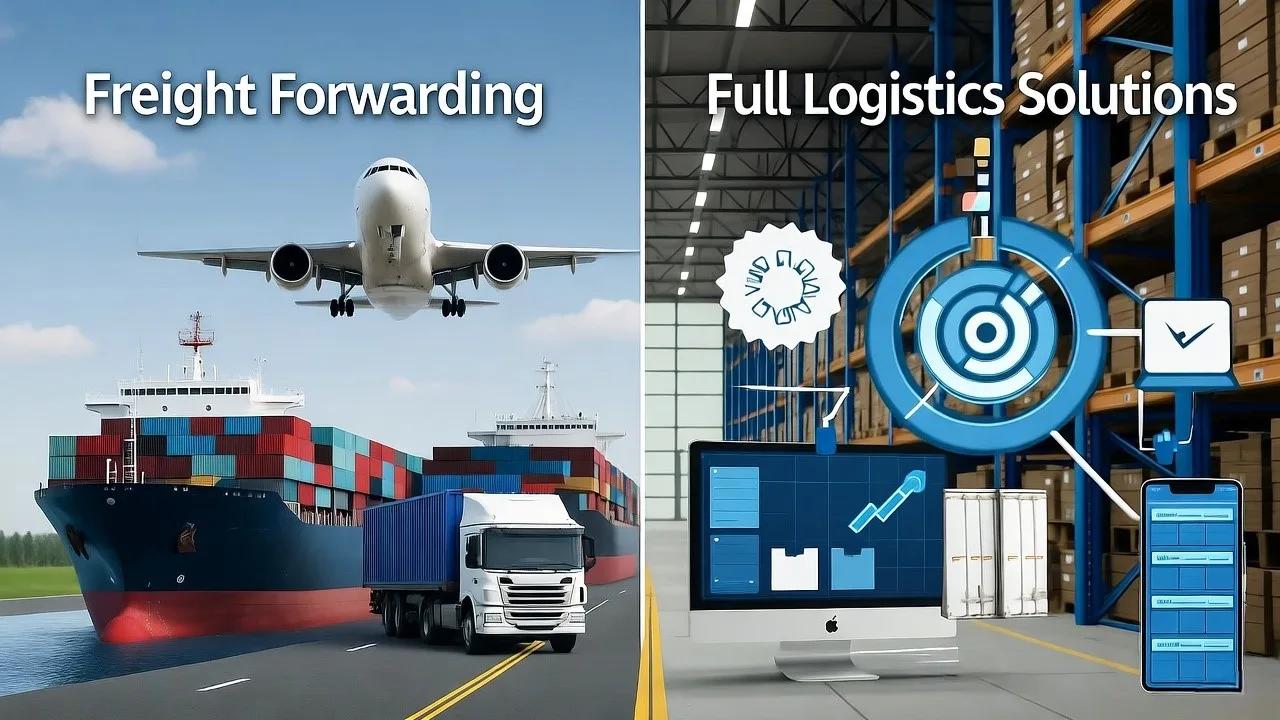

  • Freight Forwarding vs. Full Logistics Solutions

    Freight Forwarding vs. Full Logistics Solutions

    freight forwarding vs full logistics solutions

    Freight Forwarding vs Full Logistics Solutions​ – A Comparison Guide

    When we evaluate a client’s supply chain architecture, especially in the competitive US logistics and supply chain environment, the distinction between a freight forwarder and a 3PL (full logistics provider) is the starting point. It’s a difference in scope, asset ownership, and overall partnership model.

    Freight Forwarding: The Master Orchestration of Movement

    A freight forwarding company is, fundamentally, an asset-light middleman. Their core value proposition is leveraging an extensive network of carriers (ocean, air, rail, and road) to book space and manage the complex administrative processes required to move goods from point A to B.

    • Core Focus: Transportation arrangement and documentation.
    • Key Services: Booking cargo space, negotiating rates with carriers, freight consolidation, and managing customs brokerage and paperwork (e.g., Bills of Lading, commercial invoices).
    • Asset Profile: Non-asset-based. They do not typically own the ships, planes, or trucks (though some larger firms are hybrid).
    • Typical US Client: Businesses with strong in-house warehousing and inventory management, but who need expert assistance with complex international shipping or managing intermodal freight in North America.

    Full Logistics Solutions (3PL/4PL): The End-to-End Supply Chain Partner

    A full logistics solution, or 3PL (Third-Party Logistics), takes on a significantly broader mandate. They manage an entire functional segment, or even the whole, of your supply chain. They are a true operational partner, often integrating directly into your ERP and WMS systems.

    • Core Focus: End-to-end supply chain management, execution, and optimization.
    • Key Services: Transportation management, warehousing and distribution, inventory management, order fulfillment, packaging, and reverse logistics.
    • Asset Profile: Often asset-heavy (owning warehouses, trucks, or equipment) or hybrid, allowing them greater control over execution.
    • Typical US Client: E-commerce firms requiring scalable e-commerce fulfillment in the US, growing manufacturers, or businesses looking to entirely outsource their supply chain operations to focus on core product/service development.

    Choosing Your Partner: Freight Forwarding vs. Full Logistics for US E-commerce and Manufacturing

    The choice is not about which service is “better”, it’s about which service aligns with your business maturity, risk profile, and strategic objectives for your US freight management strategy.

    When a Freight Forwarder is the Right Move

    If your business is focused purely on international freight forwarding and you already have your North American warehousing and distribution figured out, a forwarder is ideal.

    • Cost Efficiency for International Trade: They secure better rates by consolidating smaller shipments (LCL/LTL) into full-container loads (FCL), a critical function for US importers and exporters navigating the ocean freight shipping market.
    • Expert Customs Navigation: For a US company shipping to or from high-volume ports like Los Angeles/Long Beach, Houston, or Newark, the expertise in US customs brokerage is invaluable for ensuring compliance and minimizing delays. This is especially true given recent trade policy shifts impacting US imports (DataM Intelligence).
    • Simpler Vendor Management: You deal with one party for transportation, who then handles coordination across multiple carriers, simplifying your vendor landscape.

    When a Full Logistics (3PL) Solution is Essential

    If your goal is to dramatically scale your fulfillment, reduce capital expenditure on non-core assets, or increase your supply chain visibility, a 3PL is the necessary strategic partner.

    • End-to-End E-commerce Fulfillment: For a US e-commerce business, a 3PL like Amazon Logistics or GXO Logistics handles everything from receiving inventory to picking, packing, and last-mile delivery. They are the engine of your direct-to-consumer (D2C) operation.
    • Scalable Infrastructure (Warehousing): A 3PL provides access to a national network of warehouses, which is vital for reducing last-mile costs and delivery times in the US. They allow you to instantly scale inventory without buying or leasing commercial real estate.
    • System Integration and Optimization: The best 3PLs offer comprehensive Transportation Management Systems (TMS) and Warehouse Management Systems (WMS), giving US businesses real-time visibility and powerful optimization tools, often powered by AI and automation (we’ll dive into this shortly).

    The AI-Driven Advantage: Optimizing US Supply Chains with Autonomous Agents

    This is where the distinction between traditional logistics and a future-proof, technology-first approach becomes critical. Simply moving freight is a commodity; optimizing the entire flow is a source of competitive advantage. At Nunar, we don’t just see a load of cargo; we see a cascade of data points waiting to be orchestrated by a new class of sophisticated software: the AI Agent.

    The future of both freight forwarding and full logistics in the US market, from the docks of Charleston to the inter-modal hubs of Chicago, will be defined by the adoption of these intelligent, goal-oriented systems. Our work developing over 500 such agents and deploying them in production has revealed a new operational playbook for US supply chain leaders.

    Autonomous Agents in Freight Forwarding: The Predictive Intermediary

    An AI Agent deployed at a freight forwarder transforms the role from a human intermediary to a Predictive Inter-modal Logistics Planner.

    • Dynamic Route & Rate Negotiation: Our AI agents monitor global and domestic spot market rates for road freight, air freight forwarding, and ocean routes in real-time. They don’t just get a quote; they predict the future optimal route based on geopolitical risk, weather patterns, and port congestion at key US hubs like the Port of Savannah, automatically locking in capacity when the price-risk ratio is best.
    • Automated Customs and Compliance: Up to 80% of manual paperwork related to customs brokerage can be eliminated. Our agents ingest ever-changing US tariff codes and compliance documentation, autonomously preparing and filing necessary paperwork, dramatically reducing human error and expediting border crossings.
    • Capacity Aggregation: Digital freight marketplaces now aggregate SME demand and auction it to carriers, cutting freight spend by over 10% (Mordor Intelligence). AI agents take this a step further by autonomously identifying the optimal consolidation strategy for your cargo based on other available freight in the network, maximizing the value of multimodal logistics in the United States.

    Autonomous Agents in Full Logistics: The Self-Optimizing Supply Chain

    In a 3PL environment, AI agents evolve from simply managing tasks to running entire operational loops autonomously, creating a truly self-healing supply chain.

    AI Agent TypeFunction in Full Logistics (3PL)US Business Benefit
    Inventory Optimization AgentPredicts micro-demand spikes using sales data and social sentiment. Autonomously rebalances inventory across a national warehouse network (e.g., between a Dallas and a New Jersey fulfillment center) to prevent stockouts and overstocking.Reduces capital tied up in excess inventory by up to 20%; ensures a 99%+ fulfillment rate for crucial e-commerce peak seasons.
    Generative Logistics AgentCreates multiple real-time disruption scenarios (e.g., a major hurricane hitting the Gulf Coast or a rail strike) and proposes immediate, executable mitigation plans, including rerouting and alternative carrier selection.Improves supply chain resilience; prevents costly downtime and penalty fees by automating real-time rerouting, as demonstrated by companies using AI to manage typhoon-related delays.
    Autonomous Procurement AgentContinuously evaluates the cost, reliability, and ESG compliance of transportation and raw material suppliers. Automatically flags non-compliant partners and recommends a switch to alternatives based on pre-defined corporate policy.Reduces supplier risk; ensures compliance with increasingly strict US and global Environmental, Social, and Governance (ESG) requirements.

    This is the power we deliver at Nunar. Our focus is to provide the intelligence layer that elevates a transactional logistics relationship into a strategic, predictive partnership.

    Deep Dive: Cost Structure Comparison for US Companies

    Understanding how you are charged is essential for budget forecasting, especially for US companies that need predictable costs to maintain healthy margins.

    The Freight Forwarding Cost Model

    Freight forwarders operate on a transactional model. Their costs are tied directly to the movement of goods and the associated administrative tasks.

    • Primary Charges: Ocean/Air freight charges (negotiated carrier rates), Terminal Handling Charges (THC), Customs Brokerage Fees, Documentation fees, and insurance costs.
    • Profit Mechanism: Markup on the negotiated carrier rate and fixed fees for value-added services like consolidation and documentation.
    • Budget Predictability: High-volume shippers with stable lanes (e.g., Shanghai to LA) can lock in long-term rates. Spot-market rates for smaller, urgent shipments can be highly volatile.

    The Full Logistics (3PL) Cost Model

    The 3PL model is more complex, built around a spectrum of services. It shifts operational expenditure from fixed costs (warehouses, staff) to variable costs (pay-per-use).

    • Primary Charges: Warehousing/Storage Fees (per pallet, per cubic foot), Fulfillment Fees (pick, pack, ship—per order/item), Transportation Fees, and Technology/Integration Fees (for WMS/TMS access).
    • Profit Mechanism: Efficiency gains from optimized operations and management fees for the integrated services.
    • Budget Predictability: Generally higher predictability. Costs scale directly with sales volume, making it an excellent variable-cost solution for e-commerce and retail with cyclical demand (e.g., the Q4 US holiday season).
    FeatureFreight Forwarding (The Broker/Planner)Full Logistics Solution (3PL/4PL)
    Core ValueArranging and moving freight globally/domestically.Managing and optimizing the entire supply chain flow.
    US FocusImport/Export, Customs Clearance, Intermodal coordination.E-commerce Fulfillment, Warehousing, Inventory Control.
    Technology UseTracking, Documentation Automation, Rate Aggregation.WMS, TMS, Robotics, AI-Driven Optimization (e.g., Nunar Agents).
    Asset OwnershipPrimarily non-asset-based (leverages carrier network).Asset-heavy or hybrid (owns warehouses, trucks, technology).
    Ideal ForCompanies with great in-house supply chain logistics but complex shipping needs.Companies needing scalable fulfillment, full outsourcing, and operational agility.
    Cost ModelTransactional (freight rate + admin fees).Variable (storage + pick/pack + shipping fees).

    The Strategic Imperative: Integrating Digital Freight Marketplaces

    A major trend reshaping both freight forwarding and full logistics in the US is the rise of digital freight marketplaces, such as Uber Freight and C.H. Robinson’s Navisphere. These platforms are not full logistics providers, but they are dramatically digitizing the freight-matching process—a core function of both models.

    • Real-Time Capacity: These marketplaces use algorithms to match shippers with available carrier capacity instantly, bypassing the traditional back-and-forth negotiation, which is a significant advantage for US domestic LTL/FTL.
    • Pricing Transparency: They introduce transparency into a historically opaque industry, forcing both forwarders and 3PLs to adopt more competitive and technology-driven pricing models.

    For a US company, the question is no longer if you use digital tools, but how you leverage them. The logistics provider you choose must not only integrate with these platforms but also use predictive intelligence to anticipate market movements.

    The Convergence Point of Freight and Full Logistics

    For US businesses, the decision between a freight forwarding company and a full logistics solution boils down to a single question: Are you outsourcing a transaction, or are you outsourcing a strategy?

    • If your core strength is operations and you only need specialized help for getting goods past borders and across the ocean—stick with an expert, tech-enabled forwarder.
    • If your goal is to build a hyper-scalable, low-capital-expenditure supply chain that can dynamically adapt to the volatile US market and e-commerce demands—you need the full strategic partnership of a 3PL.

    Regardless of your choice, the competitive edge is no longer in the physical movement of goods, but in the intelligence that orchestrates that movement. That intelligence is the AI Agent. At Nunar, we’ve moved beyond simple automation; we are building autonomous software agents that learn, predict, and act on your behalf, turning your supply chain data into self-driving operations. Our track record of developing and deploying over 500 production-ready AI agents means we speak the language of logistics and the language of high-performance technology.

  • Cryptocurrency Wallet Development

    Cryptocurrency Wallet Development

    Cryptocurrency Wallet Development: Building Secure, Scalable Digital Asset Platforms

    As the digital economy expands, cryptocurrency wallets have become the cornerstone of blockchain transactions and digital asset management. Whether it’s for trading, investing, or decentralized finance (DeFi), a secure and intuitive crypto wallet is the first touchpoint between users and the blockchain ecosystem.

    For U.S. businesses exploring opportunities in Web3, cryptocurrency wallet development represents a high-growth area combining blockchain innovation, cybersecurity, and financial technology.

    This article explores what goes into developing a cryptocurrency wallet, the types of wallets available, key features, technologies used, and best practices for security and compliance.

    What Is a Cryptocurrency Wallet?

    A cryptocurrency wallet is a digital application or hardware device that allows users to store, send, and receive cryptocurrencies securely.

    Unlike a traditional wallet, it doesn’t hold physical money it stores cryptographic keys:

    • Public key: Similar to a bank account number, used to receive funds.
    • Private key: A confidential code that allows users to access and authorize transactions.

    When you own cryptocurrency, you don’t technically own coins stored somewhere; you own the keys that prove ownership and give you the ability to move those assets on the blockchain.

    Why Cryptocurrency Wallet Development Matters for U.S. Businesses

    The United States remains one of the largest crypto markets in the world, with growing institutional participation, regulatory attention, and consumer adoption.

    Developing a cryptocurrency wallet is not just a technical project, it’s a business opportunity.

    Here’s why:

    1. Rising adoption of digital assets: Over 20% of U.S. adults own some form of cryptocurrency.
    2. DeFi and Web3 ecosystems: Wallets are gateways to decentralized exchanges, NFT marketplaces, and staking platforms.
    3. Enterprise blockchain integration: Companies are building wallets to handle tokenized assets, cross-border payments, and smart contracts.
    4. Regulatory alignment: As U.S. regulations evolve, businesses can gain a competitive edge by offering compliant, user-centric wallet solutions.

    Types of Cryptocurrency Wallets

    Before developing a wallet, businesses must understand the different types each designed for specific use cases and user preferences.

    1. Hot Wallets

    Hot wallets are connected to the internet and offer quick access to funds.

    • Examples: MetaMask, Trust Wallet, Coinbase Wallet
    • Ideal for: Daily transactions and active trading
    • Risk: More vulnerable to online attacks due to constant connectivity

    2. Cold Wallets

    Cold wallets are offline storage solutions, often hardware-based.

    • Examples: Ledger, Trezor
    • Ideal for: Long-term asset storage and institutional custody
    • Benefit: Immune to online hacking attempts

    3. Desktop Wallets

    Installed on a user’s computer and store keys locally.

    • Benefit: Users retain full control over their data
    • Limitation: Security depends on the host device

    4. Mobile Wallets

    Smartphone apps that offer convenient access to crypto on the go.

    • Benefit: Easy to use, often include QR-based transactions
    • Common use: Retail payments and everyday trading

    5. Web Wallets

    Browser-based wallets provided by exchanges or third-party services.

    • Benefit: Easy setup and accessibility
    • Limitation: Centralized, often managed by service providers

    6. Custodial Wallets

    In custodial wallets, a company or platform holds users’ private keys.

    • Benefit: Simplifies recovery and compliance
    • Trade-off: Reduced user control over funds

    7. Non-Custodial Wallets

    Users hold their private keys and full ownership of assets.

    • Benefit: Maximum decentralization and privacy
    • Limitation: Users bear full responsibility for key management

    Key Features of a Secure Cryptocurrency Wallet

    When building a wallet, focusing on functionality and security is essential. Here are the core features every modern wallet should include:

    1. Multi-Currency Support

    Support for popular cryptocurrencies like Bitcoin (BTC), Ethereum (ETH), Litecoin (LTC), and emerging tokens built on ERC-20, BEP-20, or Solana standards.

    2. Two-Factor Authentication (2FA)

    Adds an extra layer of protection during login or transaction confirmation.

    3. Backup and Recovery Options

    Seed phrases or backup mechanisms to help users restore their wallets if keys are lost.

    4. Real-Time Conversion Rates

    Integration with market data APIs to show up-to-date crypto-to-fiat conversions.

    5. Biometric Authentication

    Fingerprint or face recognition for quick and secure mobile access.

    6. Transaction History

    Detailed logs of sent and received transactions, with blockchain explorer links.

    7. Multi-Signature Authorization

    Requiring multiple approvals for a transaction, ideal for business or enterprise accounts.

    8. Integration with DeFi and NFTs

    Modern wallets include features for staking, yield farming, or NFT management.

    9. Push Notifications

    Alerts for incoming payments, price changes, or suspicious activity.

    Technology Stack for Cryptocurrency Wallet Development

    The development process involves multiple layers of technology from blockchain protocols to UI/UX frameworks.

    ComponentTechnologies
    Frontend DevelopmentReact Native, Flutter, Swift, Kotlin
    Backend DevelopmentNode.js, Python, Go, Java
    Blockchain IntegrationWeb3.js, Ethers.js, BitcoinJS
    DatabaseMongoDB, Firebase, PostgreSQL
    Security FrameworksAES encryption, SSL, biometric APIs
    Cloud InfrastructureAWS, Google Cloud, Azure
    Testing ToolsMocha, Chai, Postman, Jest

    For scalability, many developers are now using microservices architecture and containerized deployments via Docker and Kubernetes.

    Security Considerations

    Security is the backbone of wallet development. Since wallets handle private keys and digital assets, even minor vulnerabilities can cause significant losses.

    1. End-to-End Encryption

    All data, including user credentials and transaction information, should be encrypted both in transit and at rest.

    2. Secure Key Storage

    Private keys must be stored securely using HSM (Hardware Security Modules) or encrypted local storage.

    3. Anti-Phishing Measures

    Warn users about fraudulent websites or fake apps imitating the wallet interface.

    4. Code Audits and Penetration Testing

    Regular third-party audits ensure the wallet’s integrity against new vulnerabilities.

    5. Compliance with U.S. Regulations

    Adhere to FinCEN, SEC, and AML/KYC requirements for wallets that process transactions or store user funds.

    Steps to Develop a Cryptocurrency Wallet

    1. Define Purpose and Audience

    Decide whether your wallet targets retail users, institutional clients, or businesses.

    2. Choose the Blockchain Network

    Select chains based on target use cases — for example:

    • Bitcoin or Ethereum for general use
    • Solana for speed and scalability
    • Polygon for low-cost DeFi interactions

    3. Design the UI/UX

    Ensure an intuitive layout with strong emphasis on simplicity, trust, and security transparency.

    4. Integrate Blockchain APIs

    Use APIs like Web3.js or Ethers.js to interact with blockchain nodes for sending, receiving, and checking balances.

    5. Implement Security Protocols

    Encrypt private keys, enable 2FA, and include recovery options before production release.

    6. Testing and Auditing

    Run functional, performance, and penetration tests to ensure reliability under stress conditions.

    7. Deployment and Maintenance

    Host backend services securely, monitor uptime, and roll out updates to handle protocol changes or new token standards.

    Cost of Cryptocurrency Wallet Development in the U.S.

    Development costs vary based on complexity, security level, and supported platforms.

    Wallet TypeEstimated Cost (USD)
    Basic single-currency wallet$25,000 – $40,000
    Multi-currency wallet$50,000 – $90,000
    DeFi-integrated wallet$100,000+
    Hardware wallet software integration$120,000 – $200,000

    Adding KYC verification, regulatory compliance, and advanced UI/UX can increase the total investment, but they significantly improve trust and scalability for U.S. users.

    Business Benefits of Developing a Crypto Wallet

    1. Revenue Generation – Through transaction fees, staking rewards, and in-app services.
    2. Brand Positioning – Establish credibility in the Web3 space.
    3. Customer Retention – Offer integrated asset management for your user base.
    4. Innovation Enablement – Build future-ready apps aligned with blockchain trends.
    5. Market Expansion – Tap into a fast-growing digital asset market in North America.

    The Future of Cryptocurrency Wallets

    As blockchain ecosystems evolve, wallets are no longer just storage tools they’re becoming digital identity hubs and Web3 control centers.

    Trends shaping the next generation include:

    • AI-powered fraud detection
    • Cross-chain interoperability
    • Integration with decentralized identity (DID)
    • Voice-command and gesture-based interfaces
    • Quantum-resistant encryption

    These innovations will make crypto wallets smarter, safer, and more accessible for mainstream users in the coming decade.

    People Also Ask

    What is the main purpose of a cryptocurrency wallet?

    A cryptocurrency wallet allows users to securely store, send, and receive digital assets while managing private and public keys required for blockchain transactions.

    How much does it cost to develop a crypto wallet?

    In the U.S., development costs range from $25,000 for a basic wallet to over $100,000 for advanced multi-currency or DeFi-integrated solutions.

    What programming languages are used in wallet development?

    Popular choices include JavaScript (Node.js, React), Python, Go, and C++. For mobile apps, developers use Flutter, Swift, or Kotlin.

    How do you ensure security in crypto wallets?

    By implementing encryption, multi-signature support, HSM-based key storage, code audits, and compliance with AML/KYC standards.

    What’s the difference between custodial and non-custodial wallets?

    Custodial wallets are managed by a service provider that stores private keys. Non-custodial wallets give users full control of their assets and keys.

  • What Is a Security Benefit of Using Virtualization?

    What Is a Security Benefit of Using Virtualization?

    What Is a Security Benefit of Using Virtualization?

    Virtualization has transformed how organizations deploy, manage, and secure their IT environments. From small startups to large enterprises, virtual machines (VMs) and virtualized infrastructure are now core to modern computing. But beyond the operational efficiency and cost savings, one of the most significant advantages of virtualization lies in security.

    This article explains the security benefits of virtualization, how it strengthens defense against modern cyber threats, and why it’s become an essential part of enterprise IT strategy in the United States and beyond.

    Understanding Virtualization

    To understand its security benefits, it helps to start with the basics.

    Virtualization is the process of creating a virtual version of hardware, software, or network resources using a hypervisor, a software layer that separates the physical hardware from virtual environments.

    In simple terms, virtualization lets you run multiple isolated “virtual computers” on a single physical machine. Each virtual machine (VM) behaves like an independent system with its own operating system, applications, and data.

    For example, a single server could host:

    • One virtual machine for testing applications
    • Another for running business software
    • A third for backup or recovery

    Even though all share the same physical hardware, each VM is logically isolated, which is one of the reasons virtualization offers strong security advantages.

    Core Security Benefit: Isolation

    The primary security benefit of virtualization is isolation.

    Each virtual machine operates in its own self-contained environment. That means if one VM is compromised by malware, a virus, or a user error, the breach is contained within that specific virtual machine and cannot spread to others or the host system.

    This isolation creates a kind of “digital sandbox” a safe testing and operational zone that protects other workloads and systems from being affected by security incidents.

    In traditional computing, one compromised server could infect the entire network. In a virtualized environment, that same threat can be quarantined and neutralized more efficiently.

    How Virtualization Strengthens Security in Real-World Scenarios

    Let’s look at how virtualization improves security across different layers of an IT infrastructure.

    1. Containment of Threats

    If malware infiltrates one virtual machine, it remains contained. Security teams can:

    • Take a snapshot of the affected VM to analyze the threat.
    • Isolate it from the network.
    • Restore a clean version without disrupting operations.

    This ability to contain and recover quickly helps reduce downtime and prevent lateral attacks.

    2. Safe Testing Environments (Sandboxing)

    Security teams and developers often use virtual machines for sandbox testing running untrusted code, updates, or applications in a controlled environment.

    If the code behaves maliciously, the impact is confined to that isolated VM. The rest of the infrastructure stays safe.

    3. Simplified Incident Recovery

    Virtualization supports features like snapshots, cloning, and rollback, which make it easier to recover from an attack.

    For example:

    • If ransomware encrypts a VM, administrators can revert to a previous snapshot taken before the infection.
    • Backups can be restored without affecting the rest of the system.

    This rapid recovery capability reduces the overall damage of a security breach.

    4. Segmentation of Sensitive Workloads

    Enterprises often host applications with different security levels. Virtualization allows administrators to segment workloads based on their risk profile.

    For instance:

    • A financial database can run on one VM with strict access controls.
    • A testing environment can run separately on another VM with limited permissions.

    Segmentation reduces the attack surface and ensures sensitive data is protected, even if a less secure environment is compromised.

    5. Secure Patching and Updates

    Because virtual machines are isolated, IT teams can test patches and updates in a virtual environment before deploying them to production systems. This reduces the risk of introducing vulnerabilities or downtime from faulty patches.

    6. Support for Zero-Trust Security Models

    Virtualization complements Zero Trust architecture, which assumes no system or user is inherently trustworthy.

    By isolating resources and verifying each access request independently, virtualization aligns naturally with Zero Trust principles. Administrators can apply fine-grained controls to each virtual instance, enforcing least-privilege access.

    Security Benefits Across Virtualization Types

    There are multiple types of virtualization, each offering distinct security benefits depending on where it’s applied.

    1. Server Virtualization

    Server virtualization allows multiple servers to run on one physical host.
    Security benefit: Limits the impact of a server compromise, improves patch management, and enables disaster recovery through easy replication.

    2. Network Virtualization

    Network virtualization abstracts network services from hardware.
    Security benefit: Enables micro-segmentation, allowing granular control over data traffic and preventing lateral movement of threats across virtual networks.

    3. Desktop Virtualization

    In virtual desktop infrastructure (VDI), user desktops are hosted centrally and delivered remotely.
    Security benefit: Sensitive data never leaves the secure data center, reducing endpoint risks like data theft or malware infection.

    4. Application Virtualization

    Applications are isolated from the host OS.
    Security benefit: Prevents application conflicts and isolates vulnerabilities within individual apps.

    5. Storage Virtualization

    Combines multiple physical storage resources into a single virtual pool.
    Security benefit: Improves control and data redundancy while securing access to storage systems.

    Virtualization and Compliance

    For U.S. businesses, compliance frameworks like HIPAA, PCI DSS, and FedRAMP emphasize data protection, access control, and auditability.

    Virtualization supports these goals by:

    • Enabling role-based access to specific virtual systems
    • Maintaining detailed audit logs through hypervisor-level tracking
    • Supporting encrypted communication between virtual networks
    • Allowing secure multi-tenancy — multiple users or clients sharing hardware safely

    These features make virtualization attractive for sectors like healthcare, government, and financial services where compliance is mandatory.

    How Virtualization Helps Prevent Data Breaches

    Data breaches often occur when attackers gain access to one system and then move laterally across the network. Virtualization disrupts this attack pattern through:

    • Isolation (preventing spread)
    • Segmentation (limiting access scope)
    • Monitoring (detecting unusual activity at the hypervisor level)

    Advanced hypervisors from providers like VMware, Microsoft Hyper-V, and KVM include built-in security tools that detect and prevent suspicious behavior for instance, by monitoring inter-VM communication or unauthorized configuration changes.

    Challenges and Security Considerations

    While virtualization improves security, it also introduces new risks if not managed properly.

    1. Hypervisor Vulnerabilities

    The hypervisor is the control layer for all VMs. If it’s compromised, every virtual machine could be at risk. Keeping hypervisors updated and access-restricted is critical.

    2. VM Sprawl

    As virtual machines are easy to create, organizations often end up with unused or unmonitored VMs. These can become unpatched vulnerabilities if left unmanaged.

    3. Configuration Errors

    Misconfigured virtual networks or permissions can create gaps in isolation. Centralized policy management and regular audits help prevent such issues.

    4. Resource Sharing Risks

    Although VMs are isolated, they share hardware resources. Attackers can attempt side-channel attacks that exploit these shared resources. Proper hardening and encryption help minimize the risk.

    Best Practices to Secure Virtualized Environments

    1. Keep Hypervisors Updated: Regular patching closes known vulnerabilities.
    2. Implement Role-Based Access Control: Limit administrative privileges to essential personnel.
    3. Use Encryption: Encrypt both data-at-rest and data-in-transit between virtual machines.
    4. Monitor and Log Activity: Use hypervisor-level security monitoring tools.
    5. Segment Networks: Use micro-segmentation to separate workloads by sensitivity.
    6. Perform Regular Audits: Check for VM sprawl and unused configurations.
    7. Apply Zero Trust Principles: Verify every connection and limit inter-VM communication.

    Following these practices ensures that virtualization serves as a security enabler, not a vulnerability.

    Real-World Use Cases in the United States

    Several industries across the U.S. rely on virtualization for its security advantages:

    Healthcare

    Hospitals use virtualization to isolate patient data from application servers, ensuring HIPAA compliance and reducing the risk of unauthorized access.

    Finance

    Banks use virtualized environments to test software updates and run secure trading systems without exposing critical infrastructure.

    Government and Defense

    Federal agencies use virtualization to create compartmentalized environments for classified data, reducing insider threat risks.

    Education

    Universities use virtualization to provide secure lab environments for students, allowing experimentation without jeopardizing institutional data.

    The Future of Virtualization Security

    As organizations adopt hybrid and multi-cloud strategies, virtualization continues to evolve alongside containerization and cloud-native technologies.

    Emerging trends include:

    • Hardware-assisted virtualization security: Using processors like Intel VT-x and AMD-V for deeper isolation.
    • AI-driven threat detection: Machine learning algorithms that monitor VM behavior and detect anomalies.
    • Confidential computing: Protecting data even during processing by isolating workloads inside secure enclaves.

    The next generation of virtualization security will focus on visibility, automation, and resilience giving organizations the ability to detect and respond to threats in real time.

    Conclusion

    The key security benefit of using virtualization lies in isolation, the ability to contain threats, separate workloads, and recover quickly from attacks.

    But beyond isolation, virtualization enables resilient architecture, controlled access, and compliance-ready environments. It’s not just a tool for efficiency; it’s a cornerstone of modern cybersecurity strategy.

    For U.S. businesses navigating today’s complex digital landscape, virtualization offers both protection and flexibility, helping organizations stay secure while staying agile.

    People Also Ask

    What is the main security benefit of virtualization?

    The primary security benefit is isolation. Each virtual machine operates independently, preventing threats in one environment from spreading to others.

    How does virtualization improve data security?

    Virtualization enhances data security through workload segmentation, encryption, controlled access, and fast recovery using snapshots and backups.

    Can virtualization prevent ransomware attacks?

    While it can’t prevent an attack entirely, virtualization limits its spread and enables quick recovery by restoring clean VM snapshots.

    Is virtualization secure for cloud environments?

    Yes, when properly configured. Cloud providers use advanced hypervisor security, encryption, and monitoring to ensure tenant isolation and compliance.

    What are the risks of virtualization?

    Risks include hypervisor vulnerabilities, misconfigurations, and unmanaged VM sprawl. These can be mitigated with strong security policies, monitoring, and regular updates.

  • What Is a Semantic Network in Artificial Intelligence

    What Is a Semantic Network in Artificial Intelligence

    What Is a Semantic Network in Artificial Intelligence?

    Artificial Intelligence has many ways of representing knowledge, logic-based models, production rules, neural networks, and more. But one of the oldest and most intuitive methods of organizing knowledge is through something called a semantic network.

    A semantic network (or semantic net) is a structure that represents knowledge as a network of interconnected concepts. It’s a graphical way to show how ideas, objects, and relationships are linked in a meaningful way, much like how our own brains might organize memories and associations.

    Let’s explore what semantic networks are, how they work, why they matter, and where they’re used in AI today.

    Understanding the Concept of a Semantic Network

    At its simplest, a semantic network is a graph of nodes and links.

    • Nodes represent concepts or entities (like “dog,” “animal,” “barks”).
    • Links (or edges) represent relationships between those concepts (like “is a,” “has,” or “can do”).

    This creates a web of meaning, where knowledge is not stored as isolated facts but as a network of relationships.

    For example:

    Dog → is a → Animal  
    Dog → has → Tail  
    Dog → can → Bark

    Each line (or edge) expresses a simple fact. When you combine many such facts, the system can infer new relationships — for instance, if every “animal” can “breathe,” and a “dog is an animal,” then the AI can infer that “a dog can breathe.”

    That’s the power of semantic networks: knowledge representation plus logical inference.

    Why Semantic Networks Matter in AI

    Artificial Intelligence relies on knowledge representation, the ability to model the world so machines can reason about it. Semantic networks make this representation visual, structured, and easily interpretable.

    Here’s why they’re significant:

    1. Human-like reasoning: They mimic how humans connect concepts in memory.
    2. Efficient retrieval: Related facts can be accessed through simple path tracing.
    3. Inference and learning: Systems can deduce new facts by following the connections.
    4. Language understanding: They help AI systems understand word meanings, relationships, and context in natural language.

    In short, semantic networks bridge the gap between structured data and conceptual reasoning, which makes them useful across fields like linguistics, search engines, knowledge graphs, and modern AI models.

    A Brief History of Semantic Networks

    The idea of semantic networks dates back to the 1950s and 1960s, when researchers were exploring how to represent human knowledge in a machine.

    • In 1956, Allen Newell and Herbert A. Simon’s work on symbolic AI laid the foundation for representing information symbolically.
    • By 1968, Ross Quillian introduced the term semantic memory, showing how meaning could be represented as a network of concepts.
    • In the 1970s and 1980s, semantic networks influenced the development of frames, scripts, and later, ontologies, all structures designed to help AI understand relationships and context.

    Today, the same core idea underlies Google’s Knowledge Graph, Linked Data, and ontological databases in advanced AI systems.

    Structure of a Semantic Network

    A semantic network has two basic components:

    1. Nodes

    Each node represents a concept, object, or event. For example:

    • “Bird”
    • “Wing”
    • “Fly”

    2. Edges or Links

    Each edge describes a relationship between two nodes.
    Some common link types include:

    • IS-A (Inheritance relationship): “A robin is a bird.”
    • HAS-A (Part-whole relationship): “A bird has wings.”
    • CAN (Capability relationship): “A bird can fly.”

    Semantic networks can also include attributes, weights, and logical operators that refine the meaning of each link.

    Types of Semantic Networks

    Semantic networks are not all the same. Over time, different forms have evolved for specific tasks in AI.

    1. Definitional Networks

    Used to represent taxonomy or classification hierarchies.
    Example:

    Dog → is a → Mammal  
    Mammal → is a → Animal  

    2. Assertional Networks

    Focus on specific facts or statements rather than definitions.
    Example:

    Fido → is a → Dog
    Fido → has color → Brown

    3. Implicational Networks

    Used for representing causal or conditional relationships.
    Example:

    If it rains → then → the ground gets wet.

    4. Executable Semantic Networks

    Include procedural knowledge, meaning they can trigger actions when certain relationships are met.
    For example, in an AI assistant, “user asks for weather” could link to “fetch weather API.”

    How Semantic Networks Are Used in Modern AI

    While early semantic networks were mostly academic, their core principles are deeply embedded in today’s AI systems.

    1. Knowledge Graphs

    Search engines like Google, Bing, and Yahoo use semantic graphs to connect entities and meanings.
    When you search for “Barack Obama’s wife,” the system uses relationships like “Barack Obama → spouse → Michelle Obama” to give you a direct answer instead of a list of links.

    2. Natural Language Processing (NLP)

    Semantic networks help NLP systems understand word meanings, context, and disambiguation.
    For instance, the word “bank” can mean a financial institution or river edge. A semantic network can determine the correct meaning based on neighboring nodes like “money” or “water.”

    3. Recommendation Systems

    By mapping relationships between products, preferences, and users, semantic networks improve personalization in streaming services or e-commerce.

    4. Cognitive Computing and Expert Systems

    Semantic networks support reasoning systems in fields like healthcare, law, and education.
    For example, a medical AI can represent relationships between symptoms, diseases, and treatments to support diagnostic reasoning.

    5. AI Chatbots and Assistants

    Virtual assistants like Siri, Alexa, and ChatGPT use underlying semantic relationships to interpret intent and provide relevant responses.

    Advantages of Semantic Networks

    1. Intuitive structure: Easy to visualize and understand, even for non-programmers.
    2. Supports reasoning: Enables inheritance, transitivity, and inference.
    3. Scalable representation: Can grow as knowledge expands.
    4. Flexible: Can integrate with databases, ontologies, and machine learning models.
    5. Transparent: The logic behind relationships can be easily inspected unlike black-box neural networks.

    Limitations of Semantic Networks

    Despite their strengths, semantic networks are not without challenges.

    • Scalability issues: Large networks can become complex and hard to manage.
    • Ambiguity: Natural language meanings can be fuzzy or context-dependent.
    • Static nature: Early networks struggled with learning new information dynamically.
    • Lack of quantitative reasoning: They represent relationships qualitatively, not numerically.

    Modern AI systems often combine semantic networks with machine learning, allowing for both symbolic reasoning and data-driven learning a hybrid approach known as neuro-symbolic AI.

    Semantic Networks vs Ontologies vs Knowledge Graphs

    These three terms often overlap, but they are distinct concepts in modern AI.

    FeatureSemantic NetworkOntologyKnowledge Graph
    DefinitionGraph of concepts and relationshipsFormal structure defining concepts and rulesReal-world implementation of interconnected entities
    FormalityInformal or semi-formalHighly formalizedVaries from structured to semi-structured
    Use CaseConcept representationDomain modelingWeb-scale search, AI reasoning
    Example“Cat is an Animal”Defines ‘Cat’ as subclass of ‘Animal’Google’s Knowledge Graph

    In short:

    • A semantic network is the conceptual foundation.
    • An ontology adds rules and constraints.
    • A knowledge graph operationalizes both for large-scale use.

    Real-World Applications in the U.S.

    In the United States, semantic networks power systems across industries:

    • Healthcare: Representing drug interactions and disease relationships in medical databases.
    • Finance: Mapping customer profiles and fraud detection relationships.
    • Education: Personalized learning paths based on concept networks.
    • Legal Tech: Representing statutes, precedents, and case law relationships.
    • AI Research: Building explainable AI models that can reason transparently.

    These applications highlight the enduring relevance of semantic networks in the age of deep learning and large language models.

    The Future of Semantic Networks in AI

    With the rise of neuro-symbolic AI, semantic networks are regaining importance.
    AI systems now combine symbolic reasoning (structured logic) with statistical learning (machine learning). This hybrid approach allows machines to both learn patterns and understand meaning.

    In the coming years, semantic networks will likely form the conceptual backbone of explainable, ethical, and trustworthy AI, particularly in sectors that require reasoning, such as healthcare, law, and finance.

    Conclusion

    Semantic networks might be one of the oldest ideas in Artificial Intelligence, but they remain one of the most elegant ways to represent knowledge. By mapping how concepts connect and relate, they help machines understand context, reasoning, and meaning, the very essence of intelligence.

    In modern AI systems, the semantic network lives on, not as a relic, but as a foundation for knowledge graphs, ontologies, and explainable reasoning systems that drive the next generation of intelligent technologies.

    People Also Ask

    What is a semantic network in simple terms?

    A semantic network is a diagram that shows how ideas or concepts are related. It uses nodes (concepts) and links (relationships) to represent knowledge in a way computers can understand and reason with.

    How is a semantic network used in AI?

    In AI, semantic networks help represent knowledge, reason about relationships, and understand natural language. They form the basis of knowledge graphs and reasoning systems used in modern AI applications.

    What is the difference between a semantic network and a knowledge graph?

    A semantic network is the conceptual model, while a knowledge graph is its real-world implementation often used by search engines and AI systems to connect data and meanings.

    Who developed the concept of semantic networks?

    The concept was introduced in the 1960s by cognitive scientist Ross Quillian, who explored how human memory might store meanings through interconnected networks.

    Why are semantic networks still relevant today?

    They remain essential for explainable AI, knowledge representation, and systems that require logical reasoning especially in fields like healthcare, education, and enterprise AI.

  • How to Value a Logistics Business?​

    How to Value a Logistics Business?​

    how to value a logistics business​

    The U.S. logistics market is projected to reach $1,997.6 billion in 2025, creating immense value for business owners and investors alike . Yet, traditional valuation methods often miss the critical impact of technological adoption, particularly artificial intelligence. From our experience at Nunar, having developed and deployed over 500 AI agents in production for U.S. logistics companies, we’ve seen that businesses leveraging AI don’t just perform better, they command significantly higher valuations.

    This guide breaks down how to accurately value a logistics business in today’s technology-driven landscape, revealing what factors truly move the needle beyond conventional financial metrics.

    Valuing a logistics business requires analyzing financial performance, tangible and intangible assets, market position, and increasingly, technological capabilities like AI integration that enhance efficiency and future revenue potential.

    The Foundation: Traditional Logistics Business Valuation Methods

    Before examining how technology transforms logistics company valuations, you need to understand the established frameworks that underwriters, investors, and acquisition specialists have used for decades. These three primary methods provide different perspectives on value, each with distinct strengths and applications.

    1. Asset-Based Valuation Approach

    The asset-based approach calculates business value by summing all tangible and intangible assets and subtracting liabilities. In logistics, this includes:

    • Tangible Assets: Warehouses, vehicles, equipment, and inventory
    • Intangible Assets: Customer relationships, brand reputation, intellectual property, and proprietary systems 

    This method provides a solid “floor value” for your business, representing the net worth if operations ceased today. It’s particularly relevant for asset-heavy logistics companies with significant real estate holdings or specialized equipment. However, it largely ignores future earning potential, making it insufficient alone for growing companies with scalable business models.

    2. Market Multiples Approach

    The market multiples approach derives value by comparing your business to similar logistics companies that have recently sold. This relative valuation method uses industry-specific multiples such as:

    • Revenue multiples (e.g., 0.8x-1.5x annual revenue)
    • EBITDA multiples (e.g., 4x-8x annual EBITDA)
    • Industry-specific metrics like price-per-truck or value-per-warehouse-square-foot

    This method works well when there are sufficient comparable transactions, providing real-world validation of what the market will bear. The challenge lies in finding truly comparable companies, as logistics businesses vary widely in specialization, geographic coverage, and service mix.

    3. Income Approach (Discounted Cash Flow)

    The discounted cash flow (DCF) method estimates value based on projected future cash flows, discounted to their present value. This forward-looking approach is particularly favored for businesses with strong growth trajectories, as it captures their potential beyond current operations.

    The DCF method requires realistic projections for:

    • Revenue growth rates
    • Operating margins
    • Capital expenditure requirements
    • Working capital needs

    Each method reveals different aspects of value, but modern logistics valuations increasingly require a blended approach that incorporates both financial fundamentals and technological capabilities.

    The New Value Driver: How AI Transformation Impacts Logistics Valuation

    Traditional valuation methods provide a essential foundation, but they systematically undervalue what truly separates high-performing logistics businesses today: their technological capabilities, particularly AI integration. Based on our work deploying AI agents across the U.S. logistics sector, we’ve identified specific AI capabilities that directly translate to valuation premiums.

    Operational Efficiency Multipliers

    AI-driven logistics operations achieve efficiency levels that directly impact financial performance and thus business valuation:

    • Companies using AI in logistics reduce operational costs by up to 50% while improving safety rates by 90% 
    • AI-powered predictive maintenance reduces equipment downtime by 50%, cuts breakdowns by 70%, and lowers maintenance costs by 25% 
    • Warehouses with AI and automation gain 7-15% more capacity without real estate investments 

    These efficiency gains don’t just improve current profitability, they demonstrate scalable operations that can handle growth without proportional cost increases, a key factor in DCF valuations.

    Revenue Enhancement Capabilities

    Beyond cost savings, AI capabilities directly drive revenue growth through enhanced service offerings and customer satisfaction:

    • AI forecasting systems reduce errors by 20-50%, leading to major efficiency improvements and fewer stock-outs 
    • Dynamic pricing optimization using AI can raise profit margins by up to 10% 
    • Companies implementing AI achieve up to 30% better transit times and fuel consumption 

    These capabilities translate directly to higher customer retention, increased wallet share, and premium pricing power, all factors that significantly enhance revenue quality and sustainability in valuation models.

    Strategic Positioning Value

    Perhaps the most overlooked aspect of AI transformation is how it positions logistics businesses for future industry shifts:

    • 64% of supply chain leaders say AI/Gen AI capabilities are important when evaluating new technology investments 
    • By 2030, over 75% of logistics operations will rely on AI for real-time decision-making and automation 
    • AI-enabled supply chains experience a 35% inventory reduction while boosting service levels by 65% 

    Businesses with established AI capabilities aren’t just buying technology—they’re building strategic moats that protect against disruption and create durable competitive advantages.

    Key Valuation Factors for Modern Logistics Businesses

    When valuing a logistics business in 2025, we focus on four critical dimensions that collectively determine sustainable value. Each category carries different weight depending on your business model and growth stage.

    1. Financial Performance Metrics

    Strong financials remain the foundation of any business valuation, but the context matters tremendously:

    • Revenue Trends & Quality: Not all revenue is equal. We examine contract duration, customer concentration, and service mix profitability. Third-party logistics (3PL) providers, who dominate the market with 61.2% share, typically command premium multiples due to their diversified revenue streams .
    • Profitability Margins: EBITDA margins in logistics typically range from 5-15%, with AI-optimized operations achieving the upper quartile performance. Sustainable margins above industry averages indicate operational excellence and pricing power.
    • Cash Flow Stability: Consistent, predictable cash flows justify higher valuation multiples. Businesses with recurring revenue models (e.g., dedicated contract carriage, managed warehousing) typically trade at premiums to project-based businesses.
    • Balance Sheet Strength: Debt levels, working capital efficiency, and asset age all impact risk assessment and valuation.

    2. Asset Valuation Considerations

    Logistics assets vary widely in quality, utilization, and strategic value:

    • Transportation Assets: Fleet age, specialization, and operational data significantly impact value. Modern telematics and utilization data can enhance asset values by demonstrating productivity.
    • Real Estate & Facilities: Warehouse location, automation readiness, and clear height affect property values. The U.S. logistics market is seeing massive warehouse expansion, with 3PL companies contributing to a 63% year-on-year increase in industrial leasing .
    • Technology Infrastructure: This category has evolved from support function to core value driver. Modern TMS, WMS, and AI orchestration platforms represent significant intangible value.

    3. Market Position & Growth Potential

    Your competitive positioning directly influences valuation multiples:

    • Geographic Footprint: The U.S. logistics market shows regional variations, with the South and Midwest offering growth advantages due to lower operating costs and strategic distribution positioning .
    • Specialization & Niches: Focused expertise in high-growth segments like e-commerce logistics (projected to reach $1 trillion in U.S. sales by 2026) commands premium valuations .
    • Customer Base Quality: Diversified blue-chip accounts versus concentrated exposure to volatile industries significantly impact risk assessment.
    • Scalability: Businesses with demonstrable expansion potential into adjacent services or geographies justify growth premiums in their valuations.

    4. Technology Stack & AI Capabilities

    This emerging valuation category increasingly separates premium-valued businesses from the rest:

    • Data Assets: Historical operational data, customer behavior patterns, and predictive analytics capabilities represent significant intangible value.
    • Automation Level: The adoption of robotics, autonomous vehicles, and automated warehouses directly impacts labor productivity and scalability.
    • AI Integration Depth: 38% of logistics companies already use AI solutions, achieving significant competitive advantages . From our deployment experience, businesses with embedded AI agents across operations typically demonstrate 20-30% higher operational efficiency.
    • Proprietary Algorithms: Custom routing, demand forecasting, and pricing optimization systems create durable competitive advantages that translate to valuation premiums.

    A Practical Framework for AI-Enhanced Logistics Valuation

    Based on our experience valuing and transforming logistics businesses, we’ve developed a structured approach that balances traditional methods with technology impact assessment.

    Step 1: Establish Traditional Valuation Baseline

    Begin with conventional valuation methods to establish a foundation:

    1. Calculate asset-based value, focusing on replacement costs for specialized assets
    2. Research recent comparable transactions, adjusting for size, geography, and specialization differences
    3. Develop a 5-year DCF projection based on historical performance and realistic growth assumptions

    This baseline represents your business’s value without considering technology differentiation.

    Step 2: Assess AI Readiness and Implementation

    Evaluate your current technology stack and AI capabilities across these dimensions:

    • Data Infrastructure: Quality, completeness, and accessibility of operational data
    • Automation Level: Current implementation of robotic process automation, physical robotics, and autonomous systems
    • AI Integration: Deployment of machine learning for forecasting, optimization, and decision support
    • Technical Talent: In-house capabilities for developing and maintaining advanced systems

    Step 3: Quantify the AI Impact Premium

    Based on our analysis of hundreds of deployments, we’ve observed that logistics businesses with mature AI implementations typically command valuation premiums of 15-40% over traditionally-operated peers. This premium derives from:

    • Enhanced Profitability: AI-optimized operations typically achieve 10-25% higher EBITDA margins
    • Reduced Risk: Predictive capabilities lower exposure to disruptions and volatility
    • Growth Acceleration: AI-enabled businesses scale more efficiently with lower marginal costs
    • Strategic Positioning: Technology differentiation creates barriers to competition

    Step 4: Adjust for Market Conditions and Strategic Position

    Finally, contextualize your valuation within current market dynamics:

    • Industry Trends: The U.S. logistics market is experiencing 6.5-8.5% CAGR, creating favorable conditions for quality assets 
    • Geographic Factors: Strategic positioning in high-growth logistics corridors enhances value
    • Regulatory Environment: Compliance with evolving emissions standards and safety regulations affects long-term viability
    • Technology Adoption Curve: Early adopters of emerging technologies typically capture disproportionate value

    Common Valuation Pitfalls to Avoid

    Through our valuation work with logistics businesses, we’ve identified several frequent errors that can significantly impact outcomes:

    Overlooking Technology Debt

    Many logistics businesses focus on physical asset maintenance while accumulating significant “technology debt” from outdated systems. This deferred modernization cost represents a future liability that sophisticated acquirers will identify and discount accordingly. We typically observe 10-20% valuation impacts for businesses with significant technology modernization requirements.

    Misjudging Scalability Constraints

    Businesses may appear profitable at current scale but contain structural limitations that impede growth.

    These include:

    • Over-reliance on founder relationships for key accounts
    • Manual processes that don’t scale linearly with volume
    • Regional operating authorities that limit geographic expansion

    Overestimating Synergy Value

    Strategic acquirers often pay premiums for synergistic opportunities, but these are frequently overestimated. Realistic synergy valuation requires honest assessment of integration costs, cultural compatibility, and customer retention risks.

    Undervaluing Proprietary Data Assets

    Many logistics businesses significantly undervalue their accumulated operational data, which can be leveraged for:

    • Predictive analytics models
    • Machine learning training datasets
    • Market intelligence and bench marking

    Based on our experience, established logistics businesses typically have unrecognized data asset values representing 5-15% of their total enterprise value.

    The Future of Logistics Valuation: Emerging Trends

    Valuation approaches must evolve to capture emerging value drivers in the logistics sector:

    AI-First Business Models

    The industry is shifting from AI-as-enabler to AI-as-core-business-model. Companies like Covariant, Gatik, and Vecna Robotics represent this transition, with valuations based primarily on their technological capabilities rather than traditional financial metrics .

    Sustainability Integration

    Environmental performance is transitioning from regulatory compliance to valuation driver. Businesses with established sustainability initiatives—including electric fleets, optimized routing, and waste reduction—increasingly command market premiums.

    Platform Business Models

    Logistics businesses that evolve from service providers to platform operators achieve fundamentally different valuation multiples due to their network effects and scalable economics.

    Specialization Premiums

    As logistics becomes more technologically complex, specialized players in high-value segments like healthcare logistics, temperature-controlled shipping, and e-commerce fulfillment command significant valuation premiums over generalists.

    Implementing Your AI Transformation Strategy

    Based on our experience developing over 500 production AI agents for U.S. logistics companies, we’ve identified a structured approach to building technology value:

    Phase 1: Assessment & Prioritization

    • Conduct technology audit and data readiness assessment
    • Identify high-impact, quick-win opportunities
    • Develop business case with clear ROI projections

    Phase 2: Foundation Building

    • Implement core data infrastructure and integration layers
    • Deploy initial AI agents for targeted use cases
    • Establish performance baseline and tracking

    Phase 3: Scaling & Integration

    • Expand AI capabilities across operations
    • Develop proprietary algorithms and optimization engines
    • Integrate AI decision-making into core workflows

    Phase 4: Transformation

    • Evolve operating model around AI capabilities
    • Develop AI-first service offerings
    • Establish continuous improvement cycles

    The logistics businesses that will command premium valuations in 2025 and beyond aren’t necessarily the largest, they’re the most technologically sophisticated. At Nunar, we’ve helped logistics companies across the U.S. enhancement their valuations by an average of 28% through targeted AI agent deployment. The transformation typically begins with a single operational area but quickly compounds across the organization.

    People Also Ask

    What multiple do logistics companies sell for?

    Logistics companies typically transact at 4-8x EBITDA multiples, with significant variation based on specialization, growth trajectory, and technological sophistication. AI-enabled businesses with recurring revenue models often achieve premiums above this range.

    How do you value a trucking company?

    Trucking company valuation considers fleet age and specialization, driver retention rates, operating authority scope, and technological capabilities. Modern telematics data and AI-optimized routing systems can significantly enhance valuation by demonstrating operational efficiency .

    What is the most important factor in logistics business valuation?

    While financial performance remains fundamental, technological capabilities—particularly AI integration—are increasingly the differentiator between average and premium valuations. Businesses with embedded AI typically demonstrate superior profitability, scalability, and competitive positioning

    How much does AI increase logistics company value?

    Based on our deployment data, logistics businesses with mature AI implementations typically command 15-40% valuation premiums over traditional peers, derived from enhanced profitability (10-25% EBITDA improvements), reduced risk, and accelerated growth potential 

    Can small logistics businesses compete on AI?

    Absolutely. No-code platforms and AI-as-a-service solutions have democratized access to sophisticated capabilities. We’ve deployed effective AI agents for logistics businesses with under 50 employees that achieve efficiency gains comparable to enterprise implementations

  • Data Analyst in the Pharmaceutical Industry

    Data Analyst in the Pharmaceutical Industry

    Data Analyst in the Pharmaceutical Industry: Role, Impact, and Opportunities

    The pharmaceutical industry has always been data-intensive. From clinical trials to post-market surveillance, every stage of drug development generates vast amounts of data. But in recent years, the rise of digital health records, real-world evidence, and AI-driven research has made data not just a byproduct, but a business asset.

    At the center of this transformation stands the data analyst, a professional who bridges scientific research, regulatory compliance, and business decision-making through the intelligent use of data.

    This article explores what a data analyst in the pharmaceutical industry does, why the role has become essential, and how it shapes the future of drug discovery, development, and commercialization in the United States.

    The Expanding Role of Data Analysts in Pharma

    A decade ago, data analysis in pharma was largely confined to statistics departments handling clinical trial outcomes. Today, that’s no longer the case.

    Pharmaceutical companies now employ data analysts across multiple domains:

    • Drug discovery – analyzing molecular structures, genetic data, and compound libraries.
    • Clinical trials – managing patient data, study endpoints, and adverse event monitoring.
    • Manufacturing – improving quality control and production efficiency.
    • Marketing and sales – predicting market trends and measuring campaign performance.
    • Pharmacovigilance – detecting and preventing adverse drug reactions through data surveillance.

    The shift from intuition-based decision-making to data-backed strategies has made analysts integral to every phase of the pharmaceutical value chain.

    Why Data Matters in the Pharmaceutical Sector

    The U.S. pharmaceutical market is among the most regulated and competitive in the world. Every decision—from trial design to pricing—relies on accurate, validated data.

    Data analysts help companies answer critical questions such as:

    • Which drug candidates show the highest probability of success?
    • What is the optimal dosage based on patient demographics?
    • How do side effects compare across populations?
    • Where should marketing resources be focused for maximum ROI?

    When handled well, data accelerates innovation, reduces research costs, and enhances patient outcomes, all while maintaining compliance with the FDA and other regulatory bodies.

    Key Responsibilities of a Data Analyst in Pharma

    The role of a pharmaceutical data analyst involves much more than spreadsheets. It combines domain expertise, statistical reasoning, and business understanding.

    Here are the primary responsibilities:

    1. Clinical Data Management and Analysis

    Data analysts process clinical trial data from electronic data capture (EDC) systems. They ensure accuracy, clean anomalies, and perform statistical evaluations that determine a drug’s safety and efficacy.

    2. Real-World Evidence (RWE) Analytics

    Analysts work with real-world data from hospitals, insurance claims, and wearable devices to assess how drugs perform outside controlled clinical environments.

    3. Regulatory Reporting Support

    They help prepare data for submission to the FDA, EMA, and other authorities, ensuring datasets meet regulatory standards for reproducibility and integrity.

    4. Market and Sales Analytics

    Pharmaceutical data analysts use predictive modeling to forecast demand, identify high-performing territories, and optimize pricing strategies.

    5. Manufacturing and Quality Data Analysis

    They monitor production data to maintain batch consistency, detect defects early, and comply with Good Manufacturing Practices (GMP).

    Common Tools and Technologies in Data Analytics

    Pharma data analysts rely on a mix of statistical tools, visualization software, and domain-specific databases.

    CategoryTools and Platforms Commonly Used
    Statistical AnalysisR, SAS, Python (pandas, NumPy, SciPy)
    VisualizationTableau, Power BI, matplotlib, Seaborn
    Database ManagementSQL, Oracle, PostgreSQL
    Machine Learning / AITensorFlow, Scikit-learn, PyTorch
    Clinical Data SystemsMedidata, OpenClinica, REDCap
    Regulatory & Compliance PlatformsArgus Safety, Veeva Vault, Oracle Clinical

    The Rise of AI and Predictive Analytics in Pharma

    Artificial intelligence has redefined how data analysts operate in the pharmaceutical sector. Rather than just reporting what happened, AI enables predictive insights, forecasting patient responses, identifying at-risk populations, and modeling the success rate of trials before they start.

    For example:

    • Drug Discovery: Machine learning models can analyze molecular properties and predict potential drug targets in weeks rather than years.
    • Clinical Trials: AI-based analytics help identify eligible participants faster and monitor real-time trial progress.
    • Pharmacovigilance: Natural language processing (NLP) systems scan millions of patient reports and scientific publications to detect emerging safety concerns.

    Data analysts now collaborate with AI engineers to fine-tune these systems, interpret outputs, and ensure the ethical and accurate application of predictive insights.

    Data Governance and Compliance

    In the pharmaceutical world, data accuracy isn’t optional, it’s legally mandated. Every dataset must meet the highest standards of integrity, transparency, and traceability.

    Data analysts play a major role in:

    • Maintaining audit trails for data changes
    • Implementing 21 CFR Part 11 compliance (electronic records and signatures)
    • Ensuring data anonymization to protect patient privacy under HIPAA
    • Performing periodic data quality checks before regulatory submissions

    With the FDA increasing its scrutiny on data integrity, trained analysts help safeguard company credibility and prevent costly delays in drug approvals.

    Career Outlook and Demand in the U.S.

    The demand for pharmaceutical data analysts in the U.S. is at an all-time high.

    According to the U.S. Bureau of Labor Statistics (BLS), the employment of data scientists and analysts in healthcare and pharmaceuticals is expected to grow by 35% between 2022 and 2032, much faster than the average for other occupations.

    Key employers include:

    • Global pharmaceutical companies (Pfizer, Johnson & Johnson, Merck, AbbVie)
    • Contract Research Organizations (CROs)
    • Biotechnology startups
    • Health data analytics firms
    • Government and academic research institutions

    Average salaries:

    • Entry-level: $75,000 – $95,000 per year
    • Mid-level: $100,000 – $125,000 per year
    • Senior/Lead roles: $130,000 – $160,000+ per year

    The salary potential grows with specialization in AI, machine learning, or regulatory analytics.

    Skills Needed to Excel

    A successful data analyst in the pharmaceutical industry blends technical, analytical, and domain skills.

    Technical skills:

    • Proficiency in Python, R, SQL, and statistical modeling
    • Understanding of cloud-based data systems (AWS, Azure)
    • Familiarity with machine learning algorithms

    Domain skills:

    • Knowledge of clinical research processes and regulatory frameworks
    • Understanding of biological and chemical datasets

    Soft skills:

    • Analytical problem-solving
    • Communication and storytelling with data
    • Collaboration across R&D, regulatory, and business teams

    The Business Impact of Data Analysts

    In the past, pharmaceutical success depended largely on lab innovation. Today, it depends equally on how well companies interpret and act upon data.

    A skilled data analyst helps achieve:

    • Faster drug approvals through clean, consistent trial data
    • Reduced operational costs via predictive maintenance and automation
    • Higher marketing ROI through evidence-based targeting
    • Improved patient safety by detecting adverse events early

    Essentially, they convert raw information into strategic value—turning terabytes of unstructured data into life-saving decisions.

    Challenges Facing Data Analysts in Pharma

    Despite their growing influence, data analysts face real challenges in this field:

    1. Data Silos: Many pharmaceutical firms still operate with fragmented data across systems.
    2. Regulatory Hurdles: Every dataset must adhere to strict compliance standards.
    3. Interdisciplinary Complexity: Analysts must communicate with scientists, doctors, engineers, and regulators, each speaking a different “language.”
    4. Data Volume Explosion: The sheer scale of genomics and clinical data requires advanced storage and processing capabilities.

    Forward-thinking organizations address these challenges through data unification, cloud migration, and AI-driven automation.

    The Future of Data Analytics in Pharmaceuticals

    Looking ahead, the role of data analysts will only grow more strategic.

    Emerging trends include:

    • AI-driven clinical trial simulations reducing R&D costs
    • Real-world evidence (RWE) becoming central to drug approval processes
    • Integration of IoT and wearable data for continuous patient monitoring
    • Cloud-based data lakes improving collaboration across global teams

    In essence, data analysts will no longer just interpret results, they’ll help shape the design and execution of next-generation medical research.

    People Also Ask

    What does a data analyst do in a pharmaceutical company?

    A pharmaceutical data analyst collects, cleans, and analyzes data from research, clinical trials, and operations to support decision-making. They work across R&D, marketing, and regulatory departments to ensure data-driven efficiency.

    What qualifications are required for a pharma data analyst role?

    Most positions require a bachelor’s or master’s degree in data science, statistics, bioinformatics, or a related field. Familiarity with pharmaceutical regulations and clinical research data is highly valued.

    Which software tools are most used by data analysts in pharma?

    Common tools include SAS, R, Python, SQL, Tableau, and cloud-based analytics platforms like AWS Redshift or Azure Synapse.

    What is the average salary of a pharmaceutical data analyst in the U.S.?

    According to Glassdoor and BLS data, salaries range between $95,000 and $140,000 per year, depending on experience, location, and specialization.

    How is AI changing data analysis in the pharmaceutical industry?

    AI enables predictive modeling, automated data cleaning, and faster drug discovery. It allows analysts to focus on insights rather than manual processing, improving both accuracy and innovation speed.

  • Cloud Computing Business Ideas

    Cloud Computing Business Ideas

    Cloud Computing Business Ideas: 2025 Opportunities for Entrepreneurs

    Cloud computing has transformed how modern businesses operate. From startups to Fortune 500s, everyone relies on the cloud to store data, run software, and scale operations without the limitations of physical infrastructure.

    For entrepreneurs, this creates a thriving landscape of cloud-based business opportunities, ranging from infrastructure management to AI-powered software services. If you’re looking to enter the tech market, cloud computing offers both flexibility and scalability that few industries can match.

    In this article, we’ll explore the most promising cloud computing business ideas for 2025, what makes them profitable, and how you can position your business for success in the U.S. market.

    Why Cloud Computing Is a Goldmine for Entrepreneurs

    Before diving into ideas, it’s worth understanding why cloud computing continues to dominate.

    • Growing Market Size: The U.S. cloud computing market is projected to reach over $450 billion by 2027, with growth driven by AI, edge computing, and IoT integration.
    • Recurring Revenue Models: Most cloud businesses run on subscription models (SaaS, PaaS, or IaaS), ensuring steady cash flow.
    • Low Entry Barriers: Entrepreneurs no longer need large data centers, public cloud providers like AWS, Google Cloud, and Azure offer affordable infrastructure-as-a-service options.
    • Scalability: You can start small and expand globally with minimal capital investment.

    In short, cloud computing allows you to build a scalable business that meets the needs of modern enterprises.

    Top Cloud Computing Business Ideas in 2025

    Below are high-potential business ideas that blend innovation, demand, and profitability in the current U.S. market.

    1. Cloud Consulting and Migration Services

    As companies move away from on-premise systems, they need experts who can handle cloud adoption.
    You can build a business offering:

    • Cloud migration strategy
    • Architecture design (AWS, Azure, or GCP)
    • Cost optimization
    • Security and compliance assessments

    Why it’s profitable: U.S. mid-sized businesses are actively transitioning to hybrid and multi-cloud setups. Most lack in-house expertise, creating space for specialized consultants.

    Pro tip: Partner with cloud providers and earn reseller commissions while delivering managed migration services.

    2. SaaS Product Development

    Software-as-a-Service remains the backbone of the digital economy. From CRM tools to payroll systems, businesses prefer web-based applications over on-premise installations.

    You can launch a SaaS product that solves niche problems in industries such as healthcare, education, or logistics.

    Example ideas:

    • Appointment scheduling platforms for clinics
    • Fleet management systems for logistics companies
    • AI-driven analytics dashboards

    Revenue model: Monthly or annual subscription fees.

    Why it works: Recurring revenue and low distribution costs make SaaS one of the most stable business models in tech.

    3. Cloud Security Solutions

    As cloud adoption increases, so does the risk of cyberattacks. Organizations are seeking advanced tools to safeguard data across multi-cloud environments.

    You can create or resell solutions like:

    • Cloud firewalls and intrusion detection
    • Data encryption services
    • Zero-trust identity management

    Why it’s in demand: Regulatory compliance and rising cyber threats have made cloud security a top priority in 2025.

    Target clients: Financial institutions, healthcare providers, and government contractors.

    4. Cloud-Based Data Analytics Services

    Data has become the new currency, and businesses are eager to make sense of it.

    Launching a cloud analytics service allows companies to integrate, clean, and visualize their data without expensive in-house infrastructure.

    Possible offerings:

    • AI-based business intelligence dashboards
    • Data warehousing and real-time analytics
    • Predictive modeling for sales and operations

    Tools to use: AWS Redshift, Google BigQuery, or Snowflake.

    Why it’s promising: Every mid-sized enterprise in the U.S. now wants data-driven decision-making, but lacks the technical team to build custom systems.

    5. Cloud Storage and Backup Solutions

    Data loss costs businesses billions each year. A cloud-based storage or backup service is one of the simplest yet most essential offerings you can provide.

    Business models include:

    • Secure cloud backup for small businesses
    • Disaster recovery solutions
    • End-to-end encryption storage

    Why it’s profitable: Businesses prefer vendor-managed solutions over maintaining local servers. Subscription-based pricing ensures predictable revenue.

    6. AI-as-a-Service (AIaaS)

    With generative AI becoming mainstream, integrating AI capabilities into cloud platforms is a booming niche.

    You can offer:

    • AI model hosting and management
    • Chatbots and virtual assistants for businesses
    • Predictive analytics or image recognition APIs

    Example: Launch an AI-powered document summarization service or an automated compliance checker for legal teams.

    Why it’s powerful: Many U.S. firms want to use AI but don’t have internal ML expertise. Cloud-based AI services make it accessible.

    7. Cloud-Based DevOps and Automation

    DevOps is the engine that keeps modern software development efficient. Offering DevOps as a Service helps startups and enterprises deploy faster with CI/CD pipelines and monitoring systems.

    Services to offer:

    • Container orchestration (Kubernetes, Docker)
    • Infrastructure automation (Terraform, Ansible)
    • Continuous testing and deployment

    Why it’s valuable: Companies want to shorten time-to-market and reduce downtime, making DevOps a critical function.

    8. Cloud Gaming Platform

    The gaming industry is another massive opportunity. Cloud gaming eliminates the need for expensive consoles and allows users to stream games from servers.

    Possible business ideas:

    • Cloud gaming infrastructure service for developers
    • White-labeled streaming platform
    • AI-driven game recommendation system

    Why it’s trending: The U.S. gaming market is shifting toward subscription-based access models, much like Netflix for games.

    9. Cloud-Based Healthcare Management Systems

    Healthcare providers are increasingly dependent on digital record-keeping and telemedicine. A HIPAA-compliant cloud healthcare platform could manage:

    • Patient data
    • Billing systems
    • Appointment scheduling
    • Telehealth sessions

    Why it’s a strong idea: U.S. healthcare facilities prioritize secure, accessible, and compliant digital infrastructure.

    Growth opportunity: Combine AI and cloud for predictive patient care or clinical analytics.

    10. Multi-Cloud Management Tools

    Many enterprises now use a combination of AWS, Azure, and GCP for flexibility. Managing costs, performance, and compliance across multiple clouds is complex.

    You can create or resell multi-cloud management tools that:

    • Monitor usage and billing
    • Automate deployment
    • Provide unified analytics dashboards

    Why it’s profitable: As multi-cloud adoption grows, companies need unified control panels that simplify operations.

    How to Start a Cloud Computing Business in the U.S.

    1. Choose a niche – Start with a specific service (e.g., migration, security, or SaaS) that matches your expertise.
    2. Define your value proposition – Focus on measurable outcomes such as cost reduction, automation, or security.
    3. Build partnerships – Collaborate with AWS, Azure, or Google Cloud for credibility and support.
    4. Ensure compliance – Understand U.S. data privacy laws (HIPAA, SOC 2, GDPR for cross-border clients).
    5. Offer scalable pricing – Use subscription or usage-based billing to attract startups and mid-sized clients.
    6. Focus on marketing – Invest in SEO, case studies, and LinkedIn campaigns to attract B2B leads.

    The Future of Cloud Businesses

    As AI and automation merge with cloud technologies, new opportunities will continue to emerge, especially in industries like manufacturing, logistics, and sustainability. Entrepreneurs who adopt a problem-first mindset rather than chasing trends will stand out.

    The next generation of cloud businesses will be data-centric, API-driven, and AI-augmented, focusing on seamless integrations rather than standalone products.

    People Also Ask

    What is the best cloud computing business to start in 2025?

    Cloud consulting, SaaS development, and AI-as-a-Service platforms are currently the most profitable due to increasing demand among U.S. enterprises.

    How much does it cost to start a cloud computing business?

    Depending on your model, initial investment can range from $10,000 to $150,000, mostly covering infrastructure, licenses, and marketing.

    Is cloud computing business profitable in the U.S.?

    Yes. The recurring subscription model and growing enterprise dependency on cloud platforms make it one of the most stable and scalable markets.

    What trends are shaping cloud business in 2025?

    AI integration, multi-cloud architecture, edge computing, and sustainability-driven infrastructure are leading the next wave of innovation.

  • The Role of Virtualization in Cloud Computing

    The Role of Virtualization in Cloud Computing

    The Role of Virtualization in Cloud Computing: Powering the Modern Digital Infrastructure

    In today’s business environment, cloud computing has become the backbone of digital transformation. From startups to large enterprises, organizations across the United States are migrating workloads to the cloud to gain scalability, agility, and cost efficiency. But what makes this possible at such a massive scale? The answer lies in one foundational technology, virtualization.

    Virtualization is the hidden layer that enables the flexibility and efficiency of modern cloud platforms. It allows physical hardware to be divided into multiple virtual environments, each running independently and efficiently. In essence, it’s what turns a single physical server into multiple virtual machines (VMs), maximizing resource utilization and reducing costs.

    This blog explores the role of virtualization in cloud computing, its types, benefits, applications, and how it drives enterprise innovation across industries in the United States.

    1. Understanding Virtualization in Cloud Computing

    At its core, virtualization is the process of creating a virtual version of physical components, servers, storage devices, operating systems, or networks. Instead of dedicating an entire physical machine to a single task, virtualization divides computing resources into isolated, software-based environments known as virtual machines (VMs).

    Each VM behaves like an independent computer, capable of running its own operating system and applications, even though it shares the same physical hardware underneath.

    This ability to abstract hardware resources is what enables cloud service providers (CSPs) like AWS, Microsoft Azure, and Google Cloud to offer on-demand infrastructure to thousands of clients simultaneously.

    2. The Relationship Between Virtualization and Cloud Computing

    Cloud computing wouldn’t exist without virtualization. The cloud relies on virtual environments to allocate, manage, and scale computing resources dynamically.

    Here’s how they interconnect:

    VirtualizationCloud Computing
    Technology that abstracts physical hardware into virtual instancesService model that delivers those virtual resources over the internet
    Runs multiple operating systems on one machineOffers virtual servers, storage, and networking as a service
    Managed by hypervisorsManaged by cloud orchestration and provisioning systems

    In short, virtualization is the enabler, and cloud computing is the outcome.

    3. Key Components of Virtualization

    To understand how virtualization powers cloud computing, it’s important to look at its main components:

    a. Hypervisor

    The hypervisor is the core software layer that makes virtualization possible. It sits between hardware and virtual machines, managing resource allocation and ensuring isolation between VMs.

    Two main types exist:

    • Type 1 (Bare-metal): Runs directly on physical hardware (e.g., VMware ESXi, Microsoft Hyper-V, KVM). Used in data centers and cloud servers.
    • Type 2 (Hosted): Runs on top of an existing OS (e.g., Oracle VirtualBox). Used for development or testing.

    b. Virtual Machines (VMs)

    Each VM is a fully functional system with its own CPU, memory, and disk resources. Multiple VMs can coexist on one physical server without interfering with each other.

    c. Virtualization Management Software

    This software manages resource allocation, monitoring, and provisioning, essential for cloud orchestration and auto-scaling in large environments.

    d. Storage and Network Virtualization

    Virtualization isn’t limited to compute.

    • Storage virtualization pools data from multiple physical devices into one logical unit.
    • Network virtualization allows flexible, software-defined connections between VMs, enhancing security and scalability.

    4. Types of Virtualization in Cloud Computing

    Enterprises in the U.S. use various forms of virtualization to power different cloud environments:

    1. Server Virtualization

    Divides one physical server into multiple virtual servers, each running independently. It improves hardware utilization and reduces maintenance costs.

    2. Storage Virtualization

    Aggregates data storage across multiple devices into a single virtual pool, making data management simpler and faster.

    3. Network Virtualization

    Creates virtual networks through Software-Defined Networking (SDN), enabling flexible, secure communication between virtual machines and cloud services.

    4. Desktop Virtualization

    Hosts user desktops in a centralized server or cloud, enabling remote access to work environments—ideal for hybrid work models.

    5. Application Virtualization

    Allows applications to run in isolated environments without being installed on the underlying OS, reducing compatibility issues.

    6. Data Virtualization

    Provides a unified view of data stored in different locations, useful for analytics and integration across hybrid cloud setups.

    5. Benefits of Virtualization in Cloud Computing

    a. Resource Optimization

    Virtualization allows multiple workloads to share the same hardware, maximizing CPU, memory, and storage utilization.

    b. Cost Efficiency

    By reducing the number of physical servers needed, companies lower power, cooling, and maintenance costs.

    c. Scalability and Flexibility

    New virtual machines can be deployed or scaled up within minutes—supporting fast-growing U.S. businesses.

    d. Disaster Recovery and High Availability

    Virtual machines can be easily backed up or migrated across servers, ensuring business continuity during outages.

    e. Security and Isolation

    Each VM operates in isolation, reducing risks of data breaches or cross-application interference.

    f. Faster Deployment and Testing

    Developers can create multiple testing environments instantly without needing additional hardware.

    g. Energy Efficiency

    By consolidating workloads onto fewer physical machines, virtualization reduces energy consumption, a growing ESG priority for American enterprises.

    6. Virtualization in Different Cloud Models

    a. Infrastructure as a Service (IaaS)

    Virtualization forms the backbone of IaaS platforms like AWS EC2 and Azure Virtual Machines. It allows users to rent virtualized computing resources rather than own physical infrastructure.

    b. Platform as a Service (PaaS)

    In PaaS, virtualization enables developers to deploy applications on shared environments without worrying about underlying servers.

    c. Software as a Service (SaaS)

    Virtualization supports scalability and multi-tenancy for SaaS platforms, ensuring that different customers can securely share the same infrastructure.

    7. Virtualization Technologies Driving Cloud Innovation

    Some of the most widely used virtualization platforms include:

    • VMware vSphere
    • Microsoft Hyper-V
    • KVM (Kernel-based Virtual Machine)
    • Citrix XenServer
    • OpenStack

    In addition, containerization technologies like Docker and Kubernetes represent the next evolution offering lightweight, faster-deploying alternatives to traditional virtual machines. Containers and VMs often coexist, with VMs providing hardware abstraction and containers handling application isolation.

    8. Real-World Enterprise Use Cases

    Virtualization powers several real-world applications across industries in the USA:

    • Healthcare: Virtualized environments secure patient data and streamline medical record systems under HIPAA compliance.
    • Finance: Banks use virtualization for resilient trading systems and data isolation.
    • Education: Universities host virtual learning labs for remote students.
    • Manufacturing: Virtualized control systems improve automation reliability.
    • Government and Defense: Virtual machines protect sensitive systems from physical tampering and cyber threats.

    9. Challenges and Best Practices

    While virtualization offers immense benefits, enterprises must address potential challenges:

    • Performance overhead from hypervisors
    • Licensing costs for enterprise-grade virtualization software
    • Security vulnerabilities if virtual machines share the same host improperly
    • Complex management in hybrid or multi-cloud setups

    Best practices include:

    • Using cloud-native monitoring tools for visibility
    • Regularly updating hypervisors and patches
    • Implementing zero-trust access across virtual environments
    • Automating provisioning through Infrastructure as Code (IaC)

    10. Future of Virtualization in the Cloud

    Virtualization is evolving with AI-driven resource management, edge computing, and serverless architectures.

    Emerging trends include:

    • AI-optimized hypervisors that dynamically allocate resources
    • Edge virtualization for local processing in smart factories and IoT environments
    • Integration with AI agents to automate VM provisioning and predictive scaling

    These innovations are reshaping how enterprises in the U.S. deploy and manage digital infrastructure—making virtualization not just a technology but a strategic asset.

    Conclusion

    Virtualization is the foundation of cloud computing, it’s what makes flexibility, scalability, and on-demand service delivery possible. For U.S. enterprises, it remains the most reliable way to modernize IT infrastructure, reduce costs, and improve operational agility.

    As businesses move toward AI, IoT, and edge computing, virtualization continues to evolve, bridging the gap between physical hardware and limitless digital scalability.

    The future of cloud computing is, at its core, a future built on virtualization.

    People Also Ask

    What is virtualization in cloud computing?

    Virtualization is a technology that allows multiple virtual environments to run on a single physical system, enabling cloud providers to offer flexible and scalable computing resources.

    How does virtualization benefit cloud computing?

    It improves resource utilization, reduces infrastructure costs, enhances scalability, and enables high availability and disaster recovery capabilities.

    What are the main types of virtualization used in cloud computing?

    The main types include server, storage, network, desktop, and application virtualization.

    What is the difference between virtualization and containerization?

    Virtualization abstracts hardware into virtual machines, while containerization abstracts the operating system to run lightweight, isolated application environments.

    How is virtualization used by U.S. enterprises?

    Companies use virtualization to consolidate data centers, improve business continuity, enhance cybersecurity, and manage hybrid cloud infrastructure efficiently.

  • How to Start a Logistics Company

    How to Start a Logistics Company

    How to Start a Logistics Company in the USA: A Step-by-Step Guide for Entrepreneurs

    Starting a logistics company in the United States can be one of the most rewarding ventures in today’s fast-moving economy. As eCommerce, manufacturing, and supply chains grow more complex, businesses are increasingly dependent on reliable logistics providers to move goods efficiently and transparently.

    But launching a logistics business requires more than owning trucks and hiring drivers, it’s about building a scalable, technology-driven operation that delivers speed, compliance, and visibility.

    In this detailed guide, we’ll cover everything you need to know about how to start a logistics company in the USA, including planning, licenses, equipment, technology, and funding.

    1. Understanding the U.S. Logistics Market

    Before getting started, it’s crucial to understand the scope and opportunity. The U.S. logistics and transportation sector is valued at over $2 trillion, covering freight forwarding, warehousing, last-mile delivery, and supply chain management.

    With the growth of eCommerce, manufacturing exports, and AI-powered fleet automation, logistics companies are in high demand. Whether you want to focus on freight brokerage, courier services, or warehouse operations, the industry offers strong potential for scalability.

    2. Choose Your Logistics Niche

    Logistics is a broad field, and new companies succeed when they specialize first. Here are common niches to consider:

    • Freight and cargo transportation (local or interstate)
    • Third-party logistics (3PL) services for eCommerce companies
    • Warehousing and fulfillment for retail and manufacturing clients
    • Cold-chain logistics for food and pharmaceuticals
    • Last-mile delivery for online retailers
    • Freight brokerage connecting shippers and carriers

    Selecting a niche helps you refine your business model, set realistic startup costs, and target the right audience.

    3. Create a Business Plan

    A logistics business plan serves as the blueprint for your company. It should outline:

    • Business objectives and mission
    • Market analysis (local competitors, customer demand, cost structure)
    • Operational plan (fleet, routes, warehouse, staffing)
    • Technology plan (fleet management, automation, CRM)
    • Financial projections (startup costs, pricing, revenue targets)
    • Funding sources (bank loans, private investment, SBA programs)

    Having a clear plan also improves your credibility with banks, lenders, and investors when seeking capital.

    4. Legal Requirements and Licenses

    Setting up a logistics company in the USA requires multiple licenses and regulatory clearances depending on the state and service type.

    Key legal steps include:

    • Register your business (LLC, corporation, or partnership)
    • Get a USDOT number from the U.S. Department of Transportation
    • Apply for an MC number (Motor Carrier Authority) if operating across state lines
    • Obtain state and local permits for warehouse or delivery operations
    • Secure insurance coverage, including:
      • General liability
      • Commercial vehicle insurance
      • Cargo insurance
      • Workers’ compensation

    You’ll also need to comply with FMCSA (Federal Motor Carrier Safety Administration) regulations, especially if you operate heavy trucks or carry freight interstate.

    5. Setting Up Infrastructure and Equipment

    Your operational setup depends on your niche, but here are essentials for most logistics businesses:

    • Vehicles: Vans, trucks, or trailers with GPS tracking
    • Warehouse or fulfillment center: For storage, packaging, and cross-docking
    • Loading equipment: Forklifts, conveyors, and pallet jacks
    • Fleet management systems: To track routes, fuel, and driver performance
    • IT systems: CRM, ERP, or logistics management platforms for order and inventory tracking

    For smaller startups, leasing vehicles and warehousing space can reduce initial costs.

    6. Build a Skilled Operations Team

    Your team forms the backbone of your logistics business. Core roles include:

    • Operations manager – oversees dispatch and routing
    • Fleet manager – maintains vehicles and monitors driver compliance
    • Warehouse supervisors – handle inventory and shipments
    • Drivers and delivery staff – execute logistics operations
    • Customer support – manage client queries and scheduling

    Invest in training and safety programs, especially if your drivers operate heavy or hazardous cargo.

    7. Adopt Technology and Automation

    Modern logistics companies rely on technology for efficiency, accuracy, and visibility.

    Must-have tools include:

    • Transportation Management System (TMS) – for scheduling and freight tracking
    • Warehouse Management System (WMS) – for inventory and order accuracy
    • AI-driven route optimization – to minimize fuel costs and delivery time
    • IoT sensors – for real-time asset tracking
    • AI chatbots or agents – to automate customer support and billing

    Automation not only cuts costs but also helps deliver consistent customer experiences, an important factor for winning enterprise clients.

    8. Build Partnerships and Client Networks

    Strong relationships are crucial in the logistics business. Partner with:

    • Shippers and manufacturers for recurring freight contracts
    • Retailers and distributors for warehousing and delivery
    • Freight brokers for route optimization and carrier matching
    • Technology vendors for GPS, AI analytics, or ERP integration

    Networking through industry associations like the American Trucking Associations (ATA) or regional logistics councils can also lead to early business opportunities.

    9. Plan for Funding and Cash Flow

    Startup costs for logistics companies can range from $30,000 to over $500,000, depending on your scale and assets.

    Funding options include:

    • Small Business Administration (SBA) loans
    • Equipment leasing programs
    • Angel investors or venture capital
    • Business lines of credit
    • Revenue-based financing

    Also, ensure strong cash flow management since clients often pay invoices on net-30 or net-60 terms.

    10. Marketing Your Logistics Company

    To attract clients in the competitive U.S. logistics market, you’ll need a professional online presence and strong brand credibility.

    Effective marketing strategies include:

    • A modern website with service pages and contact forms
    • Search engine optimization (SEO) for keywords like “freight forwarding in [city]”
    • LinkedIn and Google Ads targeting manufacturers and retailers
    • Case studies and testimonials to build trust
    • Content marketing – blogs, whitepapers, and logistics insights
    • Offering free consultations or demos to generate qualified B2B leads

    11. Focus on Compliance and Sustainability

    Modern logistics companies must prioritize compliance and sustainability:

    • Maintain driver logs and safety checks under DOT standards
    • Reduce emissions with electric or hybrid fleets
    • Use AI-based route optimization to minimize idle time and fuel usage
    • Adopt paperless billing and digital inventory to reduce waste

    Sustainability not only improves brand image but can also attract enterprise contracts from ESG-conscious clients.

    12. Scaling and Growth Strategy

    Once your logistics business is operational, growth depends on:

    • Expanding into new routes or states
    • Offering value-added services (packaging, customs clearance, cold-chain logistics)
    • Partnering with eCommerce platforms or marketplaces
    • Investing in AI and predictive analytics for smarter planning

    You can also integrate AI-driven demand forecasting tools to optimize fleet usage and reduce downtime.

    Conclusion

    Starting a logistics company in the USA is a strategic venture with immense potential. It requires a combination of industry knowledge, legal compliance, capital planning, and technology adoption.

    The logistics industry rewards companies that are reliable, transparent, and data-driven. Whether you begin as a small regional delivery operator or a nationwide freight provider, building a foundation of trust, technology, and efficiency will position you for long-term success.

    People Also Ask

    How much does it cost to start a logistics company in the USA?

    Startup costs typically range from $30,000 to $500,000, depending on fleet size, licenses, and warehouse setup. Leasing equipment initially can reduce upfront expenses.

    Do I need a commercial driver’s license (CDL) to start a logistics business?

    You don’t personally need a CDL if you’re not driving, but your drivers must have one for vehicles above 26,000 pounds or for hazardous materials transport.

    How can I find clients for my logistics company?

    Start by targeting manufacturers, wholesalers, and retailers through LinkedIn, logistics directories, and industry trade shows. Partnering with freight brokers can also bring consistent leads.

    What technology should I use for logistics operations?

    Essential tools include TMS (Transportation Management System), WMS (Warehouse Management System), and AI route optimization platforms to streamline dispatch and improve efficiency.

    Is the logistics industry profitable in the U.S.?

    Yes. The U.S. logistics industry is expanding steadily with margins typically between 10% and 20%, depending on fuel efficiency, load optimization, and contract structure.