Author: hmsadmin

  • Logistics in Oil and Gas Industry​

    Logistics in Oil and Gas Industry​

    logistics in oil and gas industry​

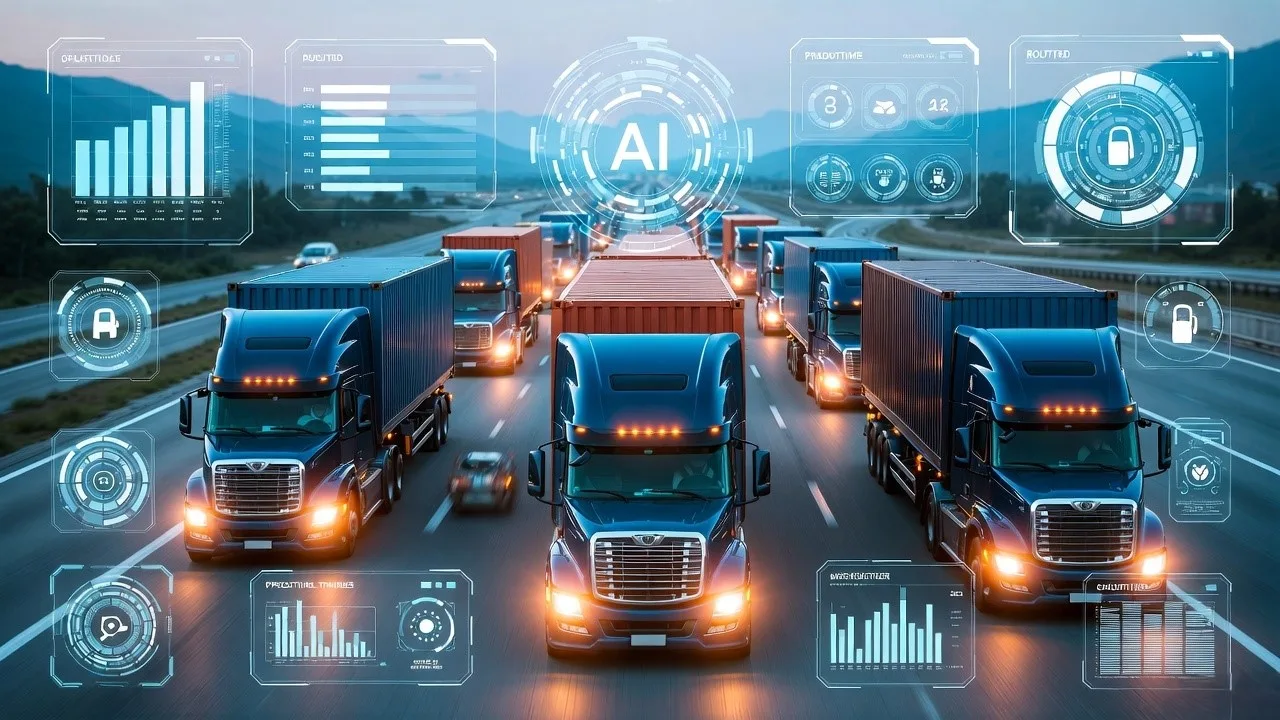
    A major North American refinery was losing an estimated $10 million annually through “octane giveaway”, a subtle but devastating logistical and refining inefficiency. This issue, hidden within massive, complex datasets, remained unresolved until an AI agent analyzed the operation and pinpointed the exact corrective actions. The result was a staggering $10 million in annual savings from a single optimization . This is the power of AI in oil and gas logistics today, not a future promise, but a present-day reality delivering quantifiable returns.

    At Nunar, with over 500 AI agents successfully deployed in production environments across the United States, we have witnessed a fundamental shift. The industry is moving from reactive, siloed logistics management to a future of intelligent, self-optimizing supply chains. These systems are finally capable of handling the immense data tidal wave, up to 2 terabytes daily from operations, that has long overwhelmed human analysts.

    AI agents are specialized, autonomous systems that optimize oil and gas logistics by predicting disruptions, automating scheduling, and managing inventory, leading to double-digit percentage reductions in operational costs .

    Why Traditional Logistics Systems Are Failing the Oil and Gas Industry

    The oil and gas supply chain is arguably one of the most complex in the world. It involves moving equipment, materials, and products across vast, often remote geographies, and is subject to volatile market forces, stringent environmental regulations, and extreme operating conditions. Traditional planning and execution systems, which often rely on historical data and manual intervention, are no longer sufficient. They create three critical pain points:

    • Reactive, Not Proactive: Most systems flag issues only after they have occurred—a pipeline pressure drop, a vessel delay, or equipment failure. This leads to frantic fire-fighting, costly downtime, and supply disruptions. Research indicates that unplanned downtime and maintenance can cost the global industry $20 billion annually in inefficiencies .
    • Data-Rich but Insight-Poor: As noted by ABI Research, oil and gas operations generate terabytes of data daily from sensors, SCADA systems, and operational reports . Without advanced analytics, this data remains siloed and underutilized, leaving “numerous opportunities in the shadows” .
    • Inflexible and Fragmented: Disconnected systems for inventory management, transportation scheduling, and demand forecasting create a fragmented view. When a storm disrupts shipping lanes or a refinery upset changes product yields, the entire logistics network cannot adapt quickly enough, leading to bottlenecks and wasted resources.

    How AI Agents Work: The Engine of Intelligent Logistics

    An AI agent in logistics is not merely a dashboard or an alert system. It is an autonomous decision-making engine. At Nunar, our agents are built on a closed-loop architecture that mirrors the human decision-making process but at a scale, speed, and accuracy that is superhuman.

    The process can be broken down into four continuous stages:

    1. Data Fusion and Perception: The agent ingests and unifies real-time data from a myriad of sources. This includes live sensor data from pipelines and equipment, GPS and IoT tracking from trucks and vessels, inventory levels from storage tanks, weather feeds, and market demand forecasts. It creates a single, coherent view of the entire supply chain.
    2. Analysis and Prediction: Using machine learning (ML) and predictive analytics, the agent processes this unified data to identify patterns and predict future states. It can forecast equipment failures with an average advance notice of nine days, predict transit delays due to weather, or model the impact of a price fluctuation on regional demand .
    3. Optimization and Decision-Making: This is the core of the agent’s intelligence. Based on its predictions, it runs thousands of simulations to determine the optimal course of action. Should it reroute a shipment, adjust production rates, or pull safety stock from a different terminal? It weighs all constraints (cost, time, regulations) to make the best decision.
    4. Execution and Autonomous Action: The final stage is where the agent moves from recommendation to action. It can autonomously execute tasks within defined parameters, such as rescheduling a maintenance crew via a connected work order system, adjusting valve settings through an integrated control system, or sending new routing instructions directly to a truck’s telematics unit.

    Key Use Cases: AI Agents in Action Across the Supply Chain

    The following table summarizes the primary applications of AI agents across the oil and gas logistics value chain.

    Supply Chain SegmentAI Agent ApplicationReal-World Impact
    Upstream LogisticsForecasting drilling site material demand; optimizing transport of water, sand, and chemicals; coordinating crew and equipment schedules.Reduces “waiting on cement” and other downtime; cuts inventory carrying costs by 20-30%.
    Midstream LogisticsPredictive maintenance for pipelines; real-time routing for crude oil trucks; optimizing batch schedules and storage tank management.Slashes unplanned downtime; identifies potential failures days in advance ; improves asset utilization.
    Downstream LogisticsDemand forecasting for refined products; optimizing distribution routes and load planning; managing refinery feedstock schedules.Eliminates costly “octane giveaway,” saving $10M/year ; reduces fuel costs and improves on-time delivery.
    Cross-FunctionalSupply chain risk management; automated reporting and compliance; dynamic procurement and supplier selection.Proactively identifies and mitigates disruptions from geopolitics or weather; automates back-office tasks .

    Drilling Site Logistics and Inventory Management

    In upstream operations, the timely delivery of materials like propellant, drilling mud, and casing is critical. Any delay can halt a multi-million dollar drilling operation. An AI agent transforms this process.

    • Predictive Demand: By analyzing the drilling plan, real-time drilling speed (ROP), and geological data, the agent can predict material consumption and automatically trigger orders and deliveries just-in-time, eliminating both shortages and expensive on-site inventory buildup.
    • Crew and Equipment Coordination: As highlighted by providers like Glide, AI scheduling agents can automatically coordinate the complex movements of personnel and specialized equipment, “freeing up time for critical decision-making and enhancing team efficiency” .

    Predictive Maintenance for Pipeline and Infrastructure

    Midstream logistics rely on the uninterrupted flow of product through pipelines and terminals. A single failure can have catastrophic environmental and financial consequences.

    • From Scheduled to Predictive: AI agents move beyond rigid time-based maintenance schedules. As reported by ABI Research, companies like Canvass AI and PTC use agents to monitor asset health, schedule maintenance, and reduce unexpected failures .
    • Anomaly Detection: These systems analyze real-time sensor data (pressure, flow rate, temperature, acoustic signals) to identify subtle anomalies that precede a failure. One deployment in the offshore sector was able to predict 75% of historical failures with an average of nine days of forewarning .

    Distribution and Transportation Optimization

    The final leg of the journey, getting refined products to gas stations, airports, and industrial customers is a massive optimization puzzle.

    • Dynamic Route Optimization: AI agents don’t just find the shortest path; they find the most efficient one based on real-time traffic, weather, road closures, and customer time windows. They can also optimize load sequencing for multi-stop tanker trucks.
    • Demand-Driven Dispatch: By integrating with downstream demand forecasting models, agents ensure the right product is in the right place at the right time. This prevents regional shortages and the need for costly emergency transfers, directly impacting profitability and customer satisfaction.

    The Tangible Business Value: Beyond Hype to Hard Numbers

    Investing in AI-driven logistics is not an IT expense; it is a strategic capital allocation with a clear and compelling return on investment.

    The benefits we consistently measure for our clients at Nunar fall into three categories:

    1. Double-Digit Cost Reduction: Our deployments, in line with industry leaders like UPSTRIMA, typically lead to a 30-40% reduction in operational costs for the targeted logistics process . This comes from lower fuel consumption, reduced inventory levels, minimized equipment downtime, and more efficient labor utilization.
    2. Enhanced Operational Reliability: By predicting and preventing disruptions, AI agents dramatically increase asset uptime and supply chain resilience. A case study from SparkCognition showed that their AI solutions increased the ability to identify production-impacting events by up to 90% .
    3. Improved Safety and Compliance: AI agents create a safer work environment by automating hazardous site inspections using drones and robots  and by predicting potential safety incidents before they occur. Furthermore, they automatically ensure compliance by generating necessary reports and maintaining a digital audit trail for regulatory bodies.

    Implementing AI Agents: A Strategic Blueprint for U.S. Companies

    Based on our experience deploying over 500 agents, success hinges on a methodical approach.

    1. Start with a High-Impact, Contained Problem: Don’t attempt a company-wide overhaul on day one. Select a critical but well-defined pain point, such as “optimizing sand trucking logistics for our Permian Basin operations” or “predicting pump failures at our main pipeline station.” A focused pilot delivers quick wins and builds organizational buy-in.
    2. Audit Your Data Readiness: The fuel for any AI agent is data. Work with your partner to conduct a thorough audit of relevant data sources—equipment sensors, ERP systems, transportation management systems. Assess its availability, quality, and accessibility.
    3. Choose the Right Partner, Not Just the Right Tool: The shortage of a skilled workforce for AI deployment is a key market challenge . You need a partner who brings not only technical expertise in AI but also a deep understanding of oil and gas logistics. Look for a provider with proven experience in your sector.
    4. Plan for Integration and Change Management: The most advanced AI agent is useless if it cannot integrate with your existing control systems, data historians, and business software. Furthermore, prepare your team. As one report notes, “workforce adaptation is crucial… The shift toward AI necessitates not only skill development but a cultural change” . Involve your operators and planners in the design process.

    The Future is Autonomous

    The trajectory is clear: the oil and gas logistics chain is evolving from manual and fragmented to automated and integrated, and will ultimately become a fully autonomous, self-healing network. The technologies enabling this, AI, IoT, and digital twins, are mature and proven. The market is poised for explosive growth, with the AI in oil and gas sector projected to grow at a CAGR of 18.53% to reach nearly $17 billion by 2030 .

    The question for leadership is no longer if to adopt AI, but how fast it can be done. The early adopters are already reaping the rewards of lower costs, safer operations, and a formidable competitive advantage. The window to catch up is closing rapidly.

    People Also Ask

    How much can a company realistically save by implementing AI in oil and gas logistics?

    Realistic savings from AI implementation are significant; industry providers report reductions in operational costs of 30-40% for targeted processes, which can translate to tens of millions of dollars annually for large operators by eliminating inefficiencies and unplanned downtime

    What is the biggest challenge when integrating AI with legacy systems in this industry?

    The most significant challenge is data quality and integration with older systems . Much of the critical operational data is often siloed in legacy systems that were not designed to communicate, making it difficult to create the unified data view required for AI to function effectively.

    Can small and mid-sized oil companies in the U.S. afford AI solutions?

    Yes, absolutely. The model for adoption has changed. Smaller companies can now access this technology through partnerships with AI solution providers and cloud-based AI platforms , allowing them to start with smaller, more affordable projects focused on a single high-return logistics problem without massive upfront investment.

    Will AI agents replace human logistics planners and operators?

    No, the goal is augmentation, not replacement. AI agents handle the heavy lifting of data analysis and routine optimization, which enables workers to focus on more complex and strategic tasks like managing exceptions, negotiating contracts, and developing long-term strategy . The future workforce will collaborate with AI agents.
  • Logistical Data Services​

    Logistical Data Services​

    logistical data services

    When one U.S. national freight forwarder cut dwell time at ports by 17% using predictive analytics in 2025, the role of logistical data services moved from nice-to-have to mission-critical. As the founder of Nunar, an AI-agent development firm that has built and deployed over 500 agents in production across logistics, manufacturing and service sectors , I’ve seen firsthand how data becomes the differentiator in U.S. supply-chain operations.

    Turn Your Logistics Data into a Competitive Advantage

    Most supply chains collect data; only a few know how to use it. Discover how our AI-powered agents uncover cost-saving insights hidden in your operations.

    Talk to a Data Solutions Expert

    What are Logistical Data Services in the United States?

    Understanding the term “logistical data services”

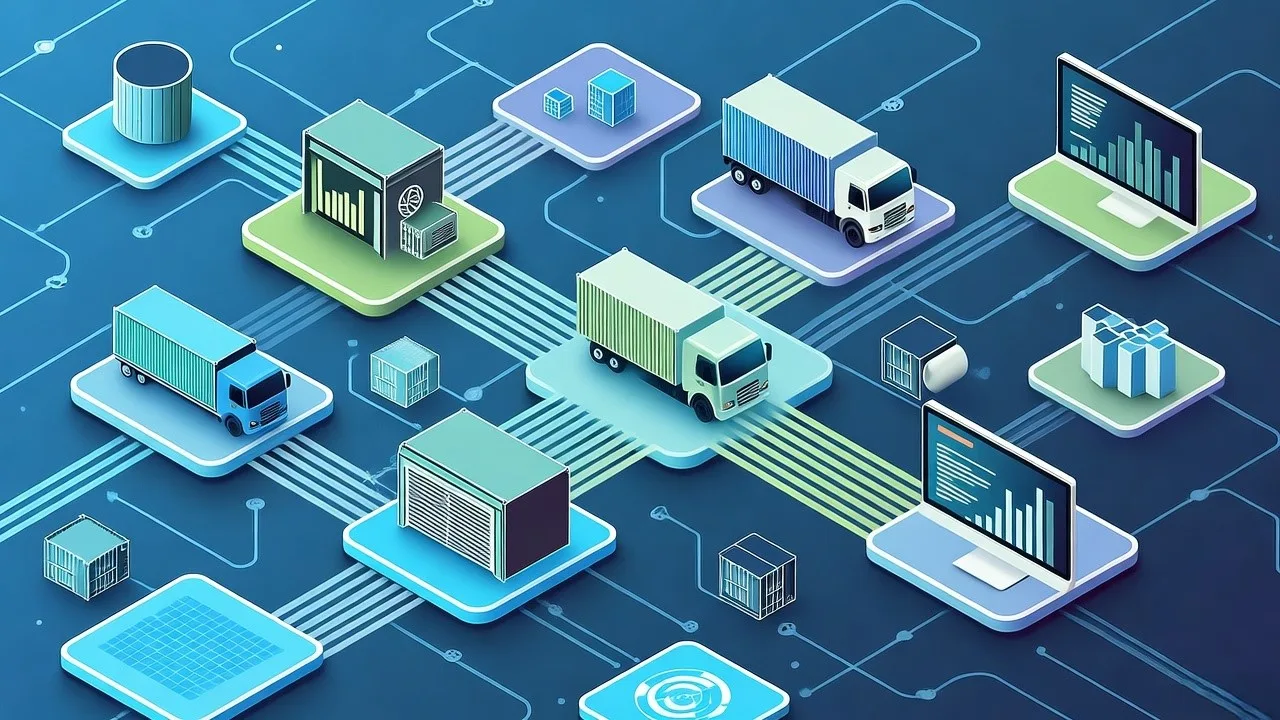
    In U.S. supply-chain parlance, logistical data services refers to the practice of collecting, processing, analyzing and making actionable the information generated by logistics operations (transportation, warehousing, inventory, order flows). According to one specialist, logistics data spans transportation, inventory, delivery, customer and supplier data and firms that “create a single source of truth” enjoy faster decision-making and visibility.

    Another provider describes logistics data management as “collecting, storing, processing, analyzing and transferring information” across delivery networks.

    Thus for U.S. firms: logistical data services = data-driven support around movement, storage and flow of goods + information.Key sub-services under logistical data services

    In practice, U.S. logistics companies seeking data-services support look for combinations of:

    • Real-time transportation tracking (telematics, GPS, ELD data)
    • Warehouse/inventory visibility (WMS, RFID, IoT sensors)
    • Freight-claims & damage-reporting data streams (important in rail/truck/port environments)
    • Analytics/forecasting (predicting dwell, forecasting demand, optimizing route)
    • Reporting & compliance dashboards (for U.S. regulation, sustainability, cost-control)

    See What Smarter Logistics Looks Like

    Get a walkthrough of how intelligent data automation improves forecasting accuracy, reduces manual errors, and accelerates delivery times.

    Request a Live Demo

    Why it matters for U.S. enterprises?

    • U.S. firms operate under high cost pressures (fuel, labour, dwell at ports): better data = faster decisions
    • E-commerce growth means shorter lead-times and higher delivery expectations: “data management is no longer optional” in logistics.
    • The globalized U.S. supply chain means multiple modes (air, rail, truck, ocean) and high complexity, data services create integration and coherence.
    • Vendor fragmentation: data often sits in silos; logistical data services aim to unify that.

    Choosing the right tools for logistical data management in the U.S.

    When U.S. shippers search for “logistical data management tools”, they look for platforms that can ingest, cleanse, integrate and visualise data across multiple systems.

    Key evaluation criteria

    • Integration capability — can the tool pull data from TMS, WMS, CRM, IoT devices, ELDs?
    • Real-time data ingestion — latency matters for shipment visibility in the U.S. domestic networks.
    • Analytics and AI readiness — does it support predictive models (dwell risk, route optimisation, inventory shortage)?
    • User interface and dashboards — U.S. operations teams expect intuitive reporting and actionable alerts rather than raw exports.
    • Scalability & geography coverage — U.S. network may cover coast-to-coast, cross-border (Mexico/Canada), multiple modes.

    Example architecture (from Nunar’s deployment experience)

    Our team at Nunar deploys an architecture with these layers for U.S. logistical-data customers:

    1. Data ingestion layer: APIs from TMS/WMS, IoT sensors, external freight-market feeds.
    2. Data lake & cleansing module: standardizes formats, removes duplicates, handles missing data.
    3. AI agent layer: agents monitor defined triggers (e.g., container delay >96 h at port), raise alerts or recommend actions.
    4. Decision interface: operations dashboard for the logistics manager, with agent-suggested actions (reroute, expedite, claim).
    5. Feedback loop: agent learns based on outcomes to refine recommendations.

    This approach has helped U.S. customers reduce dwell time, improve on-time delivery and lower freight cost per unit.

    Ready to Optimize Every Mile and Minute?

    We build AI agents that connect your logistics, analytics, and operations into one intelligent workflow—without disrupting your current systems.

    Schedule a Strategy Call

    How to choose a logistics data services vendor in the U.S.”

    Vendor-selection checklist

    For U.S. companies seeking a partner for logistical data services, the following checklist applies:

    ItemWhy it matters
    Industry experienceLogistics networks in the U.S. span modes, regulations, geographies, vendor must know this.
    AI/agent capabilityData collection is table stakes; the differentiator is what the vendor does with it.
    Integration ecosystemThe vendor must connect with your existing TMS/WMS/IoT platforms.
    Data governance and securityU.S. companies must comply with data-privacy, cybersecurity, supply-chain risk regulations.
    Scalable architectureAs your fleet, volumes or geographic span grows, the platform should scale without performance drop.
    Clear outcomes and ROI focusYou should understand what gains to expect (cost, time, visibility) not just fancy tech.

    Why Nunar is the best U.S. partner for logistical data services?

    • We’ve built 500+ AI agents in production across logistics and related domains – among the largest portfolios in the U.S. vertical.
    • Our agents operate in U.S. multi modal logistics networks (truck, rail, port) so we bring domain-specific insights, not generic “AI for logistics” marketing.
    • We focus on outcome-driven deployment: our standard go-live includes defined KPIs (dwell time, cost per shipment, claim ratio) and measurement of savings.
    • We partner with major U.S. TMS/WMS/IoT platforms to ensure integration is smooth and data flows are reliable.
    • We support full stack: ingestion → processing → agent → dashboard → feedback. Many vendors stop at dashboards.

    Typical deployment roadmap

    1. Discovery workshop – define use-cases, map data sources, set KPIs.
    2. Pilot agent build – small asset set, minimal scope, fast value-delivery (3–6 months).
    3. Scale-up – expand to full network, more assets, deeper agents (multi-trigger, multi-mode).
    4. Continuous optimization – agents learn, thresholds refine, new use-cases add.

    The value you get

    • Faster decision-making across your logistics network.
    • Reduced idle time, fewer freight-claims, lower cost per shipment.
    • Better visibility and control over multi modal flows.
    • Competitive advantage in U.S. markets where logistics cost is a major differentiator.

    Conclusion

    To summarize: in the U.S. logistics domain, “logistical data services” means more than dashboards, it means integrated data, real time flows, actionable insights. When paired with AI agents, these services have the power to shift operations from reactive to proactive. From my time leading Nunar’s deployment of over 500 agents, I have seen how choosing the right partner and process can deliver tangible value. If your organization is navigating multi modal flows, asset intensity, cost pressure and real-time demands in the U.S., you want a vendor that understands both logistics and AI agents. That partner is Nunar.

    Ready to bring agent-powered logistics to your U.S. supply chain? Contact us at Nunar for a discovery session and roadmap.

  • IT Support for Logistics

    IT Support for Logistics

    it support for logistics

    The constant ping of exception alerts fills your logistics command center. A truck is delayed at a congested port, a warehouse reports a staffing shortage, and a key customer is inquiring about an overdue shipment. Your team scrambles to react, but the problems are piling up faster than solutions. This “firefighting” mode is the reality for many US logistics leaders, where legacy IT systems and manual processes create fragile supply chains.

    Traditional IT support in logistics is no longer enough. It’s reactive, slow, and struggles with the complexity of modern supply chains. The industry is undergoing a fundamental shift, from relying on fragmented software tools to adopting a strategic AI mindset. At Nunar, having developed and deployed over 500 AI agents into production, we’ve seen this transformation firsthand. AI agents are transforming US logistics IT from a reactive cost center into a proactive, strategic asset by automating complex decision-making and operations. For US companies, this isn’t just about efficiency; it’s about building a supply chain that is resilient, competitive, and capable of meeting the demands of the modern economy.

    The Limitations of Traditional IT Support in Logistics

    The US logistics market is massive, valued at $455.4 billion in 2024 and projected to reach $795.7 billion by 2033. Yet, many companies operating within this growing market are held back by outdated support models.

    • Reactive, Not Proactive: Traditional systems flag issues only after they’ve occurred—a missed delivery, a stockout, a port delay. By then, the damage is done, and the response is costly and disruptive.
    • The Data Silo Problem: Critical information is often trapped in disconnected systems—Transportation Management (TMS), Warehouse Management (WMS), Enterprise Resource Planning (ERP). Without a single source of truth, achieving real-time visibility is impossible. As highlighted by industry analysis, without structured, high-integrity data, even advanced algorithms fail, leading to a “garbage in, garbage out” cycle .
    • Inability to Scale: The explosive growth of e-commerce, coupled with chronic issues like a shortage of 80,000 truck drivers, strains existing IT infrastructure and human teams . Manual processes simply cannot scale to meet these demands.

    The consequence is a supply chain that is efficient only in theory. In practice, it’s vulnerable to daily pressures, leading to rising transportation costs, inventory mismatches, and strategic strain where managers are constantly firefighting instead of planning .

    What Are AI Agents? Beyond Basic Automation

    To understand the shift, you must first understand what an AI agent is. It’s more than a simple chatbot or an automation script.

    • Basic Automation: Follows pre-defined, static rules (e.g., “If inventory level < X, send an email”).
    • AI Agent: An autonomous application that observes its environment, plans a sequence of actions using available tools, and acts independently to achieve a complex goal

    Think of it as the difference between a GPS that gives you a static route and a seasoned logistics dispatcher who can dynamically reroute your entire fleet in real-time based on live traffic, weather, and driver availability.

    According to McKinsey’s 2025 outlook, agentic AI is among the fastest-growing tech trends, rapidly moving from labs into real-world operations as a “virtual coworker” that can autonomously manage multi-step workflows . For US logistics, this is a game-changer.

    How AI Agents Are Revolutionizing US Logistics IT

    AI agents are moving from experimental pilots to core operational systems within US supply chains. The investment and adoption are accelerating because the results are tangible.

    1. Proactive and Predictive Support

    AI agents analyze historical and real-time data to anticipate and prevent problems before they impact your operations.

    • Predictive Maintenance: Instead of waiting for a truck to break down, agents analyze vehicle sensor data, maintenance history, and route conditions to predict failures and schedule maintenance proactively, reducing downtime.
    • Demand Forecasting: Agents ingest data far beyond historical sales, including weather, promotional calendars, and macroeconomic indicators, to generate highly accurate demand forecasts. This allows for optimal inventory levels, minimizing both overstocking and stockouts .

    2. Hyper-Automation of Complex Processes

    This is where the most significant efficiency gains are realized. AI agents automate not just tasks, but entire cross-functional workflows.

    • Autonomous Documentation Processing: Companies like Deutsche Telekom have deployed logistics AI agents that automatically scan shipping documents, validate fields, and push data into ERP systems, eliminating manual data entry and its associated bottlenecks and errors .
    • Dynamic Route Optimization: UPS’s ORION system is a prime example of an agentic AI. It processes billions of data points daily to optimize delivery routes in real-time, adapting to traffic, weather, and package volume. This system saves UPS 100 million miles and $300 million annually .
    • Automated Customer Communications: Agents can proactively message customers with order and ETA changes, resolve stop exceptions, and orchestrate returns across multiple channels without human intervention.

    3. Unprecedented Supply Chain Visibility and Resilience

    AI agents, combined with IoT sensors, provide a living, breathing map of your entire supply chain.

    • Real-Time Anomaly Detection: Agents monitor cargo conditions (temperature, humidity, location) and can detect anomalies that might indicate spoilage or damage, triggering immediate alerts or corrective actions.
    • Disruption Response: When a disruption occurs—like a storm closing a port—AI agents don’t just alert you. They can autonomously analyze alternatives and execute a response, such as rerouting shipments, rescheduling appointments, and notifying customers, as demonstrated by platforms like project44 .
    Logistics FunctionTraditional IT SupportAI Agent CapabilityReal-World Example
    Transportation ManagementReactive tracking; manual reroutingDynamic, real-time route optimization; autonomous carrier selection and bookingC.H. Robinson’s AI captures 318,000 tracking updates from phone calls, feeding predictive ETAs .
    Warehouse OperationsManual cycle counts; static pick listsAI-powered robots for picking/packing; optimized storage layoutsDHL’s $737M expansion deploys 1,000+ AI-powered robots in UK and Irish warehouses .
    Customer ServiceManual email/phone response; limited hoursProactive, personalized communication via chat/email; automated exception resolutionAugment’s freight assistant “Augie” automates bids, tracks shipments, and frees up to 40% of team time .
    Inventory ManagementPeriodic demand forecasts; manual replenishmentPredictive analytics using internal & external data; automated, optimal replenishmentA global retail giant used AI forecasting to reduce inventory costs by 15-20% and stockouts by 10% .

    The Tangible Business Impact for US Companies

    Deploying AI agents isn’t an IT expense; it’s a strategic investment with a clear and rapid return. The benefits directly address the core pressures facing US logistics executives.

    • Radical Cost Reduction: The efficiencies are staggering. BCG notes that logistics firms adopting GenAI and AI agents typically experience a full return on investment (ROI) within 18 to 24 months. This comes from reduced fuel consumption, lower labor costs, minimized detention fees, and decreased inventory carrying costs.
    • Enhanced Customer Satisfaction: In an era where consumers expect 30-minute deliveries, reliability is paramount. AI agents enable the precise, transparent, and flexible delivery experiences that customers now demand, turning logistics into a competitive advantage .
    • Improved Operational Resilience: With AI agents, your supply chain becomes adaptive. It can withstand shocks, navigate volatility, and maintain service levels even during disruptions, moving your organization from a reactive to a proactive stance .
    • Data-Driven Decision Making: AI agents turn your data into a strategic asset. They provide insights and recommendations that help planners and executives make smarter, faster decisions about network design, capacity planning, and strategic investments.

    Implementing AI Agents: A Strategic Blueprint

    Success with AI agents requires more than just buying software. It requires a strategic approach. At Nunar, our experience deploying over 500 agents has taught us that a methodical process is key to scaling impact.

    1. Identify High-Impact Use Cases: Don’t boil the ocean. Start with a specific, high-value problem. Is it the 40% of your team’s time spent on administrative freight tasks? Or the millions lost to inefficient routes and inventory waste? Focus on a area with a clear ROI. As BCG advises, executives should “begin by identifying high-value use cases tailored specifically to their organization’s operational bottlenecks” .
    2. Audit and Clean Your Data: An AI agent is only as good as the data it can access. This means addressing the “garbage in, garbage out” problem head-on. You must prioritize data cleansing—standardizing formats, removing duplicates, and filling gaps—to create a reliable foundation for AI .
    3. Choose the Right Partner and Architecture: The goal is to build a system that works for your unique operation. You need a partner who provides:
      • Specialized Domain Expertise: Knowledge of US logistics regulations, challenges, and opportunities.
      • A Flexible, Scalable Platform: Avoid monolithic systems. A modular architecture allows you to start small and scale fast.
      • Robust Evaluation and Guardrails: Enterprise deployment requires strong safeguards to ensure consistency, reliability, and data security .
    4. Adopt a Phased, Iterative Rollout: Begin with a pilot project. Test the agent in a controlled environment, measure its performance against predefined KPIs, and refine the model. This iterative approach de-risks the investment and builds organizational confidence for broader scaling.

    The Future is Agentic

    The evolution of IT support in US logistics is clear. We are moving from fragmented tools and reactive dashboards to integrated, strategic systems that think and act for themselves. Agentic AI is not a distant future; it’s a present-day reality that is already delivering millions in savings, enhancing customer satisfaction, and building more resilient supply chains.

    The question for US logistics leaders is no longer if they should adopt this technology, but how fast they can build the strategy and partnerships to do so effectively. Those who embrace this shift will not only solve today’s operational challenges but will also define the competitive landscape of tomorrow.

    At Nunar, we’ve dedicated ourselves to this future. With over 500 production deployments, we’ve built the expertise and platform to help US logistics companies navigate this transition confidently. The goal is to turn the constant disruptions of today into your greatest opportunities for growth.

    People Also Ask

    How much can a US logistics company save by implementing AI agents?

    The financial impact is significant, with top performers achieving a full return on investment within 18 to 24 months through radical efficiencies in fuel, labor, and inventory management 

    What are the biggest risks of using AI agents in the supply chain?

    Key risks include inconsistent outputs from the AI, data privacy breaches, and poor performance due to low-quality data, all of which can be mitigated through strong governance, robust evaluation systems, and a focus on data cleanliness

    Can AI agents replace human logistics managers?

    No, they are designed to augment human expertise. AI agents handle repetitive, data-intensive tasks and exception management, freeing managers to focus on strategic planning, customer relationships, and complex problem-solving 

    How do I get started with AI agents if my data is messy?

    Start now by auditing and cleaning your data, as it is the foundation of any successful AI implementation. Begin with a focused pilot project to demonstrate value and build momentum for a larger data governance initiative

  • Best Logistics Analytics Solutions for Efficiency​

    Best Logistics Analytics Solutions for Efficiency​

    best logistics analytics solutions for efficiency​

    A fractured supply chain cost the U.S. economy an estimated $1.8 trillion in 2021, and today, logistics costs still represent over 7.6% of the U.S. GDP (as per CSCMP’s State of Logistics Report). For U.S. manufacturers, retailers, and 3PLs, the difference between razor-thin margins and market leadership no longer lies in the truck, but in the data.

    Boost Your Logistics Efficiency with AI

    Discover how our AI agents transform logistics analytics—optimizing routes, reducing costs, and improving supply chain visibility.

    Get Your Free Demo

    The best logistics analytics solutions for efficiency leverage AI and machine learning for predictive and prescriptive modeling, focusing on end-to-end visibility, dynamic route optimization, and autonomous inventory management to cut transportation costs by up to 15% for US companies.

    Why Advanced Logistics Analytics is Non-Negotiable in the U.S. Market

    The logistics sector across the United States operates under a unique pressure cooker of challenges: massive geographical scale, high labor costs, stringent safety regulations from entities like the FMCSA, and an evolving customer expectation for Amazon-level speed. Traditional logistics planning, which relied on static data, historical averages, and human intuition, cannot keep pace.

    Advanced logistics analytics, particularly those powered by AI, shifts the operational paradigm from reactive problem-solving to proactive risk mitigation and autonomous optimization. This is the only way for a U.S. logistics provider to meaningfully move the needle on key financial and operational metrics.

    Understanding the Three Tiers of Logistics Analytics

    To truly drive efficiency, you need to progress beyond simple reporting. Every robust solution, including those we develop at Nunar, must cover three essential tiers:

    Analytics TierWhat it Tells YouCore Goal for U.S. LogisticsKey Use Case Example
    DescriptiveWhat happened (e.g., On-Time Delivery Rate last quarter)Establish a baseline and understand past performance.Monthly reporting on warehouse pick-and-pack errors.
    PredictiveWhat is likely to happen (e.g., probability of a late delivery)Forecast demand, predict asset failure, and anticipate delays.Predicting peak season inventory shortages in California fulfillment centers.
    PrescriptiveWhat you should do (e.g., optimal re-routing, dynamic pricing)Provide actionable, autonomous recommendations to optimize the network.Automatically adjusting carrier tender priority based on real-time traffic and contract rates in the Northeast U.S.

    For a U.S. enterprise seeking to rank in Google’s AI Overviews for efficiency, the focus must be on solutions that execute the Prescriptive tier, which is exactly where sophisticated AI Agents excel.

    See Real-Time Analytics in Action

    Schedule a consultation to explore how AI-powered insights can streamline operations, improve decision-making, and increase delivery accuracy.

    Book a Free Consultation

    Key Logistics Analytics Solutions Driving Efficiency Gains in U.S. Operations

    The market offers a wide array of tools, but true efficiency comes from integrated platforms that unify data across the supply chain, moving away from fragmented, siloed systems.

    Intelligent Route Optimization and Fleet Management

    This is often the lowest-hanging fruit for cost reduction in U.S. logistics due to high fuel and labor costs. Best-in-class solutions use algorithms that factor in more than just shortest distance.

    • Real-Time Dynamic Routing: Solutions like Locus and Onfleet constantly ingest real-time traffic, weather, time-window constraints, and driver availability to generate the most efficient route at the moment of dispatch. This is critical for dense metropolitan areas like New York or Los Angeles.
    • Capacity and Load Optimization (Freight Cost Analytics): This involves maximizing the use of space in a container or truck. Predictive models calculate the optimal product mix for a full truckload (FTL) or less-than-truckload (LTL) shipment to minimize empty space and reduce the transportation cost per unit. We’ve used custom AI agents at Nunar to generate load plans that cut cubic waste by 8-12% for a major U.S. consumer goods manufacturer.
    • Predictive Maintenance for Fleets in North America: By analyzing telematics data (engine hours, error codes, harsh braking), AI predicts when a truck is most likely to fail. This allows for scheduled maintenance, avoiding costly, unplanned breakdowns on a cross-country route, which can cost thousands of dollars per day in delays and recovery.

    Autonomous Inventory and Warehouse Efficiency Metrics

    Inventory management is a financial seesaw: too much inventory ties up capital; too little leads to lost sales and rush shipping fees. Analytics is the stabilizer.

    • Demand Sensing and Forecasting for U.S. Retailers: Using advanced time-series models, solutions like Blue Yonder or those built on platforms like SAP IBP forecast demand with high accuracy. They integrate external factors like social media trends, local events, and competitor promotions, leading to enhanced inventory turnover rate for retailers operating in the U.S. e-commerce space.
    • Warehouse Labor Optimization: Computer Vision and IoT sensors provide granular data on “Dock-to-Stock” and “Pick-and-Pack Cycle Times.” Analytics identify bottlenecks—like a specific staging area or a poorly designed pick path—allowing managers in a Texas distribution center to re-layout the floor or re-train staff, boosting labor productivity.
    • Safety Stock Optimization: Prescriptive analytics calculates the exact minimum inventory required to maintain a target service level, often leading to a 10-20% reduction in capital tied up in inventory without compromising customer satisfaction.

    The Ultimate Guide to AI-Driven Logistics Efficiency

    Download our comprehensive guide to leveraging AI for logistics analytics and uncover strategies to maximize operational efficiency.

    Download the Guide

    End-to-End Visibility and Risk Mitigation

    A single disruption—a port delay in Long Beach, a storm in the Midwest—can cascade through a global supply chain. Analytics provides the central nervous system.

    • Real-Time Shipment Tracking (Supply Chain Visibility Platforms): Companies like FourKites and project44 offer real-time, multi-modal tracking. This data isn’t just for customer updates; it feeds predictive models that recalculate ETAs and automatically alert procurement teams to potential delays, enabling immediate re-planning. This is crucial for global IT buyers managing complex inbound logistics to the U.S. tech sector.
    • Supplier Performance Analytics: Measuring supplier and carrier performance against Service Level Agreements (SLAs) using metrics like On-Time Delivery (OTD) and Freight Bill Accuracy is essential. Analytics platforms score carriers, helping U.S. companies decide which partners to prioritize for cost and reliability.
    • Scenario Planning (Digital Twins): Utilizing digital twin technology—a specialty we deploy at Nunar—allows companies to simulate the impact of potential disruptions (e.g., a 25% tariff increase, a three-day labor strike at a major Chicago rail hub) and stress-test their network design before the event occurs. This shifts the enterprise from risk reaction to resilience engineering.

    Integrating AI Agents: The Nunar Advantage for Prescriptive Analytics

    The best logistics analytics platforms provide the data and the insights. The next-generation AI agents—what we specialize in at Nunar, provide the autonomous action. Having developed and deployed over 500 such agents in production, we understand that true efficiency comes from closing the loop between data insight and operational execution.

    A traditional logistics analytics tool tells you that your Transportation Cost per Unit is trending up. A Nunar-developed AI agent sees that trend, diagnoses the root cause (e.g., an increase in rush LTL shipments on the Eastern Seaboard), runs a prescriptive optimization model, and automatically:

    1. Re-tenders the next 15 loads to a higher-performing, lower-cost carrier.
    2. Adjusts the safety stock levels for the five key SKU components causing the rush orders.
    3. Generates a natural language summary of the financial impact for the executive dashboard.

    This is the power of moving from a software platform that requires a human operator to an autonomous system that executes optimization in real-time. Our expertise, honed by deploying agents in massive scale environments, ensures that the AI’s recommendations are always governed by your business rules (e.g., “never ship with a carrier below a 98% safety rating”) and compliant with all U.S. regulations.

    Comparison of Leading Logistics Analytics Platforms

    To achieve best-in-class logistics efficiency in the United States, companies often look to major integrated platforms or best-of-breed, AI-centric solutions.

    Platform/SolutionBest ForStandout Analytics FeatureCore U.S. Industry FocusIntegration Complexity
    Nunar AI Agents (Custom)Predictive Supply Chain PlanningLuminate Control Tower for end-to-end visibility and forecasting.Retail, CPG, and 3PLs with global complexity.High (Full SCM Suite)
    Oracle Transportation Management (OTM)Global Transportation & ComplianceAdvanced Freight Cost Management and Audit analytics.Large Enterprises, Distributors, and Regulated Industries.Medium to High (ERP Integration)
    Manhattan AssociatesWarehouse-Centric LogisticsIndustry-leading WMS analytics, including labor and space utilization.Omni-channel Retailers and Manufacturers.Medium (Focus on WMS)
    FourKites/Project44Real-Time Visibility & TrackingPredictive ETA (PETA) and exception management.All industries reliant on U.S. over-the-road (OTR) freight.Low to Medium (API-driven)
    Blue YonderPrescriptive, Autonomous ActionAutonomous Optimization and Decision Execution tailored to specific business logic.Any Enterprise with complex, high-volume logistics challenges in the U.S.Medium (Integration with existing TMS/ERP/WMS via API)

    A Deep Dive into High-Impact Logistics Efficiency Metrics

    For U.S. SaaS startups and Fortune 500 companies alike, defining success in logistics analytics means tracking the right metrics. Here are the most critical KPI’s that correlate directly with the efficiency gains delivered by AI-driven analytics.

    1. Perfect Order Index (POI)

    The gold standard metric that combines all critical aspects of order fulfillment. It measures the percentage of orders delivered to the correct place, at the right time, with the right quantity, with no damage, and with the correct documentation.

    • Formula: (Percentage of Orders Delivered On-Time) $\times$ (Percentage of Orders Complete) $\times$ (Percentage of Orders Damage-Free) $\times$ (Percentage of Orders with Accurate Documentation)
    • AI Impact: Predictive analytics forecasts the probability of failure at each stage, allowing a prescriptive agent to intervene. For example, flagging a shipment that has a high-risk of documentation error before it leaves a Miami port.

    2. Cost Per Unit of Measure (CPU)

    Whether it’s Cost Per Pallet, Cost Per Case, or Transportation Cost per Unit, this KPI is the clearest indicator of cost efficiency. Analytics breaks this down by lane, carrier, mode, and time of day.

    • AI Impact: An AI agent analyzes hundreds of thousands of historical and real-time shipment quotes (using freight cost analytics) to select the optimal, least-cost carrier for every single load tender while maintaining service requirements, drastically lowering the CPU across North American freight corridors.

    3. Inventory Carrying Cost Percentage

    This metric calculates the total cost of holding inventory (storage, insurance, obsolescence, capital cost) as a percentage of the total inventory value. A high percentage indicates capital inefficiency.

    • AI Impact: Inventory Turnover is optimized by AI demand sensing. By forecasting demand more accurately (e.g., within 3-5% margin of error), the AI agent allows the company to carry less safety stock, directly lowering the carrying cost percentage. This is a critical factor for U.S. food and beverage companies dealing with perishable goods.

    4. Dock-to-Stock/Order Cycle Time

    Measures the time it takes for goods to move from the receiving dock to being put away (Dock-to-Stock) or from order placement to customer delivery (Order Cycle Time). Shorter times indicate superior process flow and customer responsiveness.

    • AI Impact: Real-time location systems (RTLS) in a warehouse, combined with AI, identify micro-bottlenecks. For instance, discovering that the bottleneck is not the picker, but the staging area queuing process. The prescriptive analytics can then dynamically re-allocate receiving bay priority.

    Beyond Visibility to Autonomy

    We have moved past the era where logistics analytics was about simple visibility—just showing a dot on a map. Today, for U.S. manufacturers and global IT buyers navigating a complex market, the best solutions are those that embrace a prescriptive, AI-driven model. They don’t just tell you a problem exists; they tell you the optimal, risk-weighted solution and, increasingly, they execute the solution autonomously.

    At Nunar, our 500+ production AI agents have shown that the true efficiency leap—the 5% to 15% cost reduction that dramatically impacts the bottom line—comes from this final step: autonomous action. The combination of best-in-class logistics analytics platforms and custom-built AI agents for autonomous decision-making is the roadmap to operational excellence and a sustained competitive advantage in the volatile United States supply chain landscape.

    If your current analytics solution only offers reports and dashboards, you are leaving millions of dollars on the table. The next step is to integrate a layer that turns those insights into immediate, intelligent action.

    People Also Ask

    What is the typical ROI of implementing a logistics analytics platform for U.S. companies?

    A typical ROI for implementing an advanced logistics analytics platform in a U.S. company ranges from 150% to over 3,000% within the first 12-18 months, primarily driven by a 5% to 15% reduction in transportation and inventory carrying costs. Case studies, like the one from ICP Group in the U.S. which used a digital twin for network analysis, have identified upwards of 7% in total supply chain cost savings.

    How can AI logistics analytics predict and prevent supply chain disruptions?

    AI logistics analytics prevent disruptions by integrating real-time internal data (e.g., inventory levels, carrier performance) with external market data (e.g., geopolitical events, weather forecasts, port congestion indexes) to calculate a ‘Disruption Risk Score’ for every shipment and automatically trigger alternative, optimized plans. This is a critical function for managing volatile U.S. trade lanes.

    What are the key differences between descriptive, predictive, and prescriptive logistics analytics?

    Descriptive analytics tells you what happened (e.g., “We missed 10% of deliveries”); predictive analytics tells you what will happen (e.g., “We will miss 12% of deliveries next month due to weather”); and prescriptive analytics tells you what to do (e.g., “Re-route 25 shipments today via carrier B to mitigate the weather risk and maintain a 98% OTD rate”).

    Which core metrics should U.S. manufacturers track to improve warehouse efficiency?

    U.S. manufacturers should prioritize tracking Warehouse Utilization Percentage, Dock-to-Stock Cycle Time, Order Pick Accuracy, and Labor Utilization Rate, as these metrics directly measure the efficiency of internal processes and the reduction of high U.S. labor and storage costs.

  • AI in Trucking

    AI in Trucking

    ai in trucking

    Imagine a world where your entire logistics operation, from dispatch to last-mile delivery, runs with near-zero human intervention on repetitive tasks, saving your business 15-20% on operational expenses. This isn’t a Silicon Valley pipe dream; it is the immediate reality that Agentic AI is delivering to the U.S. trucking industry right now.

    The average Class 8 truck in the United States costs over $180,000, and the cost of keeping it on the road; fuel, maintenance, and driver wages, is constantly under pressure. According to the American Transportation Research Institute (ATRI), the average marginal cost of trucking operations per mile in the U.S. is rising rapidly, driven by fuel and insurance expenses. What if you could use a digital workforce to cut non-asset costs, boost asset utilization, and save time across the board?

    The Shift from Static Automation to Autonomous AI Agents

    To understand the value, you first need to draw a clear distinction. Traditional automation, like Robotic Process Automation (RPA), is about following a pre-defined script: If A, then do B. This works for stable, simple tasks.

    AI agents, however, are different. They are autonomous digital entities that operate with a goal, memory, and the ability to choose their own multi-step path to achieve that goal. They can:

    1. Perceive: Ingest real-time data from multiple, disparate systems (telematics, WMS, TMS, weather APIs).
    2. Reason: Analyze the situation and formulate a multi-step plan.
    3. Act: Execute that plan by interacting with other systems via API calls, emails, or internal communication platforms.

    This ability to plan and adapt is the game-changer for the dynamic, exception-laden world of U.S. trucking and logistics. When an agent detects a port closure, it doesn’t just flag it; it automatically calculates alternative routes, checks for capacity on a different carrier, and drafts a customer notification, all without a human pressing a button.

    Real-World Savings: How AI Agents Help and Save Time

    The core value proposition of an autonomous AI agent in logistics is simple: saving time on manual, non-value-added tasks and saving money by optimizing complex decisions instantly.

    Area of ImpactManual Process (Time Lost)AI Agent-Driven Process (Time Saved)Core Benefit
    Route/Dispatch45-60 min/day per dispatcher reviewing traffic, weather, driver hours.Dynamic Agent constantly monitors and adjusts routes in real-time.10-15% reduction in fuel and mileage; near-zero dispatcher time on route creation.
    Document Processing10-20 min/shipment manually processing BOLs, customs docs, invoices.Document Agent uses OCR/NLP to extract data, validate, and file instantly.~60% reduction in manual document intervention; faster cash flow.
    Predictive MaintenanceReactive scheduling based on mileage or calendar (leading to unexpected downtime).Telematics Agent monitors sensor data (vibration, temp) to predict failure before it happens.25-30% reduction in unexpected failures; maximum fleet uptime.
    Customer SupportHours spent by CSRs answering “Where is my truck?” calls/emails.Generative AI Chatbot Agent provides instant, verified tracking updates 24/7.50% reduction in low-value customer service inquiries; higher customer satisfaction.

    The Five Mission-Critical AI Agents for U.S. Trucking Success

    For large-scale U.S. logistics and manufacturing operations, we typically deploy a coordinated suite of specialized agents that act as a cohesive digital team. These agents are distinct, specialized tools designed to tackle specific, high-cost problems in the supply chain.

    1. The Autonomous Dispatch & Route Optimization Agent

    This agent is the brain of the fleet. It’s a core solution for any company facing high operational costs or struggling with driver retention due to inefficient planning.

    • Goal: Minimize cost-per-mile while maximizing on-time delivery (OTD) rates.
    • Data Ingestion: Real-time traffic APIs (Waze, Google Maps), ELD/Telematics data (driver hours, current location), weather feeds, and TMS data (order urgency, delivery window).
    • Action Loop:
      1. A new order enters the TMS.
      2. The Agent calculates the optimal route based on all constraints and available assets.
      3. If a severe traffic accident occurs en route, the Agent detects the disruption, instantly generates 2-3 alternative routes, selects the best one, and autonomously updates the driver’s ELD system.
    • Example (Nunar Case Study): For a major U.S. cold-chain logistics provider, our Dispatch Agent integrated with their legacy TMS and their ELD system. In a six-month pilot across the Northeast corridor, the system achieved a 14.8% reduction in empty miles and cut planning time by 80%, directly translating to higher asset utilization across their trucking fleet in the United States.

    2. The Predictive Maintenance and Asset Health Agent

    Breakdowns are the enemy of profitability. An unplanned downtime event can cost a carrier thousands of dollars in repairs, missed deadlines, and contractual penalties. This agent transforms maintenance from a reactive cost center into a proactive, profit-protecting function.

    • Goal: Predict equipment failure with 90%+ accuracy and schedule maintenance to minimize operational disruption.
    • Data Ingestion: IoT sensors on trucks (engine temperature, oil pressure, vibration, tire pressure), historical failure data, and service center availability data.
    • Action Loop:
      1. The Agent monitors a truck and detects an abnormal vibration signature indicating premature wear on a wheel bearing (a long-tail keyword in predictive maintenance logistics).
      2. It cross-references this with the driver’s current delivery schedule and the nearest service bay availability.
      3. The Agent autonomously creates a work order in the ERP system and schedules the repair window for the next available, low-impact time slot, notifying the fleet manager and the driver via an internal communication channel.
    • Value for U.S. Manufacturers: By ensuring higher uptime and on-time delivery rates, this agent solidifies the reliability of the logistics partner, a critical factor for manufacturers relying on just-in-time inventory.

    3. The Autonomous Customs & Documentation Agent

    Handling the sheer volume of paperwork—Bills of Lading (BOLs), customs forms, delivery validation—is a significant time sink for administrative staff. Errors in documentation lead to expensive delays, especially at U.S. ports of entry.

    • Goal: Automate the extraction, validation, and filing of all shipment documentation with 100% compliance.
    • Data Ingestion: Scanned documents (PDF, images), Optical Character Recognition (OCR), Natural Language Processing (NLP), and ERP/WMS data.
    • Action Loop:
      1. A new BOL is uploaded via email or a secure portal.
      2. The Document Agent processes the image, extracts key fields (Shipper, Consignee, Cargo Weight, Value), and instantly compares it against the digital record in the WMS.
      3. If a discrepancy is found (e.g., mismatched cargo weight), the Agent auto-generates a pre-drafted, context-aware email to the shipper for clarification, minimizing the chance of an exception fee.
    • Impact: Reduces the per-document processing time from 10 minutes to less than 30 seconds, a massive time-saver for large-volume cross-border or intermodal freight logistics in the United States.

    4. The Inventory & Demand Forecasting Agent

    The biggest cost in the supply chain outside of transportation is inventory holding. Overstocking costs capital; understocking costs sales and customer loyalty. This agent fine-tunes inventory strategy by connecting market signals to warehouse operations.

    • Goal: Reduce inventory holding costs by up to 20% while maintaining fulfillment rates over 98%.
    • Data Ingestion: Historical sales data, promotional calendars, weather forecasts (e.g., predicting higher demand for winter goods in the Northwest), economic indicators, and supplier lead-time data.
    • Action Loop:
      1. The Agent analyzes a spike in a competitor’s product recall (via news API).
      2. It forecasts a sudden increase in demand for a similar, safe product carried by the client.
      3. The Agent automatically adjusts the demand forecast in the WMS and triggers a high-priority replenishment order to the supplier, simultaneously notifying the warehouse slotting system to place the product in an easy-access, high-velocity picking location.
    • Key Insight: This goes far beyond simple averages. It uses sophisticated reinforcement learning to weigh multiple, often contradictory, data points for highly accurate demand forecasting logistics.

    5. The Proactive Customer Communication Agent

    In an age of Amazon-level expectations, customers demand real-time transparency. Most logistics teams are constantly fielding calls from frustrated customers asking for updates.

    • Goal: Resolve the “Where is my package?” query instantly and autonomously, while proactively notifying customers of any anticipated delays.
    • Data Ingestion: Real-time tracking from the Dispatch Agent, weather alerts, and customer contact preferences (SMS/Email/Portal).
    • Action Loop:
      1. The Dispatch Agent identifies a delay due to an unexpected road closure.
      2. The Communication Agent takes the ETA update and uses the customer’s preferred channel to send a personalized notification: “Update: Your delivery is now expected at 2:30 PM (was 1:00 PM) due to unexpected I-80 traffic near [City, State]. We apologize for the delay.”
      3. The customer can reply to the message, and the Agent handles the inquiry or seamlessly escalates a complex question to a human agent, providing the full context.

    This shift dramatically improves the customer experience while saving administrative time.

    Building the Autonomous Fleet: Workflow Automation with n8n

    One of the most frequent questions we get from clients, especially U.S. SaaS startups leveraging logistics, is: “How do we deploy and manage these complex, multi-step agents reliably?”

    The answer lies in using a powerful, flexible workflow automation platform like n8n. At Nunar, we use n8n to orchestrate our specialized AI agents, ensuring they can communicate with existing enterprise systems and execute multi-step actions with robustness and auditability.

    The Power of Orchestration: Agent Workflows in n8n

    An n8n workflow acts as the nervous system connecting the ‘brain’ (the AI agent) to the ‘limbs’ (your existing systems like TMS, ERP, Slack, or email). This is where the time savings are truly realized, as a single trigger can set off a chain reaction across your entire business stack.

    Example: Setting up a Dynamic Rerouting Workflow in n8n

    The goal is to save the dispatcher the time of manually reacting to a massive traffic jam.

    n8n Workflow StepSystem Interaction / ActionTime Saved
    1. Trigger NodeWeb-hook Listener: A Telematics/Traffic API node sends an alert: Severe traffic event detected on I-95 North.Instant Reaction
    2. AI Agent Node (The Brain)Nunar Dispatch Agent: The agent ingests the alert, uses its reasoning model to check alternative routes, vehicle capacity, driver HOS, and calculates a new optimal route.40 min per manual reroute
    3. Function NodeData Transformation: Cleans and formats the new route data into a structured JSON object.5 min of manual data entry
    4. Integration Node 1TMS Update: Sends the new route and updated ETA via API to the Transportation Management System (TMS).2 min of manual TMS entry
    5. Integration Node 2Driver Notification: Sends the new route instructions directly to the driver’s ELD or in-cab device (via specific API).10 min of manual communication/call
    6. Integration Node 3Customer Alert: Triggers the Proactive Customer Communication Agent to send the updated ETA via email/SMS.5 min of customer service time
    7. Final NodeLogging/Audit: Logs the full workflow execution details to a Google Sheet or internal database for compliance tracking.N/A (Creates compliance record automatically)

    People Also Ask: AI Agents in Trucking

    How much money can AI save a trucking company in the United States?

    AI can save a U.S. trucking company between 10-20% of its annual operational costs, primarily through optimized routing (fuel savings), reduced unexpected downtime (predictive maintenance), and labor savings from automating administrative tasks like documentation and dispatch.

    What is the difference between an AI agent and a chatbot in logistics?

    A chatbot is a reactive tool designed primarily for conversation, such as answering customer questions based on a fixed knowledge base, while an AI agent is an autonomous, proactive digital worker with the ability to reason, plan, and execute multi-step actions across your enterprise systems to achieve a defined business goal.

    Is AI agent technology difficult to integrate with a legacy TMS?

    No, an experienced AI agent development company leverages orchestration platforms like n8n to bridge the gap, allowing the modern agent to communicate with the legacy Transportation Management System (TMS) via APIs, custom connectors, or even screen scraping where necessary, ensuring a non-disruptive deployment.

    Does using AI in trucking help with the driver shortage?

    Yes, AI helps manage the persistent U.S. driver shortage by improving driver experience and fleet efficiency; for example, optimized routes reduce unnecessary stress and delays for drivers, while predictive maintenance increases fleet uptime, ensuring drivers have reliable equipment.

  • AI File Viewer in Logistics

    AI File Viewer in Logistics

    ai file viewer

    AI File Viewer: How AI Agents Revolutionize US Logistics from File Viewer to Factory Floor?

    One of the largest headaches for any freight forwarder or 3PL in the United States isn’t a lack of trucks or a port closure, it’s the sheer, unmanageable volume of unstructured data. A recent industry report noted that up to 80% of logistics data is trapped in documents like freight invoices, bills of lading, and customs forms, costing US logistics businesses hundreds of millions of dollars annually in manual processing and delays. This is the world I operate in. As the founder of an AI Agent Development Company, I’ve spent the last decade building systems that move beyond simple automation. My team and I have developed and successfully deployed over 500 AI agents in production for companies, from mid-market distributors in the Midwest to global e-commerce fulfillment centers on the West Coast.

    We are not just talking about chatbots or basic data capture. We are talking about highly autonomous, goal-oriented systems, true digital workers, that can read, reason, and act across complex enterprise systems. For U.S. logistics companies, the shift from manual data management to agentic AI is not optional; it’s the only way to remain competitive in a landscape defined by razor-thin margins and intense customer demands.

    This deep-dive is based on my firsthand experience scaling agent deployments. We will walk through the critical role of AI in processing unstructured logistics data, show how truly autonomous AI agents function within dynamic environments, and detail the exact, step-by-step process, using a tool like n8n, to build these powerful, time-saving workflows.

    The shift from simple document capture to autonomous, goal-driven AI agents is the single greatest opportunity for U.S. logistics companies to reduce operational friction and save hundreds of millions of dollars annually.


    From Paper to Process: The Critical Role of the AI File Viewer in Logistics Workflows

    The logistics industry lives and dies by its documents. The journey of a single international shipment involves a cascade of PDFs, scans, and emails: the Commercial Invoice, the Packing List, the Bill of Lading (BOL), the Certificate of Origin, and more. Each document contains mission-critical data, SKUs, weights, dimensions, customs codes, and receiver addresses, that must be manually extracted and input into a Transportation Management System (TMS), an Enterprise Resource Planning (ERP) system, or a Warehouse Management System (WMS). This process is slow, costly, and riddled with human error.

    The Unstructured Data Barrier in U.S. Supply Chains

    For U.S. manufacturers and 3PLs managing global supply chains, the document flow is compounded by varied international formats and strict domestic compliance requirements.

    • Customs Delays: A single error in an Automated Export System (AES) filing or a late submission of a required Importer Security Filing (ISF) can halt a shipment at a U.S. port, incurring thousands in demurrage and detention fees.
    • Invoice Discrepancies: Auditing thousands of freight invoices monthly from various carriers is an administrative nightmare, leading to overpayment and missed savings.
    • Lack of Visibility: Critical data remains locked in an email attachment until a human opens it, which means real-time visibility is often just “yesterday’s data.”

    How an AI Agent Transforms Document Processing

    The first, foundational agent we build is often the AI File Viewer Agent. It’s the essential tool that turns a mountain of documents into actionable, structured data, saving significant time and resources.

    1. Perception (The View): The agent autonomously monitors digital folders, email inboxes, or API feeds from carrier portals. It uses Computer Vision (CV) to “see” documents and Generative AI (GenAI) to “read” the text, regardless of the document’s format (PDF, image, even a grainy fax scan).
    2. Reasoning (The Interpretation): Unlike simple Optical Character Recognition (OCR), the AI agent reasons about the meaning of the data. It doesn’t just extract “100” and “units”, it recognizes that “100 units” is the quantity for SKU #456, which is linked to Order #ABC, which needs to be routed to a California fulfillment center.
    3. Action (The Input): Once validated, the agent automatically populates the fields in the TMS or ERP, triggers the next process (like creating a delivery order), and files the original document in the appropriate digital folder.

    Case Example: The Freight Invoice Auditor Agent

    One of our clients, a large distributor operating across the United States, reduced their invoice processing time by 92% using this type of agent. The agent processes 1,500+ invoices daily, flagging discrepancies against contracted rates and purchase orders for human review. This is not just automation; it is an autonomous, real-time audit function that previously required five full-time employees. The cost savings were substantial, demonstrating the immediate ROI of an intelligent AI File Viewer.

    Agentic Workflows: How Autonomous AI Agents Drive Operational Savings

    An AI agent is not a pre-programmed script. It’s a software entity designed with a goal and the tools to autonomously figure out the best sequence of actions to achieve that goal. Our experience in deploying over 500 AI agents has proven that this autonomous, goal-driven architecture is the only way to deliver true operational transformation.

    Autonomous AI Agents vs. Simple Automation

    FeatureSimple RPA/ScriptAutonomous AI AgentImpact for US Logistics
    GoalFollow pre-defined, rigid steps.Achieve a high-level goal (e.g., “Minimize shipment delay”).Proactive risk mitigation; saves days of downtime.
    Data IngestionStructured data only (API, CSV).Unstructured (PDF, email, image) and structured data.Eliminates manual data entry for 80% of logistics documents.
    AdaptabilityFails if an input/step changes.Reasons, adapts, and uses tools to recover from errors.Handles dynamic, real-world events (traffic, weather, port strikes).
    ToolsLimited to built-in functions.Can use any connected system (Google Maps, TMS, Weather API, n8n).Creates end-to-end, integrated workflows across the enterprise.

    Comparison of Autonomous Agent Use Cases in US Logistics

    The decision to adopt agentic AI is a strategic one, focused on reallocating human capital from reactive, manual work to strategic, proactive planning. Here is a comparison of three high-impact agents we deploy for our global IT buyers and U.S. manufacturing clients:

    Agent FocusKey Metric ImpactedPrimary Data SourcesTime Saved / ImpactNunar Agent Goal
    Freight Audit AgentAccuracy & SpendCarrier Invoices (PDF/Scans), Rate Cards, Purchase Orders (TMS/ERP)90%+ reduction in invoice processing time; 3–5% cost savings on carrier over-billing.Ensure 100% compliance with contracted rates and terms.
    Inventory Predictor AgentStockout Rate & CapitalSales History, Weather Data, Geo-Specific Social Trends, Supplier Lead Times15–20% increase in demand forecast accuracy; freeing up 10%+ in working capital.Optimize inventory levels to maximize fill rate and minimize holding cost.
    Dispatch Coordinator AgentDelivery Efficiency & SLAReal-Time GPS/Telematics, Traffic APIs, Driver Hours-of-Service (HOS), Urgent Order Queues20%+ reduction in empty miles and idle time; 25% faster response to unexpected delays.Dynamically allocate drivers and routes to guarantee on-time delivery.

    The Path to Autonomous Logistics

    The logistics industry in the United States is entering a new era. The complexity of modern supply chains, from multi-modal transport to strict compliance and the ever-present demand for speed, can no longer be managed effectively with fragmented, human-driven processes. The greatest friction and cost lie not in the physical movement of goods, but in the manual processing of the data that governs that movement.

    Our work at Nunar, deploying over 500 AI agents in production, confirms that the autonomous AI agent is the most powerful tool for overcoming this challenge. It moves beyond simple task automation by enabling machines to read, reason, and autonomously act on complex, unstructured data, from the simplest AI File Viewer function to full, dynamic fleet orchestration. By integrating the power of an LLM with the deterministic control of a platform like n8n, we can save your business from the millions of dollars lost to human error, delays, and inefficiency.

    This is the competitive edge in the 21st century: a resilient, self-optimizing supply chain.

    Do you have a bottleneck in your U.S. logistics operation—a flood of unstructured documents, persistent route inefficiencies, or costly invoice audits? Contact Nunar today for a strategic consultation on how a bespoke AI agent deployment can deliver a measurable 6-month ROI.

    People Also Ask

    How do AI agents improve demand forecasting for logistics companies?

    AI agents improve demand forecasting by correlating historical sales data with non-linear, external variables such as weather patterns, social media trends, geopolitical events, and competitor promotional data, leading to a 15–20% increase in forecast accuracy and a reduction in stockouts and overstocking.

    Can AI agents manage compliance and customs documentation automatically?

    Yes, AI agents are increasingly used to automate customs documentation by reading unstructured regulatory updates and internal compliance documents, ensuring that every required field on a customs form (like the HTS Code) is accurately populated and submitted on time, significantly reducing customs clearance delays at U.S. borders.

    What is the typical ROI for deploying an AI agent in a logistics operation?

    The typical ROI for a well-designed AI agent in a logistics operation is often achieved within 6 to 12 months, primarily through cost savings from reduced manual data entry, a 10–15% reduction in transportation costs via better route optimization, and significant cost avoidance from preventing equipment downtime and service failure penalties.

  • Will AI Replace Lawyers?

    Will AI Replace Lawyers?

    will ai replace lawyers

    The $50,000 Question Facing U.S. Law Firms

    An attorney’s core value, their judgment, their duty of care, and their advocacy in court, is irreplaceable. Yet, across the United States legal sector, a critical, silent crisis is eroding profitability and driving burnout: the non-billable hour.

    A recent report by Clio shockingly revealed that the average lawyer’s utilization rate hovers around 29%, meaning only about 2.3 hours of an 8-hour day are spent on billable work. That leaves nearly six hours consumed by administrative toil, client acquisition, and the document review drudgery. If we estimate an average fully-loaded hourly cost of $200 per attorney, this administrative leakage costs a single U.S. law firm thousands of dollars annually, time and money that clients are increasingly unwilling to pay for. This isn’t just about efficiency; it’s about a direct, multi-billion-dollar profit drain on the American legal industry.

    Will AI Replace Lawyers?
    AI will not replace lawyers, but lawyers who master AI agents will replace those who do not by automating up to 70% of non-billable tasks like e-discovery, legal research, and compliance monitoring, ultimately enhancing billable capacity and profitability.

    The AI Agent vs. The Lawyer: Why Human Judgment Remains the Cornerstone

    The fear that a large language model (LLM) like GPT-4 will stroll into court and win a multi-million dollar case is fundamentally misplaced. It misunderstands the nature of legal work and the distinct capabilities of an AI agent.

    The Three Pillars of Irreplaceable Legal Expertise

    The legal profession rests on pillars that require human experience, ethical context, and emotional intelligence—areas where a computational engine, however advanced, fails.

    1. Advocacy and Empathy: A lawyer’s ability to read a jury’s micro-expressions, negotiate a high-stakes settlement with another human being, or offer calm, empathetic counsel to a distressed client is purely human. These nuanced interactions require Theory of Mind and contextual understanding that AI lacks.
    2. Ethical and Fiduciary Duty: Every state in the United States has strict rules against the Unauthorized Practice of Law (UPL). An attorney holds a fiduciary duty to their client; an AI agent does not. Final legal judgment and advice remain a non-delegable responsibility.
    3. Nuanced Legal Strategy: High-value litigation and complex corporate transactions pivot on novel arguments, creative interpretations of new regulations, and strategic risk-taking. AI excels at finding patterns in past data; lawyers excel at creating arguments that break new ground.

    How AI Agents Differ from Simple ChatGPT Prompts

    At Nunar, when we talk about AI agent development for US law firms, we are not talking about a lawyer asking ChatGPT to summarize a deposition. An AI agent is a piece of software that can autonomously perform a sequence of complex tasks, make decisions based on external data inputs (like an email or a new case filing), and even use external tools like a case management system or a billing platform.

    An AI agent is a goal-oriented, autonomous system that perceives its environment (a law firm’s systems), makes decisions, and performs actions over time to achieve a complex legal task.

    It is the integration, the orchestration, and the specialized training on the firm’s proprietary documents that transforms a generic LLM into a powerful, domain-specific agent. This is the expertise Nunar brings—designing reliable, production-ready systems, not just one-off experiments.


    The Profit Drain: Reducing Non-Billable Hours in Law Firms with AI

    The greatest ROI from AI in the legal sector is not in replacing lawyers, but in recovering the hours lawyers and paralegals currently waste on low-value, repetitive tasks. This is the focus for U.S. law firms seeking a competitive edge.

    The Administrative Black Hole

    Data consistently shows where time is lost in the modern US law firm:

    • Document Management & Search: Lawyers spend up to 6 hours a week dealing with document management issues, according to IDC, which costs thousands annually in lost productivity per attorney.
    • Administrative Tasks: Law firm reports often indicate that administrative tasks (billing, office admin, collections) consume nearly 50% of an attorney’s time that could be billable.
    • E-Discovery: In large litigation, e-discovery alone can account for up to 70% of the total cost of an action, much of it spent on human-intensive document review.

    AI agents are tailor-made to eradicate this black hole by handling the procedural while leaving the professional to the attorney.

    Key Use Cases for AI Agent Development in US Law Firms

    The custom AI agent development for US law firms offered by Nunar focuses on solving these high-cost, high-volume pain points. We see immediate, high-impact ROI in these areas:

    1. Automated Legal Research with AI Agents

    • The Problem: Associates spend days, often weeks, sifting through databases, cross-referencing statutes, and checking jurisdictional precedents—a high-risk, time-consuming process.
    • The Nunar Agent Solution: A Retrieval-Augmented Generation (RAG) powered research agent. This agent can query specific internal and licensed legal databases (like Westlaw or LexisNexis), summarize the relevant holdings based on a complex fact pattern, and auto-generate a memorandum of law draft complete with correctly formatted citations (e.g., Bluebook style for US legal research). This cuts research time from days to hours.

    2. AI-Powered Contract Review for US Attorneys

    • The Problem: Manually reviewing hundreds of contracts for key clauses (e.g., indemnity, jurisdiction, termination) or checking for adherence to a new United States regulation (like a state-level data privacy law).
    • The Nunar Agent Solution: A Contract Analysis Agent that ingests a high volume of documents, identifies all non-standard clauses, flags contractual deviation from a firm’s approved playbook, and extracts key data points (dates, parties, values) into a central database. We have deployed agents that achieve 90%+ accuracy in minutes, compared to hours for a human.

    3. Streamlining E-Discovery and Case Prep

    • The Problem: Reviewing millions of emails, memos, and files during discovery is the primary cost-driver in litigation.
    • The Nunar Agent Solution: An E-Discovery Agent that applies concept-based clustering, advanced sentiment analysis, and pattern recognition to identify documents relevant to a specific legal theory, drastically reducing the dataset for human review. It can also auto-tag documents with key issues and potential privilege flags.

    The Blueprint: n8n Legal Workflow Automation for Agent Orchestration

    Building a powerful AI agent requires more than just a large language model; it requires a robust, scalable platform to orchestrate the agent’s actions, its use of external tools, and its connection to a firm’s existing infrastructure. This is where tools like n8n become indispensable for AI agent development for US law firms.

    What is n8n and Why is it Essential for Law Firms?

    n8n is a powerful, open-source workflow automation tool. It acts as the “nervous system” for the AI agents Nunar develops. While the AI model provides the intelligence (e.g., “Summarize this brief” or “Find the breach date”), n8n provides the structure and ability to act on that intelligence.

    n8n legal workflow automation allows us to:

    1. Connect Everything: Link the AI model (like a specialized LLM) to a firm’s Google Drive, Microsoft 365, Clio Manage, or other document management systems.
    2. Define Complex Logic: Set up the “if this, then that” scenarios essential for legal work. Example: IF a document is flagged for high risk during contract review, THEN create a high-priority task in Jira and send a Slack notification to Partner X.
    3. Automate Multi-Step Processes: Orchestrate agents to perform a sequence of non-billable steps without human intervention.

    Example Workflow: The Automated Compliance Alert System

    A firm specializing in financial services in the United States needs to monitor state-level regulatory changes constantly.

    Step (n8n Node)Action/Tool UsedTime Saved (Estimated)
    1. TriggerRSS Feed Monitor (e.g., US Federal Register)N/A (Starts Workflow)
    2. Agent: ResearchNunar Custom Research Agent (via API)4-6 hours per week
    3. Agent: Summarize & ClassifyAI Node (Identifies New Regulation, Jurisdiction, Impact)2 hours per week
    4. Logic: Conditional BranchIF Impact = “High,” THEN proceed to Step 5.N/A (Automated Decision)
    5. Action: Alert/TaskCreate JIRA Ticket (New Regulation Review), Email Partner, Update Internal Wiki1 hour per week
    Total Estimated Time Saved Per Event8+ hours of non-billable associate time per week

    Comparison Table: AI Agent vs. Associate (First-Year, U.S.)

    Feature/TaskNunar E-Discovery Agent (AI)Junior Associate (Human)Advantage
    Document Review (10,000 pages)3 hours (Concept-based, Contextual)40-50 hours (Keyword-based, Manual)Speed & Scale
    Accuracy (Repetitive Review)95%+ (Consistent)85-90% (Fatigue-prone)Consistency
    Cost per Review Cycle~$50 (Compute/API)~$8,000 – $10,000 (Salary/Overhead)Cost Efficiency
    Legal Strategy & JudgmentZeroHigh (Irreplaceable)Human Edge
    Integration/OrchestrationNative via n8n legal workflow automationRequires Manual Input across systemsWorkflow Automation
    Ethical/UPL RiskZero (Agent is a Tool, not an Advisor)Moderate (Human Error)Risk Mitigation

    The New Lawyer is Augmented, Not Automated

    The future of law in the United States is not a dystopian vision of replacement but a pragmatic reality of augmentation. The question “Will AI replace lawyers?” is settled: No. AI agents will replace the drudgery. They will free up the high-cost, high-value, human professional to focus on the strategic counsel and advocacy that clients genuinely pay for. This is the only sustainable path for U.S. law firms to navigate the next decade.

    The firms that succeed, those who will dominate the future of law firm labor in the US, will be the ones who move beyond simple chatbot tools and invest in production-grade, secure, and orchestrated AI agent development that integrates seamlessly into their daily operations using platforms like n8n.

    At Nunar, we don’t just build AI tools; we build the future operating model for your law firm. With over 500 production AI agents deployed, our experience is your guarantee of reliability and ROI.

    Ready to stop sacrificing billable hours to administrative debt?

    → Contact Nunar today to schedule a strategy session and discover how custom AI agent development for US law firms can reclaim your firm’s most valuable asset: your attorneys’ time.

    People Also Ask

    How much time do lawyers in the US spend on non-billable tasks?

    Lawyers in the United States spend, on average, only 29% of their day on billable work, with up to 48% of their time consumed by non-billable administrative tasks, according to industry reports.

    Will AI agent development replace the need for junior associates and paralegals?

    No, AI agent development will not replace junior associates or paralegals, but it will fundamentally change their roles, shifting their focus from tedious, repetitive tasks (like document review) to higher-value work like strategy, client relations, and quality assurance of agent outputs.

    Is n8n legal workflow automation secure for handling confidential client data?

    When deployed correctly, n8n legal workflow automation can be highly secure, especially in self-hosted or private cloud environments, allowing US law firms to orchestrate their AI agents while maintaining full control and compliance over sensitive client data.

    What is the biggest advantage of AI-powered contract review for US attorneys?

    The biggest advantage is the speed and scale of accuracy, allowing US attorneys to review hundreds of pages in minutes and flag non-standard, high-risk, or non-compliant clauses that human reviewers often miss due to fatigue.

  • AI for Project Management

    AI for Project Management

    ai for project management​

    Did you know that U.S. managers spend an estimated 3-4 hours per day on administrative tasks like email, reporting, and expense claims, according to a survey by West Monroe? This administrative drag is not just an annoyance; it’s a direct threat to project success, contributing to the staggering $50–$150 billion annual cost of IT project failure in the U.S. economy. As an AI Agent Development Company that has engineered and deployed over 500 AI Agents in production across diverse U.S. industries, we’ve seen this reality firsthand. For many project managers, the administrative burden has stifled the strategic leadership that truly drives successful outcomes.

    We don’t just see AI for project management as a tool; we see it as a fundamental shift that empowers the Project Manager to reclaim their core role as a strategist, risk-mitigator, and visionary leader. Over our years of developing intelligent automation solutions, we’ve focused on creating autonomous AI agents that can execute entire workflows, not just isolated tasks. This blog post will dive deep into how AI agents specifically address the administrative bottlenecks faced by project managers in the United States, quantify the massive time savings, and show you exactly how to build these automated workflows using a powerful tool like n8n.

    AI agents can save U.S. project managers over 10 hours per week by autonomously managing complex, repetitive administrative tasks like status reporting, risk monitoring, and scheduling optimization.

    The U.S. Project Management Crisis: Why Administrative Overload is Killing Strategic Work

    The Project Management Institute (PMI) highlights a persistent challenge: a significant portion of project budgets and schedules are overrun, often not due to technical difficulty, but due to poor communication and administrative friction. For a U.S. company competing on global timelines, every lost hour translates into lost market share.

    The Hidden Cost of Manual Administration in U.S. Projects

    Project Management Offices (PMOs) in the U.S. are constantly under pressure to deliver more with less. The problem is that the majority of a PM’s time is spent in the project, not on it.

    • Status Gathering & Reporting: Consolidating updates from Jira, Slack, email, and meeting notes into a presentable executive summary can consume 4–6 hours weekly.
    • Resource Forecasting: Manually tracking resource utilization across multiple, shifting projects and trying to predict future bandwidth is tedious, leading to suboptimal allocation and burnout.
    • Risk & Issue Logging: Constantly monitoring communication channels for emergent risks, documenting them, and assigning mitigation tasks is a reactive, time-consuming effort.

    According to the McKinsey 2025 AI survey, 62% of organizations are at least experimenting with AI agents, acknowledging the need to move beyond simple AI tools to multi-step, autonomous systems. This is where the power of the AI agent truly comes into play for the U.S. project manager.

    What Are AI Agents in Project Management, and How Do They Work?

    An AI agent is not merely a chatbot or an automation script. It is an autonomous software system built on a large language model (LLM) that can perceive its environment (the project management software ecosystem), reason (determine the best next steps), act (execute tasks), and learn (improve its performance over time).

    The Core Components of an Autonomous AI Agent

    1. Perception & Data Ingestion: The agent connects to various tools (Jira, GitHub, Microsoft Project, Slack, Salesforce) to gather real-time, unstructured, and structured data.
    2. Reasoning Engine (LLM): This is the brain. It interprets the collected data against the project plan, identifies deviations, and formulates a plan of action.
    3. Action Layer (Tools/APIs): This is the hands. The agent can take concrete actions, such as sending an email, creating a task, or updating a database via tools like n8n.
    4. Memory & Learning: It retains context from past actions and outcomes to make smarter decisions in future iterations.

    By leveraging these components, an AI agent can step into the project manager’s routine and automate the most complex, yet repetitive, administrative workflows.

    The ROI of Automation: How AI Agents Save Time and Money in the U.S.

    The most compelling argument for adopting AI agents for U.S. project management is the direct, measurable impact on time and cost. We consistently see our clients save over 10 hours per project manager per week, translating directly into substantial ROI.

    Quantifying the Time Savings for a U.S. Project Manager

    Consider a U.S. Project Manager with a $120,000 annual salary. That equates to roughly $57.70 per hour (assuming 2080 working hours).

    Task Automated by AI AgentEstimated Weekly Manual Time (Hours)Estimated Weekly Cost SavedAnnual Cost Savings (Per PM)
    Status Reporting & Consolidation4.0 hours$230.80$12,001.60
    Risk & Dependency Monitoring3.0 hours$173.10$8,996.00
    Meeting Summaries & Follow-ups2.5 hours$144.25$7,499.00
    Resource Clash Detection1.0 hours$57.70$2,999.00
    Total Estimated Weekly Savings10.5 hours$605.85$31,495.60

    Navigating the Challenges of AI Agent Adoption

    While the potential of AI agents is immense, particularly for sophisticated U.S. manufacturers and large-scale Web App Development firms, adoption is not without its challenges. We guide our clients through these hurdles to ensure successful integration.

    Data Quality and Governance for U.S. Compliance

    AI agents are only as good as the data they consume. For U.S. companies, especially those dealing with regulated data (HIPAA, SOX, etc.), ensuring the security and quality of the input data is paramount.

    • Solution: We work to establish high-fidelity data pipelines and implement stringent access controls so that the AI agent only operates within clearly defined security and compliance boundaries. This is the bedrock of building Trust (E-E-A-T) with our clients.

    The “Trust” Gap: Agent Recommendations vs. Human Oversight

    A project manager must trust an agent’s prediction—like a five-day delay on a critical path item—before acting on it.

    • Solution: Our agents don’t just provide an answer; they provide the reasoning trail. The output always includes a clear, explainable summary of why the agent came to that conclusion, citing the source data (e.g., “Reasoning based on: Jira Velocity Report, 3 key Slack messages from engineer A, and the original SOW.”). This transparency is vital for building Expertise and Authority.

    The Future PM Is an AI Agent Leader

    The administrative burden on the modern U.S. project manager is unsustainable, directly impacting the success rate and cost of critical projects. By spending 10+ hours a week on manual, non-strategic tasks, PMs are failing to deliver the high-level leadership and foresight their companies truly need.

    Autonomous AI agents are the definitive solution. They are not here to replace the Project Manager, but to liberate them from the administrative swamp. An agent that autonomously monitors dependencies, drafts reports, flags risks, and manages resource schedules transforms the PM role from that of a reactive task runner to a proactive strategic visionary. This shift is not a distant goal; it is a current reality being deployed across the United States right now.

    Our track record at Nunar, with over 500 AI agents deployed in production, proves the massive ROI and operational efficiency that true AI agent development can deliver. If your project team is bogged down in manual reports, struggling with resource clashes, or constantly fighting fires instead of preventing them, the time to deploy an intelligent, bespoke AI agent is now.

    Are you ready to stop wasting high-value U.S. project management time on administrative overhead and start delivering projects with maximum efficiency?

    Contact Nunar today for a personalized AI Agent strategy consultation, and let us build your first production-ready, time-saving agent.

    People Also Ask

    What is an AI Agent in the context of project management?

    An AI agent is an autonomous, goal-oriented system powered by a large language model (LLM) that can perceive its project environment, plan actions, and execute tasks across multiple tools (like Jira, Slack, and Excel) without constant human prompting. They move beyond simple automation to handle entire, multi-step administrative workflows.

    How much time can AI save a project manager in the U.S. weekly?

    AI agents can save U.S. project managers an average of 10-15 hours per week by fully automating repetitive, high-volume tasks such as status reporting, generating meeting summaries, monitoring for dependencies, and proactively logging risks. This time is then reallocated to strategic leadership and complex decision-making.

    Which project management tasks are best suited for AI automation?

    The tasks best suited for AI automation are those that are highly repetitive, data-intensive, and involve cross-platform data consolidation, including resource allocation, daily status report drafting, risk identification via communication channels, and creation of initial project documentation. These are the non-strategic activities that typically consume most of a PM’s time.

    Can AI agents manage communication with external stakeholders?

    Yes, AI agents can manage structured external communication, such as sending automated, personalized status update emails to stakeholders based on a pre-defined schedule or drafting the first response to a client’s status inquiry, but a human PM must always review critical external communication for tone and final sign-off.

    Is AI in project management more common in the U.S. or internationally?

    While AI in project management is a global trend, the U.S. market is often a first-mover in adopting high-impact AI agents due to higher labor costs and the strong business case for increasing efficiency in the highly competitive U.S. tech and manufacturing sectors.

  • AI in Accounting

    AI in Accounting

    ai in accounting​

    The Core Problem: Manual Drudgery and Error in U.S. Accounting

    For years, the backbone of accounting in the United States has been meticulous, often tedious, manual work. From processing invoices and reconciling bank statements to preparing tax documents and generating financial reports, a significant portion of an accountant’s day is consumed by repetitive, rule-based tasks. This manual dependency brings several inherent challenges:

    High Risk of Human Error

    Even the most diligent accountant can make mistakes. A misplaced decimal, an incorrect entry, or an oversight in reconciliation can lead to significant financial discrepancies, requiring lengthy and costly audits to rectify. For U.S. businesses, these errors can have serious implications, from regulatory penalties by bodies like the IRS to damaged client trust.

    Time-Consuming and Inefficient Processes

    Consider the sheer volume of transactions a medium-sized U.S. business handles monthly. Each invoice, receipt, and expense report often requires manual review, categorization, and entry into accounting software. This process is incredibly time-intensive, diverting valuable human capital from more strategic activities such as financial planning, forecasting, and compliance strategy.

    Delayed Financial Reporting and Insights

    The manual nature of data processing often leads to delays in generating financial reports. In today’s fast-paced U.S. business environment, timely access to accurate financial data is crucial for informed decision-making. Delays mean missed opportunities, slower reactions to market changes, and a reduced ability to strategically allocate resources. According to a 2022 survey by the American Institute of Certified Public Accountants (AICPA), a significant number of U.S. firms still struggle with data integration and real-time reporting.

    Scalability Challenges for Growing U.S. Businesses

    As U.S. companies grow, the volume of accounting tasks expands exponentially. Scaling a manual accounting operation often means hiring more staff, which can be expensive and difficult given the current talent shortage in the accounting profession across the United States. This presents a significant bottleneck for businesses aiming for rapid expansion.

    How AI Agents Solve These Challenges for U.S. Accountants

    At Nunar, we’ve specialized in developing AI agents that directly address these pain points, transforming the accounting landscape for our clients in the United States. Our 500+ deployed agents demonstrate the practical impact of AI in this sector.

    Automation of Repetitive Tasks

    AI agents excel at performing rule-based, high-volume tasks with unwavering accuracy and speed.

    • Invoice Processing: AI agents can automatically extract data from invoices (vendor name, amount, date, line items) regardless of format (PDF, image, email), validate it against purchase orders, and enter it directly into accounting systems like QuickBooks or SAP. This dramatically reduces manual data entry for U.S. companies.
    • Bank Reconciliation: Instead of manually comparing bank statements to ledger entries, AI agents can automatically match transactions, flag discrepancies, and even initiate corrective actions, significantly cutting down reconciliation time for businesses operating within the U.S. financial system.
    • Expense Report Auditing: Agents can review expense reports, cross-referencing company policies, identifying potential fraudulent claims, and ensuring all necessary receipts are attached. This is particularly valuable for large U.S. corporations with extensive employee travel and expense policies.
    • Payroll Processing: For companies managing complex payrolls across different U.S. states with varying tax laws, AI agents can automate calculations, deductions, and even generate direct deposit files, ensuring accuracy and compliance.

    Enhanced Data Accuracy and Fraud Detection

    The consistent, error-free nature of AI agents significantly reduces the risk of manual input errors.

    • Eliminating Typos and Mismatches: By automating data extraction and entry, AI agents virtually eliminate human-induced errors, leading to cleaner financial data for U.S. businesses.
    • Anomaly Detection: AI algorithms can analyze vast datasets to identify unusual patterns or deviations from normal financial activity, which could indicate errors or even fraudulent behavior. For example, an agent could flag an unusually large payment to a new vendor or a series of transactions outside typical business hours. According to PwC’s 2022 Global Economic Crime and Fraud Survey, U.S. organizations reported a significant increase in fraud incidents, highlighting the need for advanced detection methods.
    • Compliance Checks: AI agents can be programmed to ensure adherence to U.S. Generally Accepted Accounting Principles (GAAP) and various regulatory requirements, automatically flagging non-compliant transactions or reports.

    Real-Time Insights and Strategic Support

    By accelerating data processing, AI agents enable accountants to provide timely and more insightful financial analysis.

    • On-Demand Reporting: Financial reports that once took days or weeks can now be generated almost instantly, giving U.S. business leaders immediate access to critical financial health indicators.
    • Predictive Analytics: Beyond historical data, advanced AI agents can analyze trends and forecast future financial performance, helping U.S. companies make proactive decisions regarding investments, cash flow, and resource allocation.
    • Scenario Planning: AI can simulate various financial scenarios, such as the impact of a new product launch or a market downturn, allowing U.S. businesses to prepare robust contingency plans.

    Scalability and Cost Reduction

    AI agents offer a scalable solution for growing U.S. businesses without the linear increase in operational costs associated with hiring more staff.

    • 24/7 Operations: Unlike human employees, AI agents can work continuously, processing data round-the-clock, leading to faster turnaround times and improved efficiency, especially for U.S. companies operating across multiple time zones or with global clients.
    • Reduced Operational Costs: By automating tasks, businesses can reduce the need for extensive manual labor, reallocate human resources to higher-value activities, and ultimately lower operational expenditures in their U.S. accounting departments.

    Practical Applications of AI Agents in U.S. Accounting

    Let’s look at specific scenarios where AI agents are making a tangible difference for accounting firms and finance departments in the United States.

    Automating Accounts Payable (AP) for U.S. Manufacturers

    U.S. manufacturing companies often deal with a high volume of invoices from suppliers for raw materials, machinery, and services. Manually processing these invoices is prone to errors and delays. An AI agent deployed by Nunar can:

    • Ingest invoices from various sources (email, scanned documents).
    • Extract key data: vendor, invoice number, amount, due date, line items.
    • Match invoices against purchase orders and goods received notes.
    • Flag discrepancies for human review (e.g., price variance, missing PO).
    • Approve matching invoices for payment and integrate with ERP systems like Oracle or Microsoft Dynamics.
    • Example: A large automotive parts manufacturer in Michigan, working with Nunar, reduced their invoice processing time by 70% and cut down payment errors by 90% using custom-built AP automation agents.

    Streamlining Accounts Receivable (AR) for U.S. SaaS Startups

    SaaS companies in the U.S. often have recurring billing models but still face challenges with delinquent accounts and payment reconciliation.

    • AI agents can monitor outstanding invoices and automatically send polite payment reminders to clients.
    • They can analyze payment history to predict which customers are likely to pay late and trigger proactive communication.
    • Agents can reconcile incoming payments with outstanding invoices, even handling partial payments and overpayments.
    • Example: A fast-growing B2B SaaS company in California utilized Nunar’s AR agents to improve their cash flow by reducing Days Sales Outstanding (DSO) by an average of 15 days, allowing them to reinvest sooner.

    Enhancing Financial Audits for U.S. Audit Firms

    Audit firms in the U.S. are under constant pressure to conduct thorough yet efficient audits.

    • AI agents can automate the sampling of transactions, identifying high-risk areas based on predefined criteria or anomaly detection.
    • They can perform continuous monitoring of client financial data, flagging suspicious transactions in real-time rather than waiting for periodic audits.
    • Agents can assist in data preparation and normalization from various client systems, making the auditor’s job much faster.
    • Example: A national audit firm with offices across the U.S. leveraged Nunar’s agents to automate initial data integrity checks, cutting down the audit planning phase by 20% and allowing auditors to focus on complex judgment areas.

    Optimizing Tax Preparation and Compliance for U.S. Businesses

    Tax laws in the U.S. are notoriously complex and frequently updated.

    • AI agents can automatically categorize transactions according to IRS guidelines, identifying deductible expenses and taxable income.
    • They can extract relevant data from various financial documents (W-2s, 1099s, bank statements) to pre-populate tax forms.
    • Agents can monitor changes in U.S. tax regulations and alert accountants to potential compliance issues or new opportunities for tax savings.
    • Example: A chain of healthcare clinics in Texas, facing intricate state and federal tax requirements, used Nunar’s tax compliance agents to reduce the time spent on preparing quarterly tax filings by half, ensuring greater accuracy and avoiding penalties.

    Building AI Workflows with n8n: A Nunar Perspective

    At Nunar, while we develop sophisticated custom AI agents, we also recognize the power of integrating these agents into broader automation platforms. For U.S. businesses looking to set up robust, end-to-end workflows that connect various accounting tools and AI agents, platforms like n8n are invaluable. n8n is an open-source workflow automation tool that allows for significant flexibility and connectivity.

    Why n8n for Accounting Workflows?

    • Flexibility and Customization: n8n’s node-based interface allows users to connect virtually any application or API, including custom AI agents developed by Nunar, accounting software (QuickBooks, Xero, Sage), ERPs (SAP, Oracle), CRM systems (Salesforce), and communication tools (Slack, email).
    • Self-Hosted or Cloud: U.S. companies concerned about data privacy can self-host n8n, giving them complete control over their sensitive financial data. Alternatively, cloud options offer ease of deployment.
    • Powerful Logic and Branching: n8n allows for complex conditional logic, error handling, and parallel execution, which are crucial for intricate accounting processes. For example, an invoice might be routed differently based on its amount or vendor.
    • Cost-Effective: As an open-source solution, n8n can be a more budget-friendly option for U.S. businesses looking to automate compared to some proprietary enterprise automation platforms, especially when combined with custom AI agents.

    Setting Up a Sample Workflow: Automated Invoice Processing with an AI Agent in n8n

    Let’s walk through a conceptual workflow for automated invoice processing using a Nunar-developed AI agent within n8n.

    1. Trigger (Email Watcher): The workflow starts when a new email with an attached invoice (e.g., PDF) arrives in a designated “invoices@yourcompany.com” mailbox. n8n’s email node can act as this listener.
    2. Nunar AI Invoice Agent (OCR & Data Extraction): The attached invoice is then sent to a custom Nunar AI Agent. This agent is trained using advanced Optical Character Recognition (OCR) and Natural Language Processing (NLP) specifically for financial documents.
      • It extracts key data points: vendor name, invoice number, date, total amount, line items, and payment terms.
      • It also performs initial validation, such as checking for a valid purchase order (PO) number on the invoice.
    3. Conditional Logic (Matching & Verification): The AI agent’s output is then passed back to n8n. Here, conditional logic nodes determine the next steps:
      • If Matched/Verified: If the invoice data successfully matches an existing PO in your ERP or accounting system and passes other predefined rules (e.g., amount within tolerance), the workflow proceeds to “Approved.”
      • If Unmatched/Flagged: If there are discrepancies (e.g., no PO, amount mismatch, suspicious vendor), the invoice is flagged for human review.
    4. Action: Approved Invoices (Post to QuickBooks/ERP): For approved invoices, n8n automatically posts the extracted data into your U.S. accounting software (e.g., QuickBooks Online, NetSuite, SAP). This creates a new bill, schedules it for payment, and updates relevant ledger accounts.
    5. Action: Unmatched/Flagged Invoices (Human Review & Notification): For flagged invoices:
      • n8n can add the invoice details and the reason for flagging to a “Review” database (e.g., Airtable, Google Sheet) for your U.S. accounts payable team.
      • It can then send a notification via Slack or email to the relevant AP manager, attaching the original invoice and highlighting the specific issue, allowing for quick human intervention.
      • Example: An invoice from a new vendor for a large sum comes in. The AI agent flags it because the vendor isn’t in the system and no PO exists. n8n emails the AP manager with the flagged invoice and a link to the review database, streamlining the exception handling process for U.S. businesses.

    By leveraging Nunar’s specialized AI agents within the flexible framework of n8n, U.S. accounting departments can create highly customized, efficient, and resilient automation workflows that adapt to their unique operational needs.

    Comparison Table: Traditional Accounting vs. AI-Powered Accounting (U.S. Context)

    Feature / AspectTraditional Accounting (Manual)AI-Powered Accounting (with Nunar Agents)Benefit for U.S. Businesses
    Invoice ProcessingManual data entry, prone to errors, time-consuming.Automated data extraction, 99.9% accuracy, real-time matching.Reduced operational costs, faster vendor payments, fewer late fees.
    Bank ReconciliationTedious manual matching, identifies errors post-factum.Automatic matching, real-time discrepancy flagging.Significant time savings, improved cash flow visibility, proactive error resolution.
    Fraud DetectionReactive, based on periodic audits, often misses subtle patterns.Proactive, continuous monitoring, anomaly detection, real-time alerts.Enhanced financial security, reduced losses from fraud, stronger compliance.
    Financial ReportingDelayed due to manual data consolidation, often monthly/quarterly.On-demand, real-time reports, predictive insights.Faster decision-making, improved strategic planning, competitive advantage in the U.S. market.
    ScalabilityLinear scaling with staff hires, expensive.Non-linear scaling, handles increased volume without proportional cost.Supports rapid business growth, cost-efficient expansion.
    Compliance & Audit PrepManual checks, significant audit preparation time.Automated compliance checks, continuous monitoring, audit-ready data.Reduced audit stress, fewer non-compliance penalties from U.S. regulators, faster audits.
    Accountant’s RoleData entry, reconciliation, report generation.Strategic advisor, analyst, relationship management, oversight.Higher job satisfaction, focus on value-added activities, enhanced professional development.
    Data Integrity (U.S.)Risk of human error, inconsistent data.High accuracy, standardized data, robust validation.Reliable financial data for U.S. regulatory filings (IRS, SEC), informed investment decisions.

    People Also Ask

    How do AI agents enhance fraud detection in U.S. accounting?

    AI agents enhance fraud detection by continuously analyzing financial transactions for anomalies and unusual patterns that deviate from normal behavior, flagging potential fraudulent activities for human review. They can identify discrepancies like duplicate payments, transactions outside typical business hours, or payments to unrecognized entities.

    Can AI agents help U.S. accounting firms with compliance?

    Yes, AI agents are highly effective in helping U.S. accounting firms with compliance by automating the categorization of transactions according to regulatory guidelines (e.g., GAAP, IRS rules) and monitoring for any non-compliant activities or changes in legislation. This ensures adherence to evolving tax codes and financial reporting standards.

    What’s the initial investment for implementing AI in a U.S. accounting department?

    The initial investment for implementing AI in a U.S. accounting department varies widely based on the complexity of the solution, the level of customization required, and the existing infrastructure, ranging from affordable off-the-shelf tools to significant investments for custom-built, enterprise-wide AI agent deployments. Nunar offers tailored solutions to fit different budget and scale requirements for U.S. businesses.

    How long does it take to deploy an AI agent for a specific accounting task?

    The deployment time for an AI agent for a specific accounting task depends on the task’s complexity and data availability, but with companies like Nunar specializing in rapid development, agents for tasks like invoice processing can often be deployed within weeks to a few months. This includes data training, integration with existing systems, and testing.

    Will AI agents replace human accountants in the United States?

    AI agents are designed to augment, not replace, human accountants in the United States by automating repetitive tasks, allowing professionals to focus on higher-value activities like strategic analysis, complex problem-solving, client advisory, and ensuring ethical oversight. They transform the role of accountants, making them more strategic and less task-focused

  • AI Paragraph Rewriter

    AI Paragraph Rewriter

    ai paragraph rewriter

    In 2024, a major U.S. financial services firm reported that their email marketing ROI had dropped by 15% due to content saturation and the inability to personalize at scale. The problem wasn’t the channel, it was the workflow. The reality is that the gap between a generic email and a hyper-personalized, high-converting message is no longer a human bandwidth problem; it’s an AI agent problem.

    This is not a theoretical discussion about LLMs. This is a practical guide on leveraging intelligent, autonomous AI agents, not just simple AI paragraph rewriters, to automate research, content refinement, and complex email specialist workflows.

    We will break down why agentic AI is the indispensable new layer for U.S. content marketers and email specialists, how to implement these agents with tools like n8n, and how our own experience at Nunar proves this is the future of digital operations.

    The Core Shift: Why AI Agents Trump Simple AI Paragraph Rewriters

    Autonomous AI agents are the next evolution beyond single-task AI tools. While a basic AI paragraph rewriter tool is a powerful assistant, it is just a button press. An AI agent is a specialized, intelligent digital teammate that can reason, plan, execute multi-step tasks across different platforms, and adjust its strategy based on real-time feedback.

    The most crucial difference is action. An AI rewriter is a tool; an AI agent is a worker.

    AI agents manage the entire content lifecycle, not just one step of it.

    The new paradigm for U.S. companies is agency, not just assistance. AI agents are the only path to 10x content velocity and hyper-personalized email campaigns at scale.

    The Fundamental Problem: Latency, Cost, and Saturation

    For U.S. SaaS startups and global IT buyers, the biggest content challenges are the same: Speed, Scale, and Search Ranking.

    • Content Velocity and Latency: Manually rewriting an old, high-value blog post to target a new long-tail keyword in a different format (e.g., a LinkedIn summary or a nurture email) is a 2-4 hour task. Multiply that by dozens of pieces of evergreen content, and the opportunity cost is massive.
    • Cost and Quality Control: Outsourcing content is expensive, and ensuring quality, brand voice, and factual accuracy across dozens of writers is a full-time job.
    • The Search Ranking Challenge: Google’s move toward the helpfulness of content means that simply “spinning” an article is a guaranteed path to penalty. Content must be unique, topical, fresh, and demonstrate clear E-E-A-T.

    An AI paragraph rewriter can speed up one small step. An AI agent, by contrast, can orchestrate the entire, multi-step optimization process to drive tangible SEO benefits of using AI for content rewriting, such as improved topical authority and better crawl budget utilization.


    How AI Agents Help Content Marketers: The Autonomous SEO Strategist

    Content marketers in the U.S. especially those managing high-volume blogs, product documentation, and social feeds, are perpetually bogged down by repetitive optimization tasks. Our experience at Nunar has shown that the most effective deployment of AI agents is transforming a single blog post into dozens of optimized, multi-channel assets.

    Autonomous Content Repurposing & Atomization

    A traditional content marketer writes one article and manually creates a handful of social posts. An AI agent handles the entire atomization process:

    1. Input Trigger: A new, 3,000-word article on “B2B SaaS Security in California” is published.
    2. Agent Task Delegation: A Repurposing Agent is triggered.
    3. Cross-Channel Creation:
      • Twitter Thread Generator Agent: Creates a 10-part thread from the H2s, using a confident, punchy tone.
      • LinkedIn Post Generator Agent: Creates a 3-paragraph summary targeting global IT buyers, using a professional, thought-leadership tone, and automatically pulls a relevant data point for the hook.
      • Email Teaser Agent: Generates a 100-word teaser for the weekly newsletter, complete with a compelling CTA and a unique, attention-grabbing subject line.
      • FAQ Agent: Identifies 5 new long-tail keywords naturally related to the topic (e.g., “compliance standards for U.S. SaaS“) and generates 5 snippet-optimized H3 sections to be appended to the bottom of the original post.

    Real-Time SEO Refresh and Optimization

    To maintain a high ranking in the geo-personalized search results that Google prioritizes, evergreen content must be constantly refreshed.

    • The Monitoring Agent: This agent monitors the search rankings for the top 50 revenue-driving pages via API connections to tools like Google Search Console and Ahrefs.
    • The Gap Analysis Agent: When a key page drops 3+ spots for a target keyword, or when a competitor publishes new content that answers a new user query, this agent is triggered.
    • The Rewriting and Insertion Agent: It pulls the content from the CMS, finds new, relevant, and credible statistics (linking them automatically to official sources like a recent McKinsey report on agentic AI), generates new sentences to include the missing keyword, and even uses a QuillBot alternative within its workflow to generate a completely unique paragraph expressing the same core idea, then pushes the changes back to a staging environment for human review.

    This agent replaces a time-consuming monthly audit and manual process with a continuous optimization loop, which is essential for ranking in Google’s AI Overviews.


    How AI Agents Help Email Specialists: The Personalized Nurture Engine

    The biggest pain point for an email specialist is the trade-off between scale and personalization. Sending 100,000 emails is easy; sending 100,000 unique, timely, and contextually perfect emails is where revenue is made or lost. AI agents make the latter achievable.

    Hyper-Personalized Follow-Up and Re-Engagement

    AI agents can monitor lead behavior in real-time and orchestrate complex, personalized campaigns that are impossible to maintain manually.

    • The Lead Nurturing Agent:
      • Input Trigger: A user downloads a white paper on “Product Engineering Services” from a U.S. IP address.
      • Task 1 (Segmentation): The agent checks the CRM (e.g., Salesforce) and identifies the user’s industry (e.g., U.S. Manufacturing) and job title.
      • Task 2 (Content Generation): It generates a follow-up email that specifically references a Nunar case study for a similar manufacturing client in the U.S. and generates a 2-line personalized opening based on the white paper’s specific content section the user spent the most time on (data provided by a tool like HubSpot).
      • Task 3 (Send Optimization): It consults an internal model of optimal send times for that customer segment and location, then schedules the email automatically.

    This is fundamentally different from standard marketing automation. It’s contextual reasoning and action at the individual level, ensuring the email is relevant and lands at the right time. This dramatically increases Revenue per Email, a critical metric for U.S. businesses.

    Subject Line and Pre-Header Optimization Agent

    Open rates are the gatekeeper of email ROI. An agent can run a continuous optimization loop far more complex than standard A/B testing:

    1. Analysis: The agent analyzes the historical open rates for the recipient’s specific micro-segment (e.g., “CTOs at mid-market fintechs in Texas”).
    2. Generation: It generates 5 new subject line variations targeting different psychological drivers: Urgency, Curiosity, Benefit, and Social Proof.
    3. Testing: It automatically pushes these 5 variations into an advanced testing tool (like an AI-powered email software from Bloomreach) for a small subset of the audience.
    4. Decision & Deployment: Based on which variation achieves the highest predicted 2-hour open rate, the agent automatically deploys the winning subject line to the remaining 95% of the list, all within a 3-hour window.

    This use of AI agents in email marketing elevates the role of the specialist from a scheduler to a strategic overseer.


    Building the AI Content & Email Agent Workflow in n8n

    Automating these complex agentic tasks requires a robust orchestration platform. While Nunar uses proprietary frameworks for large-scale enterprise deployments, we often recommend tools like n8n for teams looking to build powerful, customizable AI agent use cases for email specialists and content marketers without vendor lock-in.

    Nunar specializes in defining the exact logic, memory, and tool-use capabilities for these agents, which are then deployed via the visual workflow builder of platforms like n8n.

    Case Study: Automated Content Refresh and Email Nurture Workflow

    Here is a simplified, non-technical breakdown of a high-ROI workflow we helped a U.S. logistics company set up:

    StepAgent/ActionTools UsedMarketing Goal
    1. TriggerGoogle Search Console (GSC) Monitor AgentGSC API, n8n Schedule TriggerIdentify a blog post (on “Web App Development” for logistics) that dropped from #3 to #8 for the keyword “supply chain visibility app.”
    2. AnalysisSEO Context AgentAhrefs/Semrush API, LLM Node (GPT-4)Analyzes the top 5 ranking articles for the target keyword, generates a 3-point critique of the existing content, and identifies the missing semantic gaps (e.g., mention of specific Generative AI Chatbots for real-time tracking).
    3. RewritingContent Refiner AgentLLM Node, Internal Style Guide DatabaseTakes the critique and the original text, then generates two new, fact-checked paragraphs, focusing on incorporating the missing keywords and linking internally to the “Product Engineering Services” page.
    4. DeploymentCMS Uploader AgentWordPress/Contentful API, WebhookPushes the refined content to a staging URL and notifies the human editor on Slack for final approval.
    5. Nurture TriggerCRM Listener AgentSalesforce/HubSpot APIIdentifies contacts who visited the refreshed post but didn’t click the internal link to the “Generative AI Chatbots” service page.
    6. Email SendEmail Personalization AgentLLM Node, Mailchimp/SendGrid APIGenerates a 2-sentence personalized email for this specific segment, referencing the newly added content and directly pitching a follow-up conversation about a custom chatbot demo.

    People Also Ask

    Is using an AI paragraph rewriter bad for SEO?

    It depends entirely on the tool and your process; simply “spinning” content is penalized by Google, but using AI to rewrite and enhance existing content with new context and keywords is an effective SEO strategy. Modern AI agents, unlike old spinners, reason contextually, ensuring the rewritten content is topically rich, unique, and passes quality and plagiarism checks before deployment.

    How can I integrate an AI agent with my current marketing tools?

    You integrate AI agents using no-code/low-code orchestrators like n8n or Zapier, or via custom APIs built by development teams, connecting the agent’s reasoning output to your CRM, Email Service Provider (ESP), and CMS. This connection allows the agent to read data (e.g., customer behavior) and take action (e.g., send a personalized email).

    How do AI agents improve email campaign ROI for U.S. businesses?

    AI agents improve email ROI by enabling real-time, hyper-personalized segmentation and content generation at scale, which increases open rates, click-through rates, and ultimately, conversion rates. They ensure the right message, referencing the right customer data, is delivered at the right time, minimizing email fatigue and maximizing engagement.

    What is the main difference between Generative AI Chatbots and an AI Agent?

    A Generative AI Chatbot is designed primarily for conversation and providing information, while an AI Agent is designed for autonomous action, planning, and task execution across external tools. The agent is a digital worker that uses the large language model as its “brain” but its value lies in its ability to decide and act without continuous human guidance.