The Real Cost of “Free” AI Answer Generators: A 2026 Guide for American Developers
In 2025 alone, American businesses saved over 40% in customer support costs by switching to automated response systems. As an AI developer who has built and deployed over 50 custom Large Language Model (LLM) interfaces for US-based startups, I see the same pattern every week. Companies want the speed of an ai answer generator free of charge, but they often sacrifice data privacy or factual accuracy to get it.
The landscape in America has shifted. We are no longer just looking for a chatbot that talks; we need engines that cite sources, respect US data laws like CCPA, and integrate with our existing tech stacks. This guide breaks down the most reliable free tools available today and explains how we build these systems to ensure they don’t hallucinate.
An ai answer generator free tool provides instant, automated responses to user queries using LLMs. The best versions offer cited sources, real-time web access, and strict data privacy for US users.
The United States remains the primary hub for LLM innovation. From OpenAI in San Francisco to Anthropic’s research labs, the tools we use daily are shaped by American standards for “Helpfulness, Honesty, and Harmlessness.” When you use a free tool here, you are likely interacting with a model trained on massive clusters of NVIDIA H100s sitting in data centers across Virginia or Iowa.
The Search Revolution in the US
Traditional search is dying. Users in New York or Los Angeles no longer want to click ten blue links. They want a single, definitive answer. This is why “AI Overviews” have become the primary way Americans consume information. If your business doesn’t appear in these answers, you effectively don’t exist in the digital marketplace.
Top Free AI Answer Generators for US Users
When I consult for SaaS founders in Austin or Seattle, I recommend tools based on their specific logic engines. Not all “free” tools are equal. Some are great for coding, while others excel at creative prose or factual research.
1. Perplexity AI: The Researcher’s Choice
Perplexity has changed how we think about search in the US. Unlike a standard chatbot, it acts as an “answer engine.”
Real-time Accuracy: It browses the live web to find answers.
Citations: Every claim has a footnote linking to a source like The New York Times or TechCrunch.
Free Tier: Users get unlimited standard searches using their proprietary “Sonar” model.
2. Claude by Anthropic: The Ethical Powerhouse
Based in San Francisco, Anthropic focuses on “Constitutional AI.” For American developers, Claude is often the preferred choice because its writing style feels more human and less “robotic” than its competitors.
Large Context Window: You can paste long documents (like a US patent filing) and ask questions.
Safety First: It is less likely to generate harmful or biased content compared to unaligned models.
3. Google Gemini: The Ecosystem King
If your workflow lives in Google Workspace (Docs, Sheets, Gmail), Gemini is the most frictionless ai answer generator free option. It uses Google’s massive Knowledge Graph to pull facts that other models might miss.
As an AI development company, we use specific metrics to test if a tool is ready for professional use. We don’t just “vibes-check” the output. We look at:
1. Latency (Response Speed)
In the fast-paced US market, a 5-second delay is a lifetime. We measure Time to First Token (TTFT). A good free tool should start printing its answer within 500 milliseconds.
2. Hallucination Rate
Does the AI make up facts? We test this by asking about specific American legal codes or niche industry standards. If a tool fails to say “I don’t know” when it’s unsure, we flag it as high-risk.
3. Data Residency
For our clients in healthcare or finance, where the data sits matters. We prioritize tools that allow for US-based data processing to comply with local regulations.
Comparison of Leading Free AI Answer Tools (2026)
Tool Name
Best For
Model Access
Citations?
US Data Privacy
Perplexity
Fast Research
Sonar / GPT-4o (Limited)
Yes (High Quality)
Standard
Claude
Creative Writing
Claude 3.5 Sonnet
No (Internal)
High (Constitutional)
ChatGPT
General Purpose
GPT-4o mini
Optional
Standard
Microsoft Copilot
Office Users
GPT-4 / Search
Yes
Enterprise Grade
Gemini
Google Users
Gemini 1.5 Flash
Links to Search
High Integration
The Technology Behind the Answer: RAG Explained
Most people think an AI “knows” things. It doesn’t. It predicts the next word. To make an ai answer generator free version actually useful for a business, we use a technique called Retrieval-Augmented Generation (RAG).
Instead of relying on the AI’s memory (which might be outdated), RAG allows the system to:
Retrieve: Search a specific database or the web for the latest info.
Augment: Add that info to the user’s prompt.
Generate: Create an answer based only on the provided facts.
This is how we build customer support bots for American e-commerce brands that never lie about shipping prices or return policies.
Integrating AI Generators into Your US Business Workflow
If you are a solo entrepreneur in Florida or a marketing manager in Chicago, you shouldn’t just copy-paste from an AI. You should integrate it.
Content Strategy
Use an ai answer generator free tool to outline your blog posts. If you are writing about “California labor laws,” ask the AI to find the most recent updates from the Official California Legislative Information site.
Customer Support
You can use free APIs (like those from Groq or Together AI) to build a basic response engine. These platforms often offer free trial credits that allow for thousands of queries before you ever see a bill.
Coding Assistance
For developers, tools like GitHub Copilot or the free tier of Cursor use AI answer engines to debug Python or React code in real-time. This has increased developer productivity in the US by an estimated 55%.
People Also Ask (FAQ)
Is there a truly free AI answer generator?
Yes, tools like Perplexity, ChatGPT, and Claude offer robust free tiers that provide high-quality answers without a subscription. Most of these use “mini” models for free users to keep costs low.
Which AI gives the most accurate answers?
Perplexity AI is currently the most accurate for factual queries because it cites its sources directly from the live web. This allows you to verify every claim it makes.
Are free AI tools safe for business data in the US?
Most free AI tools use your data to train their models unless you opt-out in the settings. For sensitive US business data, we recommend using Enterprise versions or “Zero Data Retention” APIs.
Can I use AI answers for SEO content?
Yes, but you must edit them for E-E-A-T (Experience, Expertise, Authority, and Trust) to rank on Google. Google’s helpful content updates prioritize “people-first” content over raw AI output.
What is the best AI for writing code for free?
Claude 3.5 Sonnet is widely considered the best model for coding logic and debugging in 2026. Its ability to understand complex architecture is currently unmatched in free tiers.
Route Optimization Algorithm: How AI Agents Are Redefining Logistics and Transportation at Enterprise Scale
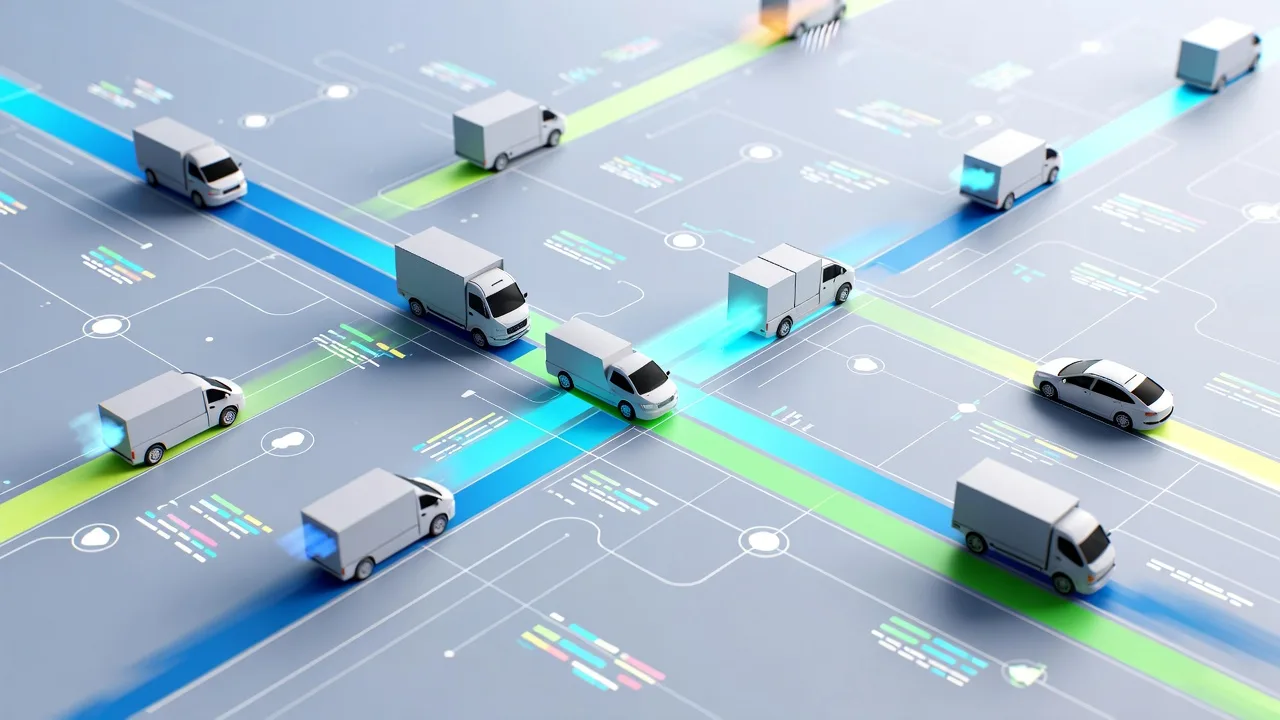
Route optimization algorithms sit at the core of modern logistics. But for enterprises managing thousands of vehicles, real-time constraints, volatile demand, and strict service-level agreements, traditional routing logic is no longer enough.
What leading logistics organizations are deploying today are AI-driven route optimization systems powered by autonomous agents. These systems do not just calculate the shortest path. They reason, adapt, negotiate constraints, and continuously optimize decisions across the entire transportation network.
This article breaks down what a route optimization algorithm really is in an enterprise context, how AI agents change the architecture, and what decision-makers should look for when investing in this capability.
At a basic level, a route optimization algorithm determines the most efficient sequence of stops for a vehicle or fleet, subject to constraints such as distance, time, capacity, and cost.
In enterprise logistics, the problem expands dramatically:
Thousands of vehicles and drivers
Multiple depots and cross-docks
Time windows, delivery priorities, and penalties
Vehicle-specific constraints
Real-time traffic, weather, and disruptions
Carbon and sustainability targets
This turns routing into a continuous decision problem, not a one-time calculation.
Modern route optimization algorithms are therefore systems, not formulas.
Why Classical Routing Algorithms Break at Enterprise Scale
Most organizations start with well-known approaches:
Dijkstra or A* for shortest path
Traveling Salesman Problem (TSP) heuristics
Vehicle Routing Problem (VRP) solvers
These methods work in controlled environments. They fail when exposed to real-world volatility.
Common failure points
Static assumptions in a dynamic world
Inability to re-optimize in real time
Poor handling of conflicting constraints
Exponential computation cost at scale
No learning from historical outcomes
This is why enterprises are moving from rule-based routing engines to AI agent-based optimization systems.
How AI Agents Change Route Optimization?
An AI agent is not just an algorithm. It is an autonomous decision unit that observes the environment, evaluates trade-offs, takes action, and learns from outcomes.
In logistics routing, AI agents operate at multiple levels.
1. Network-level optimization agents
These agents look across the entire transportation network:
Fleet utilization
Depot load balancing
Service-level risk
Cost vs speed trade-offs
They decide how routing problems should be framed before any vehicle-level calculation happens.
2. Route planning agents
These agents generate and refine routes by:
Evaluating millions of permutations using heuristics and learning-based models
Factoring real-time traffic, weather, and road restrictions
Adjusting plans mid-route when conditions change
They are designed to re-optimize continuously, not just once.
3. Execution and exception-handling agents
These agents monitor live execution:
Missed time windows
Vehicle breakdowns
Order cancellations or priority changes
They autonomously trigger re-routing, driver notifications, or upstream planning adjustments.
Core Components of an Enterprise Route Optimization Algorithm
A production-grade system typically includes the following layers.
Constraint modeling engine
Defines and prioritizes constraints such as:
Delivery time windows
Vehicle capacity and type
Driver hours of service
Customer priority tiers
Emissions or fuel targets
Advanced systems allow constraints to be soft, hard, or context-dependent.
Optimization and search layer
This is where AI replaces brute force.
Common techniques include:
Metaheuristics such as genetic algorithms and simulated annealing
Reinforcement learning for policy optimization
Graph neural networks for road network understanding
Hybrid solvers that combine heuristics with learning
The goal is not mathematical perfection, but operational optimality under uncertainty.
Real-time data ingestion layer
Enterprise routing systems ingest live signals from:
GPS and telematics
Traffic and weather APIs
Order management systems
Warehouse and dock schedules
AI agents continuously update their world model based on these inputs.
Learning and feedback loop
This is where traditional systems fall short.
AI-driven route optimization learns from:
Actual vs planned arrival times
Driver behavior and compliance
Customer feedback and penalties
Seasonal and regional patterns
Over time, the system improves its own decisions.
Route Optimization Algorithms and AI Search Visibility
From an AI search and AI Overview perspective, this topic performs well because it satisfies query fan-out behavior:
“What is a route optimization algorithm”
“How AI improves logistics routing”
“Enterprise fleet route optimization”
“AI agents in transportation”
To rank in AI-driven search systems, content must:
Explain the concept clearly
Go beyond definitions into system design
Address real enterprise problems
Demonstrate expertise and applied knowledge
That is why this article focuses on architecture, trade-offs, and decision criteria.
Business Impact for Logistics and Transportation Enterprises
When implemented correctly, AI-driven route optimization delivers measurable results.
Operational efficiency
Reduced fuel and energy consumption
Higher vehicle utilization
Fewer empty or suboptimal miles
Service reliability
Improved on-time delivery rates
Faster response to disruptions
Better customer experience consistency
Cost and margin control
Lower per-delivery cost
Reduced overtime and penalty exposure
Smarter trade-offs between speed and cost
Strategic flexibility
Ability to scale operations without linear cost growth
Faster onboarding of new regions and fleets
Resilience against demand volatility
What Enterprise Buyers Should Evaluate Before Investing?
Not all route optimization platforms are equal. Buyers should look beyond demos.
Key evaluation criteria
Can the system re-optimize routes in real time?
Does it support multi-objective optimization, not just distance?
Are AI agents explainable and auditable?
How easily does it integrate with existing TMS, WMS, and ERP systems?
Does it learn from historical performance automatically?
A true enterprise solution behaves like a decision partner, not a static tool.
The Future of Route Optimization Algorithms
The next generation of logistics systems will push further into autonomy.
Emerging trends include:
Fully agent-driven planning and execution loops
Cross-fleet collaboration using shared intelligence
Carbon-aware routing as a first-class objective
Simulation-based planning for scenario testing
Human-in-the-loop control for high-risk decisions
Route optimization is no longer a back-office function. It is a strategic capability.
Why AI Agents Are the Right Foundation?
Enterprises that treat route optimization as a one-time solver end up rebuilding every few years.
Those that invest in AI agents for logistics and transportation build systems that:
Adapt as the business evolves
Improve with scale rather than degrade
Handle uncertainty as a feature, not a failure
That is the difference between automation and intelligence.
People Also Ask
What is the difference between a route optimization algorithm and a routing engine?
A routing engine typically computes paths based on fixed rules and static inputs. A route optimization algorithm, especially when powered by AI agents, continuously evaluates constraints, adapts to real-time data, and learns from outcomes to improve future decisions.
How do AI agents improve route optimization in logistics?
AI agents enable autonomous decision-making across planning, execution, and exception handling. They re-optimize routes dynamically, balance competing objectives, and adapt to disruptions without manual intervention.
Can route optimization algorithms handle real-time changes?
Yes. Modern enterprise systems ingest live traffic, weather, and operational data. AI agents continuously adjust routes to reflect current conditions, minimizing delays and service failures.
Is route optimization only about reducing distance or fuel cost?
No. Enterprise route optimization considers multiple objectives, including delivery reliability, driver compliance, customer priority, sustainability targets, and overall network efficiency.
What industries benefit most from AI-driven route optimization?
Logistics service providers, e-commerce, retail distribution, cold chain logistics, public transportation, and large enterprise fleets see the highest returns due to scale, complexity, and volatility.
ERP System Accounts Payable: How Modern Enterprises Are Re-Engineering Payables with AI
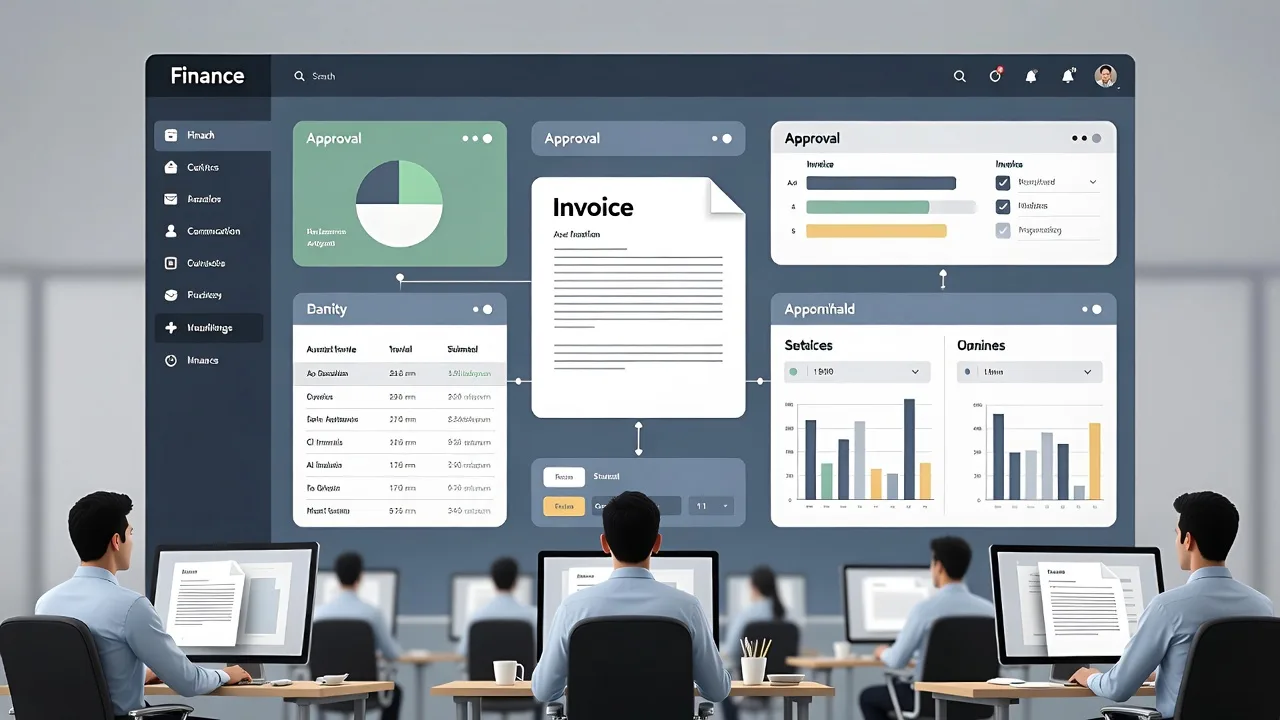
In an ERP (Enterprise Resource Planning) system, the Accounts Payable (AP) module functions as a sub-ledger that tracks and manages a company’s short-term debt obligations to its suppliers and vendors. It is a core component of the broader Procure-to-Pay (P2P) process, ensuring that invoices are verified, approved, and paid on time.
Invoice Management: Capturing incoming vendor invoices through manual entry or automated tools like OCR (Optical Character Recognition).
Three-Way Matching: Automatically verifying that the vendor invoice matches the purchase order (PO) and the goods receipt note (GRN) before approval.
Approval Workflows: Routing invoices through pre-defined internal hierarchies (e.g., department heads or the CFO) for digital sign-off.
Payment Execution: Scheduling and processing payments via ACH, wire transfer, check, or virtual credit cards.
General Ledger Sync: Automatically updating the General Ledger to reflect liabilities and expenses, ensuring a “single source of truth” for financial reporting.
Accounts payable has quietly become one of the most strategic functions inside large enterprises. Especially in logistics and transportation, where thousands of invoices move daily across carriers, fuel vendors, ports, warehouses, customs agents, and service partners, the accounts payable process is no longer just about paying bills. It is about cash visibility, vendor trust, compliance, and operational velocity.
An ERP system accounts payable module sits at the center of this transformation. But traditional ERP workflows were not built for the volume, variability, and speed that modern logistics networks demand. This is where AI-driven accounts payable inside ERP systems is changing the equation.
This article breaks down how enterprises should think about ERP system accounts payable today, what gaps still exist, and how AI agents purpose-built for logistics and transportation are redefining what “automation” really means.
Why ERP System Accounts Payable Is No Longer a Back-Office Function?
In most enterprises, accounts payable was historically treated as a cost center. The mandate was simple: process invoices accurately and avoid late payments. That mindset no longer holds.
For logistics and transportation companies, accounts payable directly affects:
Carrier relationships and negotiated freight rates
Cash flow predictability across long billing cycles
Compliance with multi-country tax and customs regulations
Working capital tied up in invoice disputes and delays
An ERP system accounts payable module now acts as a financial control tower. It connects procurement, operations, finance, and vendor ecosystems into one flow. When AP slows down, the business feels it immediately.
How ERP Accounts Payable Works in Large Logistics Enterprises?
At a structural level, ERP system accounts payable handles invoice intake, validation, approvals, and payment execution. In logistics, however, this flow is more complex due to unstructured data and operational exceptions.
Typical ERP Accounts Payable Flow
Stage
What Happens in ERP
Where Complexity Arises in Logistics
Invoice Capture
Invoices entered via EDI, email, or portals
PDFs, scans, fuel slips, handwritten PODs
2-Way / 3-Way Match
Invoice matched with PO and GRN
Partial deliveries, variable freight charges
Approval Workflow
Routed based on cost center and thresholds
Multi-location approvals across regions
Payment Processing
Scheduled payments via ERP finance module
Different payment terms per carrier
Reconciliation & Reporting
Ledger posting and audits
High dispute volume and manual adjustments
Traditional ERP systems handle the structure well. They struggle when data is inconsistent, incomplete, or delayed, which is exactly the norm in transportation networks.
The Real Limitations of Traditional ERP Accounts Payable Automation
Most enterprises already have an ERP. Many believe they have automated accounts payable. In reality, automation often stops at basic workflow rules.
Common limitations include:
Manual intervention for invoice validation
Heavy reliance on AP teams to resolve mismatches
Delayed approvals due to unclear ownership
Limited visibility into why invoices are stuck
ERP system accounts payable modules were designed for predictable procurement environments. Logistics is not predictable. Rates fluctuate, shipments split, surcharges appear late, and documentation arrives out of order.
This is why enterprises are layering AI agents on top of ERP accounts payable instead of replacing ERP itself.
Where AI Agents Transform ERP System Accounts Payable
AI agents do not replace ERP systems. They extend them. Especially in logistics and transportation, AI agents act as intelligent operators that sit between raw operational data and the ERP finance layer.
What AI Agents Actually Do in Accounts Payable?
AP Function
Traditional ERP Behavior
AI-Driven ERP Accounts Payable
Invoice Reading
Template-based OCR
Context-aware document understanding
Matching Logic
Rule-based matching
Probabilistic matching across shipments
Exception Handling
Manual queue review
Auto-resolution with confidence scoring
Approvals
Static approval paths
Dynamic routing based on risk and value
Dispute Detection
Reactive
Predictive dispute identification
Instead of pushing every exception to humans, AI agents learn how your logistics business actually operates and resolve most issues before they hit the AP queue.
ERP System Accounts Payable in Logistics: Use Cases That Matter to CFOs
Enterprise buyers do not care about features. They care about outcomes. In logistics and transportation, AI-enhanced ERP accounts payable delivers value in very specific scenarios.
High-Volume Freight Invoice Processing
Large carriers and 3PLs process tens of thousands of invoices monthly. AI agents classify, validate, and match invoices even when shipment references are inconsistent.
Fuel and Surcharge Reconciliation
Fuel invoices often arrive with delayed or aggregated charges. AI agents correlate fuel price indexes, route data, and shipment timelines before posting to ERP.
Cross-Border and Multi-Entity AP
ERP system accounts payable struggles with GST, VAT, and customs fees across regions. AI agents validate tax logic before invoices reach finance.
Vendor Trust and Faster Settlements
Faster, more accurate payments reduce disputes and strengthen carrier relationships, which directly impacts service reliability.
Measuring ROI from ERP System Accounts Payable Modernization
Enterprise leaders expect numbers. The impact of AI-driven ERP accounts payable is measurable within months.
Metric
Before AI Agents
After AI-Driven ERP AP
Invoice Processing Time
5–10 days
24–48 hours
Manual Touch Rate
60–70%
<15%
Invoice Exception Rate
High and reactive
Low and predictive
Cost per Invoice
High due to labor
Reduced by 40–60%
Vendor Disputes
Frequent
Significantly reduced
These gains compound over time as AI agents learn vendor behavior, pricing patterns, and operational anomalies.
ERP Accounts Payable Architecture with AI Agents
From a systems perspective, enterprises do not rip out ERP platforms like SAP, Oracle, or Microsoft Dynamics. AI agents integrate with them.
Typical Architecture
Layer
Role
ERP Core
Ledger, payments, compliance
AI Agent Layer
Invoice intelligence, decision automation
Data Sources
TMS, WMS, carrier portals, email
Integration APIs
Real-time sync with ERP modules
This architecture keeps ERP as the system of record while AI agents handle the messy reality of logistics data.
What Enterprise Buyers Should Look for in ERP System Accounts Payable Solutions?
Not all automation vendors are equal. Logistics enterprises should evaluate solutions through a practical lens.
Key evaluation criteria:
Native understanding of logistics and transportation workflows
Proven ERP integrations without custom rebuilds
Explainable AI decisions for audit readiness
Ability to handle unstructured documents at scale
Security, compliance, and role-based controls
A generic AP automation tool rarely survives the complexity of transportation finance.
Why ERP System Accounts Payable Is Becoming a Competitive Advantage?
When accounts payable runs smoothly, carriers get paid faster, disputes drop, and finance gains real-time visibility into cash obligations. In logistics, this translates into better capacity access, stronger vendor loyalty, and operational resilience.
ERP system accounts payable, when enhanced with AI agents, stops being a cost center. It becomes a lever for scale.
Enterprises that modernize AP early gain an advantage that competitors cannot easily copy because it is embedded in their financial nervous system.
People Also Ask
What is ERP system accounts payable?
ERP system accounts payable is the module within an ERP platform that manages invoice processing, approvals, payments, and financial posting for vendor bills across the enterprise.
Why is accounts payable more complex in logistics and transportation?
Logistics invoices involve variable charges, partial shipments, fuel surcharges, and unstructured documents, which makes traditional ERP matching and validation difficult.
Can AI agents replace ERP accounts payable modules?
No. AI agents augment ERP systems by handling intelligence, automation, and exception resolution while ERP remains the system of record.
How long does it take to see ROI from AI-driven ERP accounts payable?
Most enterprises see measurable improvements in processing time and cost within 90 days of deployment.
Is ERP accounts payable automation secure and compliant?
Yes, when implemented correctly. AI agents operate within ERP security models and provide audit trails for every automated decision.
Machine Learning in the Retail Industry: How Enterprises Use ML to Drive Revenue, Efficiency, and Scale
Retail is no longer competing on price or location alone. It is competing on intelligence.
Machine learning has moved from experimentation to infrastructure in the retail industry. Enterprises are no longer asking whether to use machine learning. They are asking where it delivers measurable impact, how it integrates with existing systems, and how to scale it without increasing operational risk.
This article explains how machine learning is actually used in enterprise retail environments, the business problems it solves, and what decision-makers need to evaluate before investing.
Machine learning in retail refers to the use of algorithms that learn from historical and real-time data to make predictions, automate decisions, and optimize operations without being explicitly programmed for every scenario.
In enterprise retail, machine learning systems typically operate across:
Customer behavior and demand signals
Pricing, promotions, and assortment decisions
Inventory and supply chain optimization
Fraud detection and loss prevention
Workforce and store operations
Unlike traditional rule-based systems, machine learning adapts as data changes, which is critical in volatile retail environments.
Machine learning does not replace core retail systems. It augments them.
Successful enterprises design ML as a decision layer that integrates cleanly with existing platforms.
Build vs Buy: A Strategic Enterprise Decision
Retail leaders often face a build-versus-buy decision.
Buying ML Solutions
Packaged retail ML platforms offer faster time to value and lower upfront effort. They are effective for standardized use cases such as recommendations or demand forecasting.
However, they may lack flexibility for:
Unique business rules
Complex assortments
Regional customization
Building Custom ML Systems
Custom ML development provides control and differentiation.
It allows enterprises to:
Use proprietary data
Encode business-specific logic
Integrate deeply with internal systems
The tradeoff is higher initial investment and the need for strong data and engineering capabilities.
Many enterprises adopt a hybrid approach.
Data Quality: The Hidden Constraint
Machine learning performance is limited by data quality.
Common retail data challenges include:
Inconsistent product hierarchies
Missing or delayed sales data
Poorly labeled historical data
Disconnected online and offline channels
Enterprise ML initiatives succeed when data governance and integration are treated as first-class concerns, not afterthoughts.
Measuring ROI From Machine Learning in Retail
Enterprise buyers require measurable outcomes.
Successful ML programs track metrics such as:
Inventory turnover improvement
Reduction in stockouts and markdowns
Increase in conversion and average order value
Reduction in fraud losses
Operational cost savings
Machine learning should be evaluated as a business system, not a technology experiment.
Security, Compliance, and Governance Considerations
Retail ML systems process sensitive customer and transaction data.
Enterprises must ensure:
Data privacy compliance
Access control and auditability
Model explainability for regulated decisions
Secure integration with existing IT systems
Governance frameworks are critical for scaling ML responsibly.
Common Reasons Enterprise Retail ML Projects Fail
Most failures are not due to model accuracy.
They occur because:
ML is isolated from business workflows
Data pipelines are unreliable
Systems lack validation and monitoring
Stakeholders expect immediate results
Ownership between IT and business is unclear
Enterprises that succeed treat machine learning as an operational capability, not a one-time project.
The Future of Machine Learning in Retail
Machine learning is evolving from predictive systems to autonomous decision engines.
Key trends include:
Real-time personalization
AI-driven assortment planning
Autonomous pricing systems
Integration with generative AI for retail operations
ML-powered retail agents
Enterprises that invest early in scalable ML foundations will adapt faster as these capabilities mature.
Final Takeaway for Enterprise Retail Leaders
Machine learning in the retail industry is no longer about innovation theater.
It is about building intelligent systems that improve margins, reduce risk, and scale decision-making across the organization.
Retail enterprises that approach machine learning with clear business objectives, strong data foundations, and enterprise-grade architecture gain a durable competitive advantage.
Those that delay adoption risk competing against faster, more intelligent systems rather than other retailers.
People Also Ask
What is machine learning in the retail industry?
Machine learning in the retail industry uses algorithms to analyze large volumes of data such as sales, customer behavior, and inventory patterns to make predictions and automate decisions.
How is machine learning used in retail?
Retailers use machine learning for demand forecasting, personalized product recommendations, dynamic pricing, inventory optimization, fraud detection, and customer sentiment analysis.
What are the benefits of machine learning in the retail industry?
Key benefits include improved customer experience, reduced operational costs, better inventory control, increased sales accuracy, and faster decision-making.
Is machine learning only for large retail companies?
No. While large retailers were early adopters, cloud-based tools now allow small and mid-sized retailers to use machine learning without heavy infrastructure costs.
What is the future of machine learning in the retail industry?
The future includes hyper-personalization, real-time pricing, autonomous supply chains, and deeper integration between online and offline retail experiences.
LLM Structured Output for Enterprise AI Systems: How to Generate Reliable, Schema-Compliant Results at Scale
Enterprise AI initiatives do not fail because large language models cannot generate text. They fail because the output cannot be trusted by downstream systems.
LLM structured output addresses this exact problem. It ensures that model responses are predictable, machine-readable, and safe to integrate into production workflows. For enterprises building AI into core systems, structured output is not a feature. It is a requirement.
This article explains what structured output means in an enterprise context, why prompt-based approaches fail, and how production-grade systems enforce reliability at scale.
Enterprise AI agents operate by passing structured arguments to tools and services.
This includes:
API calls with validated parameters
State transitions in workflow engines
Role-based routing and approvals
Unstructured output breaks agent reliability.
Process Automation and Decision Systems
Approval flows, compliance checks, risk scoring, and escalation logic all depend on deterministic inputs. Narrative text cannot drive automation.
Enterprise Analytics and Reporting
Structured output enables aggregation, auditing, and traceability. Free text does not.
Why Prompt-Only Structured Output Fails in Production
Many teams attempt to enforce structure using prompt instructions alone. This approach does not survive real-world conditions.
Prompt-only methods break under:
Long or complex inputs
Multi-step reasoning tasks
Model upgrades
Temperature adjustments
Unexpected user behavior
Prompting influences behavior. It does not enforce contracts.
Enterprise systems require guarantees, not best-effort compliance.
Schema-Driven LLM Structured Output
Production-grade systems use schema-driven generation.
In this approach, the output schema is explicitly defined and enforced. The model is constrained to generate responses that conform to this schema or the response is rejected.
A typical schema defines:
Field names and hierarchy
Data types
Required versus optional fields
Allowed values and enums
Validation rules
This converts LLM output from an untrusted response into a controlled data contract.
Validation, Rejection, and Repair Pipelines
Enterprise AI systems assume failure by default.
A standard structured output pipeline includes:
Generate structured output
Validate against schema
Reject or regenerate invalid responses
Log errors for monitoring and model tuning
Skipping validation shifts risk downstream and increases operational cost.
Handling Deterministic and Probabilistic Fields Separately
Not all fields should be treated equally.
Enterprise-grade designs distinguish between:
Deterministic fields such as IDs, dates, prices, and codes
Probabilistic fields such as classifications or intent labels
Deterministic fields are tightly constrained. Probabilistic fields are allowed only where uncertainty is acceptable and visible.
Failing to separate these leads to silent system failures.
Structured Output in Multi-Model Enterprise Architectures
As AI systems mature, enterprises often deploy multiple specialized models.
Examples include:
Extraction models
Reasoning models
Classification models
Validation models
Structured output becomes the shared contract that allows these components to interoperate reliably. Without it, systems degrade into brittle glue code.
Cost, Performance, and Operational Impact
Structured output reduces total cost of ownership.
Benefits include:
Fewer retries and exceptions
Reduced post-processing logic
Cleaner data storage
Lower support and debugging effort
Faster onboarding of new AI use cases
The upfront design effort pays for itself quickly in operational stability.
Security, Governance, and Compliance Benefits
Structured output enables enterprise governance.
It supports:
Field-level access control
Data redaction enforcement
Audit-ready logs
Deterministic traceability
Safer integration with regulated systems
For industries such as finance, healthcare, insurance, and manufacturing, structured output is a compliance enabler.
When Structured Output Is Not Required
Structured output is unnecessary for purely human-facing tasks such as:
Creative writing
Brainstorming
Marketing drafts
Informal conversational assistants
If the output is not consumed by systems or decisions, structure is optional.
The moment automation is involved, structure becomes mandatory.
The Enterprise Mistake That Causes AI Failures
The most common mistake is treating structured output as a formatting concern.
It is not.
It is a systems architecture concern involving:
Data contracts
Validation layers
Failure handling
Governance and observability
Enterprises that design for structured output build reliable AI platforms. Those that do not remain stuck in pilot mode.
Final Takeaway for Enterprise Buyers
LLM structured output is how experimental AI becomes enterprise-grade software.
If AI output feeds systems, workflows, or decisions, it must be structured, validated, and governed. Anything less introduces operational risk that compounds over time.
This is the difference between a demo and a deployable solution.
What is LLM structured output?
LLM structured output is a method that forces a language model to return responses in a predefined, machine-readable format such as JSON or a strict schema, instead of free text.
Why is structured output important for enterprise AI?
Enterprise systems rely on predictable data. Structured output prevents schema drift, data corruption, and workflow failures when LLM responses feed APIs, databases, or automation tools.
Can prompt engineering alone guarantee structured output?
No. Prompts guide behavior but do not enforce consistency. Enterprise-grade systems require schema validation, rejection, and regeneration to ensure reliable output.
What are common enterprise use cases for LLM structured output?
Typical use cases include document data extraction, AI agents with tool calling, workflow automation, compliance checks, and analytics pipelines.
How does structured output improve AI governance and compliance?
Structured output enables validation, audit trails, field-level controls, and deterministic logging, making AI systems safer to deploy in regulated environments.
Robotic Process Automation in Logistics: How Autonomous AI Agents Are Reshaping US Logistics
In a Chicago distribution center last quarter, a routine shipment from the West Coast was about to hit a critical failure. A massive traffic incident had shut down the primary route, threatening a 24-hour delivery guarantee. But instead of this triggering a cascade of customer service calls and manual rerouting efforts, an autonomous dispatch agent detected the disruption, calculated three alternative routes accounting for driver hours, weather patterns, and fuel efficiency, selected the optimal path, updated the driver’s navigation system, and proactively notified the customer of a revised ETA—all within 90 seconds of the road closure. This is the quiet revolution happening in U.S. logistics, moving beyond simple automation to create supply chains that can think, adapt, and act on their own.
At Nunar, we’ve deployed over 500 production AI agents specifically for U.S. logistics operations, from port operators in Long Beach to last-mile delivery networks in rural Appalachia. The American logistics sector stands at a tipping point—caught between rising consumer expectations, persistent labor shortages, and razor-thin margins. While traditional Robotic Process Automation (RPA) has offered incremental improvements by automating simple tasks, it’s the emergence of goal-oriented, autonomous AI agents that represents the fundamental shift needed to build resilient, efficient, and competitive supply chains. This evolution from scripted bots to intelligent agents marks the most significant operational transformation since the containerization revolution of the 1950s.
Autonomous AI agents in logistics are goal-driven systems that perceive their environment, reason about complex situations, and take multi-step actions independently, moving beyond rule-based RPA to handle dynamic logistics challenges and exceptions in real-time.
The American logistics landscape has become increasingly hostile to conventional automation approaches. Traditional RPA operates on a simple principle: if X, then do Y. These systems excel at repetitive, rule-based tasks but fail catastrophically when faced with the exceptions, variations, and dynamic decision-making that characterize modern supply chains.
Where Conventional RPA Falls Short for US Operations
The fundamental issue with traditional RPA in complex logistics environments is its brittleness. Scripted bots can process standardized invoices efficiently but cannot handle a bill of lading with unexpected fields or missing information. They can update tracking status based on predefined triggers but cannot intelligently respond to a port closure or weather emergency by reevaluating the entire transportation network.
This limitation becomes critical when we consider that up to 80% of logistics data resides in unstructured formats like emails, scanned documents, and carrier communications . Traditional RPA simply cannot process this information, creating massive blind spots in supply chain visibility. For U.S. companies managing complex multi-modal shipments across different state regulations and carrier systems, this represents a significant operational liability.
The Cost of Static Automation
The financial impact of these limitations is measurable. One of our clients, a major Midwest distributor, discovered their traditional RPA system was automatically rejecting nearly 15% of freight invoices due to minor formatting variations from carriers—invoices that contained completely valid charges. The manual reprocessing effort was costing them over $200,000 annually in administrative labor alone, not including the delayed payment penalties and carrier relationship damage. This is the hidden cost of automation that cannot adapt.
Autonomous AI agents represent a fundamental architectural shift from traditional automation. Rather than following predetermined scripts, these agents operate with defined goals, contextual awareness, and the ability to determine their own sequence of actions to achieve outcomes in dynamic environments.
The Architecture of an Autonomous Logistics Agent
True autonomous agents in logistics comprise three core capabilities that distinguish them from conventional automation:
Perception: The ability to ingest and understand data from diverse, often unstructured sources—not just APIs and databases but also PDFs, emails, images, weather feeds, traffic APIs, and even natural language communications . This enables agents to develop a comprehensive understanding of the operational environment.
Reasoning: Advanced analytical capabilities that allow the agent to evaluate complex situations, weigh multiple constraints (delivery windows, cost parameters, regulatory requirements), and formulate optimal solutions rather than simply executing predefined steps .
Action: The capacity to execute multi-step workflows across different systems—updating Transportation Management Systems, communicating with drivers, notifying customers, adjusting inventory records—without human intervention .
This architecture enables agents to handle the complexity and variability that breaks conventional RPA. Where a traditional bot might fail when encountering an unexpected field in a customs document, an AI agent can understand the context, identify the required information, and either extract it from another source or initiate the appropriate request for clarification.
The Evolution from Automation Tool to Digital Workforce
The most significant shift in moving from RPA to autonomous agents is psychological as much as technological. Rather than thinking in terms of automating discrete tasks, forward-looking logistics operations are beginning to view AI agents as digital team members capable of managing entire processes.
In our deployments, we’ve observed this transition happening in phases. Companies typically begin with single-function agents focused on specific pain points like document processing or invoice auditing. As confidence grows, they progress to multi-agent systems where specialized agents collaborate—a dispatch coordinator agent works in concert with a customer communication agent and a documentation agent to manage complex shipment exceptions holistically. The most advanced implementations feature what we term “agentic supply chains,” where interconnected AI agents autonomously manage entire operational segments with human oversight rather than direct intervention.
Key Autonomous AI Agents Revolutionizing US Logistics
Through our deployment of over 500 production AI agents in U.S. logistics operations, we’ve identified several specialized agent types that consistently deliver transformative results. The table below compares three high-impact agents that form the foundation of next-generation logistics operations.
90%+ reduction in processing time; 3–5% cost savings from over-billing prevention
Ensure 100% compliance with contracted rates and terms
Autonomous Dispatch & Route Optimization Agent
Delivery Efficiency & SLA Compliance
Real-Time GPS/Telematics, Traffic APIs, Driver HOS, Order Urgency
20%+ reduction in empty miles; 25% faster response to delays
Dynamically allocate drivers and routes to guarantee on-time delivery
Inventory Predictor Agent
Stockout Rate & Capital Utilization
Sales History, Weather Data, Social Trends, Supplier Lead Times
15–20% increase in forecast accuracy; 10%+ working capital reduction
Optimize inventory to maximize fill rate while minimizing holding cost
Predictive Maintenance Agent
Fleet Uptime & Repair Costs
IoT Sensors (vibration, temperature, pressure), Service History
25-30% reduction in unexpected failures; maximized asset utilization
Predict equipment failure with 90%+ accuracy to minimize disruption
Autonomous Dispatch and Route Optimization Agent
This agent serves as the central nervous system for transportation operations, continuously optimizing routes in response to changing conditions. Unlike static route planning software, this agent processes real-time data streams to make dynamic adjustments throughout the execution phase.
For a major cold-chain logistics provider operating in the Northeast corridor, we deployed a dispatch agent that integrated with their legacy TMS and electronic logging device (ELD) systems. The results from a six-month pilot were substantial: a 14.8% reduction in empty miles and 80% reduction in planning time. More importantly, the system demonstrated its value during unexpected events—when a highway closure threatened to delay 17 shipments, the agent automatically rerouted the entire fleet, prioritizing shipments based on temperature sensitivity and delivery windows, without a single manual intervention.
Predictive Maintenance and Asset Health Agent
Unplanned downtime represents one of the most significant costs in transportation operations. The predictive maintenance agent transforms this reactive cost center into a proactive function by analyzing real-time sensor data to identify potential failures before they occur.
This agent exemplifies the power of combining IoT infrastructure with AI decision-making. By monitoring vibration patterns, temperature signatures, and performance metrics across a fleet, the agent can identify anomalies indicative of impending component failure. In one deployment for a Texas-based trucking operation, the system detected abnormal vibration signatures in several trailers’ wheel bearings—a issue that typically leads to catastrophic failure if undetected. The agent automatically scheduled repairs during planned downtime, avoiding an estimated $84,000 in emergency repairs and tow costs, plus the immeasurable cost of disrupted customer commitments.
Autonomous Customs and Documentation Agent
Cross-border shipping represents a particular challenge for U.S. logistics operators, with complex documentation requirements and severe penalties for errors or delays. The customs documentation agent tackles this challenge by automating the end-to-end process of document handling, validation, and submission.
One of our clients, an Abu Dhabi logistics company (with significant U.S. operations), deployed this agent and achieved a 70% reduction in manual errors and 60% faster cycle times in their accounts payable process . The agent’s ability to process documents in multiple languages and formats, while validating information against multiple systems, eliminated the most time-consuming aspects of cross-border documentation while significantly improving compliance.
The Implementation Framework: Deploying AI Agents in US Logistics Operations
Successful AI agent deployment follows a methodical approach that prioritizes operational impact and organizational adaptation. Based on our experience implementing hundreds of agents across the U.S. logistics landscape, we’ve developed a phased framework that maximizes success while minimizing disruption.
Phase 1: Foundation and Assessment (Weeks 1-4)
The initial phase focuses on identifying the highest-impact opportunities while building organizational alignment:
Process Identification: Target processes that are high-volume, repetitive, prone to error, and reliant on both structured and unstructured data. Invoice processing, carrier communication, and shipment exception management typically offer strong initial candidates .
Data Audit: Assess the quality, accessibility, and structure of data required for your target processes. Clean, historical data is essential for training effective agents .
Success Metric Definition: Establish clear KPIs that define success—reduction in processing time, decrease in error rates, cost savings, or improvement in on-time performance .
This foundational work ensures that technical implementation aligns with business objectives and that stakeholders share a common definition of success.
Phase 2: Pilot Deployment (Weeks 5-12)
A focused pilot deployment demonstrates value while limiting risk:
Controlled Scope: Begin with a single process or a specific segment of a larger process. For example, rather than automating all invoice processing, start with invoices from your top three carriers .
Rapid Implementation: We typically run a 30-day implementation sprint for initial pilots, with the first two weeks dedicated to process audit and the following two weeks for agent deployment and integration .
Measured Outcomes: Rigorously track pre-defined KPIs and communicate results transparently. A successful pilot that automates two processes saving 15+ hours per week creates powerful internal momentum for broader deployment .
Phase 3: Scaling and Integration (Months 4-9)
Building on pilot success, the focus shifts to expanding agent capabilities and integrating them into broader operational workflows:
Multi-Agent Orchestration: Deploy additional specialized agents and establish communication protocols between them, enabling more complex process automation.
Workflow Integration: Use workflow automation platforms like n8n to create sophisticated automation sequences that coordinate multiple agents and systems .
Organizational Adaptation: Develop training programs that help teams work effectively alongside automated systems, focusing on exception management and process optimization rather than routine task execution .
This phased approach consistently delivers positive ROI within 6-9 months, with most organizations recouping implementation costs through labor reduction, error elimination, and improved operational efficiency .
The Tangible Benefits: Measuring the Impact of Autonomous Agents
The transition from traditional RPA to autonomous AI agents delivers measurable financial and operational benefits across multiple dimensions. Companies implementing these solutions typically experience:
Significant Cost Reduction: Organizations typically see 20-30% reduction in operational costs within the first year, with some achieving up to 50% savings in specific processes like invoice processing and order management . Labor cost reductions represent the most significant category, with companies reporting $50,000-$100,000 annual savings per bot deployed.
Enhanced Operational Efficiency: The automation of high-volume, repetitive tasks enables dramatic improvements in processing speed and accuracy. AI agents can typically process documents and transactions 60-90% faster than manual approaches while reducing error rates by up to 90% in data-intensive tasks.
Improved Asset Utilization: Optimization agents drive substantial improvements in key operational metrics. Route optimization agents typically achieve 10-15% reduction in fuel and mileage, while predictive maintenance agents deliver 25-30% reduction in unexpected equipment failures.
Superior Customer Experience: Automated customer communication agents can reduce response times by up to 60% while handling 50% more inquiries during peak periods. Proactive notification systems keep customers informed without manual intervention, significantly enhancing satisfaction.
These benefits compound over time as organizations expand their use of autonomous agents across more processes, creating increasingly efficient and resilient operations.
Overcoming Implementation Challenges: Lessons from 500+ Deployments
The path to successful AI agent implementation inevitably encounters obstacles. Based on our extensive deployment experience, the most significant challenges include:
Process Standardization and Data Quality
The most common point of failure in automation initiatives is attempting to automate inefficient or poorly understood processes. One of our manufacturing clients discovered during the assessment phase that their “standard” shipping process had 47 variations across different facilities and product lines. Investing time in process mapping and standardization before automation is non-negotiable.
Similarly, data quality issues can severely impair agent performance. We recommend conducting a thorough data audit during the planning phase, identifying gaps, inconsistencies, and accessibility issues that might hinder automation. The implementation team should include both technical members and subject matter experts who understand the data’s context and nuances.
Organizational Change Management
The introduction of autonomous agents inevitably changes workflows and responsibilities. Proactive change management is essential for smooth adoption. Transparent communication about how automation will enhance rather than replace human roles is critical for reducing resistance .
Successful implementations typically feature comprehensive training programs that help employees transition from performing routine tasks to overseeing automated processes, handling exceptions, and focusing on higher-value activities. Establishing clear feedback mechanisms allows frontline staff to contribute to continuous improvement of automated workflows.
Technical Integration Complexity
Integrating AI agents with legacy systems represents a significant technical challenge, particularly in logistics environments with aging TMS, WMS, and ERP platforms. Our approach emphasizes using workflow automation tools like n8n as an integration layer, reducing the need for costly and disruptive core system modifications .
This approach also future-proofs investments by creating a flexible architecture that can accommodate new systems and technologies as they emerge, protecting against automation obsolescence.
The Future of Autonomous Agents in US Logistics
The evolution of AI agents in logistics is accelerating, with several emerging trends poised to further transform operations:
The Shift Toward Hyperautomation
The combination of RPA, AI agents, and other emerging technologies is evolving into comprehensive hyperautomation initiatives. Gartner data indicates that hyperautomation has already affected one-fifth of all business processes, delivering greater efficiency and significant cost savings . This trend toward increasingly comprehensive automation will continue as technology barriers decrease and organizational comfort increases.
Expansion of Cognitive Capabilities
The integration of more sophisticated AI capabilities will enable agents to handle increasingly complex decisions. We’re already seeing early adoption of transformers and advanced neural networks for demand forecasting, with some implementations achieving 15-20% increases in forecast accuracy by incorporating non-traditional data sources like weather patterns and social media trends .
Emergence of Specialized Logistics Agents
The market is shifting from general-purpose automation tools toward highly specialized agents designed for specific logistics functions. This specialization enables deeper functionality and more meaningful impact within focused operational domains, from customs compliance to carrier performance management.
People Also Ask
How do AI agents differ from traditional RPA in logistics?
Traditional RPA follows predefined scripts for repetitive tasks, while AI agents operate autonomously toward goals, adapting to exceptions and dynamic conditions using reasoning capabilities. Where RPA might fail when encountering an unexpected document format, an AI agent can understand the context, extract relevant information, and determine appropriate next actions
What is the typical ROI timeframe for implementing AI agents in logistics?
Most U.S. logistics companies achieve positive ROI within 6-9 months, primarily through reduced manual labor, lower error rates, and optimized transportation and inventory costs. One client recovered implementation costs in just five months through a 92% reduction in invoice processing time and 3-5% savings from prevented over-billing
Can AI agents handle customs and compliance documentation automatically?
Yes, advanced AI agents can automatically process customs documents by reading unstructured forms, validating information against multiple systems, and ensuring compliance with changing regulations. This capability significantly reduces customs clearance delays at U.S. borders while minimizing compliance risks .
What data infrastructure is needed to implement AI agents?
Successful implementation requires integration with existing systems like TMS and ERP, plus access to clean historical data. While you don’t need a perfect data lake to start, a commitment to data quality and accessibility is essential for training effective agents .
How do AI agents improve demand forecasting accuracy?
AI agents correlate historical data with external variables like weather, market trends, and geopolitical events, achieving 15-20% better forecast accuracy than traditional methods. This results in fewer stockouts and reduced excess inventory, freeing up significant working capital .
AI Reorder Optimization: The 2025 Guide for US Logistics Leaders
For US logistics companies, the question is no longer if you should implement AI reorder optimization, but how quickly you can build a competitive advantage with it. While managing a deployment of over 500 production AI agents for US logistics firms, I’ve seen a clear divide emerge. Companies using legacy systems face a constant cycle of stockouts and excess inventory. In contrast, those leveraging modern AI agents have transformed their supply chains into proactive, self-optimizing assets.
This shift is critical. The US logistics market is projected to reach $795.7 billion by 2033, but growth is threatened by chronic issues like an 80,000-truck driver shortage and relentless pressure for faster deliveries . In this environment, manual reorder processes are a direct liability. This guide will walk you through how AI reorder optimization works, its tangible benefits, and how to implement it successfully to build a more resilient and profitable operation.
AI reorder optimization uses autonomous agents to analyze complex data sets—from sales history to weather patterns—enabling dynamic, proactive inventory management that cuts costs and prevents stockouts.
If you think AI reorder optimization is just a fancy system for setting automatic reorder points, you’re missing its true power. Traditional inventory management systems are static. They operate on fixed rules: “When inventory falls below X units, reorder Y quantity.” This rigid approach fails in today’s volatile supply chain environment, where a storm, a port strike, or a sudden TikTok trend can render your carefully calculated “X” and “Y” values useless overnight.
True AI reorder optimization, as we implement it at Nunar, is fundamentally different. It uses AI agents—autonomous systems that observe inventory data, plan optimal ordering strategies, and execute actions using connected business tools . Think of the difference between a basic GPS that gives you a static route and a seasoned logistics dispatcher who dynamically reroutes your entire fleet in real-time based on live traffic, weather, and delivery windows. The latter is what an AI agent delivers for your inventory.
How AI Reordering Fundamentally Differs
The core of this technology lies in its ability to process and reason with vast amounts of data that are impossible for humans to synthesize in real-time.
Dynamic Demand Sensing: Instead of relying only on historical sales, AI agents ingest and analyze a multitude of external factors. This includes local weather forecasts that can impact sales, promotional calendars from your marketing team, real-time shipping lane congestion, and even macroeconomic indicators. This allows the system to anticipate demand shifts before they appear in your sales data.
Autonomous Execution: An advanced AI reorder system doesn’t just alert a planner—it can autonomously execute the optimal decision. This means placing purchase orders with approved suppliers, booking transportation capacity, and updating your ERP and TMS systems, all without human intervention . This eliminates delays and ensures the best possible terms and transit times are secured immediately.
The Tangible Business Impact of AI Reorder Optimization in the US Market
For US logistics leaders, the decision to invest in AI must be justified by a clear return on investment. The data from early adopters is not just promising; it’s transformative. Our clients see a full return on investment (ROI) within 18 to 24 months, driven by radical efficiencies across their operations .
The following table summarizes the key performance indicators (KPIs) that are consistently improved through AI-driven reorder optimization.
Key Performance Indicator (KPI)
Typical Improvement with AI
Operational & Financial Impact
Inventory Levels
Reduction of 35%
Lowers storage costs and capital tied up in stock; increases warehouse capacity by 7-15% without new space .
Service Levels
Increase of 65%
Fewer stockouts lead to higher customer satisfaction and retention.
Forecasting Errors
Reduction of 20-50%
More accurate procurement, reducing both excess and safety stock.
Overall Logistics Costs
Reduction of 15%
Savings from optimized transportation, reduced storage, and less manual labor.
From Reactive Firefighting to Proactive Strategy
Beyond the numbers, the most significant impact is often cultural. Logistics planners are freed from the exhausting cycle of reacting to daily stock alerts and exception reports. Instead, they can focus on strategic tasks like supplier relationship management, process improvement, and analyzing the AI’s recommendations for continuous refinement. This shift from a reactive cost center to a proactive, strategic asset is the ultimate goal of digital transformation in logistics .
Understanding the internal mechanics of an AI reorder agent demystifies the technology and builds trust in its recommendations. The process is a continuous, intelligent loop.
Step 1: Data Ingestion and Synthesis
The AI agent’s first task is to gather data from every relevant source across your enterprise and beyond. This creates a unified, real-time view of your supply chain that has traditionally been siloed. Key data sources include:
Internal Data: Historical sales, current inventory levels (from WMS), open purchase orders (in ERP), and production schedules.
External Data: Supplier lead times, weather forecasts, geopolitical risk reports, and port congestion data .
Market Intelligence: Competitor activity, consumer sentiment from social media, and broader economic trends .
Step 2: Predictive Demand Forecasting
With this synthesized data, the agent uses machine learning models to predict future demand with a high degree of accuracy. It doesn’t just extrapolate past trends; it identifies complex, non-obvious patterns. For example, it can correlate a forecasted heatwave with an increase in demand for specific beverages or link a local event to a spike in hotel supplies, automatically adjusting inventory targets for the affected SKUs .
Step 3: Intelligent Reorder Point and Quantity Calculation
This is where the “optimization” truly happens. The AI dynamically calculates the ideal reorder point and order quantity for each SKU by analyzing:
Predictive Lead Times: It doesn’t use a static supplier lead time. It analyzes real-time data to predict potential delays and adjusts safety stock accordingly .
Cost Factors: The model incorporates carrying costs, ordering costs, and potential stockout costs to find the most cost-effective order quantity, moving beyond the simplistic Economic Order Quantity (EOQ) model.
Service Level Goals: The system is constrained by your target service levels (e.g., 98% in-stock rate), ensuring inventory levels support your customer experience goals .
Step 4: Autonomous Execution and Exception Handling
Once the optimal decision is identified, the AI agent acts. It can automatically generate and send purchase orders to suppliers, book shipping through connected carrier platforms, and update all relevant internal systems . Crucially, it also manages exceptions. If a supplier rejects an order, the agent can instantly pivot to the next-best alternative supplier based on pre-defined business rules, ensuring no time is lost.
Key Technologies Powering Modern AI Reorder Systems
The effectiveness of an AI reorder system hinges on its underlying architecture. When evaluating solutions, US logistics companies should ensure these core technologies are present.
1. Agentic AI and Autonomous Workflows
This is the most significant evolution beyond basic AI. An AI agent is not a tool that requires constant instruction, but a digital employee that can plan and execute multi-step workflows autonomously to achieve a goal—in this case, maintaining optimal inventory levels . This is the technology that enables true “hands-off” reordering for a vast number of SKUs. According to industry analysis, organizations are rapidly moving beyond prototypes, with 23% already scaling agentic AI systems in their enterprises .
2. Predictive and Prescriptive Analytics
While predictive analytics forecasts what will happen, prescriptive analytics recommends what you should do about it. The best reorder systems do both. They not only predict a demand surge but also prescribe the exact order quantity and timing to maximize profitability while minimizing risk, taking the guesswork out of inventory planning .
3. Integration with IoT and Real-Time Data
AI models are only as good as the data they receive. The integration of Internet of Things (IoT) devices provides a crucial real-time data stream. Smart shelves in warehouses can detect inventory levels physically, while IoT sensors on shipments provide real-time location and condition data, allowing the AI to adjust reorder plans proactively if a delay is detected .
Implementing AI Reorder Optimization: A 4-Stage Blueprint for US Companies
Based on our experience deploying over 500 AI agents into production, success is not about buying the best software; it’s about following a disciplined, strategic process.
Stage 1: Identify and Prioritize High-Impact Use Cases
Don’t attempt to boil the ocean. Start with a specific, high-value problem area. This could be:
A category of SKUs with high demand volatility.
Products with long or unreliable lead times from overseas suppliers.
A specific warehouse or region where stockouts are frequent. Starting with a focused pilot project allows you to demonstrate clear ROI and build organizational confidence for a broader rollout . As Boston Consulting Group advises, begin by identifying high-value use cases tailored specifically to your organization’s operational bottlenecks .
Stage 2: Audit, Clean, and Unify Your Data
An AI agent is only as good as the data it can access. The “garbage in, garbage out” principle is a real and present danger. This stage involves a critical audit of your data sources—ERP, TMS, WMS, supplier portals—and a dedicated effort to standardize formats, remove duplicates, and fill gaps. This creates a reliable foundation for AI to build upon .
Stage 3: Select the Right Partner and Technology Architecture
Choosing a vendor is a strategic decision. You need a partner with:
Proven Domain Expertise: Look for a partner with specific knowledge of US logistics regulations, challenges, and market dynamics, not just general AI expertise.
A Flexible, Scalable Platform: Avoid monolithic, rigid systems. A modular, API-first architecture allows you to start small and scale fast, integrating with your existing tech stack .
Robust Evaluation and Guardrails: Enterprise deployment requires strong safeguards. Ensure your partner has systems for traceability, logging, and validation to ensure the AI’s decisions are consistent, reliable, and secure .
Stage 4: Phased Rollout and Change Management
Begin with a controlled pilot. Test the AI agent on your prioritized use case, measure its performance against predefined KPIs (e.g., reduction in stockouts, decrease in inventory holding costs), and refine the model based on feedback. Simultaneously, invest in change management. Train your logistics planners to work with the AI, interpreting its insights and handling edge cases. This transforms them from data entry clerks into strategic supply chain analysts.
The Future of Inventory Management is Agentic
The evolution of inventory management is clear. We are moving from fragmented tools and reactive dashboards to integrated, strategic systems that think and act autonomously. Agentic AI for reorder optimization is not a distant future; it’s a present-day reality that is already delivering millions in savings, enhancing customer satisfaction, and building more resilient supply chains for forward-thinking US companies.
The question is no longer if AI reorder optimization will become the industry standard, but how quickly you can adapt. The companies that embrace this shift today will not only solve their immediate operational challenges but will also define the competitive landscape of tomorrow.
People Also Ask: Your AI Reorder Optimization Questions, Answered
What is the ROI for AI reorder optimization?
The financial impact is significant, with top performers achieving a full return on investment within 18 to 24 months through radical efficiencies in reduced inventory carrying costs, fewer stockouts, and lower manual labor requirements .
Can AI agents fully replace human inventory managers?
No, the goal is augmentation, not replacement. AI agents handle the repetitive, data-intensive tasks of monitoring and calculating optimal orders, which frees human managers to focus on strategic supplier relationships, negotiating contracts, and managing complex exceptions that require human judgment .
What are the biggest risks when implementing this technology?
Key risks include inconsistent AI outputs, data privacy breaches, and poor performance due to low-quality data. These can be mitigated by choosing a partner with strong governance, robust evaluation systems, and a clear data cleanliness strategy from the outset .
How does AI reorder optimization handle sudden demand spikes?
Advanced systems use real-time data integration from sources like social media, news feeds, and weather reports to sense emerging trends or events, allowing them to proactively adjust safety stock levels and reorder points before the demand spike hits your sales data .
Is this technology viable for small and medium-sized US logistics businesses?
Yes. The rise of no-code platforms and AI agents offered as a service (SaaS) has dramatically lowered the barrier to entry, making sophisticated optimization accessible to companies of all sizes without massive upfront investment in IT infrastructure .
Transforming Pharma Sales Forecasting: How AI Forecasting is Reshaping US Commercial Strategy
In the high-stakes world of US pharmaceutical sales, a quiet crisis has been unfolding. A comprehensive analysis of over 1,700 forecasts revealed a staggering reality: actual peak sales diverged by an average of 71% from predictions made just one year before launch, with many forecasts overstating projections by more than 160%. This isn’t just a statistical margin of error it’s a multi-billion-dollar blind spot that derails development pipelines, miscalculates resources, and creates profound market disappointments.
At Nunar, we’ve deployed over 500 specialized AI agents into production across the US pharmaceutical sector, giving us unprecedented insight into this forecasting revolution. What we’ve learned is that traditional forecasting models, built on the stable foundations of volume-based reimbursement, are collapsing under the weight of health care’s seismic shift toward value-based care and outcomes-based contracting.
The US pharmaceutical market spent $805.9 billion on pharmaceuticals in 2024 alone, representing a 10.2% increase over 2023. In this complex landscape, AI isn’t just providing incremental improvements it’s fundamentally rewriting the rules of commercial forecasting, enabling companies to navigate the turbulent transition from volume to value with unprecedented precision.
The pharmaceutical industry’s forecasting crisis stems from using outdated maps to navigate fundamentally transformed territory. For decades, forecasting operated on a simple, stable premise: revenue was a direct function of prescribing volume. In the fee-for-service era that dominated US healthcare for most of the past century, this assumption held true.
Traditional methodologies were built around this volume-based reality:
Top-down analog analysis relied on historical performance of similar products
Bottom-up epidemiology models applied filters to total patient populations
Trend-based statistical methods projected historical sales into the future
Prescriber behavior models estimated adoption curves among physicians
These approaches shared a critical flaw: they assumed a predictable, stable relationship between prescribing volume and revenue. That stability has evaporated.
The value-based revolution has inverted the entire incentive structure of US healthcare. Instead of paying for the quantity of services, new models compensate providers based on patient health outcomes. Accountable Care Organizations (ACOs), bundled payments, and patient-centered medical homes have shifted the focus from volume to value. When the US Department of Health and Human Services set an aggressive goal of tying 50% of traditional Medicare payments to alternative models by the end of 2018, it signaled a permanent restructuring of the healthcare economy.
Three tectonic forces make this shift irreversible: unsustainable cost inflation that has seen medical care prices surge 121% since 2000; government intervention through legislation like the Inflation Reduction Act that directly targets pharmaceutical pricing; and empowered consumers with greater financial skin in the game through high-deductible health plans. These forces have created a chasm between traditional forecasting logic and market reality, what we at Nunar call “strategic debt” that manifests as wildly inaccurate forecasts.
AI-powered forecasting represents the most significant advancement in pharmaceutical commercial strategy since the rise of targeted therapeutics. Rather than replacing human expertise, sophisticated AI systems function as copilots that automate computational heavy lifting while freeing strategic thinkers to focus on interpretation and action.
At Nunar, we’ve found that the most successful implementations combine specialized AI agents working in concert:
AI-Driven Predictive Sales Analytics
These systems analyze historical sales data, market trends, and healthcare professional behavior to forecast demand and optimize sales strategies. By processing electronic health records, prescribing patterns, market access information, and patient demographics, AI can identify which healthcare professionals are most likely to prescribe specific medications.
The result is transformed commercial execution: sales teams prioritize outreach, target the right physicians, and deliver personalized messaging with precise timing. Companies like Veeva Systems and Aktana are already using predictive analytics to guide pharma reps with data-driven insights, improving call planning while reducing costs.
Agentic AI for Strategic Forecasting
The latest evolution involves Agentic AI—intelligent systems that work autonomously on specialized tasks rather than simply generating responses like traditional generative AI. In pharmaceutical forecasting, these systems automate complex processes including synthesizing clinical trial data, market trends, and competitive intelligence.
Agentic AI transforms forecasting workflows through three key capabilities:
Automating data and analytics by ingesting and standardizing disparate data sources from literature searches to real-world evidence
Enabling real-time scenario planning with live adjustments during stakeholder meetings and instant “what-if” analyses
Generating stakeholder-ready presentations with consistent branding and accurate visualizations
This approach addresses the fundamental limitation of traditional models: their inability to adapt quickly to changing market conditions. As one industry leader noted during Axtria Ignite 2025, “The goal isn’t prediction, it’s preparedness”.
Sub-National Forecasting Precision
While national-level forecasts set strategic direction, they often miss critical regional nuances in patient access, prescribing patterns, and market dynamics. AI agents leverage local data—regional prescription trends, payer policies, and healthcare infrastructure variations—to create actionable operational plans that align national strategy with local execution.
One pharmaceutical company using Nunar’s sub-national forecasting agents identified a 22% variance in market access timing between Northeast and Southeast regions for a new oncology product, enabling them to reallocate field resources three months before launch and capture 15% greater market share in the delayed regions.
The transition to AI-driven forecasting requires more than technological adoption, it demands organizational trust-building. Forecasts inherently deal with uncertainty, making them prone to skepticism from stakeholders across commercial, medical, and executive teams. This inherent distrust compounds when decision-makers encounter AI “black boxes” that don’t transparently account for nuanced market realities.
Successful implementations bridge this trust gap through incremental validation:
Starting with the science by proving AI’s reliability on straightforward data tasks
Validating incrementally using AI for low-stakes scenarios before high-impact decisions
Maintaining critical thinking by verifying insights before scaling
The most effective approach balances the “art and science” of forecasting. While AI excels at processing complex datasets and identifying patterns, it lacks human ability to navigate organizational dynamics, interpret nuanced feedback, or adapt forecasts to unspoken political realities. The sweet spot emerges when AI handles computational heavy lifting, allowing forecasters to focus on contextual intelligence and relationship-building that drive consensus.
Data foundation quality determines AI forecasting success. The principle of “garbage in, garbage out” is particularly relevant when implementing AI systems that require comprehensive, well-structured data to generate reliable insights. Leading organizations establish enterprise-wide data governance committees to standardize definitions and quality controls while modernizing infrastructure with cloud-based platforms that enable seamless integration.
Leading AI Solutions for Pharma Sales Forecasting
Company/Platform
Key Features
Specialization
Recent Developments
Nunar AI Agents
Specialized autonomous agents for sub-national forecasting, real-time scenario modeling, and automated analytics
End-to-end forecasting workflow automation
Deployed over 500 production AI agents for US pharma companies
Axtria
Agentic AI for data processing, scenario modeling, and stakeholder presentation generation
Pharma-specific forecasting and commercial analytics
Healthcare-grade AI with real-world data integration, AI Assistant for natural language queries
Clinical and commercial analytics across life sciences
Introduced IQVIA AI Assistant in 2024 for conversational data analysis
Veeva Systems
Predictive analytics for physician targeting and call planning
CRM and commercial cloud for life sciences
Guides pharma reps with data-driven insights for improved targeting
Aktana
AI-driven customer engagement optimization
Physician targeting and personalized messaging
Contextual intelligence for optimizing sales representative actions
The Future of AI in Pharma Sales: Beyond Forecasting to Integrated Commercial Excellence
The pharmaceutical AI market is experiencing explosive growth, with the global AI in pharmaceutical market estimated at $1.94 billion in 2025 and forecasted to reach approximately $16.49 billion by 2034, representing a remarkable CAGR of 27% from 2025 to 2034. This growth reflects the technology’s expanding role across the commercial continuum.
AI’s impact extends far beyond sales forecasting into three transformative areas:
Customer Targeting and Engagement
AI significantly improves how pharmaceutical companies identify and engage healthcare professionals. By analyzing historical data, AI understands prescription patterns, preferences, and treatment approaches to develop tailored discussions. According to a McKinsey study, personalized recommendations powered by AI can improve sales by 5-15%.
These systems also predict physician needs before explicit discussion, identify brand loyalty patterns through social media and prescription history analysis, and optimize territory management by balancing workload and sales opportunities.
Sales Productivity Enhancement
AI automates repetitive administrative tasks that consume valuable selling time. From expense reporting and order processing to data entry into CRM systems, these automations give sales representatives more time for field engagement. AI-powered training simulations prepare representatives for HCP interactions, significantly shortening training time while identifying future development opportunities.
Integrated Commercial Strategy
The most advanced implementations connect forecasting with execution through closed-loop systems. AI doesn’t just predict market response—it shapes commercial tactics in real-time based on emerging patterns. Field resource allocation, promotional spend optimization, and messaging refinement become dynamic processes informed by continuous AI analysis rather than periodic planning cycles.
People Also Ask: Your AI Forecasting Questions Answered
What are the main challenges when implementing AI in pharma sales forecasting?
The key challenges include building stakeholder trust in AI-driven insights, ensuring high-quality and standardized data, and balancing automation with human oversight. Success requires validating AI outputs incrementally, prioritizing data governance, and preserving human expertise for strategic tasks that require nuanced judgment.
How does AI personalize pharmaceutical sales approaches?
AI personalizes pharma sales by analyzing large amounts of data such as doctor preferences, prescription patterns, and patient needs to deliver tailored recommendations and messages. This helps sales teams offer the right products, at the right time, to the right healthcare professionals, improving engagement and outcomes while respecting the individual practice characteristics.
What is Agentic AI and how does it differ from Generative AI in forecasting?
Agentic AI refers to intelligent systems that work autonomously on specific tasks, unlike Generative AI which requires more human oversight. Each agent is specialized to perform a particular function like data analysis, scenario modeling, or reporting. In pharmaceutical forecasting, Agentic AI automates complex processes such as synthesizing clinical trial data, market trends, and competitive intelligence.
Which major pharmaceutical companies are leading in AI adoption?
Companies like Roche, Novartis, and Johnson & Johnson are increasing their AI investments significantly. Roche tops the Statista AI readiness index in 2023 through both in-house innovation and strategic acquisitions of tech-driven firms. These companies are integrating AI, digital pathology, and data-driven platforms into their core operations to become pharma-tech hybrids.
What role does ethics play in AI for pharma sales?
Ethical AI in pharma sales requires ensuring fair, transparent systems aligned with healthcare laws and industry standards. Key principles include data privacy and consent compliance with regulations like HIPAA; bias-free decision-making through regular algorithm auditing; transparency and explainability so sales reps understand AI recommendations; promotion within regulatory boundaries; and corporate governance through AI ethics boards.
Beyond the Data Deluge: Solutions for Supply Chain Data Unification
In my eight years building and deploying AI agents for logistics, I’ve seen a critical shift. The biggest challenge is no longer accessing data; it’s making sense of it. A typical Fortune 500 supply chain generates terabytes of information daily, trapped in siloed systems for procurement, transportation, and warehousing. This fragmentation costs U.S. companies millions in delayed shipments, excess inventory, and missed customer commitments. At Nunar, we’ve deployed over 500 production-grade AI agents to tackle this exact problem. The transformation isn’t just about technology—it’s about creating a supply chain that can finally see, think, and act as one.
AI agents for logistics unify fragmented supply chain data by acting as intelligent, autonomous systems that integrate, interpret, and act upon information from disparate sources in real-time, turning chaos into a competitive advantage.
Before we can solve the problem, we must understand the cost of inaction. A supply chain fragmented across dozens of platforms—ERP, TMS, WMS, IoT sensors—creates massive operational blind spots.
Slow, Siloed Decision-Making: When your transportation team can’t see real-time inventory levels from the warehouse, they make routing decisions based on outdated information. This fragmentation creates bottlenecks and missed opportunities, delaying critical responses to disruptions .
Inconsistent Forecasting and Planning: Disconnected tools and ad-hoc processes make it nearly impossible to align planning with real-world demand. One division might be ramping down production while another increases orders, all because they’re looking at different data sets .
Escalating Operating Costs: When every department manages its own workflows, systems, and vendors, coordination becomes inefficient and expensive. This redundancy creates massive operational waste that directly impacts your bottom line .
Poor Customer Experience: When your internal teams lack visibility, your customers feel the impact directly through missed updates, slow responses, and inconsistent issue handling. This erosion of trust is often irreversible .
According to IBM’s 2025 AI Projects to Profits study, 83% of companies expect AI agents to significantly improve process efficiency and output by 2026. This isn’t a distant future—it’s a present-day imperative for staying competitive.
How AI Agents for Logistics Achieve True Data Unification
Traditional approaches to data unification often involve massive, costly ERP implementations or building complex data lakes that still require human intervention to be useful. AI agents represent a fundamental shift—they don’t just centralize data; they contextualize and act upon it autonomously.
Unlike conventional business intelligence tools that provide static reports, AI agents create a dynamic, operational layer across your existing systems. They perform several critical functions simultaneously:
Multi-System Integration: Advanced AI agents connect to your existing ERP, TMS, WMS, and IoT platforms through API-first architectures, ingesting data without requiring disruptive system replacements .
Contextual Understanding: Using natural language processing and machine learning, these agents understand relationships between different data points—connecting a delayed shipment from your TMS with inventory levels in your WMS and customer priority in your CRM .
Proactive Decision-Making: Rather than simply displaying data, agents make intelligent decisions within defined parameters—automatically rerouting shipments, adjusting production schedules, or triggering replenishment orders .
Continuous Learning: Through reinforcement learning, these systems continuously improve their decision-making based on outcomes, becoming more accurate and valuable over time .
Microsoft’s introduction of Graph in Fabric exemplifies this evolution, enabling organizations to “visualize and query relationships that drive business outcomes” across their entire operations . This represents the new standard for AI-ready data foundations.
The most advanced AI implementations are moving beyond simply unifying data to organizing it in ways that mirror how your business actually operates. This shift is what separates basic automation from transformative intelligence.
Leading companies are now using graph database principles—like those in Microsoft Fabric—to model the complex relationships between their customers, partners, and supply chain nodes . This creates an organizational intelligence that understands how a delay at one supplier impacts production schedules and customer commitments across the network.
Similarly, geospatial analytics through tools like Maps in Fabric bring location-based data into core operations, enabling businesses to “visualize and enrich location-based data at scale” for routing optimization and disruption response .
This evolution from unified data to organized intelligence represents the foundation for next-generation AI readiness. It’s what enables the autonomous decision-making that defines modern, resilient supply chains.
5 Core Capabilities That Define Modern Supply Chain AI Agents
Through our work deploying over 500 AI agents in production environments, we’ve identified five essential capabilities that separate effective implementations from superficial automation.
Autonomous Exception Management
The most immediate value of AI agents comes from their ability to detect and resolve supply chain exceptions without human intervention. Modern visibility platforms like Shippeo use predictive AI to forecast delays with up to 95% accuracy and proactively manage exceptions before they impact customers .
Unlike traditional monitoring systems that simply alert humans to problems, these agents can execute predefined resolution workflows—rerouting shipments, updating customer communications, and adjusting inventory allocations automatically.
Predictive Logistics Optimization
AI agents move beyond reactive problem-solving into predictive optimization. Systems like Locus DispatchIQ automatically plan delivery routes considering countless constraints—from traffic patterns and weather to customer preferences and driver availability—resulting in up to 15% reduction in shipping costs and 25% increase in shipping productivity.
This capability represents a fundamental shift from helping humans make better decisions to making optimal decisions autonomously within defined parameters.
Self-Healing Supply Chain Operations
The most advanced AI agents create self-healing supply chains that continuously optimize themselves. Companies like Rippey AI automate mission-critical back-office processes—document handling, invoice processing, and payment automation—achieving 80% operational cost savings while reducing response times to just 30 seconds .
These systems don’t just execute predefined rules; they learn normal patterns and can detect anomalies that might indicate larger systemic issues before they escalate.
Multi-Agent Collaboration for Complex Workflows
Sophisticated supply chain challenges require multiple specialized AI agents working in concert. Companies like Cognizant have developed frameworks for “multi-agent coordination under strict controls,” where different agents handle specific functions—inventory optimization, carrier selection, sustainability tracking—while communicating seamlessly .
This approach mirrors how successful organizations distribute expertise across teams while maintaining alignment toward common objectives.
Unified Visibility Through Data Synthesis
Perhaps the most foundational capability is synthesizing data from disparate sources into a single, actionable view. Platforms like Osa Commerce unify information from over 440 pre-configured integrations with major ERPs, e-commerce platforms, and transportation systems, creating what they describe as a “unified, AI-driven cloud solution” .
This unified visibility enables the other four capabilities, transforming fragmented data into a coherent operational picture.
Real-World Impact: How U.S. Companies Are Transforming Operations with AI Agents
The theoretical benefits of AI-powered unification become concrete when examining real implementations. Across the U.S., companies are achieving measurable results that directly impact their bottom line.
PepsiCo and Einride have partnered to deploy autonomous, electric freight vehicles managed by AI agents. The Einride Saga platform optimizes fleet management and multimodal logistics, achieving up to 95% reduction in carbon emissions while maintaining 99.7% delivery accuracy. This demonstrates how AI unification enables both environmental and operational excellence.
GE Appliances uses the same platform to optimize its freight operations, reducing driver idle time by 65% while significantly cutting fuel and maintenance costs . These savings directly impact profitability while creating more reliable customer delivery experiences.
In our work at Nunar, we helped a national retail client facing constant stockout situations during peak demand periods. By deploying AI agents that unified their point-of-sale data, warehouse inventory systems, and transportation schedules, we created an autonomous replenishment system that reduced stockouts by 43% while decreasing excess inventory by 28%—freeing millions in working capital.
Comparison of Leading AI Agent Approaches for Supply Chain Unification
Company/Platform
Core Specialization
Key Capabilities
Reported Impact
Nunar
Custom AI agent development
Full-cycle development, multi-agent orchestration, legacy system integration
500+ agents deployed; 43% stockout reduction for retail clients
Implementing AI Agents: A Strategic Roadmap for U.S. Logistics Leaders
Based on our experience with hundreds of implementations, successful AI agent deployment follows a deliberate progression that maximizes value while managing risk.
Phase 1: Foundation and Assessment (Weeks 1-4)
Begin with a clear-eyed assessment of your current data landscape and specific pain points. Identify where data fragmentation causes the most significant operational or customer impact.
Map your data ecosystem: Catalog all systems containing supply chain data and assess integration capabilities
Quantify pain points: Calculate the cost of current disruptions, delays, and inefficiencies
Establish metrics for success: Define clear KPIs around cost reduction, service improvement, and operational efficiency
Start with a focused use case: Select a contained but meaningful problem area for initial implementation
Many companies make the mistake of attempting enterprise-wide transformation immediately. The most successful implementations start with a high-impact, contained use case that delivers quick wins and builds organizational confidence.
Phase 2: Pilot Implementation (Weeks 5-12)
Develop and deploy a targeted AI agent solution addressing your prioritized use case. Focus on creating a robust data integration foundation while delivering measurable value.
Develop integration connectors: Build secure connections to required data sources
Train initial models: Use historical data to train AI agents for your specific environment
Establish governance frameworks: Define decision parameters and oversight mechanisms
Measure against baseline: Compare performance against pre-implementation metrics
One manufacturing client started with a single agent focused on optimizing their most volatile shipping lane. The 18% reduction in transportation costs on that lane built the credibility needed for broader transformation.
Phase 3: Scaling and Expansion (Months 4-12)
With proven success in your initial implementation, systematically expand AI agent capabilities across your supply chain.
Develop additional specialized agents: Address complementary use cases with new agents
Implement multi-agent coordination: Establish communication and collaboration protocols
Expand integration footprint: Connect additional data sources and systems
Refine based on performance: Continuously improve agent effectiveness
This phased approach mirrors what we’ve seen in successful deployments across the U.S.—start focused, demonstrate value, then scale with confidence.
The Future of Unified Supply Chains: Where AI Agents Are Heading
The evolution of AI agents for supply chain unification is accelerating toward increasingly autonomous, intelligent systems. Several key trends are shaping the next generation of capabilities.
Conversational Interface Evolution: Future systems will move beyond simple chatbots to sophisticated conversational AI that understands complex logistics queries and provides reasoned recommendations in natural language .
Multi-Enterprise Integration: The most advanced platforms will extend beyond organizational boundaries, creating unified visibility and coordination across entire supply chain ecosystems .
Hyperautomation: The combination of AI agents with robotics and IoT will enable increasingly complete automation of physical supply chain operations, from autonomous warehouses to self-optimizing transportation .
Prescriptive Analytics: Beyond predicting what will happen, next-generation agents will increasingly prescribe optimal actions and automatically implement them within defined parameters .
Microsoft’s focus on delivering “the structured, contextualized foundation AI needs” signals the industry’s direction toward platforms that don’t just process data but understand business context and relationships .
Building Your Unified Supply Chain Future
The journey from fragmented data to unified intelligence is no longer optional—it’s the fundamental differentiator between struggling supply chains and thriving ones. With AI adoption in supply chain and logistics projected to reach 73% by 2027 (up from 15% in 2022), the competitive gap between leaders and laggards will widen dramatically .
The most successful U.S. companies aren’t just experimenting with AI at the edges; they’re building unified, AI-native supply chains that can perceive, decide, and act with unprecedented speed and accuracy. This transformation starts not with technology, but with a strategic decision to turn data fragmentation into operational cohesion.
At Nunar, we’ve seen this journey firsthand across hundreds of deployments. The companies that succeed share a common trait: they start now, think big, but start focused. They identify their most painful point of fragmentation and deploy targeted AI agents to create a foundation for broader transformation.
People Also Ask: Common Questions About AI Agents for Supply Chain Unification
What is the difference between traditional automation and AI agents in logistics?
Traditional automation follows predefined rules, while AI agents perceive their environment, analyze data, make decisions, and act with minimal human intervention, creating systems that learn and adapt over time .
How long does implementation typically take for supply chain AI agents?
Focused implementations can deliver value in 8-12 weeks, with one platform reporting full visibility and significant cost savings within 8 weeks, while enterprise-wide transformation typically follows a 6-12 month roadmap
Can AI agents integrate with legacy systems common in U.S. logistics?
Yes, modern AI platforms feature API-first architectures with extensive pre-built connectors, with one solution offering over 440 integrations for major ERPs, e-commerce platforms, and transportation systems
What ROI can companies realistically expect from AI agent implementation?
Documented results include 80% operational cost savings, 30% reduction in delays, 15% lower shipping costs, and 25% improvement in fulfillment accuracy, though specific outcomes depend on implementation scope and existing processes
How do AI agents improve customer experience in logistics?
By providing accurate, real-time visibility and proactively resolving issues before they impact deliveries, companies using these systems report significantly improved customer satisfaction through reliable, communicative service .
Mastering Supply Chain Data Integration: The 2025 Guide for US Logistics
In 2023, a major US retailer lost over $1.8 billion in potential revenue due to supply chain disruptions that could have been mitigated through proper data integration. Their systems were modern, but inventory data from suppliers was arriving 48 hours late, rendering their AI forecasting models practically useless. This isn’t an isolated case nearly 65% of enterprises struggle with real-time data synchronization across their supply chain networks.
At Nunar, we’ve developed and deployed over 500 specialized AI agents into production environments across the United States. What we’ve learned is unequivocal: without robust data integration, even the most sophisticated AI agents cannot deliver their promised value. The difference between companies that thrive amid disruption and those that struggle consistently comes down to their data integration foundation.
This comprehensive guide explores how US companies can master supply chain data integration in 2025, leveraging AI agents to transform fragmented data into competitive advantage.
Effective supply chain data integration creates a unified, real-time data foundation that enables AI agents to optimize logistics operations, reduce costs, and enhance resilience for US companies.
Supply chain data integration is the process of consolidating data from various databases, cloud applications, and systems—then transforming it into a consistent, usable format to generate a complete operational picture . For US logistics operations in 2025, this has evolved from a technical consideration to a strategic imperative.
The exponential growth of global supply chain data continues unabated. Companies now collect and combine massive amounts of supply and demand information from myriad sources: Internet of Things (IoT) devices throughout the supply chain, historical purchasing records in ERP systems, weather reports, market research, and customer feedback . Yet the value of this data is directly proportional to how well it’s integrated.
Organizations attempting to manage supplier connections through manual processes or fragmented point solutions find themselves overwhelmed by complexity . The promise of supplier diversification—pursued by over 85% of companies according to recent data—can only be realized when backed by robust data integration . Without real-time synchronization between systems, companies create information silos that actually decrease visibility and responsiveness.
For US logistics operations specifically, three converging factors make integration particularly critical:
E-commerce pressure: US e-commerce sales reached $1.11 trillion in 2023, representing a 7.6% increase from 2022 . This growth creates unprecedented demands for real-time inventory visibility across channels.
Geopolitical tensions: Trade disruptions and the reshoring of manufacturing to the US require seamless data exchange between new supplier networks.
Climate-related disruptions: Increasingly frequent extreme weather events demand real-time response capabilities that only integrated systems can provide.
At Nunar, we’ve observed that US companies with mature integration capabilities report 30% faster response times to supply chain disruptions and 25% lower inventory carrying costs than their peers with fragmented data approaches.
Successful supply chain data integration rests on four interconnected components that work together to create a seamless data foundation.
Data Sources and Collection
The integration process begins with gathering data from diverse sources. Modern supply chains generate data from internal systems like ERP (Enterprise Resource Planning), WMS (Warehouse Management System), TMS (Transportation Management System), and CRM (Customer Relationship Management) platforms . Externally, information flows from supplier databases, third-party logistics providers, market data feeds, and IoT sensors embedded in containers, vehicles, and warehouse equipment .
The critical evolution in 2025 is the shift from periodic batch processing to real-time data collection. This enables access to accurate, current information that reflects the actual state of operations rather than a historical snapshot. For US logistics companies dealing with rapidly changing conditions, this real-time capability has transitioned from competitive advantage to operational necessity.
Data Storage and Management
Once collected, data must be stored and managed efficiently to maintain its quality and accessibility. Enterprises typically use centralized repositories like data lakes or warehouses, implementing robust data governance policies to maintain quality, ensure scalability, and protect sensitive information .
What we’ve implemented at Nunar for our US clients goes beyond traditional data management. Through our work deploying hundreds of AI agents, we’ve developed specialized data structures that optimize supply chain information for AI consumption. This includes temporal indexing for time-series data (like inventory levels and shipment locations) and hierarchical relationships for supplier networks.
Data Processing and Analysis
This component transforms raw data into actionable insights. ETL (Extract, Transform, Load) tools remain fundamental for integrating data from different sources, while advanced analytics techniques like predictive analytics and machine learning uncover valuable patterns .
The integration of AI agents at this stage represents a significant advancement. Instead of static reporting, companies can deploy specialized agents that continuously analyze integrated data streams to identify anomalies, predict potential disruptions, and recommend corrective actions. For example, one of our transportation management agents for a Midwest US logistics provider analyzes integrated weather, traffic, and supplier data to dynamically reroute shipments, saving an average of 12% in fuel costs and reducing late deliveries by 34%.
Data Sharing and Communication
The final component ensures that insights reach stakeholders and systems that can act upon them. Collaborative platforms and standardized protocols like EDI (Electronic Data Interchange) and APIs (Application Programming Interface) ensure smooth data flow between different systems .
Modern integration increasingly leverages cloud-native API approaches that facilitate real-time data exchange across organizational boundaries. This enables true end-to-end supply chain visibility and collaboration, connecting not just internal systems but also extending to suppliers, logistics partners, and customers .
Supply Chain Data Integration Best Practices for 2025 Implementation
Implementing supply chain data integration successfully requires following established best practices while adapting to new technological possibilities.
Choosing the Right Data Integration Solutions
Select cloud-based integration platforms like Integration Platform as a Service (iPaaS) for their flexibility and scalability . These platforms offer pre-built connectors, user-friendly interfaces, and APIs that simplify and streamline system integration.
Based on our experience across hundreds of deployments, Nunar recommends solutions that specifically support AI agent integration. The platform should provide real-time data streaming capabilities, robust API management, and built-in support for the data structures that AI agents require. For US companies, particularly important considerations include compliance with data residency requirements and compatibility with existing enterprise systems commonly used in North American markets.
Standardizing Data Formats Across Systems
Standardize data formats and protocols to ensure smooth integration . Industry initiatives like DCSA, EDI, and XML facilitate effective data mapping between systems and applications, whether cloud-based or on-premise.
The challenge we often encounter is that most US companies have hybrid environments with modern cloud applications coexisting with legacy systems. Successful standardization doesn’t necessarily mean replacing all legacy formats immediately. Instead, we implement translation layers that gradually move organizations toward standardized formats while maintaining business continuity.
Collaborating with Supply Chain Partners
Effective collaboration is key to successful data integration . By integrating your systems with those of your supply chain and trading partners, you ensure seamless collaboration across organizational boundaries.
For US companies operating global supply chains, this often means navigating varying levels of technological maturity among partners. We’ve found that establishing clear data sharing agreements and providing simplified connection options for smaller partners significantly improves adoption rates. The goal is creating a collaborative ecosystem rather than simply demanding compliance with your standards.
Ensuring Data Security Throughout the Integration
Implement robust security measures, including encryption, access controls, and regular audits to protect sensitive supply chain data . With increasing cybersecurity threats and regulatory requirements, security must be embedded throughout the integration architecture rather than bolted on as an afterthought.
For US companies, particular attention should be paid to compliance with emerging state-level privacy regulations alongside federal requirements. In our deployments, we implement granular access controls that ensure partners and internal users only access data appropriate to their roles while maintaining comprehensive audit trails of all data access and modifications.
Investing in Training and Change Management
Provide training and support to your team for effective adoption and use . Address resistance to change with proper change management tactics that help stakeholders understand the benefits and build proficiency with new systems and processes.
Based on our experience, the most successful implementations dedicate 15-20% of their project budget to change management and training. This investment pays dividends through faster adoption, more effective use of integrated systems, and greater realization of anticipated benefits.
AI Agents and Supply Chain Data Integration
The integration of AI agents represents the most significant evolution in supply chain data utilization. These specialized AI systems don’t just analyze data—they actively execute processes, make decisions, and continuously optimize operations based on integrated data streams.
What Are AI Agents in Supply Chain Management?
AI agents are specialized artificial intelligence systems that can perceive their environment through data, make decisions, and take actions to achieve specific supply chain objectives. Unlike traditional analytics tools that provide insights for human decision-makers, AI agents can autonomously execute complex processes while operating within defined parameters.
In supply chain management, these agents leverage integrated data to perform functions like dynamic inventory optimization, intelligent routing, automated procurement, and predictive disruption management. Their effectiveness is directly tied to the quality and comprehensiveness of their data inputs.
How AI Agents Leverage Integrated Data
AI agents transform integrated data into operational actions through several key mechanisms:
Pattern Recognition: Agents analyze historical and real-time data to identify patterns and correlations that humans might miss. For example, an agent might detect that specific weather conditions consistently delay shipments through particular ports and automatically reroute future shipments.
Predictive Analytics: Using machine learning models, agents forecast future scenarios based on integrated data streams. This might include predicting demand spikes, identifying potential stockouts weeks in advance, or anticipating supplier reliability issues.
Autonomous Decision-Making: Within defined parameters, agents make and execute decisions without human intervention. This might include automatically reordering inventory when levels approach thresholds, selecting carriers based on real-time performance data, or adjusting production schedules in response to material availability.
Continuous Optimization: AI agents don’t just respond to current conditions—they continuously test and refine strategies to improve outcomes. For instance, a transportation optimization agent might systematically test different route combinations to incrementally reduce fuel consumption while maintaining delivery timelines.
Benefits of AI Agents in Supply Chain Integration
The integration of AI agents into supply chain operations delivers measurable benefits across multiple dimensions:
Enhanced Operational Efficiency: AI agents automate complex decision processes, reducing manual effort and accelerating response times. For example, Maersk’s AI-driven maritime logistics has decreased vessel downtime by 30% through predictive maintenance, saving over $300 million annually .
Improved Forecasting Accuracy: By analyzing integrated data from multiple sources, AI agents achieve significantly higher forecasting accuracy. Unilever’s AI demand forecasting platform integrates 26 external data sources to improve forecast accuracy from 67% to 92% at the SKU-location level .
Greater Supply Chain Resilience: AI agents continuously monitor for potential disruptions and automatically implement mitigation strategies. Companies using AI-powered risk management can identify potential disruptions weeks earlier than traditional methods .
Cost Reduction: Through optimization and automation, AI agents deliver substantial cost savings. Amazon’s warehouse robotics program, which includes over 520,000 AI-powered robots, has cut fulfillment costs by 20% while processing 40% more orders per hour .
Measuring AI Agent Performance in Integrated Supply Chains
As AI agents take on more critical supply chain functions, measuring their performance becomes essential. Traditional metrics provide part of the picture, but specialized evaluation frameworks are necessary to fully assess agent effectiveness .
Table: Key AI Agent Performance Metrics for Supply Chain Operations
Ensures agents’ decisions are transparent, auditable, and compliant with regulations
Based on our experience deploying over 500 AI agents, we’ve found that the most effective measurement approaches balance quantitative metrics with qualitative assessments. Additionally, regular evaluation cycles are essential—AI agents should be monitored continuously, with formal reviews quarterly to identify opportunities for improvement and ensure they’re adapting to changing business conditions.
Overcoming Supply Chain Data Integration Challenges
Despite the clear benefits, implementing effective data integration presents significant challenges that organizations must navigate strategically.
Data Compatibility and Quality Issues
Different systems often use varying formats and standards, hindering smooth integration . Maintaining data accuracy, completeness, and consistency across integrated systems remains challenging, particularly when combining information from legacy systems with modern cloud platforms.
The solution lies in investing in tools and technologies that help convert data from one format to another while ensuring quality and consistency . At Nunar, we implement automated data validation and cleansing processes that identify and correct issues before data enters integrated systems. We also recommend establishing clear data quality standards and assigning accountability for data quality within source systems.
Data Security and Privacy Concerns
With increasing cybersecurity threats and regulatory requirements, organizations must implement robust security measures including encryption, access controls, and secure transmission protocols . The expanded data sharing inherent in integration creates additional potential vulnerability points that must be secured.
Our approach emphasizes security-by-design, building protection into the integration architecture rather than adding it as an afterthought. This includes implementing zero-trust security models, comprehensive encryption both in transit and at rest, and rigorous access controls based on the principle of least privilege. Regular security audits and penetration testing help identify and address potential vulnerabilities before they can be exploited.
Integration Complexity
Integrating diverse systems, applications, and data sources available in different formats within a supply chain network can be time and resource-intensive . This complexity increases exponentially as organizations add more partners and systems to their ecosystem.
Successful organizations address this challenge through careful planning, technical expertise, and better coordination among multiple stakeholders . We recommend a phased approach that prioritizes high-value integrations first, demonstrates early wins, and builds momentum for more comprehensive integration initiatives. Establishing a center of excellence with specialized integration expertise helps maintain consistency and share lessons learned across projects.
Lack of Data Governance
Without a clear data governance framework, inconsistencies in data quality, security vulnerabilities, and lack of data standardization can impede integration efforts . Effective governance ensures that data is properly defined, classified, and managed throughout its lifecycle.
To deal with this challenge, it is essential to collaborate and communicate with all the stakeholders and implement robust standard operating procedures and frameworks . The most successful implementations establish cross-functional governance bodies with representation from business units, IT, security, and compliance functions. These bodies define policies, standards, and processes that ensure data is managed as a strategic asset.
The Future of Supply Chain Data Integration
As we look toward the remainder of 2025 and beyond, several emerging trends will further transform supply chain data integration:
AI-Native Integration Platforms: Next-generation integration solutions are being designed specifically for AI agent ecosystems, with built-in capabilities for real-time data streaming, automated quality validation, and self-healing data pipelines.
Generative AI for Data Mapping: Generative AI technologies are increasingly being applied to automate the complex process of data mapping between systems, significantly reducing implementation time and costs while improving accuracy.
Blockchain-Enhanced Transparency: Blockchain technologies are being integrated with traditional data integration approaches to create immutable audit trails for critical supply chain data, particularly valuable for regulatory compliance and ethical sourcing initiatives.
Edge Computing Integration: As IoT devices proliferate throughout supply chains, edge computing capabilities are being integrated with central systems to enable real-time decision-making at the point of data collection, reducing latency for critical operations.
These advancements will further elevate the strategic importance of data integration, transforming it from a technical foundation to a core competitive capability that enables increasingly autonomous and adaptive supply chain operations.
People Also Ask: Supply Chain Data Integration
What is the difference between data integration and data synchronization in supply chain context?
Data integration combines information from disparate sources to create a unified view, while data synchronization focuses on maintaining consistency between specific datasets across systems. Integration is the broader framework that enables effective synchronization, particularly important for maintaining consistent inventory data across warehouse management, ERP, and e-commerce systems .
How long does typical supply chain data integration take to implement?
Implementation timelines vary significantly based on scope and complexity, but focused integration projects typically require 2-4 months for initial deployment, with more comprehensive transformations taking 6-12 months. At Nunar, we’ve reduced average implementation time to under 90 days through pre-built connectors and standardized methodologies .
What ROI can US companies expect from supply chain data integration?
Organizations with mature data integration capabilities typically achieve 10-15% reduction in inventory costs, 20-30% improvement in order accuracy, and 15-25% decrease in supply chain planning cycles. The specific ROI depends on current maturity levels and the scope of integration, but most US companies achieve full payback within 12-18 months.
How does data integration support sustainability initiatives in supply chain?
Integrated data provides the visibility needed to measure and manage environmental impact, particularly Scope 3 emissions from suppliers and logistics activities . AI tools can process data from energy use, transportation, and material sourcing to estimate emissions and identify reduction opportunities, supporting both regulatory compliance and sustainability goals.