Author: hmsadmin

  • Foundations of Natural Language Processing

    Foundations of Natural Language Processing

    Foundations of Natural Language Processing: How Enterprises Are Unlocking Language Intelligence with AI

    In today’s data-driven world, the ability to understand and act on human language has become one of the most transformative capabilities in artificial intelligence. From voice assistants to automated compliance monitoring, natural language processing (NLP) now powers the way businesses listen, interpret, and respond at scale.

    For enterprises in the United States, NLP is no longer an experimental field. It has matured into a strategic technology that drives productivity, decision-making, and customer engagement. In this article, we explore the foundations of natural language processing, its key components, and how organizations can build scalable, domain-specific NLP systems with the help of AI development partners like Nunar.

    What Is Natural Language Processing?

    Natural language processing (NLP) is a subfield of artificial intelligence that enables computers to understand, interpret, and generate human language. It bridges computational linguistics and machine learning to make text and speech data actionable.

    In simpler terms, NLP allows software to make sense of unstructured communication, the type of data that fills emails, chat messages, medical notes, legal contracts, and customer reviews.

    Why NLP Matters for Enterprises

    Modern enterprises generate vast amounts of text and voice data every day. Without NLP, this information remains locked and underutilized. The real value of NLP lies in transforming this linguistic data into structured insights that drive measurable outcomes:

    • Operational Efficiency: Automating document classification, customer service interactions, and report generation.
    • Decision Support: Extracting insights from compliance documents, contracts, and customer feedback.
    • Customer Experience: Powering chatbots, voice assistants, and recommendation systems that understand intent.
    • Regulatory Compliance: Monitoring communications and documentation for risk, fraud, or policy breaches.

    In essence, NLP turns language into data, and data into strategic intelligence.

    Core Foundations of NLP

    To understand how NLP works, it’s essential to look at its foundational layers. Each stage builds on linguistic theory, computer science, and advanced machine learning models.

    1. Text Preprocessing

    Before machines can analyze language, they must clean and prepare it. Preprocessing includes:

    • Tokenization: Breaking text into words or phrases.
    • Stopword Removal: Filtering common words (like “the” or “and”) that add little meaning.
    • Stemming and Lemmatization: Reducing words to their root form (e.g., “running” → “run”).
    • Normalization: Correcting misspellings and standardizing formatting.

    This foundational step ensures that downstream models work with consistent, usable data.

    2. Feature Extraction and Embeddings

    After preprocessing, NLP systems convert text into numeric representations that models can understand. This stage involves:

    • Bag-of-Words (BoW) or TF-IDF (traditional methods).
    • Word Embeddings like Word2Vec, GloVe, and FastText, which capture context and meaning.
    • Contextual Embeddings from models like BERT and GPT, which dynamically adjust meaning based on context.

    These embeddings form the heart of modern NLP, giving machines the ability to interpret nuanced language.

    3. Model Training and Understanding

    Once the data is vectorized, machine learning or deep learning models analyze it for patterns and relationships. Key model types include:

    • Recurrent Neural Networks (RNNs) for sequential data such as speech or long sentences.
    • Transformers, which revolutionized NLP by allowing parallel processing of language through attention mechanisms.
    • Large Language Models (LLMs) like GPT or T5, which build on transformers and can perform multiple NLP tasks with minimal fine-tuning.

    4. Language Generation and Interpretation

    Advanced NLP goes beyond understanding—it generates human-like language. Applications include:

    • Automated report writing
    • Summarization
    • Conversational AI
    • Question answering systems

    These systems rely on fine-tuned LLMs trained with domain-specific data, ensuring accuracy and tone suitable for professional environments.

    Practical Applications of NLP in Business

    Across industries, NLP is being integrated into enterprise systems to drive measurable business results.

    1. Banking and Financial Services

    NLP automates compliance monitoring, fraud detection, and sentiment tracking in client communications.
    Example: AI models identify risk phrases or anomalies in thousands of investment reports daily.

    2. Healthcare

    Clinical documentation and patient feedback are streamlined with NLP-based text extraction and summarization tools.
    Example: NLP models extract conditions, treatments, and outcomes from clinical notes to assist in decision-making.

    3. Manufacturing and Logistics

    NLP automates supplier communication, process documentation, and quality assurance reporting.
    Example: Email classification systems route supplier updates and automatically flag delivery anomalies.

    4. Legal and Enterprise Governance

    NLP identifies contract clauses, obligations, and risks within legal documents, saving hundreds of review hours.
    Example: An AI model can compare new contracts against internal templates for compliance consistency.

    5. Retail and Customer Support

    Conversational AI and intent recognition systems improve customer engagement.
    Example: Chatbots powered by NLP resolve tier-1 support requests, freeing human agents for complex issues.

    Building Enterprise NLP Systems the Right Way

    While many off-the-shelf NLP tools exist, enterprises often require custom NLP systems tailored to their domain, regulatory environment, and internal data structure.

    Nunar helps organizations design and deploy these systems through a structured development approach:

    1. Data Integration and Preparation

    Connecting internal systems such as CRMs, ERPs, and document repositories for centralized access.

    2. Domain-Specific Model Training

    Fine-tuning large language models with enterprise data to ensure domain relevance (e.g., medical, legal, or financial vocabulary).

    3. Workflow Automation

    Embedding NLP models into operational workflows—automating emails, reports, and customer communications.

    4. Model Governance and Monitoring

    Ensuring models are explainable, version-controlled, and auditable for compliance and transparency.

    5. Continuous Learning

    Maintaining long-term model accuracy by retraining on new data and emerging terminology.

    The Future of NLP: Generative and Agentic Intelligence

    The next phase of NLP evolution is agentic AI, systems that can reason, plan, and act using natural language as an interface.

    These AI agents can:

    • Read large datasets, summarize findings, and recommend actions.
    • Communicate autonomously across enterprise systems.
    • Learn new terminology or workflows through contextual feedback.

    As enterprises embrace generative AI, NLP will be the core interface connecting humans, machines, and data in real time.

    Benefits of Enterprise NLP Adoption

    For organizations considering NLP integration, here are measurable business outcomes:

    • 60–80% reduction in manual text analysis workload
    • 30–50% faster decision cycles with automated document understanding
    • Improved compliance accuracy through AI-powered audit trails
    • Scalable multilingual operations with machine translation and summarization
    • Enhanced employee productivity via intelligent automation tools

    Why Partner with Nunar for NLP Solutions

    Nunar combines AI research expertise with enterprise engineering experience to help businesses implement NLP systems that deliver measurable ROI.

    Our NLP capabilities include:

    • Custom model development (BERT, GPT-based, or proprietary architectures)
    • Data integration with enterprise systems (SAP, Salesforce, ServiceNow, etc.)
    • NLP agent creation for document understanding, reporting, and workflow automation
    • Governance frameworks for responsible AI use

    With deep experience in AI agent design and data automation, Nunar ensures your NLP adoption aligns with both technical performance and compliance standards.

    Final Thoughts

    Natural language processing has evolved from an academic pursuit into a strategic pillar of enterprise intelligence. As AI systems mature, the ability to interpret and generate human language will define how organizations operate, communicate, and compete.

    For enterprises seeking to modernize their workflows, NLP is not just a technology it’s a catalyst for clarity, compliance, and customer connection.

    Ready to explore NLP for your enterprise?
    Book a consultation with Nunar’s AI experts to design a tailored NLP automation roadmap that transforms how your business processes and understands language.

    People Also Ask

    What are the main components of NLP?

    NLP involves preprocessing, embedding, model training, and generation stages each enabling machines to process and understand human language effectively.

    How is NLP different from traditional automation?

    Unlike rule-based systems, NLP uses machine learning to interpret context and meaning, allowing flexible, human-like understanding.

    What industries benefit most from NLP?

    Healthcare, banking, logistics, and legal sectors see major gains in document management, compliance automation, and customer interaction.

    Can NLP handle multilingual data?

    Yes. Advanced transformer-based models like mBERT and GPT-4 can process multiple languages, enabling global scalability.

    How can enterprises start implementing NLP?

    Begin with a clear use case document automation, chatbot integration, or analytics then partner with an AI solutions provider like Nunar for data preparation, model deployment, and governance.


  • Data Aggregation Solutions

    Data Aggregation Solutions

    Transforming US Healthcare: How AI Agents Power Smarter Data Aggregation Solutions

    The average US hospital generates 50 petabytes of data annually, more than the entire Library of Congress, yet 97% of this invaluable information remains unused for improving patient care or operational efficiency. This staggering data crisis persists even as healthcare costs reach historical highs, creating an unsustainable burden on providers and patients alike. For US healthcare organizations drowning in data but starving for insights, modern AI-powered data aggregation solutions are no longer optional, they’re essential for survival and growth.

    AI-driven data aggregation unifies disparate healthcare information into actionable intelligence, enabling predictive analytics, personalized treatment, and operational excellence. At Nunar, with over 500 AI agents deployed in production environments, we’ve witnessed how strategically implemented data aggregation can reduce hospital readmission by 30%, cut operational costs by millions, and transform patient outcomes.

    The US Healthcare Data Crisis: More Information, Less Insight

    US healthcare stands at a paradoxical crossroads. While electronic health records, medical imaging, wearable devices, and IoT equipment generate unprecedented data volumes, most organizations lack the tools to extract meaningful value from this information. This crisis manifests in three critical challenges:

    Fragmented Patient Data

    Patient information remains siloed across dozens of systems, EHRs, laboratory results, prescription databases, insurance claims, and wearable health monitors. Without comprehensive aggregation, providers make critical decisions with incomplete pictures of patient health. This fragmentation directly impacts care quality and costs, with medication errors alone representing one of the most common types of preventable adverse events in healthcare settings.

    Operational Inefficiency

    Healthcare administrators struggle with manual data compilation from disparate sources, leading to delayed decisions based on outdated information. The Cleveland Clinic demonstrated the magnitude of this problem when they saved $150 million annually simply by implementing proper analytics platforms to optimize their operations.

    Regulatory and Financial Pressure

    Value-based care models have fundamentally changed healthcare economics. Medicare’s Hospital Readmissions Reduction Program penalizes facilities up to 3% of total Medicare reimbursements for excess readmissions, potentially tens of millions annually for large health systems. Without robust data aggregation and analysis capabilities, organizations cannot identify the root causes of readmissions or implement effective prevention strategies.

    What is Healthcare Data Aggregation?

    Healthcare data aggregation is the systematic process of collecting, combining, and structuring data from diverse sources into a unified, actionable view of patient health and organizational operations. This goes far beyond simple data collection to create comprehensive profiles that enable evidence-based decision-making.

    Core Components of Modern Healthcare Data Aggregation

    • Patient Health Records: Electronic health records (EHRs), medical histories, treatment plans, and clinical notes
    • Diagnostic Information: Test results, medical imaging data, prescription information, and vital signs
    • Operational Data: Resource utilization, staffing patterns, supply chain metrics, and financial information
    • External Sources: Wearable device data, patient-reported outcomes, and social determinants of health

    Traditional vs. Modern Data Aggregation

    FeatureTraditional SystemsAI-Powered Aggregation
    Data IntegrationLimited, manual processesReal-time, comprehensive automation
    Analytical CapabilitiesBasic reportingPredictive and AI-driven insights
    Operational EfficiencyLow, labor-intensiveHigh, automated
    Clinical ImpactReactive careProactive, personalized interventions
    Cost ImplicationsHidden inefficienciesDocumented savings (e.g., $150M at Cleveland Clinic)

    Key Trends in Healthcare Data Aggregation for 2025

    The healthcare data aggregation landscape is evolving rapidly, with several transformative trends shaping how US organizations approach their data strategies.

    AI and Machine Learning Revolution

    Artificial intelligence and machine learning have moved from experimental technologies to core components of effective data aggregation. These systems can process vast amounts of structured and unstructured medical data, identifying patterns that would escape human notice. At Nunar, our deployed AI agents routinely analyze clinical notes, medical images, and patient histories to predict complications hours or days before they become critical.

    AI-powered platforms now aggregate patient data to predict possible complications based on historical data and trends, enabling early interventions that prevent adverse events. For example, HCA Healthcare’s sepsis early warning system analyzes 140 clinical variables every five minutes, achieving earlier identification than traditional screening methods in 67% of sepsis cases and preventing approximately 2,000 deaths annually.

    Healthcare Data Integration Across Systems

    True healthcare data integration involves connecting disparate systems and technologies, from Electronic Health Records to clinical decision support systems, creating a cohesive view of patient health that enables seamless communication between departments. This interoperability reduces medical errors and significantly improves patient care coordination.

    The European Health Data Space (EHDS) regulation, which entered into force in 2025, provides a compelling model for how structured data access can drive innovation while maintaining privacy and security standards. While US-specific, this approach demonstrates the global direction toward more integrated, accessible health data ecosystems.

    Cloud-Based Healthcare Data Warehousing

    The future of healthcare data aggregation is increasingly cloud-based. Cloud data warehousing enables storage of vast healthcare datasets while maintaining flexibility, scalability, and cost-efficiency. This approach supports improved collaboration, easy access to data, reduced infrastructure costs, and enhanced disaster recovery capabilities, critical features for healthcare organizations operating in volatile economic environments.

    Real-Time Data Aggregation for Immediate Action

    As healthcare moves toward more personalized, on-demand care, real-time data aggregation has become essential. With the ability to track patient vitals, test results, and other health metrics in real-time, healthcare providers can respond faster and more effectively to emerging health issues. Technology enabling this includes wearable devices, IoT-enabled health monitoring systems, and mobile health applications that provide continuous data streams for analysis.

    AI Agents in Healthcare Data Aggregation

    Artificial intelligence agents represent the next evolutionary step in healthcare data aggregation, transforming from passive tools into active, autonomous systems that perceive, decide, and act to achieve specific healthcare objectives.

    What Are AI Agents in Healthcare?

    AI agents are sophisticated software systems that surpass conventional automation through four key capabilities:

    • Perception: Interpreting environmental information from diverse sources including EHRs, medical devices, and patient inputs
    • Reasoning: Processing information, applying clinical logic, and using AI models to make intelligent decisions
    • Action: Executing decisions through outputs like workflow automation, personalized treatment recommendations, or alert generation
    • Learning: Continuously improving performance through feedback and new data, adapting to evolving clinical environments

    How AI Agents Transform Data Aggregation

    At Nunar, our deployed AI agents demonstrate remarkable versatility in addressing healthcare’s most pressing data challenges:

    Clinical Operations Agents: These systems optimize hospital operations by predicting patient admissions, optimizing bed management, and enabling dynamic staffing adjustments. The NHS United Kingdom implemented similar analytics dashboards that saved approximately £2.1 million by optimizing bed management and reducing wait times. Their systems predict admission volumes by hour, allowing proactive transfer protocols before capacity crises occur.

    Patient Risk Stratification Agents: By aggregating and analyzing data from multiple sources, including clinical data, pharmacy claims, and social determinants of health, these agents identify high-risk patients with remarkable accuracy. One implementation focusing on diabetic patients achieved 83% accuracy in predicting hyperglycemic crises six months in advance. This enabled care coordinator interventions costing $1,200 per patient that prevented $45,000 average hospitalization costs.

    Medication Safety Agents: These specialized agents cross-reference prescription orders against patient allergies, contraindications, and dangerous drug interactions instantaneously. One health system using such healthcare business intelligence solutions reported a 47% reduction in adverse drug events within the first year, directly attributable to pharmacists receiving automated alerts for high-risk orders.

    Business Intelligence in Healthcare: From Data to Decisions

    Business intelligence (BI) platforms represent the crucial bridge between raw aggregated data and actionable clinical and operational insights. When properly implemented, these systems transform healthcare delivery in measurable, impactful ways.

    Predictive Analytics for Improved Patient Outcomes

    The most compelling application of healthcare BI isn’t financial, it’s clinical. Kaiser Permanente reduced hospital readmissions by 30% using predictive analytics to identify high-risk patients before discharge. Their business intelligence tools analyze medication adherence patterns, social determinants of health, historical utilization trends, and patient demographic risk factors to enable proactive interventions.

    Similarly, HCA Healthcare’s sepsis early warning system exemplifies life-saving BI in healthcare. Their algorithm analyzes vital signs, lab values, and clinical notes in real-time, alerting rapid response teams up to six hours before traditional screening criteria trigger. This proactive approach prevents approximately 2,000 deaths annually across HCA facilities.

    Operational Efficiency and Cost Reduction

    Beyond clinical applications, BI drives significant operational improvements and cost savings:

    Supply Chain Optimization: Cleveland Clinic’s BI initiatives generated $150 million in annual cost savings, including $23 million recovered from unnecessary inventory carrying costs through supply chain optimization and usage pattern analysis.

    Emergency Department Throughput: One implementation tracking patient flow from triage through discharge across 18 touchpoints reduced length of stay by 38 minutes on average by visualizing bottlenecks in diagnostic imaging delays and specialty consultation waits. This efficiency gain increased annual patient volume by 4,200 visits without adding physical capacity.

    Revenue Cycle Management: BI applications in revenue cycle management demonstrate substantial financial impact:

    BI ApplicationImpactTypical Results
    Automated claim scrubbingIdentifies errors pre-submission22-35% denial reduction
    Predictive bad debt modelsEarly financial counseling triggersImproved collection rates
    Coding optimizationAccurate reimbursement captureRevenue enhancement

    Implementing Successful Healthcare Data Aggregation

    Based on Nunar’s experience deploying over 500 AI agents in healthcare environments, we’ve identified critical success factors for data aggregation initiatives.

    Define Strategic Objectives First

    Too many healthcare data aggregation projects fail because organizations deploy technology without clear goals. Successful initiatives start with precise, measurable outcomes such as “Reduce 30-day readmissions by 15%” rather than vague aspirations like “Implement predictive analytics”. This focus ensures that BI development targets high-value use cases while eliminating interesting-but-irrelevant analyses.

    Ensure Executive Sponsorship with Accountability

    Healthcare data aggregation requires sustained investment and organizational change management. Without C-suite commitment, initiatives stall when competing priorities emerge or when analytics reveal uncomfortable truths about operational performance. Executive sponsors must maintain accountability for both the technical implementation and the cultural transformation necessary for data-driven care.

    Prioritize Data Quality and Standardization

    The accuracy and usefulness of any data aggregation initiative depend entirely on underlying data quality. This requires:

    • Data Cleansing Algorithms: Automated processes to remove inconsistencies and ensure accuracy across aggregated datasets
    • Standardization Protocols: Consistent formatting and terminology across all data sources
    • Duplicate Resolution: Sophisticated algorithms to compare new data with existing profiles, eliminating duplicates and maintaining clean datasets

    Implement Robust Quality Assurance

    A two-tier data quality assurance process, combining automated algorithms with human oversight, ensures agreed Service Level Agreement (SLA) compliance. One implementation achieved a 98% accuracy rate in delivering compliant data batches through such rigorous quality control.

    Challenges in Healthcare Data Aggregation

    Despite clear benefits, healthcare data aggregation faces significant implementation challenges that require strategic approaches.

    Data Standardization and Interoperability

    Ensuring that data from various sources is consistent and compatible remains a fundamental obstacle. Different systems use varying terminology, coding standards, and data structures that complicate aggregation efforts. Successful organizations address this by adopting industry-wide standards for data exchange and choosing healthcare data platforms designed for cross-system compatibility.

    Data Privacy and Security

    With the vast amount of sensitive health data being aggregated, privacy and security concerns are paramount. Healthcare organizations must invest heavily in cybersecurity measures including HIPAA compliance, encryption, access controls, and secure cloud storage. The European AI Act, which entered into force in August 2024, provides a regulatory framework that emphasizes risk-mitigation systems, high-quality datasets, and clear user information—principles that increasingly guide global healthcare AI deployment.

    Integration with Clinical Workflows

    The most sophisticated data aggregation systems fail if not seamlessly integrated into clinical workflows. Rather than treating analytics as a separate reporting function, leading organizations embed business intelligence directly into EHR interfaces and clinical decision points. This approach ensures that data-driven insights become part of routine care delivery rather than an additional burden on already time-constrained clinicians.

    The Future of Healthcare Data Aggregation

    As healthcare data aggregation continues to evolve, several emerging technologies and approaches promise to further transform how US healthcare organizations leverage their information assets.

    Generative AI for Synthetic Data

    Generative models, such as generative adversarial networks (GANs) and variational autoencoders, offer innovative functionality by producing realistic synthetic data that mimics genuine patient information. These models are particularly valuable for enhancing restricted datasets, especially in medical imaging, increasing the resilience and generalizability of AI models while addressing privacy concerns.

    Explainable AI for Clinical Transparency

    As AI systems play increasingly important roles in clinical decision-making, demand grows for explainable AI that provides transparent reasoning behind recommendations. This transparency is essential for building clinician trust and ensuring that AI-assisted decisions align with clinical best practices and ethical standards.

    Federated Learning Approaches

    Federated learning enables model training across multiple decentralized devices or servers holding local data samples without exchanging them. This approach addresses privacy concerns while leveraging diverse datasets from multiple institutions to improve model robustness and generalizability.

    People Also Ask

    How does data aggregation improve patient outcomes in healthcare?

    Data aggregation enables personalized treatment plans and early intervention strategies by providing comprehensive views of patient health. By combining information from EHRs, wearable devices, and social determinants of health, providers can identify at-risk patients and implement preventive measures that reduce complications and readmissions.

    What are the security considerations for healthcare data aggregation?

    Healthcare data aggregation requires robust security measures including encryption, access controls, and HIPAA compliance to protect sensitive patient information. Organizations must implement secure cloud storage, multi-factor authentication, and regular security audits to prevent breaches and maintain patient trust.

    How is AI transforming healthcare data aggregation?

    AI automates the aggregation process while uncovering patterns and predictions that would escape human analysis. Machine learning algorithms can process vast amounts of structured and unstructured data, from clinical notes to medical images, enabling predictive analytics that support clinical decision-making and operational efficiency

    What ROI can healthcare organizations expect from data aggregation?

    Healthcare organizations implementing comprehensive data aggregation typically achieve 300-500% ROI through reduced readmissions, operational efficiencies, and improved resource utilization. Specific examples include Cleveland Clinic saving $150 million annually and various hospitals reducing readmissions by 30% through predictive analytics.

  • Best AI for Automating Sustainability Report Generation

    Best AI for Automating Sustainability Report Generation

    Best AI for Automating Sustainability Report Generation: How Enterprises Can Simplify ESG Compliance with Intelligent Automation

    In the past, sustainability reports were largely manual, a collection of spreadsheets, scattered metrics, and after-the-fact calculations compiled once a year. But in 2025, the demand for transparency, regulatory accuracy, and real-time environmental insights has made that old model obsolete.

    Enter AI-powered sustainability reporting automation.

    For large enterprises navigating ESG disclosure requirements, AI isn’t just a convenience, it’s becoming essential. From carbon accounting to data aggregation, the best AI systems can now collect, clean, and structure sustainability data automatically while aligning outputs with major frameworks like GRI, SASB, TCFD, and CSRD.

    At Nunar, we build and integrate AI-driven systems that automate every stage of ESG data management, from IoT data capture to report generation, helping enterprises meet compliance requirements faster and more accurately.

    This guide explores how AI is transforming sustainability reporting, which platforms lead the field, and how companies can build their own custom AI solutions to gain a competitive edge.

    Why Sustainability Reporting Needs AI

    Sustainability reporting has evolved from a voluntary exercise to a regulatory mandate. The U.S. SEC’s climate disclosure rule and global frameworks such as CSRD (EU) and ISSB now require detailed emissions and ESG data transparency.

    However, most enterprises still face the same bottlenecks:

    • Data scattered across departments, vendors, and regions
    • Manual collection from spreadsheets and legacy systems
    • Inconsistent reporting formats
    • Lack of real-time visibility into carbon and waste metrics

    AI automation eliminates these challenges by:

    1. Aggregating data from multiple systems automatically (ERP, IoT, energy dashboards, procurement).
    2. Standardizing and cleaning data to match ESG disclosure formats.
    3. Detecting anomalies or data gaps before submission.
    4. Generating structured sustainability reports ready for audit and publication.

    In essence, AI turns what used to take months of manual labor into a continuous, auditable process.

    Core Capabilities of AI-Powered Sustainability Reporting Tools

    AI in sustainability reporting operates at three main levels:

    1. Data Ingestion and Integration

    AI connects to multiple systems across the enterprise—finance, operations, IoT sensors, and supply chains—to pull data into a central repository.
    This ensures that emissions, energy use, waste, and compliance data flow automatically into one source of truth.

    2. Data Validation and Enrichment

    Machine learning models detect inconsistencies, fill missing values, and cross-verify against historical patterns.
    For example, if a plant’s reported energy consumption deviates from established patterns, the AI flags it for review before inclusion in the report.

    3. Automated Disclosure and Report Generation

    Generative AI models convert structured ESG data into readable reports following templates aligned with global frameworks—GRI, SASB, TCFD, ISSB, and CDP—ensuring consistency and traceability.

    These tools also maintain full audit trails, ensuring every data point is traceable back to its source, critical for meeting compliance requirements.

    Top AI Tools for Automating Sustainability Report Generation

    Below are some of the best AI-powered platforms currently helping enterprises automate ESG reporting. While each tool excels in different areas, their shared strength is in using artificial intelligence to replace manual reporting with continuous automation.

    1. Taxilla ESG Reporting Software

    Best for: Enterprises managing complex, multi-location ESG data

    Taxilla’s platform uses AI to streamline data aggregation, emissions tracking, and framework alignment. It supports Scope 1, 2, and 3 carbon reporting and connects directly with ERP and finance systems to automate disclosure-ready reports.

    Key Features:

    • Automated mapping to GRI, TCFD, and ISSB standards
    • AI-driven anomaly detection in emissions data
    • Integrated audit trails and version control
    • Supply chain data ingestion for Scope 3 emissions

    Why It’s Notable:
    Taxilla’s automation-first approach reduces manual ESG data consolidation by nearly 70%, making it one of the most enterprise-ready options in the market.

    2. Rayven Sustainability & ESG Automation

    Best for: Organizations with fragmented data systems

    Rayven’s platform focuses on data orchestration and workflow automation, integrating multiple data sources (spreadsheets, ERP, IoT sensors) into unified ESG workflows.

    Key Features:

    • End-to-end ESG workflow builder
    • AI-powered data cleaning and transformation
    • Dynamic dashboards for real-time reporting
    • Customizable disclosure templates

    Why It’s Notable:
    Rayven offers a rapid deployment model, ideal for enterprises looking to automate ESG reporting without overhauling their existing infrastructure.

    3. Footprint Intelligence

    Best for: Global corporations reporting under CSRD and GRI frameworks

    Footprint Intelligence specializes in AI-driven ESG data management, providing automated mapping for global compliance frameworks and visual insights for sustainability teams.

    Key Features:

    • CSRD, GRI, and ISSB framework automation
    • AI-assisted narrative generation for sustainability reports
    • Supplier engagement tracking for Scope 3 data
    • Compliance alerts and document audit trails

    Why It’s Notable:
    Its European compliance readiness and strong AI analytics layer make it particularly suited for multinational corporations with cross-border sustainability obligations.

    4. Persefoni Climate Management Platform

    Best for: Carbon accounting and climate risk management

    Persefoni focuses on emissions accounting automation. Its AI models track, calculate, and forecast carbon emissions across operations and supply chains, simplifying sustainability data collection.

    Key Features:

    • Automated carbon accounting for Scope 1–3
    • Real-time dashboards for emissions tracking
    • AI-assisted SEC and CSRD disclosure preparation
    • Integration with finance systems for spend-based analysis

    Why It’s Notable:
    Persefoni’s robust data governance and alignment with SEC reporting standards make it a strong choice for U.S. enterprises managing carbon disclosure.

    5. Benchmark Gensuite

    Best for: Enterprises already managing EHS and ESG workflows

    Benchmark Gensuite uses automation and AI-driven analytics to streamline environmental, health, and sustainability data management within one platform.

    Key Features:

    • Automated sustainability metric tracking
    • Predictive risk analytics
    • AI-powered reporting aligned with global frameworks
    • Custom ESG KPI dashboards

    Why It’s Notable:
    Its integrated suite of EHS and ESG modules makes it ideal for enterprises seeking a unified approach to sustainability and safety compliance.

    How AI-Driven Automation Works in Sustainability Reporting

    Let’s break down how AI systems like Nunar’s automate sustainability reporting end-to-end:

    1. Data Collection

    AI agents continuously gather data from:

    • Energy management systems (for emissions data)
    • Procurement systems (for supplier footprint)
    • Finance systems (for cost-based carbon estimations)
    • IoT devices (for facility energy, water, and waste metrics)

    2. Data Cleaning and Structuring

    Machine learning models identify outliers, missing data, or duplicate entries and automatically correct or flag them for review.

    3. Framework Mapping

    AI automatically matches data fields to disclosure frameworks (GRI, SASB, CSRD), ensuring every metric aligns with the correct sustainability standard.

    4. Report Generation

    Generative AI models produce narrative sections—summaries, analysis, and visual highlights, based on validated data.

    5. Continuous Improvement

    Each reporting cycle trains the AI models, improving data accuracy, reducing errors, and shortening compliance timelines.

    Building Custom AI Sustainability Reporting Systems with Nunar

    While off-the-shelf solutions are useful, many enterprises need customized AI platforms that integrate deeply with their operational systems.

    At Nunar, we build AI-powered sustainability reporting automation systems that connect directly with:

    • ERP and accounting software (SAP, Oracle, NetSuite)
    • IoT devices for real-time emissions tracking
    • Vendor management systems for Scope 3 data capture
    • Document management and compliance tools for audits

    Our approach blends AI model development, workflow automation, and ESG analytics dashboards, enabling enterprises to transform sustainability reporting into a real-time strategic function.

    Benefits of Automating Sustainability Reporting with AI

    Key BenefitImpact for Enterprises
    Time EfficiencyCut report preparation time by 60–80%.
    Data AccuracyAI validation ensures consistent, error-free reporting.
    Regulatory ComplianceAutomatic mapping to GRI, SASB, and CSRD standards.
    Audit ReadinessFull traceability with AI-generated logs and version control.
    ScalabilityHandle global data from multiple business units seamlessly.
    Cost ReductionLower manual labor costs and reduce compliance penalties.

    In short, AI doesn’t just automate the report, it transforms sustainability from an annual exercise into a live operational intelligence system.

    Choosing the Right AI Platform for Your Enterprise

    When evaluating AI sustainability reporting tools, focus on these six capabilities:

    1. Integration Flexibility – Ensure it connects with your existing ERP, finance, and IoT systems.
    2. Framework Coverage – Look for multi-framework support (GRI, CSRD, SASB, TCFD).
    3. Data Security & Compliance – Verify the platform meets SOC 2, GDPR, and regional data protection standards.
    4. Scalability – Choose AI solutions that support multi-region and multi-entity operations.
    5. Customization Potential – Opt for systems that allow you to define custom KPIs and automate internal approval workflows.
    6. Transparency – Ensure the AI provides explainable analytics—especially important for audit and governance.

    The Future of AI in Sustainability Reporting

    The next generation of AI in sustainability will move beyond automation into predictive sustainability intelligence.

    Future systems will:

    • Predict future carbon impact based on operational data trends
    • Use Generative AI to simulate ESG scenarios before implementation
    • Employ Agentic AI models to manage vendor and supplier sustainability audits automatically

    By 2030, sustainability reporting will likely evolve from “post-event documentation” to “live sustainability management”, a system that monitors, reports, and optimizes impact in real time.

    Turning ESG Reporting into a Strategic Advantage

    AI has redefined what sustainability reporting means. What was once a compliance burden is now an opportunity for enterprises to lead with transparency, speed, and data intelligence.

    By automating ESG workflows with AI, companies can shift focus from manual data gathering to strategy, innovation, and measurable environmental performance.

    Nunar helps enterprises build custom AI-powered sustainability automation systems that align reporting, compliance, and operational intelligence into one seamless framework—backed by scalable integrations and audit-ready transparency.

    If your organization is ready to simplify sustainability reporting and strengthen ESG governance, book a consultation with Nunar’s AI automation experts today.

    People Also Ask

    What is AI-powered sustainability reporting?

    It’s the use of artificial intelligence to collect, validate, and generate sustainability and ESG reports automatically, reducing manual effort and improving compliance accuracy.

    Which AI tools are best for sustainability report automation?

    Top solutions include Taxilla, Rayven, Footprint Intelligence, Persefoni, and Benchmark Gensuite, each offering different strengths in integration, compliance, and automation.

    Can AI generate GRI- and CSRD-compliant reports automatically?

    Yes. Advanced AI tools can map enterprise data directly to GRI, CSRD, SASB, and TCFD frameworks and auto-generate compliant reports.

    How secure is AI in handling sustainability data?

    Leading platforms ensure full compliance with SOC 2, GDPR, and regional privacy standards, along with encryption and role-based access controls.

    How can Nunar help automate sustainability reporting?

    Nunar builds custom AI systems tailored to enterprise infrastructure integrating data sources, applying AI validation, and generating automated ESG disclosures aligned with regulatory frameworks.

  • Semantic Analysis in Natural Language Processing

    Semantic Analysis in Natural Language Processing

    Semantic Analysis in Natural Language Processing: The Unseen Engine Powering Modern Healthcare

    The average physician spends over 15 hours per week on clinical documentation. At Nunar, we’ve seen our AI agents, powered by advanced semantic analysis, cut that time by more than half. This isn’t just about efficiency; it’s about reclaiming time for patient care.

    In the United States, healthcare generates over 2.3 exabytes of data daily, most of it locked in unstructured clinical notes. As an AI agent development company with experience deploying over 500 production-ready agents, we’ve witnessed firsthand how semantic analysis in Natural Language Processing (NLP) is fundamentally reshaping how healthcare organizations process information, make clinical decisions, and deliver care.

    This technology moves far beyond simple keyword recognition. It understands context, extracts meaning, and identifies relationships within medical text, transforming unstructured physician notes into structured, actionable data that drives better outcomes across the healthcare ecosystem.

    Semantic analysis in healthcare NLP enables machines to understand the meaning and context of medical language, transforming unstructured text into actionable clinical intelligence.

    What is Semantic Analysis in Natural Language Processing?

    At its core, semantic analysis represents the difference between a computer simply reading words and actually understanding them. Where basic NLP might identify the words “patient,” “fever,” and “aspirin” in a clinical note, semantic analysis comprehends the relationships between these entities, that the patient has a fever and was prescribed aspirin for it.

    This understanding requires sophisticated techniques that parse both the structure and meaning of medical language:

    • Named Entity Recognition (NER) identifies and categorizes key medical concepts within text. In healthcare settings, this means accurately detecting medication names, dosages, medical conditions, procedures, and anatomical references buried in clinical narratives .
    • Relationship Extraction goes a step further by determining how these entities connect. It identifies that a specific medication is prescribed for a particular condition, or that a symptom is associated with a diagnosed disease.
    • Clinical Sentiment Analysis interprets the emotional tone and subjective assessments in medical text. It can gauge patient satisfaction from feedback, assess a clinician’s diagnostic confidence, or identify subtle language patterns indicative of mental health conditions .

    These technical capabilities form the foundation that enables the practical healthcare applications transforming patient care and administrative processes across the United States.

    How Semantic NLP is Transforming US Healthcare Delivery

    1. Ambient Clinical Intelligence and Documentation

    Physician burnout in the United States has reached crisis levels, with administrative burden being a primary contributor. Ambient clinical intelligence represents a paradigm shift in how clinical encounters are documented.

    These systems use real-time semantic NLP to listen to patient-physician conversations and automatically generate structured clinical notes. The technology doesn’t just transcribe words; it understands clinical context, identifies relevant medical concepts, and formats information according to standard medical documentation requirements.

    The impact is measurable. At Nunar, we’ve implemented ambient intelligence systems that reduce documentation time from hours to approximately 15 minutes per patient encounter while simultaneously improving note completeness and quality . This gives US physicians what they need most: time to focus on their patients rather than their screens.

    2. Enhanced Clinical Decision Support Systems

    Semantic analysis is creating intelligent safety nets for clinical decision-making. These systems analyze patient data in real-time, cross-reference it against vast medical literature and clinical guidelines, and provide evidence-based recommendations to healthcare providers.

    The technology can identify potential drug interactions that might be missed in manual reviews, suggest appropriate diagnostic tests based on patient symptoms and history, and alert physicians to critical patient conditions that require immediate attention .

    Studies indicate that AI-driven clinical decision support systems improve diagnostic accuracy by approximately 23% while reducing medical errors by 35% . For US healthcare organizations facing both quality metrics and liability concerns, this represents significant clinical and financial value.

    3. Intelligent Clinical Trial Matching and Recruitment

    The clinical trial recruitment process in the United States remains notoriously inefficient, with approximately 20% of oncology trials failing to meet enrollment targets due to manual patient identification processes .

    Semantic NLP systems are solving this problem by automatically analyzing electronic health records, medical histories, and genetic data to identify eligible candidates for clinical trials. The technology understands complex inclusion and exclusion criteria at scale, matching patient profiles to appropriate trials with precision unattainable through manual processes.

    The results are transformative. Clinical trials utilizing semantic NLP for patient matching achieve three times higher enrollment rates and complete recruitment 40% faster than traditional methods . This acceleration doesn’t just benefit pharmaceutical companies; it gets potentially life-saving treatments to patients sooner.

    4. Medical Chatbots and Virtual Health Assistants

    The evolution of healthcare chatbots from simple rule-based systems to sophisticated conversational agents represents one of the most visible applications of semantic analysis in US healthcare.

    Modern virtual health assistants leverage semantic NLP to understand patient questions in natural language, ask clarifying questions when needed, and provide specific, accurate medical information. The best systems can conduct preliminary symptom assessments, provide medication reminders, and assist with chronic disease management.

    At Mayo Clinic, an AI chatbot handles 4.2 million patient interactions monthly, with 87% of users rating their experience as “excellent” . These systems reduce patient wait times by 60% and give healthcare staff 2-3 extra hours daily to focus on complex patient care .

    The Technical Architecture of Healthcare Semantic Analysis

    Implementing effective semantic analysis in healthcare requires a sophisticated technical infrastructure specifically designed to handle medical language’s complexity and healthcare data’s sensitivity.

    Core Processing Steps

    The journey from unstructured clinical text to actionable insights follows a structured pipeline:

    1. Tokenization breaks down medical text into smaller components—sentences, phrases, and individual words. This is particularly crucial for processing clinical notes where complex medical terminology and abbreviations are common .
    2. Medical Text Normalization standardizes medical language by converting abbreviations (e.g., “HTN” to “hypertension”), standardizing drug names, and handling terminology variations to ensure consistent data processing .
    3. Clinical Entity Recognition uses advanced stemming and lemmatization specifically designed for medical language, handling complex medical terms and their variations (e.g., “cardiac,” “cardiology,” “cardiologist”) .
    4. Medical Part-of-Speech Tagging identifies grammatical relationships within medical text, helping to distinguish between a medication that was prescribed versus one that was discontinued, for instance.

    Essential Supporting Technologies

    Several specialized technologies work alongside semantic analysis to create comprehensive healthcare NLP solutions:

    • Optical Character Recognition (OCR) has evolved to process handwritten physician notes, prescription pads, and complex medical forms with remarkable accuracy—achieving 99%+ accuracy on printed medical documents and 95%+ on handwritten clinical notes .
    • Medical Text Classification automatically categorizes medical documents by specialty, urgency level, diagnosis codes, and treatment categories, enabling efficient routing and processing .
    • Topic Modeling identifies emerging health trends, research gaps, and clinical best practices across large medical datasets, helping researchers and healthcare organizations stay current with medical knowledge .

    Critical Implementation Considerations for US Healthcare Organizations

    Data Privacy and Security Compliance

    The implementation of semantic NLP in US healthcare requires meticulous attention to data privacy regulations, particularly HIPAA compliance. AI systems handling Protected Health Information (PHI) must be designed with robust safeguards :

    • Encrypt all data both at rest and in transit using advanced encryption standards
    • Implement strict access controls ensuring only authorized personnel can access PHI
    • Utilize de-identification techniques for training AI models where possible
    • Maintain comprehensive audit trails of all data access and system interactions

    Beyond federal mandates, US healthcare organizations must consider state-specific regulations like California’s CCPA and CPRA, which may impose additional data privacy obligations . This often necessitates designing AI systems with configurable privacy settings adaptable to different regional requirements.

    Integration with Existing Healthcare IT Infrastructure

    For semantic NLP solutions to deliver value, they must seamlessly integrate with existing healthcare IT ecosystems. Standards like HL7 FHIR facilitate data exchange between different platforms, ensuring interoperability . APIs enable real-time communication between NLP engines and electronic health record systems, lab systems, and patient portals.

    The integration challenge is particularly pronounced in US healthcare, where organizations often maintain complex legacy systems. Modern semantic NLP platforms address this through modular architectures that allow healthcare organizations to customize solutions to their specific workflows, enhancing efficiency while reducing implementation friction .

    The Emerging Frontier: Large Language Models in Healthcare

    The emergence of sophisticated large language models (LLMs) represents a paradigm shift in healthcare semantic analysis. These models demonstrate remarkable capabilities in medical reasoning, research synthesis, and explaining complex medical concepts in accessible language .

    Recent studies show that physician-scientists are now comparing chatbot reasoning abilities directly against human performance using standards developed to assess physicians . In some diagnostic scenarios, AI systems demonstrate superior performance when doctors have limited access to specialized resources.

    The most advanced healthcare organizations are leveraging these capabilities for:

    • Medical Knowledge Synthesis: Quickly analyzing thousands of medical research papers, clinical guidelines, and case studies to provide evidence summaries and treatment recommendations.
    • Clinical Reasoning and Explanation: Generating differential diagnoses and explaining clinical reasoning in ways that support medical education and clinical decision-making.

    The Future of Semantic Analysis in US Healthcare

    By 2030, semantic NLP is projected to process 80% of all clinical documentation automatically, fundamentally transforming how healthcare professionals interact with medical information . Several key trends will shape this evolution:

    • Multimodal AI Integration will combine text, speech, and visual data for comprehensive patient assessment, enabling more holistic clinical understanding .
    • Real-time Clinical Reasoning systems will not only provide insights but explain their diagnostic reasoning in natural language, enhancing clinician trust and adoption.
    • Predictive Health Analytics will evolve to identify health risks months or years in advance, shifting healthcare from reactive to proactive models .

    The US healthcare NLP market is growing at a remarkable 17.5% CAGR, expected to reach USD 24,446.1 Million by 2035 . This growth is fueled by the transition to value-based care, expansion of telehealth services, and increasing pressure to reduce administrative costs while improving patient outcomes.

    Comparison of Healthcare NLP Applications

    ApplicationPrimary BenefitsKey Implementation Considerations
    Ambient Clinical DocumentationReduces documentation time by 50-70%, decreases physician burnoutRequires high-quality audio capture, integration with EHR systems
    Clinical Decision SupportImproves diagnostic accuracy by 23%, reduces medical errors by 35%Must provide explainable recommendations, integrate with clinical workflows
    Intelligent Trial Matching3x higher enrollment rates, 40% faster recruitment completionNeeds access to structured and unstructured patient data, NLP trained on trial criteria
    Medical ChatbotsHandles 65% of routine inquiries, reduces patient wait times by 60%Requires continuous training on medical knowledge, clear escalation paths

    Leading the Healthcare AI Transformation

    Having deployed over 500 AI agents into production across multiple industries including healthcare, we at Nunar understand that successful implementation requires more than just sophisticated algorithms. It demands healthcare-specific expertise, robust infrastructure, and a clear focus on solving real clinical and operational problems.

    The organizations embracing semantic NLP today aren’t just adopting new technology, they’re positioning themselves to lead in the future of healthcare delivery. They’re building foundations for more personalized, efficient, and accessible care that will define the next decade of US healthcare.

    The transformation is underway. The question for healthcare leaders is no longer whether to implement semantic analysis, but how quickly they can build the capabilities to harness its potential.

    People Also Ask

    How does semantic analysis in healthcare NLP differ from general-purpose NLP?

    Healthcare semantic analysis requires specialized training on medical terminologies, clinical contexts, and healthcare-specific language patterns that general-purpose models lack, ensuring accurate understanding of complex medical concepts 

    What are the primary data privacy concerns with healthcare NLP?

    Key concerns include protecting patient data against breaches, managing re-identification risks in anonymized data, and ensuring compliance with regulations like HIPAA, all while maintaining system security and appropriate consent management

    How accurate is semantic analysis in clinical settings?

    Modern healthcare OCR systems achieve 99%+ accuracy on printed medical documents, while advanced clinical entity recognition systems can accurately extract medical concepts, though performance varies by specific application and clinical domain

    What does implementation typically cost for US healthcare organizations?

    Costs range from $20,000 for basic MVPs to over $1 million for enterprise systems, with significant ROI potential through automated efficiencies and improved outcomes .

  • RFQs Are Quietly Limiting How Fast Logistics and Distribution Teams Can Respond 

    RFQs Are Quietly Limiting How Fast Logistics and Distribution Teams Can Respond 

    RFQs Are Quietly Limiting How Fast Logistics and Distribution Teams Can Respond 

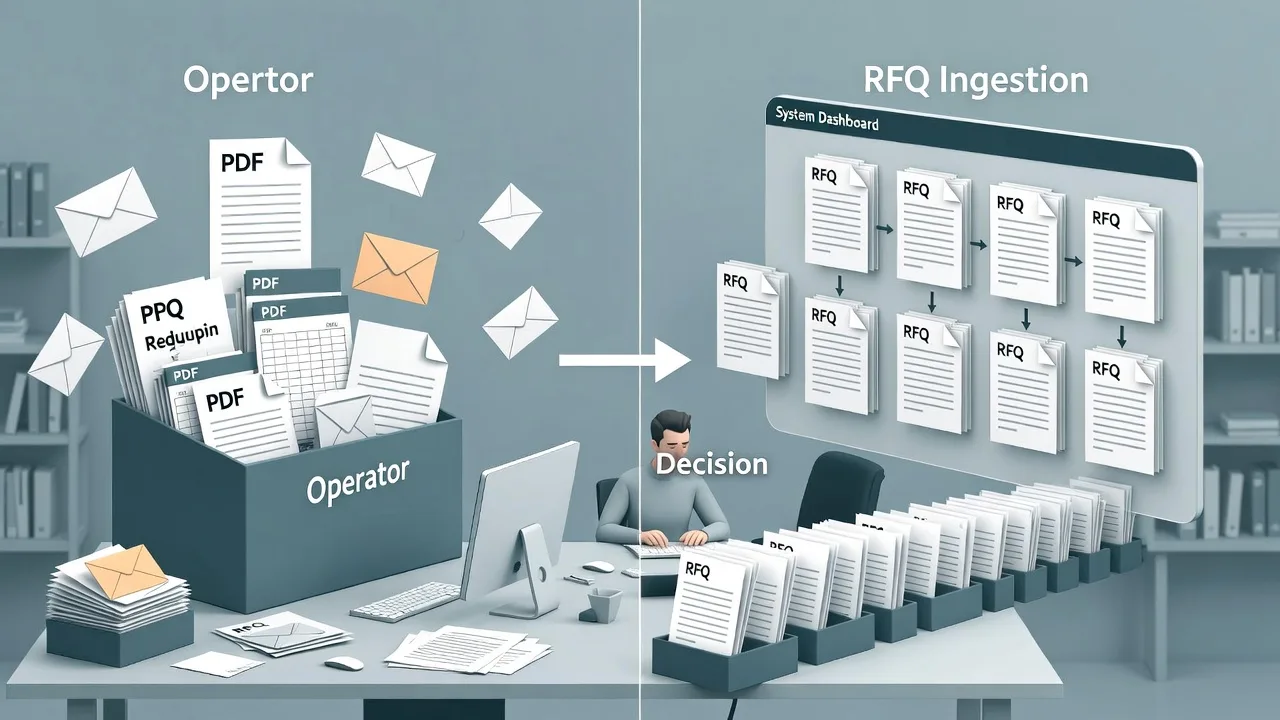
    In logistics operations and B2B distribution businesses, RFQs are treated as routine work. Emails arrive. Attachments are opened. Line items are read. Details are re-entered into ERP or Excel. Quotes are prepared. The day moves on. 

    Nothing appears broken. 

    But under the surface, RFQs quietly determine how fast teams can respond, how much volume they can handle, and how much pressure people carry every single day. 

    The Bottleneck Most Teams Don’t Measure 

    RFQs arrive continuously: 

    • Customer RFQs for routes, vessels, or shipments 
    • Vendor RFQs for pricing and availability 
    • Project-driven RFQs with tight turnaround expectations 

    Each RFQ typically takes 8–20 minutes to process manually: 

    • Reading emails and attachments 
    • Interpreting inconsistent formats 
    • Extracting item tables 
    • Correcting data before ERP entry 

    Individually, this feels manageable. 

    At scale, it is not. 

    For teams handling 50–100 RFQs per day, this quietly translates into 10–25 hours of manual effort every day, before any pricing decisions or customer responses even begin. 

    This work rarely appears on dashboards, but it silently caps operational capacity. 

    Why RFQs Don’t Scale with the Business?

    When RFQ volumes increase, most teams respond in familiar ways: 

    • Add people 
    • Extend working hours 
    • Accept slower response times 

    None of these actually fix the underlying issue. 

    RFQs depend entirely on human availability. When people are busy, RFQs wait. When backlogs form, response quality drops. Growth continues, but the RFQ process becomes fragile. 

    Over time, skilled coordinators and pricing teams spend most of their day on clerical work instead of judgment-driven tasks. 

    What Changes When RFQs Become Autonomous?

    At Nunar, we treat RFQs as an operational layer, not a document task. 

    Agentic AI changes the model by taking ownership of RFQ ingestion end to end: 

    • Monitoring RFQ inboxes continuously 
    • Detecting and pulling attachments automatically 
    • Understanding documents across formats 
    • Extracting item-level data accurately 
    • Validating and normalizing information 
    • Preparing structured outputs for ERP ingestion 

    The workflow runs independently, without waiting for people, shifts, or manual queues. 

    RFQs move forward even when teams are busy. 

    The Impact Teams Actually Feel 

    Across logistics operators and B2B distributors we work with, automating RFQ ingestion typically reduces manual effort by 70–80%

    That reclaimed capacity does not disappear. It gets redirected: 

    • Pricing teams focus on complex or high-value RFQs 
    • Coordinators manage more lanes and customers without overload 
    • Trading teams respond faster to vendors and projects 
    • Customer teams spend time on exceptions, not data entry 

    Operations become calmer, more predictable, and easier to manage at scale. 

    A Small Change with a Compounding Effect 

    When routine RFQ work is handled autonomously, teams can handle 30–50% more RFQs with the same headcount, without extending working hours or compromising accuracy. 

    The benefit is not just speed. 
    It is consistency, visibility, and sustainability. 

    RFQs may look like a small operational detail, but they sit at the front door of revenue flow. Removing manual friction here unlocks capacity across the operation. 

    The Nunar RFQ Ingestion Pipeline 

    Nunar enables this through a structured, production-ready pipeline designed for real operational environments: 

    1. Email Monitoring – RFQ inboxes are tracked continuously 
    1. Attachment Detection – Relevant documents are identified automatically 
    1. Document Understanding – Vision AI and OCR interpret tables and formats 
    1. Item Extraction – RFQ line items and key fields are captured 
    1. Validation – Data is checked, normalized, and prepared 
    1. Structured Output – Clean JSON is generated for downstream systems 
    1. ERP Delivery – Data is provided in ERP-ready formats 

    This is not a one-off automation. 
    It is a repeatable ingestion layer built for volume, variation, and growth. 

    Automation That Respects Human Judgment 

    The goal is not to remove people from RFQ workflows. 

    The goal is to remove repetition. 

    When routine RFQs move on their own, humans focus on decisions, exceptions, and customer commitments. Operations become more resilient, and growth stops feeling like pressure. 

    At Nunar, we believe operational speed should come from system design, not human exhaustion. 

    If you’d like, we can share a simple RFQ capacity calculator that shows how much time and response bandwidth your current volumes consume each week. 

  • AI in Pharmaceutical Marketing

    AI in Pharmaceutical Marketing

    AI in Pharmaceutical Marketing: Transforming Engagement, Sales, and Compliance for the Digital Era

    Pharmaceutical marketing is undergoing a quiet revolution. For decades, sales teams, marketing departments, and brand managers have relied on conventional methods, physician detailing, events, and email campaigns, to reach healthcare professionals and patients. But today, with the explosion of data and the rise of artificial intelligence (AI), the rules have changed.

    AI in pharmaceutical marketing is no longer an experiment, it’s a competitive necessity. From predictive targeting and automated content personalization to regulatory compliance and patient insights, AI is enabling pharma brands to deliver the right message to the right audience at the right time.

    At Nunar, we develop AI-powered platforms that help pharmaceutical enterprises analyze, automate, and optimize every aspect of marketing and engagement. This is more than digital transformation, it’s the evolution of marketing intelligence.

    Why AI Is Reshaping Pharmaceutical Marketing

    The pharmaceutical industry operates in one of the most complex and regulated marketing environments in the world. Every campaign must comply with medical, legal, and ethical guidelines while still reaching physicians, hospitals, and patients with relevant information.

    Traditional marketing systems struggle under this weight. Fragmented data, disconnected teams, and manual analytics slow down decision-making. AI changes that equation.

    AI systems can:

    • Process vast volumes of patient and physician data securely.
    • Identify behavioral and prescription trends invisible to humans.
    • Automate compliant outreach based on regional and regulatory parameters.
    • Continuously optimize campaigns through machine learning feedback loops.

    For pharma companies, this means faster insights, greater personalization, and measurable ROI.

    How AI Improves Targeting and Segmentation

    One of the most powerful applications of AI in pharmaceutical marketing lies in audience segmentation. Instead of grouping healthcare professionals or patients by broad categories (specialty, geography, or age), AI models can create micro-segments based on hundreds of behavioral and contextual factors.

    Using machine learning and natural language processing (NLP), AI tools can analyze prescription data, clinical publications, and digital engagement histories to predict which healthcare professionals are most likely to respond to a new drug or therapy.

    For example:

    • Predictive Targeting: AI identifies high-value prescribers or early adopters by analyzing historic prescribing patterns and patient outcomes.
    • Personalized Engagement: NLP-powered systems can tailor messaging to match the tone, vocabulary, and professional interests of each physician.
    • Omnichannel Optimization: AI continuously learns which channels, email, webinars, in-person visits, or digital ads, are most effective for specific audience types.

    The result is precision marketing at scale, something impossible through manual processes.

    AI-Powered Content Generation and Compliance Checking

    Pharmaceutical content creation is a careful balance between scientific accuracy, empathy, and compliance. Every claim must be verifiable, and every piece of communication must pass through layers of approval.

    AI streamlines this complex process.

    Modern AI systems can generate and audit marketing content using built-in compliance frameworks. Large Language Models (LLMs) and Natural Language Understanding (NLU) algorithms help:

    • Draft patient-friendly summaries of clinical data.
    • Create region-specific content aligned with FDA or EMA guidelines.
    • Automatically detect unapproved medical claims before distribution.

    Nunar’s AI content engine integrates directly with enterprise CRM and compliance management systems, ensuring every message adheres to brand and regulatory standards.

    By combining human oversight with AI-driven automation, pharma marketers can reduce approval cycles from weeks to days, while maintaining full compliance.

    Predictive Analytics for Pharma Sales and Forecasting

    Marketing success in the pharmaceutical industry isn’t just about engagement, it’s about outcomes. AI-based analytics tools can forecast drug sales, demand trends, and marketing ROI with remarkable accuracy.

    Machine learning models analyze years of prescription data, demographic trends, and real-time market signals to predict:

    • Which products are likely to gain traction in specific regions.
    • The expected sales impact of a new campaign or product launch.
    • Potential risks from competitive drugs entering the market.

    For enterprise marketing leaders, this predictive capability enables smarter budget allocation and faster decision-making.

    Nunar’s AI analytics framework helps pharmaceutical sales teams integrate marketing insights with real-world evidence, allowing for data-driven forecasting across territories, brands, and therapeutic categories.

    AI for HCP (Healthcare Professional) Engagement

    Engaging healthcare professionals (HCPs) has become increasingly challenging as digital noise grows. Doctors and pharmacists are inundated with information, making it critical for pharma companies to deliver value-driven, personalized communication.

    AI transforms HCP engagement in several ways:

    • Conversation Intelligence: AI agents analyze digital interactions and identify patterns in physician interests, helping marketing teams refine content and messaging.
    • Adaptive Learning: AI learns from each interaction, adjusting the tone, timing, and format for future communications.
    • Recommendation Engines: Machine learning models suggest relevant educational content, webinars, or drug samples based on physician behavior.

    Nunar’s HCP engagement module uses AI to unify these functions, enabling seamless omnichannel communication that feels human while remaining compliant and efficient.

    Personalized Patient Marketing with AI

    Pharmaceutical marketing is also moving closer to the end consumer, patients. With AI, patient-centric campaigns can become more relevant, timely, and ethical.

    Using AI-driven segmentation and sentiment analysis, pharma companies can:

    • Understand patient attitudes toward medications and side effects.
    • Deliver tailored educational content or reminders for medication adherence.
    • Measure emotional and behavioral responses to marketing campaigns.

    AI ensures that patient communication remains compliant with privacy laws such as HIPAA while increasing overall engagement and satisfaction.

    By integrating patient feedback loops into marketing analytics, pharma enterprises can close the gap between awareness, adherence, and advocacy.

    Integrating AI Across CRM and Marketing Platforms

    One of the greatest challenges for pharmaceutical enterprises is managing data across multiple platforms, CRM, ERP, marketing automation, and compliance tools.

    AI solves this by acting as a connective layer that integrates structured and unstructured data into a unified system.

    Nunar’s AI platform supports integrations with major enterprise tools such as:

    • Salesforce Health Cloud
    • Microsoft Dynamics 365
    • SAP Marketing Cloud
    • Oracle Eloqua and Veeva CRM

    Through AI APIs and automation scripts, pharma companies can create an intelligent data ecosystem where every campaign and interaction is informed by unified analytics.

    Ensuring Compliance and Data Security with AI

    The pharmaceutical industry’s reliance on sensitive health data makes data protection and compliance non-negotiable. AI enhances compliance by embedding data governance, audit trails, and rule-based automation directly into workflows.

    Nunar’s platform integrates compliance frameworks such as:

    • FDA 21 CFR Part 11
    • HIPAA for patient data protection
    • GDPR and CCPA for regional data privacy

    AI agents monitor data handling, flag anomalies, and ensure every transaction and message complies with local and international regulations, reducing manual oversight and risk.

    ROI and Business Impact of AI in Pharma Marketing

    The true value of AI in pharmaceutical marketing lies in its ability to create measurable impact. Enterprises adopting AI-driven marketing strategies report:

    • 35–50% faster campaign execution cycles
    • Up to 40% improvement in lead conversion rates
    • 20–30% savings in marketing operational costs
    • Significant reductions in compliance violations

    By integrating AI agents into marketing and sales operations, pharma companies are shifting from reactive to proactive decision-making—gaining speed, precision, and insight.

    Case Example: AI-Powered Marketing Transformation

    A leading U.S.-based pharmaceutical company partnered with Nunar to modernize its marketing operations using AI.

    Challenges:

    • Disjointed CRM and compliance systems
    • Manual content approval taking 10–14 days
    • Low engagement from HCPs and patients

    Solution:

    • Implemented Nunar’s AI marketing automation platform integrated with Salesforce and Veeva CRM.
    • Deployed AI agents to analyze engagement data and personalize outreach.
    • Introduced NLP-driven content verification for faster compliance review.

    Outcome:

    • Campaign approval time reduced by 65%.
    • 2.5x improvement in physician engagement rates.
    • 30% higher conversion in new drug launches.

    The Future of AI in Pharmaceutical Marketing

    Looking ahead, the next wave of AI adoption in pharma marketing will focus on:

    • Generative AI for omnichannel storytelling and content creation.
    • AI assistants for medical reps and sales enablement.
    • Real-time emotion and sentiment tracking during patient or HCP interactions.
    • Integration with AI-driven drug discovery and real-world data platforms for a closed feedback loop between research, sales, and marketing.

    Pharma leaders embracing AI today will be tomorrow’s market leaders—combining scientific rigor with digital precision.

    Redefining Pharma Marketing Intelligence

    AI is no longer just a supporting tool in pharmaceutical marketing—it’s becoming the strategic core. From predictive targeting to compliance management and personalized engagement, AI is enabling marketing teams to achieve what was once impossible: precision, personalization, and performance at scale.

    Nunar’s AI-powered marketing and analytics solutions empower pharmaceutical enterprises to modernize their engagement models, unlock deeper insights, and stay compliant while maximizing ROI.

    If your organization is ready to transform marketing operations with AI, schedule a consultation or demo with Nunar to explore how we can build your next-generation marketing intelligence platform.

    People Also Ask

    How does AI improve pharmaceutical marketing performance?

    AI enhances targeting, segmentation, and personalization using predictive analytics, NLP, and automation—resulting in faster decision-making and higher engagement rates.

    Is AI-based pharma marketing compliant with regulations?

    Yes. Platforms like Nunar integrate FDA, HIPAA, and GDPR frameworks, ensuring every campaign is secure and compliant.

    Can AI personalize campaigns for both HCPs and patients?

    Absolutely. AI analyzes behavioral data and engagement history to deliver tailored communication to healthcare professionals and patients alike.

    How long does it take to implement AI in a pharma marketing workflow?

    With ready integrations, Nunar’s AI platform can be deployed in as little as 6–10 weeks, depending on existing systems and data readiness.

    What measurable ROI can pharma companies expect?

    Most enterprises see 20–40% operational efficiency gains, improved lead conversion, and faster compliance approvals within the first year of deployment.

  • AI Support and Maintenance Services

    AI Support and Maintenance Services

    AI Support and Maintenance Services: Keeping Enterprise AI Systems Reliable, Scalable, and Future-Ready

    Building an AI system is only the beginning. The real challenge begins after deployment, when models start interacting with live data, evolving business needs, and unpredictable user behavior. For enterprises that rely on AI to automate decisions, forecast demand, or manage operations, ongoing support and maintenance determine whether those systems deliver consistent ROI or degrade over time.

    That’s where AI support and maintenance services come in. They ensure that deployed models, data pipelines, and integrations remain stable, secure, and continuously optimized for performance.

    In this article, we’ll explore what AI support and maintenance involve, why it’s critical for enterprise success, and how companies like Nunar help global organizations sustain AI reliability through intelligent automation and proactive monitoring.

    What Are AI Support and Maintenance Services?

    AI support and maintenance services are specialized technical operations focused on keeping AI-driven systems operational, accurate, and aligned with changing business goals.

    These services go beyond routine IT maintenance. They address the unique lifecycle challenges of AI systems—including model drift, data decay, algorithm updates, and integration failures.

    Core components typically include:

    • Model performance monitoring: Tracking key accuracy metrics and detecting performance degradation over time.
    • Data quality management: Ensuring incoming data remains clean, consistent, and bias-free.
    • Model retraining and revalidation: Updating AI models periodically as new data or business rules emerge.
    • System upgrades and integration support: Maintaining compatibility with new APIs, frameworks, or enterprise systems.
    • Security and compliance management: Protecting sensitive data and adhering to evolving regulatory requirements.

    Why AI Maintenance Is Critical for Enterprises

    AI systems are dynamic. A predictive model that performs flawlessly today may begin to drift within weeks as market conditions, data sources, or user behavior evolve.

    Without proper maintenance, enterprises face:

    • Decreased model accuracy leading to unreliable predictions.
    • Integration breakdowns when APIs or dependent systems change.
    • Increased risk exposure from unmonitored model bias or data anomalies.
    • Compliance failures due to untracked updates or undocumented retraining cycles.

    Continuous support ensures that your AI infrastructure remains aligned with performance, security, and governance standards, reducing operational risk while maximizing business value.

    Types of AI Support and Maintenance Services

    1. Corrective Maintenance: Addresses bugs, model errors, and performance issues detected in production environments.

    2. Adaptive Maintenance: Adapts models and integrations to reflect new business rules, data sources, or technology upgrades.

    3. Preventive Maintenance: Implements proactive monitoring and alerting systems to prevent failures or data quality issues before they occur.

    4. Perfection Maintenance: Continuously improves models through retraining, hyper-parameter tuning, or adopting new AI algorithms.

    Together, these ensure that AI systems evolve in sync with organizational priorities.

    Key Deliverables of AI Support and Maintenance

    When managed effectively, AI support services provide:

    • 24/7 monitoring dashboards for model and infrastructure health.
    • Scheduled retraining pipelines with documented version control.
    • Performance benchmarking across different datasets or time periods.
    • Root cause analysis for performance degradation.
    • Audit-ready reports for compliance and governance.
    • Technical support desk for immediate incident resolution.

    This holistic approach ensures the enterprise AI ecosystem runs predictably and efficiently, no matter how complex.

    How AI Maintenance Improves Business Outcomes

    Effective AI maintenance directly contributes to measurable enterprise benefits:

    • Higher system uptime: Reliable models ensure continuous business operations.
    • Improved forecast accuracy: Regular retraining minimizes model drift.
    • Reduced operational costs: Automated monitoring reduces manual oversight.
    • Faster innovation: Teams can focus on new projects instead of troubleshooting.
    • Stronger compliance: Versioning, documentation, and validation simplify audits.

    Ultimately, consistent AI maintenance converts your models from one-time projects into long-term business assets.

    Common Challenges Enterprises Face in AI Maintenance

    1. Unmonitored Model Drift – Over time, changing input data can silently degrade predictions.
    2. Fragmented Tools – Disconnected monitoring, retraining, and CI/CD systems create blind spots.
    3. Skill Gaps – Traditional IT teams lack the expertise for ML-specific troubleshooting.
    4. Data Dependencies – Pipeline failures can cause cascading disruptions.
    5. Lack of Governance – Without proper documentation, audits and regulatory checks become difficult.

    Overcoming these challenges requires a structured MLOps strategy supported by intelligent automation.

    How Nunar Simplifies AI Support and Maintenance

    At Nunar, we provide AI support and maintenance services that help enterprises automate oversight, prevent performance degradation, and maintain compliance at scale.

    Our platform uses AI agents that continuously monitor and manage deployed systems across environments.

    Key capabilities include:

    • Automated model monitoring: Real-time tracking of drift, accuracy, and confidence scores.
    • Predictive maintenance: AI agents identify potential issues before they impact production.
    • Retraining orchestration: Automated pipelines for data refresh and model updates.
    • Audit-ready documentation: Complete versioning for every model iteration.
    • Integration management: Continuous validation of connected systems and APIs.

    Nunar’s approach blends MLOps best practices with real-time intelligence, turning AI maintenance into a self-optimizing, low-intervention process.

    The ROI of AI Support and Maintenance

    Enterprises that implement continuous AI support frameworks typically achieve:

    • 30–50% reduction in unplanned downtime.
    • 25% improvement in predictive model accuracy.
    • 40% reduction in data-related incidents.
    • Faster compliance readiness for internal and external audits.

    These outcomes not only improve operational stability but also strengthen executive confidence in AI-driven decision-making.

    Building a Sustainable AI Maintenance Strategy

    To maximize the value of your AI investments, your maintenance approach should include:

    1. Unified Monitoring Architecture: Centralize data, model, and system metrics under one observability platform.
    2. Automated Drift Detection: Implement thresholds for key performance metrics and trigger retraining automatically.
    3. Regular Governance Audits: Ensure all updates and retrains are documented and explainable.
    4. Security Integration: Regularly patch models and APIs to mitigate risks.
    5. Cross-Functional Ownership: Create shared accountability between data science, DevOps, and compliance teams.

    These principles create a closed-loop AI ecosystem that stays accurate, reliable, and compliant, long after deployment.

    Why Enterprises Choose Nunar

    Nunar’s AI support and maintenance services are designed for scale, security, and transparency. We help businesses:

    • Monitor hundreds of models across distributed environments.
    • Automate retraining without manual intervention.
    • Manage model lifecycle documentation for compliance.
    • Reduce total cost of ownership through proactive automation.

    Whether your enterprise uses AI for fraud detection, predictive maintenance, or logistics optimization, Nunar’s intelligent agents ensure that your systems remain continuously optimized and compliant.

    Final Thoughts

    AI models don’t fail overnight, they drift slowly, often unnoticed. The real measure of AI maturity isn’t how quickly an organization can deploy models, but how consistently it can maintain them.

    By investing in dedicated AI support and maintenance services, enterprises ensure that their systems stay adaptable, ethical, and effective over time.

    With Nunar’s AI support ecosystem, maintenance evolves from a reactive burden to a proactive advantage, sustaining the performance, reliability, and business impact of your AI investments.

    People Also Ask

    What do AI support and maintenance services include?

    They cover model monitoring, retraining, data quality checks, integration updates, and compliance tracking to ensure stable AI performance.

    How often should AI models be retrained?

    Retraining frequency depends on data volatility and business use cases, but proactive monitoring can trigger automatic updates when drift occurs.

    Can Nunar’s AI agents integrate with existing MLOps tools?

    Yes. Nunar integrates with leading platforms like MLflow, Kubeflow, AWS SageMaker, and Azure ML for seamless lifecycle management.

    What industries benefit most from AI maintenance services?

    Enterprises in healthcare, finance, manufacturing, and logistics rely heavily on AI maintenance for compliance and operational continuity.

    What makes Nunar’s support model unique?

    Nunar’s AI agents automate the entire maintenance cycle, from drift detection to retraining, ensuring your systems remain efficient, compliant, and low-risk.

  • Computer Vision for Quality Control

    Computer Vision for Quality Control

    Computer Vision for Quality Control: The 2025 Guide for U.S. Manufacturers

    For U.S. manufacturers, the pursuit of perfection on the production line is relentless. Traditional quality inspection, reliant on the human eye, is increasingly a bottleneck, inconsistent, costly, and unable to keep pace with modern volumes and complexities. At Nunar, having developed and deployed over 500 AI agents into production, we’ve seen a consistent trend: computer vision is no longer a future concept but a present-day imperative for maintaining a competitive edge.

    This guide cuts through the hype to provide a clear, actionable understanding of how AI-powered visual intelligence is transforming quality control from a cost center into a strategic asset.

    Computer vision for quality control uses AI-powered cameras and deep learning algorithms to automatically and consistently inspect products for defects, ensuring higher quality, reducing costs, and improving operational efficiency in manufacturing.

    What is Computer Vision in Manufacturing Quality Control?

    Computer vision is a field of artificial intelligence that enables machines to interpret and understand the visual world. By simulating human sight, computer vision allows systems to recognize and analyze images, videos, and other visual inputs, transforming them into actionable information.

    In the context of quality control, this technology moves beyond manual inspection. It involves installing cameras and sensors at critical points on the production line. These systems capture visual data, which is then processed by deep learning models—often convolutional neural networks (CNNs), to perform tasks like anomaly detection, classification, and object detection with superhuman speed and accuracy.

    The core value lies in its consistency. While a human inspector might be affected by fatigue, distraction, or subjective judgment, a computer vision system provides an objective, repeatable, and scalable standard for quality inspection 24/7. This is not about replacing human workers, but about augmenting their capabilities and freeing them to focus on more complex, value-added tasks.

    Key Benefits of Computer Vision for Quality Control

    The shift from manual to AI-driven inspection delivers tangible, bottom-line results for U.S. factories and plants.

    • Unprecedented Defect Detection Accuracy: Manual inspection is prone to human error, especially in high-volume environments. Computer vision systems offer a consistent and objective standard. Studies and real-world applications show that AI-powered quality inspection can improve defect detection rates by up to 90%. This drastic reduction in escape rates protects your brand reputation and minimizes costly recalls.
    • Significant Cost Reduction: Catching a defect early in the production process is exponentially cheaper than discovering it after it has reached a customer. Automated inspection slashes costs associated with rework, waste, returns, and warranty claims. McKinsey findings indicate that AI-powered quality inspection can cut costs by as much as 50%.
    • Enhanced Operational Efficiency: Computer vision systems can inspect products at the full speed of your production line, eliminating the bottleneck of manual checks. This leads to higher throughput and better overall equipment effectiveness (OEE). The technology also enables predictive maintenance, where cameras monitor equipment for subtle wear or misalignment, allowing for scheduled maintenance before a failure causes unplanned downtime.
    • Improved Worker Safety and Focus: By automating repetitive and sometimes hazardous inspection tasks, computer vision reduces the need for workers to be in close proximity to fast-moving machinery. It can also monitor the production floor to ensure compliance with safety protocols, such as verifying the use of personal protective equipment (PPE) like helmets and gloves.

    How Computer Vision is Applied in Manufacturing Quality Control

    The applications for computer vision in quality control are vast and tailored to specific manufacturing needs. Based on our deployments, here are the most impactful use cases.

    1. Surface and Defect Detection

    This is the most common application. AI models are trained to identify imperfections that might be invisible or difficult for the human eye to spot consistently.

    • What it solves: Detecting micro-cracks, scratches, dents, color inconsistencies, and coating defects on products ranging from automotive panels to smartphone casings.
    • Real-world example: In aerospace manufacturing, computer vision systems inspect carbon fiber reinforced polymer tape layers for critical defects such as gaps or overlaps with extreme precision.

    2. Assembly Verification

    Ensuring that a product has been put together correctly before it moves to the next stage is crucial.

    • What it solves: Verifying the presence, placement, and orientation of all components. This prevents incomplete products from shipping and avoids downstream assembly issues.
    • Real-world example: A system can confirm that every connector is snapped into place on an electronic control unit or that all labels are correctly applied to a consumer goods package.

    3. Measurement and Gauging

    Computer vision provides non-contact, high-speed measurement of critical dimensions.

    • What it solves: Accurately measuring the size, diameter, or volume of components to ensure they are within specified tolerances. This is essential in industries like medical device manufacturing where precision is paramount.
    • Real-world example: A vision system can measure the gap between a car door and its frame to ensure a perfect fit and finish on the assembly line.

    4. Code Reading and Traceability

    Nearly every manufactured item has a barcode, QR code, or serial number for tracking.

    • What it solves: Automatically reading and verifying these codes, even if they are damaged, poorly printed, or applied to a curved surface. This ensures full traceability throughout the supply chain.
    • Real-world example: A Fortune 100 technology company optimized logistics across 400+ global warehouses with a computer vision solution for automated package tracking, ensuring real-time monitoring even with challenging label visibility.

    A Comparison of Computer Vision Approaches for Quality Control

    FeatureTraditional/Rule-Based VisionAI-Powered Computer Vision (2D)Advanced 3D Machine Vision
    Best ForSimple, high-contrast inspections (presence/absence)Complex texture, defect, and appearance analysisPrecision measurement, bin-picking, robotic guidance
    TechnologyFixed algorithms looking for pixel patternsDeep learning models (CNNs) trained on image datasetsStereo cameras, laser scanners generating 3D point clouds
    FlexibilityLow; requires reprogramming for any changeHigh; can generalize to new product variationsModerate; powerful but complex to set up
    Example Use CaseVerifying a label is on a bottleClassifying wood grain quality or detecting subtle surface scratchesMeasuring the flatness of a machined metal part

    Implementing Computer Vision in Your U.S. Manufacturing Facility

    A successful deployment is more than just buying the right camera. It requires a strategic approach tailored to your specific operational environment.

    Step 1: Define the Problem and Scope

    Start with a clear, narrow focus. Identify a specific, high-value quality issue, for instance, “reduce scratch-related returns on Product X by 75%.” A well-defined problem is easier to solve and demonstrates clear ROI, paving the way for broader adoption.

    Step 2: Data Collection and Preparation

    AI models learn from data. You will need to collect thousands of images of both “good” and “defective” products under consistent lighting and angles. This is often the most time-consuming phase, but tools like Roboflow can streamline the process of organizing, labeling, and augmenting your image datasets.

    Step 3: Model Selection and Training

    For most modern quality control tasks, deep learning is the preferred approach. You can use pre-trained models from platforms like Google’s Vertex AI or Microsoft Azure AI and fine-tune them with your data, or build a custom model from scratch. The choice depends on the uniqueness of your defect and the volume of data available.

    Step 4: Deployment and Integration

    This is where the AI agent meets the physical world. The trained model must be deployed where the inspection happens—often directly on the factory floor. This can be done via edge computing devices for low-latency, real-time analysis without relying on a cloud connection. The system must be integrated with your production line controls to automatically accept or reject items.

    Step 5: Continuous Monitoring and Improvement

    A deployed model is not a “set it and forget it” solution. You must monitor its performance to detect “model drift,” where its accuracy decreases over time as product variations or lighting conditions slowly change. At Nunar, our AI agents are designed for continuous learning, allowing them to adapt and improve based on new data without full retraining.

    Top Computer Vision Companies and Platforms for U.S. Manufacturers

    The ecosystem of providers is diverse, ranging from established industrial automation giants to agile AI specialists.

    • Industrial Leaders: Companies like Cognex Corporation and Basler AG have deep expertise in traditional machine vision and are increasingly incorporating AI into their hardware and software offerings.
    • Cloud AI Platforms: Google Cloud Vision AIAmazon SageMaker, and Microsoft Azure AI offer powerful, scalable APIs and custom model training tools. These are excellent for companies already invested in a specific cloud ecosystem.
    • End-to-End Platforms: Roboflow is a popular platform that simplifies the entire computer vision pipeline, from dataset management and labeling to model deployment, making it accessible even for teams with limited ML expertise.
    • Specialized AI Agent Developers (like Nunar): For manufacturers seeking a fully custom, turnkey solution, specialized AI development companies focus on building and deploying intelligent agents that are deeply integrated into your specific manufacturing workflows and business systems.

    The Future of Quality Control is Visual

    Computer vision has fundamentally shifted the paradigm of quality control in U.S. manufacturing. It is no longer a question of if but when and how to integrate this transformative technology. The journey begins with a single, well-defined problem. The success you achieve there creates the momentum for plant-wide digital transformation.

    The future is moving towards Visual General Intelligence (VGI), where systems will not only detect known defects but also understand context, reason about new anomalies, and interact with the production environment in increasingly human-like ways. The competitive advantage will belong to those who harness this visual intelligence today.

    At Nunar, we specialize in building and deploying practical AI agents that solve real manufacturing problems. With over 500 successful deployments, we have the experience to guide your quality control transformation. Contact our team today for a free, personalized assessment of your highest-value quality inspection opportunity.

    People Also Ask

    What is the cost of implementing computer vision for quality control?

    Costs vary widely based on complexity, ranging from a few thousand dollars for a simple, off-the-shelf application to several hundred thousand for a fully custom, multi-point inspection system; the key is that ROI is often achieved through massive reductions in scrap and rework.

    How accurate is computer vision compared to human inspection?

    In controlled tasks, computer vision consistently outperforms human inspection in both speed and accuracy, with some systems achieving over 99% detection rates on trained defects, operating 24/7 without fatigue

    Can computer vision systems adapt to new product variations?

    Yes, modern deep learning systems, especially those described as “self-learning,” can be retrained or fine-tuned with new image data to adapt to product changes, significantly reducing reprogramming downtime compared to traditional rule-based systems.

    What are the data privacy concerns with computer vision?

    In a manufacturing context, the primary concern is securing the visual data collected; this is typically addressed through on-premise (edge) deployment, which keeps data within the factory and avoids cloud privacy issues

  • Regression Suite Automation Tool

    Regression Suite Automation Tool

    Regression Suite Automation Tool: How Enterprises Are Accelerating Software Quality with AI and Continuous Testing

    Software development has shifted from periodic releases to continuous delivery. This evolution has forced QA teams to rethink how they maintain reliability as products evolve daily. Regression testing, once a manual, repetitive process, is now the backbone of modern DevOps pipelines.

    Enter the regression suite automation tool: a solution designed to automatically re-test every part of an application after changes, ensuring that new code doesn’t break existing functionality. When powered by AI and integrated into CI/CD pipelines, it can reduce test cycles from days to hours, improving release confidence and customer satisfaction.

    This article explores how regression suite automation tools work, what benefits they deliver to enterprises, and how AI-driven platforms like Nunar’s automation suite help teams modernize testing at scale.

    What Is a Regression Suite Automation Tool?

    A regression suite is a collection of automated test cases that verify critical features of an application after each code update.

    A regression suite automation tool automates the execution, maintenance, and reporting of these test cases. Instead of manually checking hundreds of functions after every release, QA engineers can run automated regression tests across environments, browsers, or devices in parallel.

    Modern tools utilize:

    • AI-based test discovery: Automatically identify affected areas from recent code changes.
    • Self-healing scripts: Fix broken test cases using intelligent element recognition.
    • Smart prioritization: Run only the most impacted test cases to save time.
    • Integrated dashboards: Visualize failures, coverage, and release readiness.

    Why Regression Suite Automation Is Crucial for Enterprises

    For large-scale enterprise systems, ERP platforms, banking apps, logistics dashboards, or healthcare software, manual regression testing is neither scalable nor cost-effective.

    Here’s why automation is now essential:

    • Speed: Test cycles shrink from weeks to hours.
    • Accuracy: Eliminates human error in repetitive checks.
    • Consistency: Every build is tested against the same baseline suite.
    • Coverage: Enables testing of thousands of scenarios continuously.
    • ROI: Frees QA teams to focus on high-value exploratory and performance testing.

    In agile and DevOps environments, automation ensures that continuous integration doesn’t compromise quality.

    How AI Enhances Regression Suite Automation

    Traditional test automation requires frequent maintenance whenever the UI or logic changes. AI eliminates much of this overhead through:

    • Visual recognition: ML models detect UI components even when identifiers change.
    • Change impact analysis: Predicts which areas of the application are most likely to fail after code updates.
    • Predictive failure detection: Uses pattern learning from previous test runs to identify likely breakpoints before execution.
    • Autonomous healing: Repairs selectors or test paths automatically.

    AI-based regression tools adapt as your application evolves, keeping test suites stable even in rapid-release environments.

    Core Features of a Modern Regression Suite Automation Tool

    1. Smart Test Case Management: Organizes test cases by module, priority, and release, allowing selective or full-suite execution.

    2. CI/CD Integration: Connects directly to Jenkins, GitHub Actions, or Azure DevOps pipelines for continuous regression validation.

    3. Cross-Platform Testing: Runs regression suites across multiple browsers, operating systems, and devices.

    4. Parallel Execution:Enables concurrent test runs, drastically reducing overall cycle time.

    5. Detailed Reporting and Analytics: Generates dashboards showing pass/fail trends, coverage gaps, and performance metrics.

    6. Collaboration and Traceability: Maintains audit trails linking test results to corresponding builds and commits.

    Business Benefits of Automated Regression Testing

    Adopting a regression suite automation tool can transform both development and QA operations.

    For business leaders:

    • Faster releases: Deliver updates more frequently without compromising stability.
    • Reduced cost of quality: Minimize manual testing hours and defect leakage.
    • Stronger compliance: Ensure consistent validation for regulated industries (finance, healthcare, aerospace).
    • Improved customer trust: Release confidently knowing every update is validated.

    For engineering teams:

    • High reusability: Test suites adapt easily to new features or branches.
    • Improved collaboration: Unified platforms for developers, testers, and DevOps engineers.
    • Data-driven optimization: Real-time analytics to guide test coverage improvement.

    Regression Suite Automation in Action: A Practical Example

    A global logistics enterprise introduced a new tracking dashboard into its existing ERP system. Frequent updates to shipment modules often broke unrelated workflows. Manual testing took days, delaying every sprint.

    By deploying Nunar’s AI-based regression automation suite, the company:

    • Integrated automated regression runs into Jenkins pipelines.
    • Reduced regression testing time by 75%.
    • Achieved near-zero production bugs after major releases.
    • Improved collaboration between development and QA teams through unified dashboards.

    This shift enabled the enterprise to move from quarterly releases to weekly sprints—without increasing QA headcount.

    How Nunar’s AI Agents Simplify Regression Suite Automation

    At Nunar, we help enterprises replace static automation scripts with intelligent, adaptive regression systems.

    Our AI regression suite automation solution offers:

    • Self-healing test scripts that automatically repair broken locators.
    • Impact-based test execution driven by recent code changes.
    • Seamless integration with CI/CD tools, version control, and project management platforms.
    • Real-time test analytics for visibility across environments.
    • Cross-platform coverage for web, mobile, and API testing.

    With AI agents handling test optimization and maintenance, engineering teams spend less time debugging tests, and more time building features.

    ROI and Measurable Impact

    Enterprises adopting automated regression suite tools typically achieve:

    • 60–70% reduction in regression testing time.
    • 50% decrease in post-release defects.
    • 40% cost savings in QA resource allocation.
    • Continuous validation aligned with every code merge.

    In essence, automation not only improves testing speed—it enhances reliability, governance, and product confidence across the entire SDLC.

    Implementing Regression Suite Automation: Best Practices

    1. Start with a baseline: Identify the most business-critical test cases for automation first.
    2. Integrate early: Connect automation to CI/CD pipelines from the start.
    3. Leverage AI where possible: Use self-healing and impact-based analysis to cut maintenance costs.
    4. Maintain visibility: Use dashboards and analytics to track test coverage and defect trends.
    5. Review continuously: Keep the regression suite aligned with evolving business priorities.

    By treating regression testing as a continuous activity, not a post-development task, teams can sustain software quality across every release.

    Final Thoughts

    Regression suite automation is no longer a luxury, it’s a necessity for enterprises embracing digital transformation. With AI-enabled tools, testing becomes faster, smarter, and more resilient to change.

    Organizations that integrate automated regression into their delivery pipelines not only accelerate time to market but also protect user trust and brand reputation.

    For enterprise leaders seeking reliability without slowing innovation, Nunar’s AI regression automation suite offers the perfect balance of speed, precision, and scalability.

    People Also Ask

    What is a regression suite automation tool?

    It’s a system that automatically executes and manages test cases to verify that new code changes haven’t broken existing features.

    How does AI improve regression testing?

    AI helps identify affected modules, prioritize test cases, and automatically heal scripts that break after UI or logic changes.

    Can regression automation work with existing CI/CD pipelines?

    Yes. Most enterprise tools integrate directly with Jenkins, GitLab CI/CD, or Azure DevOps for continuous regression validation.

    How does Nunar’s AI regression tool differ?

    Nunar’s platform combines self-healing AI agents, smart test selection, and real-time analytics—reducing human intervention while increasing test coverage.

  • Real-Time Decisioning in Manufacturing

    Real-Time Decisioning in Manufacturing

    Real-Time Decisioning in Manufacturing: The AI Agent Revolution

    For U.S. manufacturers, timely decision-making isn’t just advantageous, it’s survival. Yet many organizations struggle to convert data into actionable insights amid the relentless pressure of global competition, supply chain volatility, and escalating customer expectations. The average U.S. manufacturing facility loses nearly $50 million annually to unplanned downtime alone, a staggering figure that highlights the critical need for systems that can respond intelligently to factory conditions as they unfold . While basic automation has taken us far, the next evolutionary leap comes from AI agents that don’t just collect data but perceive, reason, and act autonomously. At Nunar, having developed and deployed over 500 AI agents into production environments, we’ve witnessed firsthand how this technology transforms operations from reactive to proactively intelligent.

    Unlock AI-Driven ESG Insights

    Partner with our experts to implement AI solutions tailored for your ESG reporting needs.

    💡 Schedule a Strategy Call

    The Manufacturing Data Dilemma: Why Real-Time Matters More Than Ever

    Manufacturing has never been more complex or more data-rich. Modern facilities generate terabytes of information daily from sensors, equipment, quality systems, and supply chain platforms. Yet data abundance doesn’t equal insight, and latency renders most of this potential intelligence useless for immediate decision-making.

    The fundamental challenge U.S. manufacturers face is the conversion gap the inability to transform raw data into immediate, actionable decisions. Traditional manufacturing execution systems and business intelligence platforms typically operate on historical data, providing postmortem analysis rather than prescriptive guidance. This creates what we call the “decision latency trap,” where organizations understand what went wrong hours or days after the fact but lack mechanisms to prevent issues as they emerge .

    Real-time decisioning fundamentally rewrites this equation by processing data streams instantaneously to support immediate operational choices. Unlike traditional analytics that explain past performance, real-time systems prescribe immediate actions based on current conditions. The most advanced implementations leverage AI agents that autonomously execute these decisions within defined parameters .

    The business case is unequivocal. Manufacturers implementing real-time decisioning consistently report 30-50% reductions in unplanned downtime15-25% improvements in overall equipment effectiveness (OEE), and significant gains in production quality and yield . These aren’t marginal improvements, they represent transformational competitive advantages for U.S. manufacturers competing in global markets.

    Beyond Automation: How AI Agents Transform Real-Time Decisioning

    Artificial intelligence agents represent a fundamental evolution beyond traditional automation and rules-based systems. Where conventional automation follows predetermined scripts, AI agents perceive their environment, reason about goals, and take autonomous actions to achieve specific outcomes . This distinction is crucial for manufacturing environments where conditions constantly fluctuate and predefined rules inevitably fail to cover edge cases.

    In practical terms, AI agents in manufacturing environments consist of interconnected capabilities:

    • Perception systems that interpret sensor data, visual information, and operational contexts
    • Reasoning engines that process this information using AI models to make intelligent decisions
    • Action mechanisms that execute decisions through workflow automation, equipment adjustments, or alert generation
    • Learning loops that continuously improve performance through feedback and new data 

    This architecture enables manufacturers to move from detection and response to prediction and prevention. For instance, instead of simply alerting maintenance teams when a bearing temperature exceeds thresholds (detection), AI agents can predict failure days in advance based on subtle vibration patterns, thermal trends, and performance metrics, then automatically schedule maintenance during planned production windows (prevention).

    The manufacturing sector is rapidly embracing this technology, with 77% of manufacturers adopting AI in 2024, up from 70% just a year earlier . Production applications lead this adoption, followed by inventory management and customer service implementations. The results are compelling, AI-driven predictive maintenance alone has reduced manufacturing downtime by 40% in sectors that have embraced these technologies.

    📘 Free Resource: “AI Decisioning Blueprint for Smart Manufacturing”

    Get the step-by-step guide we use with top manufacturers to automate production insights and improve efficiency.

    👉 Download the Blueprint

    Real-World Impact: AI Agent Use Cases in U.S. Manufacturing

    The theoretical potential of AI agents becomes concrete when examining actual implementations across U.S. manufacturing sectors. These aren’t hypothetical applications but proven solutions delivering measurable ROI.

    Predictive Maintenance and Downtime Reduction

    Heavy equipment manufacturers now use AI agents processing real-time sensor data to predict component failures before they occur. One implementation we developed at Nunar monitors hydraulic systems, electrical components, and mechanical assemblies across a distributed manufacturing network. The AI agents reduced unplanned downtime by over 50% and increased overall equipment effectiveness by 20% through proactive intervention scheduling and parts replacement.

    The financial impact extends beyond maintenance savings. For automotive manufacturers, each hour of production downtime can cost over $1 million in lost output. AI agents that slash unplanned downtime don’t just reduce maintenance costs, they protect revenue streams and customer commitments .

    Quality Optimization and Defect Reduction

    A leading aerospace manufacturer implemented AI agents to analyze real-time sensor data from debarring equipment. The agents identified that reducing machine speed by 15% significantly improved quality without impacting throughput. This seemingly minor adjustment, which human operators had overlooked for years, resulted in a 60% reduction in defect rates for a critical aircraft component.

    Similar implementations in electronics manufacturing use computer vision-enabled AI agents to detect microscopic defects impossible for human inspectors to identify consistently. These systems not only flag defects but trace them to specific process parameters, enabling continuous process improvement.

    Supply Chain and Production Responsiveness

    Global automotive manufacturers now leverage AI agents with real-time BI dashboards to monitor vehicle production metrics. When issues emerge, from parts shortages to equipment performance deviations—the systems trigger alerts that enable resolution within 30 minutes. This real-time responsiveness has boosted manufacturing throughput by over 10% while reducing inventory carrying costs .

    The most advanced implementations feature multi-agent systems where specialized AI agents collaborate autonomously. When a production delay is detected, one agent reschedules downstream operations while another adjusts material orders and a third communicates revised timelines to customers, all without human intervention.

    Table: Measurable Benefits of AI Agents in Manufacturing

    Use CaseKey Performance IndicatorsTypical Improvement
    Predictive MaintenanceUnplanned Downtime, OEE40-50% reduction, 15-25% improvement
    Quality OptimizationDefect Rates, Scrap Reduction50-70% reduction
    Production PlanningThroughput, Schedule Adherence10-15% improvement
    Energy ManagementEnergy Consumption per Unit15-30% reduction
    Inventory OptimizationCarrying Costs, Stockouts20-35% reduction

    The Implementation Challenge: Why Most AI Projects Fail and How to Succeed

    Despite compelling use cases and proven ROI, successfully implementing AI agents in manufacturing environments remains challenging. The sobering reality is that most AI projects never reach production, and manufacturing environments present particular integration complexities.

    Recent research reveals that even among enterprises with AI agents in production, most remain early in capability, control, and transparency. Teams struggle to understand when their agents are right, wrong, or uncertain. The challenge isn’t primarily in the models themselves but in everything around them, the AI stack evolves faster than organizations can standardize or validate new frameworks, APIs, and orchestration layers.

    Based on our experience deploying over 500 AI agents in manufacturing environments, we’ve identified critical success factors:

    💡 See What Real-Time AI Can Do on Your Factory Floor

    We’ve helped manufacturers move from reactive to predictive decisioning in under 90 days.

    👉 Explore a Custom AI Demo

    Start with Specific, High-ROI Use Cases

    The most successful implementations begin with constrained, measurable workflows rather than attempting enterprise-wide transformation. Document processing and operational support augmentation represent the most common successful starting points . These areas offer high volume, repetitive tasks with clear ROI potential.

    Manufacturers should identify 2-3 specific pain points where real-time decisioning could deliver measurable impact within 6-12 months. Common starting points include predictive maintenance for critical equipment, quality monitoring on high-value production lines, or dynamic scheduling in constrained operations.

    Plan for Continuous Iteration, Not One-Time Implementation

    The notion of implementing a “complete” AI solution is fundamentally flawed. Our data shows that 70% of regulated enterprises rebuild their AI agent stack every three months or faster, reflecting how unstable production environments remain . Success comes from designing for change rather than seeking permanent solutions.

    Manufacturers should architect modular systems where components can be updated or replaced independently. This might mean abstracting business logic from underlying AI models or maintaining multiple model versions for gradual transition rather than big-bang replacements.

    Prioritize Governance and Human Oversight

    As AI agents take on more responsibility, human oversight becomes increasingly critical. Research indicates that fewer than one in three teams feel satisfied with their observability and guardrail solutions, making reliability the weakest link in the AI stack . This is particularly concerning in manufacturing where decisions impact physical operations and safety.

    Successful implementations embed human governance directly into workflows through approval mechanisms, review controls, and escalation paths. Rather than treating oversight as a constraint, forward-thinking manufacturers use it as a feedback mechanism to improve agent performance over time.

    The Technology Stack: Building Blocks for Manufacturing AI Agents

    Implementing effective AI agents requires a carefully architected technology stack tailored to manufacturing’s unique requirements. Based on our deployment experience, several components prove consistently critical:

    Real-Time Data Platforms

    Manufacturing AI agents require infrastructure that can process high-velocity data streams with minimal latency. Platforms like Volt Active Data provide the foundation for applications that must respond to factory conditions instantaneously . These systems handle the ingestion, processing, and distribution of sensor data, equipment signals, and operational metrics.

    The most effective implementations create unified data layers that bridge historical context with real-time streams. This enables AI agents to evaluate current conditions against historical patterns and predicted outcomes.

    Integration and Orchestration

    Research shows that 94% of organizations view process orchestration as crucial for successful AI deployment . AI agents must work seamlessly with existing manufacturing systems, ERPs, MES platforms, PLCs, and industrial equipment. Integration challenges represent the primary reason AI projects fail to reach operational deployment .

    Successful manufacturers implement integration layers that abstract the complexity of connecting AI agents to diverse systems. API gateways, message buses, and adapters for industrial protocols create the connectivity foundation for AI-driven operations.

    Observability and Evaluation

    With 62% of production teams planning to improve observability in the next year, visibility has become the top investment priority . Manufacturing AI agents require robust monitoring not just for performance but for decision quality, compliance, and business impact.

    The most advanced implementations include evaluation frameworks that track agent performance against business outcomes, detect concept drift in models, and provide transparency into decision processes, particularly important in regulated manufacturing sectors.

    The Future of AI Agents in U.S. Manufacturing

    The trajectory for AI agents in manufacturing points toward increasingly autonomous, collaborative systems. While current implementations typically focus on discrete functions, the future lies with multi-agent systems where specialized AI agents coordinate to manage complex operations.

    We’re already seeing early signs of this evolution in facilities where production planning agents interact with inventory management agents, quality optimization agents, and maintenance prediction agents. These systems don’t just automate individual tasks, they create emergent intelligence that optimizes across traditionally siloed functions.

    The manufacturing workforce is evolving alongside these technological capabilities. Rather than replacing human expertise, AI agents are augmenting it, handling routine monitoring and response while enabling human operators to focus on exception management, process improvement, and strategic innovation. The most successful manufacturers are redesigning roles and workflows around this human-AI collaboration model.

    Starting Your AI Agent Journey

    The transformation of U.S. manufacturing through AI agents isn’t a distant possibility, it’s happening now in forward-thinking facilities across the country. The technology has progressed from experimentation to production, delivering measurable improvements in efficiency, quality, and responsiveness.

    Successful implementations share common characteristics: they start with specific operational challenges, architect for continuous evolution rather than one-time solutions, and maintain appropriate human oversight as capabilities expand. They recognize that the goal isn’t full autonomy but optimized human-machine collaboration.

    For U.S. manufacturers considering this journey, the question is no longer whether to implement AI agents but how to start effectively. Based on our experience deploying over 500 agents in production environments, we recommend beginning with a well-defined use case with clear ROI potential, assembling cross-functional teams that blend operational and technical expertise, and prioritizing data foundation and integration capabilities alongside AI technologies.

    The competitive landscape is shifting rapidly. Manufacturers who master real-time decisioning through AI agents will define the next era of industrial leadership. Those who delay risk being disrupted by more agile, intelligent operations. The time for experimentation is over—the era of implementation is here.

    People Also Ask

    How much can manufacturers realistically save with AI agents?

    Implementations typically deliver ROI between 100-200%, with U.S. companies averaging 192% returns . The largest savings come from downtime reduction (40-50%), quality improvement (50-70% defect reduction), and productivity gains (10-15% throughput increase) .

    What’s the implementation timeline for manufacturing AI agents?

    Focused implementations typically deliver value in 3-6 months, with comprehensive deployments requiring 6-12 months. Success correlates more with organizational readiness than technical complexity .

    How do AI agents differ from traditional automation?

    Where traditional automation follows predefined rulesAI agents perceive, reason, and adapt to changing conditions using machine learning . This enables them to handle unpredictable scenarios and continuously improve performance.