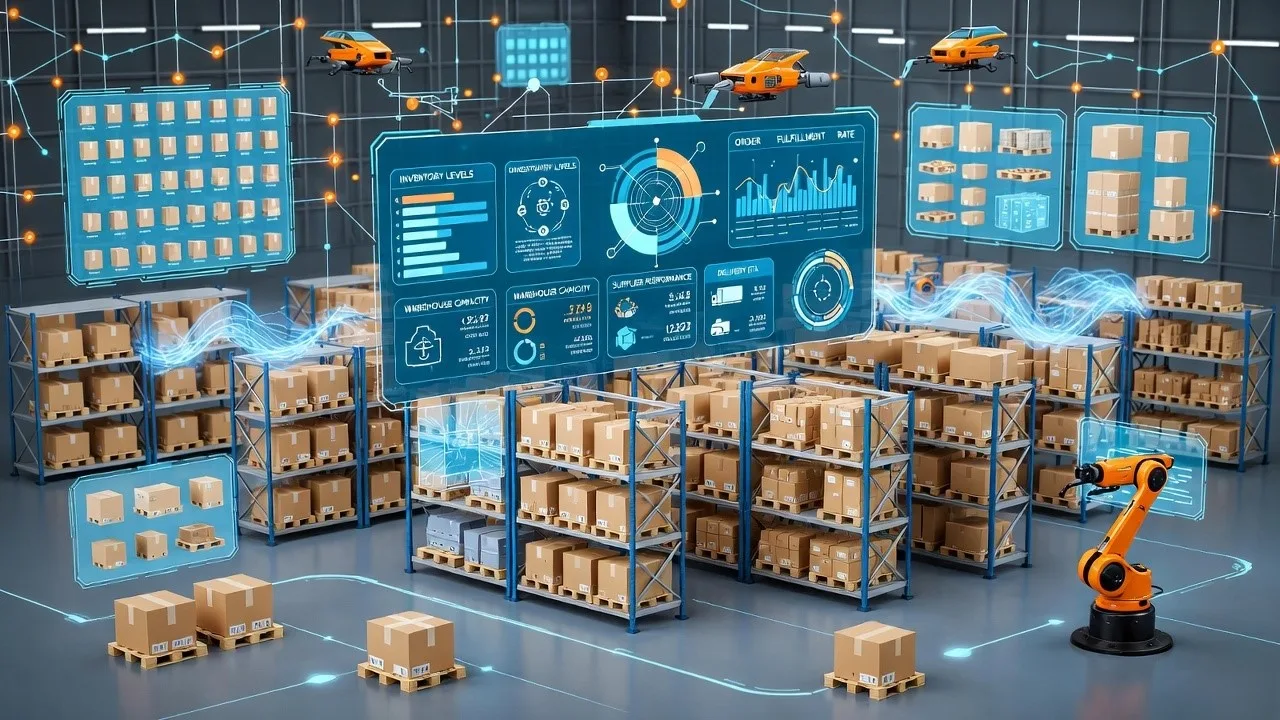
Pharma Drug Sales and Forecasts: How AI Is Transforming Pharmaceutical Revenue Planning
The pharmaceutical industry runs on precision, both in the lab and in the market. Every year, billions of dollars hinge on how accurately companies can forecast drug demand, manage inventories, and align production with regulatory cycles. Yet, even with advanced analytics, many pharma companies still struggle to balance clinical complexity, supply chain volatility, and fast-changing healthcare dynamics.
Today, AI-driven forecasting is reshaping how enterprises plan, price, and distribute their products. It is not only improving prediction accuracy but also transforming the way sales teams, market analysts, and operations leaders make strategic decisions.
In this article, we’ll explore how AI-based pharma drug sales and forecasting systems work, why traditional methods are falling short, and how enterprises can use automation and predictive modeling to unlock more reliable revenue insights.
Pharmaceutical forecasting has always been complex. Unlike consumer goods, drug sales are affected by multiple unpredictable factors—regulatory approvals, clinical trial results, competitive drug launches, seasonal illnesses, and even physician adoption rates.
Traditional approaches rely on static models, manual spreadsheets, and limited historical data.
These systems:
Struggle to integrate real-world evidence, patient data, and prescription analytics.
Lack the ability to adapt to sudden market shifts.
Depend heavily on human interpretation, increasing bias and error.
For large pharma enterprises, these inefficiencies translate into misaligned production, wasted inventory, and missed market opportunities.
Artificial Intelligence enables companies to move beyond manual prediction models. Using machine learning algorithms, enterprises can identify hidden relationships between market behavior, clinical data, and external variables, creating dynamic, real-time forecasts.
Here’s how AI transforms the process:
Multi-source data integration – Merges datasets from prescriptions, patient registries, R&D pipelines, and supply chain feeds.
Predictive modeling – Uses regression, time-series, and deep learning models to forecast market demand more accurately.
Real-time scenario testing – Simulates pricing, regulatory, and market-entry scenarios before launch.
Automated adjustments – Continuously refines predictions as new data flows in, reducing lag and improving accuracy.
By applying these capabilities, AI can improve forecast accuracy by up to 40–60% compared to traditional statistical models.
Use Cases: AI in Drug Sales Forecasting and Planning
1. Demand Forecasting for New Drugs: AI helps predict the adoption rate of new drugs by analyzing clinical trial outcomes, physician sentiment, and payer behavior.
2. Market Expansion and Pricing Strategy: Predictive models estimate the potential impact of price adjustments or market expansion to new regions, helping teams optimize launch sequencing.
3. Inventory Optimization: AI systems align production and distribution based on dynamic demand patterns, reducing overstocking or shortages.
4. Competitive Intelligence: ML models can track rival drug performance, patent expiration, and emerging substitutes to anticipate shifts in market share.
5. Sales Rep Optimization: AI agents can guide field sales teams toward higher-value physicians or regions based on historical engagement and prescription data.
Improved forecast accuracy: AI systems process larger datasets, accounting for more variables than manual methods.
Faster decision-making: Automated reporting eliminates delays in quarterly forecasting cycles.
Reduced waste: Aligning production with real demand minimizes expired or surplus inventory.
Revenue predictability: Enhanced visibility across regions and product portfolios.
Regulatory readiness: AI systems maintain transparent audit trails for compliance and reporting.
For large enterprises, these improvements can result in millions of dollars saved annually through smarter production planning and reduced lost sales.
Building a Pharma Forecasting System with AI Agents
At Nunar, we develop AI agents that combine data analytics, machine learning, and automation to modernize enterprise forecasting workflows.
Our pharma forecasting solutions include:
Unified data pipelines that pull from CRM, ERP, and clinical databases.
Custom AI models for therapeutic categories such as oncology, neurology, and cardiovascular drugs.
Sales performance dashboards that link forecasts to real-world outcomes.
Predictive scenario simulators for product launch or market access planning.
Automated compliance reports aligned with FDA and EMA data integrity requirements.
This integrated approach gives pharmaceutical leaders a single source of truth, where forecasting, market intelligence, and revenue management converge.
The ROI of AI in Pharma Forecasting
A global pharmaceutical company using AI-driven forecasting can typically expect:
20–30% improvement in forecast precision across therapeutic categories.
15% reduction in production planning errors.
25% faster cycle times for market intelligence and reporting.
Better alignment between sales, R&D, and supply chain divisions.
More importantly, AI forecasting builds resilience. When pandemics, policy shifts, or supply chain disruptions occur, models can adapt automatically, keeping revenue plans intact.
From Data to Decisions: AI’s Role in Pharma Strategy
Forecasting is no longer just about predicting demand, it’s about connecting every stage of the pharmaceutical value chain. AI-driven models bridge data from R&D, clinical operations, manufacturing, and sales to create a unified, learning-driven feedback loop.
Enterprises that embrace this transformation can make faster, evidence-based decisions on:
Market entry timing
Pricing optimization
Capacity planning
Commercial strategy adjustments
In other words, AI doesn’t just forecast the future of pharma, it helps shape it.
Why Choose Nunar for AI-Powered Pharma Forecasting
Nunar specializes in custom AI solutions for the pharmaceutical sector, helping organizations replace manual forecasting with intelligent automation. Our AI agents are designed to integrate seamlessly with existing enterprise systems, ensuring smooth adoption and measurable ROI.
We help clients:
Build adaptive, compliant, and explainable forecasting models.
Automate data aggregation across distributed teams.
Visualize forecasts and KPIs through real-time dashboards.
Achieve better synchronization between sales and production planning.
Whether you’re forecasting drug launches, regional performance, or long-term therapeutic trends, Nunar’s AI agents deliver the precision and agility modern pharma demands.
Final Thoughts
The pharmaceutical landscape is shifting faster than ever and outdated forecasting methods can no longer keep up. With AI, forecasting becomes a strategic capability rather than a reactive process.
By combining automation, predictive analytics, and AI-driven insights, pharma enterprises can align sales, operations, and R&D in real time achieving greater efficiency and confidence in every decision.
If your organization is ready to modernize its forecasting system, it’s time to explore what AI agents from Nunar can deliver.
Machine Learning Version Control: Building Reliable, Scalable, and Auditable AI Systems
As machine learning adoption deepens across industries from finance to healthcare to manufacturing, data scientists face a growing challenge: managing the lifecycle of ML models. Unlike traditional software, ML systems evolve continuously through new datasets, retraining, and hyperparameter tuning. This dynamic nature makes version control not just helpful, but essential.
For enterprises that depend on accuracy, compliance, and scalability, machine learning version control is the foundation for model reliability. In this post, we’ll explore what ML version control is, why it matters, and how companies can implement it to strengthen governance, collaboration, and innovation.
What Is Machine Learning Version Control?
Machine learning version control is the process of tracking and managing changes to datasets, model code, experiments, and artifacts across the entire ML lifecycle.
Just as developers use Git to manage source code, data teams use ML versioning tools to ensure that every change data update, feature engineering adjustment, or model iteration is captured, traceable, and reproducible.
A strong ML version control framework ties together four core components:
Modern AI systems are built on constant iteration. But without proper control, they can spiral into chaos duplicated experiments, overwritten models, and unexplainable results.
Here’s why ML version control is critical for large organizations:
Reproducibility: Ensures that experiments can be recreated exactly, even months later, by any team member.
Compliance: Provides audit trails for regulations such as GDPR, HIPAA, or financial reporting standards.
Collaboration: Enables multiple data scientists to work on shared models and datasets without conflict.
Traceability: Links each model’s output to its data source, codebase, and hyperparameters.
Deployment confidence: Simplifies model rollback and comparison when deploying updates.
In essence, version control turns experimentation into a controlled, measurable, and repeatable process something regulators and executives both value.
Several open-source and enterprise tools have emerged to handle ML versioning more effectively.
Some of the most widely used include:
DVC (Data Version Control): Built on Git, DVC manages large datasets and model files alongside code.
MLflow: Tracks experiments, models, and parameters, with APIs for reproducibility and deployment.
Weights & Biases (W&B): Focuses on collaborative experiment tracking and visualization.
Neptune.ai: A metadata store for model tracking and team collaboration.
Kubeflow & MLRun: For large-scale MLOps pipelines with integrated model lineage tracking.
Each tool offers varying depth in storage management, UI dashboards, and integrations with cloud platforms like AWS SageMaker, Azure ML, or GCP Vertex AI.
The ROI of Implementing Machine Learning Version Control
For many enterprises, the biggest benefit is reliability at scale. When teams version their models, the organization gains visibility into performance trends, model drift, and operational dependencies.
Business outcomes include:
40–60% reduction in duplicate experiments.
Up to 3x faster model deployment cycles.
Consistent regulatory compliance and audit readiness.
Lower risk of production incidents due to misaligned model versions.
This translates directly into cost savings and higher confidence in automated decision-making systems especially in critical sectors like finance, healthcare, and logistics.
Best Practices for Machine Learning Version Control
To implement effective ML versioning, enterprises should follow a structured approach:
Standardize repositories: Create unified repositories for code, data, and models with clear branching rules.
Automate metadata capture: Use tools that record model parameters, metrics, and dependencies automatically.
Use immutable storage: Store datasets and models in cloud-based versioned storage (e.g., S3 with object versioning).
Integrate with CI/CD: Connect version control with automated testing and deployment pipelines.
Define governance policies: Establish ownership, review processes, and retention policies for all ML artifacts.
This approach ensures that ML projects evolve predictably without loss of context or control.
Integrating ML Version Control into MLOps
Machine learning version control is not an isolated step; it’s a core part of MLOps the practice of applying DevOps principles to machine learning workflows.
In an MLOps ecosystem:
Versioning systems ensure consistent handoff between data science and engineering.
CI/CD pipelines automate retraining and deployment of approved model versions.
Monitoring systems detect drift and trigger retraining pipelines.
Together, these systems close the feedback loop—allowing enterprises to deploy, monitor, and improve models continuously while maintaining auditability.
How Nunar Helps Enterprises Implement Scalable ML Version Control
At Nunar, we help enterprises integrate machine learning governance into their AI pipelines using AI agents and automated tracking systems.
Our ML version control solutions combine:
Automated dataset lineage tracking
Cloud-based model repositories
Integration with Git, MLflow, and CI/CD tools
Compliance-ready audit logs
Real-time model performance dashboards
This approach helps data teams modernize their workflows without disrupting existing infrastructure. Whether your models run on-premises or across multi-cloud environments, Nunar’s AI agents can automate the entire lifecycle from experiment tracking to production governance.
Final Thoughts
Machine learning version control is not just a technical discipline; it’s an organizational safeguard. It ensures that innovation doesn’t come at the expense of traceability or trust.
For enterprise leaders, adopting a structured version control framework is the first step toward sustainable AI operations.
As AI models grow more complex and interconnected, businesses that prioritize versioning will gain an edge building systems that are faster to deploy, easier to audit, and far more resilient to change.
People Also Ask
What is the difference between ML version control and code versioning?
Traditional code versioning tracks changes to source code, while ML version control tracks data, models, and experiments in addition to code.
Can ML version control help with compliance?
Yes. It creates auditable trails showing which data and parameters influenced specific model outputs, supporting GDPR, HIPAA, or financial regulations.
How does ML version control improve team collaboration?
It allows multiple data scientists to run parallel experiments while keeping results consistent and reproducible.
Which version control tools integrate best with MLOps platforms?
DVC, MLflow, and W&B integrate well with AWS SageMaker, Azure ML, and Kubernetes-based MLOps setups.
How can Nunar help implement ML version control?
Nunar provides AI-driven version control and governance tools that automate tracking, storage, and compliance ensuring your models remain reliable and auditable at scale.
Generative AI in Inventory Management: How Intelligent Systems Are Redefining Supply Chain Precision
Inventory management has always been a balancing act too much stock drains capital, too little disrupts operations. For decades, businesses have relied on spreadsheets, ERP rules, and manual forecasting. But today, Generative AI is bringing a fundamental shift one that transforms inventory management from reactive to predictive, from guesswork to precision.
For enterprises managing complex supply chains, the value of generative AI is unmistakable: it can simulate thousands of demand scenarios, generate adaptive replenishment plans, and continuously optimize stock levels, all without human micromanagement.
Generative AI goes beyond traditional analytics. Instead of analyzing existing data to make a recommendation, it creates new, optimized possibilities.
In inventory management, this means AI models can generate:
Replenishment schedules that adapt to real-time sales and logistics data.
Predictive demand curves based on historical and market behavior.
Multi-scenario forecasts that balance cost, risk, and availability.
These models learn continuously from supply chain data, sales velocity, supplier performance, lead times, and even global events, to keep operations one step ahead of change.
The Pain Points It Solves
Challenge
Generative AI Solution
Overstocks and capital lock-up
AI simulates optimal reorder quantities and adjusts in real time as demand shifts.
Demand unpredictability
Models generate forecasts that adapt dynamically to market, season, and regional behavior.
Supplier delays
AI suggests alternate sourcing strategies or adjusted production plans to minimize disruption.
Poor visibility
Unified data pipelines feed real-time updates from ERP, POS, and logistics systems.
Manual decision-making
Automated AI agents handle routine stock, order, and transfer decisions 24/7.
Generative AI removes the inefficiency of “best guess” inventory management by transforming decision-making into a continuous, data-driven process.
Key Applications of Generative AI in Inventory Management
1. Dynamic Demand Forecasting: Traditional forecasting depends on historical averages. Generative AI models, however, generate thousands of demand patterns based on live data, promotions, weather, social sentiment, and economic trends and simulate the most probable outcomes.
2. Adaptive Replenishment Planning: Instead of relying on fixed reorder points, AI dynamically generates replenishment triggers. It adjusts stock policies by SKU, warehouse, and region, ensuring optimal balance between availability and cost.
3. Predictive Supplier Management: By modeling supplier reliability and lead-time variability, AI can recommend which vendors to prioritize or when to diversify sourcing before disruptions occur.
4. Multi-Echelon Optimization: AI learns how stock moves across your entire supply chain from factories to regional warehouses to retail outlets and generates redistribution strategies that reduce carrying costs while maintaining service levels.
5. Scenario Simulation: Generative AI lets decision-makers test “what-if” cases instantly: What if fuel costs rise 10%? What if a supplier shuts down? What if sales spike 20%? The system generates inventory and fulfillment plans that minimize risk and cost under each condition.
A U.S.-based retail enterprise managing multiple distribution centers struggled with stock imbalances, some locations were overstocked while others faced constant shortages.
After deploying a generative AI engine, the system analyzed 36 months of data, including sales trends, supplier metrics, and logistics costs. It then generated optimized stock redistribution plans, cutting storage costs by 22% and improving fulfillment speed by 28%.
The AI didn’t just react, it created a new, more resilient inventory ecosystem.
The Role of AI Agents in Inventory Automation
Modern AI agents, like those developed at Nunar, act as autonomous decision-makers within enterprise systems.
These agents can:
Monitor stock data continuously across warehouses.
Trigger automated purchase orders.
Adjust reorder points dynamically.
Send alerts for anomalies in supplier or logistics data.
In effect, Nunar’s AI agents turn static inventory workflows into self-regulating, intelligent systems.
How Nunar Helps Enterprises Transform Inventory Management
At Nunar, we build custom generative AI systems that integrate seamlessly with your ERP and logistics stack, turning raw data into strategic inventory decisions.
Our solutions deliver:
Generative forecasting models trained on enterprise-specific data.
Adaptive replenishment engines that automate procurement decisions.
Visualization dashboards for transparency and traceability.
Integration-ready AI APIs for SAP, Oracle, and Microsoft Dynamics.
Whether you manage regional warehouses or global distribution networks, Nunar’s AI-driven inventory platforms give you control, accuracy, and scalability.
Future Outlook: From Prediction to Autonomy
The next evolution of generative AI in inventory management is self-healing supply chains, systems that not only detect imbalances but automatically fix them.
We’ll see:
Autonomous procurement agents negotiating with suppliers.
AI twins of entire supply networks predicting disruptions weeks ahead.
Sustainability-focused optimization, balancing cost with carbon footprint.
Enterprises that adopt generative AI early will gain a permanent competitive edge in agility, resilience, and cost efficiency.
Why Partner with Nunar
Nunar helps enterprises modernize inventory operations with AI models, automation agents, and predictive analytics that scale with business growth.
We don’t offer off-the-shelf software, we engineer tailored generative AI systems that align with your specific supply chain data, constraints, and goals.
If you’re ready to:
Eliminate manual inventory planning,
Reduce holding costs,
Predict demand with accuracy, and
Enable continuous optimization
Then it’s time to book a consultation with Nunar and explore what generative AI can do for your inventory ecosystem.
People Also Ask
How is generative AI different from predictive analytics in inventory management?
Predictive analytics forecasts what might happen. Generative AI goes further it creates and tests optimized solutions for how to respond to changing conditions.
Can AI integrate with my existing ERP or warehouse system?
Yes. Nunar’s AI models connect through secure APIs and work alongside existing ERP, WMS, or supply chain tools without disrupting operations.
How does AI handle unexpected supply chain disruptions?
It generates alternative scenarios instantly, recalculating procurement and logistics routes to minimize downtime.
What kind of data does generative AI need?
It learns from sales, supplier, logistics, and production data anything that reflects demand, lead times, and cost dynamics.
How quickly can AI inventory systems show ROI?
Most enterprises report measurable improvements in forecasting accuracy and cost reduction within the first 90 days of deployment.
Generative AI in Construction: Reinventing Design, Planning, and Project Efficiency
The construction industry is undergoing one of its most significant transformations in decades. Long seen as slow to adopt digital technologies, it’s now embracing Generative AI, a breakthrough that’s reshaping how projects are designed, planned, and executed.
Generative AI isn’t just another automation tool. It’s a creative partner that learns from existing designs, data, and site conditions to generate new, optimized solutions. For construction firms and developers, this means smarter planning, faster delivery, and reduced waste, without compromising quality or safety.
Generative AI refers to machine learning models that generate new outputs, designs, blueprints, schedules, or material plans, based on patterns in massive data sets. Unlike traditional rule-based systems, it doesn’t follow fixed templates. It learns context, constraints, and goals to create intelligent variations.
In construction, it can:
Design more efficient building layouts
Suggest sustainable material combinations
Automate cost and risk simulations
Optimize schedules based on real-time data
Enhance collaboration between architects, engineers, and contractors
The Pain Points It Solves
Every construction project faces competing pressures, cost, time, and compliance. Generative AI addresses these core issues:
Challenge
How Generative AI Helps
Design inefficiencies
Produces multiple structural options optimized for strength, materials, and energy efficiency.
Budget overruns
Predicts cost implications of design changes early in the planning phase.
Coordination errors
Synchronizes BIM (Building Information Modeling) data across teams in real time.
Project delays
Automates scheduling, resource allocation, and risk analysis.
Sustainability goals
Suggests material and layout alternatives that minimize waste and energy use.
By feeding project data, site conditions, and historical outcomes into AI models, construction teams gain a real-time decision engine capable of simulating hundreds of scenarios before a single foundation is laid.
1. Design Optimization: Architects can generate thousands of design variations based on size, budget, and zoning requirements. The AI evaluates each option for cost efficiency, energy performance, and structural safety, delivering the most balanced outcome.
2. Site Planning and Layouts: AI models can process terrain, zoning maps, and logistics data to determine optimal site layouts, reducing travel paths for workers and machinery while improving material placement efficiency.
3. Project Scheduling and Sequencing: Generative systems create adaptive project schedules that respond to disruptions, resource availability, and weather forecasts. When a delay occurs, the AI automatically re calibrates dependencies to maintain progress.
4. Material Optimization: AI identifies the best mix of materials based on availability, cost, and sustainability targets. It can also forecast material requirements to avoid over ordering and reduce waste.
5. Safety and Compliance: By simulating site conditions, generative AI predicts safety risks before they arise. It can also assist in ensuring adherence to OSHA, environmental, and building regulations.
6. Predictive Maintenance and Asset Management: When integrated with IoT sensors, AI models analyze operational data from equipment or buildings, predicting failures before they occur, minimizing downtime and maintenance costs.
Generative AI + BIM: A Powerful Duo
Building Information Modeling (BIM) remains the foundation of modern construction. When paired with generative AI, BIM transforms into an intelligent ecosystem.
AI can ingest BIM data to:
Detect clashes between structural, electrical, and mechanical systems.
Recommend design improvements that reduce energy use or material cost.
Automatically update models when design changes occur.
This integration reduces design cycles, boosts collaboration, and ensures project data remains accurate across every stakeholder’s workflow.
Benefits for Construction Enterprises
Benefit
Impact
Accelerated Design Cycles
Generate and validate design alternatives in hours instead of weeks.
Lower Costs
Predict and mitigate overruns through AI-driven forecasts.
Sustainability
Optimize layouts and materials for energy efficiency and minimal waste.
Improved Collaboration
Centralized data ensures transparency across architects, contractors, and clients.
Reduced Risk
Simulate and correct errors before construction begins.
For large-scale projects, these efficiencies translate directly into measurable ROI, faster approvals, shorter build times, and improved margins.
Real-World Example: AI in Modular Construction
Consider a modular construction company tasked with building 200 housing units under tight deadlines. Traditionally, engineers would manually create layout options for structure and plumbing.
With generative AI, the system analyzes site data, material costs, and compliance constraints to automatically propose multiple layout options. It identifies designs that minimize foundation costs and maximize energy efficiency, delivering an optimized model ready for fabrication in hours.
The result:
35% faster design approval
20% reduction in material waste
Seamless integration with robotic manufacturing lines
How Nunar Enables Generative AI for Construction
At Nunar, we help construction enterprises integrate AI-driven design, planning, and automation tools tailored to their workflows.
Our solutions combine:
Generative design engines for structure and layout optimization
AI scheduling models that adapt to resource and environmental changes
BIM integrations for unified data management
Sustainability simulators to track and reduce environmental impact
Whether you’re a real estate developer, EPC contractor, or industrial builder, Nunar’s AI systems bring precision, efficiency, and scalability to every stage of your project.
ROI of AI Adoption in Construction
Metric
Typical Improvement
Design turnaround time
40–60% faster
Material cost savings
15–25%
Project schedule adherence
+30%
Rework reduction
20–40%
Sustainability compliance
+25% improvement in energy models
These gains extend beyond efficiency, they reflect a shift toward predictive, data-driven decision-making that positions construction firms for long-term resilience.
Future Outlook
The future of generative AI in construction lies in adaptive systems that learn continuously from ongoing projects. As data grows richer, from IoT sensors, drones, and wearables, AI will evolve from design assistance to autonomous project management.
We can expect:
Fully automated 3D model generation from text-based project briefs
Real-time optimization during on-site changes
Predictive cost and risk analytics at every decision point
Seamless integration between digital twins and construction robotics
The firms that adopt these tools early will lead the industry’s next decade.
Why Partner with Nunar
Nunar stands at the intersection of AI, automation, and industry-specific integration. We design generative AI frameworks that align with your project’s data ecosystem, empowering your teams to design faster, plan smarter, and build sustainably.
Whether you want to deploy AI for conceptual design, predictive project planning, or full automation, Nunar’s experts ensure your systems deliver measurable impact from day one.
Book a consultation today to explore how Nunar’s generative AI solutions can modernize your construction projects.
People Also Ask
What is generative AI in construction design?
It’s the use of AI models to create optimized design alternatives automatically based on parameters like cost, energy efficiency, and spatial requirements.
How does AI improve project scheduling?
AI uses real-time data (like resource availability and weather conditions) to dynamically adjust schedules and reduce delays.
Is AI suitable for small construction firms?
Yes. Cloud-based AI platforms can scale from small projects to enterprise portfolios with minimal setup.
Can AI help reduce construction waste?
Absolutely. By simulating material usage and optimizing layouts, AI can reduce waste by up to 25%.
How long does it take to implement a generative AI system?
A pilot solution can typically be deployed in 8–12 weeks, depending on data availability and integration requirements.
Fintech Fraud Detection: How AI is Reinventing Transaction Security
Digital finance has evolved at an extraordinary pace, mobile payments, online lending, and instant transfers are now routine. Yet this convenience has also opened new doors for fraud. Fintech companies face rising threats from synthetic identities, transaction laundering, and account takeovers that traditional rule-based systems can no longer handle.
This is where AI-powered fraud detection reshapes the game. It doesn’t just flag anomalies; it learns, predicts, and prevents fraudulent behavior in real time, protecting both users and the business bottom line.
Fraudsters today operate like organized networks, constantly testing and exploiting system loopholes. Common fraud types in fintech include:
Payment fraud: unauthorized transactions and chargeback scams.
Identity theft: use of stolen or synthetic credentials.
Money laundering: layering through multiple microtransactions.
Insider threats: misuse of privileged access within systems.
Traditional fraud detection methods rely on static rules — like flagging transactions above certain thresholds. But these fail when criminals change their tactics or disguise behavior through sophisticated automation.
How AI Enhances Fraud Detection
AI systems analyze far more data points than manual or rule-based systems. They spot subtle patterns that humans can’t, such as transaction velocity, device fingerprints, IP reputation, and behavioral biometrics.
Key technologies include:
1. Machine Learning (ML): Trains on historical fraud data to predict risky behavior, continuously improving over time.
2. Deep Learning: Captures nonlinear relationships across data streams, essential for detecting complex fraud chains.
3. Natural Language Processing (NLP): Analyzes communication patterns in support tickets, KYC documents, or emails to identify deception or document tampering.
4. Graph Analytics: Maps relationships between users, devices, and accounts to detect collusion and hidden fraud rings.
5. Real-Time Anomaly Detection: Uses streaming data pipelines to identify unusual activity instantly and trigger automated responses.
Data integration layer pulling from payments, CRM, KYC, and device sources.
Feature engineering engine that transforms raw transaction data into fraud signals.
Model layer (ML and DL models) trained on historical and synthetic datasets.
Decision engine that scores and classifies transactions by risk level.
Feedback loop where flagged cases are reviewed and used to retrain models.
This combination allows continuous improvement while maintaining real-time detection capability.
Benefits for Fintech Enterprises
Outcome
Description
Reduced Losses
Detects fraudulent activity before it causes financial damage.
Operational Efficiency
Automates case prioritization and investigation workflows.
Enhanced Compliance
Supports AML and KYC regulations through consistent monitoring.
Customer Trust
Protects user accounts and builds long-term loyalty.
Scalability
Adapts dynamically as transaction volumes and data sources grow.
Use Cases of AI in Fintech Fraud Prevention
1. Real-Time Transaction Scoring: AI models assess every transaction in milliseconds, blocking high-risk activity instantly.
2. Synthetic Identity Detection: Deep learning identifies inconsistencies across user-provided documents, behavioral data, and network usage.
3. Card-Not-Present (CNP) Fraud Prevention: Behavioral and device fingerprinting verify legitimate user activity during online purchases.
4. AML (Anti-Money Laundering) Automation: AI reduces false positives in AML systems by learning normal patterns and refining alert logic.
5. Insider Threat Monitoring: Unsupervised ML detects unusual employee access or system activity indicative of internal risk.
Why AI Beats Traditional Rule Engines
Unlike static systems that rely on predefined logic, AI adapts continuously.
Learns from new threats instead of waiting for human updates.
Identifies multi-channel patterns across payments, loans, and onboarding.
Reduces false positives by understanding behavioral context.
Provides explainable outputs for audit and compliance validation.
This adaptability makes AI indispensable for fintech organizations operating in a fast-changing threat landscape.
Building an AI-Powered Fraud Detection Framework
Centralize your data: unify transaction, user, and behavioral data across platforms.
Train models with diverse datasets: include both confirmed fraud and near-miss cases.
Integrate with your transaction systems: enable real-time scoring and automated blocking.
Deploy explainable AI tools: ensure transparency for compliance and regulator trust.
Partner with an AI consulting company: for architecture, deployment, and ongoing model optimization.
A partner like Nunar can deliver pre-built AI frameworks, scalable cloud integrations, and domain-specific model training tailored for fintech operations.
The ROI of AI Fraud Detection
Implementing AI-based systems typically leads to:
Up to 60% reduction in fraud losses within the first year.
Faster investigation cycles, freeing analysts for complex cases.
Regulatory confidence through explainable, auditable processes.
Why Partner with Nunar
At Nunar, we help fintech enterprises build intelligent, automated fraud detection systems powered by AI and ML. Our solutions combine real-time data analysis, advanced modeling, and seamless integration with your financial ecosystem.
We design systems that adapt, not react, helping you stay ahead of emerging fraud threats while reducing operational costs and enhancing user trust.
Book a consultation to discover how Nunar can help protect your fintech business with AI-powered fraud detection.
People Also Ask
How does AI detect fintech fraud in real time?
AI models analyze transactional and behavioral data streams to flag suspicious activity instantly before payment completion.
Is AI fraud detection suitable for small fintech startups?
Yes. Scalable AI frameworks can start small and expand as transaction volume grows.
Can AI systems replace manual fraud investigators?
No. They complement them by filtering high-risk cases, allowing analysts to focus on verification and decision-making.
How do AI models stay up to date with new fraud patterns?
Through continuous learning, models retrain using new transaction data and investigator feedback.
What’s the average deployment time for AI fraud systems?
A proof-of-concept model can be deployed in 8–10 weeks, with full integration in 3–4 months depending on data readiness.
In modern healthcare, clinical notes hold the most valuable insights, patient histories, diagnoses, treatment plans, and clinician observations. Yet much of this information remains trapped in unstructured text, difficult to analyze or use effectively. Natural Language Processing (NLP) is changing that.
NLP in clinical documentation is more than just automation. It’s about turning text into actionable medical intelligence, streamlining workflows, improving care quality, and enabling data-driven decisions across the healthcare system.
Clinicians spend a significant portion of their time entering notes into electronic health records (EHRs). These notes are essential but often inconsistent and verbose. Extracting structured data manually is both time-consuming and error-prone.
NLP helps by:
Extracting key entities like symptoms, diagnoses, medications, and procedures.
Normalizing data against standard vocabularies (SNOMED CT, ICD-10, LOINC).
Summarizing long notes into concise, context-rich clinical overviews.
Detecting risks and anomalies across large patient datasets.
This shift lets physicians and researchers focus on patient outcomes instead of documentation burdens.
Real-World Applications of NLP in Clinical Notes
1. Automated Clinical Coding: NLP models can map clinical text to standardized billing and diagnostic codes, reducing administrative delays and claim rejections.
2. Patient Risk Stratification: By identifying comorbidities, medication errors, or treatment gaps in narrative notes, NLP enables proactive care management.
3. Research Data Extraction: Medical research teams use NLP to mine retrospective data from EHRs, enabling large-scale population studies without manual review.
4. Clinical Decision Support: Integrated NLP tools highlight relevant data points in real time, assisting doctors with better diagnoses and treatment choices.
5. Quality and Compliance Audits: Hospitals use NLP-driven analytics to monitor adherence to treatment protocols and compliance with regulatory standards.
Define clear use cases — coding automation, summarization, or data mining.
Ensure data privacy compliance — HIPAA and local regulations.
Use domain-specific models trained on medical corpora.
Integrate with EHRs for real-time data flow.
Continuously retrain models for evolving terminology and accuracy.
A dedicated AI solutions partner can accelerate this process with pre-built NLP frameworks and healthcare-grade integrations.
Why Partner with an AI Consulting Firm
Building in-house NLP systems for healthcare can be complex and costly. Partnering with an experienced AI consulting company helps:
Design compliant and scalable architectures.
Deploy and maintain custom-trained clinical NLP models.
Integrate seamlessly with legacy systems and EHR vendors.
Provide interpretability and bias detection tools for trust and compliance.
The Future of NLP in Clinical Documentation
As large language models become more domain-specific, NLP will evolve from text extraction to reasoning and prediction. We’ll see:
Context-aware assistants for real-time note generation.
Predictive alerts for adverse events.
Multi-lingual clinical summarization tools for global research use.
The result? A healthcare ecosystem that understands, organizes, and learns from every word written by clinicians.
Ready to Build Your NLP Healthcare Solution?
If your healthcare organization wants to extract actionable insights from unstructured clinical notes, NLP is the key. Partner with Nunar, an AI-driven automation company specializing in healthcare data transformation.
We help hospitals, research institutions, and healthtech providers deploy secure, compliant, and high-performance NLP systems that turn clinical text into measurable outcomes.
Book a free consultation today to see how NLP can revolutionize your healthcare operations.
FAQs
What is NLP in healthcare?
NLP (Natural Language Processing) in healthcare converts unstructured clinical text into structured, analyzable data.
Is NLP compliant with HIPAA?
Yes, with proper encryption and anonymization, NLP systems can meet HIPAA and GDPR standards.
Can NLP process handwritten medical notes?
Yes, when combined with Optical Character Recognition (OCR), NLP can digitize and analyze handwritten content.
What are the most used NLP models for clinical notes?
Models like BioBERT, ClinicalBERT, and MedSpaCy are commonly used for healthcare NLP tasks.
How long does it take to implement NLP for EHRs?
Depending on complexity, a pilot NLP solution can be deployed within 8–12 weeks with a reliable AI consulting partner.
Document Verification Using AI: The Future of Secure, Scalable Identity and Compliance
Document verification once meant manual reviews, cross-checking IDs, and days of waiting for confirmation. For enterprises managing thousands of verification daily banks, logistics companies, insurers, or fintech platforms, manual verification is no longer sustainable.
AI has transformed this process from a slow administrative burden into a real-time, automated, and error-free workflow. Document verification using AI is now the backbone of digital identity management and compliance automation, allowing businesses to onboard customers faster, detect fraud earlier, and meet global regulatory standards efficiently.
This is the new standard Nunar helps organizations achieve, secure, scalable, and intelligent verification powered by AI.
Document verification using AI is the process of automatically validating the authenticity, accuracy, and ownership of identity documents, such as passports, driver’s licenses, utility bills, or corporate records, using artificial intelligence technologies.
AI systems analyze these documents by:
Extracting text through optical character recognition (OCR)
Validating document structure and layout
Comparing data against trusted databases
Detecting signs of forgery, tampering, or mismatched photos
Unlike manual reviews, AI-powered verification happens in seconds and improves in accuracy over time through continuous learning.
Why Enterprises Are Turning to AI for Verification
Digital transformation has made remote transactions and virtual onboarding the norm. However, this convenience has created a surge in document fraud and compliance risks.
Traditional verification methods, manual checks, human validation, and visual inspections, are:
Slow, often taking hours or days
Error-prone, especially under large volumes
Costly, requiring manual staffing and physical storage
Inconsistent, depending on human interpretation
AI-based verification offers a smarter alternative. With advanced algorithms, enterprises can now achieve:
98–99% accuracy rates
Near-instant approvals
Seamless integration with KYC/AML systems
Scalable verification without human dependency
For compliance-heavy sectors, this means higher trust, faster customer onboarding, and significantly reduced risk exposure.
AI verification combines several technologies to ensure authenticity, consistency, and compliance:
1. Optical Character Recognition (OCR): OCR extracts text from images or scanned documents, converting them into machine-readable data. AI-enhanced OCR detects multiple languages, handwriting, and complex document layouts with high precision.
2. Natural Language Processing (NLP): NLP algorithms interpret the extracted text, identify document fields (name, date, address), and match them against the user’s submitted data or internal databases.
3. Image Analysis and Computer Vision: AI models evaluate the physical characteristics of documents, such as holograms, seals, background patterns, or photo alignment, to detect forgeries or alterations.
4. Cross-Validation and Database Matching: The extracted information is validated against government or third-party databases, ensuring that details like ID numbers, addresses, and photos correspond to real records.
5. Anomaly and Fraud Detection: AI models flag suspicious patterns, duplicate submissions, photo manipulations, expired IDs, or synthetic identities, reducing risk before approvals occur.
Industries Benefiting from AI-Based Document Verification
1. Banking and Financial Services: Banks and fintech firms rely on AI verification for Know Your Customer (KYC) and Anti-Money Laundering (AML) compliance. AI reduces onboarding time from days to minutes and ensures every customer meets regulatory standards.
2. Insurance: Insurance companies use AI to verify claims, validate customer identity, and prevent policy fraud. Automation enables instant document validation during policy issuance or claims approval.
3. Logistics and Supply Chain: For logistics operators, AI verifies shipment records, customs documents, and vehicle IDs, ensuring compliance with cross-border regulations and preventing cargo fraud.
4. Healthcare: Hospitals and health tech platforms verify patient documents, insurance records, and prescriptions securely, protecting sensitive data and preventing identity misuse.
5. Government and Public Sector: Agencies use AI verification for e-governance, digital identity issuance, and border management, ensuring secure authentication without manual bottlenecks.
How Nunar’s AI Document Verification System Works
At Nunar, we’ve developed a modular, AI-driven document verification platform that combines speed, accuracy, and compliance for enterprise-grade use.
Our system operates through a secure pipeline designed for performance and adaptability:
1. Multi-Source Document Input: Users can upload, scan, or capture documents via mobile or web platforms. The system automatically classifies document types (passport, license, invoice, etc.) using deep learning.
2. Intelligent OCR and NLP Engine: Our AI models extract structured data, names, dates, reference numbers, and match them with contextual data fields.
3. Fraud Detection Layer: Using trained neural networks, the system identifies inconsistencies such as blurred seals, signature mismatches, and digital tampering.
4. Real-Time Cross-Validation: The system connects with global and regional data sources (government registries, sanctions lists, and compliance APIs) to verify authenticity instantly.
5. Compliance and Audit Reporting: Every verification is logged with a full audit trail, timestamp, and compliance code, meeting SOC 2, GDPR, and FINRA audit requirements.
6. Custom Integrations: Nunar’s solution integrates with CRMs, ERP systems, onboarding platforms, and internal compliance dashboards, reducing friction and manual oversight.
Benefits of AI-Driven Document Verification
1. Speed: Reduce verification time from hours to seconds. Automated workflows enable real-time on-boarding for customers, employees, or partners.
2. Accuracy: AI models detect even subtle signs of manipulation, ensuring over 99% data consistency across multiple document types.
3. Scalability: Handle thousands of verification simultaneously without increasing manual staff or infrastructure costs.
4. Compliance Automation: Meet evolving regulatory requirements with built-in KYC, AML, and data privacy frameworks that automatically update.
5. Fraud Prevention: AI continuously learns from new fraud patterns, improving its ability to flag high-risk submissions and detect synthetic identities.
6. Enhanced Customer Experience: Instant, seamless verification improves trust and satisfaction, especially in digital onboarding environments.
AI Verification in the U.S. Regulatory Landscape
In the U.S., document verification intersects with strict compliance obligations under:
KYC and AML regulations (Bank Secrecy Act, FinCEN)
Data privacy laws (CCPA, GLBA)
Financial reporting and security standards (SOC 2, PCI DSS)
AI verification tools like Nunar’s platform help organizations stay compliant automatically—tracking every step, maintaining logs, and adapting to regulatory updates in real time.
Case Example: Modernizing KYC for a Fintech Enterprise
A U.S.-based fintech client was onboarding over 25,000 new users monthly, with manual KYC checks slowing down approvals and frustrating customers.
By deploying Nunar’s AI-powered document verification:
Verification time dropped from 18 hours to under 3 minutes.
Fraud detection accuracy improved by 42%.
KYC compliance audits became fully automated.
Onboarding completion rates increased by 27%.
This transformation allowed their compliance team to focus on strategic oversight instead of manual screening.
Security and Data Protection
Document verification involves sensitive data—personal identifiers, government IDs, and financial details. Nunar’s system is built with enterprise-grade security and zero-trust architecture:
AES-256 encryption for all data in transit and at rest
Role-based access controls with biometric authentication
Immutable audit logs for transparency
Automatic data masking and retention policies
These safeguards ensure enterprises can scale verification operations without compromising trust or compliance.
The ROI of Automated Document Verification
Organizations that transition from manual to AI-powered verification realize measurable performance gains:
Metric
Manual Verification
AI Verification (Nunar)
Average processing time
6–24 hours
<3 minutes
Fraud detection accuracy
78–85%
98.7%
Compliance audit effort
High
Automated
Operational cost
100% baseline
Up to 60% reduction
Customer onboarding rate
Slow and inconsistent
2x faster
Beyond efficiency, these results translate into greater brand trust, regulatory readiness, and data integrity.
Integration Flexibility for Enterprise Environments
Nunar’s document verification engine can be deployed:
On-premise for organizations with strict data residency rules
In the cloud for scalability and integration ease
In hybrid setups for enterprises balancing control and agility
Our APIs connect directly to:
CRMs like Salesforce and HubSpot
Workflow systems like ServiceNow
Core banking platforms and government registries
This flexibility allows enterprises to automate verification without restructuring existing infrastructure.
Why Enterprises Choose Nunar
When enterprises evaluate document verification partners, the deciding factors are accuracy, compliance, and scalability. Nunar delivers all three, plus continuous innovation through AI agents that evolve with each verification cycle.
Key Advantages:
AI-driven fraud detection with adaptive learning
Seamless integrations and custom automation workflows
End-to-end compliance coverage for U.S. and global standards
Enterprise-grade data protection and auditability
Dedicated technical support and implementation guidance
Nunar doesn’t just automate verification, it builds intelligence into every compliance process.
Taking the Next Step Toward Smarter Verification
Document verification is no longer an operational task, it’s a competitive differentiator. Enterprises that automate it gain faster onboarding, stronger compliance posture, and enhanced customer trust.
Nunar’s AI-powered document verification solutions enable organizations to scale securely while reducing manual overhead and fraud exposure.
Frequently Asked Questions
How accurate is AI-powered document verification?
Nunar’s AI models achieve up to 99% accuracy in document recognition and validation, adapting continuously through machine learning.
How does Nunar ensure compliance with U.S. and international regulations?
We align with KYC, AML, SOC 2, GDPR, and CCPA frameworks, ensuring every verification meets regulatory standards and maintains auditable logs.
Can Nunar integrate with existing onboarding or CRM systems?
Yes. Our platform integrates seamlessly with major CRMs, ERPs, and compliance systems via APIs.
Is the system customizable for specific enterprise workflows?
Absolutely. Nunar tailors automation rules, approval hierarchies, and integrations to match each organization’s unique compliance needs.
Data Aggregation Tools: How AI Is Redefining Enterprise Data Integration and Decision-Making
Modern enterprises run on data, but few can truly harness it. Every department uses its own systems, tools, and databases, resulting in fragmented, inconsistent, and delayed insights. Data aggregation tools have become essential for organizations that need to unify these silos, automate data flow, and make decisions based on a single source of truth.
In the age of AI and automation, aggregation is no longer about collecting information, it’s about transforming it into action. And that’s exactly where Nunar’s intelligent data aggregation solutions are making the difference.
Data aggregation tools are platforms or software systems that collect, consolidate, and normalize data from multiple sources, such as CRMs, ERP systems, cloud storage, IoT devices, and external APIs, into a centralized database or analytics layer.
Unlike manual data collection, these tools automate repetitive tasks, ensure consistent formats, and provide real-time access to unified datasets for analytics, reporting, and machine learning.
Core functions of modern data aggregation tools include:
API integration across diverse platforms
Data cleaning, transformation, and normalization
Real-time and scheduled data synchronization
Automated error detection and data validation
Role-based access and compliance management
For enterprises, this means faster reporting, fewer discrepancies, and more confident decision-making across departments.
Why Data Aggregation Is Now a Strategic Priority for Enterprises
Data fragmentation has become one of the biggest operational risks in digital-first organizations. Business leaders now recognize that data velocity and accuracy directly impact competitiveness.
Here’s why leading companies are prioritizing advanced aggregation tools:
Real-Time Decision Intelligence: Data aggregation ensures leaders are acting on the latest data rather than reports delayed by manual updates.
Reduced Operational Overhead: Automation minimizes the time teams spend on data entry, cleaning, and reconciliation.
Compliance and Governance: With unified datasets, compliance checks (e.g., SOC 2, GDPR, CCPA) can be automated and tracked centrally.
AI and Machine Learning Enablement: Clean, aggregated data is the foundation for accurate AI model training and predictive analytics.
Cross-Departmental Collaboration: Aggregated systems eliminate data silos, improving visibility across finance, operations, and supply chain teams.
Traditional aggregation tools were rule-based, they moved and formatted data but couldn’t interpret it. AI has changed that.
AI-powered data aggregation introduces intelligence into every stage of the process:
Detecting and resolving anomalies in real time
Automatically mapping unstructured fields across systems
Prioritizing relevant data streams for faster access
Providing context-aware insights for decision support
At Nunar, our AI aggregation agents continuously monitor and adapt data pipelines to maintain accuracy and consistency as systems evolve. Instead of managing integration scripts, enterprise teams now rely on autonomous data workflows that optimize themselves.
Key Capabilities of Nunar’s Data Aggregation Platform
As a technology company focused on custom AI automation, Nunar helps enterprises go beyond standard aggregation. Our platform combines data integration, transformation, and governance in one intelligent ecosystem.
Here’s what makes our solution different:
1. Seamless API and Cloud Integration
Connect data from Salesforce, SAP, Oracle, AWS, and hundreds of other platforms using our unified integration layer. No need for manual coding or middleware maintenance.
2. AI-Driven Data Normalization
Machine learning algorithms identify inconsistent formats, incomplete entries, and duplicate records, correcting them automatically to ensure every dataset is reliable and analysis-ready.
3. Real-Time Processing Engine
Unlike batch-based tools, Nunar’s aggregation system enables real-time synchronization, ensuring dashboards and analytics tools always reflect the latest operational data.
4. Compliance-Ready Architecture
Data governance and compliance frameworks (SOC 2, GDPR, CCPA) are embedded into the platform. Access logs, audit trails, and encryption are handled automatically.
5. Visualization and Analytics Integration
Aggregated data can be instantly connected to BI tools like Tableau, Power BI, and Looker, enabling deeper visibility and faster strategic reporting.
The ROI of Intelligent Data Aggregation
Automation in data management isn’t just about convenience—it’s about measurable business outcomes. Enterprises adopting AI-powered aggregation tools have seen results such as:
Metric
Before Automation
After Nunar Integration
Data processing time
8–10 hours per cycle
<1 hour
Reporting accuracy
70–80%
99.2% verified
Operational costs
High manual dependency
40–60% reduction
Data freshness
Daily or weekly updates
Real-time sync
Compliance tracking
Manual logs
Automated audit trails
These outcomes illustrate the real value of automated data aggregation, speed, accuracy, and confidence in decision-making.
How Enterprises Use Data Aggregation Tools in Practice
Data aggregation isn’t limited to analytics teams anymore. Its impact spans across multiple departments and industries.
In Finance
Banks and insurance firms use aggregation tools to consolidate transaction data, fraud reports, and customer analytics across digital channels, helping meet compliance standards and detect anomalies faster.
In Manufacturing
Operational data from IoT sensors, ERP systems, and production lines is unified to optimize supply chains, monitor equipment, and reduce downtime through predictive insights.
In Logistics
Aggregating shipment data, vehicle telematics, and customer orders helps logistics teams monitor performance in real time and forecast delivery bottlenecks.
In Retail
Aggregating POS, inventory, and customer behavior data gives brands a unified view of sales performance, improving demand forecasting and personalization strategies.
How AI Agents Are Transforming Data Management
At Nunar, we build AI agents that autonomously manage data pipelines—from extraction to aggregation to delivery. These agents understand business logic, adjust to API changes, and even resolve schema mismatches without manual input.
For enterprises managing terabytes of data across multiple systems, this level of automation ensures:
Continuous uptime
Scalable data flows as systems evolve
Zero manual reconfiguration during migrations
These AI agents serve as the foundation for scalable data ecosystems, reducing IT overhead and improving data-driven agility.
Integration Made Simple: How Nunar Adapts to Enterprise Environments
Every enterprise has unique architectures and legacy systems. Nunar’s platform is designed for flexibility and modular deployment:
Cloud, on-premises, or hybrid setup
RESTful and GraphQL API support
Plug-and-play data connectors for ERP, CRM, and IoT sources
Real-time dashboards for performance monitoring
This adaptability ensures a faster, smoother onboarding process, with minimal disruption to existing workflows.
Security and Compliance at the Core
Aggregating sensitive business data requires trust. Nunar’s platform embeds end-to-end encryption, role-based access controls, and automated compliance monitoring aligned with:
SOC 2
ISO 27001
NIST
GDPR and CCPA
Every data interaction is logged, auditable, and transparent—allowing enterprises to meet both internal security standards and external regulatory expectations.
Why Leading Enterprises Choose Nunar
When evaluating data aggregation solutions, enterprise leaders prioritize scalability, intelligence, and long-term value. Nunar stands apart by offering:
AI-driven adaptability to changing data structures
Enterprise-grade integrations without custom development overhead
Continuous optimization via autonomous AI agents
Dedicated support for compliance, security, and cloud infrastructure
Our clients view Nunar not as a vendor but as a strategic partner in modernizing their data ecosystems.
Taking the Next Step: From Data Silos to Smart Intelligence
The ability to consolidate, clean, and analyze data across systems is now a core driver of enterprise competitiveness. If your teams are still spending hours manually aggregating reports, reconciling datasets, or fixing errors, automation isn’t just an option; it’s the next operational mandate.
Nunar’s AI-powered data aggregation tools are built to make your data ecosystem autonomous, so your teams can focus on strategy, not spreadsheets.
Frequently Asked Questions
What is the main difference between traditional and AI-powered data aggregation tools?
Traditional tools focus on collecting and formatting data, while AI-powered tools like Nunar’s actively clean, validate, and adapt data pipelines automatically, ensuring higher accuracy and resilience to API or schema changes.
Can Nunar integrate with legacy systems and on-premise databases?
Yes. Nunar supports hybrid integrations, allowing data aggregation across cloud, on-premise, and third-party systems using secure connectors.
How does Nunar handle data privacy and compliance?
Nunar’s platform complies with SOC 2, GDPR, and CCPA standards, with encryption and role-based controls to safeguard sensitive information.
What kind of industries benefit most from data aggregation tools?
Industries such as finance, logistics, manufacturing, and retail benefit significantly, as they deal with large volumes of data across multiple systems and need unified visibility.
How soon can enterprises expect results after implementation?
Most organizations experience improved data visibility and efficiency within the first few weeks of integration, with measurable ROI in 60–90 days.
Why the Urgency for Sustainable Manufacturing is Reaching a Tipping Point
The pressure on U.S. manufacturers to decarbonize is intensifying from multiple directions simultaneously. Beyond the ethical imperative, powerful economic and regulatory forces are making sustainability a business necessity rather than a optional initiative.
Governments worldwide are implementing stricter emission standards, carbon taxes, and incentives for green technologies. For U.S. manufacturers, this creates both compliance requirements and significant opportunities. Federal policies like the Inflation Reduction Act are driving massive investment in domestic clean energy manufacturing, creating new markets while imposing higher environmental standards .
Simultaneously, consumer preferences are shifting dramatically. A growing segment of B2B and B2C buyers now actively consider environmental performance in purchasing decisions, holding companies accountable for their sustainability claims. Companies that fail to adapt risk losing market share, incurring hefty fines, and facing reputational damage. Conversely, those embracing sustainable manufacturing gain competitive advantages, enhance brand loyalty, and unlock new market opportunities in the burgeoning green economy.
The AI Sustainability Advantage
What makes AI uniquely capable of addressing these challenges is its ability to process complex, multi-dimensional datasets that exceed human analytical capacity. Traditional sustainability initiatives often relied on manual data collection and simplistic heuristics, limiting their effectiveness and scale.
AI changes this dynamic entirely. At its core, AI’s potential lies in three complementary capabilities:
Prediction: AI models can forecast demand, equipment failures, energy consumption, and material yields with high accuracy, allowing manufacturers to proactively adjust operations and prevent waste .
Optimization: Algorithms can analyze countless variables to identify the most efficient parameters for production processes, logistics routes, and energy usage, minimizing resource input and maximizing output .
Automation: AI-powered systems can execute tasks with precision, reducing human error, material waste, and energy fluctuations through continuous, real-time adjustment .
These capabilities translate directly into measurable carbon reduction while simultaneously improving operational efficiency and reducing costs, the definition of a win-win scenario for forward-thinking manufacturers.
The theoretical benefits of AI for sustainability are compelling, but where do the actual emissions reductions come from? Through our work deploying AI agents across U.S. manufacturing facilities, we’ve identified four primary pathways where AI delivers quantifiable carbon reduction.
Optimizing Energy Consumption
Energy consumption represents the largest component of most manufacturers’ carbon footprint. AI offers sophisticated tools to monitor, predict, and control energy usage with unprecedented precision across three key areas:
Predictive Maintenance for Machinery: AI algorithms analyze real-time sensor data (vibration, temperature, current draw) from machinery to predict equipment failures before they occur. This prevents unscheduled downtime, which often involves inefficient start-up/shut-down cycles, and ensures machinery operates at peak efficiency. The impact is twofold: reduced energy waste from poorly performing machines and extended equipment lifespan that minimizes the energy-intensive process of manufacturing replacement parts.
Smart HVAC and Lighting Systems: AI-powered building management systems integrate data from occupancy sensors, weather forecasts, and production schedules to dynamically adjust heating, ventilation, air conditioning, and lighting . For example, in an unoccupied section of a factory, AI might dim lights and adjust temperature setbacks, or pre-cool/heat areas based on predicted shift changes . The result is significant reductions in electricity consumption for facility management, which often accounts for a substantial portion of a factory’s overhead.
Energy Grid Optimization within Factories: AI can manage energy flows across a factory’s internal grid, balancing demand with supply and integrating renewable energy sources like rooftop solar . Using reinforcement learning, AI agents can learn optimal energy dispatch strategies to minimize peak loads and leverage cheaper, greener energy when available. This approach lowers overall energy costs while simultaneously reducing reliance on carbon-intensive grid electricity.
Enhancing Resource Efficiency and Waste Reduction
Beyond energy, the consumption of raw materials and generation of waste represent major environmental concerns where AI provides powerful capabilities:
Material Optimization in Design and Production: Generative design AI tools can explore thousands of design variations for products and components, identifying options that use significantly less material while maintaining or improving performance . Similarly, machine learning algorithms can optimize cutting patterns for raw materials like sheet metal and fabric to minimize scrap waste . The impact is a direct reduction in the amount of virgin materials consumed and waste sent to landfills, lowering the embodied carbon in finished products.
Waste Sorting and Recycling via Computer Vision: Automated systems equipped with computer vision and robotic arms can rapidly and accurately identify and sort various types of waste materials on conveyor belts . Deep learning models, often Convolutional Neural Networks, are trained on vast datasets of waste images to distinguish between materials with human-like accuracy . This technology increases the efficiency and purity of recycling streams, making more materials available for reuse and reducing reliance on virgin resources.
Water Usage Optimization: In water-intensive manufacturing processes, AI-driven sensors and analytical platforms monitor water consumption in real-time, detecting leaks, optimizing processes like cleaning or cooling, and suggesting reclamation opportunities . This reduces fresh water intake, minimizes wastewater discharge, and lowers the energy associated with water treatment and pumping—a frequently overlooked source of carbon emissions.
Streamlining Supply Chains for Lower Emissions
The global supply chain represents a complex web of logistics, transportation, and inventory management, all with substantial environmental footprints. AI brings unprecedented visibility and efficiency to this domain:
Route Optimization and Logistics: AI algorithms analyze factors like traffic patterns, weather conditions, delivery schedules, and vehicle capacity to determine the most fuel-efficient routes for transportation . The impact is direct: reduced fuel consumption and associated emissions, lower logistics costs, and shorter delivery times.
Demand Forecasting to Prevent Overproduction: Advanced machine learning models integrate historical sales data, seasonal trends, economic indicators, and even social media sentiment to provide highly accurate demand forecasts . This minimizes overproduction, which leads to wasted materials, energy, and storage space, thereby reducing the carbon footprint of unsold or discarded goods.
Supplier Selection Based on Sustainability Metrics: AI platforms can process and analyze vast amounts of data on potential suppliers, including their environmental certifications, energy consumption data, waste management practices, and labor conditions . This enables manufacturers to build more sustainable supply chains by prioritizing partners who align with their environmental goals, driving a ripple effect of green practices upstream.
Enabling Circular Economy Models
Moving beyond linear “take-make-dispose” models, the circular economy aims to keep products and materials in use for as long as possible. AI is proving to be a critical enabler of this paradigm shift:
Product Lifecycle Management for Recyclability: AI tools can analyze product designs to assess their recyclability and reparability, suggesting modifications to improve end-of-life management . Through AI-powered digital twins that track usage and condition throughout product lifecycles, manufacturers can make more informed decisions about maintenance, refurbishment, and eventual recycling.
Predictive Analytics for Component Reuse: For complex products like electronics or industrial machinery, AI can predict the remaining useful life of individual components, enabling selective harvesting and reuse . This reduces the need to manufacture new components, conserving the significant materials and energy required for production.
Real-World Case Studies: AI-Driven Carbon Reduction in Action
The theoretical benefits of AI are now manifesting in tangible results across various U.S. manufacturing sectors. These case studies from 2025 demonstrate how leading manufacturers are leveraging AI to drastically cut their carbon footprint while improving operational performance.
A global supplier of metal and glass packaging solutions serving major industries worldwide faced significant sustainability challenges . Their glass production processes were highly energy- and resource-intensive, consuming vast quantities of sand and fuel. Additionally, the transportation of fragile glass products required extensive packaging materials, driving up carbon emissions further .
ThroughPut.ai deployed its AI-powered sustainable manufacturing platform to analyze, predict, and optimize production and inventory operations . By integrating real-time demand sensing, advanced forecasting, and production flow optimization, the solution enabled the client to achieve remarkable results:
Reduced machine hours from 126,906 to 101,669 – saving nearly 20% in capacity utilization
Cut annual CO₂ emissions by 14,000–28,000 kg per facility
Reduced excess inventory by $4–10 million (40–100 million pounds less product on hand)
Achieved an immediate net impact of $3 million, with potential to scale to $9 million
The AI-driven optimization helped the company build a long-term sustainable operational model while significantly improving their bottom line .
OmniTech Motors “GreenPulse” Initiative
OmniTech Motors, a global leader in automotive production, launched its “GreenPulse” initiative in early 2024, aiming for a 20% reduction in factory emissions through AI-driven optimization . While full results are still emerging, early implementations have focused on three key areas:
Predictive maintenance on assembly line robotics and welding systems to ensure optimal energy efficiency
Energy optimization in painting and curing ovens, which represent the most energy-intensive aspects of automotive manufacturing
Material efficiency in metal stamping operations, using computer vision to identify optimal cutting patterns that minimize scrap
Though comprehensive emissions data isn’t yet publicly available, OmniTech has reported double-digit percentage reductions in energy consumption at their Detroit and Stuttgart facilities where the AI systems have been fully implemented.
Hanwha’s AI-Powered Factory Safety and Efficiency
Hanwha has integrated AI across its manufacturing operations to simultaneously improve safety and sustainability . Their smart factory solutions incorporate AI-powered surveillance cameras to monitor forklift operations, addressing a serious safety concern—forklift accidents in the U.S. cause significant injuries annually .
By issuing real-time alerts and using proximity detection, this AI-powered system helps prevent collisions and improve workplace safety . While safety is the primary benefit, the system also reduces operational disruptions and enables more efficient material handling workflows, indirectly contributing to lower energy consumption and emissions.
Implementing AI for Carbon Reduction: A Practical Roadmap
Based on our experience deploying over 500 AI agents in manufacturing environments, we’ve developed a structured approach to implementing AI for sustainability that maximizes success while minimizing risk.
Start with a Strategic Assessment
Before selecting technologies or vendors, conduct a comprehensive assessment of your operations to identify the highest-impact opportunities for AI-driven carbon reduction.
Key steps include:
Carbon Footprint Baseline: Calculate your current carbon footprint across Scope 1, 2, and 3 emissions to understand your starting point and prioritize reduction opportunities .
Data Infrastructure Audit: Evaluate your existing data collection systems (sensors, SCADA, MES, ERP) to identify gaps and integration opportunities.
Process Mapping: Identify the most energy- and material-intensive processes in your operations where small efficiency gains could yield significant environmental benefits.
Stakeholder Alignment: Ensure sustainability, operations, and finance leaders are aligned on both environmental and business objectives.
Select the Right AI Technologies
Based on your assessment, determine which AI technologies align with your specific carbon reduction goals:
Table: Matching AI Technologies to Carbon Reduction Objectives
Carbon Reduction Goal
Most Relevant AI Technologies
Expected Impact
Reduce energy consumption
Predictive maintenance, smart HVAC, energy grid optimization
15-25% reduction in energy use
Minimize material waste
Computer vision for quality control, generative design, optimized cutting patterns
Digital twins, predictive analytics for component reuse
25-40% extension of product lifespan
Follow Proven Implementation Principles
Successful AI implementation follows several key principles we’ve validated across hundreds of deployments:
Start Small, Scale Fast: Begin with non-critical functions like scheduling or reporting, then expand into mission-critical workflows. This approach builds organizational confidence while delivering quick wins that fund more ambitious initiatives.
Adopt a Human-in-the-Loop Approach: Keep operators in control during initial phases to build trust and ensure safety . AI should augment human expertise rather than replace it, especially in complex manufacturing environments.
Prioritize Data Quality: Invest in cleaning and structuring historical data, quality input drives reliable output . Many AI initiatives underperform due to inadequate attention to data preparation.
Ensure Security and Compliance: Choose solutions that meet U.S. regulatory and cybersecurity standards, particularly when working with critical infrastructure.
Plan for Continuous Training: AI models improve over time with new data; periodic retraining ensures ongoing accuracy and relevance .
Emerging Trends and Future Outlook
As AI technologies continue evolving, several trends are shaping the future of sustainable manufacturing:
The Rise of AI Agents and Reasoning Systems
AI agents, autonomous, intelligent software entities that can perceive data, make decisions, and take actions, are moving from experimental to essential across manufacturing . These systems go beyond traditional automation by being adaptive, context-aware, and collaborative . When combined with reasoning large language models, they can handle increasingly complex sustainability challenges, from balancing multiple environmental objectives to navigating trade-offs between cost and carbon reduction .
Advanced Carbon Accounting and Management
A new generation of AI-powered carbon management platforms is emerging to help manufacturers track and reduce emissions with unprecedented accuracy. Companies like Persefoni and Climatiq are leveraging AI for automated emissions monitoring across Scope 1, 2, and 3 emissions, smart reporting and compliance, and reduction pathway optimization . These platforms use techniques like anomaly detection in emissions datasets and natural-language emission-factor mapping to simplify the complex task of carbon accounting .
The Growth of Green Electronics Manufacturing
The green electronics manufacturing market is experiencing rapid growth, expected to reach $20.66 billion in 2025, with a compound annual growth rate of 22.9% . AI is playing a dual role in this expansion, both as an enabler of more sustainable manufacturing processes and as a product of the industry itself. Major companies are launching projects that utilize AI to facilitate resource-efficient manufacturing and supply chains while developing products with lower environmental impact.
The Future of Manufacturing is Sustainable and AI-Driven
The evidence is clear: AI is fundamentally transforming the relationship between manufacturing productivity and environmental responsibility. What was once a zero-sum game has become a virtuous cycle where efficiency and sustainability reinforce each other. Through the strategic application of AI technologies, from predictive maintenance and energy optimization to circular economy enablement, U.S. manufacturers can significantly reduce their carbon footprint while strengthening their competitive position.
The journey toward AI-driven sustainability requires careful planning and execution, but the rewards extend far beyond regulatory compliance. Manufacturers who embrace this transformation are building more resilient, efficient, and profitable operations while contributing to a more sustainable future. As the case studies demonstrate, the question is no longer whether AI can reduce manufacturing’s carbon footprint, but how quickly organizations can implement these solutions to reap both environmental and business benefits.
At Nunar, we’ve seen this transformation across diverse manufacturing sectors. The companies moving fastest aren’t waiting for perfect conditions, they’re starting with targeted pilots, demonstrating value, and scaling systematically. With the right approach, any manufacturer can begin this journey today.
People Also Ask
How quickly can we expect to see results from AI-driven sustainability initiatives?
Manufacturers typically see initial results within the first few months of implementation, with noticeable improvements in emissions, inventory levels, and throughput efficiency becoming evident in this timeframe . However, the full benefits compound over time as systems learn and optimize further.
What measurable ROI can manufacturers expect from AI in sustainability?
Manufacturers typically see a 15–25% improvement in operational efficiency and millions in cost savings from waste reduction and capacity optimization . These financial benefits often accompany significant carbon reductions, creating a compelling business case.
Can AI really reduce carbon emissions in energy-intensive industries like steel or glass manufacturing?
Yes, AI has demonstrated significant emissions reductions even in energy-intensive industries by predicting demand and scheduling production efficiently, reducing machine run time, fuel use, and overall emissions . The case study highlighted earlier involving glass manufacturing shows reductions of 14,000-28,000 kg of CO₂ per facility annually .
How does AI help with the complex challenge of Scope 3 emissions?
AI simplifies Scope 3 emissions tracking by analyzing complex supply chain data and automatically mapping emissions factors to purchasing data . Platforms like Persefoni use AI for anomaly detection in Scope 3 emissions datasets, while others like Climatiq use machine learning to automatically match unstructured data to correct emission factors
What’s the difference between traditional automation and AI agents in manufacturing?
Unlike traditional automation that follows predefined rules, AI agents are adaptive, context-aware, and collaborative. They can learn from new data, understand their environment, and work alongside humans and other systems, making them far more capable of handling the dynamic complexities of sustainable manufacturing.
AI in ESG Reporting: A Practical Guide for U.S. Manufacturers in 2025
The pressure on U.S. factories has never been greater. Beyond operational challenges like tariffs and energy prices, the regulatory landscape is shifting rapidly. The U.S. SEC’s climate disclosure rules, while evolving, signal a clear direction of travel towards mandatory, assured reporting. Simultaneously, any manufacturer with European operations must contend with the EU’s Corporate Sustainability Reporting Directive (CSRD), which imposes strict double materiality assessments.
The core of the problem is data. A factory tracking its carbon footprint must gather information from dozens of sources: energy bills from utilities, natural gas and fuel receipts from suppliers, transport logs from logistics providers, and production output data from MES and ERP systems. This data is often unstructured, locked in PDFs, spreadsheets, and emails, making it incredibly time-consuming to consolidate and validate. One of our asset management clients reported that it took four to six manual hours to analyze the ESG documents of a single firm they were assessing. For a manufacturer with hundreds of suppliers, this approach is simply not scalable.
The consequence of falling behind is severe. Beyond regulatory penalties and reputational damage, there is a tangible financial cost. Inefficient reporting drains engineering and sustainability teams of hundreds of hours, distracting them from their core mission: improving production efficiency and product quality.
Transform ESG Reporting with AI
Automate data collection, analyze sustainability metrics, and generate accurate reports effortlessly.
AI agents are a significant leap beyond traditional automation or simple chatbots. These are sophisticated software systems that can perceive their environment through data connections, reason about the information they receive, and act autonomously to achieve specific ESG reporting goals.
In a manufacturing context, this means an AI agent can be programmed with the overarching goal of “ensuring CSRD compliance for Scope 1 and 2 emissions.” To achieve this, it will independently perform a series of tasks: it will connect to the factory’s energy management systems, perceive new utility data, reason by calculating the associated emissions using the correct formulas, and act by populating the relevant section of the sustainability report and flagging any anomalous data for review.
This is not a future concept. At our company, we have deployed agents that function as internal auditors. They quietly and continuously run in the background, monitoring data flows, comparing performance against targets, and compiling draft reports that are always audit-ready.
The most immediate and high-impact application of AI is in conquering the data challenge. Machine learning models, particularly those powered by generative AI, are exceptionally good at processing unstructured data.
Intelligent Document Processing: AI can extract key information from utility bills, fuel receipts, and chemical usage logs at scale. For example, EnerSys uses an AI platform that employs heat map-based machine learning to extract data such as date ranges, usage amounts, and costs from utility bill PDFs uploaded by its 180 global sites. The AI also flags anomalies and variabilities, making the data collection process traceable and auditable.
IoT Sensor Integration: AI agents can ingest real-time data from IoT sensors monitoring energy meters, water flow, and gas consumption. This provides a live view of environmental impact and eliminates manual data logging errors. Companies like Siemens have partnered with Microsoft to make operational technology (OT) and IT data fully interoperable, streamlining this data flow from the factory edge to the cloud.
2. Real-Time Compliance and Gap Detection
ESG frameworks are a moving target. AI-powered platforms can perform real-time comparisons of your current disclosures against evolving regulatory frameworks like CSRD, GRI, and TCFD. These systems highlight under-reported or missing items and provide tailored recommendations for disclosure teams to act upon. This capability transforms compliance from a reactive, annual scramble into a proactive, managed process.
3. Predictive Analytics for Risk and Opportunity
This is where AI moves beyond automation into the realm of strategic foresight. By analyzing historical ESG metrics alongside operational data, AI can identify emerging risks before they materialize.
Predictive Maintenance for Sustainability: An AI agent can analyze sensor data from a compressor or pump to predict failure. By preventing breakdowns, it not only avoids downtime but also prevents the wasted energy and potential methane leaks associated with inefficient equipment.
Supply Chain Risk Analysis: AI can monitor news feeds, weather data, and geopolitical events to assess the ESG risks within your supply chain, allowing you to diversify sources before a disruption occurs.
Unlock AI-Driven ESG Insights
Partner with our experts to implement AI solutions tailored for your ESG reporting needs.
4. Intelligent Report Generation and Summarization
Generative AI is revolutionizing the final stage of the reporting process. These tools can draft sections of sustainability reports, generate executive summaries for board members, and create customized versions for different stakeholders like regulators, investors, or customers. At EnerSys, the team is using ChatGPT Enterprise to assist in writing portions of their sustainability report and customizing storytelling for various stakeholders, significantly cutting down the time spent on these tasks.
Table: AI Capabilities and Their Direct Impact on ESG Reporting Pain Points
Manufacturing ESG Challenge
AI Solution
Practical Outcome for U.S. Factories
Disparate data sources (utility bills, fuel logs, ERP)
AI-powered smart data capture & document parsing
75% reduction in time spent collecting Scope 1 & 2 emissions data.
Keeping up with evolving frameworks (CSRD, SEC, GRI)
Real-time compliance gap detection engines
Proactive alignment with regulations, avoiding costly last-minute audits.
Need for strategic insight from data
Predictive analytics for risk detection & scenario planning
Identify energy waste patterns and forecast carbon price impacts.
Time-consuming report creation
AI-driven summarization & draft generation
50% faster production of board briefs and regulator-ready drafts.
For a U.S. manufacturer, choosing the right AI path is critical. The table below contrasts the two primary approaches: using off-the-shelf software platforms versus developing custom AI agents.
Table: Custom AI Agents vs. Off-the-Shelf ESG Software
Feature
Custom AI Agents
Off-the-Shelf ESG Platforms (e.g., EcoActive ESG, IBM Envizi)
Implementation
Tailored integration with existing MES, ERP, and IoT systems.
Faster setup, but may require adapting processes to the software.
Flexibility
Highly adaptable to unique manufacturing processes and legacy systems.
Limited to the platform’s built-in features and connectors.
Data Handling
Built to process proprietary and complex operational data formats.
Best with standardized data, may struggle with deep OT data integration.
Total Cost of Ownership
Higher initial investment, lower long-term subscription fees, and greater ROI.
Predictable subscription model, but can become costly at scale.
Best For
Large, complex manufacturers with unique processes and legacy systems.
Mid-market companies seeking a faster, standardized solution.
The Tangible Benefits: More Than Just Compliance
When implemented effectively, the return on investment for AI in ESG reporting is multi-faceted.
Radical Efficiency: AI slashes the manual effort involved in reporting. What used to take weeks of tedious data gathering and validation can now be accomplished in days or hours. This frees up valuable engineering and sustainability talent to focus on strategic decarbonization projects rather than data entry.
Enhanced Accuracy and Auditability: AI reduces human error and creates a transparent, traceable data trail. Every claim in a final report can be linked back to a source document or dataset, making internal and external audits far less stressful.
Strategic Decision-Making: With AI providing a clear, data-driven view of your ESG performance, leadership can make smarter decisions. This includes prioritizing energy efficiency projects, assessing the carbon footprint of new product designs, and engaging suppliers on their sustainability performance.
Implementing AI in Your ESG Workflow: A Phased Approach
Based on our experience deploying over 500 agents, a successful implementation follows a clear, phased path.
Phase 1: Foundation (First 30 Days): Begin by defining the critical decisions that depend on ESG data. Lock in your core metrics and evidence requirements. The goal here is clarity, not complexity.
Phase 2: Data Integration (Next 30-60 Days): Connect your AI agents to your highest-value, messiest data sources. This typically means utility data for Scope 2 emissions and natural gas/fuel usage for Scope 1. Let the automation draft initial reports and surface data gaps.
Phase 3: Insight and Expansion (Ongoing): With a functioning system in place, focus shifts to using the insights. Roll up data into portfolio-level views for management, assign corrective actions, and continuously refine the process.
The Future is Automated and Strategic
For U.S. manufacturers, the question is no longer if they should automate their ESG reporting, but how. The regulatory, investor, and operational pressures are too great to manage with spreadsheets and manual processes. AI agents represent the next generation of manufacturing intelligence, a way to not only comply with demands for transparency but to uncover hidden efficiencies, build resilience, and demonstrate true market leadership.
The journey begins with a single step: treating your ESG data as a strategic asset and choosing the right tools to manage it.
People Also Ask
What is the biggest challenge when starting with AI for ESG reporting?
The most common hurdle is data fragmentation and quality. Manufacturers have critical ESG data locked in utility PDFs, fuel receipts, spreadsheets, and legacy systems, making it difficult to create a single source of truth without intelligent automation
How can we ensure the accuracy of AI-generated ESG reports?
Treat the AI like a new, highly skilled employee. Implement a mandatory human review step where domain experts validate outputs, and always maintain a clear, audit-ready link between every AI-generated claim and its original source data
Is the energy consumption of AI a contradiction to sustainability goals?
This is a valid concern. The key is to apply AI strategically. Text-based analysis and data processing have a relatively lower footprint. For tasks with higher computational costs, the efficiency gains and emission reductions from AI-optimized operations typically far outweigh the AI’s own carbon cost
Can small and mid-sized manufacturers afford AI for ESG?
Yes. The growth of the AI in ESG market has led to more accessible, off-the-shelf software solutions (SaaS) that offer powerful automation without the need for a large custom development budget, making the technology increasingly viable for smaller operations