Author: hmsadmin

  • Automated Data Processing Software

    Automated Data Processing Software

    Automated Data Processing Software: Powering the Next Generation of Intelligent Enterprise Operations

    Data is the core of every modern enterprise. From daily transactions to IoT sensor feeds, from CRM entries to compliance reports, businesses process enormous volumes of data every hour. Yet, much of this work still happens through fragmented systems, manual workflows, and repetitive data handling.

    Automated data processing software changes that dynamic. By applying artificial intelligence (AI), robotic process automation (RPA), and machine learning (ML), it transforms raw data into structured, validated, and actionable information, without human intervention.

    For enterprises looking to modernize operations and gain real-time insights, automation is no longer a convenience. It’s a competitive necessity.


    What Is Automated Data Processing Software?

    Automated data processing software streamlines the end-to-end movement of data—from capture and transformation to validation and storage. It replaces manual data handling with intelligent systems that can process information from multiple sources, detect anomalies, and trigger workflows automatically.

    In simpler terms, it’s the digital workforce that takes over repetitive, rule-based, and time-consuming data operations.

    Typical enterprise use cases include:

    • Processing financial transactions and invoices
    • Managing production and logistics data
    • Consolidating information from IoT and ERP systems
    • Generating compliance or audit-ready reports

    Why Enterprises Are Turning to Data Processing Automation

    Large organizations often handle millions of data records every day. Managing this manually leads to errors, delays, and inconsistent reporting. Automated data processing ensures that information flows seamlessly between departments and systems—accurately, securely, and in real time.

    1. Operational Efficiency

    Automation eliminates manual data entry, reconciliation, and transfer steps, improving overall productivity by up to 70%.

    2. Faster Turnaround Time

    High-volume data can be processed in seconds, allowing faster response to operational events and business opportunities.

    3. Error Reduction

    AI-powered validation ensures data consistency and prevents costly human mistakes.

    4. Compliance and Audit Readiness

    Every process is logged, tracked, and documented automatically, ensuring transparency for audits or regulatory checks.

    5. Better Insights for Decision-Making

    With clean, structured data available instantly, leaders gain reliable insights for forecasting, optimization, and performance management.


    Key Features of an Automated Data Processing Platform

    When choosing automation software, enterprises should prioritize adaptability, security, and system interoperability. A robust platform supports both structured and unstructured data, scaling with evolving business demands.

    Core features include:

    • AI and ML-Based Automation: Learns from historical data to improve extraction and validation accuracy.
    • Data Transformation Pipelines: Converts raw or inconsistent data into standardized formats.
    • Real-Time Integration: Syncs with ERP, CRM, IoT, and analytics systems via APIs or connectors.
    • Data Quality Management: Ensures clean and reliable outputs through automated validation and cleansing routines.
    • Scalable Cloud Architecture: Handles growing data volumes efficiently without infrastructure strain.
    • Security and Access Control: Protects sensitive enterprise data with encryption, role-based access, and audit trails.

    Benefits for Enterprise Operations

    For large-scale organizations, automated data processing goes far beyond efficiency—it directly improves business outcomes.

    • Accelerates digital transformation by automating back-end workflows.
    • Enhances cross-department collaboration with unified data visibility.
    • Reduces costs by minimizing manual labor and errors.
    • Increases compliance reliability through traceable workflows.
    • Improves ROI by turning raw data into timely intelligence.

    These outcomes lead to leaner, smarter, and more responsive operations.


    How Nunar Helps Enterprises Automate Data Processing

    At Nunar, we build custom AI-driven automation platforms that unify enterprise data management. Our software doesn’t just move data—it understands it, validates it, and integrates it across your digital ecosystem.

    Nunar’s Automated Data Processing Platform offers:

    • AI-based data classification and transformation
    • Prebuilt connectors for SAP, Oracle, Salesforce, and Microsoft systems
    • Automated compliance logging and error reporting
    • Real-time dashboards for data accuracy and flow monitoring
    • Flexible deployment—cloud, on-premise, or hybrid

    Whether you’re a logistics provider, manufacturer, or global enterprise, Nunar helps you modernize your data workflows while maintaining governance and scalability.


    Why AI-Driven Processing Matters

    Traditional automation relies on predefined rules. AI-driven automation adapts to data variability, detects anomalies, and continuously learns from new patterns.

    For example:

    • When invoice formats change, the AI model retrains itself automatically.
    • When a data anomaly occurs, it flags and corrects it before it reaches downstream systems.
    • When regulatory frameworks evolve, the platform updates validation logic without manual coding.

    This flexibility ensures long-term reliability and minimal human oversight.


    Use Cases Across Industries

    Manufacturing: Automated collection of production, inventory, and quality control data from multiple systems.
    Logistics: Real-time data integration from telematics, sensors, and fleet systems.
    Finance: Automated reconciliation, validation, and report generation.
    Healthcare: Data aggregation from patient records, diagnostic systems, and compliance databases.
    Retail: Centralized tracking of sales, inventory, and customer insights.


    The ROI of Data Processing Automation

    Most enterprises see measurable ROI within months:

    • 60–80% reduction in data handling time
    • 40–50% lower operational costs
    • 90% improvement in data accuracy
    • Faster time-to-decision through unified dashboards

    Automation not only reduces expenses—it enhances agility and competitiveness.


    Future Outlook: Intelligent Data Ecosystems

    As AI and automation mature, enterprises are shifting from process-level automation to ecosystem-level intelligence. The next wave of data processing software will combine real-time analytics, autonomous optimization, and integrated governance for continuous performance improvement.

    Organizations that adopt these tools today gain a sustainable edge tomorrow.


    Transform Data Operations with Nunar

    Nunar empowers enterprises to transform manual, fragmented data workflows into intelligent, automated ecosystems.

    Our solutions integrate seamlessly across your IT landscape, allowing you to process, analyze, and act on data faster than ever.

    Book a demo or consultation to see how Nunar’s automated data processing platform can improve your data operations, reduce costs, and deliver measurable business results.

    People Also Ask

    What does automated data processing software do?

    It automates the collection, transformation, and validation of enterprise data using AI, ensuring accurate and timely information flow.

    Which industries benefit most from automated data processing?

    Industries such as manufacturing, logistics, finance, healthcare, and retail where large volumes of data need to be processed quickly and accurately.

    How does Nunar’s solution integrate with existing systems?

    Nunar’s platform connects via APIs to ERP, CRM, IoT, and data warehouse systems for seamless data synchronization.

    Is the platform secure for handling sensitive data?

    Yes. It includes encryption, access control, and full audit trails to meet enterprise-grade security standards.

    What ROI can businesses expect from automation?

    On average, enterprises achieve a 50% reduction in operational costs and see ROI within the first few quarters after deployment.


  • The AI Governance Maturity Model: Navigating the Journey from Chaos to Compliance

    The AI Governance Maturity Model: Navigating the Journey from Chaos to Compliance

    The AI Governance Maturity Model: Navigating the Journey from Chaos to Compliance

    In the current commercial landscape, Artificial Intelligence (AI) has shifted from a “nice-to-have” experimental tool to the central engine of enterprise innovation. However, with great power comes significant risk. As organizations integrate Large Language Models (LLMs) and automated decision-making into their core workflows, they face a minefield of ethical, legal, and operational challenges.

    This is where the AI Governance Maturity Model becomes an essential commercial framework.

    An AI Governance Maturity Model is a structured roadmap that allows organizations to assess their current capabilities, identify gaps in their oversight, and systematically build the guardrails necessary for responsible AI. It isn’t just about compliance; it’s about building trust with customers, investors, and regulators to ensure long-term business viability.

    What is an AI Governance Maturity Model?

    At its core, the model is a diagnostic tool. It breaks down the complex world of AI oversight into manageable dimensions, such as data privacy, algorithmic fairness, transparency, and accountability, and maps them across progressive levels of sophistication.

    The Commercial Value of Maturity

    For the C-suite, moving up the maturity curve isn’t a technical exercise—it’s a risk management strategy. A mature AI governance posture:

    • Accelerates Time-to-Market: Clear guardrails mean teams don’t have to “ask for permission” at every step; they already know the boundaries.
    • Reduces Legal Liability: With regulations like the EU AI Act looming, a maturity model provides the documentation and audit trails required for compliance.
    • Enhances Brand Reputation: Ethical AI is a market differentiator. Consumers are increasingly choosing brands that demonstrate responsible data handling.

    The Five Levels of the AI Governance Maturity Model

    Most frameworks categorize maturity into five distinct stages. Understanding where your organization sits today is the first step toward the next level.

    Level 1: Ad-hoc (Individual Initiative)

    At this stage, AI use is fragmented. Individual departments might be using ChatGPT or Midjourney without centralized oversight.

    • Characteristics: No formal AI policy, shadow AI is rampant, and risk assessment is non-existent.
    • Commercial Risk: High probability of data leaks, intellectual property infringement, and “hallucination” errors entering public-facing content.

    Level 2: Managed (Emerging Awareness)

    The organization recognizes the need for rules. Initial policies are drafted, often focused on what employees cannot do.

    • Characteristics: Basic inventory of AI tools, manual approval processes for new software, and a “risk-first” mindset.
    • Commercial Status: AI experimentation is slowed down by bureaucracy, but the “wild west” era is ending.

    Level 3: Defined (Standardized Integration)

    This is the “tipping point.” Governance is no longer a hurdle; it’s an integrated part of the Product Development Life Cycle (PDLC).

    • Characteristics: A cross-functional AI Ethics Committee is established, standardized impact assessments are mandatory, and data lineage is tracked.
    • Commercial Status: The organization can reliably deploy AI at scale across multiple departments.

    Level 4: Quantitatively Managed (Data-Driven Oversight)

    Governance moves from qualitative checkboxes to quantitative metrics.

    • Characteristics: Real-time monitoring for model drift, automated bias detection, and Key Performance Indicators (KPIs) linked to ethical AI performance.
    • Commercial Status: High predictability. The business can calculate the ROI of its AI investments while maintaining a near-zero risk profile for ethical breaches.

    Level 5: Optimizing (Continuous Innovation)

    AI governance is a core competency. The organization doesn’t just follow the rules; it helps define industry best practices.

    • Characteristics: AI “red-teaming” is continuous, governance is fully automated via “Governance as Code,” and AI is used to monitor other AI.
    • Commercial Status: Total competitive advantage. The brand is synonymous with “Trusted AI.”

    Key Pillars of a Modern AI Governance Framework

    To move through the maturity levels, enterprises must invest in four critical pillars:

    1. Data Governance & Privacy

    AI is only as good as the data it consumes. Mature models require strict controls over data provenance, consent management, and the anonymization of PII (Personally Identifiable Information).

    2. Algorithmic Transparency & Explainability

    Can you explain why your AI denied a loan or selected a job candidate? At higher maturity levels, “Black Box” AI is unacceptable. Organizations must use tools that provide explainable outputs to satisfy regulators and customers.

    3. Ethical Bias & Fairness

    Proactive testing for bias, whether it’s gender, race, or age-related—must be automated. Mature governance models include “Fairness by Design” protocols that catch bias during the training phase, not after deployment.

    4. Human-in-the-Loop (HITL)

    No matter how advanced the AI, human oversight is the final safety net. Maturity models define exactly where a human must intervene, verify, or override an AI-generated decision.

    How to Start Your AI Governance Journey

    1. Conduct a Baseline Assessment: Use the five levels to honestly grade your current state. Survey your IT, Legal, and Marketing departments to find “Shadow AI.”
    2. Establish a Multi-Disciplinary Task Force: Governance cannot live in IT alone. It requires input from HR, Legal, Risk, and the C-Suite.
    3. Draft a Living AI Policy: Start with Level 2 (Managed) goals. Define acceptable use cases and prohibited tools.
    4. Invest in Governance Technology: As you move toward Level 4, look for AI monitoring platforms that automate the tracking of model drift and bias.

    People Also Ask

    What is the main goal of an AI Governance Maturity Model?

    The goal is to provide a structured roadmap that helps an organization move from unmanaged, risky AI usage to a state of fully integrated, ethical, and compliant AI operations that drive commercial value safely.

    Who is responsible for AI governance in a company?

    It is a cross-functional responsibility. While IT manages the technical deployment, Legal and Risk oversee compliance, and a cross-departmental AI Ethics Committee typically sets the overall strategic and ethical guidelines

    How does the EU AI Act impact the maturity model?

    The EU AI Act makes governance a legal requirement for “high-risk” AI. A maturity model helps you build the audit trails, transparency, and data documentation specifically required by these new regulations to avoid massive fines.

    Can a small business use an AI Governance Maturity Model?

    Yes. While a small business may not reach Level 5, using Level 2 and 3 principles (like basic tool inventory and ethical impact assessments) prevents shadow AI risks and prepares the company for future growth and regulation.

    What is “Shadow AI” and how does governance fix it?

    Shadow AI is the use of AI tools by employees without the knowledge or approval of the IT/Legal department. A maturity model fixes this by creating a formalized approval process and providing sanctioned, secure alternatives that protect company data.

  • Automated Data Extraction Software

    Automated Data Extraction Software

    Automated Data Extraction Software: Transforming How Enterprises Capture, Process, and Use Information

    In large enterprises, data exists everywhere, inside invoices, emails, purchase orders, reports, and operational systems. Yet, most of it remains trapped in unstructured formats. Manual data entry, file conversions, and repetitive extraction processes not only waste time but also increase errors and operational costs.

    Automated data extraction software solves this by intelligently capturing and structuring data from multiple sources, documents, APIs, or sensors, without human intervention. For facility, operations, and enterprise leaders, it represents a major leap toward faster decisions and measurable productivity gains.


    What Is Automated Data Extraction Software?

    Automated data extraction software uses artificial intelligence, OCR (optical character recognition), and machine learning to identify, capture, and organize data from any format, PDFs, images, spreadsheets, emails, or scanned documents.

    Unlike traditional tools that require manual setup or rule-based mapping, modern extraction systems learn patterns, adapt to new document layouts, and validate data automatically before transferring it to enterprise systems or analytics platforms.


    Why Enterprises Are Adopting Automated Data Extraction Solutions

    For most organizations, data extraction is a bottleneck in digital operations. Whether you’re managing supply chains, customer records, financial statements, or compliance documents, the process of gathering accurate data consumes both time and labor.

    Automated extraction software replaces these manual workflows with scalable, AI-driven systems.

    1. Speed and Scalability

    Automation accelerates document processing by up to 90%, enabling teams to process thousands of records or invoices within minutes instead of hours.

    2. Cost Reduction

    By eliminating manual data entry, enterprises can cut operational expenses tied to labor, rework, and delays.

    3. Accuracy and Compliance

    Machine learning algorithms and built-in validation logic reduce human error and ensure consistent compliance with audit and regulatory requirements.

    4. Seamless Integration

    Modern tools connect directly to ERP, CRM, or data warehouse systems, automating the data flow from extraction to analysis.

    5. Faster Decision-Making

    Real-time data availability enhances visibility across departments—supporting informed and timely decisions.


    Core Capabilities of an Automated Data Extraction Platform

    When evaluating software, enterprises should focus on flexibility, intelligence, and integration depth. A robust platform should support multiple document types and scale with business demands.

    Key features include:

    • AI-Driven Data Recognition: Learns document formats automatically, even with unstructured data.
    • Multi-Format Extraction: Supports PDFs, images, Excel files, emails, APIs, and scanned forms.
    • Data Validation and Error Handling: Ensures accuracy through confidence scoring and automated re-checks.
    • API and Database Integrations: Enables direct data transfer to ERP, CRM, and BI systems.
    • Security and Governance: Includes role-based access, encryption, and audit trails for data compliance.
    • No-Code Configuration: Allows users to create extraction workflows without extensive programming.

    Real-World Benefits for Enterprise Operations

    Automated data extraction delivers measurable improvements in both productivity and ROI:

    • Faster processing times (up to 10x improvement)
    • Reduced data handling costs by 30–50%
    • Higher accuracy and data reliability for analytics and reporting
    • Fewer compliance risks due to traceable workflows
    • Improved inter-departmental collaboration through centralized data access

    The result is a smarter, more connected business that turns raw information into actionable insights.


    How Nunar Helps Enterprises Automate Data Extraction

    At Nunar, we specialize in end-to-end automation solutions—combining AI-driven software with hardware and integration support to streamline data operations.

    Our automated data extraction platform enables organizations to capture, validate, and use data directly across digital systems with minimal configuration.

    What sets Nunar apart:

    • AI-based document recognition adaptable to any layout or format
    • Prebuilt integrations for SAP, Oracle, Salesforce, and data warehouses
    • Real-time dashboards for tracking extraction accuracy and throughput
    • Scalable architecture for multi-site or enterprise-wide deployment

    Whether you manage a manufacturing plant, logistics network, or large enterprise facility, Nunar helps you automate document workflows, improve visibility, and achieve tangible ROI across operations.


    Take the Next Step

    Ready to replace manual data handling with intelligent automation?
    Book a demo or consultation with Nunar’s automation specialists to see how our data extraction software can help you capture value from every document and data source across your enterprise.

    People Also Ask

    What does automated data extraction software do?

    It uses AI and OCR to capture and structure information from digital or scanned documents automatically, reducing manual effort.

    Which industries benefit most from data extraction automation?

    Industries such as manufacturing, logistics, finance, and healthcare gain efficiency by automating large-scale document or data processing tasks.

    How does Nunar’s solution integrate with existing enterprise systems?

    Nunar’s platform connects via APIs and supports direct integration with ERP, CRM, and warehouse management systems.

    Can the software handle unstructured data like scanned invoices or forms?

    Yes. The system uses AI models to interpret unstructured data layouts and validate extracted information before export.

    What ROI can businesses expect from data extraction automation?

    Most enterprises report 40–60% savings in operational costs and faster turnaround times within weeks of implementation.

  • Data Warehouse Automation Software

    Data Warehouse Automation Software

    Data Warehouse Automation Software: How Modern Enterprises Accelerate Data Efficiency and ROI

    In today’s data-driven enterprises, the gap between data collection and data-driven decision-making is often wide. Traditional ETL processes, manual data modeling, and siloed analytics pipelines slow down operations and increase costs. Data warehouse automation (DWA) software closes this gap, helping enterprises modernize their data architecture, eliminate bottlenecks, and unlock faster insights with fewer resources.

    For organizations managing large-scale data ecosystems, automation is not just a convenience, it’s an operational necessity.

    What Is Data Warehouse Automation Software?

    Data warehouse automation software is a platform designed to streamline the end-to-end data warehousing lifecycle, covering design, development, deployment, and maintenance. It uses metadata-driven automation, AI, and predefined templates to accelerate processes such as:

    • Data modeling and schema generation
    • ETL/ELT pipeline automation
    • Source-to-target mapping
    • Testing, documentation, and deployment
    • Change management and version control

    The goal is simple: make enterprise data ready for analysis faster, with less human intervention and fewer errors.


    Why Enterprises Are Turning to Data Warehouse Automation

    In large organizations, especially those in manufacturing, logistics, retail, and BFSI, data volumes have exploded. Managing and transforming this data manually through traditional warehousing tools creates inefficiencies and risks.

    Data warehouse automation software offers several measurable advantages:

    1. Faster Time-to-Insight

    Automated pipelines reduce development and integration cycles from months to weeks. With prebuilt connectors and workflows, teams can launch new analytics initiatives faster and respond to changing business needs in real time.

    2. Reduced Operational Costs

    Automation minimizes manual coding, repetitive testing, and rework. This leads to lower development and maintenance costs, and allows engineers to focus on innovation instead of data wrangling.

    3. Improved Data Accuracy and Consistency

    Metadata-driven processes ensure data lineage, version control, and compliance. This enhances trust in enterprise reports and analytics dashboards.

    4. Simplified Cloud Migration

    As enterprises migrate from on-premise data warehouses to cloud platforms like Snowflake, BigQuery, or Azure Synapse, automation software reduces migration effort by automatically mapping, transforming, and validating datasets.

    5. Scalable Architecture for Future Growth

    DWA solutions can scale to handle massive datasets, enabling real-time analytics and hybrid cloud setups without requiring manual redesign.


    Core Features to Look For in Data Warehouse Automation Software

    When evaluating automation tools, enterprises should look for solutions that integrate seamlessly with existing systems while offering flexibility for future needs.

    Key capabilities include:

    • End-to-End Workflow Automation: From schema design to deployment.
    • Smart Metadata Management: Centralized metadata repository for version control and lineage tracking.
    • Code Generation and Templates: Automated SQL/ETL code generation for faster rollout.
    • Integration with BI Tools: Seamless data flow into Tableau, Power BI, or Looker.
    • Cloud-Native Compatibility: Optimized for multi-cloud environments.
    • Security and Compliance: Support for role-based access and audit trails.

    Business Impact: Turning Data into Measurable ROI

    Implementing a data warehouse automation platform helps enterprises transition from manual, resource-heavy operations to agile, insight-driven performance.

    Tangible outcomes include:

    • 50–70% faster data project delivery times
    • Up to 40% lower total cost of ownership
    • Enhanced decision-making accuracy across business units
    • Better alignment between IT and business strategy

    By automating data engineering and governance workflows, companies can focus on using insights, rather than managing infrastructure.


    How Nunar Helps Enterprises Automate Data Warehousing

    At Nunar, we provide ready-to-deploy data warehouse automation solutions that combine software efficiency with strategic data consulting. Our tools integrate directly with leading cloud databases and legacy systems, helping data teams build, test, and deploy modern warehouses at scale.

    Why enterprises partner with Nunar:

    • Prebuilt integrations for major ERP, CRM, and IoT data sources
    • Automated schema and pipeline generation with zero manual coding
    • Real-time monitoring, alerting, and optimization dashboards
    • Seamless migration support from legacy to modern data platforms

    Whether you’re modernizing an existing data warehouse or building a new cloud-native architecture, Nunar delivers the automation and expertise to accelerate your analytics roadmap.


    Take the Next Step

    Ready to eliminate manual data operations and accelerate analytics delivery?
    Book a demo or consultation with Nunar’s automation experts to explore how our data warehouse automation platform can transform your data ecosystem for the future.

    People Also Ask

    What is data warehouse automation software used for?

    It automates data modeling, ETL, and deployment tasks in the data warehouse lifecycle, reducing manual effort and improving accuracy.

    How does automation improve data warehouse performance?

    By standardizing and accelerating repetitive workflows, automation reduces latency, improves consistency, and speeds up data delivery for analytics.

    Is data warehouse automation suitable for hybrid or multi-cloud setups?

    Yes. Modern DWA platforms are designed to integrate across on-premise and cloud environments with unified governance and control.

    Can Nunar’s automation tools integrate with existing BI platforms?

    Yes. Nunar’s solutions connect with Power BI, Tableau, and other major BI tools to streamline reporting and visualization.

    What’s the ROI of adopting data warehouse automation?

    Enterprises typically see faster project completion (up to 70% reduction in cycle time), lower operational costs, and better decision-making across departments.

  • Construction Equipment Fleet Management

    Construction Equipment Fleet Management

    Construction Equipment Fleet Management: Transforming Productivity with AI and Automation

    Construction projects depend on one critical resource beyond materials and manpower, equipment. Excavators, loaders, cranes, and generators form the operational backbone of every job site. Managing these high-value assets efficiently, however, remains one of the industry’s most persistent challenges.

    Rising fuel costs, fragmented tracking systems, equipment downtime, and lack of visibility across sites can quickly erode profit margins. Manual monitoring and spreadsheet-based maintenance schedules no longer suffice in today’s data-driven construction landscape.

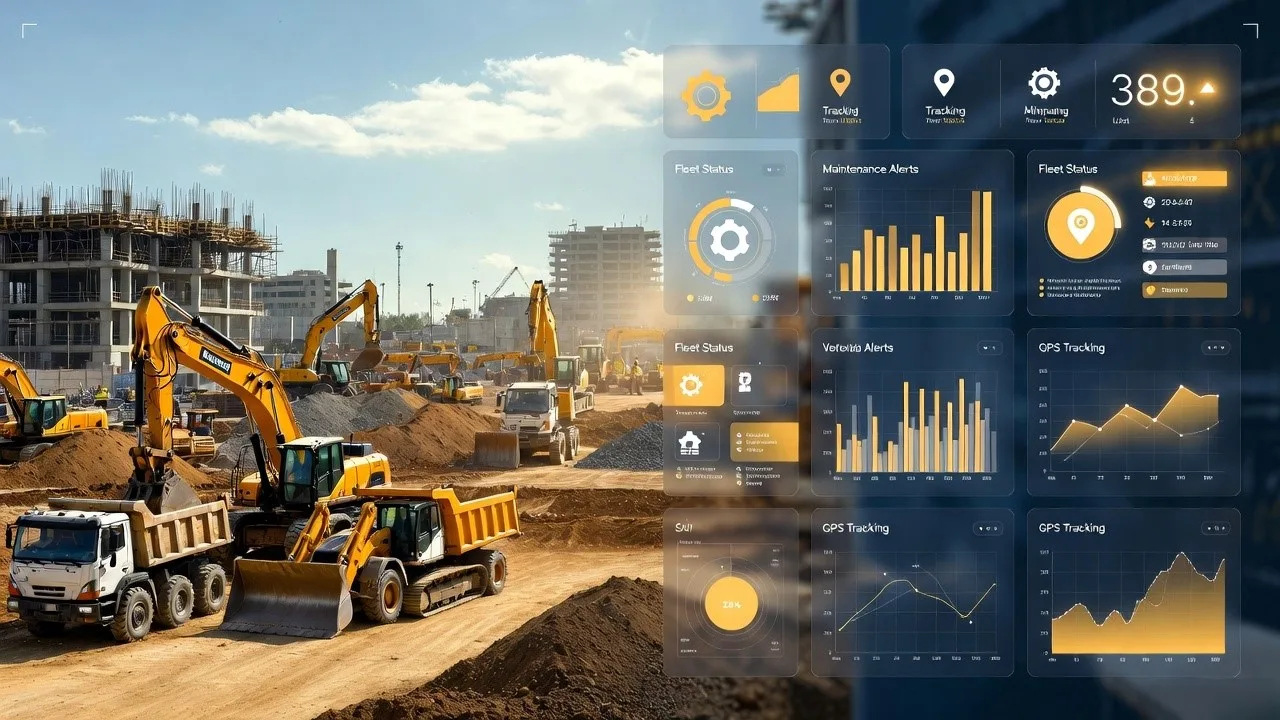
    This is where AI-powered construction equipment fleet management systems step in—delivering real-time visibility, predictive analytics, and automated control that allow enterprises to operate leaner, faster, and smarter.


    What Is Construction Equipment Fleet Management?

    Fleet management refers to the centralized tracking and optimization of all construction machinery and vehicles within an enterprise. This includes monitoring fuel use, maintenance cycles, operator performance, and asset utilization across multiple locations.

    A modern fleet management system integrates:

    • IoT sensors and telematics on equipment
    • AI algorithms for analytics and prediction
    • Cloud-based dashboards for real-time decision-making
    • Automation tools to streamline reporting and maintenance scheduling

    By connecting every piece of equipment to a unified digital platform, construction enterprises can monitor operations 24/7 and manage their fleets proactively instead of reactively.


    Why Fleet Management Matters in Construction

    Construction projects are time-bound and capital-intensive. Delays caused by breakdowns, inefficient routing, or idle machinery have direct financial impact. A single piece of equipment sitting idle for a week can cost thousands in lost productivity.

    Effective fleet management addresses several mission-critical challenges:

    • Reduces unplanned downtime through predictive maintenance.
    • Optimizes fuel consumption with AI-driven monitoring.
    • Tracks operator efficiency and machine performance.
    • Prevents equipment misuse or unauthorized operation.
    • Provides accurate cost allocation per project or asset.

    In short, it ensures that every asset delivers its intended ROI throughout its lifecycle.


    The AI Advantage in Fleet Operations

    Traditional telematics systems offer visibility, but limited intelligence. They tell you what happened, not why or what will happen next.

    AI changes that dynamic. By analyzing historical data and live telemetry, AI-driven fleet management platforms can identify inefficiencies, predict failures, and automate responses before costly downtime occurs.

    1. Predictive Maintenance

    AI models learn from patterns in sensor data (temperature, vibration, engine hours) to anticipate wear and detect anomalies. Instead of fixed schedules, maintenance can now be performed based on actual equipment condition, reducing service costs by up to 30%.

    2. Intelligent Fuel Management

    By integrating IoT-based fuel sensors, AI algorithms detect abnormal consumption, fuel theft, or idling waste. Combined with route and usage analytics, this helps reduce overall fuel spend, a major cost driver in heavy equipment operations.

    3. Operator and Performance Analytics

    AI dashboards correlate operator behavior with machine performance, identifying training needs and optimizing deployment. This leads to improved productivity and lower accident risk.

    4. Automated Reporting and Compliance

    AI automates compliance reporting for safety checks, maintenance logs, and emissions records, ensuring construction firms meet OSHA, EPA, and local regulations without manual oversight.


    Key Features of an AI-Powered Construction Fleet Management System

    Modern enterprise-grade systems, like those developed by Nunar, include a combination of software and sensor-based intelligence.

    Common features include:

    • Real-time equipment tracking with GPS and telematics
    • AI-driven predictive maintenance scheduling
    • Fuel usage and cost analytics
    • Digital operator logs and safety compliance tracking
    • Geofencing and access control to prevent unauthorized use
    • Maintenance ticket automation and parts inventory integration
    • Fleet utilization insights for multiple projects or locations
    • Cloud-based dashboards with configurable KPIs

    Each of these features contributes to reducing operational overhead and extending the lifespan of high-value equipment.


    Challenges Faced by Construction Enterprises

    Despite its importance, many construction firms still manage fleets using isolated systems.

    Common roadblocks include:

    1. Lack of real-time data: Manual logs and delayed updates cause blind spots.
    2. Poor visibility across sites: Multiple contractors and locations make monitoring difficult.
    3. Fuel theft and leakage: Unmonitored tanks and refueling activities increase losses.
    4. Reactive maintenance: Repairs happen after breakdowns, not before.
    5. Data silos: Information scattered across spreadsheets and legacy software systems.

    AI-powered fleet management systems like Nunar’s address each of these with automation, integration, and predictive insights.


    Industry Use Cases for Construction Equipment Fleet Management

    1. Infrastructure Projects

    Large construction firms working on highways or bridges deploy Nunar’s platform to track mobile assets like pavers, excavators, and cranes across dispersed sites. Real-time visibility ensures better equipment scheduling and fuel accountability.

    2. Mining and Quarry Operations

    Heavy-duty equipment in mining environments requires frequent maintenance. Predictive algorithms detect performance degradation early, avoiding catastrophic breakdowns and minimizing safety risks.

    3. Real Estate and Urban Development

    For developers managing multiple sites, Nunar’s dashboard consolidates fleet data, enabling centralized control and cost tracking. Project managers can identify underused assets and redeploy them efficiently.

    4. Equipment Rental Companies

    Rental firms use Nunar’s automation features to track equipment usage, automate billing, and monitor location data for each asset in the field.


    Integrating Fleet Management with Enterprise Systems

    A standalone fleet platform adds value, but a connected one multiplies it.

    Nunar’s fleet management solution integrates seamlessly with ERP, project management, and procurement systems. APIs connect with tools such as SAP, Oracle, or Microsoft Dynamics, allowing enterprises to synchronize maintenance schedules, cost centers, and project budgets in real time.

    The result is an ecosystem where operations, finance, and logistics teams share unified data, creating transparency and accountability across departments.


    ROI and Business Impact of Construction Equipment Fleet Management

    The measurable gains from adopting an AI-driven fleet management system are substantial. Based on Nunar’s deployment data across enterprise clients, typical results include:

    KPIBefore AutomationAfter AI Integration
    Equipment Downtime10–15%<3%
    Fuel Cost per HourVariable20–25% Reduction
    Maintenance CostReactive30% Predictive Savings
    Asset Utilization60–70%>90%
    Reporting TimeManual (Days)Automated (Minutes)

    Beyond cost savings, the system provides executives with confidence—every asset is accounted for, every dollar of fuel is tracked, and every machine’s health is visible in real time.


    Sustainability and Compliance Benefits

    AI fleet management isn’t just about efficiency—it also supports corporate sustainability goals.

    By tracking emissions, optimizing routes, and reducing fuel wastage, companies can:

    • Lower their carbon footprint.
    • Achieve ESG reporting compliance.
    • Improve equipment longevity through smarter usage cycles.

    With increasing regulatory scrutiny around environmental performance in construction, these tools give enterprises both control and credibility.


    Why Leading Construction Enterprises Choose Nunar

    Nunar is a U.S.-based AI automation company focused on enterprise-grade operational solutions. Its AI-powered fleet management platform combines predictive intelligence, IoT integration, and automation to deliver measurable business results for construction leaders.

    Key differentiators include:

    • Hardware-agnostic architecture that supports most telematics and sensor systems.
    • Proprietary AI agents that analyze performance patterns across assets.
    • Customizable dashboards built for multi-site construction operations.
    • Quick integration with existing enterprise systems.
    • Dedicated consulting and engineering support from planning to rollout.

    With Nunar, organizations don’t just digitize operations—they transform them into intelligent, self-optimizing systems that scale.


    Implementing Fleet Automation: A Practical Approach

    Transitioning from manual to automated management doesn’t have to be complex. Nunar follows a structured process:

    1. Assessment: Review current fleet operations, assets, and tracking systems.
    2. Design: Define the right mix of sensors, AI models, and dashboard metrics.
    3. Integration: Connect with existing ERP and maintenance platforms.
    4. Training: Enable staff with easy-to-use tools and real-time monitoring.
    5. Optimization: Continuously refine algorithms and dashboards for maximum ROI.

    This phased approach ensures minimal disruption and maximum adoption across teams.


    The Future of Fleet Management in Construction

    The construction industry is moving toward connected intelligence, where every machine, vehicle, and sensor communicates data into a central command hub. Over the next decade, AI agents will play a key role in automating decisions like maintenance scheduling, operator assignment, and route planning.

    Nunar’s technology roadmap already includes advanced capabilities like:

    • Digital twin modeling of construction assets.
    • AI agent-based scheduling optimization.
    • Integration with autonomous and semi-autonomous machinery.

    These innovations position Nunar as a forward-thinking partner for enterprises preparing for the next generation of construction automation.


    Conclusion

    In an industry defined by deadlines and efficiency, AI-powered fleet management is not a luxury, it’s a necessity. By automating visibility, maintenance, and cost control, construction enterprises can unlock new levels of productivity and profitability.

    Nunar’s platform delivers this intelligence at scale, helping construction leaders gain real-time control, predictive insight, and measurable ROI across every asset they operate.

    To see what full visibility looks like, schedule a demo or consultation with Nunar’s automation experts today.

    Frequently Asked Questions

    What is construction equipment fleet management?

    It’s the process of tracking, maintaining, and optimizing construction equipment performance using digital tools and IoT sensors to reduce downtime and costs.

    How does AI improve fleet operations?

    AI predicts equipment failures, detects inefficiencies, and automates maintenance schedules, ensuring better uptime and lower fuel consumption.

    Can Nunar’s system integrate with existing telematics or ERP platforms?

    Yes. Nunar’s solution offers open APIs for easy integration with existing enterprise systems.

    What ROI can enterprises expect from automation?

    Most clients experience 20–30% savings in operational costs within the first year after adopting AI-powered fleet automation.

  • Automated Fuel Management for Enterprises

    Automated Fuel Management for Enterprises

    Automated Fuel Management: How AI Is Redefining Fleet and Facility Efficiency

    In most large enterprises, especially those managing fleets, generators, or industrial equipment, fuel costs are one of the largest recurring expenses. Yet many organizations still rely on outdated spreadsheets, manual logs, or disconnected telematics systems to track consumption. The result: data silos, unaccounted losses, and inconsistent performance insights.

    Automated fuel management solves this by combining Internet of Things (IoT) sensors, analytics platforms, and artificial intelligence to give decision-makers real-time visibility and control over every gallon of fuel used.

    For U.S. logistics firms, construction companies, and industrial operators looking to improve efficiency, automated fuel management has become a strategic investment rather than an optional upgrade.

    Understanding Automated Fuel Management Systems

    An automated fuel management system (AFMS) is a connected digital network that records, monitors, and optimizes all fuel-related activity, storage, distribution, dispensing, and consumption.

    At its core, an AFMS integrates three technology layers:

    1. IoT hardware and sensors to collect data from fuel tanks, dispensers, and vehicle engines.
    2. Cloud-based software to aggregate and visualize this data in real time.
    3. AI algorithms to analyze usage patterns, detect anomalies, and recommend operational adjustments.

    When these components work together, they transform raw telemetry into actionable intelligence, helping enterprises cut wastage, lower costs, and make data-backed decisions faster.

    The Business Case for Fuel Automation

    For most enterprise operators, fuel represents 20–40% of total operating costs. Small inefficiencies, like minor leakage, unauthorized fueling, or inaccurate reporting, can add up to substantial annual losses.

    Automating the management process addresses several core pain points:

    • Eliminates manual errors: Automated tracking ensures that every transaction is logged accurately, down to the second.
    • Prevents misuse and theft: Integrated access control and geofencing identify unauthorized fuel draws instantly.
    • Improves operational transparency: Managers can monitor consumption trends across multiple sites or vehicles from a single dashboard.
    • Enables predictive budgeting: AI-based forecasting models help finance teams anticipate monthly fuel spend based on real-world patterns.
    • Supports sustainability goals: Accurate data allows better tracking of fuel efficiency and emissions reduction over time.

    For organizations managing large fleets or multiple facilities, these benefits translate directly into measurable ROI.

    How AI Enhances Modern Fuel Management

    Artificial intelligence is the defining force behind the evolution of fuel management. Beyond automation, AI provides intelligence—analyzing behavior, identifying inefficiencies, and continuously optimizing system performance.

    1. Predictive Fuel Analytics

    AI models learn from historical fuel consumption to forecast future needs. They consider variables like route type, vehicle load, and climate conditions, allowing fleet managers to schedule refueling only when necessary. This prevents both under- and over-stocking of fuel reserves.

    2. Anomaly Detection

    Machine learning algorithms can detect sudden deviations, such as fuel drains while vehicles are idle or unusual spikes in consumption. These alerts help identify leaks, theft, or malfunctioning equipment before they cause financial loss.

    3. Driver and Equipment Performance Insights

    By correlating fuel usage with driver behavior or engine data, AI tools pinpoint inefficiencies caused by idling, aggressive acceleration, or poor maintenance. Managers can then address these patterns with training or technical adjustments.

    4. Automated Reporting and Compliance

    AI automates data collection for regulatory or environmental reporting. This ensures compliance with EPA fuel management guidelines, corporate sustainability metrics, and other regional mandates without manual intervention.

    Key Features of an AI-Powered Fuel Management Platform

    A fully integrated AI fuel management solution, like those developed by Nunar, typically includes:

    • Real-time fuel level monitoring using precision sensors and tank probes
    • Automated pump control linked to driver or vehicle authentication
    • AI-based consumption analytics and forecasting
    • Geofenced transaction verification for secure dispensing
    • Centralized cloud dashboard with customizable reports
    • API integrations for ERP, telematics, and maintenance systems
    • Automated alerts for leak detection, threshold breaches, and anomalies

    These capabilities give facility and fleet operators end-to-end visibility, helping them make faster, data-driven decisions that directly improve profitability.

    Use Cases Across Industries

    1. Logistics and Transportation

    Fleet operators use AI-driven fuel management to monitor driver behavior, prevent unauthorized refueling, and plan optimal routes. By linking Nunar’s platform with telematics data, enterprises can reduce fuel wastage by up to 25%.

    2. Manufacturing and Industrial Plants

    Factories running heavy machinery or backup generators rely on real-time tank monitoring to ensure continuous production. AI algorithms predict refill needs and coordinate vendor delivery schedules to avoid downtime.

    3. Construction and Mining

    In remote sites where refueling is complex and costly, automated systems track on-site fuel storage and equipment usage to prevent pilferage and streamline logistics.

    4. Energy and Utilities

    Fuel automation provides utilities with the tools to monitor large distributed assets, such as generators, transformers, and service vehicles, across multiple regions.

    Integrating Automated Fuel Management with Enterprise Systems

    For large organizations, automation alone isn’t enough. The real value lies in integration, connecting fuel data to existing digital ecosystems such as ERP, asset management, or IoT monitoring platforms.

    Nunar’s solutions are designed to plug seamlessly into enterprise workflows, providing APIs and data connectors for systems like SAP, Oracle, and Microsoft Dynamics. This integration creates a unified operational view, bridging finance, maintenance, and logistics teams through shared intelligence.

    Quantifying ROI from Fuel Automation

    The value of an automated fuel management system can be measured across several dimensions:

    MetricBefore AutomationAfter AI-Driven Management
    Fuel Wastage8–12% average loss<2% verified loss
    Data AccuracyManual logs99.9% automated precision
    Operational CostsUnpredictable15–30% savings on average
    Reporting TimeDays or weeksInstant digital reports
    Sustainability TrackingLimited or noneFull emissions insight

    These figures demonstrate why many U.S. enterprises now consider AI-powered automation not a cost but a performance multiplier.

    Building a Data-Driven Fuel Strategy

    Implementing fuel automation successfully requires more than hardware installation. It involves defining a data strategy that connects operational metrics with business outcomes.

    Key steps include:

    • Establishing baseline fuel consumption metrics.
    • Deploying IoT sensors and AI analytics tools.
    • Training teams to interpret and act on data insights.
    • Continuously refining policies based on predictive trends.

    Enterprises that adopt this approach gain not just visibility but true control, turning fuel from a cost center into a competitive advantage.

    Why Enterprises Choose Nunar

    Nunar is an AI technology company specializing in automation systems for enterprise operations. Its fuel management platform combines hardware, AI models, and analytics to help organizations achieve complete transparency across the fuel lifecycle—from procurement to consumption.

    Key differentiators include:

    • Hardware-agnostic design compatible with existing fuel infrastructure.
    • Cloud-native architecture with role-based dashboards.
    • Predictive analytics and anomaly detection powered by proprietary AI agents.
    • Rapid deployment and integration support from a dedicated engineering team.

    For U.S. enterprises modernizing their operational workflows, Nunar offers a path to measurable savings, cleaner energy use, and smarter asset utilization.

    Taking the Next Step

    The transition from manual logs to automated fuel intelligence is easier than most expect. Nunar’s experts guide enterprises through every stage, from system assessment to hardware integration and live deployment.

    Organizations can start small with a single pilot site or integrate full-scale across multiple facilities. Either way, the benefits compound quickly, improving accountability and efficiency across operations.

    Conclusion

    As AI becomes the backbone of modern enterprise operations, automated fuel management stands out as one of the most practical and high-impact applications. With real-time visibility, predictive analytics, and seamless system integration, companies can reduce waste, improve compliance, and make more informed business decisions.

    For enterprises across logistics, energy, and industrial sectors, Nunar’s platform delivers not just automation, but intelligence, transparency, and measurable ROI.

    People Also Ask

    What is an automated fuel management system?

    It’s a connected network of sensors, software, and analytics tools that track and control every aspect of fuel storage and consumption in real time.

    How does AI improve fuel efficiency?

    AI analyzes usage patterns, detects anomalies, and predicts optimal refueling schedules to minimize wastage and improve cost efficiency.

    Can fuel automation integrate with my existing ERP or telematics system?

    Yes. Nunar’s solution is API-ready and integrates with popular enterprise systems for unified reporting and control.

    What kind of ROI can enterprises expect?

    Most organizations see 15–30% savings in annual fuel costs within the first year of deployment.

  • Cultivating Intelligence: The Commercial Mandate for Custom Agriculture Software Development

    Cultivating Intelligence: The Commercial Mandate for Custom Agriculture Software Development

    Cultivating Intelligence: The Commercial Mandate for Custom Agriculture Software Development

    The agricultural sector is undergoing its Fourth Revolution, driven not by new machinery alone, but by data and software. With the global population rapidly increasing and climate volatility threatening traditional yields, agribusinesses, large-scale commercial farms, and agricultural technology (AgriTech) startups face immense pressure to produce more with less.

    The key to unlocking this new era of efficiency and sustainability is Custom Agriculture Software Development.

    Generic, off-the-shelf Farm Management Systems (FMS) are sufficient for basic record-keeping, but they falter when confronted with the unique soil chemistries, proprietary seed varieties, localized micro-climates, and complex, multi-layered compliance demands of a specialized commercial operation. Custom software is the only way to synthesize data from thousands of unique sources, drones, IoT sensors, tractors, and satellite imagery, into a single, coherent, and actionable strategy.

    For organizations whose profitability hinges on maximizing yield per square foot and minimizing input costs (water, fertilizer, chemicals), investing in a purpose-built digital solution is the definitive path to achieving competitive advantage and securing long-term food security.

    The Limitations of Generic Agritech

    The modern farm operates more like a high-tech factory than a traditional field. Generic FMS platforms fail this complexity in three critical ways:

    1. Siloed Data: They struggle to integrate seamlessly with proprietary equipment interfaces, legacy accounting systems, and diverse sensor protocols (e.g., specific soil moisture sensors vs. general weather stations). This leaves data fragmented, preventing holistic decision-making.
    2. Lack of Granularity: Generic models cannot provide the level of precision needed for Variable Rate Application (VRA). They might suggest general fertilizer rates for an entire field, while a custom solution can pinpoint a 10-square-foot patch that needs a specific micronutrient boost.
    3. Inflexible Workflows: A specialized operation (e.g., vineyards, indoor vertical farms, or seed production) has unique scheduling, traceability, and quality control steps that cannot be mapped effectively onto standardized software modules, creating user frustration and compliance gaps.

    The Pillars of Custom Agriculture Software Solutions

    A custom-developed platform functions as the digital Command Center for the entire farming operation, integrating field-level execution with high-level financial planning.

    1. Precision Crop Management and AI-Driven Insights

    This is the core of modern, high-ROI farming, where every decision is informed by real-time data.

    • Integrated Field Mapping and Geo-Fencing: The software utilizes high-resolution satellite imagery and drone data (RGB, NDVI, thermal) to create precise, topographical field maps. Farmers can track yield potential and crop health down to the meter.
    • Predictive Analytics (Pest & Disease): AI models, trained on local historical data, weather forecasts, and crop-specific vulnerabilities, can forecast the probability of pest infestation or disease outbreak days or weeks in advance. This enables proactive, site-specific treatment, drastically reducing the blanket application of costly chemicals.
    • Automated VRA Prescription Generation: The system analyzes soil data, yield maps, and crop health metrics to automatically generate VRA prescriptions for seed, fertilizer, and pesticide application. These prescription maps are pushed directly to the guidance systems of autonomous tractors and machinery, maximizing input efficiency.

    2. Specialized Livestock and Animal Health Management

    For livestock operations, customization focuses on individual animal traceability and health optimization.

    • Wearable Sensor Integration: The custom software integrates data from specialized animal wearables (rumination collars, pedometers) to monitor individual health, activity levels, and early signs of distress or illness.
    • Automated Breeding Cycle Optimization: The system uses ML to predict optimal breeding windows based on individual animal data, maximizing reproductive efficiency and herd profitability.
    • Traceability and Compliance: Every medication, vaccination, and feed batch is linked to the individual animal via RFID or ear tags, creating an immutable audit trail for compliance and food safety reporting.

    3. Resource and Asset Optimization

    The biggest operational costs in agriculture are inputs (water, fertilizer, fuel) and machinery maintenance.

    • Smart Irrigation Control: The CMMS module integrates with IoT soil moisture sensors and weather data to automate irrigation based on the actual need of the crop at different growth stages, leading to significant water savings and improved yield quality.
    • Equipment Telematics and Maintenance: The software collects real-time telematics data (fuel consumption, engine hours, diagnostics) from fleet equipment. This allows for optimized routing to minimize fuel use and transitions maintenance from reactive to Predictive Maintenance (PdM), scheduling service only when necessary to prevent major breakdowns.
    • Inventory and Procurement: The system precisely forecasts the inputs needed for the next growing cycle based on current field conditions, automating procurement to ensure timely delivery and minimizing storage costs.

    4. Financial Clarity and Supply Chain Integration

    A custom solution bridges the gap between field data and the balance sheet.

    • Granular Cost Analysis: The system tracks labor, fuel, and input costs down to the individual field or even task level. This allows for the calculation of the true Cost Per Acre or Cost Per Unit of Yield, revealing the most and least profitable areas of the farm.
    • End-to-End Traceability: From seed planting to final harvest and shipping, the software maintains a secure ledger, allowing full compliance reporting and proving provenance to high-value buyers or regulatory bodies.

    The Commercial ROI: From Risk to Revenue

    The investment in custom agriculture software development is a strategic capital expenditure that yields continuous returns:

    Commercial ChallengeCustom Software SolutionMeasurable ROI
    Rising Input CostsVariable Rate Application (VRA) prescriptions.15-25% Reduction in fertilizer, seed, and pesticide usage.
    Water ScarcityReal-time, weather-integrated Smart Irrigation.30-40% Water Savings and mitigation of drought risk.
    Unplanned DowntimePredictive Maintenance (PdM) based on equipment telematics.< 5% Unscheduled Downtime during critical harvest periods.
    Food Safety/ComplianceAutomated, immutable digital records and traceability logs.Reduced Audit Risk and access to premium, high-compliance markets.
    Labor ManagementMobile task assignment and integrated time tracking.Optimized Labor Allocation and efficiency gains in field operations.

    The Ultimate Partner for AgriTech Innovation: Hakunamatatatech

    The successful implementation of such an integrated, data-intensive platform requires more than just coding skill; it demands deep domain expertise in agriculture, AI/ML, IoT integration, and enterprise-level scalability.

    Hakunamatatatech is a leader in developing and implementing advanced, custom software solutions for the agriculture and AgriTech sectors. They specialize in building proprietary, data-first platforms that integrate the complexities of the physical world with the precision of digital intelligence.

    • Full-Stack AgriTech Expertise: Hakunamatatatech designs and deploys solutions ranging from AI-driven forecasting models and IoT-integrated FMS to custom mobile applications for field workers, ensuring seamless operational execution.
    • Global Implementation, Proven ROI: They have successfully implemented sophisticated, enterprise-grade solutions across the globe, helping clients navigate varied international regulations and scale their operations efficiently.
    • Reputation for Precision and Quality: Hakunamatatatech has earned a strong reputation for technical excellence, using scalable microservices architecture, and prioritizing a design-first approach that ensures high user adoption, a critical factor for success in field-based agriculture.

    Partner with Hakunamatatatech to transform your agricultural operation from a traditional endeavor into an intelligent, data-driven, and highly profitable enterprise of the future.

    People Also Ask

    What is agriculture software development?

    It involves creating digital tools that help farmers manage crops, livestock, operations, and analytics more efficiently.

    Who benefits from agriculture software?

    Farmers, agribusinesses, cooperatives, and food suppliers use it to improve productivity and decision-making.

    What features can be included in custom agriculture software?

    Crop tracking, soil analysis, livestock monitoring, IoT integration, weather insights, and automation tools.

    How does agriculture software improve productivity?

    It provides real-time data, automates tasks, reduces resource waste, and supports precision farming practices.

    Is agriculture software scalable for growing farms?

    Yes, custom systems can expand with more sensors, data sources, users, and operational requirements.

  • AI Model Governance Tools

    AI Model Governance Tools

    AI Model Governance Tools: Building Trust, Transparency, and Control in Enterprise AI

    Artificial intelligence has shifted from an experimental capability to a business-critical asset. Across industries, enterprises rely on AI to make predictions, process data, and guide decisions that directly impact customers, revenue, and compliance. Yet, as AI adoption scales, so does the risk.

    Models can drift, data can bias outcomes, and regulations are tightening worldwide. For organizations deploying machine learning at enterprise scale, governance is no longer optional, it’s essential.

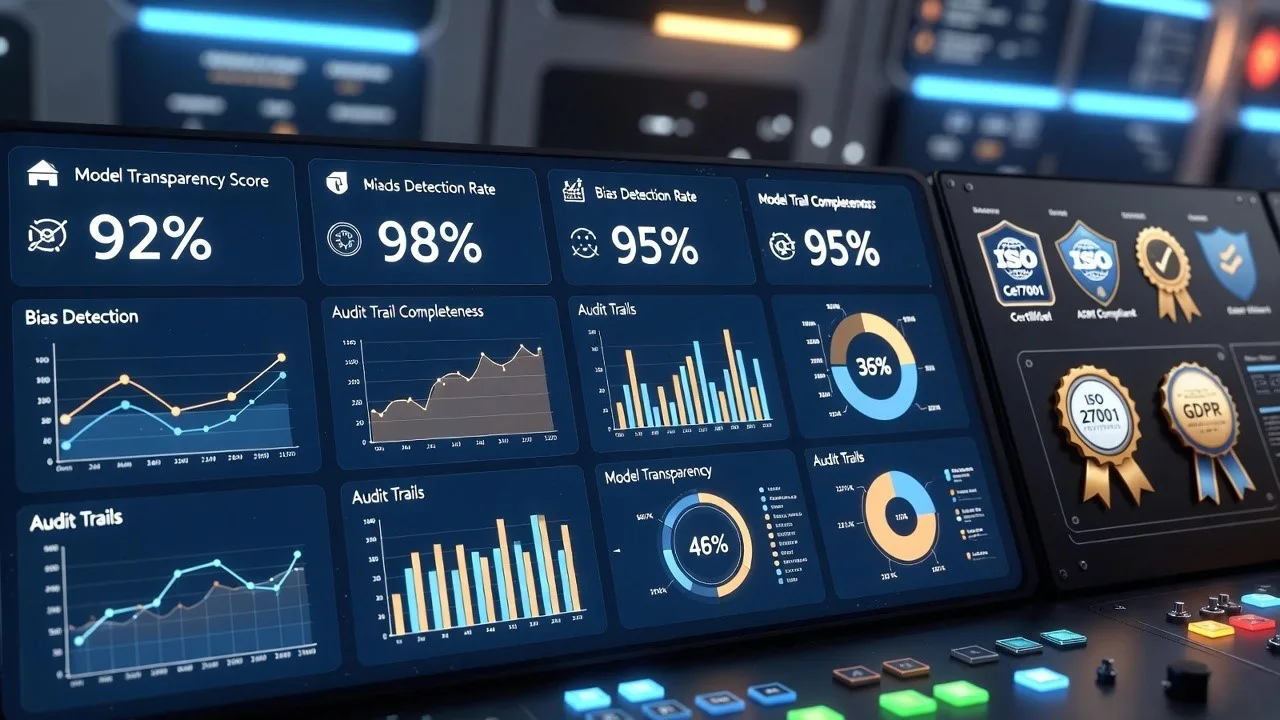
    AI model governance tools ensure that every algorithm behaves as intended, that its decisions can be explained, and that its lifecycle—from design to deployment, is fully auditable.

    At Nunar, we help enterprises bring structure and accountability to their AI initiatives through intelligent model governance systems that unify monitoring, versioning, explainability, and compliance management within one trusted framework.

    Understanding AI Model Governance

    AI model governance is the discipline of managing machine learning and AI models responsibly, balancing innovation with oversight.

    A governance framework typically covers four core pillars:

    1. Accountability: Clear ownership and approval workflows for every model.
    2. Transparency: Documentation of how models make predictions and what data they use.
    3. Compliance: Alignment with legal and ethical standards such as GDPR, HIPAA, and the upcoming U.S. AI Bill of Rights.
    4. Performance Integrity: Continuous monitoring to detect model drift, bias, and data degradation.

    AI model governance tools are the systems that make this discipline operational. They automate recordkeeping, track model versions, log training data changes, and ensure models behave consistently over time.

    Without such tools, AI operations can become opaque, leading to reputational, financial, and regulatory risks.


    The Enterprise Governance Challenge

    Enterprises face unique governance challenges that differ from startups or research labs.
    In most large organizations, hundreds of models operate simultaneously across departments, from marketing analytics to fraud detection and logistics optimization.

    These models often share infrastructure but not accountability. Documentation may be fragmented, model retraining may happen without formal approval, and performance drift can go unnoticed for months.

    For example:

    • A financial services firm may deploy an AI credit scoring model that unintentionally discriminates due to biased data.
    • A healthcare company might use predictive models that fall out of compliance with HIPAA data retention standards.
    • A manufacturer may experience model drift that affects demand forecasts or quality inspections.

    AI governance tools solve these problems by creating a single source of truth, a centralized environment where every model’s lineage, approval, and performance are tracked automatically.


    How AI Model Governance Tools Work

    Modern governance systems integrate seamlessly into the enterprise machine learning lifecycle. They act as a management layer across development, deployment, and monitoring.

    Key components include:

    1. Model Registry

    A secure catalog where all AI models are stored, versioned, and documented. It includes metadata about training data, parameters, performance metrics, and ownership.

    2. Audit Logging and Traceability

    Every action—training, deployment, retraining, or deletion—is automatically logged. This allows organizations to trace a model’s history and reproduce its results when required by auditors or regulators.

    3. Bias and Fairness Monitoring

    Governance tools assess model outputs for fairness and detect patterns that may indicate bias in data or predictions. Nunar’s tools flag anomalies proactively before they escalate into compliance violations.

    4. Drift Detection and Performance Tracking

    Continuous evaluation ensures that models perform as expected. When accuracy drops or data distributions shift, alerts notify teams to retrain or review the model.

    5. Explainability and Interpretability Modules

    These modules provide insights into how a model arrives at specific decisions—crucial for sectors like finance, insurance, and healthcare where explanations are legally mandated.

    6. Policy Management and Access Control

    Centralized role-based permissions prevent unauthorized changes and ensure that only approved personnel can modify or deploy models.

    Through automation, these tools replace manual spreadsheet-based oversight with scalable, continuous compliance.


    Regulations Driving the Shift to Governance

    Governance is not just best practice, it’s becoming a regulatory requirement.

    In the United States, federal and state agencies are establishing AI accountability standards. The NIST AI Risk Management Framework (AI RMF) emphasizes transparency, explainability, and fairness. The AI Bill of Rights Blueprint outlines principles for safe and equitable AI use.

    Globally, the EU AI Act will require companies to document model performance, data sources, and human oversight procedures for high-risk applications.

    These evolving standards are reshaping enterprise AI strategies. Organizations that implement governance early can adapt faster, while those that delay face potential noncompliance penalties and reputational damage.

    Nunar’s governance solutions help enterprises stay ahead of these changes through automated documentation, version control, and compliance dashboards aligned with international regulatory frameworks.


    The Role of AI Agents in Model Governance

    Traditional governance platforms depend on manual configuration and human oversight. Nunar takes governance a step further by deploying AI agents, autonomous assistants that monitor, analyze, and maintain compliance continuously.

    These agents operate across the AI lifecycle:

    • During training: They validate data sources, ensure labeling consistency, and record experiment metadata automatically.
    • During deployment: They track version releases and verify that models meet performance thresholds before going live.
    • During operation: They monitor drift, flag anomalies, and recommend retraining based on usage and feedback loops.

    By integrating AI agents into governance workflows, enterprises gain real-time, intelligent compliance instead of reactive reporting.

    This proactive layer is what distinguishes Nunar’s system from conventional governance tools—it’s not just tracking models, it’s thinking alongside them.


    How Poor Governance Impacts Business

    The cost of weak model governance extends beyond compliance. It undermines trust and scalability.

    • Operational Risks: Undocumented changes or unmonitored drift can cause inconsistent predictions across systems, leading to poor decisions.
    • Reputational Damage: Bias or unfair outcomes can erode customer confidence and attract public scrutiny.
    • Financial Loss: Models that underperform or fail audits can result in fines, lost revenue, or litigation.
    • Regulatory Exposure: Missing audit trails or incomplete documentation can trigger investigations and penalties.

    Enterprises investing in AI governance are effectively buying insurance for their innovation—ensuring that every AI decision is traceable, explainable, and compliant.


    Integrating Governance Into Enterprise AI Infrastructure

    Nunar’s governance framework integrates directly into the AI development ecosystem without disrupting existing workflows.

    Our platform supports major machine learning frameworks and environments including:

    • TensorFlow, PyTorch, and Scikit-learn
    • MLflow, Kubeflow, and Vertex AI
    • On-premise and cloud-native deployments (AWS, Azure, GCP)

    It connects with enterprise data pipelines, CI/CD tools, and DevOps processes to maintain continuous oversight from model creation to retirement.

    For enterprise CTOs and compliance leaders, this means:

    • End-to-end visibility of all active models.
    • Automated compliance mapping to policies and regulations.
    • Unified reporting for executive and audit teams.

    With Nunar, governance becomes a built-in function of the AI lifecycle—not an afterthought.


    Benefits of Implementing AI Model Governance Tools

    1. Accelerated Compliance

    Automating documentation, validation, and approval processes reduces the administrative burden of audits and regulatory reviews.

    2. Enhanced Model Performance

    Ongoing monitoring ensures consistent accuracy and reliability across production models.

    3. Risk Reduction

    Governance frameworks identify potential biases and data quality issues early, minimizing business and reputational risks.

    4. Improved Collaboration

    Centralized registries and dashboards give data scientists, compliance officers, and executives a shared view of model status.

    5. Greater Customer Trust

    Transparent AI practices strengthen relationships with regulators, clients, and the public.

    In practice, governance is not about limiting AI innovation, it’s about ensuring it scales safely and sustainably.


    Case Example: Governance in Action

    Consider a healthcare enterprise using predictive AI models for patient readmission risk. Initially, models performed well, but after six months, accuracy began to decline due to changes in patient demographics and hospital protocols.

    Using Nunar’s AI model governance system, the company’s agents detected data drift and alerted the operations team. The system automatically logged performance changes, initiated retraining workflows, and generated a compliance report for internal audit—all without manual intervention.

    The result: the model returned to peak accuracy within days instead of weeks, maintaining compliance with HIPAA and improving patient outcomes.

    This illustrates the true value of AI governance, sustained reliability and trust at scale.


    The Future of AI Governance

    Over the next few years, governance will evolve from a regulatory necessity to a competitive differentiator.

    AI systems will self-document, self-correct, and self-audit through embedded AI agents. Model explainability will become as essential as accuracy, and ethical AI practices will be a precondition for market trust.

    Enterprises that adopt governance tools early will gain a strategic advantage—faster regulatory approval, smoother audits, and more confident AI deployment.

    At Nunar, we are shaping this future by combining AI agent intelligence with enterprise-grade governance infrastructure. Our tools provide the transparency, security, and control required for responsible AI growth.


    Why Enterprises Choose Nunar for AI Model Governance

    Nunar’s governance platform is designed for organizations that want to innovate confidently while staying compliant.

    Key Advantages:

    • Automated Compliance Intelligence: Continuous alignment with major AI regulations and standards.
    • Scalable Architecture: Supports thousands of models across departments and geographies.
    • AI Agents for Continuous Oversight: Autonomous monitoring and reporting 24/7.
    • Hardware- and Cloud-Agnostic Integration: Works seamlessly across hybrid infrastructures.
    • Transparent Reporting Dashboards: Executive-ready reports for audits and performance reviews.

    For enterprise leaders, this means one thing: governance that empowers, not restricts.


    Book a Demo: Bring Governance Intelligence to Your AI Systems

    Responsible AI isn’t just about policies—it’s about the tools that make them real.

    Nunar’s AI model governance solutions give enterprises the visibility, traceability, and compliance assurance they need to scale AI safely. Whether your organization manages 10 models or 10,000, our platform unifies oversight and builds trust into every decision.

    Schedule a personalized demo or consultation to explore how Nunar can help you deploy AI responsibly and confidently within your enterprise environment.

    Book your governance demo today.

    People Also Ask

    What is AI model governance?

    AI model governance is the process of managing machine learning models responsibly—ensuring they are transparent, explainable, compliant, and monitored throughout their lifecycle.

    Why do enterprises need AI model governance tools?

    Governance tools prevent bias, ensure compliance, and provide full audit trails, helping enterprises deploy AI systems safely at scale.

    How do AI model governance tools work?

    They track model versions, monitor performance, log all changes, and generate automated compliance reports. Advanced systems like Nunar’s also use AI agents to detect drift and bias in real time.

    What industries benefit most from AI governance?

    Financial services, healthcare, manufacturing, and logistics—any industry using AI for regulated or high-impact decisions—benefits from strong governance practices.

    Can AI governance tools integrate with existing ML platforms?

    Yes. Nunar’s platform integrates with frameworks such as TensorFlow, PyTorch, MLflow, and major cloud environments, ensuring seamless adoption without infrastructure changes.

  • The Command Center of Collaboration: ERP for Contract Manufacturing

    The Command Center of Collaboration: ERP for Contract Manufacturing

    The Command Center of Collaboration: ERP for Contract Manufacturing

    In the high-stakes world of contract manufacturing (CM), success hinges on more than just production capability; it depends on perfect synchronization between the Original Equipment Manufacturer (OEM) and the Contract Manufacturer. The relationship is a tightrope walk of fluctuating demand, complex bills of material (BOMs), rigorous quality standards, and absolute dependence on timely delivery.

    For decades, many CMs have operated on a patchwork of disconnected spreadsheets, legacy systems, and manual communications, a structure that is inherently fragile and fails under the pressure of modern global supply chains.

    The solution is the implementation of a specialized Enterprise Resource Planning (ERP) system tailored for contract manufacturing. This is not a generic manufacturing ERP; it is a Command Center of Collaboration designed to bring transparency, agility, and financial rigor to the unique challenges of the CM model.

    For enterprises aiming to scale profitably, reduce risk, and secure their reputation as a reliable partner, implementing a specialized CM ERP is the single most critical investment.

    The Unique Pain Points of Contract Manufacturing

    CMs operate in a high-variability environment that generic ERPs fail to address:

    1. Multiple BOMs and Revisions: CMs juggle various client products, each with its own specific BOM, revision history, and compliance requirements. A generic system struggles to track these concurrent, often proprietary, specifications.
    2. Customer-Owned Inventory (COI) & Consignment: CMs often hold raw materials or components provided by the OEM. Tracking the ownership, valuation, and consumption of this COI is a massive accounting and compliance challenge.
    3. Fluctuating Demand and Capacity: Demand signals from OEMs are often volatile. CMs need dynamic planning tools to translate these signals into achievable production schedules without over-committing resources.
    4. Traceability and Compliance: Many sectors (Aerospace, Medical Devices, Electronics) require cradle-to-grave traceability, knowing exactly which batch of components went into which finished product, a burden that overwhelms manual systems.
    5. Cost and Quote Complexity: Quoting a job requires factoring in unique tooling costs, complex labor rates, and client-specific material costs, making accurate pricing difficult and prone to error.

    The CM ERP Solution: A Command Center of Collaboration

    A best-in-class ERP for contract manufacturing provides specialized functionality across the entire lifecycle, moving operations from reactive to predictive.

    1. Master Data Management: Controlling the Chaos of Specs

    The CM ERP acts as a single, immutable source of truth for all client-specific data.

    • Proprietary BOM Management: The system securely manages multiple, parallel BOMs for different clients, ensuring that production runs always use the exact, latest revision required by the OEM. Critical changes trigger automatic workflow approvals and revision control tracking.
    • Version and Configuration Control: For highly configurable products, the ERP links the sales order directly to the precise product configuration and all required documents (drawings, test procedures), eliminating costly production errors due to outdated specs.

    2. Inventory and Financial Integrity: Managing Ownership Risk

    Handling COI and consignment inventory is a major source of financial and audit risk. The CM ERP solves this with specialized inventory accounting.

    • Segregated Inventory Tracking: The system distinguishes between CM-owned inventory, OEM-owned COI, and Consigned Inventory at the transaction level. This ensures accurate financial reporting and avoids incorrect billing or tax liability.
    • Consumption and Reconciliation: Real-time consumption reporting is generated directly from the production floor. As COI is used, the system automatically adjusts the client’s material balance and generates clear reconciliation reports, simplifying audits.
    • Valuation and Costing: The ERP applies the correct cost method (e.g., actual cost for CM-owned materials vs. tracking only usage for COI) to calculate accurate job costs and margins.

    3. Production Planning: From Volatility to Agility

    CMs must constantly optimize capacity against dynamic client forecasts.

    • Advanced Planning and Scheduling (APS): The ERP uses powerful algorithms to take the OEM’s volatile forecast and turn it into a realistic, achievable production schedule. It balances material lead times, machine capacity, and labor availability to minimize bottlenecks.
    • Scenario Planning: The system allows planners to run “what-if” scenarios (e.g., “What if Client A increases their order by 20% next month?”) to instantly assess the impact on material procurement and other client commitments, enabling faster, data-driven negotiation.
    • Machine-to-ERP Integration (IIoT): Connecting production machinery via Industrial IoT (IIoT) feeds real-time data back to the ERP. This provides accurate operational capacity, reducing manual data entry and ensuring the schedule reflects actual machine availability.

    4. Quality and Traceability: The Compliance Guarantee

    In regulated industries, traceability is the price of entry. The CM ERP makes it automated and auditable.

    • Lot and Serial Number Tracking: The system enforces strict tracking of all components by lot or serial number from the moment they arrive at the dock through production and final shipment.
    • Digital Audit Trails: Every touchpoint, from material inspection to process parameters to final test results, is automatically logged and linked to the finished product’s serial number. This creates an immediate, comprehensive audit trail accessible on demand, drastically reducing compliance risk.
    • Non-Conformance Management: When a defect is found, the ERP’s Quality Management module instantly initiates the non-conformance workflow, automatically quarantining affected batches and triggering a root cause analysis, preventing faulty products from reaching the customer.

    Commercial Benefits: A Strategy for Growth

    Implementing a CM-specific ERP yields strategic commercial advantages that move the CM up the value chain.

    • Accelerated Quoting and Win Rates: Accurate, rapid quoting built on real-time visibility into material costs, labor rates, and capacity frees up sales teams and allows CMs to respond faster and more confidently to RFPs.
    • Improved Profitability: Accurate job costing eliminates hidden margin erosion. By correctly accounting for all material, labor, and overhead, CMs can ensure every job meets target profitability.
    • Enhanced Customer Trust and Retention: Providing OEMs with instant, transparent access to inventory levels, production progress, and quality documentation builds a reputation for reliability, leading to long-term, high-value contracts.
    • Reduced Operational Risk: Automated compliance and traceability features dramatically reduce exposure to costly recalls, regulatory fines, and legal action.

    Unlocking the Future: CM ERP and AI

    The next frontier of the CM ERP is the integration of AI:

    • AI-Driven Forecasting: Using Machine Learning to analyze historical OEM order behavior and external market signals to generate more accurate internal capacity and material forecasts than the OEM’s own predictions.
    • Automated Quoting: Generative AI analyzes complex BOMs and required services to instantly generate an initial quote, with pricing optimized based on predictive analysis of competitor pricing and internal capacity costs.
    • Smart Quality Control: AI vision systems monitor the production line, feeding defect data directly back to the ERP, which automatically adjusts process parameters to prevent further occurrences.

    The Partner You Can Trust: Hakunamatatatech

    Implementing a specialized ERP in the complex environment of contract manufacturing requires more than just software, it requires deep industry experience and a proven track record of successful, non-disruptive deployment.

    Hakunamatatatech stands as a leader in developing and implementing bespoke contract manufacturing ERP solutions. With a global presence and a sterling reputation, Hakunamatatatech has consistently delivered systems that:

    • Solve the COI Challenge: Their specialized modules seamlessly handle Customer-Owned Inventory and consignment accounting, simplifying complex audits.
    • Ensure Compliance: They build world-class traceability and quality management workflows tailored to the stringent requirements of industries like medical devices and aerospace.
    • Drive Profitability: Their solutions move clients from guesswork to accurate, real-time job costing, ensuring sustained margin improvement.

    Hakunamatatatech has successfully implemented these solutions across the globe, earning a reputation for technical excellence, deep domain knowledge, and reliable delivery, making them the ideal partner to lead your contract manufacturing operation into the intelligent future.

    People Also Ask

    What is contract manufacturing ERP?

    It is specialized ERP software that manages production, materials, costing, and workflows for companies providing contract manufacturing services.

    Why do contract manufacturers need ERP?

    ERP improves production visibility, ensures accurate planning, enhances quality control, and automates repetitive tasks.

    What features are essential in a contract manufacturing ERP?

    Key features include MRP, job costing, scheduling, inventory tracking, compliance tools, and real-time reporting.

    How does ERP improve supply chain efficiency?

    It centralizes data, reduces errors, improves forecasting, and tracks materials through every production stage.

    Can contract manufacturing ERP integrate with other systems?

    Yes, most ERP solutions integrate with CRM, accounting, MES, and procurement platforms for seamless operations.

  • Beyond the Box: Why Custom Software Solutions are the Key to IoT Success

    Beyond the Box: Why Custom Software Solutions are the Key to IoT Success

    Beyond the Box: Why Custom Software Solutions are the Key to IoT Success

    The Internet of Things (IoT) has moved from futuristic buzzword to foundational enterprise technology. Tens of billions of sensors, devices, and machines are now connected, generating an unprecedented torrent of data that promises to revolutionize everything from logistics and manufacturing to smart cities and consumer health.

    However, the dream of massive operational efficiencies and breakthrough business models often hits a wall: generic, off-the-shelf IoT platforms. These “one-size-fits-all” solutions are often too rigid, too complex, or simply incapable of handling the unique data streams, legacy systems, and specialized business logic that define a successful, high-ROI IoT deployment.

    The critical insight for enterprises ready to move beyond pilots and achieve true commercial scale is this: The real value of IoT is unlocked not by the hardware, but by the custom software and intelligence layer built specifically for your business.

    This guide details why custom software solutions are indispensable for realizing high-value IoT goals and how to strategically approach their development.

    The Limitations of Generic IoT Platforms

    While commercial IoT platforms provide foundational tools (device connectivity, basic dashboards), they inevitably fail at the high-value commercial stage because they lack:

    • Deep Integration with Legacy Systems: Generic platforms struggle to handshake with proprietary Enterprise Resource Planning (ERP), Supply Chain Management (SCM), or customer databases that hold the critical business context needed to make sensor data actionable.
    • Unique Business Logic: No two companies manage inventory, optimize energy use, or schedule maintenance exactly the same way. Custom rules (e.g., dynamic maintenance based on specific equipment models, temperature thresholds unique to a pharmaceutical compound) cannot be configured effectively in generic dashboards.
    • Scalability and Cost: Standard platforms often charge per device or per message, leading to exponential costs as deployments scale. They may also be over-engineered, forcing the client to pay for unused services.
    • Competitive Differentiation: If your competitors use the same off-the-shelf software, you cannot build a proprietary, high-ROI service that sets you apart in the market.

    The Custom Software Advantage: Building the Intelligence Layer

    Custom IoT software solutions are designed to address these gaps, focusing on the unique interplay between your specific hardware, data streams, business goals, and existing IT infrastructure.

    1. Unified Data Ingestion and Normalization

    IoT data comes from a massive variety of devices, utilizing different protocols (MQTT, HTTP, CoAP) and formats.

    • Custom Edge and Cloud Gateways: Custom solutions build tailored gateways that speak to every type of device, from ancient, proprietary industrial sensors to modern Bluetooth low energy (BLE) beacons.
    • Data Normalization Engine: The custom layer ensures all raw data, regardless of its source, is instantly normalized into a standardized format. This clean, consistent data is essential for accurate Machine Learning (ML) models and reliable integration with enterprise applications.
    • Commercial Value: Reduced data processing errors, a unified data lake for advanced analytics, and the ability to seamlessly onboard new device types without disrupting the entire system.

    2. Tailored Predictive and Analytical Models

    The highest commercial value of IoT lies in predictive analytics—forecasting failure, optimizing energy consumption, or predicting demand. Custom software is necessary to build, deploy, and govern these models effectively.

    • Purpose-Built ML Models: Generic platforms offer basic trending. Custom solutions deploy complex ML models (like Random Forests or Neural Networks) trained exclusively on your proprietary historical data, leading to superior accuracy in areas like:
      • Predictive Maintenance: Forecasting the specific component failure time for your unique industrial assets.
      • Demand Forecasting: Correlating in-store traffic (from sensors) with weather and local events to forecast product demand with high granularity.
    • Edge Computing Logic: Custom software allows organizations to push the intelligence to the edge. Simple algorithms run on the device or gateway to filter noise or trigger immediate local actions (e.g., shutting down a machine) before data ever hits the cloud, ensuring low-latency decision-making.

    3. Deep Enterprise System Integration

    An IoT project only achieves maximum ROI when sensor data actively triggers actions within core business systems.

    • ERP/SCM Automation: Custom APIs and microservices are developed to ensure seamless, bi-directional communication. For example:
      • A custom IoT solution detects a supply bin is nearly empty. It sends an API call directly to the ERP’s purchasing module, which automatically creates a purchase requisition.
      • The SCM system updates the delivery schedule, which is instantly reflected on the digital signage on the loading dock (IoT).
    • Workflow Automation: Custom business process management tools are integrated, so a sensor alert instantly triggers an entire workflow, notifying the right technician, creating a work order in the maintenance system, and updating the financial ledger.

    4. Proprietary User Experience (UX) and Interface

    The data visualization needs of a CEO, a field technician, and a data scientist are vastly different. Custom software provides the specialized interfaces necessary for each role to act on IoT data quickly and effectively.

    • Role-Based Dashboards: Building customized dashboards that show only the KPIs relevant to the user’s role. A fleet manager needs to see route optimization and fuel efficiency, while a technician needs to see detailed vibration analysis for a specific asset.
    • Mobile and Augmented Reality (AR) Integration: Developing custom mobile apps for field technicians that use AR to overlay diagnostic data onto the physical asset they are viewing, dramatically accelerating repair times and improving first-time fix rates.

    Strategic Areas for High-ROI Custom IoT

    For commercial success, focus your custom software investment on these high-value areas:

    AreaCustom Software FocusCommercial Outcome
    Asset Performance Mgmt (APM)Predictive maintenance models, custom sensor fusion algorithms, failure pattern recognition logic.Reduced Downtime: Cut unplanned outages by using AI to forecast failure with 90%+ accuracy.
    Smart Logistics/Supply ChainCustom route optimization algorithms (factoring in real-time load weight, delivery windows, and road conditions), automated cold chain compliance logs.Cost Reduction & Compliance: Lower fuel costs and ensure regulatory compliance for perishable goods.
    Product-as-a-Service (PaaS)Customer-facing dashboards, usage-based billing logic integrated with the CRM/ERP, and remote monitoring for service level agreements (SLAs).New Revenue Streams: Monetization of equipment use and guaranteed uptime, transforming CAPEX into OPEX for customers.
    Industrial IoT (IIoT)Digital Twins—custom simulation environments that model the physical factory, allowing for virtual testing of process changes before physical deployment.Operational Efficiency: Optimize factory layouts, production scheduling, and throughput virtually, minimizing real-world disruption.

    The Custom IoT Development Roadmap

    Embarking on a custom IoT solution requires a disciplined, strategic approach:

    1. Define the Business Outcome: Start with the problem, not the technology. Define a clear, measurable business goal (e.g., “Reduce average equipment downtime by 20% within 12 months”).
    2. Architecture Blueprint: Design the three layers of the solution: the Edge (devices/gateways), the Cloud (data lake, ML engines), and the Enterprise (APIs and integration points). Focus on creating modular, scalable, and secure architecture.
    3. Data Strategy: Identify the minimum viable data required for the chosen ML model. Establish a clear plan for data cleansing, normalization, and long-term storage (your data is your IP).
    4. Agile Development and Deployment: Develop the solution in short, iterative sprints. Deploy the custom software in a pilot phase (“shadow mode”) to compare the AI’s predictions against current operational metrics before fully relying on it.

    Conclusion

    The future of the Internet of Things is not a collection of disconnected sensors; it is a unified, intelligent system that leverages data to drive proactive business decisions. While generic platforms offer a starting point, achieving breakthrough commercial success and building competitive advantage requires custom software solutions.

    By investing in a purpose-built intelligence layer, enterprises can ensure seamless integration with their core systems, deploy highly accurate predictive models, and create unique digital services that maximize the ROI on every sensor deployed. Stop thinking about the devices, and start investing in the software that makes them smart.

    People Also Ask

    What are custom IoT software solutions?

    They are tailored applications that connect, manage, and analyze IoT devices to support automation and real-time operations.

    Why do businesses need custom IoT software?

    It ensures seamless device integration, improved efficiency, data-driven decisions, and scalability based on specific needs.

    What industries use IoT software solutions?

    Healthcare, manufacturing, logistics, agriculture, retail, and smart home sectors rely heavily on IoT systems.

    How secure are custom IoT applications?

    They use encryption, authentication, and secure cloud frameworks to protect device data and networks.

    Can custom IoT software scale with more devices?

    Yes, it is designed to support large, growing device networks with flexible architectures.