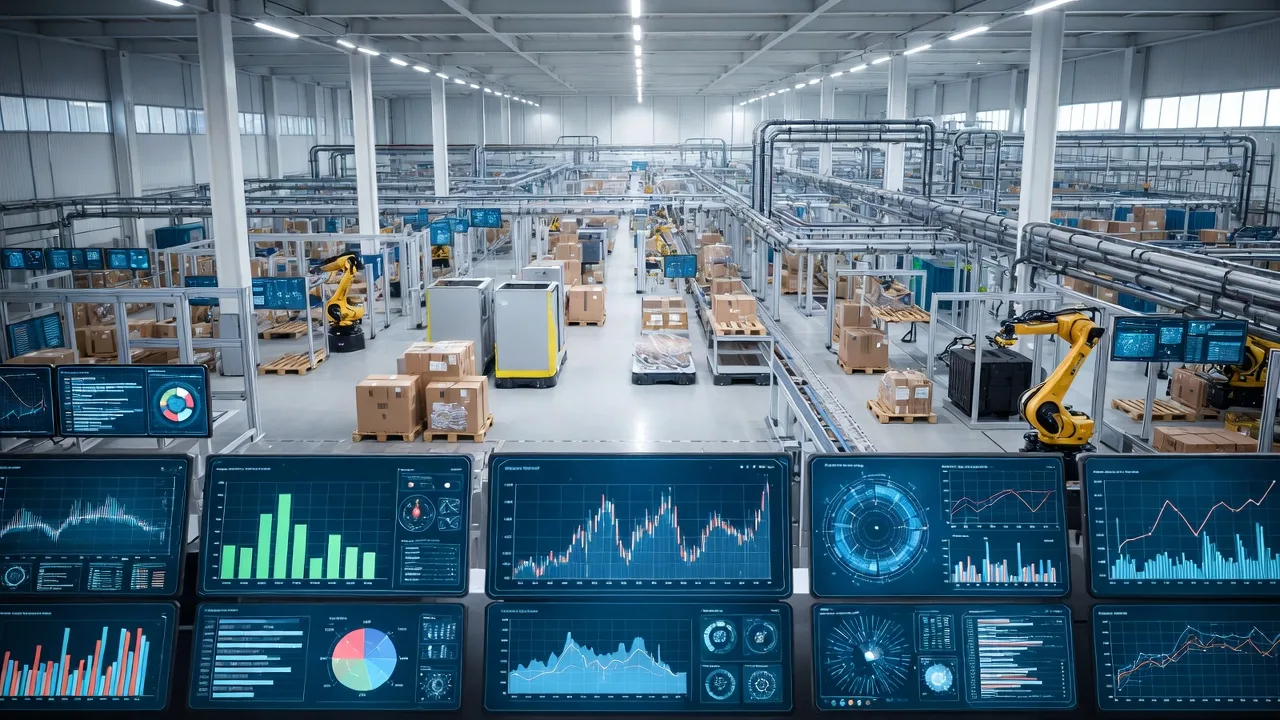
AI in Supply Chain Optimization: Transforming Logistics with Intelligent Agents
In today’s fast-paced global economy, supply chains are becoming increasingly complex. Enterprises face pressure to reduce operational costs, enhance efficiency, and respond dynamically to disruptions. Traditional supply chain management methods struggle to cope with these demands. Enter Artificial Intelligence (AI), especially AI agents designed for logistics and transportation, which is revolutionizing the way supply chains operate.
This blog explores how AI optimizes supply chain operations, enhances decision-making, and provides measurable ROI for enterprise logistics operations.
Why AI is Critical for Modern Supply Chains?
Supply chains today are multidimensional networks involving suppliers, manufacturers, warehouses, transportation partners, and end customers. Manual decision-making or rule-based systems cannot keep up with the speed and volume of modern operations. AI, particularly autonomous agents, offers predictive, adaptive, and automated solutions to these challenges.
| Challenge | Traditional Approach | AI-Enabled Approach |
|---|---|---|
| Forecasting demand | Historical data and spreadsheets | AI agents predict demand using real-time market data, seasonal trends, and customer behavior patterns |
| Inventory management | Fixed reorder points | Dynamic, AI-driven inventory optimization reduces overstock and stockouts |
| Route planning | Static routing software | AI agents optimize delivery routes in real-time considering traffic, weather, and fuel consumption |
| Supplier risk management | Manual monitoring | AI continuously analyzes supplier reliability, geopolitical risks, and supply disruptions |
| Customer service | Reactive issue resolution | AI agents proactively flag delays, reroute shipments, and communicate with customers |
How AI Agents Transform Logistics and Transportation?
AI agents are autonomous software systems that can make decisions, learn from data, and interact with other systems. In logistics, they act as intelligent coordinators that optimize multiple supply chain layers simultaneously.
1. Predictive Demand Planning
AI agents analyze historical sales, market trends, social media sentiment, and external factors like weather or geopolitical events to forecast demand with higher accuracy. Unlike traditional systems, which rely on static forecasts, AI agents continuously learn from real-time data and adjust predictions.
Impact on Enterprises:
- Reduced inventory carrying costs by 15–30%
- Improved fulfillment rates
- Minimized production overstock
| Metric | Traditional Forecasting | AI Agent Forecasting |
|---|---|---|
| Forecast Accuracy | 70–75% | 90–95% |
| Stockouts | Frequent | Rare |
| Inventory Holding Costs | High | Optimized |
2. Dynamic Route Optimization
Transportation efficiency is crucial for logistics-heavy enterprises. AI agents optimize delivery routes based on traffic patterns, weather, vehicle load, and delivery priorities. This goes beyond static GPS routing by dynamically rerouting shipments to save time and fuel.
Example:
A regional distribution network implemented AI-driven routing for last-mile delivery. Result:
- 18% reduction in fuel consumption
- 22% improvement in on-time delivery
- Real-time adaptation to traffic incidents
| Route Optimization Parameter | Manual Route Planning | AI Agent Optimization |
|---|---|---|
| Traffic Consideration | Limited | Real-time dynamic |
| Fuel Efficiency | Not considered | Calculated for all deliveries |
| Delivery Prioritization | Manual | Automated prioritization based on SLA and urgency |
| Scenario Simulation | None | Multiple scenarios simulated before execution |
3. Intelligent Inventory Management
AI agents integrate data from warehouses, suppliers, and demand forecasts to maintain optimal inventory levels. They determine precise reorder points, automate procurement, and balance stock across multiple locations to prevent both overstocking and stockouts.
Enterprise Benefits:
- Reduced waste due to spoilage or obsolescence
- Optimized warehouse space utilization
- Cost savings through automated procurement
| Inventory Metric | Traditional | AI-Optimized |
|---|---|---|
| Overstock Rate | 20–30% | 5–10% |
| Stockout Rate | 10–15% | 1–3% |
| Warehouse Utilization | Low | High, dynamic allocation |
4. Supplier Risk Assessment and Management
Supply chains are vulnerable to supplier failures, geopolitical disruptions, and financial instability. AI agents continuously analyze supplier performance, financial health, and geopolitical risks. They can recommend alternative suppliers proactively and adjust procurement strategies.
Key Advantages:
- Reduced disruption risks
- Proactive contingency planning
- Enhanced compliance monitoring
| Supplier Risk | Traditional | AI Agent Approach |
|---|---|---|
| Risk Identification | Reactive, slow | Proactive, continuous |
| Alternative Supplier Selection | Manual | Automated recommendation |
| Compliance Monitoring | Periodic audits | Real-time tracking |
5. Autonomous Monitoring and Issue Resolution
AI agents in logistics do more than plan—they act in real time to resolve issues. They monitor shipments, predict delays, and automatically trigger corrective actions like rerouting cargo or notifying customers. This reduces operational bottlenecks and improves customer satisfaction.
Impact on Operations:
- Reduced manual intervention by 40–50%
- Faster resolution of delays or disruptions
- Enhanced transparency for stakeholders
Implementing AI in Supply Chain: Enterprise Considerations
Adopting AI in logistics and transportation requires careful planning:
- Data Integration: AI agents require access to ERP systems, warehouse management systems, transportation management systems, and IoT sensors.
- Scalability: AI models must handle enterprise-scale data across multiple geographies.
- Explainability: Stakeholders need clear insights into AI decisions to trust the system.
- Continuous Learning: AI agents improve over time with real-world feedback.
- Regulatory Compliance: Ensure AI deployment aligns with logistics, environmental, and data protection regulations.
| Implementation Stage | Key Actions |
|---|---|
| Assessment | Map current supply chain processes and pain points |
| Data Preparation | Collect and normalize historical and real-time data |
| Pilot Deployment | Implement AI agents on select routes, warehouses, or suppliers |
| Full Rollout | Scale AI agent solutions enterprise-wide |
| Continuous Improvement | Monitor performance and retrain models for accuracy |
ROI of AI in Supply Chain Optimization
Investing in AI agents delivers tangible enterprise value:
| Benefit | Typical ROI Impact |
|---|---|
| Transportation cost reduction | 10–20% |
| Inventory cost reduction | 15–30% |
| Service-level improvement | 20–40% |
| Forecasting accuracy | Up to 95% |
| Operational efficiency | 25–35% |
Enterprises that implement AI-driven logistics report faster order fulfillment, lower operational costs, and improved decision-making agility. These advantages translate into stronger competitiveness and customer loyalty.
Case Study: AI Agents in Action
Company: A leading regional logistics provider
Problem: Frequent delivery delays and high fuel costs
Solution: Deployed AI agents for predictive routing and dynamic inventory management
Results:
- On-time delivery improved by 22%
- Fuel consumption reduced by 18%
- Customer complaints dropped by 35%
- Inventory holding costs optimized across three regional warehouses
This demonstrates the transformative power of AI when applied strategically in logistics operations.
People Also Ask
AI agents are autonomous, learn from real-time data, and adapt decisions dynamically, whereas traditional software relies on static rules and manual intervention.
Yes. By analyzing supplier performance, weather data, geopolitical events, and market trends, AI agents can proactively flag potential disruptions.
Key data includes sales history, inventory levels, supplier performance, transportation logs, IoT sensor data, and market intelligence.
ROI can often be observed within 6–12 months, depending on the scope of deployment and quality of data integration.
While AI benefits most complex, data-rich supply chains, small-scale operations with limited data may see lower immediate impact but can still benefit from predictive insights.
Leave a Reply