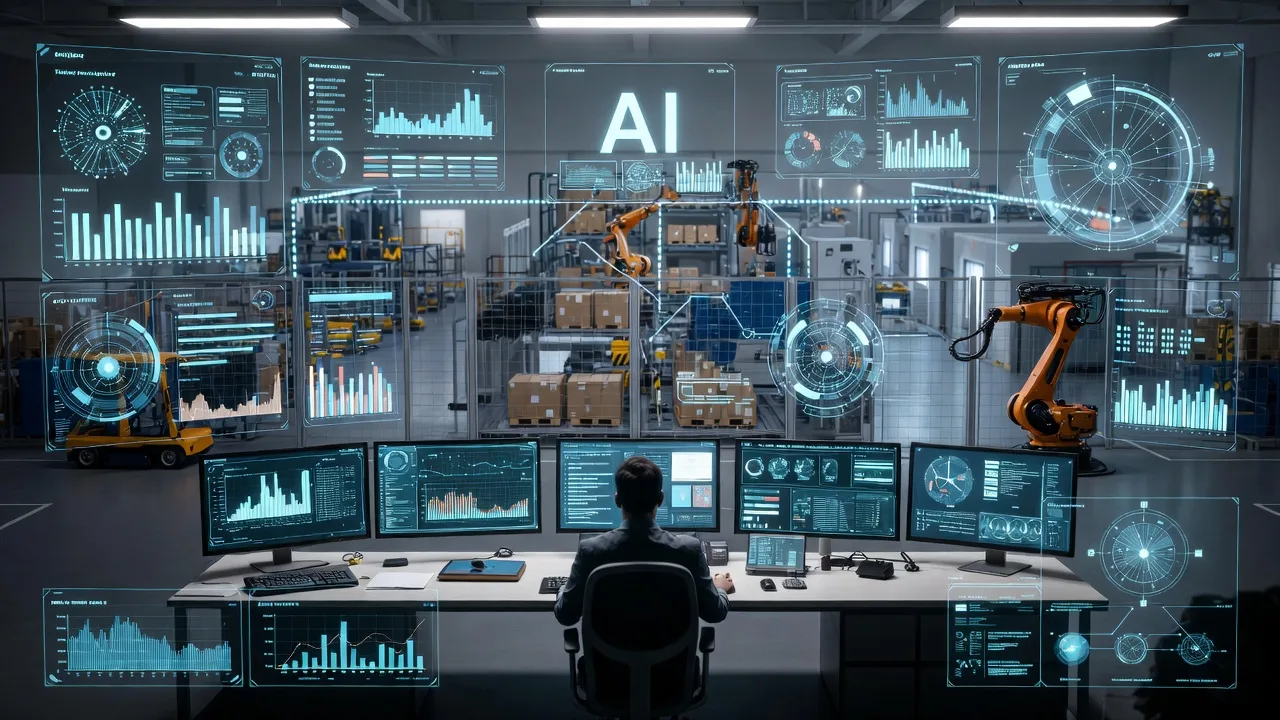
Artificial Intelligence in Transportation: Revolutionizing Logistics with Intelligent Agents
Artificial Intelligence (AI) is transforming transportation from a reactive sector into a proactive, data-driven ecosystem. By integrating machine learning, computer vision, and predictive analytics, it is addressing modern urban challenges like congestion, safety, and carbon emissions.
Core Applications
- Autonomous Vehicles (AVs): AI is the “brain” behind self-driving technology, using sensor fusion (LiDAR, radar, cameras) to navigate, detect obstacles, and make real-time driving decisions. Leading examples include Waymo’s robotaxis and Tesla’s Full Self-Driving system.
- Intelligent Traffic Management: Systems like Surtrac in Pittsburgh use AI to adjust traffic signal timings in real-time based on actual vehicle flow, reducing travel times by up to 25% and emissions by 20%.
- Predictive Maintenance: AI monitors vehicle health (engines, brakes, tires) via IoT sensors to predict failures before they happen. This is widely used by railway operators like SNCF and Hitachi to reduce downtime and maintenance costs.
- Logistics & Fleet Optimization: AI helps companies like UPS and FedEx optimize delivery routes by analyzing traffic, weather, and historical data, which can reduce fuel costs by up to 30%.
- Public Transit Optimization: AI models predict passenger demand to adjust bus and train schedules dynamically, ensuring resources are deployed where they are needed most, as seen in San Antonio’s transit planning.
Key Benefits
- Safety: AI helps mitigate human error, responsible for 94% of accidents, through Advanced Driver Assistance Systems (ADAS) that provide collision warnings and driver fatigue monitoring.
- Sustainability: By optimizing routes and reducing idling in traffic, AI helps lower fuel consumption and greenhouse gas emissions.
- User Experience: AI-powered chatbots and real-time tracking apps provide passengers with accurate ETAs and personalized travel recommendations.
Challenges & Future Trends
- Challenges: Widespread adoption is hindered by high implementation costs, regulatory uncertainty regarding liability, and significant cybersecurity risks.
- Regulatory Shift: Governments are beginning to use AI themselves; for instance, the U.S. Department of Transportation is exploring AI to draft federal safety regulations faster.
- Emerging Trends: Future focus areas include Urban Air Mobility (UAM) with drone taxis, autonomous last-mile delivery robots, and fully integrated “Smart City” mobility networks.
How AI Is Transforming Transportation?
AI in transportation leverages machine learning (ML), computer vision, natural language processing (NLP), and predictive analytics to automate processes, forecast demand, and enhance decision-making. Enterprise logistics operations are particularly well-suited to AI because of the massive volumes of data generated by fleets, warehouses, supply chains, and customer interactions.
Key areas where AI is transforming transportation include:
- Predictive Maintenance – AI predicts vehicle and equipment failures before they occur, reducing downtime and maintenance costs.
- Route Optimization – Machine learning algorithms determine the most efficient delivery routes, accounting for traffic, weather, fuel costs, and real-time conditions.
- Inventory and Fleet Management – AI agents analyze demand patterns and optimize the allocation of vehicles, drivers, and warehouse resources.
- Supply Chain Visibility – AI integrates data across multiple partners, providing real-time tracking and predictive alerts for delays or disruptions.
- Autonomous Vehicles and Drones – AI powers self-driving trucks, delivery robots, and drones, reducing human dependency and improving safety.
Benefits of AI in Transportation for Enterprises
AI delivers measurable value for enterprises by improving efficiency, reducing costs, and enhancing service quality. The table below summarizes the key benefits:
| Benefit | Impact on Transportation & Logistics |
|---|---|
| Cost Reduction | AI optimizes fuel consumption, route planning, and maintenance schedules, cutting operational costs. |
| Improved Delivery Speed | Dynamic routing and predictive analytics ensure timely deliveries. |
| Reduced Downtime | Predictive maintenance minimizes vehicle and equipment failures. |
| Enhanced Safety | AI monitors driver behavior, identifies hazards, and reduces accidents. |
| Real-Time Visibility | AI-powered dashboards provide live tracking of shipments, vehicles, and inventory. |
| Decision Automation | AI agents handle routine operational decisions, freeing human teams for strategic tasks. |
| Customer Satisfaction | Accurate ETAs and proactive disruption alerts improve end-customer experience. |
AI Agents in Logistics and Transportation
AI agents are specialized software systems that can perceive their environment, make autonomous decisions, and act to achieve goals. In transportation, AI agents can handle tasks ranging from route optimization to fleet scheduling.
Key Applications of AI Agents
| Application | Function | Enterprise Benefit |
|---|---|---|
| Autonomous Fleet Management | Monitors vehicle location, condition, and performance. | Reduces human errors, improves resource allocation. |
| Dynamic Route Planning | Uses traffic, weather, and historical data to determine optimal routes in real time. | Cuts fuel costs, reduces delivery times. |
| Predictive Maintenance Agents | Analyzes sensor and operational data to predict vehicle or equipment failures. | Minimizes downtime and costly emergency repairs. |
| AI-Powered Load Optimization | Calculates the best load distribution for cargo to maximize efficiency and safety. | Increases payload efficiency and reduces transportation cost per unit. |
| Demand Forecasting Agents | Predicts shipment volumes, peak times, and inventory needs. | Optimizes fleet scheduling and inventory stocking. |
| Intelligent Customer Support | Uses NLP to answer queries, schedule deliveries, and provide real-time updates. | Enhances customer experience and reduces support workload. |
Real-World Enterprise Use Cases
AI is already making tangible impacts across global transportation enterprises:
- Smart Fleet Management: Companies like DHL and UPS use AI to monitor vehicle performance, predict maintenance needs, and dynamically allocate resources across thousands of vehicles.
- Predictive Route Optimization: AI agents analyze traffic patterns, weather forecasts, and historical delivery data to optimize routes for FedEx and Amazon logistics fleets.
- Autonomous Delivery Systems: Leading logistics firms are piloting AI-powered drones and self-driving trucks to automate last-mile deliveries, reducing reliance on human labor.
- Intelligent Supply Chain Visibility: AI consolidates data from suppliers, warehouses, and distributors to provide end-to-end supply chain visibility for enterprises like Maersk and DB Schenker.
Implementing AI in Transportation: A Step-by-Step Enterprise Approach
Adopting AI agents in transportation requires strategic planning and integration into existing enterprise systems. Here’s a framework for enterprise adoption:
| Step | Action | Key Considerations |
|---|---|---|
| 1. Identify Business Goals | Define the transportation challenges AI will address (e.g., cost reduction, speed). | Align AI use cases with measurable KPIs. |
| 2. Data Collection & Integration | Aggregate vehicle, fleet, warehouse, and supply chain data. | Ensure data quality, accessibility, and compliance with regulations. |
| 3. Choose AI Technology | Select AI models, ML algorithms, and agent frameworks suitable for enterprise logistics. | Evaluate scalability, reliability, and integration capabilities. |
| 4. Pilot & Test | Deploy AI agents in controlled environments. | Monitor performance, accuracy, and ROI before enterprise-wide rollout. |
| 5. Scale & Optimize | Expand AI agents across fleets, warehouses, and routes. | Continuously refine models with real-time data. |
| 6. Training & Change Management | Educate employees on AI capabilities and workflows. | Ensure smooth adoption and minimize resistance. |
Challenges in AI Adoption for Transportation
While AI offers significant benefits, enterprises must address several challenges:
- Data Complexity: Transportation generates heterogeneous data from sensors, vehicles, GPS, and ERP systems. Ensuring clean, structured, and interoperable data is critical.
- Integration with Legacy Systems: Many enterprises rely on older fleet management or ERP systems that may not natively support AI.
- Regulatory Compliance: Autonomous systems, data privacy, and safety regulations vary by country and industry.
- Talent Gap: Skilled AI engineers and data scientists are essential for developing, deploying, and maintaining AI agents.
- Scalability & ROI: Pilot programs often succeed, but scaling AI across thousands of vehicles and multiple geographies requires careful planning and monitoring.
Measuring the Impact of AI in Transportation
Enterprises need clear KPIs to evaluate AI agent performance. Typical metrics include:
| Metric | Purpose |
|---|---|
| On-Time Delivery Rate | Measures improvement in delivery punctuality. |
| Fuel Efficiency | Evaluates cost savings from optimized routes. |
| Vehicle Downtime | Tracks reduction in maintenance-related downtime. |
| Operational Costs | Monitors savings achieved from AI-driven optimization. |
| Customer Satisfaction Score | Assesses improvements in client experience and support response times. |
| Predictive Accuracy | Evaluates AI models’ success in forecasting maintenance, demand, or routes. |
Future Trends in AI-Driven Transportation
The transportation industry is poised for even deeper AI integration. Key trends include:
- Autonomous Trucking Expansion: Full-scale adoption of AI-driven long-haul trucks.
- AI-Powered Urban Mobility: Smart traffic management and AI-enabled public transport planning.
- Integration with IoT Devices: Real-time sensor data feeding AI models for predictive insights.
- Sustainability Optimization: AI agents minimizing carbon footprint through energy-efficient routes and electric fleet management.
- Cognitive Supply Chains: Self-learning AI agents autonomously adjusting supply chains to global events and demand fluctuations.
People Also Ask
Traditional software tracks and reports data, whereas AI agents analyze patterns, predict outcomes, and make autonomous decisions, reducing manual intervention.
Yes. AI agents are designed to work alongside ERP, TMS, and WMS systems via APIs and data connectors, enabling a phased, enterprise-friendly deployment.
AI agents leverage GPS, telematics, fuel consumption, maintenance logs, weather data, traffic updates, inventory levels, and shipment histories.
ROI varies, but enterprises typically see reductions in operational costs (10–30%), improved on-time deliveries (15–25%), and decreased maintenance downtime (20–40%).
AI vehicles undergo extensive testing and monitoring. While not completely eliminating risk, AI improves safety by reducing human error and optimizing real-time responses to hazards.
Leave a Reply