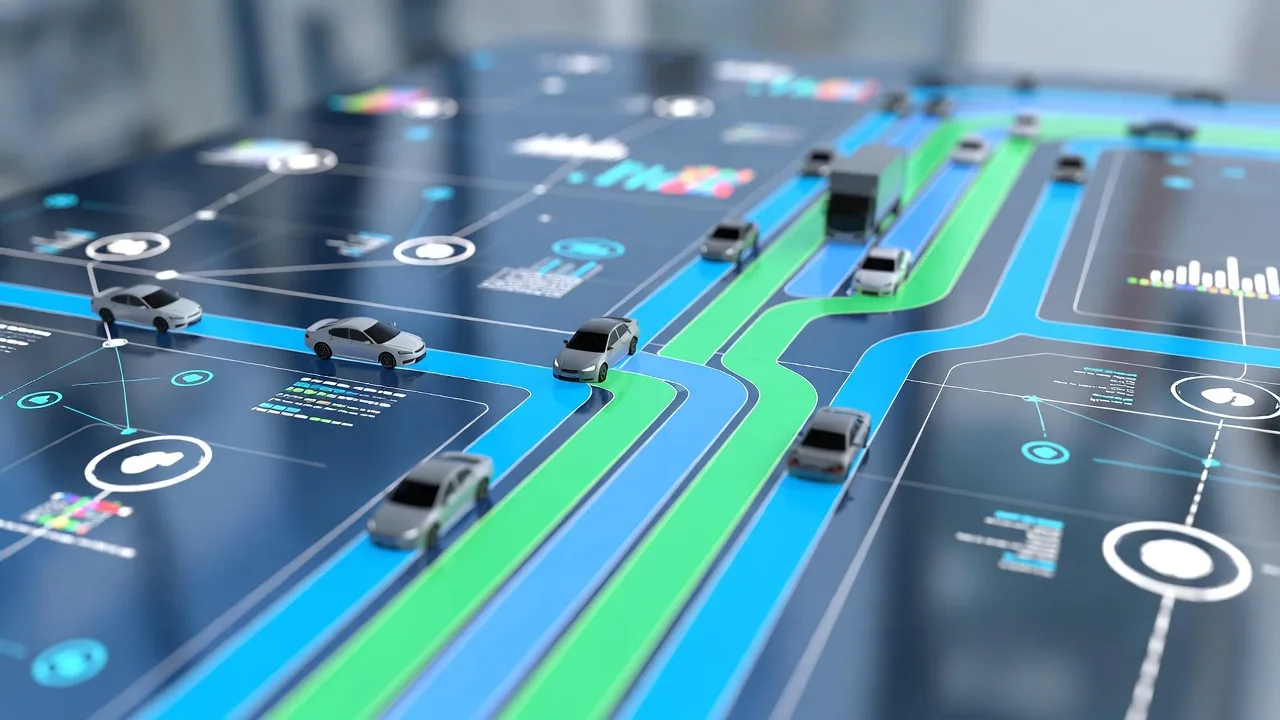
Vehicle Route Optimization: How AI Agents Are Redefining Enterprise Logistics at Scale
Vehicle route optimization is no longer a back-office efficiency play. For large logistics, transportation, and distribution enterprises, it has become a core operational intelligence layer that directly impacts cost structure, delivery reliability, customer experience, and sustainability metrics.
Traditional route planning systems were built for static environments. Modern logistics operates in anything but static conditions. Traffic volatility, demand spikes, labor constraints, fuel price fluctuations, weather disruptions, and same-day delivery expectations have pushed legacy routing engines beyond their limits.
This is where AI-driven vehicle route optimization changes the equation.
For enterprises managing hundreds or thousands of vehicles across regions, AI agents now act as autonomous decision systems. They continuously analyze data, simulate outcomes, and adapt routes in real time, without waiting for human intervention. The result is not just shorter routes, but smarter logistics operations.
This article explains what vehicle route optimization really means at an enterprise level, why rule-based systems are failing, and how AI agents are transforming logistics and transportation networks.
What Is Vehicle Route Optimization in Enterprise Logistics?
Vehicle route optimization is the process of determining the most efficient routes for a fleet of vehicles to complete deliveries, pickups, or service tasks while respecting real-world constraints.
At an enterprise scale, route optimization must account for:
- Fleet size and vehicle heterogeneity
- Delivery time windows and service level agreements
- Traffic patterns and road restrictions
- Driver availability and labor regulations
- Fuel consumption and emissions targets
- Warehouse and hub constraints
- Customer priority and service tiers
In simple terms, enterprise route optimization is a multi-objective optimization problem. Cost, time, reliability, and sustainability all compete. Optimizing one metric in isolation usually degrades another.
AI-based systems are designed to balance these trade-offs dynamically.
Why Traditional Route Planning Fails at Scale?
Most legacy route planning tools rely on deterministic rules and static optimization models. These approaches work in controlled environments but break down under real-world variability.
Common limitations include:
- Routes generated once per day with no real-time re-optimization
- Inability to react to traffic incidents or vehicle breakdowns
- Manual intervention required for exceptions
- Poor handling of last-minute order changes
- Limited learning from historical outcomes
For enterprises, these gaps lead to hidden costs. Missed delivery windows, excessive fuel consumption, underutilized vehicles, and customer dissatisfaction compound across the network.
Static systems assume the world behaves as planned. Logistics reality rarely does.
How AI Agents Transform Vehicle Route Optimization
AI agents move route optimization from static planning to continuous decision-making.
Instead of calculating a single “best route,” AI agents:
- Continuously ingest live and historical data
- Evaluate multiple routing scenarios in parallel
- Predict downstream impacts before executing decisions
- Adapt routes autonomously as conditions change
In an enterprise logistics environment, AI agents function as always-on operational controllers.
Core Capabilities of AI-Driven Route Optimization
Real-time adaptability
AI agents respond instantly to traffic congestion, weather changes, delivery delays, and vehicle availability issues.
Predictive intelligence
Machine learning models forecast travel times, demand surges, and risk zones rather than reacting after failures occur.
Constraint awareness
Enterprise constraints such as driver hours, union rules, cold-chain requirements, and regulatory compliance are enforced automatically.
Continuous learning
Every completed route feeds back into the system, improving future decisions without manual reconfiguration.
This shift turns route optimization from a planning task into an adaptive control system.
AI Agent Architecture for Vehicle Route Optimization
Enterprise buyers often ask how AI-based route optimization actually works under the hood. At a high level, AI agents operate across three layers.
Data Ingestion and Context Layer
AI agents integrate with:
- GPS and telematics systems
- Transportation management systems (TMS)
- Warehouse management systems (WMS)
- Order management platforms
- Traffic, weather, and map data providers
- Fuel pricing and vehicle health systems
This creates a unified, real-time operational context.
Decision and Optimization Layer
This layer combines:
- Graph-based route optimization algorithms
- Reinforcement learning for policy improvement
- Constraint solvers for enterprise rules
- Predictive models for ETA, congestion, and risk
The AI agent evaluates millions of route permutations and selects actions that optimize enterprise objectives.
Execution and Feedback Layer
Optimized routes are pushed to:
- Driver mobile applications
- Fleet management dashboards
- Dispatch and control towers
Actual outcomes are captured and fed back into the learning loop.
This closed-loop system is what enables continuous improvement at scale.
Enterprise Use Cases for Vehicle Route Optimization
AI-driven route optimization applies across logistics and transportation verticals.
Large-Scale Distribution Networks
Enterprises operating regional or national distribution fleets use AI agents to balance delivery density, hub utilization, and service levels across thousands of daily routes.
Last-Mile Delivery Operations
AI agents optimize last-mile routes by dynamically sequencing stops, rerouting around congestion, and adjusting for failed delivery attempts.
Freight and Line-Haul Transportation
For long-haul operations, AI-based route optimization considers fuel efficiency, toll costs, driver rest requirements, and cross-border regulations.
Field Service and Asset Maintenance
Route optimization extends beyond delivery to field technicians, service engineers, and mobile assets where response time and technician skill matching matter.
Business Impact of AI-Based Vehicle Route Optimization
For enterprise decision-makers, the value of route optimization is measured in outcomes, not algorithms.
Organizations deploying AI agents typically see:
- Reduced fuel and operating costs
- Higher fleet utilization
- Improved on-time delivery performance
- Lower carbon emissions per delivery
- Reduced dispatcher workload
- Faster response to disruptions
More importantly, AI-driven routing increases operational resilience. The system continues to function effectively even when plans fail.
Vehicle Route Optimization and Sustainability Goals
Sustainability is now a board-level priority. Route optimization plays a direct role in emissions reduction.
AI agents optimize routes not just for distance, but for:
- Fuel-efficient driving patterns
- Reduced idle time
- Consolidated deliveries
- Electric vehicle range constraints
For enterprises tracking Scope 3 emissions, AI-based routing provides measurable and auditable reductions tied directly to logistics operations.
Integration with Enterprise Logistics Systems
Vehicle route optimization does not operate in isolation. Enterprise adoption requires seamless integration.
AI agents are typically deployed as modular services that integrate with:
- Existing TMS and ERP platforms
- Custom logistics applications
- Driver and dispatcher interfaces
- Analytics and reporting systems
This approach allows enterprises to modernize routing intelligence without replacing their entire logistics stack.
Evaluating Vehicle Route Optimization Solutions
For enterprise buyers, not all route optimization platforms are equal.
Key evaluation criteria include:
- Ability to handle real-time re-optimization
- Support for complex enterprise constraints
- Proven scalability across large fleets
- Transparency and explainability of AI decisions
- Security, compliance, and data governance
- Integration flexibility
Solutions built around AI agents outperform static optimization engines because they are designed for continuous decision-making, not one-time planning.
The Future of Vehicle Route Optimization
Vehicle route optimization is evolving toward autonomous logistics orchestration.
As AI agents mature, they will:
- Coordinate across warehouses, fleets, and carriers
- Negotiate trade-offs between cost, speed, and sustainability
- Anticipate disruptions days in advance
- Self-optimize based on strategic business goals
For enterprises, route optimization will no longer be a feature. It will be the intelligence layer that runs logistics operations.
People Also Ask
Vehicle route optimization is the process of determining the most efficient routes for a fleet of vehicles while accounting for real-world constraints such as traffic, delivery windows, vehicle capacity, and regulatory rules.
AI improves route optimization by enabling real-time adaptability, predictive decision-making, and continuous learning from historical data. AI agents dynamically re-optimize routes as conditions change.
No. Vehicle route optimization applies to last-mile delivery, regional distribution, freight transportation, field service operations, and any logistics network involving mobile assets.
Traditional routing software generates static plans. AI agents continuously analyze data, predict outcomes, and autonomously adjust routes to optimize enterprise objectives in real time.
Enterprises should look for scalability, real-time re-optimization, support for complex constraints, integration flexibility, explainable AI decisions, and proven results in large-scale logistics environments.
Leave a Reply