Category: Blogs

This Category Consists of the blogs.

  • Container Logistics Management​

    Container Logistics Management​

    container logistics management​

    Remember the days when a week-long shipping window felt “reasonable”? In 2025, American consumers and businesses won’t wait for a slow elevator, let alone a slow shipment. With US e-commerce sales projected to surpass $1.3 trillion and over 70% of shoppers now willing to pay extra for sustainable shipping, the pressure on logistics has never been greater .

    The entire system is showing its strain. Container ships still detour around the Cape of Good Hope to avoid Red Sea attacks, adding up to two weeks to transit times and nearly $1 million in extra costs per voyage . On the domestic side, logistics spending is increasingly trapped in inefficiencies, with almost 41% tied up in last-mile delivery problems like porch piracy and route delays .

    At our AI development company, we’ve helped over 50 US-based logistics firms and shippers navigate this new reality. What we’ve found is clear: traditional technology stacks are no longer sufficient. This comprehensive guide will show you how AI agents are fundamentally reshaping container logistics management across the United States, and how your organization can leverage this transformation.

    The Unignorable Challenges in US Container Logistics

    Before exploring the AI solutions, it’s crucial to understand the specific pressures squeezing US container logistics in 2025.

    → Soaring Costs and Pricing Volatility

    Even with pandemic-era peaks behind us, shippers aren’t seeing real relief. According to the Q2 2025 CIPS Pulse Survey, 22% of procurement leaders now expect shipping and logistics input costs to rise by more than 10%, up from previous quarters . Diesel price fluctuations, new labor contracts, higher insurance premiums, and potential tariffs all contribute to this instability.

    → Capacity Shortages Beneath the Surface

    While spot rates occasionally dip, the underlying capacity remains tight. The US trucking industry alone could face a shortage of 100,000 drivers by 2025 . Aging equipment takes longer to replace, and seasonal surges can snap up available trucks and containers almost overnight, leaving shippers fighting for space when they need it most.

    → Regulatory Pressure and Cross-Border Complexities

    Regulatory pressure is increasing in both scope and speed. New US customs rules introduced in late 2024 require detailed documentation for every package arriving from China and Hong Kong, ending a long-standing exemption . Meanwhile, cross-border shipping between North American countries faces roadblocks due to mismatched safety regulations and outdated infrastructure at ports of entry .

    → Sustainability Transitions from Optional to Mandatory

    Sustainability is no longer a public relations initiative but a business imperative. Regulators, investors, and consumers all want proof of reduced carbon impact. A 2024 Deloitte survey found that 68% of US consumers now prefer eco-friendly shipping options, even if it costs more .

    How AI Agents Are Revolutionizing Container Logistics

    AI agents are autonomous software systems that perceive their environment, analyze data, make decisions, and act with minimal human intervention. Unlike traditional automation tools, they learn and adapt over time.

    Here’s how they’re tackling the core challenges in US container logistics.

    → Predictive Analytics and Demand Forecasting

    Modern AI forecasting systems extend far beyond traditional statistical methods. Unilever’s AI demand forecasting platform integrates 26 external data sources, including social media sentiment, weather patterns, and local events, improving forecast accuracy from 67% to 92% on a SKU-location level while reducing excess inventory by €300 million .

    How it works for US shippers: AI agents analyze your historical shipping data, seasonal patterns, market trends, and even weather forecasts to predict container needs weeks in advance, ensuring you secure capacity before shortages occur.

    → Intelligent Route and Load Optimization

    AI-driven route optimization represents one of the most immediate opportunities for cost savings and efficiency gains. UPS’s ORION route optimization system uses AI to calculate optimal delivery paths, processing 30,000 route optimizations per minute and saving 38 million liters of fuel annually .

    How it works for US shippers: AI agents continuously monitor traffic conditions, port congestion, weather disruptions, and carrier schedules to dynamically adjust routes in real-time, reducing transit times and fuel consumption.

    → Automated Documentation and Compliance Processing

    A global logistics leader recently partnered with BCG to develop high-impact GenAI applications focused on automating business-critical documentation. For Requests for Proposal (RFPs), their AI agent now automatically generates a high share of these essential documents, significantly cutting turnaround times and ensuring accuracy .

    How it works for US shippers: AI agents automatically process bills of lading, customs declarations, and other documentation, ensuring compliance with constantly changing US regulations while reducing manual errors and processing time by up to 80% .

    → Real-Time Container Tracking and Exception Management

    Despite the proliferation of tracking solutions, many shippers still operate with delayed, fragmented, or siloed data between modes. Advanced AI visibility platforms like Shippeo provide highly accurate ETA forecasting up to 95% accuracy and proactive exception management, reducing delays by 30% .

    How it works for US shippers: AI agents monitor container locations, conditions, and estimated arrival times across all transport modes, automatically detecting anomalies and proposing alternative solutions before disruptions escalate.

    Real-World Impact: Case Studies from Industry Leaders

    → Maersk’s AI-Driven Maritime Logistics

    Maersk has decreased vessel downtime by 30% through predictive maintenance, saving over $300 million annually and reducing carbon emissions by 1.5 million tons. Their AI systems analyze over 2 billion data points daily from 700+ vessels, predicting equipment failures up to 3 weeks in advance with 85% accuracy .

    → Einride’s Electric and Autonomous Transformation

    Einride Saga, an intelligent freight platform, leverages AI and digital twins to optimize fleet management. Their clients achieve remarkable results, including: up to 95% reduction in carbon emissions, 99.7% delivery accuracy, and 65% reduction in driver idle time .

    → Port of Rotterdam’s Predictive Maintenance Success

    The Port of Rotterdam’s AI system monitors 42 million vessel movements annually, predicting maintenance needs for 100,000+ assets with 95% accuracy. This has reduced unexpected downtime by 20% and extended equipment lifespan by 25%, saving €31 million annually .

    Implementing AI Agents: A Practical Guide for US Shippers

    → Start with High-Impact, Contained Use Cases

    Rather than attempting a full-scale transformation overnight, begin with focused applications that deliver quick wins and demonstrate ROI. The most successful implementations often start with:

    • Automated document processing for customs and carrier documentation
    • Predictive ETAs for inbound container tracking
    • Dynamic route optimization for drayage and last-mile delivery

    Companies that embrace GenAI in logistics typically experience a full return on investment within 18 to 24 months .

    → Build Upon Your Existing Technology Foundation

    Most AI agents for logistics are designed with integration in mind. Look for solutions with:

    • API-first architecture for connecting with your TMS, WMS, and ERP systems
    • Pre-configured integrations for major platforms like SAP, Oracle, and Microsoft Dynamics
    • IoT compatibility to leverage existing sensor data from containers and equipment

    Osa Commerce, for example, offers an API-first architecture with over 440 pre-configured integrations for major business systems .

    → Prioritize Data Quality and Governance

    AI agents are only as effective as the data they process. Before implementation, establish:

    • Data cleanliness protocols to ensure accurate inputs
    • Cross-system synchronization to break down information silos
    • Ongoing monitoring to maintain data integrity across sources

    Firms using machine learning for load optimization have lowered freight costs by 18% while improving delivery reliability, but this depends heavily on data quality .

    Top AI Agents Transforming US Container Logistics

    AI AgentPrimary FunctionKey BenefitNotable Feature
    NunarFleet & sustainability management95% emission reductionElectric & autonomous freight focus
    Shippeo Real-time transportation visibility95% ETA accuracyProactive exception alerts
    Locus DispatchIQ Last-mile & route optimization15% shipping cost reductionAutomatic route planning with constraints
    Rippey AI Document automation & support80% operational cost savingsInvoice & payment processing
    Movement AI Supply chain monitoring & analytics40% reduction in breach costsPredictive ETA & disruption prevention
    Ampcome Multi-agent logistics automationEnterprise-ready scalabilityCombines AI, ML, NLP, computer vision

    The Future Landscape: Emerging Trends for US Logistics

    → Digital Twins for Supply Chain Simulation

    Digital twins now replicate entire supply networks in virtual environments, allowing companies to simulate changes and anticipate disruptions before they occur. As Maersk notes, “The demand to get heavy and complex cargo in and out of really tight spots is only increasing… advances in transport modeling and simulation technology can help logistics planners see how to ‘thread the needle’” .

    → Autonomous Operations and Self-Healing Supply Chains

    The next evolution involves AI agents that not only predict disruptions but automatically implement corrections. As these systems mature, we’ll see more “self-healing” supply chains where AI agents proactively reroute shipments, adjust inventory levels, and re select carriers without human intervention.

    → Generative AI for Strategic Logistics Planning

    Beyond operational improvements, generative AI is increasingly used for strategic planning, creating optimal transportation routes, warehouse layouts, and packaging designs that human planners might never conceive.

    People Also Ask

    What is the typical ROI timeline for AI agents in logistics?

    Companies that embrace GenAI in logistics typically experience a full return on investment within 18 to 24 months, with many seeing significant operational improvements within the first 6 months

    How do AI agents handle sudden supply chain disruptions?

    Advanced AI agents use predictive analytics and digital twin technology to simulate disruptions and preemptively adjust routing, often detecting and responding to issues before human managers are even aware of them

    Can small to mid-sized US shippers benefit from AI agents?

    Absolutely. The market now offers scalable solutions with flexible pricing models, including API-based services that allow smaller shippers to access sophisticated AI capabilities without major upfront investment

    What infrastructure is needed to implement AI logistics agents?

    Most modern AI agents are cloud-based and API-driven, requiring minimal upfront infrastructure. The key requirement is ensuring your existing systems can integrate through standard interfaces

    How do AI agents improve sustainability in container logistics?

    By optimizing routes, consolidating loads, and improving equipment utilization, AI agents significantly reduce fuel consumption and emissions. Einride’s clients, for example, achieve up to 95% reduction in carbon emissions through their AI-powered platform

  • Drug Storage Logistics & 
Inventory Management​

    Drug Storage Logistics & Inventory Management​

    drug storage logistics and inventory management​

    AI-driven drug storage logistics and inventory management optimize the US pharmaceutical supply chain by ensuring temperature compliance, enhancing visibility, and automating inventory control to reduce costs and spoilage.

    The journey of a life-saving vaccine from a manufacturing facility to a remote clinic is a high-stakes race against time and temperature. In the United States, a single deviation in a drug’s storage condition can render a $20,000 vial of specialty medicine completely worthless, representing a catastrophic loss for healthcare providers and a potential risk to patient safety. This immense pressure is why the pharmaceutical logistics market is transforming, projected to grow from USD 100.1 billion in 2024 to USD 150.1 billion by 2033.

    The High Stakes of US Pharmaceutical Logistics

    The United States pharmaceutical supply chain is a complex, tightly regulated ecosystem where efficiency is directly tied to patient outcomes. The margin for error is virtually zero.

    Why Drug Logistics Are Different

    Transporting pharmaceuticals isn’t like shipping consumer goods. The entire process is governed by stringent regulations from the Food and Drug Administration (FDA) and other global bodies, with requirements for detailed, unit-level traceability coming into full effect. The rise of specialty biologic has further intensified these challenges. A remarkable 80% of therapies shipped in developed markets now require 2°-8°C temperature control, making cold-chain logistics not a niche service, but the industry backbone. The costs are substantial; temperature-controlled transport can be three to five times more expensive than ambient freight.

    The Crippling Cost of Inefficiency

    Beyond the direct costs of spoilage, operational inefficiencies create massive financial drag. Legacy systems often lead to:

    • Overstock and Stockouts: Inaccurate demand forecasting can tie up capital in expensive inventory or, worse, lead to critical drug shortages.
    • Regulatory Penalties: Failure to comply with regulations like the Drug Supply Chain Security Act (DSCSA) can result in hefty fines and product quarantines.
    • Manual Labor Reliance: Time-consuming manual data entry and temperature checks are not only expensive but also prone to human error.

    The AI Arsenal: Solving Core Challenges in Drug Storage & Logistics

    Artificial Intelligence is not a single tool but a comprehensive arsenal of technologies. At Nunar, we develop targeted AI agents that address specific pain points across the pharmaceutical logistics chain.

    Intelligent Temperature Control and Cold Chain Management

    Maintaining the cold chain is the most visible challenge in pharma logistics. AI moves beyond simple temperature logging to proactive, predictive preservation.

    • Predictive Excursion Alerts: Instead of merely recording a temperature breach after it happens, AI models analyze real-time sensor data against forecasted weather, traffic patterns, and historical lane performance. This allows our AI agents to predict a potential excursion hours in advance, enabling logistics managers to proactively reroute a truck or adjust cooling systems.
    • Prescriptive Analytics for Packaging: Which shipping container or phase-change material is optimal for a specific route and season? AI can analyze historical performance data to prescribe the most effective and cost-efficient packaging configuration, extending hold times for critical shipments to up to 120 hours and enabling reliable ground transport where air freight was once the only option.

    Predictive Inventory Management and Demand Forecasting

    The goal is to have the right drug, in the right place, at the right time. AI makes this possible.

    • Beyond Historical Sales Data: Traditional forecasting relies on past sales. AI models incorporate a multitude of variables, including local disease outbreaks, seasonal healthcare trends, and even regional public health announcements, to predict demand with stunning accuracy. This helps prevent both costly overstocking of short-shelf-life items and dangerous stock-outs of essential medicines.
    • Automated Replenishment: Our deployed AI agents autonomously monitor inventory levels against dynamic demand forecasts. They can automatically generate and send purchase orders to suppliers when thresholds are triggered, ensuring continuous supply while minimizing human intervention and the risk of human error.

    Enhanced Regulatory Compliance and Traceability

    With the FDA’s DSCSA mandating full unit-level traceability, compliance has become a monumental data challenge. AI is the only scalable solution.

    • Automated Serialization and Data Integrity: AI-powered vision systems in warehouses can verify 2D data-matrix codes on every saleable unit with greater speed and accuracy than human workers, drastically reducing data-error rates that could trigger product quarantines.
    • Blockchain and AI for Immutable Audit Trails: We integrate AI agents with blockchain-based systems to create a secure, unchangeable record of a drug’s journey. Every hand-off, every temperature scan, and every location ping is recorded, creating a transparent and trustworthy chain of custody that simplifies regulatory reporting and accelerates recall management if needed.

    Nunar in Action: Deployed AI Agents Driving Real-World Impact

    Our philosophy at Nunar is that the value of AI is proven not in a lab, but in production.

    Here are two anonymized case studies from our portfolio of over 500 deployments.

    Case Study: Optimizing a National COVID-19 Vaccine Distribution Network

    During the rollout of mRNA vaccines, a national logistics provider faced the immense challenge of distributing doses requiring -80°C ultra-cold storage.

    Manual tracking and forecasting were insufficient.

    • The Nunar Solution: We deployed a network of interconnected AI agents. One agent handled real-time predictive temperature monitoring for all ultra-low temperature freezers and shipments. Another specialized in demand forecasting, dynamically allocating inventory to regional hubs based on real-time vaccination appointment data and local infection rates.
    • The Result: The system reduced potential temperature excursions by 98% and optimized inventory flow to ensure a 99.8% on-time delivery rate to vaccination sites, directly supporting the public health effort.

    Case Study: Eliminating Stock outs for a Major Hospital Network’s Pharmacy

    A large hospital network was struggling with inventory management for high-cost oncology drugs. Manual counts led to frequent stock outs, causing treatment delays and frustrating clinicians.

    • The Nunar Solution: We implemented an AI agent that integrated with their existing ERP and Warehouse Management Systems. The agent provided real-time visibility into stock levels across all central and satellite pharmacies and used predictive analytics to forecast patient-specific demand based on treatment schedules.
    • The Result: The hospital network achieved a 99.9% inventory accuracy rate and eliminated stock-outs for critical oncology drugs within six months. This also led to a 15% reduction in carrying costs by preventing over-ordering and minimizing drug wastage.

    The Future of AI in Pharmaceutical Logistics

    The evolution is just beginning. The leading logistics companies like DHL, UPS, and FedEx are already heavily investing in AI-powered visibility platforms and smart-freezer farms. The next wave of innovation will be driven by:

    • Hyper-Personalized Logistics: AI will enable truly patient-centric supply chains, such as optimizing direct-to-patient delivery for specialty drugs based on a patient’s personal schedule and preferences.
    • The Self-Optimizing Supply Chain: The future is a fully autonomous supply chain where AI agents don’t just recommend actions but execute them—orchestrating robots in warehouses, negotiating rates with carriers, and managing cash flow with minimal human oversight.
    • Generative AI for Scenario Planning: Generative AI models will simulate thousands of potential supply chain disruptions from a hurricane to a supplier bankruptcy allowing companies to stress-test their strategies and build unparalleled resilience.

    Choosing Your Path Forward: A Comparative View

    The journey toward an AI-optimized supply chain can take different forms. Here’s a comparison of the strategic approaches we see in the market.

    FeatureTraditional Legacy SystemsOff-the-Shelf AI SoftwareNunar’s Custom AI Agents
    Core FunctionalityManual data entry; reactive problem-solvingGeneralized algorithms for common tasksSpecialized agents built for pharma-specific workflows
    Temperature ControlReactive logging; post-event excursion reportsBasic real-time monitoring & alertsPredictive analytics to prevent excursions before they happen
    Inventory ManagementError-prone manual counts; static reorder pointsImproved forecasting based on sales historyDynamic, multi-factor demand forecasting & automated replenishment
    Regulatory ComplianceLabor-intensive, manual documentationDigital record-keepingAutomated serialization verification & blockchain-backed audit trails
    IntegrationSiloed data; difficult to connect with new systemsAPI-based, but may lack deep workflow integrationSeamless integration with existing ERPs, WMS, and IoT sensors
    ScalabilityLimited; requires adding more personnelModular, but may hit performance ceilingsHighly scalable, autonomous network of agents that learn and adapt

    Your Next Step Toward a Resilient, Intelligent Supply Chain

    The transformation of the U.S. pharmaceutical supply chain is underway. The challenges of cold-chain management, inventory optimization, and regulatory compliance are too complex and costly for legacy systems. The integration of AI is no longer a speculative future but a present-day imperative for protecting patient health and your bottom line.

    The evidence is clear: AI-driven logistics solutions significantly reduce spoilage, optimize inventory carrying costs, and build a compliant, resilient supply chain. From predictive cold chain management to fully autonomous inventory systems, the technology is here, and it is proven.

    At Nunar, we have already engineered and deployed over 500 AI agents to solve these exact problems. We don’t just sell software; we provide a strategic partnership to embed deep intelligence into your logistics operations.

  • Freight Forwarding vs. Full Logistics Solutions

    Freight Forwarding vs. Full Logistics Solutions

    freight forwarding vs full logistics solutions

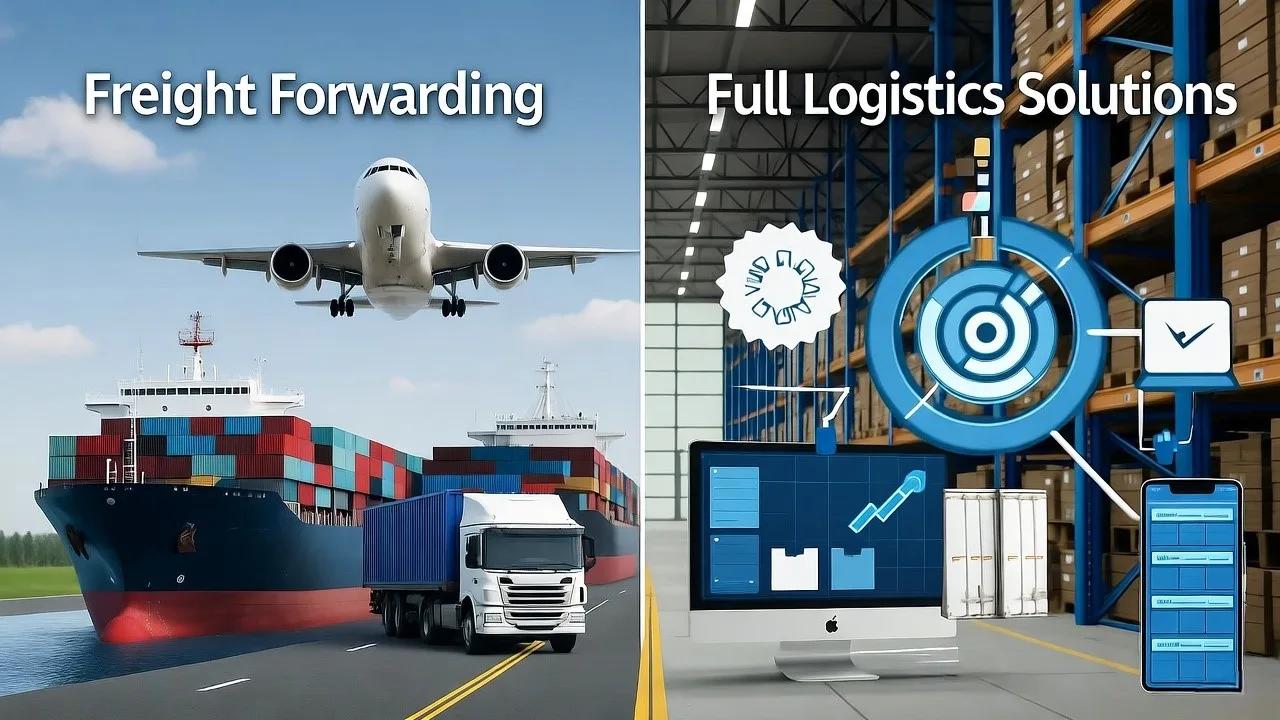
    Freight Forwarding vs Full Logistics Solutions​ – A Comparison Guide

    When we evaluate a client’s supply chain architecture, especially in the competitive US logistics and supply chain environment, the distinction between a freight forwarder and a 3PL (full logistics provider) is the starting point. It’s a difference in scope, asset ownership, and overall partnership model.

    Freight Forwarding: The Master Orchestration of Movement

    A freight forwarding company is, fundamentally, an asset-light middleman. Their core value proposition is leveraging an extensive network of carriers (ocean, air, rail, and road) to book space and manage the complex administrative processes required to move goods from point A to B.

    • Core Focus: Transportation arrangement and documentation.
    • Key Services: Booking cargo space, negotiating rates with carriers, freight consolidation, and managing customs brokerage and paperwork (e.g., Bills of Lading, commercial invoices).
    • Asset Profile: Non-asset-based. They do not typically own the ships, planes, or trucks (though some larger firms are hybrid).
    • Typical US Client: Businesses with strong in-house warehousing and inventory management, but who need expert assistance with complex international shipping or managing intermodal freight in North America.

    Full Logistics Solutions (3PL/4PL): The End-to-End Supply Chain Partner

    A full logistics solution, or 3PL (Third-Party Logistics), takes on a significantly broader mandate. They manage an entire functional segment, or even the whole, of your supply chain. They are a true operational partner, often integrating directly into your ERP and WMS systems.

    • Core Focus: End-to-end supply chain management, execution, and optimization.
    • Key Services: Transportation management, warehousing and distribution, inventory management, order fulfillment, packaging, and reverse logistics.
    • Asset Profile: Often asset-heavy (owning warehouses, trucks, or equipment) or hybrid, allowing them greater control over execution.
    • Typical US Client: E-commerce firms requiring scalable e-commerce fulfillment in the US, growing manufacturers, or businesses looking to entirely outsource their supply chain operations to focus on core product/service development.

    Choosing Your Partner: Freight Forwarding vs. Full Logistics for US E-commerce and Manufacturing

    The choice is not about which service is “better”, it’s about which service aligns with your business maturity, risk profile, and strategic objectives for your US freight management strategy.

    When a Freight Forwarder is the Right Move

    If your business is focused purely on international freight forwarding and you already have your North American warehousing and distribution figured out, a forwarder is ideal.

    • Cost Efficiency for International Trade: They secure better rates by consolidating smaller shipments (LCL/LTL) into full-container loads (FCL), a critical function for US importers and exporters navigating the ocean freight shipping market.
    • Expert Customs Navigation: For a US company shipping to or from high-volume ports like Los Angeles/Long Beach, Houston, or Newark, the expertise in US customs brokerage is invaluable for ensuring compliance and minimizing delays. This is especially true given recent trade policy shifts impacting US imports (DataM Intelligence).
    • Simpler Vendor Management: You deal with one party for transportation, who then handles coordination across multiple carriers, simplifying your vendor landscape.

    When a Full Logistics (3PL) Solution is Essential

    If your goal is to dramatically scale your fulfillment, reduce capital expenditure on non-core assets, or increase your supply chain visibility, a 3PL is the necessary strategic partner.

    • End-to-End E-commerce Fulfillment: For a US e-commerce business, a 3PL like Amazon Logistics or GXO Logistics handles everything from receiving inventory to picking, packing, and last-mile delivery. They are the engine of your direct-to-consumer (D2C) operation.
    • Scalable Infrastructure (Warehousing): A 3PL provides access to a national network of warehouses, which is vital for reducing last-mile costs and delivery times in the US. They allow you to instantly scale inventory without buying or leasing commercial real estate.
    • System Integration and Optimization: The best 3PLs offer comprehensive Transportation Management Systems (TMS) and Warehouse Management Systems (WMS), giving US businesses real-time visibility and powerful optimization tools, often powered by AI and automation (we’ll dive into this shortly).

    The AI-Driven Advantage: Optimizing US Supply Chains with Autonomous Agents

    This is where the distinction between traditional logistics and a future-proof, technology-first approach becomes critical. Simply moving freight is a commodity; optimizing the entire flow is a source of competitive advantage. At Nunar, we don’t just see a load of cargo; we see a cascade of data points waiting to be orchestrated by a new class of sophisticated software: the AI Agent.

    The future of both freight forwarding and full logistics in the US market, from the docks of Charleston to the inter-modal hubs of Chicago, will be defined by the adoption of these intelligent, goal-oriented systems. Our work developing over 500 such agents and deploying them in production has revealed a new operational playbook for US supply chain leaders.

    Autonomous Agents in Freight Forwarding: The Predictive Intermediary

    An AI Agent deployed at a freight forwarder transforms the role from a human intermediary to a Predictive Inter-modal Logistics Planner.

    • Dynamic Route & Rate Negotiation: Our AI agents monitor global and domestic spot market rates for road freight, air freight forwarding, and ocean routes in real-time. They don’t just get a quote; they predict the future optimal route based on geopolitical risk, weather patterns, and port congestion at key US hubs like the Port of Savannah, automatically locking in capacity when the price-risk ratio is best.
    • Automated Customs and Compliance: Up to 80% of manual paperwork related to customs brokerage can be eliminated. Our agents ingest ever-changing US tariff codes and compliance documentation, autonomously preparing and filing necessary paperwork, dramatically reducing human error and expediting border crossings.
    • Capacity Aggregation: Digital freight marketplaces now aggregate SME demand and auction it to carriers, cutting freight spend by over 10% (Mordor Intelligence). AI agents take this a step further by autonomously identifying the optimal consolidation strategy for your cargo based on other available freight in the network, maximizing the value of multimodal logistics in the United States.

    Autonomous Agents in Full Logistics: The Self-Optimizing Supply Chain

    In a 3PL environment, AI agents evolve from simply managing tasks to running entire operational loops autonomously, creating a truly self-healing supply chain.

    AI Agent TypeFunction in Full Logistics (3PL)US Business Benefit
    Inventory Optimization AgentPredicts micro-demand spikes using sales data and social sentiment. Autonomously rebalances inventory across a national warehouse network (e.g., between a Dallas and a New Jersey fulfillment center) to prevent stockouts and overstocking.Reduces capital tied up in excess inventory by up to 20%; ensures a 99%+ fulfillment rate for crucial e-commerce peak seasons.
    Generative Logistics AgentCreates multiple real-time disruption scenarios (e.g., a major hurricane hitting the Gulf Coast or a rail strike) and proposes immediate, executable mitigation plans, including rerouting and alternative carrier selection.Improves supply chain resilience; prevents costly downtime and penalty fees by automating real-time rerouting, as demonstrated by companies using AI to manage typhoon-related delays.
    Autonomous Procurement AgentContinuously evaluates the cost, reliability, and ESG compliance of transportation and raw material suppliers. Automatically flags non-compliant partners and recommends a switch to alternatives based on pre-defined corporate policy.Reduces supplier risk; ensures compliance with increasingly strict US and global Environmental, Social, and Governance (ESG) requirements.

    This is the power we deliver at Nunar. Our focus is to provide the intelligence layer that elevates a transactional logistics relationship into a strategic, predictive partnership.

    Deep Dive: Cost Structure Comparison for US Companies

    Understanding how you are charged is essential for budget forecasting, especially for US companies that need predictable costs to maintain healthy margins.

    The Freight Forwarding Cost Model

    Freight forwarders operate on a transactional model. Their costs are tied directly to the movement of goods and the associated administrative tasks.

    • Primary Charges: Ocean/Air freight charges (negotiated carrier rates), Terminal Handling Charges (THC), Customs Brokerage Fees, Documentation fees, and insurance costs.
    • Profit Mechanism: Markup on the negotiated carrier rate and fixed fees for value-added services like consolidation and documentation.
    • Budget Predictability: High-volume shippers with stable lanes (e.g., Shanghai to LA) can lock in long-term rates. Spot-market rates for smaller, urgent shipments can be highly volatile.

    The Full Logistics (3PL) Cost Model

    The 3PL model is more complex, built around a spectrum of services. It shifts operational expenditure from fixed costs (warehouses, staff) to variable costs (pay-per-use).

    • Primary Charges: Warehousing/Storage Fees (per pallet, per cubic foot), Fulfillment Fees (pick, pack, ship—per order/item), Transportation Fees, and Technology/Integration Fees (for WMS/TMS access).
    • Profit Mechanism: Efficiency gains from optimized operations and management fees for the integrated services.
    • Budget Predictability: Generally higher predictability. Costs scale directly with sales volume, making it an excellent variable-cost solution for e-commerce and retail with cyclical demand (e.g., the Q4 US holiday season).
    FeatureFreight Forwarding (The Broker/Planner)Full Logistics Solution (3PL/4PL)
    Core ValueArranging and moving freight globally/domestically.Managing and optimizing the entire supply chain flow.
    US FocusImport/Export, Customs Clearance, Intermodal coordination.E-commerce Fulfillment, Warehousing, Inventory Control.
    Technology UseTracking, Documentation Automation, Rate Aggregation.WMS, TMS, Robotics, AI-Driven Optimization (e.g., Nunar Agents).
    Asset OwnershipPrimarily non-asset-based (leverages carrier network).Asset-heavy or hybrid (owns warehouses, trucks, technology).
    Ideal ForCompanies with great in-house supply chain logistics but complex shipping needs.Companies needing scalable fulfillment, full outsourcing, and operational agility.
    Cost ModelTransactional (freight rate + admin fees).Variable (storage + pick/pack + shipping fees).

    The Strategic Imperative: Integrating Digital Freight Marketplaces

    A major trend reshaping both freight forwarding and full logistics in the US is the rise of digital freight marketplaces, such as Uber Freight and C.H. Robinson’s Navisphere. These platforms are not full logistics providers, but they are dramatically digitizing the freight-matching process—a core function of both models.

    • Real-Time Capacity: These marketplaces use algorithms to match shippers with available carrier capacity instantly, bypassing the traditional back-and-forth negotiation, which is a significant advantage for US domestic LTL/FTL.
    • Pricing Transparency: They introduce transparency into a historically opaque industry, forcing both forwarders and 3PLs to adopt more competitive and technology-driven pricing models.

    For a US company, the question is no longer if you use digital tools, but how you leverage them. The logistics provider you choose must not only integrate with these platforms but also use predictive intelligence to anticipate market movements.

    The Convergence Point of Freight and Full Logistics

    For US businesses, the decision between a freight forwarding company and a full logistics solution boils down to a single question: Are you outsourcing a transaction, or are you outsourcing a strategy?

    • If your core strength is operations and you only need specialized help for getting goods past borders and across the ocean—stick with an expert, tech-enabled forwarder.
    • If your goal is to build a hyper-scalable, low-capital-expenditure supply chain that can dynamically adapt to the volatile US market and e-commerce demands—you need the full strategic partnership of a 3PL.

    Regardless of your choice, the competitive edge is no longer in the physical movement of goods, but in the intelligence that orchestrates that movement. That intelligence is the AI Agent. At Nunar, we’ve moved beyond simple automation; we are building autonomous software agents that learn, predict, and act on your behalf, turning your supply chain data into self-driving operations. Our track record of developing and deploying over 500 production-ready AI agents means we speak the language of logistics and the language of high-performance technology.

  • How to Value a Logistics Business?​

    How to Value a Logistics Business?​

    how to value a logistics business​

    The U.S. logistics market is projected to reach $1,997.6 billion in 2025, creating immense value for business owners and investors alike . Yet, traditional valuation methods often miss the critical impact of technological adoption, particularly artificial intelligence. From our experience at Nunar, having developed and deployed over 500 AI agents in production for U.S. logistics companies, we’ve seen that businesses leveraging AI don’t just perform better, they command significantly higher valuations.

    This guide breaks down how to accurately value a logistics business in today’s technology-driven landscape, revealing what factors truly move the needle beyond conventional financial metrics.

    Valuing a logistics business requires analyzing financial performance, tangible and intangible assets, market position, and increasingly, technological capabilities like AI integration that enhance efficiency and future revenue potential.

    The Foundation: Traditional Logistics Business Valuation Methods

    Before examining how technology transforms logistics company valuations, you need to understand the established frameworks that underwriters, investors, and acquisition specialists have used for decades. These three primary methods provide different perspectives on value, each with distinct strengths and applications.

    1. Asset-Based Valuation Approach

    The asset-based approach calculates business value by summing all tangible and intangible assets and subtracting liabilities. In logistics, this includes:

    • Tangible Assets: Warehouses, vehicles, equipment, and inventory
    • Intangible Assets: Customer relationships, brand reputation, intellectual property, and proprietary systems 

    This method provides a solid “floor value” for your business, representing the net worth if operations ceased today. It’s particularly relevant for asset-heavy logistics companies with significant real estate holdings or specialized equipment. However, it largely ignores future earning potential, making it insufficient alone for growing companies with scalable business models.

    2. Market Multiples Approach

    The market multiples approach derives value by comparing your business to similar logistics companies that have recently sold. This relative valuation method uses industry-specific multiples such as:

    • Revenue multiples (e.g., 0.8x-1.5x annual revenue)
    • EBITDA multiples (e.g., 4x-8x annual EBITDA)
    • Industry-specific metrics like price-per-truck or value-per-warehouse-square-foot

    This method works well when there are sufficient comparable transactions, providing real-world validation of what the market will bear. The challenge lies in finding truly comparable companies, as logistics businesses vary widely in specialization, geographic coverage, and service mix.

    3. Income Approach (Discounted Cash Flow)

    The discounted cash flow (DCF) method estimates value based on projected future cash flows, discounted to their present value. This forward-looking approach is particularly favored for businesses with strong growth trajectories, as it captures their potential beyond current operations.

    The DCF method requires realistic projections for:

    • Revenue growth rates
    • Operating margins
    • Capital expenditure requirements
    • Working capital needs

    Each method reveals different aspects of value, but modern logistics valuations increasingly require a blended approach that incorporates both financial fundamentals and technological capabilities.

    The New Value Driver: How AI Transformation Impacts Logistics Valuation

    Traditional valuation methods provide a essential foundation, but they systematically undervalue what truly separates high-performing logistics businesses today: their technological capabilities, particularly AI integration. Based on our work deploying AI agents across the U.S. logistics sector, we’ve identified specific AI capabilities that directly translate to valuation premiums.

    Operational Efficiency Multipliers

    AI-driven logistics operations achieve efficiency levels that directly impact financial performance and thus business valuation:

    • Companies using AI in logistics reduce operational costs by up to 50% while improving safety rates by 90% 
    • AI-powered predictive maintenance reduces equipment downtime by 50%, cuts breakdowns by 70%, and lowers maintenance costs by 25% 
    • Warehouses with AI and automation gain 7-15% more capacity without real estate investments 

    These efficiency gains don’t just improve current profitability, they demonstrate scalable operations that can handle growth without proportional cost increases, a key factor in DCF valuations.

    Revenue Enhancement Capabilities

    Beyond cost savings, AI capabilities directly drive revenue growth through enhanced service offerings and customer satisfaction:

    • AI forecasting systems reduce errors by 20-50%, leading to major efficiency improvements and fewer stock-outs 
    • Dynamic pricing optimization using AI can raise profit margins by up to 10% 
    • Companies implementing AI achieve up to 30% better transit times and fuel consumption 

    These capabilities translate directly to higher customer retention, increased wallet share, and premium pricing power, all factors that significantly enhance revenue quality and sustainability in valuation models.

    Strategic Positioning Value

    Perhaps the most overlooked aspect of AI transformation is how it positions logistics businesses for future industry shifts:

    • 64% of supply chain leaders say AI/Gen AI capabilities are important when evaluating new technology investments 
    • By 2030, over 75% of logistics operations will rely on AI for real-time decision-making and automation 
    • AI-enabled supply chains experience a 35% inventory reduction while boosting service levels by 65% 

    Businesses with established AI capabilities aren’t just buying technology—they’re building strategic moats that protect against disruption and create durable competitive advantages.

    Key Valuation Factors for Modern Logistics Businesses

    When valuing a logistics business in 2025, we focus on four critical dimensions that collectively determine sustainable value. Each category carries different weight depending on your business model and growth stage.

    1. Financial Performance Metrics

    Strong financials remain the foundation of any business valuation, but the context matters tremendously:

    • Revenue Trends & Quality: Not all revenue is equal. We examine contract duration, customer concentration, and service mix profitability. Third-party logistics (3PL) providers, who dominate the market with 61.2% share, typically command premium multiples due to their diversified revenue streams .
    • Profitability Margins: EBITDA margins in logistics typically range from 5-15%, with AI-optimized operations achieving the upper quartile performance. Sustainable margins above industry averages indicate operational excellence and pricing power.
    • Cash Flow Stability: Consistent, predictable cash flows justify higher valuation multiples. Businesses with recurring revenue models (e.g., dedicated contract carriage, managed warehousing) typically trade at premiums to project-based businesses.
    • Balance Sheet Strength: Debt levels, working capital efficiency, and asset age all impact risk assessment and valuation.

    2. Asset Valuation Considerations

    Logistics assets vary widely in quality, utilization, and strategic value:

    • Transportation Assets: Fleet age, specialization, and operational data significantly impact value. Modern telematics and utilization data can enhance asset values by demonstrating productivity.
    • Real Estate & Facilities: Warehouse location, automation readiness, and clear height affect property values. The U.S. logistics market is seeing massive warehouse expansion, with 3PL companies contributing to a 63% year-on-year increase in industrial leasing .
    • Technology Infrastructure: This category has evolved from support function to core value driver. Modern TMS, WMS, and AI orchestration platforms represent significant intangible value.

    3. Market Position & Growth Potential

    Your competitive positioning directly influences valuation multiples:

    • Geographic Footprint: The U.S. logistics market shows regional variations, with the South and Midwest offering growth advantages due to lower operating costs and strategic distribution positioning .
    • Specialization & Niches: Focused expertise in high-growth segments like e-commerce logistics (projected to reach $1 trillion in U.S. sales by 2026) commands premium valuations .
    • Customer Base Quality: Diversified blue-chip accounts versus concentrated exposure to volatile industries significantly impact risk assessment.
    • Scalability: Businesses with demonstrable expansion potential into adjacent services or geographies justify growth premiums in their valuations.

    4. Technology Stack & AI Capabilities

    This emerging valuation category increasingly separates premium-valued businesses from the rest:

    • Data Assets: Historical operational data, customer behavior patterns, and predictive analytics capabilities represent significant intangible value.
    • Automation Level: The adoption of robotics, autonomous vehicles, and automated warehouses directly impacts labor productivity and scalability.
    • AI Integration Depth: 38% of logistics companies already use AI solutions, achieving significant competitive advantages . From our deployment experience, businesses with embedded AI agents across operations typically demonstrate 20-30% higher operational efficiency.
    • Proprietary Algorithms: Custom routing, demand forecasting, and pricing optimization systems create durable competitive advantages that translate to valuation premiums.

    A Practical Framework for AI-Enhanced Logistics Valuation

    Based on our experience valuing and transforming logistics businesses, we’ve developed a structured approach that balances traditional methods with technology impact assessment.

    Step 1: Establish Traditional Valuation Baseline

    Begin with conventional valuation methods to establish a foundation:

    1. Calculate asset-based value, focusing on replacement costs for specialized assets
    2. Research recent comparable transactions, adjusting for size, geography, and specialization differences
    3. Develop a 5-year DCF projection based on historical performance and realistic growth assumptions

    This baseline represents your business’s value without considering technology differentiation.

    Step 2: Assess AI Readiness and Implementation

    Evaluate your current technology stack and AI capabilities across these dimensions:

    • Data Infrastructure: Quality, completeness, and accessibility of operational data
    • Automation Level: Current implementation of robotic process automation, physical robotics, and autonomous systems
    • AI Integration: Deployment of machine learning for forecasting, optimization, and decision support
    • Technical Talent: In-house capabilities for developing and maintaining advanced systems

    Step 3: Quantify the AI Impact Premium

    Based on our analysis of hundreds of deployments, we’ve observed that logistics businesses with mature AI implementations typically command valuation premiums of 15-40% over traditionally-operated peers. This premium derives from:

    • Enhanced Profitability: AI-optimized operations typically achieve 10-25% higher EBITDA margins
    • Reduced Risk: Predictive capabilities lower exposure to disruptions and volatility
    • Growth Acceleration: AI-enabled businesses scale more efficiently with lower marginal costs
    • Strategic Positioning: Technology differentiation creates barriers to competition

    Step 4: Adjust for Market Conditions and Strategic Position

    Finally, contextualize your valuation within current market dynamics:

    • Industry Trends: The U.S. logistics market is experiencing 6.5-8.5% CAGR, creating favorable conditions for quality assets 
    • Geographic Factors: Strategic positioning in high-growth logistics corridors enhances value
    • Regulatory Environment: Compliance with evolving emissions standards and safety regulations affects long-term viability
    • Technology Adoption Curve: Early adopters of emerging technologies typically capture disproportionate value

    Common Valuation Pitfalls to Avoid

    Through our valuation work with logistics businesses, we’ve identified several frequent errors that can significantly impact outcomes:

    Overlooking Technology Debt

    Many logistics businesses focus on physical asset maintenance while accumulating significant “technology debt” from outdated systems. This deferred modernization cost represents a future liability that sophisticated acquirers will identify and discount accordingly. We typically observe 10-20% valuation impacts for businesses with significant technology modernization requirements.

    Misjudging Scalability Constraints

    Businesses may appear profitable at current scale but contain structural limitations that impede growth.

    These include:

    • Over-reliance on founder relationships for key accounts
    • Manual processes that don’t scale linearly with volume
    • Regional operating authorities that limit geographic expansion

    Overestimating Synergy Value

    Strategic acquirers often pay premiums for synergistic opportunities, but these are frequently overestimated. Realistic synergy valuation requires honest assessment of integration costs, cultural compatibility, and customer retention risks.

    Undervaluing Proprietary Data Assets

    Many logistics businesses significantly undervalue their accumulated operational data, which can be leveraged for:

    • Predictive analytics models
    • Machine learning training datasets
    • Market intelligence and bench marking

    Based on our experience, established logistics businesses typically have unrecognized data asset values representing 5-15% of their total enterprise value.

    The Future of Logistics Valuation: Emerging Trends

    Valuation approaches must evolve to capture emerging value drivers in the logistics sector:

    AI-First Business Models

    The industry is shifting from AI-as-enabler to AI-as-core-business-model. Companies like Covariant, Gatik, and Vecna Robotics represent this transition, with valuations based primarily on their technological capabilities rather than traditional financial metrics .

    Sustainability Integration

    Environmental performance is transitioning from regulatory compliance to valuation driver. Businesses with established sustainability initiatives—including electric fleets, optimized routing, and waste reduction—increasingly command market premiums.

    Platform Business Models

    Logistics businesses that evolve from service providers to platform operators achieve fundamentally different valuation multiples due to their network effects and scalable economics.

    Specialization Premiums

    As logistics becomes more technologically complex, specialized players in high-value segments like healthcare logistics, temperature-controlled shipping, and e-commerce fulfillment command significant valuation premiums over generalists.

    Implementing Your AI Transformation Strategy

    Based on our experience developing over 500 production AI agents for U.S. logistics companies, we’ve identified a structured approach to building technology value:

    Phase 1: Assessment & Prioritization

    • Conduct technology audit and data readiness assessment
    • Identify high-impact, quick-win opportunities
    • Develop business case with clear ROI projections

    Phase 2: Foundation Building

    • Implement core data infrastructure and integration layers
    • Deploy initial AI agents for targeted use cases
    • Establish performance baseline and tracking

    Phase 3: Scaling & Integration

    • Expand AI capabilities across operations
    • Develop proprietary algorithms and optimization engines
    • Integrate AI decision-making into core workflows

    Phase 4: Transformation

    • Evolve operating model around AI capabilities
    • Develop AI-first service offerings
    • Establish continuous improvement cycles

    The logistics businesses that will command premium valuations in 2025 and beyond aren’t necessarily the largest, they’re the most technologically sophisticated. At Nunar, we’ve helped logistics companies across the U.S. enhancement their valuations by an average of 28% through targeted AI agent deployment. The transformation typically begins with a single operational area but quickly compounds across the organization.

    People Also Ask

    What multiple do logistics companies sell for?

    Logistics companies typically transact at 4-8x EBITDA multiples, with significant variation based on specialization, growth trajectory, and technological sophistication. AI-enabled businesses with recurring revenue models often achieve premiums above this range.

    How do you value a trucking company?

    Trucking company valuation considers fleet age and specialization, driver retention rates, operating authority scope, and technological capabilities. Modern telematics data and AI-optimized routing systems can significantly enhance valuation by demonstrating operational efficiency .

    What is the most important factor in logistics business valuation?

    While financial performance remains fundamental, technological capabilities—particularly AI integration—are increasingly the differentiator between average and premium valuations. Businesses with embedded AI typically demonstrate superior profitability, scalability, and competitive positioning

    How much does AI increase logistics company value?

    Based on our deployment data, logistics businesses with mature AI implementations typically command 15-40% valuation premiums over traditional peers, derived from enhanced profitability (10-25% EBITDA improvements), reduced risk, and accelerated growth potential 

    Can small logistics businesses compete on AI?

    Absolutely. No-code platforms and AI-as-a-service solutions have democratized access to sophisticated capabilities. We’ve deployed effective AI agents for logistics businesses with under 50 employees that achieve efficiency gains comparable to enterprise implementations

  • Artificial Intelligence in Industrial Automation

    Artificial Intelligence in Industrial Automation

    Artificial Intelligence in Industrial Automation: Powering the Next Wave of Smart Manufacturing

    Artificial Intelligence (AI) is redefining how industries operate, optimize, and grow. In the realm of industrial automation, it has become the driving force behind smarter machines, predictive systems, and autonomous processes that learn and improve over time. Across the United States and globally, manufacturers are leveraging AI to enhance productivity, reduce waste, and achieve near-zero downtime in production.

    This blog explores how AI is transforming industrial automation, its key benefits, applications, and the future it’s shaping for modern manufacturing.

    What Is Industrial Automation with AI?

    Industrial automation refers to the use of control systems, sensors, and machinery to perform tasks with minimal human intervention. When integrated with Artificial Intelligence, automation becomes adaptive and intelligent, able to analyze data, predict outcomes, and make autonomous decisions.

    In traditional automation, machines follow fixed instructions. With AI, they learn from data, adjust parameters dynamically, and identify inefficiencies before they cause disruption.

    AI-powered automation involves technologies like:

    • Machine learning (ML): For pattern recognition and predictive maintenance
    • Computer vision: For real-time inspection and quality assurance
    • Natural language processing (NLP): For human-machine communication
    • Edge AI and IoT integration: For faster, localized decision-making

    Why AI Is Transforming Industrial Automation

    Modern factories are flooded with data from connected devices, sensors, and production lines. AI enables companies to harness this data intelligently, turning it into insights that improve efficiency, reliability, and product quality.

    In the U.S., industries such as automotive, aerospace, electronics, and food processing are increasingly adopting AI-driven automation to stay globally competitive.

    Key Advantages of AI in Industrial Automation

    1. Predictive Maintenance

    AI systems can analyze sensor data to predict when equipment is likely to fail. Instead of reacting to breakdowns, manufacturers can schedule maintenance proactively, reducing unplanned downtime and repair costs.
    For instance, vibration and temperature sensors combined with machine learning algorithms can forecast motor wear weeks before failure.

    2. Enhanced Quality Control

    Through computer vision, AI can identify surface defects, color variations, or structural inconsistencies invisible to the human eye.
    Unlike manual inspection, AI systems can inspect hundreds of products per minute with near-perfect precision, ensuring consistent quality across production lines.

    3. Optimized Production Planning

    AI-driven automation software uses real-time data to balance workloads, manage inventory, and optimize scheduling.
    In complex manufacturing setups, this reduces bottlenecks and ensures resources—machines, materials, and labor, are used efficiently

    4. Energy Efficiency and Cost Reduction

    AI can analyze operational data to identify energy-intensive stages of production and suggest optimizations. For example, AI-controlled HVAC or robotic systems can adjust operations dynamically based on production demand, saving both energy and cost.

    5. Workplace Safety and Risk Management

    AI-powered video analytics can detect unsafe behavior, PPE non-compliance, or equipment malfunctions instantly.
    This proactive monitoring prevents accidents and helps companies comply with strict OSHA and environmental regulations in U.S. industries.

    6. Autonomous Operations

    Advanced factories are moving toward self-learning systems that run with minimal supervision. Robots equipped with AI and computer vision can adapt to product changes on the fly, re configuring tasks such as welding, sorting, or packing without reprogramming.

    Real-World Applications of AI in Industrial Automation

    IndustryAI ApplicationKey Benefit
    AutomotivePredictive maintenance, robotics, quality inspectionFaster production with fewer defects
    ElectronicsAI-based assembly line monitoringHigher yield and precision
    Food ProcessingVisual inspection and sortingConsistent product quality and safety
    Chemical ManufacturingProcess optimizationReduced energy use and improved output consistency
    AerospaceSupply chain and maintenance analyticsEnhanced reliability and operational efficiency

    How AI and IoT Work Together in Automation

    AI alone can process data and make intelligent decisions, but when combined with the Internet of Things (IoT), its potential multiplies. IoT sensors collect real-time operational data, from temperature to machine vibration, while AI models interpret it for actionable insights.

    This AIoT (Artificial Intelligence of Things) synergy helps manufacturers:

    • Monitor production remotely
    • Implement predictive maintenance
    • Optimize logistics and warehouse management
    • Enable closed-loop automation systems

    For instance, a smart factory in the U.S. Midwest can use AIoT to automatically adjust assembly line speeds based on live demand data, eliminating overproduction and material waste.

    The Future of AI in Industrial Automation

    The next generation of automation will be driven by AI agents, autonomous digital workers that continuously learn from factory data and coordinate across departments.

    Emerging trends include:

    • Generative AI for process design: Automatically generating optimal workflows.
    • Digital twins: Simulating production systems to predict performance outcomes.
    • Edge AI: Running models directly on devices for faster decisions and lower latency.
    • Human-AI collaboration: Where AI assists engineers rather than replaces them.

    These advancements will lead to fully adaptive factories that self-optimize in real time, pushing industries closer to Industry 5.0, a model where human creativity and machine intelligence coexist seamlessly.

    Conclusion

    Artificial Intelligence is not just enhancing industrial automation, it’s redefining it. By combining the precision of machines with the adaptability of AI, manufacturers across the United States are building systems that are smarter, safer, and more sustainable.

    The companies that embrace this transformation today will lead tomorrow’s industrial revolution, setting new standards for efficiency, reliability, and innovation.

    People Also Ask

    What is AI in industrial automation?

    AI in industrial automation refers to the integration of artificial intelligence technologies, such as machine learning and computer vision, into manufacturing and production systems to improve performance, accuracy, and decision-making.

    How does AI improve manufacturing efficiency?

    AI analyzes data from sensors and machines to optimize processes, predict maintenance needs, and automate repetitive tasks, resulting in higher productivity and lower downtime.

    What industries benefit most from AI automation?

    Automotive, electronics, pharmaceuticals, aerospace, and consumer goods industries are among the leading adopters in the U.S.

    Is AI automation expensive to implement?

    While initial setup costs can be high, the long-term benefits, reduced downtime, fewer errors, and energy efficiency, usually offset the investment.

    What is the future of AI in industrial automation?

    The future lies in intelligent, self-learning systems powered by AI agents, digital twins, and edge computing, enabling fully autonomous, adaptive factories.

  • Logistical Staffing Solutions​

    Logistical Staffing Solutions​

    logistical staffing solutions

    In the first quarter of 2024, a major U.S. logistics provider faced a critical 30% dispatcher turnover rate that was crippling their operations. After implementing specialized AI agents to handle routine load assignments, customer inquiries, and on boarding processes, they reduced turnover by 52% within six months while improving delivery accuracy. This isn’t an isolated case, it’s part of a fundamental transformation sweeping through American logistics.

    At Nunar, we’ve developed and deployed over 500 specialized AI agents into production environments across the United States logistics sector. We’ve witnessed firsthand how the convergence of staffing crises and artificial intelligence is reshaping how goods move through supply chains. The U.S. logistics market, projected to reach USD 1,997.6 billion in 2025 and grow to USD 3,814.7 billion by 2033, faces unprecedented staffing challenges that threaten this growth . Simultaneously, the logistics outsourcing market is expected to grow at a CAGR of 4.8% from 2025 to 2035 as companies seek specialized expertise .

    This perfect storm of staffing shortages and technological innovation has created an urgent need for intelligent solutions that go beyond traditional hiring approaches. In this comprehensive guide, we’ll explore how AI-driven staffing solutions are addressing critical pain points in U.S. logistics operations, transforming everything from recruitment to retention, and delivering measurable ROI in an industry where efficiency margins are increasingly tight.

    AI-powered logistical staffing solutions directly address chronic workforce shortages by automating recruitment, enhancing retention, and providing 24/7 operational support for U.S. supply chains.

    The U.S. Logistics Staffing Crisis: By the Numbers

    The American logistics industry faces a multidimensional staffing challenge that extends far beyond truck driver shortages. Understanding the scope and impact of this crisis is essential to appreciating the value of AI-powered solutions.

    Quantifying the Staffing Shortfall

    • Industry Financial Impact: The U.S. staffing and recruiting industry itself reached a market size of $56 billion in 2023, reflecting the massive investment companies are making just to find and retain talent . This represents significant cost pressure on logistics operations already facing thin margins.
    • Operational Inefficiencies: The staffing crisis manifests in daily operational challenges including unanswered customer calls during peak hours, dispatch knowledge gaps from high turnover, and back-office bottlenecks from manual processes . These inefficiencies directly impact customer satisfaction and bottom-line performance.
    • E-commerce Acceleration Pressure: With e-commerce accounting for 16.2% of total U.S. retail sales in Q3 2024 and growing at 7.4% year-over-year, the pressure on logistics staffing has intensified . The demand for same-day and next-day delivery capabilities requires staffing solutions that can scale rapidly with fluctuating order volumes.

    The True Cost of Staff Turnover

    Beyond recruitment expenses, logistics companies face substantial hidden costs from staff turnover:

    • Training Inefficiency: Each new dispatcher requires approximately 3-6 months to reach full productivity, during which time routing inefficiencies can increase fuel and overtime costs by 15-20%.
    • Knowledge Loss: When experienced logistics coordinators depart, they take with them invaluable institutional knowledge about carrier relationships, customer preferences, and exception management protocols.
    • Customer Impact: One major logistics company reported a 22% increase in customer complaints following rapid turnover in their customer service team, directly impacting account retention.

    Table: The Ripple Effects of Logistics Staffing Shortages

    DepartmentDirect ImpactDownstream Consequences
    Dispatcher TeamsHigh turnover creating knowledge gapsInconsistent service, routing inefficiencies, driver frustration
    Customer ServiceUnanswered calls during peak hoursLost revenue, frustrated clients, damage to carrier reputation
    Back-Office OperationsManual processes leading to errorsBilling delays, compliance issues, accounting bottlenecks
    Warehouse OperationsLabor shortages in key regionsSlower fulfillment, inventory inaccuracies, overtime costs

    Understanding Traditional Staffing Solutions

    Before examining AI-powered approaches, it’s important to understand the traditional staffing solutions that U.S. logistics companies have relied upon and their limitations in today’s environment.

    Outsourcing to Staffing Agencies

    Many logistics firms have turned to specialized staffing agencies to fill critical roles. The U.S. staffing industry has grown significantly to address these needs, with particular focus on:

    • Temporary Staffing: Providing short-term coverage for peak seasons, special projects, or to fill gaps while searching for permanent employees.
    • Specialized Recruiting: Leveraging industry-specific recruiters who understand the unique requirements of logistics roles, from warehouse managers to transportation analysts.
    • Geographic Flexibility: Enabling companies to tap into talent pools beyond their immediate geographic area, particularly important for logistics operations in competitive job markets.

    Business Process Outsourcing (BPO)

    The Philippines has emerged as a particularly popular BPO destination for U.S. logistics companies, offering:

    • 24/7 Coverage: Time zone advantages that enable around-the-clock customer service and dispatch support .
    • Cost Efficiency: Reduced labor costs while maintaining service quality, with estimates suggesting 30-50% savings compared to domestic staffing.
    • Specialized Training: BPO providers who develop logistics-specific expertise in areas like freight documentation, shipment tracking, and carrier communication.

    The Limitations of Conventional Approaches

    While these traditional solutions provide temporary relief, they suffer from significant limitations:

    • Knowledge Retention Challenges: Outsourced teams often experience their own turnover issues, creating recurring training burdens and consistency problems.
    • Integration Barriers: Physically and operationally separated teams struggle with real-time coordination, leading to communication gaps during exception management.
    • Scalability Constraints: Traditional staffing models cannot rapidly scale up or down in response to sudden volume fluctuations common in logistics.
    • Data Silos: Critical operational knowledge becomes fragmented across multiple organizations, hindering optimization and continuous improvement.

    The AI Revolution in Logistical Staffing

    Artificial intelligence is transforming logistical staffing from a reactive cost center to a strategic advantage. Unlike traditional approaches that simply provide more warm bodies, AI addresses the root causes of staffing inefficiencies.

    How AI Agents Redefine Staffing Solutions

    At Nunar, we’ve deployed AI agents across five key logistical functions where staffing challenges are most acute:

    1. Intelligent Dispatch Assistants: These agents handle routine load assignments, carrier communications, and exception management, freeing human dispatchers to focus on complex problem-solving and relationship management.
    2. Customer Service Co-pilots: AI agents provide 24/7 customer support for routine inquiries like shipment tracking, documentation requests, and appointment scheduling, with seamless escalation to human specialists for complex issues.
    3. Recruitment Accelerators: Our AI systems automate candidate sourcing, screening, and initial interviews, reducing time-to-hire for critical logistics roles from weeks to days.
    4. Onboarding Guides: Personalized AI assistants that accelerate new employee ramp-up by providing just-in-time training, process documentation, and performance support.
    5. Back-Office Automators: AI agents that handle repetitive administrative tasks like data entry, invoice processing, and compliance documentation with greater accuracy and speed.

    Tangible Benefits Beyond Labor Replacement

    The value proposition of AI staffing solutions extends far beyond direct labor substitution:

    • Enhanced Human Effectiveness: Rather than replacing staff, AI augments human capabilities. At one 3PL provider, dispatchers supported by AI agents managed 40% more loads with reduced stress and higher job satisfaction.
    • Predictive Capacity Planning: AI systems analyze historical data, market trends, and seasonal patterns to predict staffing needs weeks in advance, enabling proactive rather than reactive hiring.
    • Continuous Process Improvement: Unlike human staff who may adhere to established routines, AI systems continuously identify optimization opportunities in routing, load consolidation, and resource allocation.
    • Quality Consistency: AI delivery ensures consistent service quality regardless of time of day, workload pressures, or individual experience levels.

    Table: Comparative Analysis of Staffing Solutions for U.S. Logistics

    Solution TypeImplementation TimelineCost StructureScalabilityKey Limitations
    Traditional Hiring4-12 weeksHigh fixed costs (salaries, benefits)LowLengthy recruitment, training burden, geographic constraints
    Staffing Agencies2-4 weeksVariable (markup on wages)MediumKnowledge retention issues, cultural integration challenges
    BPO Offshore8-16 weeksMedium (management overhead)Medium-HighTime zone coordination, data security concerns, quality control
    AI Staffing Agents2-6 weeksPredictable subscriptionInstant scalabilityInitial integration complexity, change management requirements

    Implementing AI Staffing Solutions: A Framework for Success

    Based on our experience deploying over 500 AI agents in production environments, we’ve developed a structured approach to implementation that maximizes success and minimizes disruption.

    Phase 1: Assessment and Prioritization

    The most successful implementations begin with a thorough assessment of staffing pain points and their operational impact:

    • Process Mining: Document current workflows to identify bottlenecks, variations, and exception handling patterns. We typically discover that 20-30% of processes are strong candidates for initial AI automation.
    • Impact Analysis: Quantify the operational and financial impact of specific staffing challenges. For example, one client discovered that dispatcher turnover was costing them $18,000 per occurrence in recruitment and training costs alone.
    • Stakeholder Mapping: Identify all affected parties from frontline staff to senior leadership, understanding their specific concerns and success criteria.

    Phase 2: Targeted Solution Design

    AI staffing solutions should be designed to address specific operational challenges while integrating seamlessly with existing teams:

    • Hybrid Workflow Design: Create processes that leverage the strengths of both AI and human intelligence. For instance, AI agents handle initial customer inquiries and document collection, then escalate complex issues to human specialists with full context.
    • Change Management Planning: Develop comprehensive communication and training plans that address workforce concerns about automation while highlighting how AI will make jobs more rewarding rather than redundant.
    • Performance Metrics: Establish clear KPIs that measure both efficiency gains (cost per shipment, order cycle time) and quality improvements (accuracy rates, customer satisfaction).

    Phase 3: Phased Implementation and Optimization

    A phased implementation approach reduces risk and demonstrates early value:

    • Pilot Deployment: Start with a contained pilot addressing one specific pain point, such as automated tracking updates or invoice processing. Successful pilots build organizational confidence and generate valuable implementation insights.
    • Iterative Expansion: Gradually expand AI capabilities based on pilot results, organizational feedback, and evolving business needs.
    • Continuous Learning: Implement feedback loops that enable AI systems to learn from human corrections and exceptions, continuously improving performance over time.

    Real-World Applications and Case Studies

    The theoretical benefits of AI staffing solutions become compelling when examined through actual implementation results:

    Case Study: Midwestern 3PL Provider

    A regional third-party logistics provider with 250 employees was struggling with 45% annual turnover among customer service staff, leading to inconsistent customer experiences and account retention challenges.

    Solution: We implemented a team of AI customer service agents to handle routine tracking inquiries, documentation requests, and appointment scheduling. The AI agents integrated with their TMS and provided human agents with complete conversation history and context for escalations.

    Results:

    • Customer service turnover reduced to 21% within eight months
    • After-hours customer inquiry resolution time improved from 3.2 hours to 8 minutes
    • Human customer service agents could focus on high-value relationship management, leading to a 16% improvement in customer satisfaction scores

    Case Study: National Fleet Operator

    A trucking company with 400 power units faced chronic dispatcher burnout and turnover, with the average dispatcher lasting just 14 months in the role.

    Solution: We deployed AI dispatch assistants that handled routine carrier communications, load tracking, and exception alerts. The system prioritized loads requiring human intervention based on complexity, relationship sensitivity, and exception severity.

    Results:

    • Dispatcher workload reduced by 35% during peak periods
    • Turnover decreased from 45% to 28% in the first year
    • Load acceptance rates improved by 12% through faster response times
    • Drivers reported higher satisfaction due to more consistent communication

    Overcoming Implementation Challenges

    While AI staffing solutions offer significant benefits, successful implementation requires addressing several common challenges:

    Integration with Legacy Systems

    Many logistics companies operate with a patchwork of legacy systems that weren’t designed for AI integration.

    Effective approaches include:

    • API-Layer Solutions: Creating integration layers that enable AI systems to communicate with legacy systems without requiring expensive replacements.
    • Phased Modernization: Using AI implementation as an opportunity to gradually modernize technology stacks, starting with the most critical interfaces.

    Change Management and Workforce Acceptance

    Employees naturally fear that automation may threaten their job security. Successful implementations address these concerns through:

    • Transparent Communication: Clearly articulating how AI will augment rather than replace human capabilities, focusing on eliminating tedious tasks rather than eliminating positions.
    • Upskilling Programs: Providing training that enables employees to work effectively with AI systems and take on more rewarding responsibilities.
    • Inclusive Design: Involving front line staff in the design and testing of AI solutions, incorporating their feedback and building ownership.

    Data Quality and Availability

    AI systems depend on quality data, which can be fragmented across logistics organizations. Effective strategies include:

    • Data Governance Frameworks: Establishing clear standards for data collection, validation, and maintenance.
    • Incremental Improvement: Beginning with the most reliable data sources and gradually expanding as data quality improves.

    The Future of AI in Logistical Staffing

    The evolution of AI staffing solutions is accelerating, with several emerging trends that will further transform logistics operations:

    Predictive Workforce Optimization

    Next-generation AI systems will move beyond reactive staffing to predictive workforce optimization, forecasting staffing needs based on:

    • Market Intelligence: Analysis of economic indicators, freight volumes, and capacity trends.
    • Seasonal Patterns: Historical data on volume fluctuations by season, region, and freight type.
    • Event Correlation: Identification of how external events (weather, port disruptions, economic announcements) impact staffing requirements.

    Hyper-Automation of Complex Processes

    While current AI solutions target discrete processes, future systems will manage increasingly complex end-to-end workflows with minimal human intervention, including:

    • Dynamic Pricing and Capacity Matching: Real-time alignment of freight requirements with available capacity at optimal pricing.
    • Multi-Modal Optimization: Intelligent selection and coordination across transportation modes based on cost, service level, and sustainability requirements.
    • Autonomous Exception Management: Self-correcting supply chains that automatically reroute shipments, adjust inventories, and reallocate resources in response to disruptions.

    Human-AI Collaboration Platforms

    The future of logistical staffing isn’t about replacing humans with AI, but creating seamless collaboration platforms that leverage the strengths of both, including:

    • Augmented Decision Support: AI systems that provide human managers with predictive insights and recommended actions based on comprehensive data analysis.
    • Skill-Based Routing: Intelligent routing of tasks and decisions to the most appropriate resource, human or AI based on complexity, relationship sensitivity, and strategic importance.
    • Continuous Learning Ecosystems: Systems where human expertise and AI capabilities continuously enhance each other through feedback loops and shared experience.

    People Also Ask

    What are the biggest staffing challenges in the U.S. logistics industry?

    The most significant challenges include driver and dispatcher shortageshigh turnover rates in critical roles, rising customer expectations for 24/7 support, and back-office inefficiencies from manual processes that compound operational bottlenecks

    How can AI staffing solutions reduce costs for logistics companies?

    AI agents reduce labor costs for routine tasks, decrease expenses associated with employee turnover, lower training costs through intuitive interfaces, and minimize costly errors through automated quality controls, typically delivering ROI within 6-12 months.

    What logistics functions are most suitable for AI staffing solutions?

    The most immediately suitable functions include routine customer inquiriesshipment tracking updatesdispatcher supportrecruitment screeningdocument processing, and compliance reporting tasks with clear patterns and structured information requirements.

    How do AI solutions integrate with existing logistics teams?

    Effective integration creates hybrid workflows where AI handles high-volume repetitive tasks while humans focus on complex problem-solving, relationship management, and exception handling, with seamless context passing between systems.

    What is the implementation timeline for AI staffing solutions?

    Most organizations can deploy initial AI agents within 2-6 weeks for specific functions, with organization-wide transformation typically occurring over 6-18 months through phased implementation of increasingly sophisticated capabilities.

  • Real-Time Safety Monitoring

    Real-Time Safety Monitoring

    Real-Time Safety Monitoring in US Manufacturing: The AI Agent Revolution

    In a Texas chemical plant, a network of AI agents scans live video feeds, identifying a worker approaching a restricted zone without proper protective gear. Before a supervisor can react, the system triggers an on-site alarm and sends a mobile alert, preventing a potential incident. This isn’t a future vision, it’s happening today, and within just two weeks of implementation, this facility reduced near-miss incidents by 48% and improved hazard response times by 65% .

    The landscape of industrial safety in the United States is undergoing its most significant transformation in decades. As an AI agent development company with over 500 production deployments across US manufacturing facilities, we’ve witnessed firsthand how autonomous AI systems are moving safety from reactive compliance to proactive protection. The market reflects this shift: the AI in manufacturing sector is projected to soar from $34.18 billion in 2025 to $155.04 billion by 2030, achieving a remarkable 35.3% CAGR .

    Real-time safety monitoring in US manufacturing uses autonomous AI agents with computer vision and sensor integration to proactively identify hazards, prevent incidents, and ensure compliance across factory floors. 

    What is AI-Powered Real-Time Safety Monitoring?

    Traditional safety monitoring in manufacturing has largely been reactive—depending on manual inspections, periodic audits, and incident investigations. While these methods have their place, they share a critical limitation: they identify problems after they occur. AI-powered real-time safety monitoring flips this paradigm entirely.

    Real-time safety monitoring leverages autonomous AI agents equipped with computer vision, sensor fusion, and predictive analytics to continuously scan manufacturing environments for potential hazards. These systems don’t just record footage—they understand what they’re seeing, interpret context, and trigger immediate interventions when detecting safety violations or emerging risks .

    From our experience deploying over 500 AI agents in production environments, the most effective systems share three core capabilities:

    1. Continuous Environmental Awareness: Using existing CCTV infrastructure combined with IoT sensors, these systems maintain uninterrupted vigilance across facilities, detecting subtle risk patterns human observers might miss during long monitoring sessions .
    2. Contextual Understanding: Advanced computer vision distinguishes between normal operations and genuine safety concerns—recognizing the difference between a worker briefly passing near a hazardous zone versus one conducting extended work in a dangerous area .
    3. Automated Intervention Systems: Upon detecting risks, these AI agents don’t just alert security desks—they trigger multiple response protocols simultaneously, from on-site audio warnings to mobile notifications for safety officers, creating a layered defense system .

    The Business Case for Real-Time Safety Monitoring in US Manufacturing

    Beyond the obvious moral imperative of protecting workers, real-time safety monitoring delivers quantifiable financial and operational benefits that justify the investment. The business case has become increasingly compelling as technology costs decrease and implementation timelines shorten.

    Major manufacturers are reporting extraordinary results from their AI safety implementations. One global steel manufacturer achieved a 90% reduction in total safety alerts and a 92% decrease in near-traverse alerts after implementing an AI-powered monitoring system. Perhaps more impressively, they reduced PPE non-compliance alerts by 73% and truck wheel blockade violations by 77% .

    The financial implications of these improvements are substantial. McKinsey research indicates that AI-driven predictive maintenance alone can reduce machine downtime by up to 50% and extend machine life by 20% to 40% . When applied specifically to safety monitoring, the benefits extend across multiple dimensions:

    • Incident Cost Reduction: The National Safety Council estimates the average cost of a serious workplace injury exceeds $100,000 when accounting for medical expenses, lost productivity, and administrative costs. Preventing even a handful of incidents delivers rapid ROI .
    • Regulatory Compliance: With OSHA penalties increasing annually, automated compliance monitoring significantly reduces violation risks. The AI systems provide comprehensive documentation of safety initiatives and incident prevention efforts .
    • Operational Efficiency: Manufacturers using AI safety systems report spending 40% less time on manual safety inspections, freeing safety professionals for more strategic initiatives .
    • Insurance Premium Reduction: As incident rates decline, manufacturers often negotiate significantly lower workers’ compensation premiums, creating recurring annual savings .

    Key Technologies Powering Modern Safety Monitoring Systems

    Computer Vision and Deep Learning

    At the core of modern safety monitoring systems lie advanced computer vision algorithms capable of interpreting visual data with human-like understanding—and in some cases, surpassing human capabilities. These deep learning models are trained on millions of industrial images to recognize safety violations, hazardous conditions, and near-miss events .

    The technology has evolved beyond simple object detection. Today’s systems understand complex scenarios: distinguishing between authorized and unauthorized personnel in restricted zones, identifying subtle equipment malfunctions that precede failures, and detecting fatigue-related behaviors in workers before they lead to incidents .

    From our deployment experience, the most effective computer vision applications in US manufacturing facilities include:

    • PPE Compliance Detection: Real-time verification of hard hats, safety glasses, high-visibility vests, and respiratory protection usage .
    • Restricted Zone Monitoring: Continuous surveillance of hazardous areas, with immediate alerts when unauthorized personnel enter dangerous zones .
    • Vehicle and Pedestrian Interaction: Detection of unsafe proximity between workers and moving equipment like forklifts, preventing collision incidents .
    • Ergonomic Risk Identification: Monitoring for potentially harmful body positions or movements that could lead to musculoskeletal disorders .

    Sensor Fusion and IoT Integration

    While computer vision provides crucial visual context, the most robust safety monitoring systems integrate multiple data streams through sensor fusion. By combining visual data with information from environmental sensors, equipment monitors, and wearable devices, AI agents develop a comprehensive understanding of workplace safety conditions .

    Modern manufacturing facilities deploy networks of IoT sensors that track everything from air quality and temperature to equipment vibration and noise levels. When integrated with visual monitoring systems, these data streams enable predictive safety interventions—identifying potentially hazardous conditions before they manifest as immediate threats .

    The proliferation of industrial IoT is staggering: Statista reports that the number of IoT-connected devices is expected to reach 75.44 billion worldwide by 2025, creating unprecedented opportunities for safety monitoring systems to access real-time operational data .

    Edge Computing for Real-Time Processing

    In safety-critical applications, response time is non-negotiable. Cloud-based processing introduces latency that could mean the difference between prevention and incident. Edge computing brings computational power directly to the factory floor, enabling real-time analysis and immediate response to detected hazards .

    Modern GPUs can process AI workloads up to 50 times faster than traditional CPUs, making complex real-time analytics practical even in large facilities with multiple video streams . This processing speed is essential for applications like:

    • Immediate Intervention: Triggering alarms or equipment shutdown within milliseconds of detecting a safety violation .
    • Bandwidth Optimization: Reducing network load by processing video footage locally and transmitting only alert metadata and relevant video clips .
    • Offline Operation: Maintaining safety monitoring capabilities even during network outages, crucial for continuous protection .

    Implementation Framework for US Manufacturers

    Assessment and Planning

    Successful implementation begins with a comprehensive assessment of existing safety challenges and infrastructure. Through our experience with hundreds of deployments, we’ve found that manufacturers who dedicate appropriate time to this phase achieve significantly better outcomes.

    The assessment process should include:

    • Infrastructure Audit: Evaluation of existing CCTV systems, network capabilities, and sensor coverage to determine what can be leveraged versus what requires upgrading .
    • Risk Prioritization: Identification of highest-impact safety scenarios based on historical incident data, near-miss reports, and worker feedback .
    • Use Case Selection: Choosing initial AI safety scenarios that address the most critical risks while demonstrating clear value to build organizational support .

    A typical assessment and planning phase requires approximately three days for a medium-sized manufacturing facility, though complex environments may need additional time .

    Deployment and Integration

    The deployment phase focuses on configuring AI models, integrating with existing systems, and establishing alert protocols. Modern AI platforms can typically be deployed within two weeks, significantly faster than traditional safety systems .

    Critical deployment activities include:

    • AI Model Configuration: Customizing detection parameters for facility-specific risks and operational contexts .
    • System Integration: Connecting with existing camera infrastructure, sensor networks, and communication systems without disrupting operations .
    • Alert System Setup: Establishing multi-channel notification protocols including mobile alerts, email notifications, and on-site alarms .
    • User Training: Ensuring safety personnel and relevant operators understand how to interpret and respond to system alerts .

    The rapid deployment timeline is possible because modern solutions leverage existing infrastructure most facilities require no additional hardware investments beyond their current CCTV systems .

    Optimization and Scaling

    Post-deployment optimization is where manufacturers extract maximum value from their AI safety investments. The most successful implementations treat initial deployments as foundations for continuous improvement rather than one-time projects.

    Optimization activities include:

    • Performance Monitoring: Tracking detection accuracy, false positive rates, and response effectiveness to refine system parameters .
    • Workflow Integration: Embedding AI safety insights into existing safety processes, from daily briefings to management reviews .
    • Expansion Planning: Identifying additional use cases and areas for deployment based on initial success and evolving safety needs .

    Manufacturers who systematically optimize and scale their AI safety systems typically achieve 120% increases in recorded safety incidents within the first two weeks not because more incidents occur, but because previously unnoticed safety issues are captured .

    Measuring ROI and Performance Metrics

    Quantifying the return on safety investments has traditionally been challenging, but AI-powered systems provide unprecedented data for measuring impact. The most sophisticated manufacturers track both leading and lagging indicators to build a comprehensive picture of safety performance.

    Leading indicators proactive measures that predict safety performance include:

    • Alert Reduction Rates: Decreasing frequency of safety violations indicates improving compliance .
    • Response Time Improvements: Faster intervention in hazardous situations prevents escalation .
    • Near-Miss Detection: Increased identification of near-miss events provides opportunities for preventive action .

    Lagging indicators, reactive measures of safety performance—include:

    • Incident Rate Reduction: Decreases in recordable injuries and safety incidents .
    • Cost Savings: Reduction in workers’ compensation claims, equipment damage, and regulatory penalties .
    • Operational Impact: Decreases in safety-related downtime and improvements in overall equipment effectiveness .

    One chemical manufacturer reported a 35% reduction in emergency shutdowns due to safety concerns after implementing AI monitoring, demonstrating how safety improvements directly impact operational continuity .

    People Also Ask

    How much does implementing AI safety monitoring cost?

    Implementation costs vary significantly based on facility size and existing infrastructure, but modern solutions that leverage current CCTV systems can deploy with minimal hardware investment, focusing costs on software and configuration .

    Can AI safety systems integrate with existing equipment?

    Yes, most AI safety monitoring platforms designed for manufacturing integrate directly with existing CCTV infrastructure, sensor networks, and communication systems without requiring expensive hardware upgrades .

    How accurate are AI safety monitoring systems?

    Modern computer vision systems achieve high accuracy rates in detecting specific safety violations, with one steel manufacturer reporting 90%+ reduction in false alerts after system optimization, indicating strong pattern recognition capabilities .

    What about employee privacy concerns?

    Responsible implementations focus on detecting safety violations rather than individual tracking, use anonymized data where possible, and maintain transparent communication about system purpose and data handling practices .

  • Real-Time Analytics in Manufacturing

    Real-Time Analytics in Manufacturing

    Real-Time Analytics in Manufacturing: The Complete 2025 Guide for US Companies

    For US manufacturers, the competition has never been tighter. While reviewing production data from a client’s facility last quarter, I noticed a pattern that would have taken their team weeks to uncover, a minor calibration drift in their assembly line that was costing them $18,000 monthly in rework. Through one of our AI agents, we detected this in 3.2 seconds and automatically triggered corrective protocols. This is the power of modern real-time analytics.

    At Nunar, we’ve deployed over 500 specialized AI agents into production environments, giving us unprecedented insight into what actually works in today’s manufacturing landscape.

    Real-time analytics in manufacturing involves using AI-powered systems to immediately process operational data from sensors, equipment, and business systems, enabling US manufacturers to prevent downtime, optimize processes, and reduce costs through instant insights and automated responses.

    Key Applications of Real-Time Analytics in US Manufacturing

    Predictive Maintenance

    Unplanned downtime represents one of the largest costs in manufacturing operations. The traditional approach of routine maintenance regardless of actual need, or worse, waiting for equipment to fail, is no longer sustainable. Real-time predictive maintenance uses sensor data and AI models to anticipate failures before they occur.

    At Nunar, we’ve implemented predictive maintenance systems that analyze vibration patterns, thermal imaging, and performance metrics in real-time. One deployment for a food processing client reduced their unplanned downtime by 30% and decreased maintenance expenses by 20% within six months . The system automatically schedules maintenance when needed and even orders replacement parts without human intervention.

    The data challenge here is significant high-frequency sensor data from equipment must be captured, stored, and analyzed continuously . Traditional databases simply can’t keep up with the volume and velocity of this data stream.

    Quality Control and Defect Detection

    Modern manufacturing demands near-perfect quality standards, but manual inspection processes are notoriously inconsistent, slow, and expensive. Real-time analytics transforms quality control through computer vision and immediate feedback loops.

    We’ve seen remarkable results implementing AI-powered visual inspection systems. One electronics manufacturer reduced their defect escape rate by 76% while inspecting 300% more components daily. The system not only identifies defects but traces them back to their root causes whether a specific machine, shift, or material batch.

    Samsung’s use of automated systems for quality checks demonstrates this application at scale their systems ensure consistent inspection of 30,000 to 50,000 components . The key advantage is immediate detection, which prevents thousands of defective units from progressing through production before intervention.

    Supply Chain and Inventory Optimization

    Recent supply chain disruptions have highlighted the vulnerability of global manufacturing networks. Real-time analytics provides unprecedented visibility and responsiveness across the entire supply chain.

    Smart supply chains use IIoT-driven data from multiple sources—ERP systems, logistics providers, and IoT sensors—to optimize production planning based on actual demand signals rather than forecasts . The challenge lies in integrating and analyzing these diverse data streams in real-time without lag .

    The results are substantial. Retailers with advanced real-time inventory management have achieved 25.8% higher conversion rates, while omnichannel customers show 200% higher purchase likelihood when visiting websites within 24 hours of store visits . For manufacturers, this translates to better production planning, reduced inventory costs, and improved customer satisfaction.

    Energy Management and Sustainability

    With increasing regulatory pressure and energy costs, sustainability has become both an environmental imperative and a business necessity. Real-time analytics enables manufacturers to monitor energy usage across facilities and processes, identifying inefficiencies and opportunities for improvement.

    One of our industrial clients reduced their energy consumption by 18% through real-time monitoring and AI-driven optimization of their compressed air systems—typically one of the most significant energy draws in manufacturing. The system continuously adjusts operations based on production schedules, ambient conditions, and utility pricing.

    The data challenge in sustainability initiatives often involves long-term data storage and analysis . Manufacturers need to track energy consumption over months or years to identify trends and measure improvement, which traditional relational databases handle poorly.

    The Architecture of Modern Real-Time Analytics Systems

    Implementing effective real-time analytics requires a thoughtful architecture that can handle the unique demands of manufacturing environments. Through our deployments across hundreds of facilities, we’ve identified several critical components.

    Edge Computing for Low-Latency Processing

    For time-sensitive applications like autonomous robotics or safety systems, cloud processing introduces unacceptable delays. Edge computing processes data where it’s generated—on the factory floor—before sending relevant insights to the cloud.

    A manufacturer using edge analytics for safety monitoring can detect when a worker enters a restricted area and immediately disable nearby equipment. By the time this data could reach a cloud server and return, the incident could already have occurred. Edge computing reduces this latency to milliseconds.

    The architectural challenge involves managing distributed data across multiple locations while ensuring consistency and synchronization . This requires a database solution that supports hybrid architectures seamlessly.

    IoT and Sensor Integration

    The foundation of any real-time analytics system is comprehensive data collection. Modern manufacturing facilities deploy thousands of sensors monitoring everything from temperature and humidity to vibration and energy consumption.

    The growth of IoT devices is staggering—experts predict approximately 30% of generated data will be real-time by 2025 . The number of IoT-connected devices is expected to reach 29 billion by 2030 globally . Each of these devices generates a continuous stream of data that must be processed and analyzed.

    AI and Machine Learning Models

    Raw data has limited value without interpretation. AI and machine learning models transform this data into actionable insights—predicting failures, optimizing processes, and automating responses.

    Manufacturers are increasingly adopting these technologies. According to Deloitte’s survey, 29% of manufacturers currently use AI/ML at the facility or network level, with another 23% piloting solutions . Additionally, 72% of manufacturing organizations have incorporated Industry 4.0 technology, with predictive maintenance as a primary application .

    At Nunar, we’ve found that the most successful implementations combine multiple AI approaches computer vision for quality inspection, natural language processing for maintenance logs, and predictive algorithms for demand forecasting.

    Comparison of Real-Time Analytics Approaches in US Manufacturing

    ApproachBest ForImplementation TimelineKey BenefitsLeading Providers
    Predictive MaintenanceCapital-intensive industries with expensive downtime3-6 months30% reduction in unplanned downtime, 20% lower maintenance costs Siemens, IBM, Nunar AI Agents
    Quality Control AIHigh-precision manufacturing with quality-sensitive products2-4 months76% reduction in defect escape rate, 300% more inspections dailyCognex, Keyence, Nunar Vision Systems
    Supply Chain AnalyticsComplex global operations with volatile demand patterns4-8 months25.8% higher conversion rates, 200% higher customer engagement ToolsGroup, River Logic, Nunar Supply Chain AI
    Energy ManagementEnergy-intensive processes with sustainability goals2-5 months18% reduction in energy consumption, regulatory complianceSchneider Electric, Siemens, Nunar Sustainability AI
    Digital TwinsProcess optimization and new product introduction6-12 months48% increase in time before first engine removal Siemens, Dassault Systèmes, Nunar Digital Twin Platform

    Implementation Challenges and Solutions

    Despite the clear benefits, implementing real-time analytics presents significant challenges. Understanding these hurdles and how to overcome them is critical for success.

    Data Quality and Integration Issues

    The most sophisticated AI models are useless with poor quality data. Nearly 70% of manufacturers cite problems with data quality, contextualization, and validation as the most significant obstacles to AI implementation .

    Manufacturing data often comes from disparate systems with different standards and formats. Historical data may contain gaps or inconsistencies. Through our deployments, we’ve developed robust data validation and cleansing processes that automatically identify and correct data quality issues before they impact analytics.

    Legacy System Integration

    Most US manufacturing facilities operate with a mix of modern and legacy equipment. Integrating decades-old machines with contemporary analytics platforms requires specialized expertise. We’ve successfully connected equipment dating back to the 1980s through custom interface solutions and edge computing devices.

    Skills Gap and Change Management

    The manufacturing skills gap is well-documented, but the analytics skills gap compounds this challenge. 87% of companies face talent shortages with potential $5.5 trillion in losses by 2026 .

    Successful implementations address this through intuitive interfaces that don’t require data science expertise and comprehensive training programs that upskill existing employees. The most effective systems augment human decision-making rather than replacing it entirely.

    Security Concerns

    Connected manufacturing environments expand the attack surface for cyber threats. Our approach implements security at every layer—from device authentication to encrypted communications and access controls. Regular security audits and anomaly detection systems provide additional protection.

    The ROI of Real-Time Analytics for US Manufacturers

    Investing in real-time analytics requires significant resources, but the returns justify the expenditure many times over. Beyond the specific applications mentioned earlier, several broader benefits emerge across organizations.

    Companies achieving higher digital maturity show correlation with improved EBIT and revenue . The manufacturing analytics market’s explosive growth from $13.97 billion in 2024 to $39.49 billion by 2029 at 24.1% CAGR reflects the measurable value manufacturers are realizing .

    One of our clients, a medium-sized industrial equipment manufacturer, achieved a full return on their analytics investment in under 14 months through a combination of reduced downtime, lower inventory costs, and improved quality. Perhaps more importantly, they’ve developed capabilities that differentiate them in a competitive market—they can now offer customers unprecedented visibility into order status and faster response to issues.

    People Also Ask: Real-Time Analytics in Manufacturing

    What is the difference between real-time analytics and traditional manufacturing reporting?

    Traditional reporting looks backward at what already happened, while real-time analytics provides immediate insights that enable intervention while processes are still running, fundamentally changing manufacturing from reactive to proactive.

    How much does implementing real-time analytics typically cost?

    Costs vary significantly by scope, but complete implementations typically range from $250,000 for focused applications to $2+ million for enterprise-wide transformations, with most achieving ROI within 12-18 months through efficiency gains and cost reductions.

    What infrastructure is needed for real-time analytics in manufacturing?

    Essential infrastructure includes IoT sensors, edge computing devices, robust networking, cloud or on-premise data platforms, and analytics software, with exact requirements depending on facility size, data volume, and use case complexity.

    Can real-time analytics work with legacy manufacturing equipment?

    Yes, through retrofitted sensors, edge gateways, and interface solutions, even decades-old equipment can generate valuable data, though integration complexity varies based on equipment age and communication capabilities.

  • Artificial Intelligence in ESG Tracking and Recording

    Artificial Intelligence in ESG Tracking and Recording

    Artificial Intelligence in ESG Tracking and Recording: Transforming How Businesses Measure Sustainability

    In today’s data-driven business world, environmental, social, and governance (ESG) reporting has become a boardroom priority. Investors, regulators, and customers increasingly expect companies to back sustainability claims with verifiable data. But collecting, verifying, and reporting ESG data across large enterprises is still a manual, error-prone process.

    That’s where artificial intelligence (AI) is making a decisive impact—automating the tracking, recording, and analysis of ESG performance with speed and precision.

    The Challenge of Traditional ESG Reporting

    ESG data comes from multiple sources: supply chains, utility meters, HR systems, financial reports, and even social sentiment data. Tracking these manually often leads to:

    • Data silos between departments.
    • Inconsistent formats and unverified inputs.
    • Delayed reporting that misses regulatory deadlines.
    • Inaccurate or incomplete ESG metrics that hurt credibility.

    AI changes this by introducing automated intelligence into the entire ESG data lifecycle from data capture to report generation.

    How AI Transforms ESG Tracking and Recording

    1. Automated Data Collection: AI-powered systems can pull ESG-related data from multiple structured and unstructured sources—IoT sensors, ERP platforms, emails, sustainability reports, and supplier documents. Natural Language Processing (NLP) helps extract key metrics automatically, reducing manual data entry.
    2. Real-Time Monitoring: With machine learning models, companies can continuously track metrics like energy usage, waste generation, water consumption, and emissions in real time. This enables instant visibility into sustainability performance across locations.
    3. Data Normalization and Validation: AI algorithms clean and standardize ESG data by identifying duplicates, inconsistencies, and anomalies. This ensures every data point aligns with accepted sustainability frameworks like GRI, SASB, and CSRD.
    4. Predictive Analysis: Beyond tracking current performance, AI can forecast ESG outcomes such as predicting future carbon emissions based on production patterns or supply chain data. This supports proactive planning and resource optimization.
    5. Automated ESG Reporting: Generative AI tools can draft ESG disclosures, sustainability reports, and compliance summaries based on collected data—aligning outputs with global standards and tailoring them for investors, regulators, or internal audits.

    Key Benefits for Enterprises in ESG Reporting

    • Faster and More Accurate Reporting: Automated systems reduce reporting time from months to days while improving data accuracy.
    • Enhanced Transparency: Real-time dashboards make ESG metrics visible to executives, auditors, and stakeholders.
    • Improved Decision-Making: Predictive insights help leaders make informed sustainability investments.
    • Regulatory Readiness: AI tools align data to frameworks like SEC climate disclosures or EU CSRD requirements automatically.
    • Audit-Ready Records: With immutable data trails, AI systems ensure every ESG figure can be verified and traced to its source.

    Real-World Use Cases in ESG Reporting

    • Manufacturing: AI-driven energy monitoring systems track emissions at every production stage.
    • Retail: Machine learning models analyze supplier data to evaluate ethical sourcing and labor compliance.
    • Finance: Banks use AI to assess the ESG performance of loan portfolios, improving responsible lending decisions.
    • Logistics: Fleet management tools powered by AI optimize routes to reduce fuel consumption and carbon footprint.

    Integrating AI into ESG Workflows

    To implement AI-based ESG tracking successfully, organizations should:

    • Establish a unified data governance framework for ESG.
    • Integrate AI tools with existing ERP, CRM, and sustainability software.
    • Use cloud-based ESG analytics platforms for scalable data storage and real-time processing.
    • Involve sustainability and compliance teams early to define KPIs.
    • Ensure data security and ethical AI use when processing sensitive corporate or supplier data.

    The Future: Autonomous ESG Intelligence

    In the near future, enterprises will rely on autonomous ESG systems that continuously collect, analyze, and report sustainability performance with minimal human intervention. AI will not only track compliance but also recommend optimizations like switching energy sources or adjusting production cycles to achieve net-zero goals.

    These intelligent systems will turn ESG from a reporting obligation into a strategic growth driver, helping companies identify cost savings, attract investors, and strengthen brand reputation.

    Conclusion

    Artificial intelligence is redefining how organizations approach ESG tracking and recording. What was once a fragmented and reactive process is becoming continuous, automated, and data-driven.

    By investing in AI-powered ESG solutions, businesses can ensure transparency, meet global sustainability standards, and move closer to measurable, credible impact backed by real-time insights instead of yearly summaries.

    People Also Ask

    How does AI improve ESG data accuracy?

    AI uses data validation algorithms to identify inconsistencies, standardize formats, and verify values against historical and external benchmarks, ensuring reliable ESG reporting.

    Which industries benefit most from AI-based ESG tracking?

    Manufacturing, logistics, finance, and energy sectors see the greatest value because of their complex supply chains and high emissions tracking requirements.

    Can AI automate ESG reporting completely?

    AI can automate most of the tracking and reporting process, but human oversight remains necessary for interpreting data and ensuring contextual accuracy.

    What role does NLP play in ESG data processing?

    Natural Language Processing helps extract ESG metrics from unstructured data sources such as sustainability reports, supplier contracts, and regulatory filings.

    How can companies start implementing AI for ESG?

    Begin by identifying key ESG KPIs, consolidating data sources, and deploying AI analytics platforms that integrate with your existing data systems for seamless automation.

  • Automated Contract Negotiation

    Automated Contract Negotiation

    Automated Contract Negotiation: How AI Is Reshaping the Way Businesses Seal Deals

    In today’s fast-moving business landscape, contract negotiation has become a major bottleneck. Legal teams, procurement managers, and sales departments often spend weeks, sometimes months, reviewing terms, comparing clauses, and ensuring compliance. But with AI-driven automation, this once tedious process is undergoing a transformation.

    Let’s explore how automated contract negotiation works, why it’s gaining traction, and what it means for enterprises aiming to reduce turnaround times and boost accuracy.

    What Is Automated Contract Negotiation?

    Automated contract negotiation uses artificial intelligence (AI) and natural language processing (NLP) to streamline the process of reviewing, comparing, and approving contracts between parties.

    Instead of manually analyzing legal documents line by line, AI tools can:

    • Identify key clauses and obligations.
    • Suggest optimal terms based on previous agreements.
    • Highlight risks or inconsistencies.
    • Automatically generate redlines and alternative suggestions.

    This allows legal and business teams to focus on strategy rather than paperwork.

    Automated Contract Negotiation: How It Works: Step-by-Step Process

    1. Document Ingestion: The AI system uploads and reads the contract using NLP, breaking it into clauses, sections, and entities for structured analysis.
    2. Clause Comparison: It matches the current terms against templates, past agreements, or predefined standards.
    3. Risk Assessment:The model flags deviations, missing clauses, or potentially non-compliant language based on internal or regulatory policies.
    4. Automated Redlining: AI suggests alternative wordings or edits to align the contract with organizational standards or negotiation objectives.
    5. Collaborative Workflow: Teams can review and approve AI suggestions, integrate e-signatures, and finalize agreements through automated workflows.

    Benefits of Automated Contract Negotiation

    1. Faster Deal Cycles: Negotiations that once took weeks can now be completed in hours. AI reduces back-and-forth by providing clear, data-backed recommendations.
    2. Reduced Legal Risk: AI models can be trained to detect high-risk clauses, outdated terms, or compliance gaps, minimizing exposure to legal liabilities.
    3. Consistency Across Agreements: Automated systems ensure all contracts align with the company’s latest legal policies, pricing models, and business standards.
    4. Improved Collaboration: Teams across departments, sales, procurement, legal can work in real time on a centralized platform, tracking edits and approvals transparently.
    5. Data-Driven Insights: AI learns from every negotiation, offering insights into bottlenecks, recurring disputes, or areas for policy improvement.

    Use Cases of Automated Contract Negotiation Across Industries

    • Procurement: Standardizing supplier contracts and minimizing renegotiation cycles.
    • Real Estate: Accelerating lease agreements through clause automation.
    • Finance: Ensuring compliance with evolving regulatory frameworks.
    • Technology: Managing complex partnership and IP licensing agreements.
    • Healthcare: Streamlining vendor and data-sharing contracts under HIPAA compliance.

    The Role of Generative AI in Contract Negotiation

    Generative AI models are now capable of drafting entire contract sections, rewriting clauses, and creating negotiation-ready drafts based on historical data and desired outcomes. When fine-tuned on an enterprise’s legal library, they can even mimic preferred tone and terminology.

    However, human oversight remains essential. AI assists in preparation, but final validation by legal experts ensures that context-specific nuances aren’t lost.

    Implementation Considerations of Automated Contract Negotiation

    Before deploying automated negotiation systems, organizations should:

    • Define standardized templates and clause libraries.
    • Integrate AI tools with existing contract lifecycle management (CLM) systems.
    • Ensure data security and confidentiality during processing.
    • Train teams to review and validate AI outputs.

    A well-structured rollout can shorten deal times and free legal teams from repetitive tasks, without compromising on compliance or control.

    The ROI of Automated Negotiation

    Companies adopting AI-driven contract negotiation report:

    • Up to 60% faster contract turnaround times.
    • 40% fewer errors in contract language.
    • A 30% reduction in administrative costs associated with legal operations.

    These improvements not only increase efficiency but also enhance business agility, allowing organizations to act faster in competitive markets.

    Conclusion

    Automated contract negotiation marks a shift from reactive legal review to proactive, data-driven deal management. By integrating AI and NLP into the negotiation process, companies can reduce friction, accelerate approvals, and maintain better control over compliance.

    As generative AI models continue to advance, the vision of fully autonomous contracting, where systems negotiate standard terms and flag only exceptions to humans, may soon become reality.

    People Also Ask

    What is the difference between automated contract negotiation and contract management?

    Contract management oversees the full lifecycle of contracts, while automated negotiation specifically focuses on streamlining and optimizing the negotiation and approval stages.

    Can AI completely replace human negotiators?

    No. AI handles analysis, comparisons, and drafting, but human judgment remains essential for context, intent, and relationship-based decisions.

    Which industries benefit most from automated contract negotiation?

    Legal, procurement, IT services, finance, and manufacturing see the strongest ROI due to their high contract volumes and compliance needs.

    Is automated contract negotiation secure?

    Yes, provided the system follows enterprise-grade encryption and compliance standards like SOC 2, ISO 27001, or GDPR.

    How can businesses get started with AI-based negotiation?

    Begin with a pilot project focusing on standard contracts, integrate it with your CLM tool, and refine AI models using historical agreements before scaling.