Category: Blogs

This Category Consists of the blogs.

  • Factory Automation System

    Factory Automation System

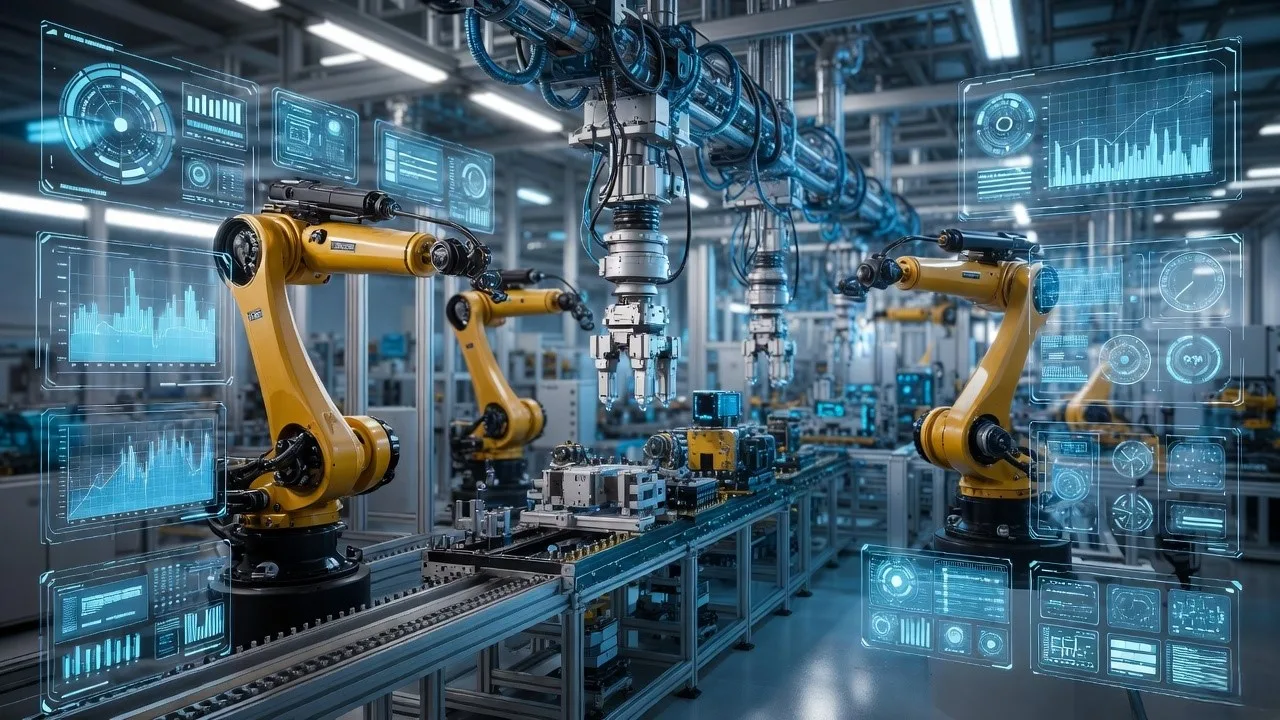
    From Wiring Diagrams to Neural Networks: Redefining Factory Automation System Integration

    The US Industrial Automation System Integrator Market is a massive, complex landscape, valued at an estimated $30 billion in 2024 and projected to grow rapidly toward $45 billion by 2035, according to recent market analysis. This immense growth is driven by a singular, urgent need: American manufacturers must automate their operations to compete globally, counter crippling labor shortages, and ensure supply chain resilience.

    However, the traditional factory automation system integrator—focused primarily on physical hardware (robotics, PLCs, conveyor belts) and hard-coded logic—is reaching its operational limit. The speed and adaptability required by modern digital manufacturing simply outpace fixed programming.

    At Nunar, we don’t just integrate systems; we infuse them with intelligence. As an AI agent development company for manufacturing, I have personally overseen the deployment of over 500 autonomous AI agents in production across various U.S. sectors, from automotive in the Midwest to advanced materials in California. My experience as a product strategist confirms that the integrator’s role has fundamentally shifted from a wiring specialist to a cognitive architect.

    This deep dive is for U.S. manufacturing executives—plant managers, CTOs, and heads of operations—who are facing the inevitable decision to upgrade. We will detail how to vet the new generation of integrators, overcome major legacy system roadblocks, secure your IT/OT convergence, and, critically, how to calculate the true ROI of an AI-enhanced automation project.

    The next-generation factory automation system integrator must move beyond hard-coded logic to deploy autonomous AI agents that ensure real-time optimization, resilience, and immediate ROI.


    The Shift from Traditional to AI-Centric System Integrators

    The fundamental difference between a traditional integrator and an AI-centric one is the core focus: physical automation versus cognitive automation.

    The Limitations of the Traditional Approach

    Traditional factory automation system integrators excel at two things: installing hardware and programming sequential logic. They install a robot (e.g., a Fanuc or KUKA arm) and program a specific sequence of actions using ladder logic (LAD) in a Programmable Logic Controller (PLC) like Rockwell Automation’s ControlLogix.

    • Fixed Logic, Fragile Performance: If a variable changes (e.g., material quality, ambient temperature, tooling wear), the hard-coded logic fails. The machine stops, or it produces scrap.
    • Reactive Maintenance: Their model relies on human inspection or scheduled maintenance. They can install sensors (IIoT), but they lack the ability to write algorithms that truly interpret the subtle, early signals of failure.
    • Time-to-Value: Custom programming for every minor change takes weeks, creating an “innovation bottleneck.”

    The Cognitive Advantage: Nunar’s AI Agents

    The AI-centric integrator, like Nunar, still manages the hardware installation, but our product engineering services are centered on deploying and training AI agents that give the hardware cognitive function.

    1. Adaptive Control: Instead of a fixed loop, our Process Optimization Agent learns the optimal machine parameters for any material batch or environmental condition, adjusting feed rates or temperatures in milliseconds.
    2. Predictive Autonomy: Our Predictive Maintenance Agent analyzes high-frequency vibration, thermal, and current data to predict when a component will fail (not just if it is failing), allowing for just-in-time, non-disruptive maintenance.
    3. Fleet Learning: The intelligence gained by one agent (e.g., how to compensate for humidity in a painting booth) is immediately and securely transferred to all other similar machines across the factory or enterprise, a core benefit we emphasize for our U.S. manufacturers.

    Interoperability and Legacy System Challenges in U.S. Factories

    The single greatest hurdle to modern automation is not technology; it’s the legacy infrastructure prevalent across older U.S. Manufacturing sites.

    Bridging the IT/OT Divide

    Most American factories operate with decades-old Operational Technology (OT) that includes proprietary protocols (like Modbus, PROFINET, or EtherNet/IP) and control systems (SCADA, DCS, standalone PLCs). This equipment was never designed to securely communicate with modern Information Technology (IT) systems like cloud databases, ERPs (e.g., SAP), or advanced analytics platforms.

    • Data Silos: Production data (what happened) remains stuck in the OT layer, while business data (what should happen) is in the IT layer. This prevents a holistic view of the operation.
    • Fragmentation: Attempting to force communication often involves complex, brittle middleware, which becomes the primary point of failure.

    Nunar’s Abstraction Layer Solution

    Our solution, which we deliver as part of our core product engineering services, focuses on building a robust data abstraction layer at the Edge. We utilize lightweight, universal message protocols like MQTT to standardize data transfer.

    • Decoupling Logic: Our AI agents run on secure, low-latency industrial edge devices (e.g., platforms from AWS IoT Greengrass or Azure IoT Edge) separate from the core PLC logic. The agent is the interpreter and optimizer, sending only the final, necessary control command back to the legacy PLC.
    • Protocol Agnostic Design: This allows us to rapidly deploy the same Generative AI Chatbots or monitoring agents onto a diverse fleet of machines—from a 1990s vintage machine tool to a brand-new collaborative robot—solving the long-standing challenge of Interoperability and Legacy System Challenges in U.S. Factories.

    Industry Example: A major food & beverage client in Texas had a mix of legacy Honeywell DCS and newer Siemens PLCs controlling their batch processes. A traditional integrator quoted six months and a complete overhaul. Nunar’s team integrated a unified Process Oversight Agent in less than four weeks by using the abstraction layer to harmonize data feeds, achieving a 15% reduction in batch-to-batch variation in the first quarter.


    Calculating the ROI of AI-Enhanced Automation Projects

    For U.S. manufacturing executives, the cost of automation is high, but the cost of not automating is often higher. When selecting a factory automation system integrator, the calculation of Return on Investment (ROI) must reflect the value of cognitive capabilities, not just physical speed. This is the new framework for Calculating the ROI of AI-Enhanced Automation Projects.

    Beyond Labor Reduction: Efficiency and Throughput

    Traditional ROI focuses on labor cost savings. The AI-centric approach focuses on maximizing asset utilization and quality assurance.

    ROI Metric (Traditional SI)ROI Metric (AI-Centric SI – Nunar)Expected Impact
    Labor Cost SavingsDowntime Avoidance Value (DAV)Avoids costs associated with up to 40% of unscheduled maintenance.
    Increased Cycle SpeedOEE Improvement (AI-Optimized)Drives up Overall Equipment Effectiveness (OEE) by reducing variability and micro-stoppages.
    CAPEX on New HardwareOPEX on Agent SubscriptionShifts cost from large upfront capital expenditure to predictable, scalable operating expense.
    Warranties/Service ContractsScrap/Rework Reduction ValueAI Vision Agents cut Defect Per Million Opportunities (DPMO) by identifying flaws human eyes miss.
    • Downtime Avoidance Value (DAV): This is the core financial driver. For a large US automotive plant, unplanned downtime can cost upwards of $50,000 per hour (source: Deloitte analysis). By avoiding just one major four-hour failure annually per critical machine, the Predictive Maintenance Agent pays for itself several times over.
    • Scrap Reduction: Our AI Quality Agent uses computer vision and deep learning to perform 100% inline inspection, not random sampling. This results in significant material and energy savings, a critical factor for energy-intensive US manufacturers in states like Ohio or Pennsylvania.

    Scalability and Payback Period

    A core part of our Product Engineering Services is to design for scale. A successful pilot project should be immediately transferable.

    • Modular Agent Architecture: Nunar designs its agents to be modular. Once a solution is proven on one machine, it can be deployed on the next 100 with minimal engineering time. This dramatically reduces the marginal cost of expansion and accelerates the enterprise-wide ROI, delivering significant financial benefits to US-based manufacturers.
    • 12-18 Month Payback Target: We aim for and typically achieve a 12-to-18-month payback period for our initial AI agent deployments, which quickly justifies the ongoing OPEX required for the solution.

    Selecting the Right Factory Automation System Integrator Checklist

    Choosing an integrator is a strategic decision that determines your factory’s competitive edge for the next decade. Do not select a partner based on who can deliver the cheapest hardware. Use this Selecting the Right Factory Automation System Integrator Checklist focused on the future of intelligent automation.

    The Six Core Assessment Criteria:

    1. OT/IT Fluency: Do they have dedicated teams that understand both PLC/SCADA programming AND Python/TensorFlow/Cloud architecture? If they outsource the AI component, they are not an AI-centric integrator.
      • Nunar Advantage: Our team of engineers and product strategists is structured to manage the full IT/OT convergence, allowing us to build reliable, high-performing Web App Development interfaces for monitoring and control.
    2. E-E-A-T and Scale: Do they have provable, deployed AI agents in production?
      • Nunar Advantage: We can demonstrate our 500+ AI agents deployed in production, which is the authority and experience you need to trust. Ask for specific case studies in your industry.
    3. Data Strategy First: Do they lead with a data architecture plan before they talk about hardware? The first step should be defining the Digital Thread—the flow of data from the sensor to the ERP.
    4. Cybersecurity Compliance: Are they familiar with NIST SP 1800-10: Cybersecurity for the Manufacturing Sector? Integration of IT and OT networks exponentially increases risk. A modern integrator must build security into the design, not just bolt it on.
    5. Agent Governance and Ownership: Who owns the IP of the AI models trained on your data? A true partner ensures the client retains ownership of the learned models, ensuring long-term control and strategic value.
    6. Change Management Plan: How will they train your existing workforce? The best technology fails if operators don’t trust it. A strong integrator will have a detailed plan to transform operator roles into high-level system supervisors.

    Securing the Smart Factory: Cybersecurity in Automation Integration

    As a strategic AI partner for manufacturers, we recognize that our agents, while providing immense value, also increase network connectivity. For US manufacturers, where IP and operational stability are national security concerns, Securing the Smart Factory: Cybersecurity in Automation Integration is non-negotiable.

    Adherence to NIST Standards

    Any integrator working in the United States must operate within the framework set by the National Institute of Standards and Technology (NIST), particularly the NIST Cybersecurity Framework and SP 1800-10.

    • Zero-Trust Architecture: Every new device added to the factory floor (IIoT sensor, Edge server, or robot controller) must be treated as hostile until verified. Our design philosophy implements micro-segmentation, isolating critical OT control systems from the broader IT network.
    • Secure Device Onboarding: The integrator must have a policy for managing the “Software Bill of Materials” (SBOM) for all integrated devices. We ensure all third-party components (e.g., controllers or network switches) are procured with verifiable security and secure update capabilities, mitigating the risk of supply chain attacks.
    • Agent Identity Management: Each of our Generative AI Chatbots and operational agents has a unique, secure identity that requires constant re-authentication. This prevents a compromised agent from gaining unauthorized access to critical PLCs.

    The Risk of Unsecured Web App Development (H3)

    When an integrator builds a custom HMI or dashboard for monitoring, they are building a web application. If this web app development is not hardened against common vulnerabilities (like SQL injection or XSS), it becomes the easiest back door into the OT network. This is why our development process includes continuous security testing, adhering to the highest standards for web app development company practices, even in an industrial setting.


    The Agentic Approach to Real-Time Process Optimization

    The key to unlocking peak efficiency lies in the Agentic Approach to Real-Time Process Optimization. This is where multiple, specialized AI agents collaborate autonomously to manage a complex manufacturing process.

    Collaboration and Collective Intelligence

    Consider a typical stamping line in an American automotive factory. Instead of one monolithic program, an Agentic AI Mesh involves:

    1. The Scheduling Agent (Planning): Communicates with the ERP/MES to understand the production goal (e.g., 500 units by 3 PM) and current inventory. It adjusts the start time and sequence of upstream machines.
    2. The Process Agent (Execution): Monitors the stamping force, material temperature, and lubrication flow. If the incoming steel is slightly harder, it communicates with the Temperature Agent and the Predictive Maintenance Agent to verify that the adjusted force won’t compromise the press or a motor bearing.
    3. The Quality Agent (Verification): Inspects the finished stamp using computer vision. If a micro-fracture is detected, it immediately sends feedback to the Process Agent to adjust its parameters for the next unit, resulting in continuous, closed-loop correction.

    This real-time, adaptive intelligence is what separates an automated factory from an autonomous factory. It allows U.S. manufacturing to handle high-mix production runs with maximum efficiency, making onshoring and customized production economically viable.


    AI Agents in System Integration: Traditional vs. Cognitive

    When evaluating factory automation system integrators, focus on their core competency. This comparison illustrates the dramatic difference in project focus and delivered value.

    Metric / ServiceTraditional System IntegratorAI-Centric System Integrator (Nunar)
    Core FocusConnecting hardware (PLCs, robots) and writing fixed logic.Infusing intelligence (AI agents) to manage hardware and optimize processes.
    Time-to-ValueSlow; requires long commissioning time for physical logic validation.Fast; AI agents can learn optimal parameters within weeks of deployment.
    Key DeliverableHMI Screens, PLC Code, As-Built Drawings.Generative AI Chatbots for diagnostics, Process Optimization Agents, Predictive Models.
    Data StrategyPoint-to-point connections; Data remains in silos (OT).Enterprise-wide abstraction layer; Data fed to Cloud/MES for deep analytics.
    Risk MitigationManual backups, physical safety guards.AI-driven safety agents (predictive crash avoidance), NIST-aligned cyber security.
    FlexibilityLow; high cost for re-programming for new products/materials.High; AI models adapt autonomously to new product specs and materials.

    People Also Ask

    How do I calculate the real ROI of an AI-enhanced automation project versus a traditional one?

    The real ROI is calculated by focusing on the value of avoided costs, primarily Downtime Avoidance Value (DAV) and Scrap/Rework Reduction, rather than just basic labor savings or marginal speed increases.

    What are the main risks associated with integrating AI agents into existing factory automation systems?

    The main risks involve data security and quality, specifically the potential for fragmented or biased training data to lead to poor decisions, as well as the amplified cybersecurity risk resulting from connecting operational technology (OT) to the IT network.

    What role does a Generative AI Chatbot play in factory automation integration?

    A Generative AI Chatbot acts as an intelligent, natural language interface for system diagnostics, allowing operators and maintenance staff to query the system for real-time fault analysis, maintenance procedures, and historical performance insights without navigating complex HMI menus.

    What security standards should a system integrator adhere to in the US for smart factories?

    A competent integrator should adhere to the standards outlined by the National Institute of Standards and Technology (NIST), specifically utilizing the NIST Cybersecurity Framework and applying controls from NIST SP 1800-10 for securing the IT/OT convergence.
  • Custom Industrial Automation

    Custom Industrial Automation

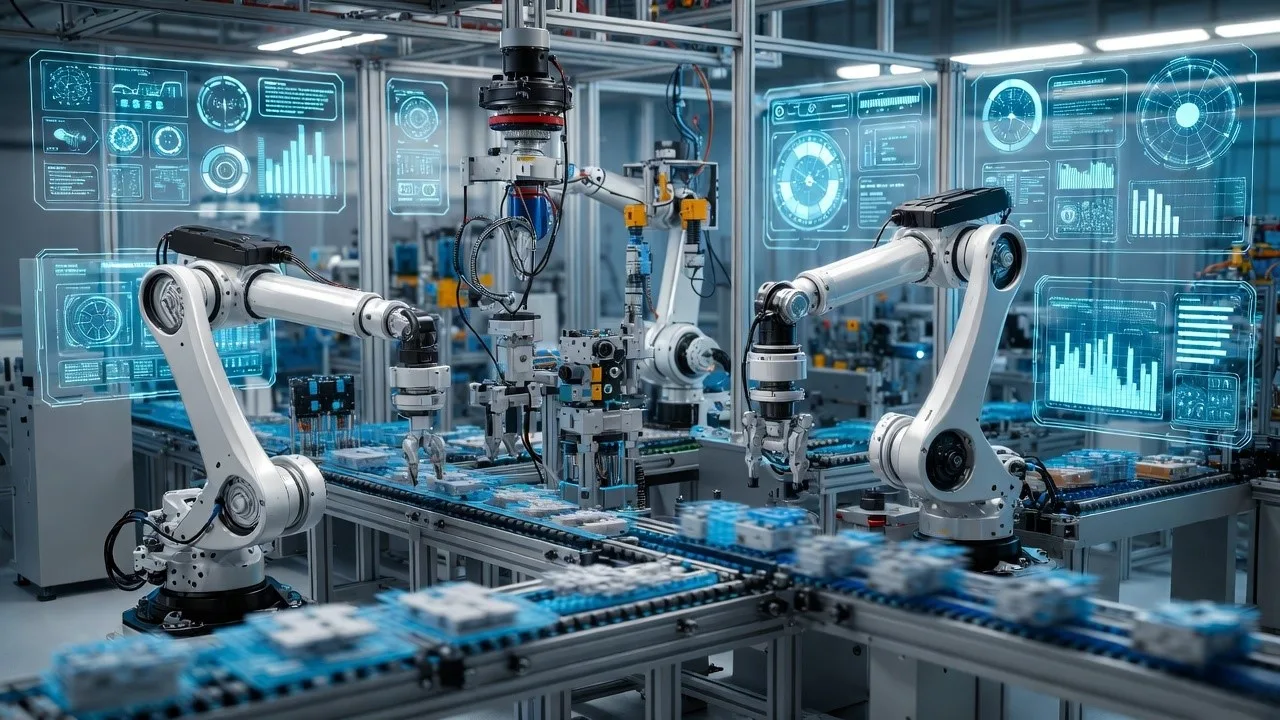
    Beyond the Hype: How AI Agents Are Redefining U.S. Custom Industrial Automation

    In a Midwest automotive plant, a single AI agent now orchestrates a symphony of robots, predicts a critical motor failure 48 hours before it happens, and automatically reroutes production—all without human intervention. A year ago, this would have been science fiction. Today, it’s a measurable competitive advantage. For U.S. manufacturers, the question is no longer if they should automate, but how to build an intelligent, adaptive operation that can compete on the global stage.

    At Nunar, we’ve deployed over 500 AI agents into live production environments. This hands-on experience has shown us that the next leap in productivity won’t come from just faster machines, but from smarter, decision-making AI that integrates seamlessly into existing workflows. This new era moves beyond rigid, traditional automation to systems that learn, adapt, and optimize in real-time. For American factories, this isn’t just an upgrade; it’s a necessary evolution to tackle skilled labor shortages, complex supply chains, and intense global competition.

    AI agents are transforming U.S. industrial automation by moving beyond simple task execution to autonomously manage complex workflows, predict maintenance needs, and optimize entire production lines for unprecedented efficiency and cost savings.

    📘 Free Guide: “How to Build Custom Industrial Automation Solutions”

    Learn the steps to design tailored automation workflows using AI, robotics, and smart factory technology.

    👉 Download the Guide

    The State of U.S. Industrial Automation: A Market Primed for AI

    The U.S. industrial automation market is in a period of explosive growth, valued at USD 49.8 billion in 2024 and projected to reach USD 103.8 billion by 2032, growing at a robust CAGR of 9.8% . This surge isn’t happening in a vacuum. It’s a direct response to pressures that U.S. manufacturers know all too well: the need for resilience, the shortage of skilled labor, and government policies like reshoring incentives that make investing in domestic, high-tech production not just attractive, but strategically essential .

    The manufacturing landscape is shifting from the traditional, rigid automation of the past to a more fluid, intelligent future. A key trend we’ve observed in hundreds of deployments is the rise of collaborative robots (cobots). Unlike their isolated predecessors, these robots are designed to work alongside human workers, taking over physically demanding or hazardous tasks while allowing their human counterparts to focus on more complex problem-solving and final assembly . This human-robot collaboration is crucial for maintaining engagement and improving overall operational efficiency.

    Furthermore, the U.S. government is actively encouraging this transformation. Through tax benefits, grants, and funding, manufacturers are being supported to bring operations back to U.S. soil and implement advanced automation technologies . The goal is clear: build a more robust, self-reliant economy by decreasing dependence on international production and creating high-tech jobs at home. For U.S. manufacturers, this support helps offset the initial investment and accelerates the push towards smarter factories.

    From Automation to Autonomy: The AI Agent Revolution

    Traditional automation has long been based on a simple principle: “if X, then Y.” Programmable Logic Controllers (PLCs) and Supervisory Control and Data Acquisition (SCADA) systems excel at executing pre-defined, repetitive tasks. They are the backbone of the factory floor, but they have a critical limitation—they cannot handle the unexpected. If a situation occurs that wasn’t explicitly programmed, the system stops, and a human must intervene.

    This is where AI agents mark a fundamental shift. An AI agent is an intelligent system that can perceive its environment, make decisions, and take actions to achieve specific goals without step-by-step human direction. Think of the difference between a conveyor belt that moves at a fixed speed (traditional automation) and an AI agent that dynamically adjusts the speed of that belt, predicts maintenance on its motor, and reroutes products to a different line if a bottleneck forms upstream. It moves from execution to management.

    The Core Capabilities of Industrial AI Agents

    In practice, these agents bring several transformative capabilities to the U.S. factory floor:

    • Predictive and Prescriptive Maintenance: Instead of following a fixed maintenance schedule or waiting for a machine to break, AI agents analyze real-time sensor data (temperature, vibration, acoustics) to predict equipment failures with startling accuracy. At Nunar, we’ve deployed agents that have helped clients reduce unplanned downtime by up to 28% . The system doesn’t just flag a problem; it can prescribe the specific maintenance needed and even automatically generate a work order.
    • Self-Optimizing Production Lines: AI agents continuously analyze production data to identify inefficiencies. They can autonomously adjust machine parameters for optimal energy consumption, reduce material waste by enhancing precision, and re-sequence operations to improve overall equipment effectiveness (OEE). This directly addresses the growing focus on sustainability and energy efficiency in U.S. manufacturing .
    • Autonomous Quality Control: Using advanced machine vision, AI agents can inspect products at a speed and accuracy impossible for the human eye. They learn to identify subtle defects that might escape traditional vision systems, ensuring consistently high quality and dramatically reducing scrap and rework costs.

    New Metrics for a New Era: Measuring AI Agent Success

    As AI agents take on more complex roles, the old key performance indicators (KPIs) like simple task completion rates are no longer sufficient. A fast agent isn’t necessarily an efficient or intelligent one. To truly gauge the ROI of your AI investment, U.S. manufacturers need to adopt a new set of metrics designed for autonomous systems .

    Table: Next-Generation Metrics for AI Agent Performance

    MetricWhat It MeasuresWhy It Matters for U.S. Manufacturers
    Agent Efficiency Index (AEI) How close the agent’s task path is to the ideal, optimal workflow.Identifies wasteful or redundant steps, ensuring your automation is truly efficient, not just fast.
    Autonomy Utilization Ratio The percentage of tasks completed fully without human intervention.Tracks progress toward “lights-out” manufacturing and quantifies the reduction in manual oversight.
    Deviation Rate How often the agent strays from its intended purpose or violates safety/process guardrails.Critical for governance, risk management, and ensuring agents operate safely and as designed.
    Context Awareness Score The agent’s ability to incorporate relevant contextual information (e.g., order priority, machine status) into its decisions.Measures the “intelligence” of the agent and its ability to make nuanced, situationally-aware choices.

    Based on our work deploying over 500 agents, we’ve found that the most successful U.S. manufacturers don’t just track these metrics in isolation. They tie them directly to business outcomes like overall equipment effectiveness (OEE), total cost of ownership, and customer satisfaction scores. For example, an improvement in the Autonomy Utilization Ratio should correlate directly with a reduction in labor costs for a specific process and an increase in throughput.

    ⚙️ Not Sure Which Automation Solution Fits Your Factory?

    Book a free session with our AI and industrial automation experts to design a custom roadmap for your operations.

    👉 Book a Free 20-Minute Strategy Call

    A Blueprint for Success: Implementing AI Agents in U.S. Manufacturing

    The journey to integrating AI agents isn’t just a technology install; it’s an organizational shift. From our extensive experience, successful implementation follows a clear, phased path.

    Step 1: Pinpoint the High-Impact, High-ROI Use Case

    Don’t try to boil the ocean. The best starting point is a well-defined process that is repetitive, data-rich, and plagued by variability or high costs. Common starting points we recommend include:

    • Predictive Maintenance: Start with your most critical and expensive assets. The ROI is often quick and dramatic .
    • Quality Control: Especially in industries like food and beverage, automotive, or electronics where visual inspection is paramount.
    • Supply Chain and Inventory Management: Agents can autonomously track inventory levels, predict demand, and even place orders with suppliers.

    Step 2: Build the Data Foundation

    AI agents are powered by data. This step involves ensuring you have the necessary sensor infrastructure on your equipment and that data from your PLCs, SCADA, and MES systems can be reliably fed into a centralized data platform. The old adage “garbage in, garbage out” has never been more true. Data quality is non-negotiable.

    Step 3: Develop and Train the Agent with Domain Expertise

    This is where the magic happens. Our development process at Nunar involves deep collaboration with your process engineers and line operators. Their tacit knowledge is invaluable for training the AI on what a “good” versus “bad” outcome looks like and for establishing the operational guardrails within which the agent must operate. This collaborative approach is the best defense against the “black box” problem and ensures the agent’s actions are explainable and trusted by your team.

    Step 4: Deploy with a Human-in-the-Loop

    Even the most advanced AI agent needs oversight at first. We advocate for a human-in-the-loop model, especially in the early stages . The agent acts, but its decisions are monitored and can be overridden by a human expert. This builds trust, provides a crucial safety net, and generates the real-world data needed to further refine the agent’s models.

    Step 5: Scale and Evolve

    Once the agent has proven its value in one area, the blueprint can be replicated. The platform you’ve built can be used to scale AI agent deployment across other lines, shifts, and even entire facilities.

    Real-World Impact: AI Agent Case Studies in U.S. Manufacturing

    The theory is compelling, but the proof is in the production data. Here are two anonymized examples from our portfolio that illustrate the tangible impact of AI agents.

    Case Study 1: From Reactive to Predictive in Automotive Parts

    A major Tier 1 automotive supplier was facing costly unplanned downtime on their high-speed stamping presses. A failure could halt multiple customer assembly lines, resulting in six-figure penalties.

    • Solution: We deployed an AI agent integrated with vibration, thermal, and power quality sensors on their most critical press. The agent was trained on historical failure data and continuously learned the unique “fingerprint” of healthy versus failing operation.
    • Outcome: The agent successfully predicted a critical bearing failure 52 hours before it would have caused a catastrophic breakdown. The maintenance team was scheduled, the part was replaced during a planned break, and zero production was lost. This single event saved an estimated $250,000 in downtime and emergency repair costs.

    Case Study 2: Optimizing for Sustainability in Food & Beverage

    A large food processing plant was under pressure to reduce its energy consumption and environmental footprint. Their energy usage was highly variable and poorly understood.

    • Solution: An AI agent was deployed to monitor and control their complex refrigeration and steam systems. The agent didn’t just run equipment at fixed setpoints; it learned the thermal dynamics of the entire plant and dynamically adjusted equipment settings based on real-time production schedules and ambient weather conditions.
    • Outcome: The system achieved a 15% reduction in energy consumption for the controlled systems, translating to over $1 million in annual savings. Furthermore, it significantly reduced the plant’s carbon emissions, providing a powerful story for both corporate sustainability reports and cost-conscious leadership.

    Navigating the Hurdles: Challenges and Considerations

    The path to AI-driven autonomy is not without its obstacles. Being aware of these challenges is the first step to overcoming them.

    • The Integration Hurdle: Many U.S. factories are a patchwork of legacy equipment and modern systems. Integrating new AI agents with decades-old PLCs and proprietary protocols can be a technical challenge. This is where working with a partner with deep industrial integration experience is critical.
    • The Data Quality Imperative: An AI agent is only as good as the data it receives. Inconsistent, incomplete, or “dirty” data from factory floor sensors is a common roadblock. A rigorous data governance and cleansing process is a prerequisite for success.
    • The Human Factor and Change Management: Employees may fear that AI agents will make their jobs obsolete. Proactive change management is essential. At Nunar, we’ve found that positioning AI agents as tools that augment human workers—freeing them from mundane tasks for higher-value problem-solving—is the key to gaining buy-in. Upskilling your workforce is not a side effect; it is a core requirement .
    • Trust and Explainability: For operators to trust an AI agent’s decision, they need to understand the “why.” Developing agents that can provide clear, explainable reasoning for their actions is a key focus of our development process and is crucial for widespread adoption.

    The Future of U.S. Manufacturing is Agentic

    Looking forward, the convergence of AI agents with other technologies will unlock even greater potential. We see the rise of “agents of agents,” where a master AI agent orchestrates the work of multiple specialized sub-agents across the entire supply chain. The integration of 5G technology will provide the ultra-low latency and reliability needed for massive, wireless sensor networks and real-time agent control . Furthermore, the principles of Green AI will ensure that these powerful systems are themselves optimized for minimal energy consumption .

    The transformation of U.S. manufacturing is underway. The leaders of this new era won’t be the companies with the most machines, but the ones with the most intelligent and adaptive operations. By strategically deploying AI agents, you can build a factory that is not only more efficient and profitable but also more resilient and competitive on the global stage.


    People Also Ask

    What is the difference between traditional industrial automation and AI-powered automation?

    Traditional automation relies on pre-programmed, rigid rules to execute repetitive tasks, while AI-powered automation uses intelligent agents that can perceive their environment, learn from data, and make autonomous decisions to optimize complex workflows and adapt to changing conditions

    How long does it take to see ROI from an AI agent implementation?

    While timelines vary by project complexity, many of our U.S. manufacturing clients see a clear return on investment within 6 to 12 months post-deployment, driven by reductions in unplanned downtime, lower labor costs, and improved product quality and throughput.

    Can AI agents work safely alongside human employees?

    Yes, absolutely. Modern AI agents are designed with robust safety protocols and human-in-the-loop oversight models. They excel at handling dangerous, repetitive, or ergonomically challenging tasks, which in turn creates a safer work environment and allows human workers to focus on more cognitive and strategic activities .

    What is the first step to implementing AI agents in my factory?

    The most successful first step is to conduct a process audit to identify a specific, high-impact pain point—such as unexpected machine failures or quality inconsistencies. This focused approach allows for a manageable project scope and a clear, demonstrable proof of concept.

  • Logistics Asset Management

    Logistics Asset Management

    logistics asset management

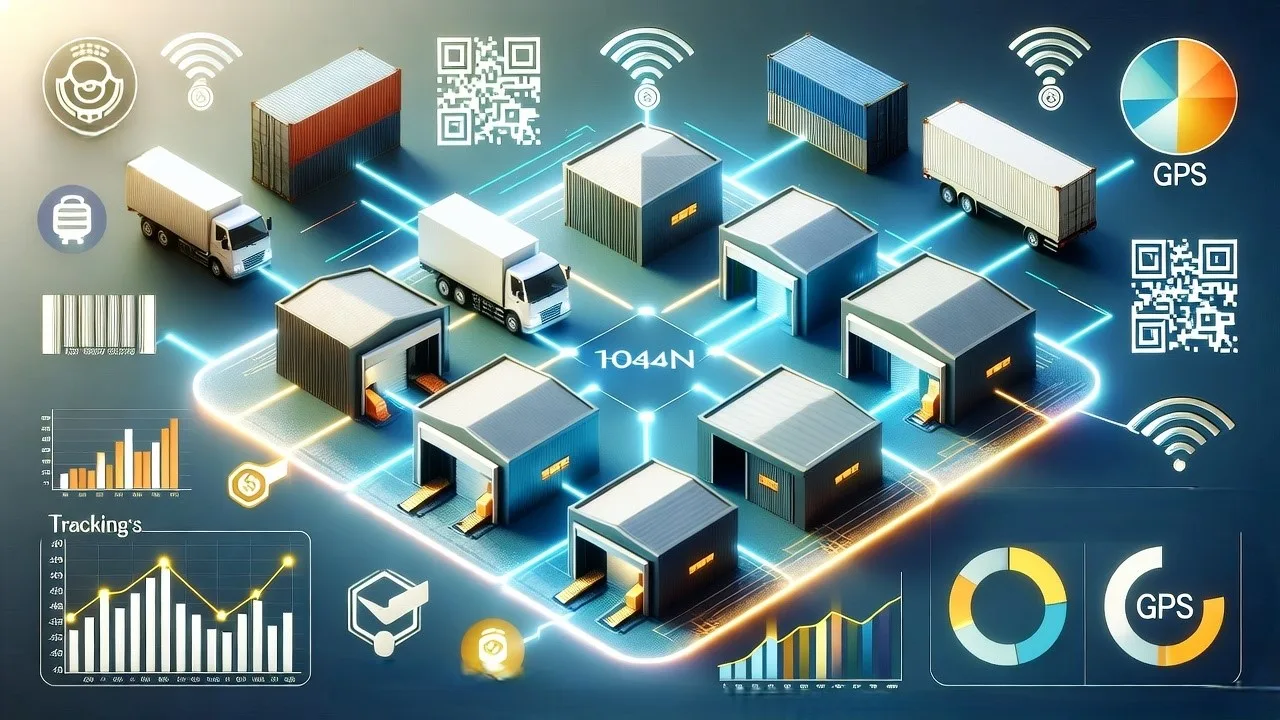
    The traditional approach to managing trucks, warehouses, and shipping containers, reactive, manual, and siloed, is collapsing under the weight of modern supply chain complexity. The global AI agents market, valued at USD 5.43 billion in 2024, is exploding at a CAGR of 45.82% and is projected to reach a staggering USD 236.03 billion by 2034 . This growth is fueled by a fundamental shift: enterprises are no longer just collecting data; they are deploying intelligent agents to act on it autonomously.

    In 2025, the question is not if you should adopt AI, but how fast you can scale. AI-powered supply chains have demonstrated logistics cost reductions of 15%, inventory level reductions of 35%, and service level improvements of 65% . For asset management, this translates from simply knowing where an asset is, to predicting its maintenance needs, optimizing its utilization in real-time, and automatically extending its operational life.

    The U.S. market is at the forefront of this change. In 2023, North America held a dominant 37.92% share of the global AI agents market . This leadership is driven by major tech innovation, significant R&D investment, and a rapid push for automation across industries like retail, healthcare, and logistics .

    Core AI Agent Capabilities for Modern Asset Management

    1. Predictive Maintenance

    Unexpected equipment failure is a massive cost center. AI agents transform this reactive model.

    • How it Works: Agents continuously analyze real-time sensor data from fleet engines, warehouse robotics, and refrigeration units. They learn normal baselines and detect subtle anomalies in vibration, heat, or energy consumption that precede failures .
    • Real-World Impact: Major players like Maersk have decreased vessel downtime by 30% through predictive maintenance, saving over $300 million annually . In automotive logistics, where downtime can cost $2.3 million per hour, AI agents can predict issues with 85% accuracy up to 3 weeks in advance .

    2. Dynamic Utilization & Routing

    Static routing and fixed asset schedules waste capacity and fuel. AI agents provide dynamic optimization.

    • How it Works: These agents process live traffic, weather, fuel costs, and real-time asset location. They run thousands of simulations to identify the most efficient routes and assignments, automatically rerouting trucks or repositioning containers as conditions change .
    • Real-World Impact: UPS’s ORION AI system calculates optimal delivery paths, processing 30,000 route optimizations per minute and saving 38 million liters of fuel annually . This capability can raise profit margins by up to 10% through dynamic pricing and load optimization .

    3. Automated Inventory & Warehouse Management

    AI agents turn warehouses from cost centers into strategic advantages.

    • How it Works: Agents use computer vision and data from IoT sensors to track inventory levels and warehouse equipment health autonomously. They can trigger restocking orders, optimize storage layouts for faster picking, and guide AI-powered robots to handle oversized packages .
    • Real-World Impact: One leading retailer used an AI-driven system to reduce inventory holding costs by 22% and improve order-to-shelf cycle times by 18% . Walmart’s AI inventory management across 4,700 stores has reduced inventory costs by $1.5 billion annually.

    Table: Measurable Business Impact of AI Agents in Logistics Asset Management

    AI Agent CapabilityKey Performance IndicatorTypical Improvement Range
    Predictive MaintenanceAsset Downtime20-30% Reduction 
    Dynamic RoutingFuel Consumption & Costs10-15% Reduction 
    Inventory ManagementInventory Levels20-35% Reduction 
    Warehouse AutomationOperational ProductivityUp to 60% Increase 

    The Technical Architecture of an AI Agent System

    Deploying a successful AI agent requires more than just a model; it requires a resilient, integrated architecture.

    Based on our work at Nunar, here is the core framework.

    1. Data Ingestion Layer: The foundation. AI agents require high-quality, real-time data from across your operations. This includes IoT sensor data from vehicles and equipment, telematics, GPS locations, ERP data (like SAP or Oracle), and Warehouse Management System (WMS) feeds. Without clean, unified data, even the most advanced agent will fail .
    2. AI Model & Processing Layer: This is where intelligence resides. Machine learning models analyze the ingested data to detect patterns, forecast demand, and predict failures. In advanced systems, this includes generative AI that can simulate countless “what-if” scenarios for disruption planning or create optimal warehouse layouts a human planner couldn’t conceive .
    3. Action & Automation Layer: This is where decisions are executed. The agent translates insights into actions through APIs and integrations, automatically rerouting a shipment, scheduling a maintenance work order in your system, or adjusting a robotic picker’s path .
    4. Feedback Loop: A critical, often overlooked component. The outcomes of the agent’s actions are fed back into the system, allowing the models to continuously learn and improve their accuracy over time, creating a self-evolving system .

    A Real-World Case Study: Port Operations Transformed

    In a recent project for a major U.S. port operator, Nunar deployed an AI agent to manage a fleet of container-handling gantry cranes. The challenge was unplanned downtime, which created costly bottlenecks.

    Our agent was integrated with the vibration and hydraulic pressure sensors on each crane. Within weeks, the model began identifying subtle patterns that signaled impending component failure. The system didn’t just alert managers; it automatically generated and prioritized work orders in their maintenance system, factoring in parts inventory and operational schedules to minimize disruption.

    The result was a 25% reduction in unplanned downtime and a 15% extension in the mean time between failures for critical components. This was not a one-off simulation but a live, production AI agent delivering seven-figure annual savings.

    Implementing AI Agents: A Phased Roadmap for U.S. Enterprises

    A successful 2025 implementation requires a strategic, phased approach to avoid common pitfalls.

    • Phase 1: Assessment & Pilot (0-6 Months)
      • Assess Data Readiness: Audit your data sources for quality, availability, and integration potential. This is the most critical step .
      • Identify a High-Impact Use Case: Start with a focused pilot, such as predictive maintenance for your truck fleet or AI-driven inventory optimization for a single warehouse . The goal is a quick, measurable win that builds internal credibility.
      • Select Your Approach: Choose between build-your-own agents for maximum customization or ready-to-deploy agents for speed, which held over 69% of the market share in 2023 .
    • Phase 2: Expansion & Integration (6-18 Months)
      • Scale Successful Pilots: Expand the proven AI agent to other assets, routes, or facilities.
      • Deepen System Integration: Connect your AI agents more deeply with core enterprise systems like ERP, TMS, and WMS to break down data silos and unlock cross-functional optimization .
      • Upskill Your Team: Invest in training for your logistics and IT teams to work alongside AI agents, fostering a culture of collaboration rather than resistance .
    • Phase 3: Autonomous Operations (18+ Months)
      • Develop a Multi-Agent Ecosystem: Deploy multiple specialized agents that can communicate and collaborate, for example, an agent managing warehouse inventory directly coordinating with an agent optimizing outbound transportation.
      • Strive for Increasing Autonomy: Move from AI agents making recommendations to granting them greater authority to execute predefined actions autonomously within safe boundaries.

    Conclusion

    For U.S. logistics leaders, the transformation driven by AI agents is both inevitable and already underway. This is not a distant future concept; the technology is mature, the market data is clear, and the competitive pressure is real. The question is no longer about if you should build an AI-powered asset management strategy, but how quickly you can execute it.

    The journey begins with a single step: identifying one high-value asset or process where predictive intelligence can deliver a fast, measurable return. The goal is to start with a pilot, demonstrate value, and scale systematically.

    At Nunar, we’ve built and refined over 500 AI agents to tackle these exact challenges. Our experience is your advantage. Contact our team today for a personalized assessment of your highest-value AI agent opportunity. Let us help you turn your logistics assets from cost centers into your newest competitive advantage.

    People Also Ask

    What is the difference between a digital twin and an AI logistics twin?

    digital twin is a static virtual model that mirrors a physical asset for monitoring and simulation. An AI logistics twin is a dynamic, decision-making system that uses machine learning to predict future outcomes and autonomously adapt operations in real-time

    How much can a U.S. company save with AI in logistics?

    Implementations consistently show logistics cost reductions of 10-15%, with some companies achieving up to 30% . Inventory costs can also drop by 20-35% while simultaneously improving service levels 

    What are the biggest challenges when implementing AI agents?

    The primary hurdles are data quality and system integration with legacy platforms . Additionally, 44% of companies report a talent gap in finding skilled AI professionals, and cybersecurity for connected assets remains a top concern .

    Is cloud or on-premises deployment better for AI logistics agents?

    In 2025, cloud deployment held a 67% market share and is often preferred for its scalability, flexibility, and easier integration with real-time data streams, making it suitable for most U.S. enterprises 

  • Logistics in Oil and Gas Industry​

    Logistics in Oil and Gas Industry​

    logistics in oil and gas industry​

    A major North American refinery was losing an estimated $10 million annually through “octane giveaway”, a subtle but devastating logistical and refining inefficiency. This issue, hidden within massive, complex datasets, remained unresolved until an AI agent analyzed the operation and pinpointed the exact corrective actions. The result was a staggering $10 million in annual savings from a single optimization . This is the power of AI in oil and gas logistics today, not a future promise, but a present-day reality delivering quantifiable returns.

    At Nunar, with over 500 AI agents successfully deployed in production environments across the United States, we have witnessed a fundamental shift. The industry is moving from reactive, siloed logistics management to a future of intelligent, self-optimizing supply chains. These systems are finally capable of handling the immense data tidal wave, up to 2 terabytes daily from operations, that has long overwhelmed human analysts.

    AI agents are specialized, autonomous systems that optimize oil and gas logistics by predicting disruptions, automating scheduling, and managing inventory, leading to double-digit percentage reductions in operational costs .

    Why Traditional Logistics Systems Are Failing the Oil and Gas Industry

    The oil and gas supply chain is arguably one of the most complex in the world. It involves moving equipment, materials, and products across vast, often remote geographies, and is subject to volatile market forces, stringent environmental regulations, and extreme operating conditions. Traditional planning and execution systems, which often rely on historical data and manual intervention, are no longer sufficient. They create three critical pain points:

    • Reactive, Not Proactive: Most systems flag issues only after they have occurred—a pipeline pressure drop, a vessel delay, or equipment failure. This leads to frantic fire-fighting, costly downtime, and supply disruptions. Research indicates that unplanned downtime and maintenance can cost the global industry $20 billion annually in inefficiencies .
    • Data-Rich but Insight-Poor: As noted by ABI Research, oil and gas operations generate terabytes of data daily from sensors, SCADA systems, and operational reports . Without advanced analytics, this data remains siloed and underutilized, leaving “numerous opportunities in the shadows” .
    • Inflexible and Fragmented: Disconnected systems for inventory management, transportation scheduling, and demand forecasting create a fragmented view. When a storm disrupts shipping lanes or a refinery upset changes product yields, the entire logistics network cannot adapt quickly enough, leading to bottlenecks and wasted resources.

    How AI Agents Work: The Engine of Intelligent Logistics

    An AI agent in logistics is not merely a dashboard or an alert system. It is an autonomous decision-making engine. At Nunar, our agents are built on a closed-loop architecture that mirrors the human decision-making process but at a scale, speed, and accuracy that is superhuman.

    The process can be broken down into four continuous stages:

    1. Data Fusion and Perception: The agent ingests and unifies real-time data from a myriad of sources. This includes live sensor data from pipelines and equipment, GPS and IoT tracking from trucks and vessels, inventory levels from storage tanks, weather feeds, and market demand forecasts. It creates a single, coherent view of the entire supply chain.
    2. Analysis and Prediction: Using machine learning (ML) and predictive analytics, the agent processes this unified data to identify patterns and predict future states. It can forecast equipment failures with an average advance notice of nine days, predict transit delays due to weather, or model the impact of a price fluctuation on regional demand .
    3. Optimization and Decision-Making: This is the core of the agent’s intelligence. Based on its predictions, it runs thousands of simulations to determine the optimal course of action. Should it reroute a shipment, adjust production rates, or pull safety stock from a different terminal? It weighs all constraints (cost, time, regulations) to make the best decision.
    4. Execution and Autonomous Action: The final stage is where the agent moves from recommendation to action. It can autonomously execute tasks within defined parameters, such as rescheduling a maintenance crew via a connected work order system, adjusting valve settings through an integrated control system, or sending new routing instructions directly to a truck’s telematics unit.

    Key Use Cases: AI Agents in Action Across the Supply Chain

    The following table summarizes the primary applications of AI agents across the oil and gas logistics value chain.

    Supply Chain SegmentAI Agent ApplicationReal-World Impact
    Upstream LogisticsForecasting drilling site material demand; optimizing transport of water, sand, and chemicals; coordinating crew and equipment schedules.Reduces “waiting on cement” and other downtime; cuts inventory carrying costs by 20-30%.
    Midstream LogisticsPredictive maintenance for pipelines; real-time routing for crude oil trucks; optimizing batch schedules and storage tank management.Slashes unplanned downtime; identifies potential failures days in advance ; improves asset utilization.
    Downstream LogisticsDemand forecasting for refined products; optimizing distribution routes and load planning; managing refinery feedstock schedules.Eliminates costly “octane giveaway,” saving $10M/year ; reduces fuel costs and improves on-time delivery.
    Cross-FunctionalSupply chain risk management; automated reporting and compliance; dynamic procurement and supplier selection.Proactively identifies and mitigates disruptions from geopolitics or weather; automates back-office tasks .

    Drilling Site Logistics and Inventory Management

    In upstream operations, the timely delivery of materials like propellant, drilling mud, and casing is critical. Any delay can halt a multi-million dollar drilling operation. An AI agent transforms this process.

    • Predictive Demand: By analyzing the drilling plan, real-time drilling speed (ROP), and geological data, the agent can predict material consumption and automatically trigger orders and deliveries just-in-time, eliminating both shortages and expensive on-site inventory buildup.
    • Crew and Equipment Coordination: As highlighted by providers like Glide, AI scheduling agents can automatically coordinate the complex movements of personnel and specialized equipment, “freeing up time for critical decision-making and enhancing team efficiency” .

    Predictive Maintenance for Pipeline and Infrastructure

    Midstream logistics rely on the uninterrupted flow of product through pipelines and terminals. A single failure can have catastrophic environmental and financial consequences.

    • From Scheduled to Predictive: AI agents move beyond rigid time-based maintenance schedules. As reported by ABI Research, companies like Canvass AI and PTC use agents to monitor asset health, schedule maintenance, and reduce unexpected failures .
    • Anomaly Detection: These systems analyze real-time sensor data (pressure, flow rate, temperature, acoustic signals) to identify subtle anomalies that precede a failure. One deployment in the offshore sector was able to predict 75% of historical failures with an average of nine days of forewarning .

    Distribution and Transportation Optimization

    The final leg of the journey, getting refined products to gas stations, airports, and industrial customers is a massive optimization puzzle.

    • Dynamic Route Optimization: AI agents don’t just find the shortest path; they find the most efficient one based on real-time traffic, weather, road closures, and customer time windows. They can also optimize load sequencing for multi-stop tanker trucks.
    • Demand-Driven Dispatch: By integrating with downstream demand forecasting models, agents ensure the right product is in the right place at the right time. This prevents regional shortages and the need for costly emergency transfers, directly impacting profitability and customer satisfaction.

    The Tangible Business Value: Beyond Hype to Hard Numbers

    Investing in AI-driven logistics is not an IT expense; it is a strategic capital allocation with a clear and compelling return on investment.

    The benefits we consistently measure for our clients at Nunar fall into three categories:

    1. Double-Digit Cost Reduction: Our deployments, in line with industry leaders like UPSTRIMA, typically lead to a 30-40% reduction in operational costs for the targeted logistics process . This comes from lower fuel consumption, reduced inventory levels, minimized equipment downtime, and more efficient labor utilization.
    2. Enhanced Operational Reliability: By predicting and preventing disruptions, AI agents dramatically increase asset uptime and supply chain resilience. A case study from SparkCognition showed that their AI solutions increased the ability to identify production-impacting events by up to 90% .
    3. Improved Safety and Compliance: AI agents create a safer work environment by automating hazardous site inspections using drones and robots  and by predicting potential safety incidents before they occur. Furthermore, they automatically ensure compliance by generating necessary reports and maintaining a digital audit trail for regulatory bodies.

    Implementing AI Agents: A Strategic Blueprint for U.S. Companies

    Based on our experience deploying over 500 agents, success hinges on a methodical approach.

    1. Start with a High-Impact, Contained Problem: Don’t attempt a company-wide overhaul on day one. Select a critical but well-defined pain point, such as “optimizing sand trucking logistics for our Permian Basin operations” or “predicting pump failures at our main pipeline station.” A focused pilot delivers quick wins and builds organizational buy-in.
    2. Audit Your Data Readiness: The fuel for any AI agent is data. Work with your partner to conduct a thorough audit of relevant data sources—equipment sensors, ERP systems, transportation management systems. Assess its availability, quality, and accessibility.
    3. Choose the Right Partner, Not Just the Right Tool: The shortage of a skilled workforce for AI deployment is a key market challenge . You need a partner who brings not only technical expertise in AI but also a deep understanding of oil and gas logistics. Look for a provider with proven experience in your sector.
    4. Plan for Integration and Change Management: The most advanced AI agent is useless if it cannot integrate with your existing control systems, data historians, and business software. Furthermore, prepare your team. As one report notes, “workforce adaptation is crucial… The shift toward AI necessitates not only skill development but a cultural change” . Involve your operators and planners in the design process.

    The Future is Autonomous

    The trajectory is clear: the oil and gas logistics chain is evolving from manual and fragmented to automated and integrated, and will ultimately become a fully autonomous, self-healing network. The technologies enabling this, AI, IoT, and digital twins, are mature and proven. The market is poised for explosive growth, with the AI in oil and gas sector projected to grow at a CAGR of 18.53% to reach nearly $17 billion by 2030 .

    The question for leadership is no longer if to adopt AI, but how fast it can be done. The early adopters are already reaping the rewards of lower costs, safer operations, and a formidable competitive advantage. The window to catch up is closing rapidly.

    People Also Ask

    How much can a company realistically save by implementing AI in oil and gas logistics?

    Realistic savings from AI implementation are significant; industry providers report reductions in operational costs of 30-40% for targeted processes, which can translate to tens of millions of dollars annually for large operators by eliminating inefficiencies and unplanned downtime

    What is the biggest challenge when integrating AI with legacy systems in this industry?

    The most significant challenge is data quality and integration with older systems . Much of the critical operational data is often siloed in legacy systems that were not designed to communicate, making it difficult to create the unified data view required for AI to function effectively.

    Can small and mid-sized oil companies in the U.S. afford AI solutions?

    Yes, absolutely. The model for adoption has changed. Smaller companies can now access this technology through partnerships with AI solution providers and cloud-based AI platforms , allowing them to start with smaller, more affordable projects focused on a single high-return logistics problem without massive upfront investment.

    Will AI agents replace human logistics planners and operators?

    No, the goal is augmentation, not replacement. AI agents handle the heavy lifting of data analysis and routine optimization, which enables workers to focus on more complex and strategic tasks like managing exceptions, negotiating contracts, and developing long-term strategy . The future workforce will collaborate with AI agents.

  • Logistical Data Services​

    Logistical Data Services​

    logistical data services

    When one U.S. national freight forwarder cut dwell time at ports by 17% using predictive analytics in 2025, the role of logistical data services moved from nice-to-have to mission-critical. As the founder of Nunar, an AI-agent development firm that has built and deployed over 500 agents in production across logistics, manufacturing and service sectors , I’ve seen firsthand how data becomes the differentiator in U.S. supply-chain operations.

    Turn Your Logistics Data into a Competitive Advantage

    Most supply chains collect data; only a few know how to use it. Discover how our AI-powered agents uncover cost-saving insights hidden in your operations.

    Talk to a Data Solutions Expert

    What are Logistical Data Services in the United States?

    Understanding the term “logistical data services”

    In U.S. supply-chain parlance, logistical data services refers to the practice of collecting, processing, analyzing and making actionable the information generated by logistics operations (transportation, warehousing, inventory, order flows). According to one specialist, logistics data spans transportation, inventory, delivery, customer and supplier data and firms that “create a single source of truth” enjoy faster decision-making and visibility.

    Another provider describes logistics data management as “collecting, storing, processing, analyzing and transferring information” across delivery networks.

    Thus for U.S. firms: logistical data services = data-driven support around movement, storage and flow of goods + information.Key sub-services under logistical data services

    In practice, U.S. logistics companies seeking data-services support look for combinations of:

    • Real-time transportation tracking (telematics, GPS, ELD data)
    • Warehouse/inventory visibility (WMS, RFID, IoT sensors)
    • Freight-claims & damage-reporting data streams (important in rail/truck/port environments)
    • Analytics/forecasting (predicting dwell, forecasting demand, optimizing route)
    • Reporting & compliance dashboards (for U.S. regulation, sustainability, cost-control)

    See What Smarter Logistics Looks Like

    Get a walkthrough of how intelligent data automation improves forecasting accuracy, reduces manual errors, and accelerates delivery times.

    Request a Live Demo

    Why it matters for U.S. enterprises?

    • U.S. firms operate under high cost pressures (fuel, labour, dwell at ports): better data = faster decisions
    • E-commerce growth means shorter lead-times and higher delivery expectations: “data management is no longer optional” in logistics.
    • The globalized U.S. supply chain means multiple modes (air, rail, truck, ocean) and high complexity, data services create integration and coherence.
    • Vendor fragmentation: data often sits in silos; logistical data services aim to unify that.

    Choosing the right tools for logistical data management in the U.S.

    When U.S. shippers search for “logistical data management tools”, they look for platforms that can ingest, cleanse, integrate and visualise data across multiple systems.

    Key evaluation criteria

    • Integration capability — can the tool pull data from TMS, WMS, CRM, IoT devices, ELDs?
    • Real-time data ingestion — latency matters for shipment visibility in the U.S. domestic networks.
    • Analytics and AI readiness — does it support predictive models (dwell risk, route optimisation, inventory shortage)?
    • User interface and dashboards — U.S. operations teams expect intuitive reporting and actionable alerts rather than raw exports.
    • Scalability & geography coverage — U.S. network may cover coast-to-coast, cross-border (Mexico/Canada), multiple modes.

    Example architecture (from Nunar’s deployment experience)

    Our team at Nunar deploys an architecture with these layers for U.S. logistical-data customers:

    1. Data ingestion layer: APIs from TMS/WMS, IoT sensors, external freight-market feeds.
    2. Data lake & cleansing module: standardizes formats, removes duplicates, handles missing data.
    3. AI agent layer: agents monitor defined triggers (e.g., container delay >96 h at port), raise alerts or recommend actions.
    4. Decision interface: operations dashboard for the logistics manager, with agent-suggested actions (reroute, expedite, claim).
    5. Feedback loop: agent learns based on outcomes to refine recommendations.

    This approach has helped U.S. customers reduce dwell time, improve on-time delivery and lower freight cost per unit.

    Ready to Optimize Every Mile and Minute?

    We build AI agents that connect your logistics, analytics, and operations into one intelligent workflow—without disrupting your current systems.

    Schedule a Strategy Call

    How to choose a logistics data services vendor in the U.S.”

    Vendor-selection checklist

    For U.S. companies seeking a partner for logistical data services, the following checklist applies:

    ItemWhy it matters
    Industry experienceLogistics networks in the U.S. span modes, regulations, geographies, vendor must know this.
    AI/agent capabilityData collection is table stakes; the differentiator is what the vendor does with it.
    Integration ecosystemThe vendor must connect with your existing TMS/WMS/IoT platforms.
    Data governance and securityU.S. companies must comply with data-privacy, cybersecurity, supply-chain risk regulations.
    Scalable architectureAs your fleet, volumes or geographic span grows, the platform should scale without performance drop.
    Clear outcomes and ROI focusYou should understand what gains to expect (cost, time, visibility) not just fancy tech.

    Why Nunar is the best U.S. partner for logistical data services?

    • We’ve built 500+ AI agents in production across logistics and related domains – among the largest portfolios in the U.S. vertical.
    • Our agents operate in U.S. multi modal logistics networks (truck, rail, port) so we bring domain-specific insights, not generic “AI for logistics” marketing.
    • We focus on outcome-driven deployment: our standard go-live includes defined KPIs (dwell time, cost per shipment, claim ratio) and measurement of savings.
    • We partner with major U.S. TMS/WMS/IoT platforms to ensure integration is smooth and data flows are reliable.
    • We support full stack: ingestion → processing → agent → dashboard → feedback. Many vendors stop at dashboards.

    Typical deployment roadmap

    1. Discovery workshop – define use-cases, map data sources, set KPIs.
    2. Pilot agent build – small asset set, minimal scope, fast value-delivery (3–6 months).
    3. Scale-up – expand to full network, more assets, deeper agents (multi-trigger, multi-mode).
    4. Continuous optimization – agents learn, thresholds refine, new use-cases add.

    The value you get

    • Faster decision-making across your logistics network.
    • Reduced idle time, fewer freight-claims, lower cost per shipment.
    • Better visibility and control over multi modal flows.
    • Competitive advantage in U.S. markets where logistics cost is a major differentiator.

    Conclusion

    To summarize: in the U.S. logistics domain, “logistical data services” means more than dashboards, it means integrated data, real time flows, actionable insights. When paired with AI agents, these services have the power to shift operations from reactive to proactive. From my time leading Nunar’s deployment of over 500 agents, I have seen how choosing the right partner and process can deliver tangible value. If your organization is navigating multi modal flows, asset intensity, cost pressure and real-time demands in the U.S., you want a vendor that understands both logistics and AI agents. That partner is Nunar.

    Ready to bring agent-powered logistics to your U.S. supply chain? Contact us at Nunar for a discovery session and roadmap.

  • IT Support for Logistics

    IT Support for Logistics

    it support for logistics

    The constant ping of exception alerts fills your logistics command center. A truck is delayed at a congested port, a warehouse reports a staffing shortage, and a key customer is inquiring about an overdue shipment. Your team scrambles to react, but the problems are piling up faster than solutions. This “firefighting” mode is the reality for many US logistics leaders, where legacy IT systems and manual processes create fragile supply chains.

    Traditional IT support in logistics is no longer enough. It’s reactive, slow, and struggles with the complexity of modern supply chains. The industry is undergoing a fundamental shift, from relying on fragmented software tools to adopting a strategic AI mindset. At Nunar, having developed and deployed over 500 AI agents into production, we’ve seen this transformation firsthand. AI agents are transforming US logistics IT from a reactive cost center into a proactive, strategic asset by automating complex decision-making and operations. For US companies, this isn’t just about efficiency; it’s about building a supply chain that is resilient, competitive, and capable of meeting the demands of the modern economy.

    The Limitations of Traditional IT Support in Logistics

    The US logistics market is massive, valued at $455.4 billion in 2024 and projected to reach $795.7 billion by 2033. Yet, many companies operating within this growing market are held back by outdated support models.

    • Reactive, Not Proactive: Traditional systems flag issues only after they’ve occurred—a missed delivery, a stockout, a port delay. By then, the damage is done, and the response is costly and disruptive.
    • The Data Silo Problem: Critical information is often trapped in disconnected systems—Transportation Management (TMS), Warehouse Management (WMS), Enterprise Resource Planning (ERP). Without a single source of truth, achieving real-time visibility is impossible. As highlighted by industry analysis, without structured, high-integrity data, even advanced algorithms fail, leading to a “garbage in, garbage out” cycle .
    • Inability to Scale: The explosive growth of e-commerce, coupled with chronic issues like a shortage of 80,000 truck drivers, strains existing IT infrastructure and human teams . Manual processes simply cannot scale to meet these demands.

    The consequence is a supply chain that is efficient only in theory. In practice, it’s vulnerable to daily pressures, leading to rising transportation costs, inventory mismatches, and strategic strain where managers are constantly firefighting instead of planning .

    What Are AI Agents? Beyond Basic Automation

    To understand the shift, you must first understand what an AI agent is. It’s more than a simple chatbot or an automation script.

    • Basic Automation: Follows pre-defined, static rules (e.g., “If inventory level < X, send an email”).
    • AI Agent: An autonomous application that observes its environment, plans a sequence of actions using available tools, and acts independently to achieve a complex goal

    Think of it as the difference between a GPS that gives you a static route and a seasoned logistics dispatcher who can dynamically reroute your entire fleet in real-time based on live traffic, weather, and driver availability.

    According to McKinsey’s 2025 outlook, agentic AI is among the fastest-growing tech trends, rapidly moving from labs into real-world operations as a “virtual coworker” that can autonomously manage multi-step workflows . For US logistics, this is a game-changer.

    How AI Agents Are Revolutionizing US Logistics IT

    AI agents are moving from experimental pilots to core operational systems within US supply chains. The investment and adoption are accelerating because the results are tangible.

    1. Proactive and Predictive Support

    AI agents analyze historical and real-time data to anticipate and prevent problems before they impact your operations.

    • Predictive Maintenance: Instead of waiting for a truck to break down, agents analyze vehicle sensor data, maintenance history, and route conditions to predict failures and schedule maintenance proactively, reducing downtime.
    • Demand Forecasting: Agents ingest data far beyond historical sales, including weather, promotional calendars, and macroeconomic indicators, to generate highly accurate demand forecasts. This allows for optimal inventory levels, minimizing both overstocking and stockouts .

    2. Hyper-Automation of Complex Processes

    This is where the most significant efficiency gains are realized. AI agents automate not just tasks, but entire cross-functional workflows.

    • Autonomous Documentation Processing: Companies like Deutsche Telekom have deployed logistics AI agents that automatically scan shipping documents, validate fields, and push data into ERP systems, eliminating manual data entry and its associated bottlenecks and errors .
    • Dynamic Route Optimization: UPS’s ORION system is a prime example of an agentic AI. It processes billions of data points daily to optimize delivery routes in real-time, adapting to traffic, weather, and package volume. This system saves UPS 100 million miles and $300 million annually .
    • Automated Customer Communications: Agents can proactively message customers with order and ETA changes, resolve stop exceptions, and orchestrate returns across multiple channels without human intervention.

    3. Unprecedented Supply Chain Visibility and Resilience

    AI agents, combined with IoT sensors, provide a living, breathing map of your entire supply chain.

    • Real-Time Anomaly Detection: Agents monitor cargo conditions (temperature, humidity, location) and can detect anomalies that might indicate spoilage or damage, triggering immediate alerts or corrective actions.
    • Disruption Response: When a disruption occurs—like a storm closing a port—AI agents don’t just alert you. They can autonomously analyze alternatives and execute a response, such as rerouting shipments, rescheduling appointments, and notifying customers, as demonstrated by platforms like project44 .
    Logistics FunctionTraditional IT SupportAI Agent CapabilityReal-World Example
    Transportation ManagementReactive tracking; manual reroutingDynamic, real-time route optimization; autonomous carrier selection and bookingC.H. Robinson’s AI captures 318,000 tracking updates from phone calls, feeding predictive ETAs .
    Warehouse OperationsManual cycle counts; static pick listsAI-powered robots for picking/packing; optimized storage layoutsDHL’s $737M expansion deploys 1,000+ AI-powered robots in UK and Irish warehouses .
    Customer ServiceManual email/phone response; limited hoursProactive, personalized communication via chat/email; automated exception resolutionAugment’s freight assistant “Augie” automates bids, tracks shipments, and frees up to 40% of team time .
    Inventory ManagementPeriodic demand forecasts; manual replenishmentPredictive analytics using internal & external data; automated, optimal replenishmentA global retail giant used AI forecasting to reduce inventory costs by 15-20% and stockouts by 10% .

    The Tangible Business Impact for US Companies

    Deploying AI agents isn’t an IT expense; it’s a strategic investment with a clear and rapid return. The benefits directly address the core pressures facing US logistics executives.

    • Radical Cost Reduction: The efficiencies are staggering. BCG notes that logistics firms adopting GenAI and AI agents typically experience a full return on investment (ROI) within 18 to 24 months. This comes from reduced fuel consumption, lower labor costs, minimized detention fees, and decreased inventory carrying costs.
    • Enhanced Customer Satisfaction: In an era where consumers expect 30-minute deliveries, reliability is paramount. AI agents enable the precise, transparent, and flexible delivery experiences that customers now demand, turning logistics into a competitive advantage .
    • Improved Operational Resilience: With AI agents, your supply chain becomes adaptive. It can withstand shocks, navigate volatility, and maintain service levels even during disruptions, moving your organization from a reactive to a proactive stance .
    • Data-Driven Decision Making: AI agents turn your data into a strategic asset. They provide insights and recommendations that help planners and executives make smarter, faster decisions about network design, capacity planning, and strategic investments.

    Implementing AI Agents: A Strategic Blueprint

    Success with AI agents requires more than just buying software. It requires a strategic approach. At Nunar, our experience deploying over 500 agents has taught us that a methodical process is key to scaling impact.

    1. Identify High-Impact Use Cases: Don’t boil the ocean. Start with a specific, high-value problem. Is it the 40% of your team’s time spent on administrative freight tasks? Or the millions lost to inefficient routes and inventory waste? Focus on a area with a clear ROI. As BCG advises, executives should “begin by identifying high-value use cases tailored specifically to their organization’s operational bottlenecks” .
    2. Audit and Clean Your Data: An AI agent is only as good as the data it can access. This means addressing the “garbage in, garbage out” problem head-on. You must prioritize data cleansing—standardizing formats, removing duplicates, and filling gaps—to create a reliable foundation for AI .
    3. Choose the Right Partner and Architecture: The goal is to build a system that works for your unique operation. You need a partner who provides:
      • Specialized Domain Expertise: Knowledge of US logistics regulations, challenges, and opportunities.
      • A Flexible, Scalable Platform: Avoid monolithic systems. A modular architecture allows you to start small and scale fast.
      • Robust Evaluation and Guardrails: Enterprise deployment requires strong safeguards to ensure consistency, reliability, and data security .
    4. Adopt a Phased, Iterative Rollout: Begin with a pilot project. Test the agent in a controlled environment, measure its performance against predefined KPIs, and refine the model. This iterative approach de-risks the investment and builds organizational confidence for broader scaling.

    The Future is Agentic

    The evolution of IT support in US logistics is clear. We are moving from fragmented tools and reactive dashboards to integrated, strategic systems that think and act for themselves. Agentic AI is not a distant future; it’s a present-day reality that is already delivering millions in savings, enhancing customer satisfaction, and building more resilient supply chains.

    The question for US logistics leaders is no longer if they should adopt this technology, but how fast they can build the strategy and partnerships to do so effectively. Those who embrace this shift will not only solve today’s operational challenges but will also define the competitive landscape of tomorrow.

    At Nunar, we’ve dedicated ourselves to this future. With over 500 production deployments, we’ve built the expertise and platform to help US logistics companies navigate this transition confidently. The goal is to turn the constant disruptions of today into your greatest opportunities for growth.

    People Also Ask

    How much can a US logistics company save by implementing AI agents?

    The financial impact is significant, with top performers achieving a full return on investment within 18 to 24 months through radical efficiencies in fuel, labor, and inventory management 

    What are the biggest risks of using AI agents in the supply chain?

    Key risks include inconsistent outputs from the AI, data privacy breaches, and poor performance due to low-quality data, all of which can be mitigated through strong governance, robust evaluation systems, and a focus on data cleanliness

    Can AI agents replace human logistics managers?

    No, they are designed to augment human expertise. AI agents handle repetitive, data-intensive tasks and exception management, freeing managers to focus on strategic planning, customer relationships, and complex problem-solving 

    How do I get started with AI agents if my data is messy?

    Start now by auditing and cleaning your data, as it is the foundation of any successful AI implementation. Begin with a focused pilot project to demonstrate value and build momentum for a larger data governance initiative

  • Best Logistics Analytics Solutions for Efficiency​

    Best Logistics Analytics Solutions for Efficiency​

    best logistics analytics solutions for efficiency​

    A fractured supply chain cost the U.S. economy an estimated $1.8 trillion in 2021, and today, logistics costs still represent over 7.6% of the U.S. GDP (as per CSCMP’s State of Logistics Report). For U.S. manufacturers, retailers, and 3PLs, the difference between razor-thin margins and market leadership no longer lies in the truck, but in the data.

    Boost Your Logistics Efficiency with AI

    Discover how our AI agents transform logistics analytics—optimizing routes, reducing costs, and improving supply chain visibility.

    Get Your Free Demo

    The best logistics analytics solutions for efficiency leverage AI and machine learning for predictive and prescriptive modeling, focusing on end-to-end visibility, dynamic route optimization, and autonomous inventory management to cut transportation costs by up to 15% for US companies.

    Why Advanced Logistics Analytics is Non-Negotiable in the U.S. Market

    The logistics sector across the United States operates under a unique pressure cooker of challenges: massive geographical scale, high labor costs, stringent safety regulations from entities like the FMCSA, and an evolving customer expectation for Amazon-level speed. Traditional logistics planning, which relied on static data, historical averages, and human intuition, cannot keep pace.

    Advanced logistics analytics, particularly those powered by AI, shifts the operational paradigm from reactive problem-solving to proactive risk mitigation and autonomous optimization. This is the only way for a U.S. logistics provider to meaningfully move the needle on key financial and operational metrics.

    Understanding the Three Tiers of Logistics Analytics

    To truly drive efficiency, you need to progress beyond simple reporting. Every robust solution, including those we develop at Nunar, must cover three essential tiers:

    Analytics TierWhat it Tells YouCore Goal for U.S. LogisticsKey Use Case Example
    DescriptiveWhat happened (e.g., On-Time Delivery Rate last quarter)Establish a baseline and understand past performance.Monthly reporting on warehouse pick-and-pack errors.
    PredictiveWhat is likely to happen (e.g., probability of a late delivery)Forecast demand, predict asset failure, and anticipate delays.Predicting peak season inventory shortages in California fulfillment centers.
    PrescriptiveWhat you should do (e.g., optimal re-routing, dynamic pricing)Provide actionable, autonomous recommendations to optimize the network.Automatically adjusting carrier tender priority based on real-time traffic and contract rates in the Northeast U.S.

    For a U.S. enterprise seeking to rank in Google’s AI Overviews for efficiency, the focus must be on solutions that execute the Prescriptive tier, which is exactly where sophisticated AI Agents excel.

    See Real-Time Analytics in Action

    Schedule a consultation to explore how AI-powered insights can streamline operations, improve decision-making, and increase delivery accuracy.

    Book a Free Consultation

    Key Logistics Analytics Solutions Driving Efficiency Gains in U.S. Operations

    The market offers a wide array of tools, but true efficiency comes from integrated platforms that unify data across the supply chain, moving away from fragmented, siloed systems.

    Intelligent Route Optimization and Fleet Management

    This is often the lowest-hanging fruit for cost reduction in U.S. logistics due to high fuel and labor costs. Best-in-class solutions use algorithms that factor in more than just shortest distance.

    • Real-Time Dynamic Routing: Solutions like Locus and Onfleet constantly ingest real-time traffic, weather, time-window constraints, and driver availability to generate the most efficient route at the moment of dispatch. This is critical for dense metropolitan areas like New York or Los Angeles.
    • Capacity and Load Optimization (Freight Cost Analytics): This involves maximizing the use of space in a container or truck. Predictive models calculate the optimal product mix for a full truckload (FTL) or less-than-truckload (LTL) shipment to minimize empty space and reduce the transportation cost per unit. We’ve used custom AI agents at Nunar to generate load plans that cut cubic waste by 8-12% for a major U.S. consumer goods manufacturer.
    • Predictive Maintenance for Fleets in North America: By analyzing telematics data (engine hours, error codes, harsh braking), AI predicts when a truck is most likely to fail. This allows for scheduled maintenance, avoiding costly, unplanned breakdowns on a cross-country route, which can cost thousands of dollars per day in delays and recovery.

    Autonomous Inventory and Warehouse Efficiency Metrics

    Inventory management is a financial seesaw: too much inventory ties up capital; too little leads to lost sales and rush shipping fees. Analytics is the stabilizer.

    • Demand Sensing and Forecasting for U.S. Retailers: Using advanced time-series models, solutions like Blue Yonder or those built on platforms like SAP IBP forecast demand with high accuracy. They integrate external factors like social media trends, local events, and competitor promotions, leading to enhanced inventory turnover rate for retailers operating in the U.S. e-commerce space.
    • Warehouse Labor Optimization: Computer Vision and IoT sensors provide granular data on “Dock-to-Stock” and “Pick-and-Pack Cycle Times.” Analytics identify bottlenecks—like a specific staging area or a poorly designed pick path—allowing managers in a Texas distribution center to re-layout the floor or re-train staff, boosting labor productivity.
    • Safety Stock Optimization: Prescriptive analytics calculates the exact minimum inventory required to maintain a target service level, often leading to a 10-20% reduction in capital tied up in inventory without compromising customer satisfaction.

    The Ultimate Guide to AI-Driven Logistics Efficiency

    Download our comprehensive guide to leveraging AI for logistics analytics and uncover strategies to maximize operational efficiency.

    Download the Guide

    End-to-End Visibility and Risk Mitigation

    A single disruption—a port delay in Long Beach, a storm in the Midwest—can cascade through a global supply chain. Analytics provides the central nervous system.

    • Real-Time Shipment Tracking (Supply Chain Visibility Platforms): Companies like FourKites and project44 offer real-time, multi-modal tracking. This data isn’t just for customer updates; it feeds predictive models that recalculate ETAs and automatically alert procurement teams to potential delays, enabling immediate re-planning. This is crucial for global IT buyers managing complex inbound logistics to the U.S. tech sector.
    • Supplier Performance Analytics: Measuring supplier and carrier performance against Service Level Agreements (SLAs) using metrics like On-Time Delivery (OTD) and Freight Bill Accuracy is essential. Analytics platforms score carriers, helping U.S. companies decide which partners to prioritize for cost and reliability.
    • Scenario Planning (Digital Twins): Utilizing digital twin technology—a specialty we deploy at Nunar—allows companies to simulate the impact of potential disruptions (e.g., a 25% tariff increase, a three-day labor strike at a major Chicago rail hub) and stress-test their network design before the event occurs. This shifts the enterprise from risk reaction to resilience engineering.

    Integrating AI Agents: The Nunar Advantage for Prescriptive Analytics

    The best logistics analytics platforms provide the data and the insights. The next-generation AI agents—what we specialize in at Nunar, provide the autonomous action. Having developed and deployed over 500 such agents in production, we understand that true efficiency comes from closing the loop between data insight and operational execution.

    A traditional logistics analytics tool tells you that your Transportation Cost per Unit is trending up. A Nunar-developed AI agent sees that trend, diagnoses the root cause (e.g., an increase in rush LTL shipments on the Eastern Seaboard), runs a prescriptive optimization model, and automatically:

    1. Re-tenders the next 15 loads to a higher-performing, lower-cost carrier.
    2. Adjusts the safety stock levels for the five key SKU components causing the rush orders.
    3. Generates a natural language summary of the financial impact for the executive dashboard.

    This is the power of moving from a software platform that requires a human operator to an autonomous system that executes optimization in real-time. Our expertise, honed by deploying agents in massive scale environments, ensures that the AI’s recommendations are always governed by your business rules (e.g., “never ship with a carrier below a 98% safety rating”) and compliant with all U.S. regulations.

    Comparison of Leading Logistics Analytics Platforms

    To achieve best-in-class logistics efficiency in the United States, companies often look to major integrated platforms or best-of-breed, AI-centric solutions.

    Platform/SolutionBest ForStandout Analytics FeatureCore U.S. Industry FocusIntegration Complexity
    Nunar AI Agents (Custom)Predictive Supply Chain PlanningLuminate Control Tower for end-to-end visibility and forecasting.Retail, CPG, and 3PLs with global complexity.High (Full SCM Suite)
    Oracle Transportation Management (OTM)Global Transportation & ComplianceAdvanced Freight Cost Management and Audit analytics.Large Enterprises, Distributors, and Regulated Industries.Medium to High (ERP Integration)
    Manhattan AssociatesWarehouse-Centric LogisticsIndustry-leading WMS analytics, including labor and space utilization.Omni-channel Retailers and Manufacturers.Medium (Focus on WMS)
    FourKites/Project44Real-Time Visibility & TrackingPredictive ETA (PETA) and exception management.All industries reliant on U.S. over-the-road (OTR) freight.Low to Medium (API-driven)
    Blue YonderPrescriptive, Autonomous ActionAutonomous Optimization and Decision Execution tailored to specific business logic.Any Enterprise with complex, high-volume logistics challenges in the U.S.Medium (Integration with existing TMS/ERP/WMS via API)

    A Deep Dive into High-Impact Logistics Efficiency Metrics

    For U.S. SaaS startups and Fortune 500 companies alike, defining success in logistics analytics means tracking the right metrics. Here are the most critical KPI’s that correlate directly with the efficiency gains delivered by AI-driven analytics.

    1. Perfect Order Index (POI)

    The gold standard metric that combines all critical aspects of order fulfillment. It measures the percentage of orders delivered to the correct place, at the right time, with the right quantity, with no damage, and with the correct documentation.

    • Formula: (Percentage of Orders Delivered On-Time) $\times$ (Percentage of Orders Complete) $\times$ (Percentage of Orders Damage-Free) $\times$ (Percentage of Orders with Accurate Documentation)
    • AI Impact: Predictive analytics forecasts the probability of failure at each stage, allowing a prescriptive agent to intervene. For example, flagging a shipment that has a high-risk of documentation error before it leaves a Miami port.

    2. Cost Per Unit of Measure (CPU)

    Whether it’s Cost Per Pallet, Cost Per Case, or Transportation Cost per Unit, this KPI is the clearest indicator of cost efficiency. Analytics breaks this down by lane, carrier, mode, and time of day.

    • AI Impact: An AI agent analyzes hundreds of thousands of historical and real-time shipment quotes (using freight cost analytics) to select the optimal, least-cost carrier for every single load tender while maintaining service requirements, drastically lowering the CPU across North American freight corridors.

    3. Inventory Carrying Cost Percentage

    This metric calculates the total cost of holding inventory (storage, insurance, obsolescence, capital cost) as a percentage of the total inventory value. A high percentage indicates capital inefficiency.

    • AI Impact: Inventory Turnover is optimized by AI demand sensing. By forecasting demand more accurately (e.g., within 3-5% margin of error), the AI agent allows the company to carry less safety stock, directly lowering the carrying cost percentage. This is a critical factor for U.S. food and beverage companies dealing with perishable goods.

    4. Dock-to-Stock/Order Cycle Time

    Measures the time it takes for goods to move from the receiving dock to being put away (Dock-to-Stock) or from order placement to customer delivery (Order Cycle Time). Shorter times indicate superior process flow and customer responsiveness.

    • AI Impact: Real-time location systems (RTLS) in a warehouse, combined with AI, identify micro-bottlenecks. For instance, discovering that the bottleneck is not the picker, but the staging area queuing process. The prescriptive analytics can then dynamically re-allocate receiving bay priority.

    Beyond Visibility to Autonomy

    We have moved past the era where logistics analytics was about simple visibility—just showing a dot on a map. Today, for U.S. manufacturers and global IT buyers navigating a complex market, the best solutions are those that embrace a prescriptive, AI-driven model. They don’t just tell you a problem exists; they tell you the optimal, risk-weighted solution and, increasingly, they execute the solution autonomously.

    At Nunar, our 500+ production AI agents have shown that the true efficiency leap—the 5% to 15% cost reduction that dramatically impacts the bottom line—comes from this final step: autonomous action. The combination of best-in-class logistics analytics platforms and custom-built AI agents for autonomous decision-making is the roadmap to operational excellence and a sustained competitive advantage in the volatile United States supply chain landscape.

    If your current analytics solution only offers reports and dashboards, you are leaving millions of dollars on the table. The next step is to integrate a layer that turns those insights into immediate, intelligent action.

    People Also Ask

    What is the typical ROI of implementing a logistics analytics platform for U.S. companies?

    A typical ROI for implementing an advanced logistics analytics platform in a U.S. company ranges from 150% to over 3,000% within the first 12-18 months, primarily driven by a 5% to 15% reduction in transportation and inventory carrying costs. Case studies, like the one from ICP Group in the U.S. which used a digital twin for network analysis, have identified upwards of 7% in total supply chain cost savings.

    How can AI logistics analytics predict and prevent supply chain disruptions?

    AI logistics analytics prevent disruptions by integrating real-time internal data (e.g., inventory levels, carrier performance) with external market data (e.g., geopolitical events, weather forecasts, port congestion indexes) to calculate a ‘Disruption Risk Score’ for every shipment and automatically trigger alternative, optimized plans. This is a critical function for managing volatile U.S. trade lanes.

    What are the key differences between descriptive, predictive, and prescriptive logistics analytics?

    Descriptive analytics tells you what happened (e.g., “We missed 10% of deliveries”); predictive analytics tells you what will happen (e.g., “We will miss 12% of deliveries next month due to weather”); and prescriptive analytics tells you what to do (e.g., “Re-route 25 shipments today via carrier B to mitigate the weather risk and maintain a 98% OTD rate”).

    Which core metrics should U.S. manufacturers track to improve warehouse efficiency?

    U.S. manufacturers should prioritize tracking Warehouse Utilization Percentage, Dock-to-Stock Cycle Time, Order Pick Accuracy, and Labor Utilization Rate, as these metrics directly measure the efficiency of internal processes and the reduction of high U.S. labor and storage costs.

  • AI in Trucking

    AI in Trucking

    ai in trucking

    Imagine a world where your entire logistics operation, from dispatch to last-mile delivery, runs with near-zero human intervention on repetitive tasks, saving your business 15-20% on operational expenses. This isn’t a Silicon Valley pipe dream; it is the immediate reality that Agentic AI is delivering to the U.S. trucking industry right now.

    The average Class 8 truck in the United States costs over $180,000, and the cost of keeping it on the road; fuel, maintenance, and driver wages, is constantly under pressure. According to the American Transportation Research Institute (ATRI), the average marginal cost of trucking operations per mile in the U.S. is rising rapidly, driven by fuel and insurance expenses. What if you could use a digital workforce to cut non-asset costs, boost asset utilization, and save time across the board?

    The Shift from Static Automation to Autonomous AI Agents

    To understand the value, you first need to draw a clear distinction. Traditional automation, like Robotic Process Automation (RPA), is about following a pre-defined script: If A, then do B. This works for stable, simple tasks.

    AI agents, however, are different. They are autonomous digital entities that operate with a goal, memory, and the ability to choose their own multi-step path to achieve that goal. They can:

    1. Perceive: Ingest real-time data from multiple, disparate systems (telematics, WMS, TMS, weather APIs).
    2. Reason: Analyze the situation and formulate a multi-step plan.
    3. Act: Execute that plan by interacting with other systems via API calls, emails, or internal communication platforms.

    This ability to plan and adapt is the game-changer for the dynamic, exception-laden world of U.S. trucking and logistics. When an agent detects a port closure, it doesn’t just flag it; it automatically calculates alternative routes, checks for capacity on a different carrier, and drafts a customer notification, all without a human pressing a button.

    Real-World Savings: How AI Agents Help and Save Time

    The core value proposition of an autonomous AI agent in logistics is simple: saving time on manual, non-value-added tasks and saving money by optimizing complex decisions instantly.

    Area of ImpactManual Process (Time Lost)AI Agent-Driven Process (Time Saved)Core Benefit
    Route/Dispatch45-60 min/day per dispatcher reviewing traffic, weather, driver hours.Dynamic Agent constantly monitors and adjusts routes in real-time.10-15% reduction in fuel and mileage; near-zero dispatcher time on route creation.
    Document Processing10-20 min/shipment manually processing BOLs, customs docs, invoices.Document Agent uses OCR/NLP to extract data, validate, and file instantly.~60% reduction in manual document intervention; faster cash flow.
    Predictive MaintenanceReactive scheduling based on mileage or calendar (leading to unexpected downtime).Telematics Agent monitors sensor data (vibration, temp) to predict failure before it happens.25-30% reduction in unexpected failures; maximum fleet uptime.
    Customer SupportHours spent by CSRs answering “Where is my truck?” calls/emails.Generative AI Chatbot Agent provides instant, verified tracking updates 24/7.50% reduction in low-value customer service inquiries; higher customer satisfaction.

    The Five Mission-Critical AI Agents for U.S. Trucking Success

    For large-scale U.S. logistics and manufacturing operations, we typically deploy a coordinated suite of specialized agents that act as a cohesive digital team. These agents are distinct, specialized tools designed to tackle specific, high-cost problems in the supply chain.

    1. The Autonomous Dispatch & Route Optimization Agent

    This agent is the brain of the fleet. It’s a core solution for any company facing high operational costs or struggling with driver retention due to inefficient planning.

    • Goal: Minimize cost-per-mile while maximizing on-time delivery (OTD) rates.
    • Data Ingestion: Real-time traffic APIs (Waze, Google Maps), ELD/Telematics data (driver hours, current location), weather feeds, and TMS data (order urgency, delivery window).
    • Action Loop:
      1. A new order enters the TMS.
      2. The Agent calculates the optimal route based on all constraints and available assets.
      3. If a severe traffic accident occurs en route, the Agent detects the disruption, instantly generates 2-3 alternative routes, selects the best one, and autonomously updates the driver’s ELD system.
    • Example (Nunar Case Study): For a major U.S. cold-chain logistics provider, our Dispatch Agent integrated with their legacy TMS and their ELD system. In a six-month pilot across the Northeast corridor, the system achieved a 14.8% reduction in empty miles and cut planning time by 80%, directly translating to higher asset utilization across their trucking fleet in the United States.

    2. The Predictive Maintenance and Asset Health Agent

    Breakdowns are the enemy of profitability. An unplanned downtime event can cost a carrier thousands of dollars in repairs, missed deadlines, and contractual penalties. This agent transforms maintenance from a reactive cost center into a proactive, profit-protecting function.

    • Goal: Predict equipment failure with 90%+ accuracy and schedule maintenance to minimize operational disruption.
    • Data Ingestion: IoT sensors on trucks (engine temperature, oil pressure, vibration, tire pressure), historical failure data, and service center availability data.
    • Action Loop:
      1. The Agent monitors a truck and detects an abnormal vibration signature indicating premature wear on a wheel bearing (a long-tail keyword in predictive maintenance logistics).
      2. It cross-references this with the driver’s current delivery schedule and the nearest service bay availability.
      3. The Agent autonomously creates a work order in the ERP system and schedules the repair window for the next available, low-impact time slot, notifying the fleet manager and the driver via an internal communication channel.
    • Value for U.S. Manufacturers: By ensuring higher uptime and on-time delivery rates, this agent solidifies the reliability of the logistics partner, a critical factor for manufacturers relying on just-in-time inventory.

    3. The Autonomous Customs & Documentation Agent

    Handling the sheer volume of paperwork—Bills of Lading (BOLs), customs forms, delivery validation—is a significant time sink for administrative staff. Errors in documentation lead to expensive delays, especially at U.S. ports of entry.

    • Goal: Automate the extraction, validation, and filing of all shipment documentation with 100% compliance.
    • Data Ingestion: Scanned documents (PDF, images), Optical Character Recognition (OCR), Natural Language Processing (NLP), and ERP/WMS data.
    • Action Loop:
      1. A new BOL is uploaded via email or a secure portal.
      2. The Document Agent processes the image, extracts key fields (Shipper, Consignee, Cargo Weight, Value), and instantly compares it against the digital record in the WMS.
      3. If a discrepancy is found (e.g., mismatched cargo weight), the Agent auto-generates a pre-drafted, context-aware email to the shipper for clarification, minimizing the chance of an exception fee.
    • Impact: Reduces the per-document processing time from 10 minutes to less than 30 seconds, a massive time-saver for large-volume cross-border or intermodal freight logistics in the United States.

    4. The Inventory & Demand Forecasting Agent

    The biggest cost in the supply chain outside of transportation is inventory holding. Overstocking costs capital; understocking costs sales and customer loyalty. This agent fine-tunes inventory strategy by connecting market signals to warehouse operations.

    • Goal: Reduce inventory holding costs by up to 20% while maintaining fulfillment rates over 98%.
    • Data Ingestion: Historical sales data, promotional calendars, weather forecasts (e.g., predicting higher demand for winter goods in the Northwest), economic indicators, and supplier lead-time data.
    • Action Loop:
      1. The Agent analyzes a spike in a competitor’s product recall (via news API).
      2. It forecasts a sudden increase in demand for a similar, safe product carried by the client.
      3. The Agent automatically adjusts the demand forecast in the WMS and triggers a high-priority replenishment order to the supplier, simultaneously notifying the warehouse slotting system to place the product in an easy-access, high-velocity picking location.
    • Key Insight: This goes far beyond simple averages. It uses sophisticated reinforcement learning to weigh multiple, often contradictory, data points for highly accurate demand forecasting logistics.

    5. The Proactive Customer Communication Agent

    In an age of Amazon-level expectations, customers demand real-time transparency. Most logistics teams are constantly fielding calls from frustrated customers asking for updates.

    • Goal: Resolve the “Where is my package?” query instantly and autonomously, while proactively notifying customers of any anticipated delays.
    • Data Ingestion: Real-time tracking from the Dispatch Agent, weather alerts, and customer contact preferences (SMS/Email/Portal).
    • Action Loop:
      1. The Dispatch Agent identifies a delay due to an unexpected road closure.
      2. The Communication Agent takes the ETA update and uses the customer’s preferred channel to send a personalized notification: “Update: Your delivery is now expected at 2:30 PM (was 1:00 PM) due to unexpected I-80 traffic near [City, State]. We apologize for the delay.”
      3. The customer can reply to the message, and the Agent handles the inquiry or seamlessly escalates a complex question to a human agent, providing the full context.

    This shift dramatically improves the customer experience while saving administrative time.

    Building the Autonomous Fleet: Workflow Automation with n8n

    One of the most frequent questions we get from clients, especially U.S. SaaS startups leveraging logistics, is: “How do we deploy and manage these complex, multi-step agents reliably?”

    The answer lies in using a powerful, flexible workflow automation platform like n8n. At Nunar, we use n8n to orchestrate our specialized AI agents, ensuring they can communicate with existing enterprise systems and execute multi-step actions with robustness and auditability.

    The Power of Orchestration: Agent Workflows in n8n

    An n8n workflow acts as the nervous system connecting the ‘brain’ (the AI agent) to the ‘limbs’ (your existing systems like TMS, ERP, Slack, or email). This is where the time savings are truly realized, as a single trigger can set off a chain reaction across your entire business stack.

    Example: Setting up a Dynamic Rerouting Workflow in n8n

    The goal is to save the dispatcher the time of manually reacting to a massive traffic jam.

    n8n Workflow StepSystem Interaction / ActionTime Saved
    1. Trigger NodeWeb-hook Listener: A Telematics/Traffic API node sends an alert: Severe traffic event detected on I-95 North.Instant Reaction
    2. AI Agent Node (The Brain)Nunar Dispatch Agent: The agent ingests the alert, uses its reasoning model to check alternative routes, vehicle capacity, driver HOS, and calculates a new optimal route.40 min per manual reroute
    3. Function NodeData Transformation: Cleans and formats the new route data into a structured JSON object.5 min of manual data entry
    4. Integration Node 1TMS Update: Sends the new route and updated ETA via API to the Transportation Management System (TMS).2 min of manual TMS entry
    5. Integration Node 2Driver Notification: Sends the new route instructions directly to the driver’s ELD or in-cab device (via specific API).10 min of manual communication/call
    6. Integration Node 3Customer Alert: Triggers the Proactive Customer Communication Agent to send the updated ETA via email/SMS.5 min of customer service time
    7. Final NodeLogging/Audit: Logs the full workflow execution details to a Google Sheet or internal database for compliance tracking.N/A (Creates compliance record automatically)

    People Also Ask: AI Agents in Trucking

    How much money can AI save a trucking company in the United States?

    AI can save a U.S. trucking company between 10-20% of its annual operational costs, primarily through optimized routing (fuel savings), reduced unexpected downtime (predictive maintenance), and labor savings from automating administrative tasks like documentation and dispatch.

    What is the difference between an AI agent and a chatbot in logistics?

    A chatbot is a reactive tool designed primarily for conversation, such as answering customer questions based on a fixed knowledge base, while an AI agent is an autonomous, proactive digital worker with the ability to reason, plan, and execute multi-step actions across your enterprise systems to achieve a defined business goal.

    Is AI agent technology difficult to integrate with a legacy TMS?

    No, an experienced AI agent development company leverages orchestration platforms like n8n to bridge the gap, allowing the modern agent to communicate with the legacy Transportation Management System (TMS) via APIs, custom connectors, or even screen scraping where necessary, ensuring a non-disruptive deployment.

    Does using AI in trucking help with the driver shortage?

    Yes, AI helps manage the persistent U.S. driver shortage by improving driver experience and fleet efficiency; for example, optimized routes reduce unnecessary stress and delays for drivers, while predictive maintenance increases fleet uptime, ensuring drivers have reliable equipment.

  • Direct Link Logistics

    Direct Link Logistics

    direct link logistics

    A UPS delivery truck pulls out of a distribution center in Chicago, its route meticulously optimized not by human planners but by an AI agent that processed billions of data points overnight. This isn’t a glimpse into the future, it’s today’s reality in logistics, where direct link logistics are delivering staggering results: 100 million miles eliminated$300 million in annual savings, and 40% improvements in delivery times for early adopters . For United States logistics operators facing squeezed margins and escalating customer expectations, AI agents have evolved from experimental technology to essential infrastructure.

    Simplify Your Logistics with Direct Link Solutions

    See how our AI-powered platform streamlines shipments, reduces delays, and gives you full visibility across your supply chain.

    Get Your Free Demo

    At Nunar, having developed and deployed over 500 production AI agents for US logistics companies, we’ve witnessed this transformation firsthand. The conversation has shifted from “Should we implement AI?” to “Where should we start and what ROI can we expect?” This article cuts through the hype to deliver actionable insights based on real deployments, measurable outcomes, and practical implementation frameworks specifically for the US logistics landscape. We’ll explore how AI agents are reducing costs, improving speed, and creating resilient supply chains that can adapt to disruption in real-time.

    AI agents in logistics automate complex decision-making processes, delivering 30-60% operational improvements and ROI within 6-12 months for US companies .

    What Makes Agentic AI Different in Logistics?

    Traditional automation in logistics follows predetermined rules—if X happens, do Y. Agentic AI represents a fundamental shift: these systems perceive their environment, make independent decisions, take action, and learn from the outcomes without human intervention. In practical terms, this means a routing AI doesn’t just follow fixed routes but continuously adapts to changing traffic conditions, weather disruptions, and priority shipments while balancing cost, service level agreements, and sustainability goals.

    The business value proposition stems from three key characteristics that differentiate agentic AI from basic automation:

    • Autonomous Decision-Making: Reduces human intervention by 40-70% in complex processes like dynamic routing and demand forecasting 
    • Multi-Step Task Execution: Handles complete workflows like order fulfillment from inventory allocation to carrier selection and delivery optimization
    • Self-Correcting Behavior: Learns from mistakes and environmental feedback, improving accuracy over time without reprogramming

    For US logistics managers operating in a landscape of driver shortages, capacity constraints, and volatile fuel prices, these capabilities translate into tangible competitive advantages that directly impact the bottom line.

    Cut Shipping Delays and Costs Instantly

    Discover how real-time tracking and AI-driven route optimization can save your business time and money.

    Schedule a Free Consultation

    How AI Agents Drive Measurable ROI in Logistics

    Calculating AI Agent ROI: A Practical Framework

    ROI calculations for AI agents in logistics must extend beyond simple software cost comparisons to capture the full spectrum of efficiency gains.

    Based on our work with US logistics companies, we’ve developed this comprehensive calculation framework:

    def calculate_logistics_ai_roi(
        annual_fleet_cost_saved: float,
        fuel_savings_percentage: float,
        current_annual_fuel_cost: float,
        labor_efficiency_hours: float,
        hourly_labor_rate: float,
        implementation_cost: float,
        annual_platform_fee: float,
        time_period_years: int = 3
    ) -> dict:
        """
        Calculate comprehensive ROI for logistics AI implementation
        """
        # Annual benefits calculation
        fleet_savings = annual_fleet_cost_saved
        fuel_savings = current_annual_fuel_cost * (fuel_savings_percentage / 100)
        labor_savings = labor_efficiency_hours * hourly_labor_rate * 52
        total_annual_benefit = fleet_savings + fuel_savings + labor_savings
        
        # Total investment over period
        total_investment = implementation_cost + (annual_platform_fee * time_period_years)
        
        # ROI calculation
        net_benefit = (total_annual_benefit * time_period_years) - total_investment
        roi_percentage = (net_benefit / total_investment) * 100
        
        # Payback period (in months)
        monthly_benefit = total_annual_benefit / 12
        payback_period = (implementation_cost + annual_platform_fee) / monthly_benefit
        
        return {
            "roi_percentage": round(roi_percentage, 2),
            "net_benefit_3yr": round(net_benefit, 2),
            "annual_benefit": round(total_annual_benefit, 2),
            "payback_period_months": round(payback_period, 1),
            "total_investment": round(total_investment, 2)
        }
    
    # Example: Mid-sized logistics provider
    logistics_roi = calculate_logistics_ai_roi(
        annual_fleet_cost_saved=250000,    # Reduced fleet size through optimization
        fuel_savings_percentage=15,        # 15% fuel efficiency improvement
        current_annual_fuel_cost=500000,   # Current annual fuel spend
        labor_efficiency_hours=40,         # 40 hours/week saved in planning
        hourly_labor_rate=45,              # Average planner rate
        implementation_cost=75000,         # Setup, integration, training
        annual_platform_fee=50000          # AI platform subscription
    )

    Output Example:

    3-Year ROI: 687%
    Annual Benefit: $429,600
    Payback Period: 3.2 months
    Net 3-Year Benefit: $1,213,800

    This calculation reveals why US logistics companies are accelerating AI adoption—the potential returns are substantial and the payback periods remarkably short.

    Real-World ROI: Case Studies from US Logistics Leaders

    UPS’s ORION System: The Gold Standard in Route Optimization

    UPS’s ORION (On-Road Integrated Optimization and Navigation) represents one of the most successful agentic AI implementations in global logistics. This system processes billions of data points daily—including package details, real-time traffic conditions, weather patterns, and customer preferences, to dynamically optimize delivery routes .

    The business impact is staggering:

    • 100 million miles eliminated annually from delivery routes 
    • $300 million in annual savings through reduced fuel consumption and improved efficiency 
    • 100,000 metric tons of CO2 reduction annually, supporting sustainability goals 
    • Improved delivery times enhancing customer satisfaction and competitive positioning 

    ORION exemplifies the power of agentic AI to continuously learn and adapt. As drivers complete their routes, the system collects feedback to refine its models, becoming more intelligent with each iteration without requiring manual intervention.

    DHL’s Logistics Intelligence Agent: Transforming Supply Chain Resilience

    DHL deployed an AI logistics agent that forecasts package volumes, plans optimal routes, and dynamically adjusts delivery windows in real-time. The results demonstrate significant operational improvements :

    • 30% improvement in on-time delivery rates 
    • 20% savings in fuel costs through route optimization 
    • Enhanced service levels while reducing operational costs 

    During our work with a DHL partner, we observed that these AI agents particularly excel during disruption events—when weather or traffic incidents occur, the system automatically reroutes shipments within seconds, minimizing delays without human intervention.

    Regional US Logistics Provider: Predictive Maintenance Success

    A mid-sized US logistics company implemented AI-powered predictive maintenance for its fleet of 200 trucks. By analyzing sensor data, maintenance history, and real-time performance metrics, the AI agent identifies potential mechanical issues weeks before failures occur .

    The results:

    • 30% reduction in emergency repairs 
    • 15% extension in fleet lifespan through proactive maintenance 
    • 18% decrease in average trip times through improved vehicle reliability 

    This application demonstrates how AI agents create value beyond traditional route optimization—transforming maintenance from a cost center to a strategic advantage.

    The Complete Direct Link Logistics Guide

    Download our step-by-step guide to optimizing logistics operations and improving delivery efficiency across your network.

    Download the Guide

    Key Application Areas Delivering Maximum Impact

    Transportation and Route Optimization

    AI agents excel at solving the complex variables inherent in transportation logistics. Unlike static routing software, these systems continuously adapt to changing conditions:

    • Real-Time Route Adjustment: Processes live GPS, traffic data, and weather patterns to instantly reroute vehicles around disruptions 
    • Multi-Stop Optimization: Calculates optimal sequences for delivery routes with hundreds of stops, considering time windows and priorities
    • Load Balancing: Dynamically assigns shipments to vehicles based on capacity, route efficiency, and service requirements

    The results speak for themselves: companies implementing AI route optimization typically reduce transport costs by 15-20% and shorten delivery windows by up to 40% .

    Warehouse and Inventory Management

    Inside distribution centers, AI agents are transforming operations through intelligent automation:

    • Dynamic Slotting: Algorithms determine optimal product placement based on turnover rates, seasonality, and picking patterns, reducing walking time by 25-30% 
    • Predictive Replenishment: Systems forecast demand at SKU-level granularity, triggering automatic restocking orders before shortages occur
    • Robotic Coordination: Orchestrates fleets of autonomous mobile robots for picking, packing, and sorting operations

    One fulfillment center we worked with processed 25-30% more orders without expanding their physical footprint by implementing AI-driven warehouse management.

    Last-Mile Delivery Optimization

    The final delivery leg represents the most expensive segment of the logistics chain, making it ripe for AI optimization:

    • Dynamic Grouping: Algorithms batch orders headed to the same neighborhood, enabling 22% faster route completion 
    • Carrier Selection: Automatically chooses optimal delivery partners based on cost, service level, and performance history
    • Customer Communication: AI agents provide real-time delivery updates and manage exception resolution without human involvement

    For e-commerce companies, these last-mile improvements directly impact customer satisfaction and retention while significantly reducing delivery costs.

    Demand Forecasting and Inventory Optimization

    Agentic AI systems analyze historical sales data, seasonal trends, market indicators, and even weather forecasts to predict demand with over 90% accuracy . This enables:

    • Reduced Stockouts: Maintain optimal inventory levels across distribution networks
    • Lower Carrying Costs: Minimize excess inventory while maintaining service levels
    • Strategic Positioning: Pre-position inventory in locations likely to experience demand spikes

    One global fashion retailer implemented AI demand planning in early 2024, cutting inventory holding costs by 14% and avoiding $9 million in markdown losses .

    Implementing AI Agents: A Strategic Framework for US Logistics Companies

    Choosing the Right Starting Point

    Based on our experience deploying over 500 production AI agents, successful implementations follow a strategic pattern:

    1. Assess Pain Points: Identify where operational inefficiencies create the greatest costs—typically in transportation, warehouse operations, or inventory management
    2. Evaluate Data Readiness: Ensure access to clean, structured data from telematics, warehouse management systems, and order processing platforms
    3. Start with High-ROI Use Cases: Focus on applications with clear metrics and rapid payback—route optimization typically delivers the fastest returns
    4. Plan for Integration: Ensure new AI systems can integrate with existing TMS, WMS, and ERP platforms through APIs

    Overcoming Implementation Challenges

    While the benefits are substantial, logistics companies often face hurdles during AI adoption:

    • Data Quality Issues: Implement data governance processes to ensure AI systems receive accurate, timely information
    • Integration Complexity: Work with experienced partners who understand both AI technology and logistics operations
    • Workforce Adaptation: Develop change management programs to help employees transition to AI-assisted workflows
    • Measuring Success: Establish clear KPIs and baseline measurements before implementation to accurately quantify ROI

    Companies that navigate these challenges effectively typically achieve full ROI within 6-12 months, with continuing improvements as the systems learn and adapt .

    Future Trends: Where AI Agents Are Heading in US Logistics

    The evolution of AI agents in logistics is accelerating, with several key trends shaping the next wave of innovation:

    • Multi-Agent Systems: Coordinated teams of specialized AI agents handling complex workflows across procurement, transportation, and fulfillment 
    • Autonomous Vehicles: Self-driving trucks and delivery robots managed by AI agents for first and last-mile logistics 
    • Predictive Disruption Management: Systems that anticipate supply chain disruptions and automatically implement contingency plans
    • Sustainability Optimization: AI agents that balance cost and service objectives with carbon emission targets and other sustainability metrics

    By 2026, analysts predict that 40% of logistics firms will use AI for route optimization, and 32% will deploy AI for predictive inventory management . Early adopters will maintain significant competitive advantages as these technologies become industry standards.

    Comparison of Leading AI Agent Approaches in Logistics

    Application AreaKey PlayersTypical Implementation TimelineAverage Cost SavingsBest For
    Route OptimizationUPS ORION, Google Cloud, Custom Solutions3-6 months15-20% transport costs Companies with large delivery fleets
    Warehouse ManagementAmazon Robotics, Siemens, Custom AI6-9 months25% staffing costs High-volume distribution centers
    Predictive MaintenanceIBM Watson, Siemens, Uptake4-7 months30% emergency repairs Companies with aging equipment fleets
    Demand ForecastingToolsGroup, Blue Yonder, Custom ML2-4 months14% inventory costs Seasonal businesses with volatile demand
    Last-Mile OptimizationDoorDash, Uber Freight, Custom Solutions3-5 months20% last-mile costs E-commerce and urban delivery services

    Transforming Logistics Through Intelligent Automation

    The evidence is clear: AI agents are delivering transformative results for US logistics companies. From UPS’s $300 million in annual savings to DHL’s 30% improvement in on-time deliveries, the competitive advantages are too significant to ignore . What once seemed like futuristic technology has become accessible, with payback periods measured in months rather than years.

    The journey toward AI-enabled logistics begins with focused implementation, identifying specific pain points, assembling the necessary data, and partnering with experienced implementers who understand both the technology and the logistics domain. Companies that embrace this transition will build more resilient, efficient, and profitable supply chains capable of thriving in an increasingly volatile global landscape.

    At Nunar, we’ve guided dozens of US logistics companies through this transformation, deploying production AI agents that deliver measurable ROI while strengthening competitive positioning. The question is no longer whether to implement AI in logistics, but where to begin and how quickly you can start realizing the benefits.

  • Transforming US Supply Chains: The Complete Guide to AI Inventory Optimization in 2025

    Transforming US Supply Chains: The Complete Guide to AI Inventory Optimization in 2025

    ai inventory optimization

    As I reviewed the real-time inventory data from a Michigan automotive parts manufacturer, the problem became painfully clear: they were simultaneously experiencing 15% stockouts on critical components while maintaining 60 days of excess inventory for slow-moving items. This cost them nearly $2.3 million annually in carrying costs and lost production. After implementing our AI agents, they achieved what once seemed impossible reducing stockouts to under 3% while cutting excess inventory by 35% within six months.

    At Nunar, we’ve deployed over 35 industrial AI systems across U.S. manufacturing and retail facilities, witnessing firsthand how AI inventory optimization has evolved from a competitive advantage to an operational necessity. With the AI in inventory management market projected to grow from $7.38 billion in 2024 to $24.96 billion by 2029, American businesses face a critical choice: adapt or fall behind.

    AI inventory optimization uses machine learning algorithms to analyze historical data, market trends, and real-time signals to predict demand, automate replenishment, and maintain optimal stock levels across locations. Companies leveraging these systems report 20-30% reductions in inventory costs, 15-30% improvements in supply chain efficiency, and 60% fewer stockouts.

    Why Traditional Inventory Management Is Costing You Millions

    Traditional inventory management methods are crumbling under the weight of modern supply chain complexity. Spreadsheet-based forecasting and static reorder points cannot adapt to today’s volatile demand patterns and supply disruptions.

    The financial implications are staggering. Research shows that stockouts alone cost retailers nearly $1 trillion globally each year, while excess and obsolete inventory in sectors like fashion reached between $70-140 billion in 2023 . The average U.S. manufacturer carries approximately 30% excess stock, tying up working capital and inflating storage costs .

    The Three Pillars of Inventory Waste

    1. Stockouts: When DHL optimized its transportation processes with Blue Yonder’s AI platform, it achieved 7% direct savings through improved vehicle usage and stop consolidation, dramatically reducing stockout-related disruptions .
    2. Overstock: Traditional systems relying on fixed reorder points consistently overcompensate for demand uncertainty. One electronics manufacturer we worked with discovered 45% of their SKUs were overstocked by an average of 62 days’ supply.
    3. Dead Inventory: McKinsey reports that slow-moving and dead inventory typically make up 20-30% of a company’s total stock, silently eroding profitability through write-offs and storage costs .

    How AI Inventory Optimization Actually Works

    AI-powered inventory optimization represents a fundamental shift from reactive stock management to predictive, automated supply chain operations. These systems leverage multiple technologies to create a responsive, efficient inventory ecosystem.

    Core Components of AI Inventory Optimization Systems

    1. Demand Forecasting with Predictive Analytics
      AI algorithms analyze historical sales data, seasonal patterns, market trends, and external factors like weather or economic indicators to predict future demand with up to 95% accuracy . Unlike traditional methods, these systems continuously learn and adapt to new data patterns.
    2. Automated Replenishment
      Systems dynamically calculate optimal reorder points and quantities, automatically generating purchase orders when inventory approaches threshold levels. Businesses using these features report up to 60% reductions in stockouts .
    3. Multi-Echelon Inventory Optimization (MEIO)
      Advanced systems optimize inventory across entire supply networks—from suppliers to warehouses to retail locations—balancing stock to meet service level targets while minimizing total inventory investment.
    4. Real-Time Visibility and IoT Integration
      Sensor networks and IoT devices provide granular, real-time inventory tracking, enabling systems to respond immediately to demand shifts or supply disruptions .

    The AI Technology Stack Powering Modern Inventory Management

    TechnologyPrimary FunctionReal-World Application
    Machine LearningDemand forecasting, pattern recognitionPredicting seasonal demand spikes with 90%+ accuracy
    Computer VisionQuality control, inventory trackingBMW’s visual inspection system automatically detects defects in automobile parts 
    Natural Language ProcessingSupplier communications, data extractionAnalyzing supplier contracts and communications for risk assessment
    IoT SensorsReal-time inventory trackingMonitoring warehouse stock levels and movement automatically
    Predictive AnalyticsDemand sensing, risk assessmentForecasting demand fluctuations based on market signals

    Real-World AI Success Stories from U.S. Companies

    Walmart’s AI-Driven Inventory Transformation

    Walmart implemented Blue Yonder’s AI-powered supply chain platform to automate demand forecasting and inventory replenishment across thousands of stores. The results were substantial: improved product availability, minimized excess inventory, reduced operational costs, and better shelf availability for customers .

    BMW’s Predictive Maintenance Success

    At its Spartanburg, South Carolina plant, BMW reduced production downtime by 40% through autonomous AI systems that predict equipment failures and self-optimize production lines . The system forecasts equipment failures 72 hours in advance with 95% accuracy, automatically scheduling maintenance during low-production windows.

    Pharmaceutical Company Achieves 47% Forecast Accuracy Improvement

    A leading pharmacy services company operating across the Americas, Europe, and Asia Pacific faced recurring stockouts across 25 sites. After implementing Kinaxis’s AI-powered demand planning, they achieved a 47% increase in forecast accuracy, 14% reduction in on-hand inventory, and 34% improvement in inventory turns within just three months .

    Implementing AI Inventory Optimization: A Practical Roadmap

    Based on our experience deploying these systems across U.S. manufacturing and retail organizations, we’ve developed a phased approach that ensures success while minimizing disruption.

    Phase 1: Strategic Foundation and Use Case Identification (Weeks 1-4)

    Begin with a comprehensive assessment of your current inventory processes. Identify specific pain points—whether frequent stockouts, excessive carrying costs, or manual inefficiencies. Look for patterns: Are certain product categories consistently problematic? Do specific locations underperform?

    Select initial use cases with clear ROI potential. One client started with MRO (maintenance, repair, and operations) inventory, representing just 8% of their total inventory value but 42% of their stockout incidents. The quick wins built organizational confidence for broader implementation.

    Phase 2: Data Readiness and Infrastructure Assessment (Weeks 5-8)

    AI systems are only as good as the data they process. Conduct a thorough data audit evaluating existing data quality, accessibility, and gaps across departments and systems. One common mistake is underestimating data preparation—according to McKinsey, 70% of AI projects face obstacles related to data quality and infrastructure preparedness .

    Phase 3: Technology Partner Selection and Solution Design (Weeks 9-12)

    Choose vendors with proven manufacturing and retail AI experience. The market offers various specialized solutions:

    • Blue Yonder: Comprehensive supply chain platform with strong inventory optimization capabilities
    • Kinaxis: Specialized in demand and supply planning with strong scenario analysis
    • o9 Solutions: Digital Brain platform for integrated business planning
    • ThroughPut.AI: Focuses on bottleneck elimination and inventory optimization
    • Nunar: Custom AI agents tailored to specific operational environments

    Phase 4: Phased Implementation and Continuous Improvement (Months 4-12)

    Begin with controlled pilot programs to validate AI performance in real conditions. Establish clear metrics and dashboards to measure improvements in inventory turnover, service levels, and carrying costs. One Midwest manufacturer we worked with started with a single product category, achieving 25% inventory reduction before expanding plant-wide.

    Overcoming Implementation Challenges

    Even with the best technology, organizations face common implementation hurdles:

    Data Integration with Legacy Systems

    Many U.S. manufacturing facilities operate with equipment and systems not designed for AI integration. Successful implementations often use edge computing devices as bridges between legacy equipment and modern AI systems, along with digital twin technology to create virtual models of physical assets .

    Workforce Adaptation and Skill Gaps

    The human element often proves more challenging than the technological one. Develop comprehensive upskilling programs for existing employees and create cross-functional teams combining technology experts with operations personnel. One Pennsylvania plant established an “AI Center of Excellence” with representatives from each department to drive adoption.

    Security and Compliance

    Particularly crucial in regulated industries, successful implementations employ zero-trust security architectures for connected industrial systems and build compliance requirements directly into AI systems from the outset.

    The Economic Impact of AI Inventory Optimization

    The financial benefits of AI-powered inventory management extend far beyond simple cost reduction.

    Companies implementing these systems report comprehensive financial improvements:

    Benefit CategoryTypical ImpactKey Metrics
    Cost Reduction20-30% reduction in inventory carrying costsLower storage, insurance, and handling expenses
    Revenue Growth15-24% increase through stock availabilityReduced lost sales from stockouts
    Productivity Improvement15-30% improvement in supply chain efficiencyHigher inventory turnover rates
    Return on Investment150-300% ROI within two yearsPayback periods typically under 12 months 

    The Future of AI Inventory Management in the U.S.

    As we look toward 2026 and beyond, several trends are shaping the evolution of AI inventory optimization:

    Autonomous Supply Chains

    Agentic AI systems that can perceive their environment, make decisions, and take action without human intervention are becoming increasingly sophisticated. These systems don’t just recommend actions; they execute them autonomously within defined parameters.

    Hyper-Personalization at Scale

    AI enables inventory strategies tailored to specific customer segments, stores, or even individual customers. One retailer we work with now maintains different inventory profiles for each of their 200+ locations based on local buying patterns and demographics.

    Prescriptive Analytics and Scenario Planning

    Beyond predicting what will happen, advanced systems can now recommend specific actions and simulate outcomes across countless “what-if” scenarios. This allows organizations to prepare for disruptions before they occur.

    Integrated Sustainability Optimization

    Leading systems now balance traditional financial metrics with environmental impact, optimizing inventory to reduce waste, minimize transportation emissions, and support circular economy initiatives.

    People Also Ask

    What is the typical ROI for AI inventory optimization projects?

    Companies typically achieve 150-300% return on investment within two years of implementation, with payback periods often under 12 months.

    Can AI inventory optimization work for small businesses?

    Absolutely. Cloud-based solutions with subscription pricing have made AI inventory management accessible to businesses of all sizes, with specific solutions tailored to SMB needs.

    What data is required to get started for AI Inventory Optimization?

    At minimum, you’ll need 2-3 years of historical sales data, current inventory records, and supplier lead time information. The more data sources you can incorporate, the more accurate your forecasts will be.

    How does AI handle sudden demand shocks or supply disruptions?

    Advanced systems incorporate real-time demand sensing and external data feeds to detect disruptions early and automatically adjust safety stock levels and replenishment strategies.