Category: KnowledgeBase

  • Data Modernization Services

    Data Modernization Services

    Data Modernization Services: Transforming Legacy Systems into Intelligent, Future-Ready Data Ecosystems

    Across industries from banking to manufacturing organizations are sitting on vast amounts of untapped data. Yet much of it lives in outdated systems, inaccessible silos, and incompatible formats. The result? Slow analytics, inconsistent insights, and lost opportunities.

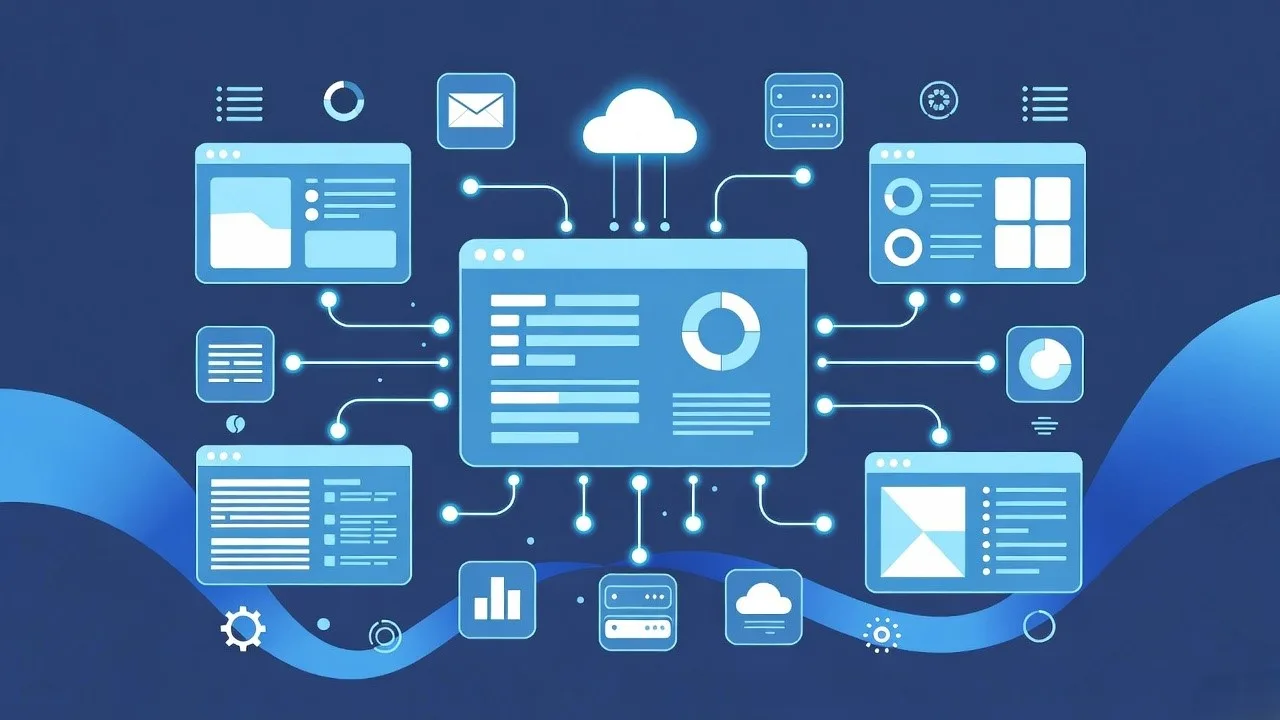
    Data modernization services solve this by transforming legacy databases and workflows into agile, cloud-ready, and AI-compatible architectures. For U.S. enterprises racing toward digital transformation, data modernization isn’t just a technology upgrade, it’s a business survival strategy.

    What Is Data Modernization?

    Data modernization is the process of migrating and re-engineering traditional data systems into modern platforms that support real-time analytics, AI integration, and scalable storage.

    This includes:

    • Moving from on-premises databases to cloud-based data warehouses.
    • Replacing legacy ETL pipelines with automated data integration tools.
    • Implementing data lakes for unstructured and semi-structured information.
    • Building governance frameworks for consistency and compliance.

    At its core, data modernization enables enterprises to unlock the full value of their data by making it accessible, reliable, and actionable.

    Why Enterprises Need Data Modernization

    Most organizations operate with decades-old infrastructure. Legacy systems are often rigid, costly to maintain, and disconnected from emerging technologies like AI or IoT.

    Modernizing these systems brings several strategic advantages:

    • Real-time visibility: Data flows continuously instead of relying on nightly batch updates.
    • Scalability: Cloud platforms scale dynamically with business growth.
    • Integration: AI and analytics tools connect directly to clean, unified data.
    • Cost efficiency: Eliminates expensive legacy hardware and licensing.
    • Resilience: Modern systems ensure data continuity and backup across environments.

    For leaders focused on long-term growth, modernization lays the groundwork for automation, advanced analytics, and competitive differentiation.

    Key Components of Data Modernization Services

    1. Data Assessment and Strategy

    Modernization starts with a detailed audit of existing systems. Experts assess data quality, architecture, and compliance readiness to design a migration roadmap.

    Deliverables include:

    • Source system inventory
    • Data flow diagrams
    • Cloud-readiness evaluation
    • Modernization roadmap with ROI estimates

    2. Cloud Migration

    Moving data to the cloud is a cornerstone of modernization. Platforms like AWS Redshift, Google BigQuery, Snowflake, or Azure Synapse provide flexible, high-performance environments for analytics.

    Migration methods vary, rehosting, re-platforming, or full re-architecture, depending on business goals.

    3. Data Integration and Automation

    Modern data ecosystems rely on ETL/ELT pipelines and APIs to unify data from multiple sources.
    AI-driven tools now automate transformation, cleansing, and validation, ensuring consistent, high-quality information across applications.

    4. Data Governance and Security

    With growing regulations (GDPR, CCPA, HIPAA), data governance is critical.
    Modernization frameworks establish policies for:

    • Data lineage and access control
    • Encryption and anonymization
    • Compliance reporting
    • Role-based permissions

    5. Analytics and AI Enablement

    Modern data platforms integrate seamlessly with BI tools and AI models.
    This allows predictive analytics, machine learning, and natural language queries, all powered by unified, trusted data.

    6. Ongoing Optimization and Monitoring

    Post-migration, continuous monitoring ensures system performance, scalability, and cost efficiency. AI can even predict system bottlenecks and recommend optimizations.

    Benefits of Data Modernization

    1. Enhanced Agility: Modernized data systems allow enterprises to pivot quickly, adapt to market changes, and support innovation with minimal technical barriers.
    2. Improved Decision-Making: With real-time data streams and unified dashboards, decision-makers can act faster and more confidently.
    3. Lower Total Cost of Ownership: Cloud-native architectures eliminate expensive hardware and maintenance costs, replacing them with scalable, usage-based pricing.
    4. Future-Ready Infrastructure: Modern data architectures support advanced technologies like AI agents, predictive analytics, digital twins, and IoT ecosystems.
    5. Data Democratization: With modern governance tools and visual dashboards, non-technical teams gain access to insights without depending on IT.

    Data Modernization Use Cases Across Industries

    • Healthcare: Integrating patient data across legacy EHRs for AI-driven diagnosis and compliance-ready reporting.
    • Retail: Real-time analytics on consumer behavior for personalized marketing and demand forecasting.
    • Manufacturing: Consolidating IoT sensor data from factory floors to predict equipment failure.
    • Finance: Centralizing transaction data for fraud detection and risk modeling.
    • Logistics: Combining fleet and fuel data for route optimization and sustainability tracking.

    Challenges in Data Modernization

    While the benefits are clear, many organizations face hurdles such as:

    • Data silos and fragmented ownership.
    • Poor data quality or incomplete records.
    • Legacy dependencies that complicate migration.
    • Skill gaps in modern data engineering and cloud management.

    These challenges are best handled by a specialized modernization partner, one that brings automation, cloud expertise, and security-first design.

    Choosing the Right Data Modernization Partner

    When selecting a provider, enterprises should look for:

    • Proven experience in cloud data migration (AWS, Azure, GCP).
    • Expertise in data governance and compliance frameworks.
    • Automation capabilities for data validation and lineage tracking.
    • Support for AI and real-time analytics integration.
    • A collaborative approach to strategy, execution, and optimization.

    Firms like Nunar (if positioned as your brand) deliver tailored modernization services, combining AI, automation, and engineering expertise to help U.S. enterprises unify their data ecosystems and prepare for the next wave of digital intelligence.

    Future of Data Modernization

    The future lies in autonomous data systems, platforms capable of self-cleaning, self-optimizing, and self-healing through AI.
    As large language models and AI agents advance, they’ll increasingly automate governance, integration, and quality assurance, turning today’s complex pipelines into intelligent, adaptive ecosystems.

    Data modernization, therefore, is not a one-time project, it’s an evolving journey toward continuous intelligence.

    Conclusion

    Data modernization services empower enterprises to move beyond outdated systems and fragmented data landscapes. By migrating to cloud-native, AI-ready architectures, businesses gain the speed, scalability, and intelligence needed to thrive in the digital economy.

    For U.S. companies seeking resilience and agility, modernizing data infrastructure is the single most strategic investment they can make, unlocking not just efficiency, but the power to innovate, predict, and lead.

    People Also Ask

    What is the primary goal of data modernization?

    To convert legacy data systems into modern, cloud-based, AI-compatible environments that support agility, analytics, and automation.

    How does data modernization improve ROI?

    It reduces hardware and maintenance costs, accelerates decision-making, and increases productivity through automation and real-time insights.

    What technologies drive modern data ecosystems?

    Cloud platforms (AWS, Azure, GCP), data lakes, ETL automation tools, APIs, and machine learning models.

    How long does a data modernization project take?

    Depending on scale, projects can range from a few months (for single systems) to over a year (for enterprise-wide migrations).

    What’s the first step toward modernization?

    Start with a comprehensive data assessment analyzing systems, dependencies, and readiness for cloud migration.

  • Advantages of Integrated Software Applications

    Advantages of Integrated Software Applications

    Advantages of Integrated Software Applications: Why Unified Systems Drive Modern Business Efficiency

    In today’s enterprise environment, companies rely on dozens of tools, ERP systems, CRMs, accounting software, HR portals, analytics dashboards, and more. But when these systems don’t communicate, data stays trapped in silos, processes slow down, and teams lose visibility.

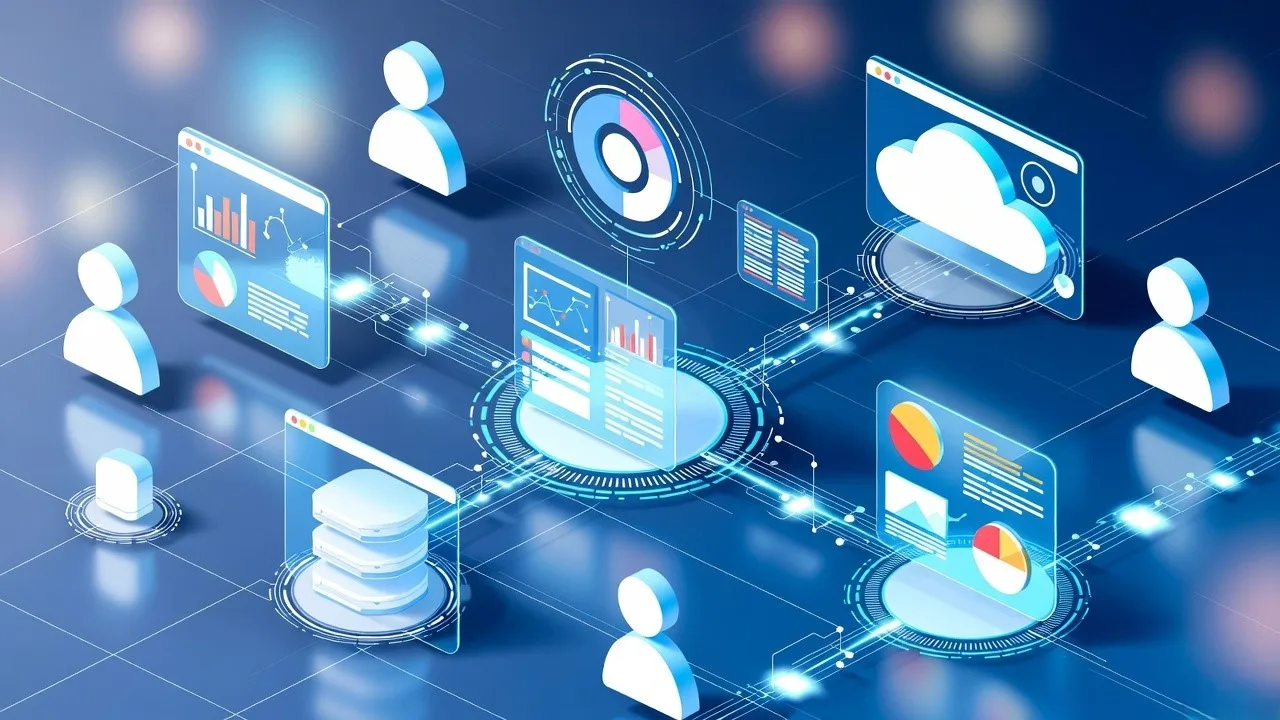
    Integrated software applications solve this problem by connecting multiple business systems into one synchronized environment, allowing seamless data exchange, better collaboration, and smarter decision-making.

    For U.S. enterprises moving toward digital transformation, integration is no longer optional. It’s the foundation of agility, cost efficiency, and long-term scalability.

    What Are Integrated Software Applications?

    Integrated software applications combine different business tools, such as finance, HR, marketing, operations, and inventory management, into a unified ecosystem.

    This can happen through:

    • Native integration: When applications are built to work together out of the box.
    • API-based integration: When software uses APIs to exchange data securely between systems.
    • Middleware platforms or iPaaS: Integration Platforms as a Service that connect legacy and modern systems.

    The result: a connected environment where information flows automatically between departments, eliminating redundant manual work.

    1. Centralized Data and Unified Insights

    When every department uses its own tools, data gets scattered sales figures in one system, expenses in another, inventory elsewhere. Integrated software centralizes all this data, giving leaders one consistent version of truth.

    Benefits:

    • Real-time visibility into performance metrics.
    • Easier compliance and audit reporting.
    • Improved forecasting and strategic planning.

    Example: A retail enterprise integrating its POS, CRM, and supply chain systems can instantly see which stores are underperforming and adjust inventory or promotions accordingly.

    2. Enhanced Workflow Automation

    Integrated applications allow processes to flow automatically from one system to another without manual input.

    For instance:

    • A sales order placed in CRM automatically updates the ERP for billing and inventory.
    • HR onboarding triggers IT access provisioning and payroll setup.

    This cross-system automation reduces human errors, saves time, and ensures data consistency.

    Key ROI impact: Automation through integration can cut administrative workloads by up to 40%, freeing employees for higher-value work.

    3. Improved Collaboration and Communication

    Disconnected systems create communication gaps. Integration unifies departments, ensuring everyone has access to accurate, up-to-date information.

    • Marketing teams see real-time sales data to fine-tune campaigns.
    • Finance has instant access to expense reports from operations.
    • Customer support can view order histories without toggling between systems.

    This eliminates silos and promotes cross-functional alignment, which is critical in large organizations with distributed teams.

    4. Cost Efficiency and Resource Optimization

    Maintaining separate systems often means duplicate data entry, redundant software licenses, and manual reconciliation, all costly inefficiencies.

    Integrated systems:

    • Eliminate repetitive tasks.
    • Reduce data management costs.
    • Lower IT maintenance overhead by consolidating platforms.

    Over time, companies save substantially by streamlining software investments and reducing time spent on administrative work.

    5. Real-Time Analytics and Decision Support

    In integrated environments, analytics platforms can pull data directly from multiple applications simultaneously. This real-time view supports faster, data-backed decisions.

    AI and machine learning models perform best when fed clean, unified datasets. Integration ensures that these models operate with complete, reliable information, vital for predictive analytics, performance optimization, and risk management.

    6. Scalability and Flexibility

    As enterprises grow, they add new systems and tools. Integrated architectures make it easier to scale without disrupting operations.

    • Cloud-based integrations adapt to evolving business models.
    • New tools can be added to existing workflows with minimal reconfiguration.
    • Future AI and automation modules can plug in seamlessly through APIs.

    This flexibility supports continuous innovation, a key competitive advantage in rapidly changing markets.

    7. Better Customer Experience

    Customers expect fast, personalized, and consistent interactions across channels. Integrated systems make this possible.

    For example:

    • Customer data from CRM merges with order and support histories.
    • AI agents use integrated data to deliver accurate, context-aware responses.
    • Marketing automation platforms personalize outreach based on unified insights.

    The result: more responsive service, improved satisfaction, and stronger customer loyalty.

    8. Compliance and Security

    Integrated systems can centralize governance policies and access controls, making it easier to maintain data privacy and compliance.

    • Unified audit trails across all applications.
    • Consistent enforcement of security standards (GDPR, SOC 2, HIPAA).
    • Reduced risk of errors from manual data transfers.

    In regulated industries like finance, healthcare, and manufacturing, this centralization is critical for minimizing compliance risk.

    9. Integration with Emerging Technologies

    Modern integrated software environments are designed to work with AI agents, IoT devices, and automation platforms.

    • AI can extract insights from integrated business data in real time.
    • IoT sensors feed live operational data into ERP systems for predictive maintenance.
    • Intelligent automation orchestrates end-to-end workflows across platforms.

    These integrations make enterprises more adaptive and future-ready, capable of leveraging new technologies without reengineering their systems.

    10. Competitive Advantage

    Enterprises that successfully integrate their systems can operate faster, adapt quicker, and deliver more value. Integration becomes a strategic enabler, reducing time-to-market, enhancing operational intelligence, and supporting continuous improvement.

    In contrast, fragmented systems slow down decision-making and limit visibility, putting organizations at a disadvantage in data-driven markets.

    Final Thoughts

    Integrated software applications are not just a technical upgrade—they represent a shift toward operational intelligence and unified growth.

    For U.S. enterprises investing in digital transformation, integration is the key to unlocking efficiency, scalability, and insight-driven strategy. By connecting data, systems, and people, integrated solutions turn fragmented operations into cohesive, high-performing ecosystems.

    In a landscape where agility and accuracy define success, the advantages of integration are clear: faster workflows, smarter analytics, and stronger business outcomes.

    People Also Ask

    What are integrated software applications?

    They are systems that connect multiple business tools like CRM, ERP, and HR software so data flows seamlessly across departments.

    Why is integration important for enterprises?

    It eliminates silos, reduces manual work, and provides a single source of truth for better decision-making.

    How does software integration improve ROI?

    It cuts administrative costs, reduces redundant software usage, and accelerates business processes, leading to measurable productivity gains.

    Can integrated systems support AI and automation?

    Yes, integrated software environments provide the unified data backbone AI and automation tools need to deliver accurate insights and decisions.

    What’s the first step in integrating enterprise software?

    Begin with an audit of your current systems, identify overlapping functions, and choose an integration platform (API or iPaaS) that supports scalable data exchange.

  • AI-Driven MES

    AI-Driven MES

    AI-Driven MES: Transforming U.S. Manufacturing into Smart, Self-Optimizing Operations

    For decades, Manufacturing Execution Systems (MES) have served as the digital backbone of factory operations, tracking production, monitoring machines, and ensuring quality. But today, the landscape is shifting. With artificial intelligence (AI) entering the factory floor, the traditional MES is evolving into something far more powerful: an AI-driven MES that not only monitors but predicts, optimizes, and learns continuously.

    This transformation is redefining how manufacturers across the United States manage production, efficiency, and workforce productivity in real time.

    What Is an AI-Driven MES?

    An AI-driven Manufacturing Execution System (MES) combines traditional production management tools with artificial intelligence to automate decision-making and provide predictive insights.

    Unlike a conventional MES that reports what has happened, an AI-driven system interprets why something happened—and predicts what will happen next.

    It connects data streams from machines, sensors, ERP systems, and human operators, turning that data into actionable intelligence.

    Key capabilities include:

    • Predictive maintenance alerts before failures occur.
    • Automated root-cause analysis for quality issues.
    • Real-time optimization of production schedules.
    • Energy and resource consumption forecasting.
    • Autonomous process adjustments through AI agents.

    Why U.S. Manufacturers Are Adopting AI in MES

    In recent years, U.S. manufacturers have faced mounting pressures: workforce shortages, rising operational costs, and the need for digital resilience. These challenges make AI-driven MES platforms not just attractive, but essential.

    According to Deloitte, 83% of American manufacturers have made or plan to make AI a core part of their Industry 4.0 strategy. AI-enabled MES platforms serve as the central nervous system in this strategy—bridging production data, IoT devices, and enterprise systems.

    Top drivers of AI-driven MES adoption include:

    • Need for predictive insights to prevent downtime and reduce waste.
    • Push for real-time visibility into plant operations.
    • Growing demand for mass customization and agile production lines.
    • Integration with Industrial IoT (IIoT) and digital twins.

    How AI Enhances Traditional MES Capabilities

    1. Predictive Maintenance

    AI models analyze vibration data, temperature patterns, and machine usage to forecast potential failures. Instead of reacting to downtime, manufacturers schedule maintenance proactively reducing unplanned stoppages by up to 40%.

    2. Dynamic Scheduling

    AI-driven MES systems automatically adjust schedules when disruptions occur, machine breakdowns, material delays, or urgent orders. This agility allows plants to maintain output efficiency even in fluctuating demand environments.

    3. Quality Control through Vision AI

    AI-powered cameras and sensors detect product defects in real time with higher accuracy than human inspection. The system then feeds this data back into MES for instant correction and continuous learning.

    4. Energy Optimization

    AI tracks equipment energy consumption and suggests optimal run times or parameter changes to minimize energy costs—particularly valuable for large-scale U.S. plants with sustainability goals.

    5. Digital Twin Integration

    By combining MES with digital twins (virtual replicas of production environments), manufacturers can simulate outcomes before implementing physical changes. AI agents analyze these simulations to suggest the most efficient configurations.

    Key Components of an AI-Driven MES

    ComponentFunction
    AI/ML EngineLearns from historical and real-time data to generate predictive insights.
    IoT LayerConnects sensors, PLCs, and machines to the MES network.
    Analytics DashboardDisplays KPIs, production metrics, and AI recommendations.
    Integration LayerBridges ERP, SCM, and Quality Management Systems for unified visibility.
    AI AgentsAutomate responses—adjusting schedules, sending alerts, or triggering maintenance workflows.

    Benefits of Implementing an AI-Driven MES

    1. Increased Operational Efficiency: AI identifies inefficiencies at every production stage, helping U.S. manufacturers reduce cycle times and eliminate bottlenecks.

    2. Improved Quality and Consistency: Automated defect detection and root-cause analysis lead to fewer quality deviations and lower scrap rates.

    3. Lower Downtime Costs: Predictive maintenance powered by AI helps plants cut downtime costs dramatically.

    4. Greater Sustainability: AI-driven MES helps monitor carbon emissions, energy use, and waste metrics supporting compliance with EPA and ESG reporting standards.

    5. Enhanced Workforce Productivity: By automating data collection and routine analysis, skilled workers can focus on problem-solving and innovation.

    How AI-Driven MES Works in Real Scenarios

    Example 1: Automotive Manufacturing: An automotive plant in Michigan implemented an AI-driven MES integrated with IoT sensors and predictive models. The system detected early signs of tool wear and adjusted production speed to maintain part precision—resulting in a 22% reduction in rework and 15% higher throughput.

    Example 2: Food & Beverage Industry: A beverage manufacturer in California used AI analytics within its MES to predict maintenance needs for filling machines. The model reduced downtime by 30% while improving OEE (Overall Equipment Effectiveness).

    Example 3: Semiconductor Fabrication: In Texas, a semiconductor plant used AI-driven MES to balance workloads across multiple production lines, minimizing energy waste and improving yield consistency.

    Integrating AI with Existing MES Infrastructure

    For many U.S. enterprises, a full system overhaul isn’t necessary. AI-driven capabilities can be integrated into existing MES environments.

    Key integration strategies:

    1. Layered AI Architecture – Deploy AI modules on top of legacy MES systems for incremental improvement.
    2. Cloud and Edge AI – Combine cloud analytics with edge-based ML models to process data directly from machines.
    3. Open APIs and Data Lakes – Enable seamless data exchange between MES, ERP, and AI tools.
    4. Human-in-the-loop Approach – Maintain human oversight while AI handles repetitive tasks and suggestions.

    Challenges to Overcome in MES

    While promising, AI-driven MES adoption faces practical hurdles:

    • Data Silos: Inconsistent data formats across systems.
    • Legacy Equipment: Older machines may lack IoT compatibility.
    • Change Management: Shifting human workflows to trust AI recommendations.
    • Integration Complexity: Bridging multiple enterprise systems under one framework.

    To address these, U.S. manufacturers often partner with AI automation specialists like Nunar, who provide end-to-end integration, custom agent development, and scalable cloud deployment strategies.

    Future of AI-Driven MES in the U.S.

    The future of MES is autonomous. AI agents will not just assist humans they will run micro-decisions in real time, optimizing production minute-by-minute. As generative AI advances, these systems will simulate and propose new workflows automatically.

    The U.S. manufacturing sector, already leading global innovation, stands to gain immensely. With smart AI-driven MES platforms, factories can achieve adaptive, self-correcting, and sustainability-aligned production systems, hallmarks of Industry 5.0.

    People Also Ask

    What makes an MES “AI-driven”?

    An MES becomes AI-driven when machine learning models and predictive analytics are embedded to automate forecasting, optimization, and root-cause analysis.

    Can AI-driven MES work with existing legacy systems?

    Yes. Through IoT adapters, APIs, and data integration layers, AI modules can enhance current MES platforms without full replacement.

    How does AI-driven MES improve sustainability?

    It tracks energy consumption and material waste in real time, helping manufacturers meet environmental compliance goals.

    Which industries in the U.S. benefit most from AI-driven MES?

    Automotive, electronics, aerospace, food processing, and pharmaceuticals are leading adopters due to their high-volume, high-precision requirements.

    What’s the ROI of implementing an AI-driven MES?

    Most manufacturers see returns within 12–18 months, driven by reduced downtime, better quality control, and optimized energy usage.

  • Discourse Integration in NLP

    Discourse Integration in NLP

    Discourse Integration in NLP: The Key to Contextual Understanding

    Natural Language Processing (NLP) has advanced far beyond simple keyword matching or sentence parsing. Today’s AI systems are expected to understand context, interpret intent, and maintain coherence across multiple sentences or even entire documents. This is where discourse integration becomes essential.

    In this blog, we’ll explore what discourse integration means, why it matters in NLP applications, and how it enables machines to interpret language the way humans naturally do.

    What Is Discourse Integration in NLP?

    Discourse integration refers to the process of linking sentences or phrases together to form a coherent understanding of a passage. Unlike syntactic or semantic analysis, which focus on individual sentences, discourse integration looks at relationships between sentences—how one affects or informs another.

    For example:

    “John dropped the cup. It broke.”

    The word “it” in the second sentence refers to “the cup.” A human reader makes that connection instantly, but for a machine, it requires discourse analysis to determine that “it” doesn’t refer to “John.”

    Thus, discourse integration gives NLP systems the ability to:

    • Resolve references like pronouns or implied subjects
    • Maintain contextual continuity
    • Understand cause-and-effect or temporal relationships between sentences

    Why Discourse Integration Matters

    Without discourse integration, NLP systems can misinterpret text, give inaccurate responses, or lose track of context in longer conversations. This capability is critical for real-world applications such as:

    1. Conversational AI – Chatbots and virtual assistants rely on discourse integration to maintain context over multiple turns in a conversation.
    2. Text Summarization – Understanding relationships between sentences ensures summaries preserve meaning and logical flow.
    3. Machine Translation – Accurate translation across languages depends on recognizing pronoun references, tense consistency, and discourse markers.
    4. Question Answering Systems – Discourse understanding allows the system to pull answers from passages that require connecting information across sentences.
    5. Document Classification – Identifying the central topic or sentiment of a multi-paragraph text requires integrating context across sections.

    How Discourse Integration Works

    Discourse integration in NLP involves several interrelated processes:

    1. Anaphora Resolution

    Determining what pronouns or referring expressions point to.
    Example:

    “Mary called Susan. She didn’t answer.”
    Here, the model must identify whether she refers to Mary or Susan.

    2. Discourse Markers

    Recognizing words like however, therefore, meanwhile, or because that signal relationships between ideas.

    3. Coherence Relations

    Analyzing how sentences logically connect—such as contrast, elaboration, cause-effect, or temporal sequence.

    4. World Knowledge and Pragmatics

    Some discourse understanding requires external or common-sense knowledge.
    Example:

    “The ice melted. The temperature rose.”
    A model must infer a cause-effect relationship based on general knowledge.

    Approaches to Discourse Integration

    There are two main approaches to implementing discourse understanding:

    Rule-Based Models

    Earlier NLP systems used manually defined linguistic rules, relying on syntax patterns and cue phrases. Though accurate in limited cases, they struggled with ambiguity and scalability.

    Neural and Transformer-Based Models

    Modern NLP leverages transformers like BERT, GPT, or T5, which capture long-range dependencies between words and sentences. These models use attention mechanisms to understand how every token in a document relates to others, allowing them to retain context across paragraphs or dialogues.

    Hybrid models now combine neural learning with symbolic logic to balance reasoning and adaptability.

    Applications of Discourse Integration

    • AI Writing Assistants: Ensure coherence in generated content by tracking prior context.
    • Customer Support Bots: Retain conversational history for accurate, context-aware responses.
    • Healthcare NLP: Interpret patient records and medical narratives where context matters across entries.
    • Legal and Financial Document Analysis: Understand references and clauses spanning long documents.

    Challenges in Discourse Integration

    Despite progress, several challenges remain:

    • Ambiguous references (e.g., multiple possible antecedents)
    • Cultural or implicit context
    • Long-document dependencies exceeding current model limits
    • Limited annotated datasets for discourse relations

    Solving these requires better training data, refined evaluation methods, and hybrid reasoning systems that combine language models with structured knowledge.

    The Future of Discourse in NLP

    As language models continue to evolve, discourse integration will be key to building AI that truly “understands” rather than merely processes language. Emerging systems are already exploring memory-augmented models, conversation graph tracking, and discourse-aware embeddings to maintain context more naturally.

    In the near future, this progress will enable NLP tools that read contracts, interpret patient histories, summarize meetings, and converse as seamlessly as humans.

    People Also Ask

    What is the main goal of discourse integration in NLP?

    To connect sentences meaningfully so that AI systems can interpret context, references, and relationships across multiple statements.

    How is discourse integration different from semantic analysis?

    Semantic analysis deals with meaning within a single sentence, while discourse integration manages meaning across sentences or paragraphs.

    What are some examples of discourse integration in real-world NLP systems?

    Voice assistants, customer service chatbots, AI writing tools, and document summarization platforms all rely on discourse understanding.

    Which models are best for discourse integration?

    Transformer-based models like BERT, GPT, and RoBERTa excel at capturing long-range dependencies, making them effective for discourse-level tasks.

    What are the biggest research challenges in discourse integration?

    Handling ambiguous pronouns, maintaining context in long texts, and incorporating world knowledge into machine understanding remain open challenges.

  • Normalization in NLP

    Normalization in NLP

    Normalization in NLP: The Hidden Step That Makes Language Processing Smarter

    When humans read text, our brains automatically ignore typos, recognize abbreviations, and interpret different word forms as meaning the same thing. Machines, however, are not that intuitive. They need structured, standardized input to make sense of language.

    That’s where normalization in Natural Language Processing (NLP) comes in. It’s the quiet but essential process that prepares text for accurate analysis, search, and prediction.

    In this blog, we’ll explore what normalization is, how it works, why it’s vital in AI applications, and how U.S. enterprises are using it to improve accuracy in their NLP-powered systems.

    What Is Normalization in NLP?

    Normalization in NLP is the process of transforming text into a standard, consistent format before it’s analyzed by algorithms. It removes variations in spelling, punctuation, and formatting that might confuse a machine learning model.

    In simple terms, normalization helps ensure that different versions of the same word or expression are treated as identical.

    Example:

    • Input text: “U.S.A., USA, or United States of America”
    • After normalization: “united states of america”

    Without normalization, an NLP model might treat these as entirely separate entities, reducing accuracy in tasks such as sentiment analysis, entity recognition, or search.

    Why Normalization Matters in NLP

    Human language is messy. We write differently depending on context—emails, texts, or social media posts all have their quirks. Machines need a consistent format to understand and process language effectively.

    Here’s why normalization is essential:

    1. Improves Text Matching: Makes sure that “color” and “colour” are recognized as the same word.
    2. Enhances Search Accuracy: Helps search systems match variations of a query to the right results.
    3. Prepares Data for Machine Learning: Reduces noise and inconsistency, making training datasets cleaner.
    4. Increases Model Accuracy: Ensures the model learns patterns from meaning, not from formatting errors.
    5. Supports Multilingual and Cross-Platform Consistency: Especially important for global enterprises handling data from different regions and dialects.

    Key Steps in Text Normalization

    Normalization isn’t a single action—it’s a series of transformations applied to text before analysis. Each step removes inconsistencies or unwanted elements.

    Let’s look at the most common ones:

    1. Lowercasing

    All characters are converted to lowercase to ensure that case sensitivity doesn’t cause mismatches.

    • “Apple” → “apple”

    This is particularly useful for search and tokenization tasks.

    2. Removing Punctuation and Special Characters

    Punctuation can create noise in analysis unless it serves a semantic purpose (like in sentiment detection).

    • “Hello, world!” → “hello world”

    This step simplifies the dataset for tasks like classification or clustering.

    3. Removing Stop Words

    Common words like “is,” “the,” or “and” add little analytical value.
    These are often removed to reduce computational load and improve focus on meaningful terms.

    4. Stemming

    Stemming reduces words to their root form by chopping off endings.

    • “Running,” “runs,” “ran” → “run”

    However, stemming can sometimes distort words because it’s a mechanical process (e.g., “better” → “bet”).

    5. Lemmatization

    Lemmatization is more linguistically informed than stemming. It reduces words to their base form (lemma) using vocabulary and grammar rules.

    • “Running” → “run”
    • “Better” → “good”

    Lemmatization is preferred in modern NLP applications because it preserves meaning while standardizing text.

    6. Removing Extra Whitespaces and Numbers

    Cleaning up redundant spaces, tabs, or numbers helps maintain consistency and speeds up tokenization.

    7. Handling Abbreviations and Contractions

    Expanding short forms ensures clarity:

    • “can’t” → “cannot”
    • “U.S.” → “United States”

    This step improves comprehension for language models trained on formal text.

    8. Correcting Spelling and Misspellings

    Spell correction ensures that misspelled words don’t reduce the model’s accuracy.

    • “teh” → “the”

    Modern systems often use context-aware models like BERT or Hunspell for this task.

    Normalization in Action: A Real-World Example

    Let’s say an airline customer leaves this review:

    “I luvd the service @Delta. Wud fly again!!”

    Before NLP analysis, normalization would clean it up:

    “i loved the service delta would fly again”

    After this process, the text becomes clear enough for a sentiment analysis model to correctly classify it as positive.

    Without normalization, the model might misinterpret abbreviations and misspellings, leading to inaccurate sentiment detection.

    Normalization Techniques in Modern NLP Pipelines

    Modern NLP systems often combine rule-based and machine learning-based normalization.

    • Rule-based normalization uses predefined rules for tokenization, stemming, and abbreviation expansion.
    • ML-based normalization uses trained models to recognize and correct contextual variations—like slang or code-mixed language on social platforms.

    For large-scale enterprise systems, cloud NLP platforms like Google Cloud Natural Language API, AWS Comprehend, and spaCy pipelines integrate normalization as part of preprocessing.

    Use Cases of Normalization in the U.S. Market

    1. E-commerce: Helps search systems understand user intent, even with typos or slang in product queries.
    2. Healthcare: Standardizes medical terms and patient notes before feeding into clinical NLP models.
    3. Finance: Ensures consistent interpretation of financial documents with variable formatting.
    4. Customer Service AI: Normalizes user messages in chatbots for accurate intent recognition.
    5. Social Media Analytics: Cleans up user-generated content with inconsistent grammar or abbreviations.

    Challenges in Text Normalization

    While normalization is powerful, it’s not without limitations:

    • Over-normalization: Sometimes removes meaningful distinctions (e.g., “US” vs. “us”).
    • Language Diversity: Dialects and slang evolve quickly, making rule-based normalization less effective.
    • Domain Sensitivity: What’s noise in one domain might be vital in another (e.g., numbers in financial data).
    • Contextual Dependency: Words can have different meanings depending on context; simple normalization may overlook that.

    Best Practices for Effective Normalization

    • Always define domain-specific rules (medical, financial, technical, etc.).
    • Combine lemmatization with contextual embeddings for accuracy.
    • Use custom stop-word lists instead of generic ones.
    • Test your normalization pipeline on real-world samples before deploying at scale.
    • Continuously retrain your model with new, evolving text patterns.

    Conclusion

    Normalization may not sound as exciting as deep learning or large language models, but it’s one of the most important steps in any NLP workflow. It brings structure to linguistic chaos, allowing AI systems to interpret text with precision.

    For U.S. enterprises implementing NLP in analytics, chatbots, healthcare, or automation, proper normalization ensures reliability, accuracy, and long-term scalability. In many ways, it’s the foundation that determines how “intelligent” your AI truly is.

    Frequently Asked Questions (FAQs)

    What is the purpose of normalization in NLP?

    Normalization standardizes text so that machines can interpret and analyze it accurately, reducing variations and inconsistencies.

    What’s the difference between stemming and lemmatization?

    Stemming mechanically removes word endings, while lemmatization uses linguistic rules to find the word’s base form.

    Is normalization necessary for every NLP project?

    Yes, especially for projects involving search, sentiment analysis, or classification. It ensures consistent data quality.

    What tools can I use for normalization?

    Popular tools include NLTK, spaCy, TextBlob, and regex-based scripts. Cloud APIs from AWS, Google, and Azure also support normalization.

    Does normalization affect model performance?

    Absolutely. A well-normalized dataset improves accuracy, reduces noise, and speeds up training in machine learning pipelines.

  • Phases of NLP

    Phases of NLP

    The Key Phases of NLP: How Machines Understand Human Language

    Natural Language Processing (NLP) has become a cornerstone of modern artificial intelligence. It powers the chatbots that handle customer service, the virtual assistants that manage schedules, and the analytical tools that extract insights from documents. But behind these capabilities lies a structured sequence of processes that help machines make sense of language.

    Understanding the phases of NLP is essential for developers, data scientists, and enterprise leaders looking to integrate AI-driven communication tools into their systems. In this blog, we’ll explore these phases in depth, focusing on how they work, why they matter, and how they’re driving innovation across industries in the United States.

    What Is Natural Language Processing (NLP)?

    NLP is a branch of artificial intelligence that enables computers to understand, interpret, and generate human language. It bridges the gap between human communication and machine comprehension, transforming unstructured text or speech into structured data that can be analyzed or acted upon.

    The process involves multiple stages—each addressing a unique aspect of how humans use language. From recognizing words to understanding their meaning and emotional tone, NLP follows a logical progression that mirrors human linguistic comprehension.

    The 6 Core Phases of NLP

    1. Lexical Analysis (Tokenization and Morphological Analysis)

    The first step in NLP is to break text into manageable pieces. This involves tokenization, where sentences are split into words or phrases, and morphological analysis, where each word is examined for its root form, prefixes, and suffixes.

    For example, in the sentence “Running improves health,”

    • “Running” → root form: “run”
    • “Improves” → root form: “improve”

    This step transforms raw text into a machine-readable format and prepares it for grammatical analysis.

    Key Tools Used: spaCy, NLTK, and Stanza

    2. Syntactic Analysis (Parsing)

    Syntactic analysis, or parsing, examines the grammatical structure of sentences. It identifies how words relate to each other and ensures that the sentence follows grammatical rules.

    For instance, in the sentence “The robot cleaned the floor,” syntactic analysis reveals that “robot” is the subject and “floor” is the object.

    This phase helps NLP systems detect sentence structures, part-of-speech tags (nouns, verbs, adjectives), and dependencies.

    Applications: Grammar checkers, question-answering systems, and AI assistants

    3. Semantic Analysis (Meaning Extraction)

    Once the structure is understood, NLP moves on to semantic analysis—interpreting meaning. This phase ensures that machines grasp the true sense of each word and how it contributes to the overall message.

    For example, the word “bank” could mean:

    • A financial institution, or
    • The side of a river

    Semantic analysis uses context to distinguish between such meanings, often relying on word embeddings and contextual models like BERT and GPT.

    Applications: Search engines, sentiment analysis, and AI chatbots

    4. Discourse Integration (Contextual Understanding)

    Language doesn’t exist in isolation. The meaning of a sentence can depend on what came before it.

    Discourse integration helps NLP systems connect ideas across sentences. For example:

    • “John bought a car. He loves it.”
      Here, “He” refers to John, and “it” refers to the car.

    This phase enables machines to maintain logical continuity, which is crucial for document summarization, dialogue systems, and contextual search.

    Applications: Conversational AI, document summarization, and contextual search tools

    5. Pragmatic Analysis (Real-World Interpretation)

    Pragmatic analysis allows NLP systems to interpret meaning beyond words and structure—taking into account tone, intent, and real-world knowledge.

    For example, if someone says, “Can you open the window?”, they’re not asking if you’re capable—they’re politely asking you to open it.

    This phase involves understanding implied meaning, sarcasm, and cultural nuances. It’s particularly relevant for customer interaction systems and virtual assistants designed for the U.S. market, where tone and politeness vary widely across regions and contexts.

    Applications: Virtual assistants, social media monitoring, and AI-driven customer support

    6. Natural Language Generation (NLG)

    The final phase is generation, where NLP systems produce human-like text or speech in response to input.

    This is the technology behind automated report writing, AI-driven copywriting, and chatbots. The system uses syntactic and semantic rules to construct grammatically correct and contextually appropriate responses.

    Example:
    Input: “Summarize this report.”
    Output: “The report outlines three key findings related to user behavior and engagement trends.”

    Applications: Chatbots, automated writing assistants, and data reporting tools

    How U.S. Enterprises Use These NLP Phases

    Across industries, U.S.-based companies are adopting NLP technologies to streamline operations, improve communication, and enhance data-driven decision-making.

    • Healthcare: NLP processes patient notes, extracts medical terms, and supports clinical decision systems.
    • Finance: Banks use NLP for fraud detection, compliance monitoring, and customer service chatbots.
    • E-commerce: NLP powers recommendation engines, customer feedback analysis, and sentiment tracking.
    • Legal: Document review and contract analysis are automated using NLP’s syntactic and semantic phases.
    • Technology: AI-driven support systems use pragmatic and discourse analysis for conversational accuracy.

    These examples highlight how understanding and implementing NLP phases strategically can result in measurable ROI, through automation, accuracy, and customer satisfaction.

    Challenges in Implementing NLP

    Despite its success, NLP still faces challenges that enterprises must consider:

    • Language Ambiguity: Words can carry multiple meanings depending on context.
    • Data Bias: Training data can contain cultural or gender bias, influencing model output.
    • Domain Adaptation: Models trained on general data often perform poorly in specialized fields like medicine or law.
    • Real-Time Processing: High computational demand can limit speed for large-scale systems.

    Emerging AI frameworks and agent-based architectures are addressing these limitations, offering more adaptive and interpretable NLP solutions.

    Conclusion

    Each phase of NLP—from tokenization to pragmatic interpretation—builds upon the previous one, forming a complete system that can read, understand, and respond like a human.

    For U.S. organizations adopting AI-driven communication and analytics tools, understanding these phases provides a roadmap for designing smarter, more context-aware solutions. As NLP continues to evolve, the synergy between linguistic science and machine learning will redefine how enterprises interact with information, and with people.

    People Also Ask

    What are the main phases of NLP?

    The main phases are lexical analysis, syntactic analysis, semantic analysis, discourse integration, pragmatic analysis, and natural language generation.

    Why are NLP phases important for AI applications?

    They ensure that AI systems can understand, interpret, and generate human language accurately, which improves communication, automation, and decision-making.

    Which NLP tools are widely used in the U.S.?

    Popular tools include spaCy, NLTK, Hugging Face Transformers, Stanford CoreNLP, and OpenAI’s GPT models.

    How do NLP phases impact chatbot performance?

    Proper syntactic and semantic understanding enables chatbots to interpret intent accurately and respond naturally, improving user satisfaction.

    What industries benefit most from NLP in the U.S.?

    Healthcare, finance, legal, e-commerce, and customer service sectors are among the top adopters of NLP technologies.

  • Syntactic Analysis in NLP

    Syntactic Analysis in NLP

    Understanding Syntactic Analysis in NLP: How Machines Learn the Structure of Language

    In the field of Natural Language Processing (NLP), understanding what words mean is only half the challenge. The other half lies in understanding how those words are arranged to convey meaning. This is where syntactic analysis comes in.

    For AI systems that power search engines, chatbots, and voice assistants, syntax is what helps them understand the grammar and relationships between words, allowing machines to interpret human language with precision.

    This blog breaks down what syntactic analysis means, how it works, the techniques behind it, and how it’s shaping real-world applications across industries in the United States.

    What Is Syntactic Analysis in NLP?

    Syntactic analysis, often called parsing, is the process of analyzing the grammatical structure of sentences in natural language. It determines how words are related to each other and how they combine to form phrases and sentences.

    In simpler terms, syntactic analysis helps a machine understand why a sentence like “The cat chased the mouse” is grammatically correct, while “Chased cat the mouse” is not.

    By understanding sentence structure, NLP systems can perform more advanced tasks, like translating text, summarizing content, or answering questions, accurately and coherently.

    Why Syntactic Analysis Matters in NLP

    Language is structured, and grammar governs that structure. Without syntax, even the most advanced AI models would struggle to grasp how meaning changes depending on word order or part of speech.

    Here’s why syntactic analysis plays such an important role:

    • 1. Enables Grammatical Understanding: It helps AI systems identify parts of speech (nouns, verbs, adjectives, etc.) and how they relate in a sentence.
    • 2. Improves Contextual Interpretation: Syntax allows NLP models to distinguish between similar words used in different roles—for example, “book” as a noun (“read the book”) versus as a verb (“book a ticket”).
    • 3. Enhances Machine Translation: By understanding sentence structure, NLP systems can generate translations that sound natural and grammatically correct.
    • 4. Boosts Search Accuracy: Search engines rely on syntactic patterns to match queries with relevant results rather than just keywords.
    • 5. Enables Natural Conversations: Chatbots and AI assistants use syntax analysis to form responses that sound coherent and context-aware.

    How Syntactic Analysis Works

    Syntactic analysis involves several key steps and techniques that allow machines to process sentence structures effectively:

    1. Tokenization

    The sentence is broken down into smaller units called tokens (usually words or punctuation marks).
    Example:

    “The dog barked loudly” → [The] [dog] [barked] [loudly]

    2. Part-of-Speech Tagging (POS Tagging)

    Each token is tagged with its grammatical role (noun, verb, adjective, etc.).
    Example:

    The (Determiner) | dog (Noun) | barked (Verb) | loudly (Adverb)

    3. Parsing

    This is the core step where sentence structure is analyzed. The system determines how words connect and form larger units (phrases, clauses).

    4. Dependency and Constituency Analysis

    • Constituency parsing divides sentences into sub-phrases (noun phrases, verb phrases, etc.).
    • Dependency parsing identifies relationships between words, showing which words “depend” on others.

    For example, in the sentence “The boy kicked the ball,” “boy” is the subject of “kicked,” and “ball” is the object.

    5. Tree Structure Representation

    The results of parsing are often represented as syntax trees, which visually map the grammatical structure of a sentence.

    Types of Syntactic Analysis Techniques

    There are two main approaches used in NLP today:

    1. Rule-Based Parsing: Uses predefined grammatical rules created by linguists. While accurate, it struggles with ambiguous or complex sentences.
    2. Statistical and Neural Parsing: Modern AI models like BERT, GPT, and spaCy use deep learning to learn syntactic patterns from massive datasets. These methods adapt to real-world variations in language use.

    Applications of Syntactic Analysis in the U.S. Market

    Syntactic analysis plays a critical role across various industries adopting NLP technologies in the United States:

    • Healthcare:AI tools analyze medical records to extract meaningful information, ensuring clinical notes and prescriptions are interpreted correctly.
    • Finance: NLP systems parse contracts, filings, and reports to identify risks and compliance issues.
    • Customer Service: Virtual assistants and chatbots use syntax to understand user intent and respond naturally.
    • Education: Grammar-checking tools and automated essay graders rely heavily on syntactic analysis.
    • Legal: Legal NLP software parses long documents to summarize case law or identify key clauses efficiently.

    Benefits of Syntactic Analysis in NLP

    • Improved Accuracy in Language Understanding: AI can handle grammatical complexity and ambiguity with greater precision.
    • Enhanced Text Summarization and Translation: Syntax-aware systems produce more natural and meaningful summaries and translations.
    • Better Sentiment Analysis: By understanding sentence structure, NLP can detect subtle shifts in tone or emphasis.
    • Greater Search and Query Relevance: Search algorithms can match user queries to results that truly align with their intent.
    • Human-Like AI Communication: Syntactic understanding helps conversational AI systems generate responses that sound fluid and logical.

    Challenges in Syntactic Analysis

    Despite its benefits, syntactic analysis faces several challenges:

    • Language Ambiguity: The same sentence can have multiple meanings depending on punctuation or emphasis.
    • Complex Sentence Structures: Longer sentences with embedded clauses are harder for machines to parse accurately.
    • Domain-Specific Grammar: Technical or specialized language often breaks traditional grammar rules.
    • Evolving Language: Slang, abbreviations, and informal syntax on social platforms make consistent parsing difficult.

    AI researchers in the U.S. are actively working on combining syntax with semantic analysis and contextual embeddings to overcome these barriers.

    Conclusion

    Syntactic analysis is at the heart of how NLP models understand human language. It gives AI systems the grammatical awareness needed to read, interpret, and respond intelligently.

    As American companies continue investing in AI for customer service, analytics, and automation, syntactic analysis will remain a foundational pillar, ensuring that machines don’t just process words but understand the structure behind them.

    People Also Ask

    What is the difference between syntactic and semantic analysis in NLP?

    Syntactic analysis focuses on sentence structure and grammar, while semantic analysis deals with meaning and context.

    What are the main techniques used for syntactic analysis?

    The key techniques include rule-based parsing, statistical parsing, dependency parsing, and constituency parsing.

    How does syntactic analysis improve chatbots?

    It allows chatbots to understand the grammatical structure of user queries, leading to more accurate and context-aware responses.

    Which tools are commonly used for syntactic analysis

    Popular NLP libraries include spaCy, NLTK, Stanford CoreNLP, and transformers like BERT that incorporate syntactic understanding.

    Can syntactic analysis handle informal or social media language?

    Modern neural models trained on large, diverse datasets can handle informal language better than older rule-based systems, but accuracy can still vary.

  • Semantic Integration in NLP

    Semantic Integration in NLP

    Understanding Semantic Integration in NLP: How It Powers Smarter AI Systems

    In the evolving world of artificial intelligence, Natural Language Processing (NLP) stands as one of the most transformative technologies. From chatbots to virtual assistants and intelligent search engines, NLP allows machines to understand and generate human language. But what makes this understanding possible? The answer lies in semantic integration, the process that connects data, context, and meaning across different systems to help AI comprehend language like humans do.

    This article explores what semantic integration means in NLP, why it matters, how it’s implemented, and the industries that benefit from it—especially in the U.S. where AI adoption continues to accelerate across sectors.

    What Is Semantic Integration in NLP?

    Semantic integration refers to the process of combining and aligning data from different sources so that AI systems can interpret them consistently and meaningfully. In simple terms, it ensures that “meaning” is shared across systems.

    For instance, two databases might store “customer” and “client” as separate fields, but for an AI model to process them correctly, it must understand that both represent the same concept. Semantic integration uses techniques like ontologies, knowledge graphs, and semantic mapping to bridge such differences.

    This is crucial in NLP because human language is inherently ambiguous. Words change meaning depending on context, tone, or culture. By linking data through semantic relationships, NLP models can capture these nuances more effectively.

    Why Semantic Integration Matters in NLP

    Modern NLP models rely on vast and varied data sources—social media, corporate documents, user queries, and structured databases. Without semantic integration, these sources remain siloed and inconsistent.

    Here’s why semantic integration is essential:

    • 1. Contextual Understanding: It enables AI models to interpret language within context. For example, “Apple” could mean a fruit or a tech company. Semantic integration helps identify which meaning applies.
    • 2. Data Consistency: When organizations merge data from multiple systems, semantic integration ensures the AI interprets similar terms and entities consistently.
    • 3. Better Decision-Making: Integrated semantics allow NLP systems to generate more accurate summaries, insights, and recommendations.
    • 4. Improved Interoperability: Businesses often use multiple data platforms. Semantic integration allows seamless data exchange between them, supporting smarter automation.

    How Semantic Integration Works in NLP

    To understand how this process functions, let’s break it down into its core components:

    1. Data Mapping and Alignment: Semantic integration starts by mapping equivalent terms and structures across datasets—for instance, linking “employee_id” in one dataset with “staff_number” in another.
    2. Ontology and Taxonomy Building: Ontologies define the relationships between concepts (e.g., “doctor is a type of healthcare professional”). This structure helps NLP systems understand hierarchical and associative meanings.
    3. Knowledge Graphs: Knowledge graphs store and connect semantic relationships. They allow NLP models to infer meaning dynamically, improving contextual reasoning.
    4. Semantic Embeddings: AI models like BERT and GPT use embeddings, numerical representations of words based on context. These embeddings are aligned through semantic integration, ensuring consistent interpretation.
    5. Continuous Learning: As language evolves, semantic models are retrained to reflect new terminology, industry jargon, and cultural context.

    Applications of Semantic Integration in NLP

    Semantic integration powers many real-world applications in the U.S. and beyond:

    • Healthcare: Integrating patient records and medical terminologies enables AI-driven diagnostics, personalized treatment recommendations, and drug interaction detection.
    • Finance: Banks and fintech companies use semantic integration to unify customer data, detect fraud, and enhance sentiment analysis in market research.
    • E-commerce: Retailers leverage it to match product descriptions, optimize search algorithms, and deliver personalized recommendations.
    • Government and Legal Services: NLP models trained with semantic integration help analyze large-scale policy documents and case law efficiently.
    • Customer Support:
      Virtual assistants understand user intent more accurately when trained with semantically integrated data.

    Benefits of Semantic Integration in NLP

    • Higher Accuracy: NLP models deliver more relevant and reliable results.
    • Reduced Redundancy: Data duplication across sources decreases, improving performance and cost efficiency.
    • Faster Insights: Integrated semantic systems allow real-time understanding across massive datasets.
    • Scalability: As businesses expand their AI use, semantic integration supports smooth data scaling.
    • Enhanced User Experience: Chatbots, recommendation engines, and search tools become more intuitive and context-aware.

    Challenges in Semantic Integration

    While powerful, semantic integration isn’t simple to implement.

    • It requires extensive domain knowledge to define relationships correctly.
    • Building and maintaining ontologies and knowledge graphs demands constant updates.
    • Data privacy and compliance regulations (like GDPR and HIPAA) must be managed carefully when unifying data sources.

    Nonetheless, as AI systems evolve, automation and AI agents are increasingly handling these challenges—making semantic integration more accessible to organizations of all sizes.

    Conclusion

    Semantic integration is the backbone of modern NLP. It transforms fragmented data into meaningful insights, enabling AI to understand not just words, but the intent behind them. For U.S. enterprises investing in AI-driven communication, analytics, and automation, mastering semantic integration is key to building smarter, context-aware systems that truly “speak human.”

    People Also Ask

    What is the main goal of semantic integration in NLP?

    The goal is to unify data meaning across different systems so NLP models can interpret language accurately and contextually.

    How is semantic integration different from data integration?

    Data integration focuses on combining datasets, while semantic integration focuses on aligning meaning across those datasets.

    Which AI models benefit most from semantic integration?

    Large language models (LLMs) like GPT, BERT, and T5 gain better contextual understanding and reasoning when trained with semantically integrated data.

    What industries use semantic integration most?

    Healthcare, finance, retail, and legal sectors in the U.S. are leading adopters due to their complex data ecosystems.

    Can semantic integration improve chatbot performance?

    Yes. It allows chatbots to interpret queries more accurately by understanding user intent, synonyms, and contextual cues.

  • Benefits of Java in Software Development

    Benefits of Java in Software Development

    Benefits of Java in Software Development: Why U.S. Enterprises Still Rely on It in 2025

    For over two decades, Java has remained a cornerstone of enterprise software development. While newer programming languages have gained traction, Java continues to power much of the digital infrastructure across finance, retail, healthcare, and government sectors in the United States.

    Its endurance isn’t accidental, it’s a result of stability, performance, and scalability, qualities that modern enterprises value when building large-scale, mission-critical systems.

    In this article, we’ll explore the key benefits of Java in software development, why it continues to dominate the U.S. tech landscape, and how it’s evolving in the age of cloud computing and AI.

    1. Platform Independence: Write Once, Run Anywhere

    One of Java’s most defining features is its platform independence.
    When Java was introduced, this principle“Write Once, Run Anywhere”, set it apart from nearly every other language of its time.

    Developers can compile Java code into bytecode that runs on any system equipped with a Java Virtual Machine (JVM), whether it’s Windows, macOS, or Linux.

    For U.S. companies managing hybrid environments or multiple cloud infrastructures, this cross-platform compatibility translates directly into:

    • Reduced development costs
    • Easier deployment across environments
    • Faster time-to-market for enterprise applications

    From government systems to mobile apps, this interoperability makes Java an unmatched choice for long-term software investments.

    2. Exceptional Stability and Backward Compatibility

    Enterprises value continuity, and Java delivers it better than almost any modern language.

    Java’s backward compatibility ensures that older systems can integrate with or run on newer Java versions without major rewrites. This is crucial for sectors such as finance, defense, and healthcare, where mission-critical applications must remain reliable over decades.

    For example, many U.S. banks still run backend systems built in Java 1.4 or 1.5, yet can migrate to Java 17+ today with minimal disruption.

    This long-term reliability minimizes technical debt and lowers maintenance costs, making Java a strategic choice for enterprise-grade systems that prioritize uptime and compliance.

    3. Robust Security Framework

    Security is a non-negotiable requirement in U.S. enterprise environments.
    Java was designed with security at its core, featuring a sandboxing model, bytecode verification, and automatic memory management.

    It also offers advanced frameworks like:

    • Spring Security for authentication and authorization
    • Java Cryptography Extension (JCE) for encryption
    • JAAS (Java Authentication and Authorization Service) for secure access control

    These frameworks make Java ideal for industries bound by strict regulations such as HIPAA, PCI DSS, and SOX.

    In an era where data breaches can cost millions, Java’s mature security infrastructure offers enterprises a high degree of protection without compromising performance.

    4. Enterprise-Grade Performance and Scalability

    Modern Java frameworks and the JVM’s Just-In-Time (JIT) compilation make Java both efficient and scalable.

    Its multithreading capabilities allow it to handle large volumes of transactions and concurrent processes, critical for platforms like:

    • E-commerce systems with high traffic loads
    • Banking platforms processing millions of daily transactions
    • Telecom and logistics management systems requiring real-time updates

    For U.S. enterprises scaling their digital infrastructure, Java offers predictable performance even under massive loads, making it a foundation for high-availability systems.

    5. Extensive Ecosystem and Community Support

    Java’s ecosystem is one of the largest and most mature in the software world.

    The Java Developer community millions strong globally continues to contribute libraries, frameworks, and open-source tools that reduce development time and improve efficiency.

    Key frameworks such as:

    • Spring Boot – simplifies microservices and API development
    • Hibernate – streamlines database interactions
    • Apache Kafka – handles event-driven data pipelines

    For U.S. tech companies, this ecosystem means access to ready-built, proven components, reducing the need for in-house solutions and accelerating project timelines.

    6. Ideal for Cloud-Native and Microservices Architectures

    As cloud adoption accelerates across the United States, Java has adapted seamlessly to the modern paradigm.

    Frameworks like Spring Boot, Micronaut, and Quarkus have made Java lighter, faster, and better suited for containerized deployments on AWS, Azure, and Google Cloud.

    Java’s modular design allows developers to build microservices that can scale independently, perfect for distributed, cloud-native architectures.

    For instance, American enterprises migrating legacy monoliths to Kubernetes clusters often find that Java’s stability and mature tooling simplify the transition significantly.

    7. Strong Integration Capabilities

    Integration is key for enterprise systems that must communicate with CRM, ERP, and analytics platforms.

    Java’s support for REST, SOAP, JMS, and database connectivity through JDBC makes it inherently integration-friendly.

    From SAP systems to Salesforce integrations, Java enables seamless interoperability between cloud services, APIs, and legacy platforms.

    U.S. businesses leveraging multiple SaaS ecosystems benefit from this flexibility, especially when building AI-enabled or data-driven applications that require unified connectivity.

    8. Rich Tooling and Development Frameworks

    From IDEs like IntelliJ IDEA and Eclipse to build tools like Maven and Gradle, Java offers a mature and developer-friendly environment.

    These tools enhance productivity through:

    • Code refactoring and debugging features
    • Automated build and dependency management
    • Integration with CI/CD pipelines

    Combined with AI-assisted tools emerging in 2025, such as intelligent code generation and automated testing, Java development is becoming faster and more efficient than ever.

    9. Active Evolution and Modernization

    Java has evolved continuously, introducing new language features every six months under the OpenJDK model.

    Recent updates (Java 17, 21) have introduced:

    • Pattern matching for cleaner syntax
    • Records for lightweight data modeling
    • Virtual threads (Project Loom) for high-concurrency performance
    • Improved garbage collection (ZGC, Shenandoah) for better memory efficiency

    These improvements make Java not just a legacy platform, but a forward-looking language fit for modern software development challenges.

    10. Cost Efficiency and Long-Term ROI

    While newer languages might offer lower initial setup costs, Java’s total cost of ownership (TCO) remains lower over time due to:

    • Broad talent availability in the U.S.
    • Minimal maintenance requirements
    • Proven performance across industries
    • Decades of documentation and best practices

    For CIOs and IT leaders, Java’s predictability and long-term sustainability translate into strong ROI and risk-free modernization.

    Java’s Role in Emerging Technologies

    As AI, IoT, and automation reshape U.S. industries, Java continues to integrate with these frontiers.

    • AI & ML: Java-based tools like Deeplearning4j and Tribuo support enterprise-grade machine learning.
    • IoT: Java ME and embedded frameworks power smart devices and industrial automation systems.
    • Blockchain: Java’s stability and modularity make it a preferred language for distributed ledger systems.

    In short, Java isn’t just keeping pace, it’s expanding its footprint across new technology domains.

    Final Thoughts

    In 2025, Java remains the backbone of enterprise software development, not because of nostalgia, but because of proven reliability, scalability, and adaptability.

    For U.S. enterprises navigating digital transformation, Java offers a blend of stability and innovation that few languages can match.

    Whether it’s cloud migration, AI integration, or large-scale modernization, Java provides the flexibility and ecosystem maturity that modern software demands.

    As technologies evolve, one truth remains constant: when reliability and performance matter, Java delivers.

    People Also Ask

    What are the main benefits of using Java?

    Java offers platform independence, strong security, scalability, and a vast ecosystem that supports efficient software development.

    Why is Java popular among developers?

    Its simplicity, portability, and compatibility across different systems make Java a preferred choice for web, mobile, and enterprise applications.

    How does Java ensure platform independence?

    Java uses the Java Virtual Machine (JVM) to run code on any device or operating system without modification.

    Is Java suitable for large-scale applications?

    Yes, Java’s scalability, reliability, and multi-threading capabilities make it ideal for enterprise-level and complex applications.

    How does Java contribute to application security?

    Java provides built-in security features like bytecode verification, sandboxing, and secure APIs that protect applications from vulnerabilities.

  • Advantages of Web Scraping

    Advantages of Web Scraping

    Advantages of Web Scraping in AI Agents: How U.S. Businesses Are Unlocking Real-Time Intelligence

    In the data-driven economy, information is the new infrastructure. U.S. enterprises, whether in finance, retail, logistics, or tech depend on accurate, up-to-date data to stay competitive. But with billions of web pages generating new content daily, manually tracking relevant information is impossible.

    That’s where web scraping integrated into AI agents becomes transformative. It turns static data collection into an automated, intelligent, and continuously adaptive process. For organizations aiming to scale digital operations, this combination is rapidly becoming a cornerstone of modern analytics and decision-making.

    What Is Web Scraping in the Context of AI Agents?

    Web scraping refers to the automated extraction of structured information from websites. Traditionally, it required coding scripts to collect and clean data from specific pages. But with the rise of AI agents, autonomous, goal-oriented systems that can understand context and adapt to changing conditions web scraping has evolved into something far more powerful.

    AI-powered scraping agents can:

    • Understand page layouts dynamically, even when websites change structure.
    • Extract data semantically, interpreting meaning rather than just text.
    • Automate entire data pipelines—from extraction to cleaning, classification, and integration.
    • Continuously monitor web sources in real time.

    Instead of writing one-off scrapers, businesses can now deploy self-learning agents that handle end-to-end data intelligence without constant human supervision.

    Why U.S. Businesses Are Turning to AI-Driven Web Scraping

    The U.S. market is one of the most competitive landscapes in the world. From financial firms tracking market signals to retailers monitoring pricing trends, access to real-time external data has become essential.

    AI-enabled web scraping gives U.S. enterprises a direct advantage in three major ways:

    1. Speed and Scalability: AI agents can extract data from thousands of web sources simultaneously. What used to take days of manual effort can now be done in minutes, continuously.
    2. Data Accuracy and Context: Traditional scraping tools often fail when web layouts change. AI agents use natural language processing (NLP) and computer vision to interpret data contextually, reducing noise and improving reliability.
    3. Operational Efficiency: Automated scraping reduces dependency on third-party data providers, lowering recurring costs and improving internal data governance.

    Key Advantages of Web Scraping for AI Agents

    Let’s break down the specific benefits that make AI-driven web scraping indispensable for modern enterprises.

    1. Real-Time Market Intelligence

    AI agents equipped with web scraping capabilities can track live updates from competitor websites, product listings, stock data, and social media. This gives decision-makers instant access to actionable insights—helping companies pivot quickly in volatile markets.

    For example, a U.S.-based e-commerce company can monitor competitor pricing across hundreds of SKUs every hour and dynamically adjust its own pricing models through AI-led decision engines.

    2. Automated Lead and Prospect Data Gathering

    Sales and marketing teams spend enormous time identifying leads from the web. AI agents can scrape business directories, LinkedIn profiles, or corporate websites, then enrich that data with contact details and behavioral signals.

    This allows U.S. B2B firms to build precise, continuously updated lead databases—fueling smarter outreach with minimal manual effort.

    3. Enhanced Data for Machine Learning Models

    AI models are only as good as the data that trains them. Web scraping agents can feed fresh, diverse, real-world data into models—especially valuable for natural language processing, recommendation systems, and sentiment analysis.

    For instance, a financial AI model predicting investor sentiment could use scraped data from news portals, Reddit forums, and corporate filings—all curated and cleaned automatically.

    4. Competitive Benchmarking and Pricing Optimization

    Retail and hospitality industries in the U.S. rely heavily on competitor benchmarking. AI scraping agents can continuously collect pricing, promotions, and product availability from multiple platforms—feeding analytics systems that optimize pricing or inventory in real time.

    This form of dynamic intelligence was once limited to large-scale data providers. Today, even mid-size firms can deploy AI scraping agents that deliver enterprise-grade visibility.

    5. Improved Compliance and Risk Monitoring

    Banks, insurance firms, and logistics companies increasingly use web scraping for compliance checks and vendor monitoring. AI agents can automatically review websites, forums, and databases to detect regulatory risks or data anomalies.

    By combining scraping with machine learning classification, these systems flag noncompliant behavior or market risks long before they become costly problems.

    6. Content Aggregation and Knowledge Management

    In sectors such as healthcare, education, and research, AI web scrapers automate the aggregation of new publications, patents, and scientific data. Instead of relying on outdated data repositories, institutions can maintain live, centralized knowledge bases updated by autonomous agents.

    The Technical Edge: Why AI Enhances Scraping

    Traditional scrapers depend on static rules—like XPaths or HTML tags. When websites change, they break. AI agents use pattern recognition, NLP, and visual parsing to identify relevant content even when structure changes.

    They can also:

    • Handle CAPTCHAs and dynamic JavaScript rendering.
    • Understand tables, infographics, and PDFs through OCR (Optical Character Recognition).
    • Detect and skip irrelevant or duplicate data.
    • Learn from feedback loops to improve future accuracy.

    This adaptive behavior makes AI scraping more sustainable and enterprise-friendly, especially when managing thousands of target URLs.

    How U.S. Enterprises Are Applying AI Scraping Across Industries

    1. Finance and Investment
    Investment firms use scraping agents to monitor earnings reports, press releases, and social media sentiment. Real-time analysis of these inputs can support algorithmic trading and risk modeling.

    2. Retail and E-Commerce
    Brands use scraping agents to monitor competitor prices, customer reviews, and market demand shifts. AI then automates re-pricing or stock management based on live market data.

    3. Manufacturing and Supply Chain
    Procurement teams scrape supplier websites for material prices and availability. AI agents can forecast supply risks and recommend alternative sourcing strategies.

    4. Real Estate and Construction
    Agents collect property listings, zoning regulations, and permit updates to identify investment opportunities or compliance risks faster than manual analysts.

    5. Healthcare and Life Sciences
    Pharma companies scrape clinical trial data, FDA updates, and research papers—then use NLP to summarize trends for R&D or regulatory reporting.

    Compliance and Ethical Considerations

    While web scraping is legal in most contexts, U.S. businesses must ensure compliance with data protection and intellectual property laws. Ethical AI scraping frameworks typically include:

    • Respecting website robots.txt protocols.
    • Avoiding extraction of personal or sensitive data.
    • Implementing throttling and anonymization to prevent server overload.
    • Maintaining audit trails for accountability.

    Partnering with an experienced AI and data automation provider ensures that all scraping activities adhere to U.S. legal standards such as the Computer Fraud and Abuse Act (CFAA) and GDPR (for international data).

    Future of AI Web Scraping: Autonomous Data Ecosystems

    The next phase of web scraping lies in autonomous data ecosystems—where AI agents not only collect data but also analyze, interpret, and act on it.

    Future AI scrapers will:

    • Collaborate with other agents in real time to exchange structured insights.
    • Integrate seamlessly with business intelligence platforms.
    • Detect emerging market signals before human analysts can.

    For U.S. enterprises, this means faster decisions, leaner teams, and truly data-driven innovation.

    Final Thoughts

    Web scraping was once a back-office utility. With AI agents, it’s becoming a strategic growth enabler. By automating how data is discovered, structured, and analyzed, organizations can achieve real-time intelligence at scale a critical edge in today’s fast-moving markets.

    Whether you’re a financial firm seeking early signals, a retailer optimizing pricing, or a logistics company tracking supply trends, AI-driven web scraping delivers the precision and speed your data teams need.

    For U.S. enterprises building AI-first infrastructure, integrating web scraping into AI agent workflows is no longer optional, it’s the foundation for smarter, faster, and more resilient business intelligence.

    People Also Ask

    What is web scraping?

    Web scraping is the automated process of extracting data from websites to collect valuable information for analysis, research, or business use.

    What are the main advantages of web scraping?

    It enables large-scale data collection, saves time, improves accuracy, and provides real-time insights for competitive and market analysis.

    How does web scraping help businesses?

    Businesses use web scraping to track competitors, monitor pricing, gather customer feedback, and identify market trends efficiently.

    Can web scraping improve decision-making?

    Yes, it provides timely and structured data that supports informed strategic decisions and predictive analytics.

    What technologies are commonly used for web scraping?

    Popular tools include Python libraries like BeautifulSoup, Scrapy, and Selenium for automating and managing data extraction tasks.