Welcome to WordPress. This is your first post. Edit or delete it, then start writing!
Category: Uncategorized
-
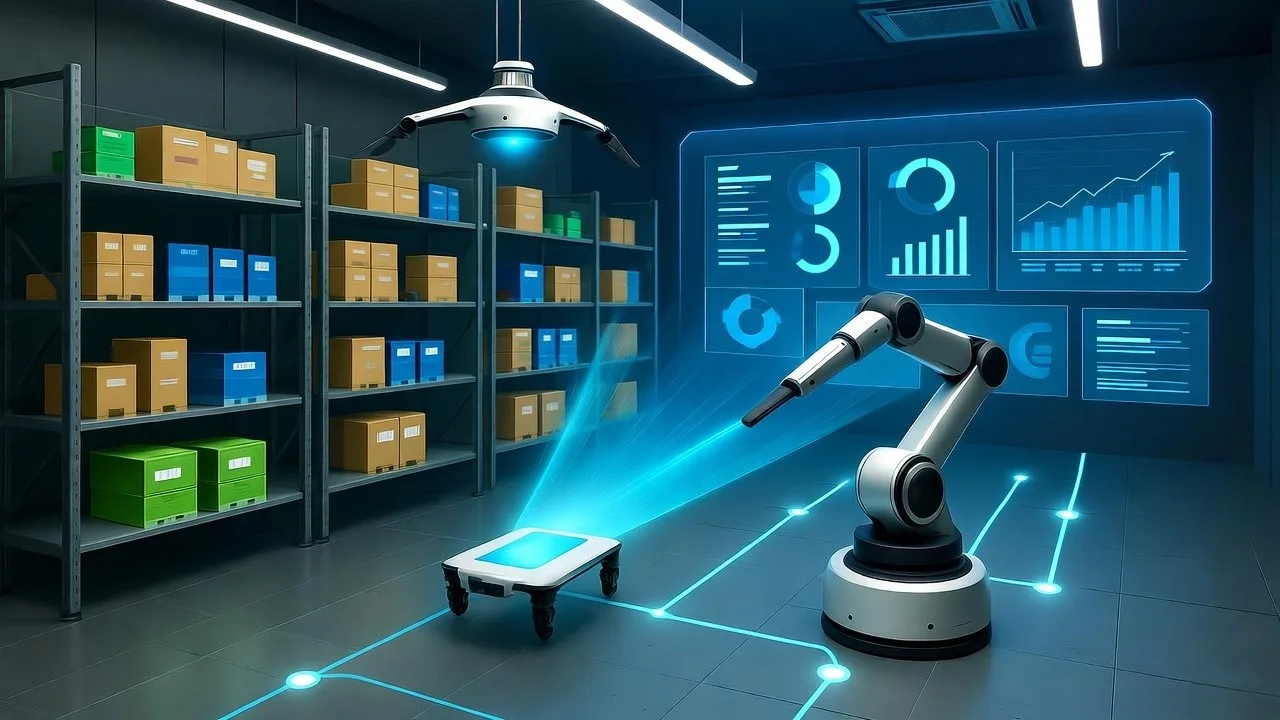
Transforming US Supply Chains: The Complete Guide to AI Inventory Optimization in 2025
As I reviewed the real-time inventory data from a Michigan automotive parts manufacturer, the problem became painfully clear: they were simultaneously experiencing 15% stockouts on critical components while maintaining 60 days of excess inventory for slow-moving items. This cost them nearly $2.3 million annually in carrying costs and lost production. After implementing our AI agents, they achieved what once seemed impossible reducing stockouts to under 3% while cutting excess inventory by 35% within six months.
At Nunar, we’ve deployed over 35 industrial AI systems across U.S. manufacturing and retail facilities, witnessing firsthand how AI inventory optimization has evolved from a competitive advantage to an operational necessity. With the AI in inventory management market projected to grow from $7.38 billion in 2024 to $24.96 billion by 2029, American businesses face a critical choice: adapt or fall behind.
AI inventory optimization uses machine learning algorithms to analyze historical data, market trends, and real-time signals to predict demand, automate replenishment, and maintain optimal stock levels across locations. Companies leveraging these systems report 20-30% reductions in inventory costs, 15-30% improvements in supply chain efficiency, and 60% fewer stockouts.
Why Traditional Inventory Management Is Costing You Millions
Traditional inventory management methods are crumbling under the weight of modern supply chain complexity. Spreadsheet-based forecasting and static reorder points cannot adapt to today’s volatile demand patterns and supply disruptions.
The financial implications are staggering. Research shows that stockouts alone cost retailers nearly $1 trillion globally each year, while excess and obsolete inventory in sectors like fashion reached between $70-140 billion in 2023 . The average U.S. manufacturer carries approximately 30% excess stock, tying up working capital and inflating storage costs .
The Three Pillars of Inventory Waste
- Stockouts: When DHL optimized its transportation processes with Blue Yonder’s AI platform, it achieved 7% direct savings through improved vehicle usage and stop consolidation, dramatically reducing stockout-related disruptions .
- Overstock: Traditional systems relying on fixed reorder points consistently overcompensate for demand uncertainty. One electronics manufacturer we worked with discovered 45% of their SKUs were overstocked by an average of 62 days’ supply.
- Dead Inventory: McKinsey reports that slow-moving and dead inventory typically make up 20-30% of a company’s total stock, silently eroding profitability through write-offs and storage costs .
How AI Inventory Optimization Actually Works
AI-powered inventory optimization represents a fundamental shift from reactive stock management to predictive, automated supply chain operations. These systems leverage multiple technologies to create a responsive, efficient inventory ecosystem.
Core Components of AI Inventory Optimization Systems
- Demand Forecasting with Predictive Analytics
AI algorithms analyze historical sales data, seasonal patterns, market trends, and external factors like weather or economic indicators to predict future demand with up to 95% accuracy . Unlike traditional methods, these systems continuously learn and adapt to new data patterns. - Automated Replenishment
Systems dynamically calculate optimal reorder points and quantities, automatically generating purchase orders when inventory approaches threshold levels. Businesses using these features report up to 60% reductions in stockouts . - Multi-Echelon Inventory Optimization (MEIO)
Advanced systems optimize inventory across entire supply networks—from suppliers to warehouses to retail locations—balancing stock to meet service level targets while minimizing total inventory investment. - Real-Time Visibility and IoT Integration
Sensor networks and IoT devices provide granular, real-time inventory tracking, enabling systems to respond immediately to demand shifts or supply disruptions .
The AI Technology Stack Powering Modern Inventory Management
Real-World AI Success Stories from U.S. Companies
Walmart’s AI-Driven Inventory Transformation
Walmart implemented Blue Yonder’s AI-powered supply chain platform to automate demand forecasting and inventory replenishment across thousands of stores. The results were substantial: improved product availability, minimized excess inventory, reduced operational costs, and better shelf availability for customers .
BMW’s Predictive Maintenance Success
At its Spartanburg, South Carolina plant, BMW reduced production downtime by 40% through autonomous AI systems that predict equipment failures and self-optimize production lines . The system forecasts equipment failures 72 hours in advance with 95% accuracy, automatically scheduling maintenance during low-production windows.
Pharmaceutical Company Achieves 47% Forecast Accuracy Improvement
A leading pharmacy services company operating across the Americas, Europe, and Asia Pacific faced recurring stockouts across 25 sites. After implementing Kinaxis’s AI-powered demand planning, they achieved a 47% increase in forecast accuracy, 14% reduction in on-hand inventory, and 34% improvement in inventory turns within just three months .
Implementing AI Inventory Optimization: A Practical Roadmap
Based on our experience deploying these systems across U.S. manufacturing and retail organizations, we’ve developed a phased approach that ensures success while minimizing disruption.
Phase 1: Strategic Foundation and Use Case Identification (Weeks 1-4)
Begin with a comprehensive assessment of your current inventory processes. Identify specific pain points—whether frequent stockouts, excessive carrying costs, or manual inefficiencies. Look for patterns: Are certain product categories consistently problematic? Do specific locations underperform?
Select initial use cases with clear ROI potential. One client started with MRO (maintenance, repair, and operations) inventory, representing just 8% of their total inventory value but 42% of their stockout incidents. The quick wins built organizational confidence for broader implementation.
Phase 2: Data Readiness and Infrastructure Assessment (Weeks 5-8)
AI systems are only as good as the data they process. Conduct a thorough data audit evaluating existing data quality, accessibility, and gaps across departments and systems. One common mistake is underestimating data preparation—according to McKinsey, 70% of AI projects face obstacles related to data quality and infrastructure preparedness .
Phase 3: Technology Partner Selection and Solution Design (Weeks 9-12)
Choose vendors with proven manufacturing and retail AI experience. The market offers various specialized solutions:
- Blue Yonder: Comprehensive supply chain platform with strong inventory optimization capabilities
- Kinaxis: Specialized in demand and supply planning with strong scenario analysis
- o9 Solutions: Digital Brain platform for integrated business planning
- ThroughPut.AI: Focuses on bottleneck elimination and inventory optimization
- Nunar: Custom AI agents tailored to specific operational environments
Phase 4: Phased Implementation and Continuous Improvement (Months 4-12)
Begin with controlled pilot programs to validate AI performance in real conditions. Establish clear metrics and dashboards to measure improvements in inventory turnover, service levels, and carrying costs. One Midwest manufacturer we worked with started with a single product category, achieving 25% inventory reduction before expanding plant-wide.
Overcoming Implementation Challenges
Even with the best technology, organizations face common implementation hurdles:
Data Integration with Legacy Systems
Many U.S. manufacturing facilities operate with equipment and systems not designed for AI integration. Successful implementations often use edge computing devices as bridges between legacy equipment and modern AI systems, along with digital twin technology to create virtual models of physical assets .
Workforce Adaptation and Skill Gaps
The human element often proves more challenging than the technological one. Develop comprehensive upskilling programs for existing employees and create cross-functional teams combining technology experts with operations personnel. One Pennsylvania plant established an “AI Center of Excellence” with representatives from each department to drive adoption.
Security and Compliance
Particularly crucial in regulated industries, successful implementations employ zero-trust security architectures for connected industrial systems and build compliance requirements directly into AI systems from the outset.
The Economic Impact of AI Inventory Optimization
The financial benefits of AI-powered inventory management extend far beyond simple cost reduction.
Companies implementing these systems report comprehensive financial improvements:
The Future of AI Inventory Management in the U.S.
As we look toward 2026 and beyond, several trends are shaping the evolution of AI inventory optimization:
Autonomous Supply Chains
Agentic AI systems that can perceive their environment, make decisions, and take action without human intervention are becoming increasingly sophisticated. These systems don’t just recommend actions; they execute them autonomously within defined parameters.
Hyper-Personalization at Scale
AI enables inventory strategies tailored to specific customer segments, stores, or even individual customers. One retailer we work with now maintains different inventory profiles for each of their 200+ locations based on local buying patterns and demographics.
Prescriptive Analytics and Scenario Planning
Beyond predicting what will happen, advanced systems can now recommend specific actions and simulate outcomes across countless “what-if” scenarios. This allows organizations to prepare for disruptions before they occur.
Integrated Sustainability Optimization
Leading systems now balance traditional financial metrics with environmental impact, optimizing inventory to reduce waste, minimize transportation emissions, and support circular economy initiatives.
People Also Ask
What is the typical ROI for AI inventory optimization projects?Companies typically achieve 150-300% return on investment within two years of implementation, with payback periods often under 12 months.
Can AI inventory optimization work for small businesses?Absolutely. Cloud-based solutions with subscription pricing have made AI inventory management accessible to businesses of all sizes, with specific solutions tailored to SMB needs.
What data is required to get started for AI Inventory Optimization?At minimum, you’ll need 2-3 years of historical sales data, current inventory records, and supplier lead time information. The more data sources you can incorporate, the more accurate your forecasts will be.
How does AI handle sudden demand shocks or supply disruptions?Advanced systems incorporate real-time demand sensing and external data feeds to detect disruptions early and automatically adjust safety stock levels and replenishment strategies.
-

Transforming UAE Skies: How AI Agents Are Revolutionizing Air Traffic Control
Transforming UAE Skies: How AI Agents Are Revolutionizing Air Traffic Control
For decades, air traffic control has depended on human expertise and vigilant monitoring to ensure the safety of increasingly crowded skies. Today, the United Arab Emirates is leading a quiet revolution in automation in air traffic control, setting a global example of how technology and precision can coexist in one of the world’s most complex aviation environments.
At Ras Al Khaimah International Airport, a remote system upgrade completed during COVID lockdowns showed how legacy circuits could be replaced with IP-based communication networks. This transition proved that even the most traditional ATC systems could adopt digital transformation without disrupting operations.
Transform UAE Airspace Operations with AI Precision
Discover how automation is reshaping air traffic control from predictive routing to AI-driven safety systems.
It was one of the first clear steps toward full automation in air traffic control across the UAE.
The State of UAE Air Traffic Management
The UAE’s airspace is among the world’s most complex and rapidly evolving. Hosting major international hubs like Dubai International and Abu Dhabi International, the region has become a global connectivity crossroads. This growth comes with inherent challenges that traditional ATC systems struggle to address efficiently.
Current Pain Points in UAE ATC
- Rising Traffic Volume: With global passenger numbers expected to reach 4.7 billion by 2025, UAE airspace is experiencing unprecedented congestion
- Human Factor Limitations: Controllers face cognitive overload during peak operations, increasing potential for human error
- Infrastructure Costs: Maintaining and upgrading traditional ATC systems requires significant capital investment
- Coordination Complexity: Managing increasing numbers of drones alongside commercial aircraft creates new operational challenges
The UAE government recognizes these challenges. Through initiatives like the UAE Artificial Intelligence Strategy 2031 and Abu Dhabi’s AED 13 billion ($3.5 billion) investment in AI-driven digital transformation, the country has committed to technological solutions . The Roads and Transport Authority’s Artificial Intelligence Strategy 2030 further positions Dubai as a global leader in AI-powered mobility, including aviation infrastructure .
How AI Agents Transform Air Traffic Control
AI agents represent a fundamental shift from traditional automation. Unlike rule-based systems, these intelligent agents can perceive their environment, make decisions, and act autonomously to achieve specific goals. In ATC applications, this capability translates to systems that don’t just assist controllers but actively manage complex operational scenarios.
Want to See AI in Action?
Request a guided walkthrough of how GPT-powered automation can streamline airspace management, reduce delays, and enhance control tower efficiency.
Core Capabilities of ATC AI Agents
- Predictive Flow Management
AI agents analyze historical traffic patterns, weather data, and real-time aircraft positions to predict congestion points up to 4 hours in advance. At Dubai International, early implementations have reduced traffic delays by 25% through anticipatory routing . - Dynamic Conflict Detection and Resolution
Using machine learning algorithms, AI agents continuously monitor aircraft separation, identifying potential conflicts earlier than human controllers. These systems can automatically suggest or implement course corrections while maintaining safety margins. - Intelligent Resource Allocation
From runway assignments to gate management, AI agents optimize resource utilization based on multiple variables including aircraft size, passenger connections, and ground crew availability. - Automated Communication Handling
Systems like the Copperchase ATC Messaging platform deployed at Ras Al Khaimah International Airport now process AFTN messages through AI-powered interfaces, reducing manual message handling by up to 70% .
Real-World Implementation: AT-Elog in UAE Airspace
One standout example is AT-Elog, an emerging private ATC company making significant strides in the UAE. Their AI-powered platform currently manages 4.5 million flights annually across UAE airspace, featuring:
- Real-time ATC radar integration with AI-powered flight path predictions
- Cloud-based dashboards for airport operations
- Seamless integration with smart airport IoT solutions
The modular architecture ensures scalability from regional airports to national-level air navigation service providers, demonstrating how AI agent systems can adapt to diverse operational requirements.
Building Effective AI Agents for ATC: A Practical Framework
Developing AI agents for critical infrastructure like ATC requires meticulous planning and execution. Through our work at NunarIQ with UAE aviation clients, we’ve refined a structured approach that ensures reliability and regulatory compliance.
Phase 1: Use Case Evaluation and Prioritization
Not all ATC functions are equally suited for AI agent implementation. We evaluate potential use cases against specific criteria:
- Impact Potential: Tasks with high cognitive load or frequent repetition deliver the greatest ROI
- Data Availability: Processes with rich historical and real-time data streams enable more effective training
- Regulatory Considerations: Functions with well-defined parameters are easier to certify initially
- Safety Criticality: We typically begin with decision-support functions before progressing to fully autonomous operations
Let’s Build the Future of Air Traffic Automation Together.
Whether you’re exploring AI integration or scaling automation across multiple control centers, our team can help architect the transition.
Table: ATC AI Agent Implementation Priority Matrix
Priority Level Use Cases Implementation Complexity Expected Efficiency Gain High Flight data processing, Message routing, Resource scheduling Low 40-70% reduction in manual effort Medium Conflict detection, Weather integration, Traffic flow management Medium 25-50% improvement in decision accuracy Low (Initial) Emergency response, Separation assurance, Final approach decisions High Critical safety enhancement Phase 2: Data Infrastructure and Integration
Successful AI agents require robust data foundations. In UAE ATC environments, this typically involves:
- Federated Data Layer: Creating unified access to disparate systems including radar, flight plans, weather, and airport operations
- Real-time Processing: Implementing stream processing architectures capable of handling high-velocity ATC data
- Historical Analysis: Building repositories of annotated scenarios for training and validation
One of our UAE clients achieved a 70% reduction in manual errors after implementing a unified data infrastructure supporting their AI agents for invoice processing and reconciliation, principles equally applicable to ATC data flows.
Phase 3: Agent Development and Training
The core development process focuses on creating autonomous systems that can handle ATC’s unique demands:
- Multi-Agent Architecture: Deploying specialized agents for distinct functions (surveillance, coordination, prediction) that collaborate toward shared objectives
- Reinforcement Learning: Training agents through simulation of thousands of hours of air traffic scenarios
- Human-AI Collaboration Design: Creating intuitive interfaces that maintain controller situational awareness while leveraging AI capabilities
Phase 4: Validation and Certification
For ATC applications, rigorous validation is non-negotiable. Our approach includes:
- Digital Twins: Creating virtual replicas of UAE airspace to test agents under various conditions
- Procedural Integration: Working with controllers to refine agent behavior and interaction protocols
- Regulatory Alignment: Engaging early with GCAA (UAE General Civil Aviation Authority) to ensure compliance throughout development
Overcoming Implementation Challenges in UAE ATC
Despite the clear benefits, integrating AI agents into ATC systems presents specific challenges that require strategic approaches.
Regulatory Compliance and Certification
The UAE’s regulatory framework for aviation safety is rightly rigorous. AI agents must demonstrate reliability that meets or exceeds human performance standards.
We address this through:
- Explainable AI Techniques: Developing systems that can articulate their reasoning for decisions
- Progressive Certification: Beginning with decision-support applications and gradually expanding autonomy as trust is established
- Continuous Monitoring: Implementing robust logging and performance tracking for ongoing validation
Cultural Adoption and Change Management
Even the most advanced AI agents deliver limited value without controller acceptance.
Successful implementations include:
- Co-Design Approaches: Involving controllers throughout the development process
- Phased Deployment: Introducing agents initially for non-critical functions to build confidence
- Comprehensive Training: Ensuring controllers understand both the capabilities and limitations of AI systems
Technical Integration with Legacy Systems
UAE ATC environments often combine cutting-edge systems with established infrastructure.
Our integration strategy focuses on:
- Middleware Solutions: Creating adapters that enable AI agents to interface with existing ATC systems
- Graceful Degradation: Designing systems that maintain core functionality even when advanced features are unavailable
- Progressive Modernization: Using AI implementation as an opportunity to systematically update technical infrastructure
The Future of AI in UAE Air Traffic Management
The evolution of AI agents in UAE air traffic control is moving steadily toward more autonomous and data-driven operations. Several developments illustrate how automation in air traffic control is shaping the next decade of aviation across the Emirates:
1. Autonomous Tower Operations
- Digital tower technology allows multiple airports to be monitored and managed remotely from centralized hubs.
- AI agents analyze real-time video, radar, and sensor data to assist controllers with faster decision-making.
- This approach delivers greater efficiency for regional airports in the UAE, especially those with fluctuating traffic volumes.
2. Urban Air Mobility Integration
- The UAE is preparing for aerial mobility services such as the Joby S4 aerial taxi in Dubai, which could connect Dubai International Airport to Palm Jumeirah in roughly ten minutes.
- AI agents will play a crucial role in managing low-altitude airspace, coordinating conventional aircraft, vertical takeoff and landing vehicles, and drones within dense urban areas.
- Effective automation in air traffic control will be essential for balancing safety and flow as new airspace users emerge.
3. Predictive Safety Management
- AI-driven systems are evolving from reactive safety measures into predictive risk management tools.
- By studying near-miss events, maintenance data, and flight patterns, AI agents can identify and mitigate risks before incidents occur.
- This predictive approach strengthens the reliability and safety of air operations across the UAE.
4. AI-Driven Training and Simulation
- At the IFATCA 64 conference in Abu Dhabi, new AI-based training methods were introduced for air traffic controllers.
- Virtual reality simulations and adaptive learning programs help trainees experience realistic scenarios.
- AI agents personalize each session, adjusting to the individual controller’s progress and decision-making style, reinforcing the practical side of automation in air traffic control.
People Also Ask
How are private ATC companies like AT-Elog contributing to AI adoption in UAE airspace?Private ATC companies are driving innovation by deploying AI-powered systems more rapidly than traditional government-run systems. AT-Elog specifically manages 4.5 million flights annually across UAE airspace using AI-powered flight path predictions and cloud-based dashboards that enhance both efficiency and safety.
What measurable benefits have UAE organizations achieved through AI automation?UAE companies implementing AI automation report reducing manual work by 40+ hours per employee weekly, with one logistics firm achieving a 70% reduction in manual errors and 60% faster processing cycles. Similar efficiency gains are achievable in ATC environments through targeted AI agent implementation.
How does the UAE regulatory environment support AI innovation in aviation?The UAE has established supportive frameworks including regulatory sandboxes through DIFC Innovation Hub and ADGM Regulation Lab, combined with significant government investment in AI transformation. These initiatives create controlled environments for testing and scaling AI solutions in aviation and other critical sectors.