Accounts Payable OCR Software for Logistics and Transportation Enterprises
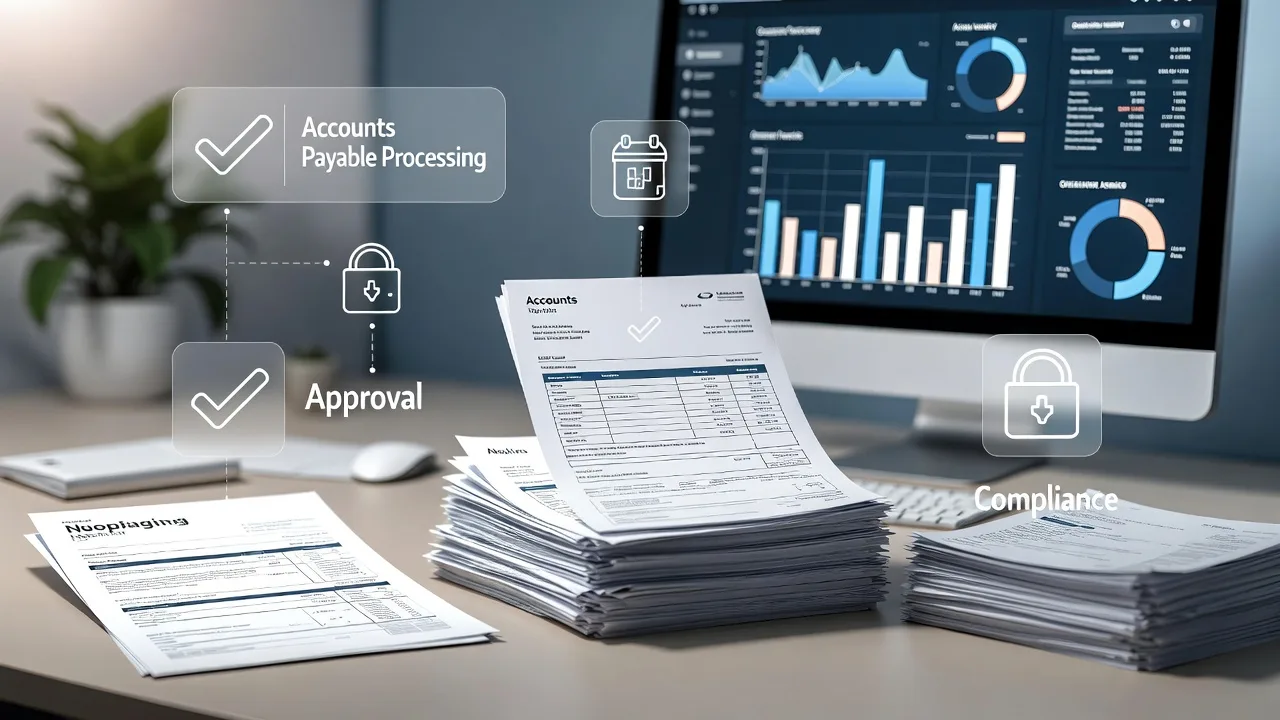
Accounts payable (AP) OCR software uses Optical Character Recognition and Artificial Intelligence to automatically read and extract data from invoices, receipts, and other financial documents. Modern solutions go beyond simple text scanning to handle complex layouts, validate data against purchase orders (3-way matching), and route invoices for approval.
Top Accounts Payable OCR Software (2025–2026)
The following solutions are widely recognized for their accuracy and integration capabilities:
- Tipalti: Best for global enterprises and multi-national operations. It offers end-to-end AP automation, including tax compliance and global payments in 120 currencies.
- ABBYY FlexiCapture: Best for complex, high-volume needs. Known for exceptional accuracy and the ability to process millions of documents without rigid templates.
- Yooz: Best for mid-market businesses. It integrates with over 250 financial systems and focuses on a user-friendly, real-time AI experience.
- Lido: Best for speed and simplicity. A flexible platform that extracts data with 99%+ accuracy directly into spreadsheets or databases without IT setup.
- AvidXchange: Best for full AP workflows. It provides comprehensive fraud detection and purchase order management alongside high-accuracy invoice scanning.
- Nanonets: Best for unstructured data. Uses deep learning to handle diverse, non-standard document layouts and allows for custom model training.
- DocuClipper: Best for QuickBooks users. Specializes in extracting data from bank statements and invoices for direct import into QuickBooks.
- Dext Prepare: Best for small businesses and accountants. Popular for its mobile-first design and 99%+ accuracy for receipts and bills.
Key Benefits of Implementation
- Speed: Reduces processing time by up to 80% compared to manual entry.
- Accuracy: Reaches 95-99% accuracy, significantly reducing common human errors like typos or transpositions.
- Cost Savings: Can save businesses an average of $5–$15 per invoice processed.
- Fraud Prevention: Automated systems can flag duplicate invoices and verify that vendor details match your approved records.
- Early Discounts: Faster processing allows your team to take advantage of early payment discounts from vendors.
Critical Features to Look For
- Template-Free Extraction: AI that “understands” layouts rather than relying on rigid zones for data.
- ERP Integration: Seamless syncing with systems like NetSuite, SAP, Sage, or QuickBooks.
- Validation Rules: Automatic cross-checks for mathematical errors, tax compliance, and PO matching.
- Audit Trails: Digital logs of every action, approval, and exception for transparency.
What Is Accounts Payable OCR Software?
Accounts payable OCR software uses optical character recognition combined with machine learning to extract invoice data such as vendor name, invoice number, line items, taxes, totals, and payment terms from unstructured documents and convert it into structured data for AP systems.
In logistics and transportation, AP OCR must also handle:
- Fuel surcharge breakdowns
- Lane-based freight pricing
- Accessorial charges like detention or demurrage
- Multi-page carrier invoices
- Rate cards and contract references
Basic OCR reads text. Enterprise AP OCR understands context, validates values, and flags exceptions.
Why Logistics AP Breaks at Scale?
Logistics finance teams face complexity that traditional AP automation was never designed for.
| AP Challenge | Why It Happens in Logistics | Business Impact |
|---|---|---|
| Invoice mismatches | Rates vary by lane, weight, fuel index | Delayed payments, disputes |
| Duplicate invoices | Carriers resend invoices after follow-ups | Overpayments |
| Manual validation | Line items must match TMS data | High processing cost |
| Poor audit trails | Data spread across emails and PDFs | Compliance risk |
| Long cycle times | High invoice volume, low standardization | Carrier dissatisfaction |
OCR alone does not solve these problems. The solution requires AI agents that connect finance data with logistics systems.
How Accounts Payable OCR Software Works in Logistics?
Modern AP OCR for logistics operates as a pipeline, not a single step.
Step 1: Invoice Ingestion
Invoices enter the system through multiple channels:
- Email inboxes
- Vendor portals
- SFTP or API feeds
- Mobile uploads from depots
AI agents classify documents by type before OCR is applied.
| Input Type | AI Agent Action |
|---|---|
| Carrier freight invoice | Route to freight validation |
| Fuel invoice | Trigger fuel reconciliation |
| Maintenance bill | Route to asset cost allocation |
Step 2: Intelligent Data Extraction
OCR models trained on logistics documents extract both header and line-level data.
| Extracted Data | Logistics Context |
|---|---|
| Invoice number | Carrier billing reference |
| Lane details | Origin, destination |
| Fuel surcharge | Indexed to fuel rate |
| Accessorial fees | Detention, layover, tolls |
| Tax components | Jurisdiction-specific |
Unlike generic OCR, logistics-focused models understand repeating line items, rate tables, and multi-page invoices.
Step 3: AI-Based Validation and Matching
This is where AI agents matter.
Extracted invoice data is validated against:
- Transportation Management Systems (TMS)
- Contract rate tables
- Fuel price indexes
- Proof of delivery (POD) records
| Validation Type | Outcome |
|---|---|
| Rate match | Auto-approve |
| Quantity mismatch | Flag exception |
| Duplicate detection | Block payment |
| Missing POD | Hold invoice |
Instead of humans checking every invoice, AI agents review only exceptions.
Step 4: Approval, Posting, and Payment
Once validated:
- Approved invoices sync to ERP systems
- Payment terms are calculated automatically
- Audit logs are generated
All actions are traceable, which matters for enterprise compliance.
From OCR to AI Agents: The Real Shift
Most vendors stop at “invoice capture.” That is not enough for logistics.
AI agents extend AP OCR by taking actions, not just extracting data.
| Capability | OCR-Only Tools | AI Agent-Driven AP |
|---|---|---|
| Data extraction | Yes | Yes |
| Context awareness | Limited | High |
| Cross-system validation | Manual | Automated |
| Exception handling | Human-led | AI-triaged |
| Continuous learning | No | Yes |
For logistics enterprises, AI agents act as digital AP analysts, trained on your contracts, vendors, and operational rules.
Key Features Enterprise Buyers Should Evaluate
If you are buying accounts payable OCR software for logistics, these are not optional features.
Logistics-Specific Document Intelligence
The system must understand freight invoices, fuel bills, and accessorial structures, not just generic AP documents.
AI-Based Matching, Not Rules Only
Static rules fail when rates fluctuate. AI agents adapt based on historical patterns and contract context.
ERP and TMS Integration
| System | Why It Matters |
|---|---|
| ERP | Financial posting |
| TMS | Freight validation |
| Fuel management | Surcharge verification |
| Vendor master | Payment accuracy |
Explainability and Auditability
Every approval or rejection must be traceable. Black-box AI is a liability in finance.
Measurable Business Impact
Enterprises adopting AI-driven AP OCR in logistics typically see:
| Metric | Before | After |
|---|---|---|
| Invoice processing time | 5–10 days | Same day |
| Manual touch rate | 80% | <20% |
| Duplicate payments | High risk | Near zero |
| Audit readiness | Reactive | Continuous |
| AP cost per invoice | High | Significantly reduced |
These are operational outcomes, not marketing promises.
Security and Compliance Considerations
Accounts payable touches sensitive financial and vendor data.
Enterprise-grade AP OCR software must support:
- Role-based access controls
- Encrypted data at rest and in transit
- Full audit logs
- Compliance with regional tax and finance regulations
AI agents must operate within defined approval boundaries.
How This Fits Into a Broader AI Logistics Platform
For logistics enterprises building AI maturity, AP OCR should not be isolated.
It becomes part of a larger AI agent ecosystem that includes:
- Freight audit and payment
- Fuel reconciliation
- Asset cost tracking
- Vendor performance analysis
AP data feeds intelligence back into pricing, procurement, and carrier negotiations.
People Also Ask
No. OCR only converts text to data. Logistics AP requires validation against TMS, contracts, and fuel indexes. AI agents are necessary to automate decisions and exception handling.
Accuracy depends on training data and validation layers. Logistics-trained OCR combined with AI agents typically achieves high extraction accuracy, with near-perfect results after automated matching.
Yes, if designed for logistics. Enterprise solutions support multi-page invoices, repeated line items, and rate tables common in carrier billing.
AI agents detect duplicates by analyzing invoice numbers, amounts, vendor behavior, and historical patterns, not just exact matches.
Implementation timelines vary, but enterprise systems are typically deployed in phases, starting with extraction and validation, then expanding into full AI-driven automation.