
Tag: automation

  • The Real Cost of “Free” AI Answer Generators: A 2026 Guide for American Developers

    The Real Cost of “Free” AI Answer Generators: A 2026 Guide for American Developers

    The Real Cost of “Free” AI Answer Generators: A 2026 Guide for American Developers

    In 2025 alone, American businesses saved over 40% in customer support costs by switching to automated response systems. As an AI developer who has built and deployed over 50 custom Large Language Model (LLM) interfaces for US-based startups, I see the same pattern every week. Companies want the speed of an ai answer generator free of charge, but they often sacrifice data privacy or factual accuracy to get it.

    The landscape in America has shifted. We are no longer just looking for a chatbot that talks; we need engines that cite sources, respect US data laws like CCPA, and integrate with our existing tech stacks. This guide breaks down the most reliable free tools available today and explains how we build these systems to ensure they don’t hallucinate.

    An ai answer generator free tool provides instant, automated responses to user queries using LLMs. The best versions offer cited sources, real-time web access, and strict data privacy for US users.

    Why America Leads the Shift to AI Answer Engines?

    The United States remains the primary hub for LLM innovation. From OpenAI in San Francisco to Anthropic’s research labs, the tools we use daily are shaped by American standards for “Helpfulness, Honesty, and Harmlessness.” When you use a free tool here, you are likely interacting with a model trained on massive clusters of NVIDIA H100s sitting in data centers across Virginia or Iowa.

    The Search Revolution in the US

    Traditional search is dying. Users in New York or Los Angeles no longer want to click ten blue links. They want a single, definitive answer. This is why “AI Overviews” have become the primary way Americans consume information. If your business doesn’t appear in these answers, you effectively don’t exist in the digital marketplace.

    Top Free AI Answer Generators for US Users

    When I consult for SaaS founders in Austin or Seattle, I recommend tools based on their specific logic engines. Not all “free” tools are equal. Some are great for coding, while others excel at creative prose or factual research.

    1. Perplexity AI: The Researcher’s Choice

    Perplexity has changed how we think about search in the US. Unlike a standard chatbot, it acts as an “answer engine.”

    • Real-time Accuracy: It browses the live web to find answers.
    • Citations: Every claim has a footnote linking to a source like The New York Times or TechCrunch.
    • Free Tier: Users get unlimited standard searches using their proprietary “Sonar” model.

    2. Claude by Anthropic: The Ethical Powerhouse

    Based in San Francisco, Anthropic focuses on “Constitutional AI.” For American developers, Claude is often the preferred choice because its writing style feels more human and less “robotic” than its competitors.

    • Large Context Window: You can paste long documents (like a US patent filing) and ask questions.
    • Safety First: It is less likely to generate harmful or biased content compared to unaligned models.

    3. Google Gemini: The Ecosystem King

    If your workflow lives in Google Workspace (Docs, Sheets, Gmail), Gemini is the most frictionless ai answer generator free option. It uses Google’s massive Knowledge Graph to pull facts that other models might miss.

    How We Evaluate AI Answer Quality in America?

    As an AI development company, we use specific metrics to test if a tool is ready for professional use. We don’t just “vibes-check” the output. We look at:

    1. Latency (Response Speed)

    In the fast-paced US market, a 5-second delay is a lifetime. We measure Time to First Token (TTFT). A good free tool should start printing its answer within 500 milliseconds.

    2. Hallucination Rate

    Does the AI make up facts? We test this by asking about specific American legal codes or niche industry standards. If a tool fails to say “I don’t know” when it’s unsure, we flag it as high-risk.

    3. Data Residency

    For our clients in healthcare or finance, where the data sits matters. We prioritize tools that allow for US-based data processing to comply with local regulations.

    Comparison of Leading Free AI Answer Tools (2026)

    Tool NameBest ForModel AccessCitations?US Data Privacy
    PerplexityFast ResearchSonar / GPT-4o (Limited)Yes (High Quality)Standard
    ClaudeCreative WritingClaude 3.5 SonnetNo (Internal)High (Constitutional)
    ChatGPTGeneral PurposeGPT-4o miniOptionalStandard
    Microsoft CopilotOffice UsersGPT-4 / SearchYesEnterprise Grade
    GeminiGoogle UsersGemini 1.5 FlashLinks to SearchHigh Integration

    The Technology Behind the Answer: RAG Explained

    Most people think an AI “knows” things. It doesn’t. It predicts the next word. To make an ai answer generator free version actually useful for a business, we use a technique called Retrieval-Augmented Generation (RAG).

    Instead of relying on the AI’s memory (which might be outdated), RAG allows the system to:

    1. Retrieve: Search a specific database or the web for the latest info.
    2. Augment: Add that info to the user’s prompt.
    3. Generate: Create an answer based only on the provided facts.

    This is how we build customer support bots for American e-commerce brands that never lie about shipping prices or return policies.

    Integrating AI Generators into Your US Business Workflow

    If you are a solo entrepreneur in Florida or a marketing manager in Chicago, you shouldn’t just copy-paste from an AI. You should integrate it.

    Content Strategy

    Use an ai answer generator free tool to outline your blog posts. If you are writing about “California labor laws,” ask the AI to find the most recent updates from the Official California Legislative Information site.

    Customer Support

    You can use free APIs (like those from Groq or Together AI) to build a basic response engine. These platforms often offer free trial credits that allow for thousands of queries before you ever see a bill.

    Coding Assistance

    For developers, tools like GitHub Copilot or the free tier of Cursor use AI answer engines to debug Python or React code in real-time. This has increased developer productivity in the US by an estimated 55%.

    People Also Ask (FAQ)

    Is there a truly free AI answer generator?

    Yes, tools like Perplexity, ChatGPT, and Claude offer robust free tiers that provide high-quality answers without a subscription. Most of these use “mini” models for free users to keep costs low.

    Which AI gives the most accurate answers?

    Perplexity AI is currently the most accurate for factual queries because it cites its sources directly from the live web. This allows you to verify every claim it makes.

    Are free AI tools safe for business data in the US?

    Most free AI tools use your data to train their models unless you opt-out in the settings. For sensitive US business data, we recommend using Enterprise versions or “Zero Data Retention” APIs.

    Can I use AI answers for SEO content?

    Yes, but you must edit them for E-E-A-T (Experience, Expertise, Authority, and Trust) to rank on Google. Google’s helpful content updates prioritize “people-first” content over raw AI output.

    What is the best AI for writing code for free?

    Claude 3.5 Sonnet is widely considered the best model for coding logic and debugging in 2026. Its ability to understand complex architecture is currently unmatched in free tiers.
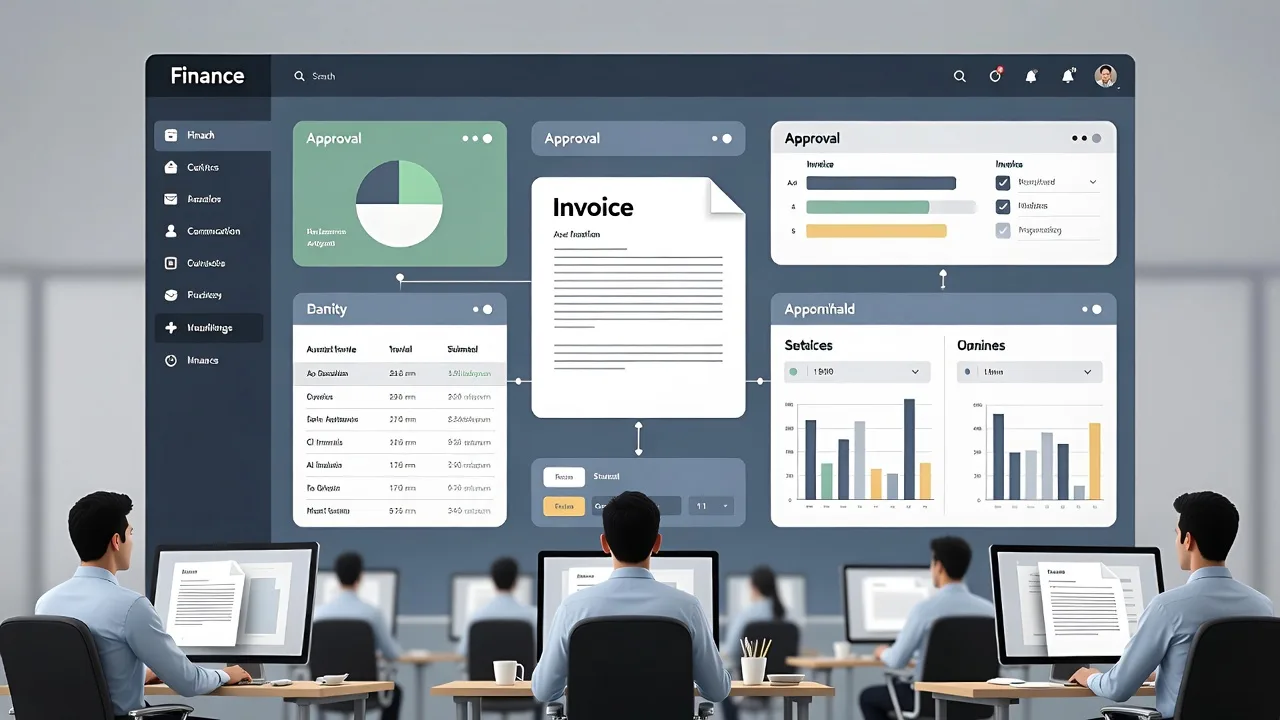
  • ERP System Accounts Payable

    ERP System Accounts Payable

    ERP System Accounts Payable: How Modern Enterprises Are Re-Engineering Payables with AI

    In an ERP (Enterprise Resource Planning) system, the Accounts Payable (AP) module functions as a sub-ledger that tracks and manages a company’s short-term debt obligations to its suppliers and vendors. It is a core component of the broader Procure-to-Pay (P2P) process, ensuring that invoices are verified, approved, and paid on time. 

    Core Functions of ERP Accounts Payable

    • Invoice Management: Capturing incoming vendor invoices through manual entry or automated tools like OCR (Optical Character Recognition).
    • Three-Way Matching: Automatically verifying that the vendor invoice matches the purchase order (PO) and the goods receipt note (GRN) before approval.
    • Approval Workflows: Routing invoices through pre-defined internal hierarchies (e.g., department heads or the CFO) for digital sign-off.
    • Payment Execution: Scheduling and processing payments via ACH, wire transfer, check, or virtual credit cards.
    • General Ledger Sync: Automatically updating the General Ledger to reflect liabilities and expenses, ensuring a “single source of truth” for financial reporting. 

    Leading ERP Systems with Robust AP Modules

    ERP System Best ForKey AP Strengths
    Oracle NetSuiteHigh-growth & mid-marketReal-time visibility, multi-entity consolidation, and deep scalability.
    SAP S/4HANALarge global enterprisesAdvanced AI for anomaly detection and complex global compliance.
    Microsoft Dynamics 365Microsoft-centric ecosystemsStrong integration with Office tools and flexible cloud/on-premise options.
    Sage IntacctMid-sized & non-profitsHighly modular with powerful API-driven third-party integrations.
    AcumaticaSMBs seeking flexibilityUnlimited-user licensing model and modern cloud interface.

    Enhancing ERP with AP Automation 

    Many companies layer third-party AP Automation software on top of their ERP to handle “last-mile” tasks that core ERPs may find cumbersome, such as: 

    • Supplier Portals: Allowing vendors to self-onboard and check payment statuses.
    • Global Tax Compliance: Automated collection of W-9/W-8 forms and tax withholding calculations.
    • Mass Payments: Executing hundreds of international payments in local currencies with one click.
    • Popular Add-ons: TipaltiStampliBILL, and Coupa

    Accounts payable has quietly become one of the most strategic functions inside large enterprises. Especially in logistics and transportation, where thousands of invoices move daily across carriers, fuel vendors, ports, warehouses, customs agents, and service partners, the accounts payable process is no longer just about paying bills. It is about cash visibility, vendor trust, compliance, and operational velocity.

    An ERP system accounts payable module sits at the center of this transformation. But traditional ERP workflows were not built for the volume, variability, and speed that modern logistics networks demand. This is where AI-driven accounts payable inside ERP systems is changing the equation.

    This article breaks down how enterprises should think about ERP system accounts payable today, what gaps still exist, and how AI agents purpose-built for logistics and transportation are redefining what “automation” really means.

    Why ERP System Accounts Payable Is No Longer a Back-Office Function?

    In most enterprises, accounts payable was historically treated as a cost center. The mandate was simple: process invoices accurately and avoid late payments. That mindset no longer holds.

    For logistics and transportation companies, accounts payable directly affects:

    • Carrier relationships and negotiated freight rates
    • Cash flow predictability across long billing cycles
    • Compliance with multi-country tax and customs regulations
    • Working capital tied up in invoice disputes and delays

    An ERP system accounts payable module now acts as a financial control tower. It connects procurement, operations, finance, and vendor ecosystems into one flow. When AP slows down, the business feels it immediately.

    How ERP Accounts Payable Works in Large Logistics Enterprises?

    At a structural level, ERP system accounts payable handles invoice intake, validation, approvals, and payment execution. In logistics, however, this flow is more complex due to unstructured data and operational exceptions.

    Typical ERP Accounts Payable Flow

    StageWhat Happens in ERPWhere Complexity Arises in Logistics
    Invoice CaptureInvoices entered via EDI, email, or portalsPDFs, scans, fuel slips, handwritten PODs
    2-Way / 3-Way MatchInvoice matched with PO and GRNPartial deliveries, variable freight charges
    Approval WorkflowRouted based on cost center and thresholdsMulti-location approvals across regions
    Payment ProcessingScheduled payments via ERP finance moduleDifferent payment terms per carrier
    Reconciliation & ReportingLedger posting and auditsHigh dispute volume and manual adjustments

    Traditional ERP systems handle the structure well. They struggle when data is inconsistent, incomplete, or delayed, which is exactly the norm in transportation networks.

    The Real Limitations of Traditional ERP Accounts Payable Automation

    Most enterprises already have an ERP. Many believe they have automated accounts payable. In reality, automation often stops at basic workflow rules.

    Common limitations include:

    • Manual intervention for invoice validation
    • Heavy reliance on AP teams to resolve mismatches
    • Delayed approvals due to unclear ownership
    • Limited visibility into why invoices are stuck

    ERP system accounts payable modules were designed for predictable procurement environments. Logistics is not predictable. Rates fluctuate, shipments split, surcharges appear late, and documentation arrives out of order.

    This is why enterprises are layering AI agents on top of ERP accounts payable instead of replacing ERP itself.

    Where AI Agents Transform ERP System Accounts Payable

    AI agents do not replace ERP systems. They extend them. Especially in logistics and transportation, AI agents act as intelligent operators that sit between raw operational data and the ERP finance layer.

    What AI Agents Actually Do in Accounts Payable?

    AP FunctionTraditional ERP BehaviorAI-Driven ERP Accounts Payable
    Invoice ReadingTemplate-based OCRContext-aware document understanding
    Matching LogicRule-based matchingProbabilistic matching across shipments
    Exception HandlingManual queue reviewAuto-resolution with confidence scoring
    ApprovalsStatic approval pathsDynamic routing based on risk and value
    Dispute DetectionReactivePredictive dispute identification

    Instead of pushing every exception to humans, AI agents learn how your logistics business actually operates and resolve most issues before they hit the AP queue.

    ERP System Accounts Payable in Logistics: Use Cases That Matter to CFOs

    Enterprise buyers do not care about features. They care about outcomes. In logistics and transportation, AI-enhanced ERP accounts payable delivers value in very specific scenarios.

    High-Volume Freight Invoice Processing

    Large carriers and 3PLs process tens of thousands of invoices monthly. AI agents classify, validate, and match invoices even when shipment references are inconsistent.

    Fuel and Surcharge Reconciliation

    Fuel invoices often arrive with delayed or aggregated charges. AI agents correlate fuel price indexes, route data, and shipment timelines before posting to ERP.

    Cross-Border and Multi-Entity AP

    ERP system accounts payable struggles with GST, VAT, and customs fees across regions. AI agents validate tax logic before invoices reach finance.

    Vendor Trust and Faster Settlements

    Faster, more accurate payments reduce disputes and strengthen carrier relationships, which directly impacts service reliability.

    Measuring ROI from ERP System Accounts Payable Modernization

    Enterprise leaders expect numbers. The impact of AI-driven ERP accounts payable is measurable within months.

    MetricBefore AI AgentsAfter AI-Driven ERP AP
    Invoice Processing Time5–10 days24–48 hours
    Manual Touch Rate60–70%<15%
    Invoice Exception RateHigh and reactiveLow and predictive
    Cost per InvoiceHigh due to laborReduced by 40–60%
    Vendor DisputesFrequentSignificantly reduced

    These gains compound over time as AI agents learn vendor behavior, pricing patterns, and operational anomalies.

    ERP Accounts Payable Architecture with AI Agents

    From a systems perspective, enterprises do not rip out ERP platforms like SAP, Oracle, or Microsoft Dynamics. AI agents integrate with them.

    Typical Architecture

    LayerRole
    ERP CoreLedger, payments, compliance
    AI Agent LayerInvoice intelligence, decision automation
    Data SourcesTMS, WMS, carrier portals, email
    Integration APIsReal-time sync with ERP modules

    This architecture keeps ERP as the system of record while AI agents handle the messy reality of logistics data.

    What Enterprise Buyers Should Look for in ERP System Accounts Payable Solutions?

    Not all automation vendors are equal. Logistics enterprises should evaluate solutions through a practical lens.

    Key evaluation criteria:

    • Native understanding of logistics and transportation workflows
    • Proven ERP integrations without custom rebuilds
    • Explainable AI decisions for audit readiness
    • Ability to handle unstructured documents at scale
    • Security, compliance, and role-based controls

    A generic AP automation tool rarely survives the complexity of transportation finance.

    Why ERP System Accounts Payable Is Becoming a Competitive Advantage?

    When accounts payable runs smoothly, carriers get paid faster, disputes drop, and finance gains real-time visibility into cash obligations. In logistics, this translates into better capacity access, stronger vendor loyalty, and operational resilience.

    ERP system accounts payable, when enhanced with AI agents, stops being a cost center. It becomes a lever for scale.

    Enterprises that modernize AP early gain an advantage that competitors cannot easily copy because it is embedded in their financial nervous system.

    People Also Ask

    What is ERP system accounts payable?

    ERP system accounts payable is the module within an ERP platform that manages invoice processing, approvals, payments, and financial posting for vendor bills across the enterprise.

    Why is accounts payable more complex in logistics and transportation?

    Logistics invoices involve variable charges, partial shipments, fuel surcharges, and unstructured documents, which makes traditional ERP matching and validation difficult.

    Can AI agents replace ERP accounts payable modules?

    No. AI agents augment ERP systems by handling intelligence, automation, and exception resolution while ERP remains the system of record.

    How long does it take to see ROI from AI-driven ERP accounts payable?

    Most enterprises see measurable improvements in processing time and cost within 90 days of deployment.

    Is ERP accounts payable automation secure and compliant?

    Yes, when implemented correctly. AI agents operate within ERP security models and provide audit trails for every automated decision.

  • Automated Risk Assessment Tools​ – UAE Guide

    Automated Risk Assessment Tools​ – UAE Guide

    Automated Risk Assessment Tools​ – UAE Guide

    automated risk assessment tools​

    AI-powered automated risk assessment tools use intelligent agents to analyze data, predict threats, and execute mitigation workflows, significantly enhancing accuracy and operational efficiency for UAE businesses.

    The urgent case for automation in UAE risk management

    The UAE’s rapid digital transformation, backed by government strategies like the UAE National Strategy for Artificial Intelligence 2031, has created an environment where manual processes simply cannot keep pace. The market reflects this shift—the AI sector in the UAE was valued at $3.47 billion in 2023 and is projected to grow at a remarkable CAGR of 43.9% through 2030.

    /feature

    The true cost of manual risk assessment

    While the time savings from automation are significant, the hidden costs of manual processes run deeper:

    • Compliance vulnerabilities: Manual processes increase exposure to regulatory risks from authorities like CBUAE, DFSA, and FSRA
    • Error-prone operations: Industry research indicates manual data entry typically shows error rates of 0.55% to 4.0%
    • Strategic opportunity cost: Teams mired in manual assessment have less capacity for strategic risk analysis and business protection

    How AI agents transform risk assessment

    Traditional automation follows predefined rules, but AI-powered risk assessment tools introduce adaptive intelligence. These systems leverage:

    • Machine learning algorithms that continuously improve from new data and outcomes
    • Natural language processing to interpret unstructured data from contracts, reports, and communications
    • Predictive analytics to forecast potential risks before they materialize
    • Autonomous workflow triggering that initiates mitigation responses without human intervention

    This evolution represents a fundamental shift from reactive compliance to proactive business protection.

    Core capabilities of AI-powered risk assessment tools

    Intelligent data processing and analysis

    Modern AI agents excel at processing diverse data sources simultaneously—structured data from databases, unstructured data from documents, and real-time feeds from operational systems. One leading platform, FlowForma, integrates with 1,000+ applications to unify risk data into a single coherent picture.

    These systems employ both supervised and unsupervised learning approaches. Supervised learning models trained on historical risk incidents can categorize new threats, while unsupervised learning identifies novel patterns and anomalies that might escape human analysts.

    Predictive risk modeling and simulation

    The most advanced systems incorporate simulation capabilities that model various risk scenarios, allowing organizations to understand potential impacts and likelihoods before making strategic decisions. For financial institutions in the DIFC and ADGM, this might mean stress-testing investment strategies against potential market shocks. For logistics companies, it could simulate supply chain disruptions and evaluate mitigation strategies.

    Autonomous response and workflow automation

    When AI agents detect emerging risks, they don’t just alert humans—they initiate predefined response workflows. This might include:

    • Automatically escalating high-risk transactions for manual review
    • Triggering additional verification steps for suspicious activities
    • Reallocating resources to address potential bottlenecks
    • Generating and routing compliance documentation to appropriate stakeholders

    Implementing AI risk assessment: A practical framework

    Defining your risk assessment architecture

    Before selecting tools, establish a clear risk assessment framework. This foundation should specify:

    • Quantitative thresholds that trigger different risk responses
    • Contextual factors that might elevate or reduce risk scores
    • Industry-specific compliance requirements that must be monitored
    • Clear ownership and accountability for risk categories and mitigation actions

    This framework ensures your AI system has the contextual understanding needed to make accurate assessments.

    Selecting the right automation tools

    The UAE market offers various automated risk assessment platforms with different strengths.

    This comparison highlights key options relevant to UAE businesses:

    ToolPrimary StrengthIdeal Use CaseImplementation Consideration
    FlowFormaNo-code platform with AI CopilotBusinesses seeking rapid implementation without IT dependencyMinimal technical overhead, extensive template library
    CyberSaintCybersecurity specializationOrganizations prioritizing data security and compliance automationRequires cybersecurity knowledge for optimal configuration
    Logic ManagerComprehensive risk taxonomyEnterprises needing structured, systematic risk evaluationInitial setup requires significant configuration
    AppianLow-code with powerful analyticsComplex risk scenarios requiring custom workflow developmentHigher upfront cost, may need dedicated IT support
    CreatioRisk assessment unified with CRMSales-driven organizations needing customer context in risk evaluationCombines risk management with customer relationship management

    Integration and deployment strategies

    Successful implementation follows a phased approach:

    1. Start with high-frequency, rule-based processes like compliance checks or vendor assessments
    2. Establish continuous data collection from relevant sources across your infrastructure
    3. Implement machine learning capabilities beginning with supervised models trained on historical incidents
    4. Develop feedback loops where security analysts validate and improve model accuracy
    5. Expand to predictive analytics once sufficient historical data is accumulated

    Industry-specific applications in the UAE context

    Financial services and banking

    UAE financial institutions face complex regulatory requirements from multiple authorities. AI agents are revolutionizing this space through:

    • Automated compliance reporting for CBUAE, DFSA, and FSRA requirements
    • AI-powered KYC/AML processing with document analysis in both Arabic and English
    • Trade finance documentation automation without manual intervention
    • Multi-entity reconciliation across UAE mainland and free zone operations

    One leading bank implemented AI systems to monitor transactions, flagging irregular spending patterns or purchases in unusual locations, then automatically alerting security teams to verify legitimacy.

    Logistics and supply chain

    As a global logistics hub, UAE companies face complex supply chain risks. AI applications include:

    • Customs documentation automation for UAE ports and free zones
    • Inventory reconciliation across Dubai and Abu Dhabi warehouses
    • Shipment tracking coordination between emirates and international destinations
    • Multi-currency invoice processing for regional suppliers

    Healthcare and pharmaceuticals

    With Abu Dhabi’s Department of Health implementing stringent regulations, AI systems help healthcare providers by:

    • Analyzing patient records to identify uncommon side effects across populations
    • Predicting patient suitability for treatments based on genetic markers and historical data
    • Automating compliance with Dubai Health Authority and Department of Health requirements

    Building business-specific AI agents for risk assessment

    At NunarIQ, we’ve developed a structured methodology for creating effective AI risk assessment agents tailored to UAE business environments.

    Critical success factors for AI implementation

    UAE businesses succeeding with AI agents follow proven patterns:

    • Regulatory compliance built into system design from day one, not added later
    • Multi-language support for Arabic and English processing
    • Integration capabilities with UAE banking and ERP systems
    • Local implementation expertise with understanding of regional business practices

    Overcoming implementation challenges

    Even with the right technology, implementation hurdles can derail projects:

    • Legacy system integration: Many organizations rely on outdated systems incompatible with modern technologies. Start with API-based connectors that bridge systems without full replacement.
    • Talent shortages: There’s growing demand for skilled professionals in technology and data analysis. Consider partnering with specialists during implementation.
    • Data quality issues: AI models require reliable, structured data. Begin with data cleansing and normalization before full implementation.

    The future of AI-powered risk assessment in UAE

    As Abu Dhabi implements its Digital Strategy 2025-2027 with AED 13 billion in investment, aiming to establish the world’s first fully AI-powered government by 2027, the direction is clear.

    We’re moving toward autonomous risk management systems that:

    • Continuously self-improve based on new data and outcomes
    • Collaborate across organizational boundaries to identify systemic risks
    • Anticipate novel threats through advanced pattern recognition
    • Automate increasingly complex decisions with appropriate human oversight

    For UAE businesses, this represents both a challenge and opportunity. Early adopters are already seeing returns through 40+ hours of manual work eliminated per employee weekly and significant error rate reductions in critical business processes.

    Your next steps toward intelligent risk assessment

    The transition from manual risk assessment to AI-powered automation is no longer a luxury for UAE businesses—it’s a strategic imperative. With government strategies actively promoting AI adoption and early implementers demonstrating compelling results, the question isn’t whether to automate, but how quickly.

    The most successful implementations share a common pattern: they start with well-defined processes, select tools matched to their specific risk profile, and partner with experienced implementers who understand both the technology and the unique requirements of the UAE business environment.

    At NunarIQ, we specialize in developing intelligent AI agents that transform risk assessment from a compliance obligation into a competitive advantage. Our approach combines deep technical expertise with understanding of regional business practices and regulatory requirements.

    People Also Ask

    What are the most important features to look for in automated risk assessment tools?

    Prioritize real-time analytics, customization options for UAE regulations, AI-driven predictive insights, and robust reporting capabilities that align with local compliance requirements

    How long does implementation typically take for AI risk assessment systems?

    While simpler tools can be operational in weeks, enterprise-grade systems typically require 2-4 months for full implementation, including integration with existing UAE banking and ERP systems

    Are these tools suitable for small and medium businesses in the UAE?

    Yes, many platforms like FlowForma, NunarIQ and Kissflow offer scalable solutions with affordable pricing options, including free plans for small teams.

    What ROI can UAE businesses realistically expect from automation?

    Case studies show UAE companies achieving 70% reduction in manual errors, 60% faster processing cycles, and elimination of 40+ hours of weekly manual work per employee

    How do these systems handle Arabic language requirements?

    Leading platforms serving the UAE market incorporate multi-language support for processing documents and communications in both Arabic and English

  • Automated KYC Verification​ in UAE Logistics with AI Agents

    Automated KYC Verification​ in UAE Logistics with AI Agents

    Automated KYC Verification​ in UAE Logistics with AI Agents

    The first time one of our logistics partners in Jebel Ali faced a customs clearance delay, it wasn’t due to paperwork errors or missing permits. The issue was simpler and more frustrating: a vendor’s KYC documentation had expired three months earlier, stalling a container with $500,000 of temperature-sensitive pharmaceuticals. As the head of an AI agent building company specializing in UAE logistics, I’ve seen how manual Know Your Customer processes create the weakest links in otherwise robust supply chains.

    automated kyc verification​

    In the UAE’s hyper-competitive logistics landscape, where ports like Jebel Ali and Khalifa handle millions of containers annually connecting Asia, Africa, and Europe, manual KYC verification creates massive operational drag. Logistics companies managing thousands of vendor relationships struggle with document expiration tracking, fraudulent documentation, and compliance with UAE Central Bank standards.

    AI agents automate KYC verification for UAE logistics companies by integrating document intelligence, real-time biometric validation, and regulatory checks into supply chain workflows, cutting vendor onboarding from days to minutes while ensuring 100% compliance.

    Having implemented these systems for logistics companies across the UAE, I’ve witnessed how AI-powered KYC transformation positions firms not just for compliance, but for competitive advantage in the region’s rapidly digitizing logistics sector.

    Why KYC Automation Can’t Wait for UAE Logistics Companies

    The UAE’s position as a global trade hub creates extraordinary opportunities alongside complex compliance challenges. With massive ports handling millions of containers annually, even marginal improvements in vendor verification efficiency compound into significant advantages.

    The Staggering Cost of Manual KYC Processes

    Traditional KYC methods consistently hit the same limitations that directly impact logistics operations:

    • Compliance Risks: The UAE has strict AML and KYC regulations that logistics companies must follow, with non-compliance leading to financial penalties that impact business reputation
    • Operational Delays: Manual KYC verification creates bottlenecks in vendor onboarding, delaying procurement and distribution cycles critical to supply chain efficiency
    • Fraud Vulnerability: Without proper identity checks, logistics companies face increased risks of fake identities that fraudsters commonly use to commit financial crimes
    • Resource Drain: Industry data indicates that manual KYC processes can occupy 40+ hours weekly per employee in administrative tasks, diverting human resources from core logistics operations

    The consequence? Companies using traditional KYC methods typically achieve only 70-80% operational efficiency in their vendor management, leaving substantial capacity unused while incurring full compliance costs.

    The UAE’s Strategic Push Toward Logistics Automation

    The UAE’s national strategies, including UAE Vision 2031 and the Dubai Industrial Strategy 2030, explicitly prioritize technological transformation in logistics. The government recognizes that maintaining the UAE’s position as a global logistics hub requires moving beyond legacy processes toward intelligent, automated systems.

    This alignment between national vision and technological capability creates a perfect environment for AI adoption. Logistics companies that embrace this shift aren’t just improving their operations—they’re positioning themselves as leaders in the UAE’s economic future.

    How AI Agents Transform KYC Verification: A Technical Breakdown

    AI-powered KYC represents a fundamental shift from manual verification to intelligent automation. These systems don’t just check documents—they understand context, adapt to regulatory changes, and continuously optimize decisions.

    The Architecture of KYC Automation AI Agents

    From a technical perspective, these AI agents combine several sophisticated components:

    • Document Intelligence: AI-powered systems automatically extract and validate data from scanned invoices, Bills of Lading, and customs documentation with 85% reduction in data entry requirements
    • Biometric Verification: Real-time facial recognition with liveness detection validates identities against UAE’s ICA database, achieving 100% verification accuracy
    • Regulatory Compliance Engines: Automated systems screen vendors against global databases including Office of Foreign Assets Control, PEP, and Company Ownership registers
    • Integration Capabilities: Seamless connection with Warehouse Management Systems (WMS), Transportation Management Systems (TMS), and enterprise resource planning platforms

    This technical architecture enables what we call “perceptive compliance”—systems that don’t just verify efficiently but understand context, constraints, and business priorities.

    AI Agent Capabilities for KYC Automation

    Table: AI Agent Capabilities for KYC Automation in UAE Logistics

    CapabilityTraditional ProcessAI-Agent Powered ProcessImpact
    Document ProcessingManual data entry (15-30 minutes per document)Automatic extraction and validation (seconds)85% reduction in processing time
    Identity VerificationPhysical document presentation and in-person verificationReal-time biometric validation against ICA database100% accuracy in identity verification
    Vendor Onboarding3-5 days for complete process5-10 minutes with video KYC34% increase in onboarding pace
    Compliance CheckingManual screening against updated listsAutomated continuous monitoring100% compliance with UAE Central Bank standards
    Data SecurityPaper records and scattered digital filesEncrypted storage with advanced security protocolsComplete protection of sensitive vendor data

    Implementing KYC AI Agents: A Practical Framework for UAE Logistics

    Based on our experience implementing these systems for UAE logistics companies, we’ve developed a structured approach that ensures successful adoption and measurable ROI.

    Phase 1: Data Standardization and System Integration

    The foundation of effective AI-powered KYC is clean, standardized data. This phase involves:

    • Establishing Vendor Master Data: Consolidating fragmented vendor information across spreadsheets, legacy systems, and institutional knowledge into a single source of truth
    • Defining Compliance Parameters: Configuring constraint parameters for different vendor categories, risk ratings, documentation requirements, and regulatory thresholds
    • Integrating with Existing Systems: Connecting with WMS, TMS, and order management platforms to enable seamless data flow across logistics operations

    For most companies, this data foundation already exists—it’s simply fragmented across departments. The key is consolidation and standardization.

    Phase 2: Pilot Implementation and Validation

    Rather than attempting enterprise-wide deployment immediately, we recommend starting with a controlled pilot:

    • Select a Representative Vendor Category: Choose a segment with consistent volume and diverse documentation requirements
    • Implement Parallel Systems: Run the AI system alongside existing processes to compare results and validate performance
    • Establish Clear Metrics: Track container utilization rates, planning time reduction, compliance adherence, and vendor satisfaction
    • Gather User Feedback: Identify usability issues and refinement opportunities from both internal teams and vendors

    One of our UAE-based clients, a logistics company serving the automotive parts sector, conducted a 90-day pilot with their European suppliers. The results were telling: vendor onboarding time decreased by 85%, compliance costs dropped by 40%, and vendor satisfaction scores increased significantly—validating both the technology and implementation approach.

    Phase 3: Scaling and Optimization

    With pilot validation complete, the focus shifts to enterprise-wide deployment:

    • Phased Rollout: Expand across additional vendor categories and geographic regions
    • Team Training and Change Management: Ensure adoption across procurement, compliance, and operations teams
    • Continuous Improvement: Refine constraints and rules based on operational feedback and regulatory updates
    • Advanced Capability Implementation: Introduce predictive analytics for vendor risk assessment and automated renewal processes

    UAE-Specific Implementation Considerations

    Successfully deploying KYC AI agents in the UAE context requires attention to several regional factors:

    Multilingual Capabilities

    The UAE’s multicultural logistics workforce means that AI systems must support both English and Arabic interfaces and document processing. Systems that can process constraints and commands in both languages see significantly higher adoption rates among diverse teams.

    Integration with UAE Customs and Port Systems

    The most advanced KYC optimization provides limited value if it doesn’t align with UAE customs documentation requirements and port handling procedures. Systems must generate customs-compliant documentation and align with the specific operational requirements of ports like Jebel Ali, Khalifa, and Fujairah.

    Regulatory Compliance with UAE Standards

    KYC solutions must meet stringent UAE Central Bank standards for secure, validated processes. This includes integration with government databases like ICA for identity verification and adherence to AML regulations specific to the UAE financial system.

    Measuring ROI: The Tangible Value of KYC Automation

    When implemented effectively, AI-powered KYC delivers measurable financial and operational benefits for UAE logistics companies:

    • Operational Efficiency: Automated KYC verification reduces turnaround times by 90% compared to manual processes
    • Cost Reduction: Companies save 25+ hours weekly on administrative tasks per employee, significantly reducing operational expenses
    • Compliance Assurance: 100% adherence to UAE regulatory requirements eliminates penalty risks and protects business reputation
    • Vendor Satisfaction: Faster onboarding (5-10 minutes versus days) improves vendor relationships and supply chain reliability

    For a typical UAE logistics company managing 1,000+ vendors, these improvements can translate to annual savings exceeding $500,000, creating a compelling ROI case for implementation.

    Positioning for the AI-Driven Future of UAE Logistics

    KYC automation represents just the beginning of AI’s potential in UAE logistics. We’re already seeing emerging applications in container loading optimization, customs documentation automation, and multi-currency invoice processing that integrate seamlessly with verified vendor data.

    As the UAE continues its push toward AI leadership under initiatives like the UAE National AI Strategy 2031, logistics companies that embrace these technologies will not only improve their operational efficiency but position themselves at the forefront of the industry’s future.

    The question isn’t whether AI automation will transform UAE logistics operations, it’s whether your company will lead this transformation or work to catch up.

    People Also Ask: KYC Automation in UAE Logistics

    What is the difference between traditional KYC and automated KYC?

    Traditional KYC relies on manual document checks and in-person verification, while automated KYC uses AI agents with document intelligence and biometric validation to complete verification in minutes instead of days, with 100% compliance accuracy.

    How does KYC automation help prevent fraud in logistics?

    AI-powered KYC solutions authenticate identities of customers, suppliers, and partners to ensure logistics companies connect with legitimate entities, preventing fake identities and document fraud through real-time biometric verification and global database screening.

    Are automated KYC solutions compliant with UAE regulations?

    Yes, advanced KYC solutions integrate with UAE government databases like ICA and meet Central Bank standards, with built-in compliance checks that automatically adapt to regulatory updates specific to the UAE market.

    Can KYC automation integrate with existing logistics management systems?

    AI agent platforms seamlessly integrate with existing Warehouse Management Systems, Transportation Management Systems, and ERP platforms, extracting and validating data without disrupting established logistics workflows